Specs are compiled from manufacturer listings and verified buyer reviews and can change over time — please confirm the key details on the product page before buying.
Buying a trail dirt bike online is nerve-wracking because the thing arrives in a crate, half-built, with no dealer standing behind it. So the real question is simple: which of these six machines actually starts, runs, and holds together once you bolt on the front wheel? This guide answers that with published specs and the recurring patterns in owner feedback, so you can match a bike to your inseam, your terrain, and how much assembly you want to do.
This guide is built by comparing the manufacturers’ published specifications and the patterns across verified customer reviews, so you get each pick’s real strengths and trade-offs instead of marketing spin.
Powertrain size, wheel size, seat height, and how much assembly lands on your garage floor decide whether a trail bike feels right or fights you. Here is the breakdown of the best trail dirt bike choices, sorted by what each one does best.
Top Picks

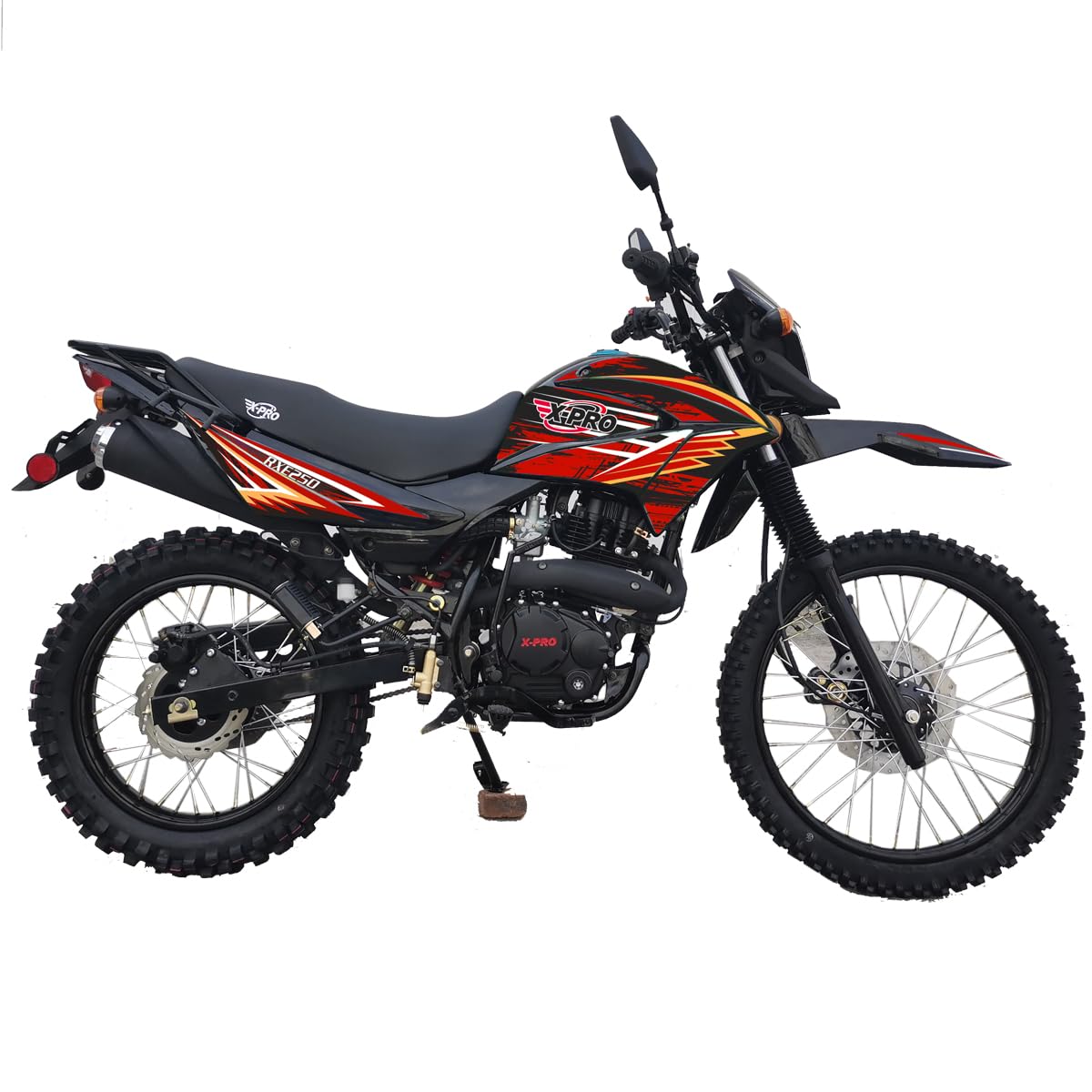
How To Choose The Best Trail Dirt Bike
Trail riding punishes the parts a showroom never tests: clutch feel in a rock garden, suspension over roots, and a frame that survives a tip-over on a rutted climb. The good news is that a handful of published specs tell you most of what you need before you ever open the crate.
Engine size and how the power arrives
A 250cc engine is the middle ground most adult trail riders land on — enough grunt to pull a hill without the weight of a bigger machine. The X-PRO Templar X runs a 249.9cc Zongshen engine, while the Titan DLX runs a 223cc Zongshen unit. Zongshen is the engine brand named in the listings, and it is the name buyers search for because parts and knowledge are easier to find. What matters on the trail is not the peak number but whether the power comes on smoothly enough to keep the rear tire hooked up.
Wheel size and tire footprint
A 21-inch front wheel rolls over roots and rocks instead of slamming into them, and an 18-inch rear gives you a taller sidewall to absorb hits. Nearly every bike here runs that 21/18 pairing. The Cavalier goes a step further with fat 80/100-21 front and 110/100-18 rear tires, which put more rubber on loose ground for traction. If your trails are sandy or muddy, that footprint is worth more than a few extra horsepower.
Seat height and ground clearance
You need to dab a foot down when a climb stalls, so seat height and ground clearance are safety numbers, not vanity stats. The Apollo Thunder lists a 35.8-inch seat height and 13.5 inches of ground clearance, which tells you it sits tall and clears big obstacles. If you are shorter or newer to trail riding, a lower, more forgiving seat will keep you off the ground more often than a taller race-bred one.
Assembly and paperwork
These bikes ship crated and partly assembled, so budget an afternoon with real tools. Assembly typically covers the handlebar brackets, wheels, brakes, number plate, and fender, though it varies by model. The Apollo arrives 70% assembled and still needs the tires and handlebar fitted. Several listings also note the Manufacturer Statement of Origin (MSO) and bill of sale arrive by separate mail, which you need for registration — confirm that paperwork lands before you plan a first ride.
Side-by-Side Comparison
Detailed Reviews
1. X-PRO Templar X 250cc 6 Speed Dirt Bike with Zongshen Engine
Our pick — 4.5+★ from 100+ verified ratings; the strongest balance of quality and price.
A 249.9cc Zongshen trail bike with front and rear shocks you can dial from soft to firm.
The number that earns this bike its spot is 249.9cc — a genuine Zongshen-branded engine, the make buyers hunt for because it is the expensive, reliable, long-life option in this class. That displacement clearly outgrows the Titan DLX’s 223cc, so the Templar X carries more usable torque up a loose climb. Both front and rear shocks adjust from soft to hard, which lets you soften the ride for rooty singletrack and firm it up when you open the throttle on a fire road.
What wins people over is how it feels underneath them: ride quality is the single most praised trait in the feedback, with a long list of riders calling it a machine that exceeds expectations. Assembly lands on the friendlier end too — handlebar brackets, wheels, brakes, number plate, and fender, and that is it. The big 21-inch front and 18-inch rear alloy wheels are what put this in trail territory, giving you a tall front hoop to roll over rocks and an 18-inch rear to soak up hits.
The honest catch sits at the exhaust. Durability feedback runs mixed, with reports of the exhaust coming apart, so check those fasteners after the first few rides and treat the pipe as something to watch. Weight is 258 pounds, which is manageable on the trail but not a featherweight you will toss around. And this bike cannot be sold to California, so Golden State riders need a different pick.
What Riders Rave About
- 249.9cc Zongshen engine delivers real trail torque
- Adjustable front and rear shocks tune to terrain
- Big 21″/18″ alloy wheels roll over obstacles
- Assembly is straightforward and well-documented
- Strong, high-strength frame built to take hits
Where It Asks For Care
- Exhaust has been a durability weak point for some
- 258 pounds is a heftier package
- Not available for sale in California
- Crated, so some assembly is on you
Go for this if: you want the strongest overall trail package with a real Zongshen engine and tunable suspension, rated 4.5+ stars.
Look elsewhere if: you ride in California, since this model cannot ship there.
2. X-PRO Cavalier 250 with Zongshen Counter Balanced Engine
A 35.8-inch seat height and 13.5 inches of clearance for riders who want to clear obstacles, not tiptoe around them.
Suspension is where the Thunder 250 makes its case. The front end runs adjustable inverted forks with 200mm of travel over a 21-inch front tire, and the maker describes the 250cc engine as outclassing similarly sized bikes for acceleration and high performance. Inverted forks — a design where the thick part of the fork sits at the top — resist flex better than a conventional fork, so the front stays planted when you hit a rock garden at speed. Add 13.5 inches of ground clearance and a 35.8-inch seat height and you get a tall, aggressive stance built to clear the nastiest obstacles.
At 233 pounds it is the lightest of the bikes here with a listed weight — the Templar X tips the scale at 258 pounds by comparison — which makes it easier to throw into a corner. You get quick startup in any altitude or weather from the electric starter backed by a kickstarter, plus front and rear hydraulic disc brakes and offroad tires built for grip. Quality draws the strongest praise, with owners calling it a nice bike for the money.
The catch is commitment. A 35.8-inch seat height and 13.5 inches of clearance are not beginner numbers — they suit someone with long legs who is comfortable on a tall bike. Performance feedback splits, with some saying it runs well, so give it a proper shake-down. And it arrives 70% assembled in a metal crate, needing tires and handlebar fitted, so plan on assembly time. This bike cannot be sold to California either.
Terrain clearance: That 13.5-inch ground clearance and 200mm of fork travel mean rocks and logs are obstacles you ride over, not around.
What to weigh: The tall stance rewards experienced riders but can feel imposing if you are shorter or newer to the dirt.
Made for: taller, experienced trail riders who want aggressive geometry and a light 233-pound package, at 4.0+ stars.
Not the fit for: a first-timer who needs a low seat and would rather not assemble the front end.
3. X-PRO Hawk 250 Dirt Bike Motorcycle Enduro

The starter enduro with 4.0+ stars across 44,000+ ratings, the deepest owner pool in this group.
Of anything here, the Hawk has the most experience behind it — 4.0+ stars across 44,000+ ratings is the crowd verdict, and it is the closest thing this category has to a known quantity. It pairs electric start with a motocross-style seat that sits relatively low and lets you move freely, and it rolls on the 21-inch front and 18-inch rear wheels that define a trail machine. For a first enduro, that combination of easy starts and a forgiving perch is what keeps you from getting discouraged in the first month.
What people actually experience is a bike that runs well and is genuinely fun to ride, and quality draws the most praise of any trait. Assembly is the dividing line, though — some find it very easy to put together, while others open the crate and find no instructions. Do your homework on the assembly steps before the box lands, or have a shop do the setup. The dimensions, 82.3 x 36.2 x 55.1 inches, make it a full-size machine rather than a compact pit bike.
The honest limit to know about is longevity. Durability is the weakest-reported area, with notes about the frame and parts working loose over time and stickers peeling. Those are maintenance signals, not a reason to write the bike off — it means checking bolts and the frame after hard rides. Speed expectations vary too, with riders reporting anywhere from 50mph to 60mph, so treat the top end as trail-tuned rather than highway-ready.
Why Beginners Gravitate Here
- Electric start makes cold mornings painless
- Low motocross seat suits newer riders
- Big 21″/18″ wheels handle varied terrain
- Huge owner base means real-world advice is easy to find
Sizing Up The Reality
- Durability is the most-flagged weak spot — stay on maintenance
- Assembly can arrive without instructions
- Top speed reports vary from 50mph to 60mph
- Full-size footprint takes real garage space
For the first-time owner: a low seat, electric start, and the deepest track record in this group make the Hawk the safe entry point.
For the hard charger: if you ride aggressively every weekend, the longevity notes push you toward a sturdier frame.
Know the Specs
Engine Displacement in cc
Displacement, measured in cubic centimeters (cc), is the volume the piston sweeps in one stroke — the bigger the number, the more air and fuel the engine can burn per cycle. In this group it spans a 223cc Zongshen unit on the Titan DLX up to a 249.9cc Zongshen engine on the Templar X. On a trail, that difference shows up as grunt when you ask the bike to pull a rutted climb rather than outright top speed.
Wheel Size (21″/18″)
A 21-inch front wheel is the tall hoop up front that rolls over roots and rocks instead of slamming into them, and an 18-inch rear wheel gives a taller sidewall to soak up impacts. Nearly every trail bike here runs that pairing, because it is the standard recipe for mixed terrain. The Cavalier goes further with fat 80/100-21 and 110/100-18 tires, putting more rubber on the ground for loose or muddy trails.
Suspension Travel and Adjustability
Travel is how far the fork or shock can compress before it bottoms out, and adjustability lets you tune soft or hard for the terrain. The Templar X offers front and rear shocks that adjust between soft and hard, while the Apollo Thunder runs inverted forks with 200mm of front travel. More travel and firm settings suit faster, rockier riding; softer settings keep a slower trail ride comfortable.
Seat Height and Ground Clearance
Seat height is how tall the bike sits at the saddle, and ground clearance is the gap between the lowest point and the dirt. The Apollo Thunder lists a 35.8-inch seat height and 13.5 inches of clearance, telling you it sits tall and clears big obstacles. For a shorter rider or a beginner who needs to dab a foot down in a rut, a lower seat keeps you safer than a taller race stance.
Common Questions
Can these trail dirt bikes be shipped to California?
How much assembly does a crated dirt bike actually need?
What is the difference between 223cc and 249.9cc on the trail?
Will a 35.8-inch seat height fit a shorter rider?
Do these bikes come with a title and paperwork for registration?
Is a 21-inch front wheel better than a smaller wheel for trail riding?
What top speed should I expect from a 250cc trail bike?
Are inverted forks worth having on a trail bike?
How do I keep a trail dirt bike’s frame and bolts from loosening?
The Bottom Line
For most trail riders, the trail dirt bike that earns the top spot is the X-PRO Templar X because its 249.9cc Zongshen engine and adjustable front and rear shocks give you the most complete trail package here. If you want fat tires and a smooth counter-balanced engine to learn on, grab the X-PRO Cavalier. And for riders who need to connect trailheads by road, the X-PRO Titan DLX with its full light kit is the one to reach for.
The honest nudge: the Hawk carries the deepest owner pool in this group, and its low seat and electric start make it the easiest first bike to live with — so if this is your entry into trail riding, start your shortlist there.
How we choose
We do not accept paid placement. Every pick is matched to a real buyer and a real use-case; we do not hands-on test units.
Sources
Specifications: manufacturer listings and product documentation. Review insights: verified customer reviews, as of November 2026. Pricing: not shown on this page (it changes often); check the current price via the retailer link.
As an Amazon Associate, Tactical Gear Guy earns from qualifying purchases. This does not affect which products we feature.