Specs are compiled from manufacturer listings and verified buyer reviews and can change over time — please confirm the key details on the product page before buying.
Your feet decide whether a hike is a good memory or a long, painful walk back to the car. The boots below solve that by pairing real waterproofing with a women’s-specific fit, so you get dry socks and steady ankles instead of hot spots and rolled ankles. Every pick here is a legitimately women’s-cut boot, which matters because a scaled-down men’s boot puts the flex point in the wrong place for most women’s feet.
This guide is built by comparing the manufacturers’ published specifications and the patterns across verified customer reviews, so you get each pick’s real strengths and trade-offs instead of marketing spin.
Below you’ll find how to read a lug pattern, why a stiff shank helps on rocky ground, and which boots run narrow or wide. Here are the top rated hiking boots for women, ranked by what real trail days demand.
Top Picks


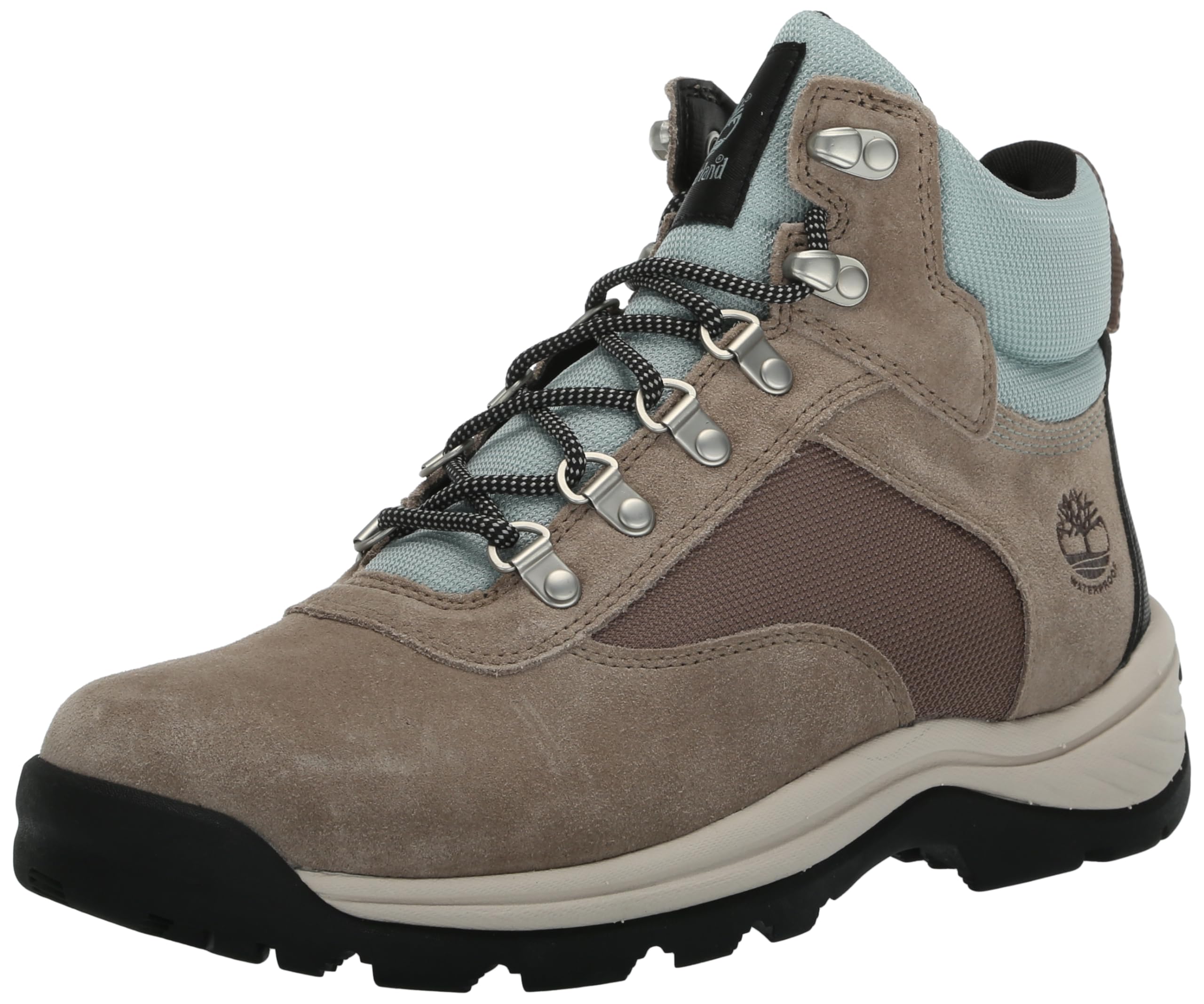
How To Choose The Best Top Rated Hiking Boots for Women
Most first-time buyers assume a hiking boot is just a stiffer sneaker. The difference that bites you on mile six is the underfoot structure — a proper shank and cushioning system that spreads the sting of a pointed rock instead of passing it straight to your arch. Start by matching the boot to the terrain you actually walk, not the alpine summit you might climb someday.
Waterproofing vs. water resistance
A boot with a waterproof membrane like TimberDry or KEEN.DRY is built to keep water out while letting sweat vapor escape. That two-way job is what separates a real hiking boot from a water-repellent sneaker — a coated upper sheds light rain but soaks through in a puddle. If your trails involve streams, mud, or wet grass at dawn, insist on a membrane. If you only hike dry ridgelines in summer, breathability may matter more than a sealed barrier.
Lug depth, rubber, and grip
Lugs are the raised rubber teeth on the sole, and their depth in millimeters tells you how much bite you get in loose dirt and mud. A 4mm lug pattern is a good all-around depth for mixed trails. The rubber compound matters just as much — a soft compound grips wet rock but wears faster, while a hard compound lasts longer but can skate. Look for an outsole named and specified rather than a generic “rubber outsole” line.
Weight and break-in
Here’s the number most buyers skip: weight. A 4-pound boot and a 2-pound boot feel identical in the store and completely different after eight miles. Lighter boots are easier to lift and less tiring, but often trade some underfoot armor. Also ask about break-in — some leather boots need weeks, while mesh-and-synthetic uppers can be comfortable on day one. If you want to hike soon, prioriti
ze low break-in time over the thickest leather.
Width and volume for socks
Women’s feet vary in width as much as in length, so “my usual size” is a starting point, not a guarantee. A medium-width boot with adjustable lacing can adapt to thicker wool socks, while a narrow last may bind the toes. Read the sizing notes carefully — a boot that runs a whole size large will leave your heel lifting on every climb, which is exactly how blisters start.
Side-by-Side Comparison
| Model | Best For | Waterproofing | Weight | Standout Feature | Amazon |
|---|---|---|---|---|---|
| Columbia Women’s Transverse Suede★ Best Overall | All-around value | Waterproof | — | Cushioned, terrain-adaptive sole | Amazon |
| Columbia Novo Trail MidBest Value | Light day hikes | Water-and-stain-resistant | — | Omni-Max underfoot system | Amazon |
| Timberland Women’s Ledge MidBest for Wet Weather | Rainy-day reliability | TimberDry membrane | 4 pounds | Ortholite footbed, recycled lining | Amazon |
| Columbia Newton Ridge Omni-Heat II | Cold-weather hikes | Waterproof | — | Omni-Heat insulation | Amazon |
| Merrell Women’s Speed Strike 2 Mid | Fast, athletic hikes | Waterproof | 2 pounds | Merrell sticky rubber outsole | Amazon |
| Danner Mountain 600 | Premium comfort | Danner Dry | — | Vibram SPE midsole and Fuga outsole | Amazon |
| Viakix Monterra | Thru-hiking and backpacking | Waterproof | 11.7 oz (size 7) | 4mm lug Grip360 rubber | Amazon |
| KEEN Steens Mid | Wet trail hiking | KEEN.DRY membrane | — | KEEN.ALL-TERRAIN rubber outsole | Amazon |
| Oboz Bridger Mid B-DRY | Long treks | B-DRY waterproofing | 19.0 oz / 538 g | Granite Peak outsole with TPU chassis | Amazon |
Detailed Reviews
1. Columbia Women’s Transverse Suede
Our pick — 4.5+★ from 800+ verified ratings; the strongest balance of quality and price.
The waterproof suede day hiker that makes the everyday trail feel easier — sealed against rain and quietly cushioned.
Suede and waterproofing rarely share a sentence without a caveat, but this Columbia manages both. The upper is a soft suede that sips rather than chugs styling cues from a hiking boot, and the sealed build sheds rain and trail splashes. Underfoot, the midsole is built to be lightweight and responsive, which means your foot isn’t fighting a slab of foam on every step. The sole is tuned to adapt across terrain types, from groomed path to rooty singletrack.
What wins people over is comfort — it’s the single thing owners talk about most by a wide margin, and the recurring theme is no blisters, even on long days or with varying sock thicknesses. The fit is generous enough to handle thick wool socks without pinching. Durability gets steady praise too, with waterfall hikes and beach walks in Iceland cited as proof of life after wet terrain. Ankle support is present without feeling rigid, which is the balance most day-hikers actually want.
The catch is the weight — this is a stout, substantial suede boot, not a featherweight. If your hikes are short and fast, you may prefer a lighter option elsewhere on this list. And while the waterproofing holds up to puddles and shallow streams, it’s a sealed suede boot, so treat the leather with a reproofing product now and then to keep it that way.
What earns the top spot
- Waterproof suede upper handles rain, puddles, and shallow stream crossings without leaks.
- Comfort is the dominant praise among owners, with no-blister reports across long days and variable sock thickness.
- Generous fit accommodates thicker socks without binding the toes.
- Responsive, lightweight cushioning keeps the sole adaptable across mixed terrain.
Where it asks a little patience
- The suede build is substantial, so it’s not the lightest boot for fast, short outings.
- Sealed suede still benefits from periodic reproofing to keep waterproofing at its best.
Reach for this if: you want one boot that handles wet trails, mixed terrain, and long days without a break-in saga.
Think twice if: your priority is the lightest possible boot for quick summer walks.
2. Columbia Novo Trail Mid
A light, cushioned hiker that feels like a jogging shoe on the trail you actually walk.
This is the boot you grab when you want trail-ready support without the tank-like feel. The Omni-Max underfoot system does the heavy lifting here — it’s a cushioning-and-stability platform that spreads pressure under the foot and firms up where you need traction. The upper is water-and-stain-resistant rather than fully sealed, so it shrugs off dew and light rain but isn’t a stream-crossing boot. Ankle support comes in comfortably, and the whole package stays light enough to feel athletic.
Owners describe it as feeling like a jogging shoe that doesn’t hurt, which is high praise for a hiker — the comfort and build quality lead the conversation. The fit lands well for most, and the look gets a nod too. Lightness is a real theme in what people say, and that tracks with the design intent.
The honest note is traction and weather. Traction feedback is split, with some finding the grip decent and others feeling every rock through the sole on rougher ground. Water resistance also gets mixed reports — fine for wet grass, less so for sustained soaking. This is a fair-weather day hiker with an athletic feel, not a boot for scree fields or monsoon season.
The feel: Omni-Max cushioning plus a light build makes this the pick for quick, comfortable day hikes where agility beats armor.
The honest limit: it’s water-and-stain-resistant, not fully waterproof, and rough, rocky ground can telegraph through the sole.
Pick this one if: you want a trail shoe-like hiker for dry-ish paths, light trails, and casual walks.
Leave it for: wet, rocky routes where a sealed membrane and deeper bite matter more.
3. Timberland Women’s Ledge Mid Lace-Up Waterproof Hiking Boot
The rain-day anchor — a sealed TimberDry membrane and an Ortholite footbed that keeps you comfortable mile after mile.
At 4 pounds, this Timberland is the heavyweight of the group — the Merrell Speed Strike 2 below comes in at 2 pounds, so there’s a 2.0x gap between them. That extra mass buys you a lot of structure. The TimberDry waterproof membrane is a sealed barrier, not a surface coating, so it’s built for actual rain rather than a passing drizzle. The Ortholite footbed adds cushioning that stays comfortable through a long day, and the D-ring lacing system makes tightening up quick and secure.
What wins people over is the comfort and the medium-width fit — owners consistently report no blisters and a width that suits most feet. The durability gets described in terms of lasting a lifetime, and the water resistance holds up to real weather, including heavy rain and snow. Ankle support is on the firm side, giving you confidence on uneven ground. The ReBOTL fabric lining contains at least 50 percent recycled plastic, a nice bonus if that matters to you.
The trade-off is exactly what those 4 pounds suggest — this boot is not built for speed or long, hot descents. It’s a stable, protective companion for wet, cool weather rather than a fast-and-light choice. Treat it as your foul-weather boot and it rewards you with dry feet and solid support.
Why it holds up in rough weather
- TimberDry waterproof membrane is a sealed barrier built for sustained rain and snow.
- Ortholite footbed keeps comfort steady over long days.
- Medium-width fit suits most feet without pinching.
- Firm ankle support adds confidence on uneven, wet ground.
The weight you’re carrying
- At 4 pounds it’s the heaviest boot here — 2.0x the weight of the Merrell Speed Strike 2.
- Better suited to wet-weather stability than fast, light summer hikes.
Best for: rainy, cool-weather hikes where dry feet and firm ankle support top your list.
Skip if: you want a featherweight boot for fast, hot-weather outings.
4. Columbia Newton Ridge Waterproof Omni-Heat II
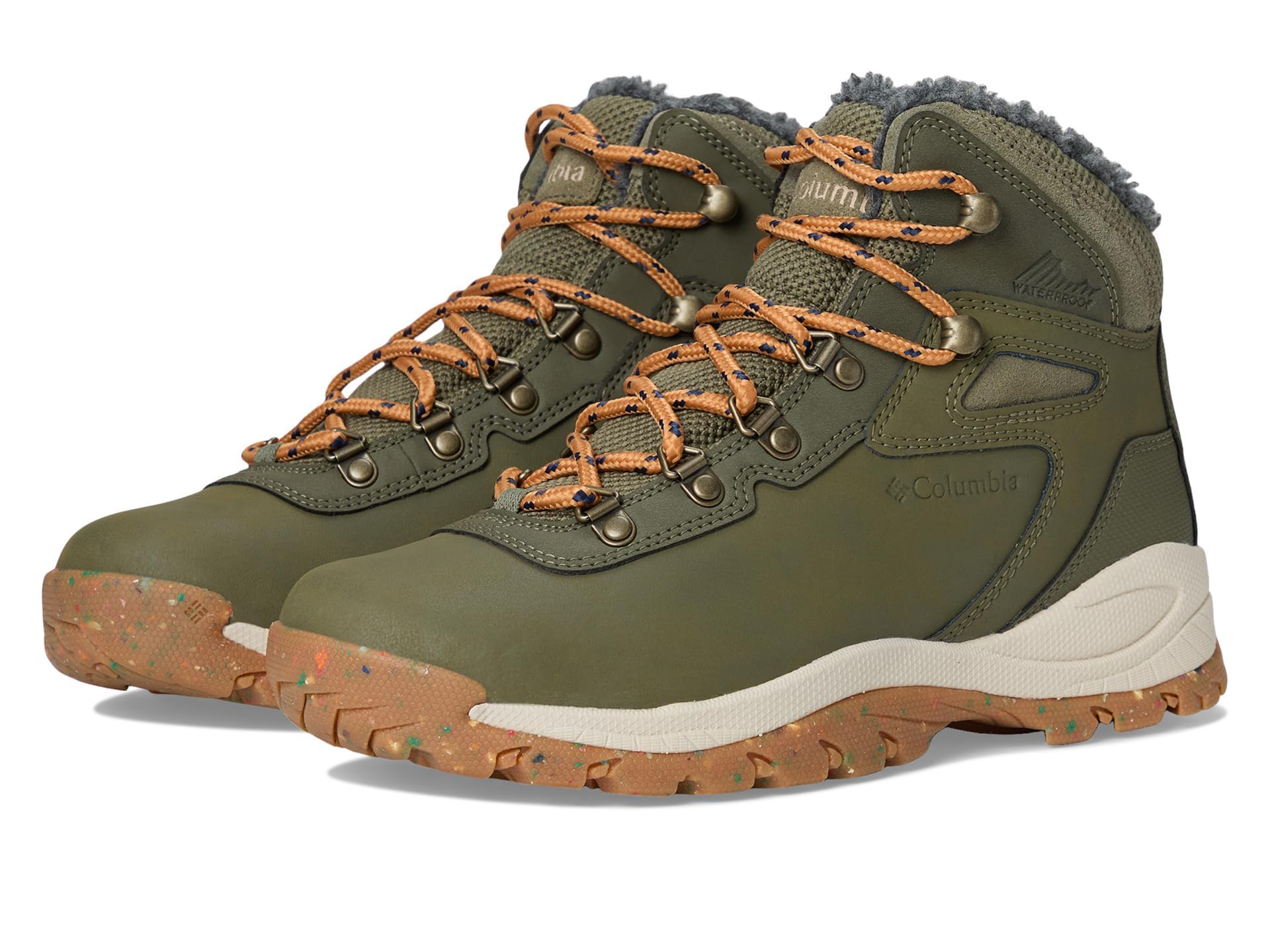
Built for frosty mornings — Omni-Heat insulation and a waterproof upper for when the trail turns cold.
Insulation is what separates this Newton Ridge from the rest of the field. The Omni-Heat build traps warmth, and the waterproof upper keeps cold, wet weather on the outside where it belongs. The look is a major draw too — appearance is the most-talked-about aspect among owners, and it’s the combination of a classic hiker silhouette with weather-ready practicality that people respond to.
Comfort and warmth lead the daily experience. Owners note the boots work well both on cement and tile floors and on the trail, which tells you the cushioning isn’t trail-only harsh. Warmth gets consistent praise, and water resistance holds up in cold weather with dry feet reported. The fit leaves room for thick socks without binding the toes, a genuine benefit when you’re layering for winter. Lightness and sturdiness both get mentioned as pluses.
The trade-off is that insulation makes this a seasonal pick. In hot, humid conditions it can run warm, so it’s a purpose-built cold-weather boot rather than a year-round one. For late-season hikes, snowy approaches, and cool morning starts, though, that warmth is exactly what you want.
The warm-weather caveat: Omni-Heat insulation is a gift in frost and a liability in summer heat — match it to the season.
The roomy fit: extra room for thick socks without pinching the toes means winter layering works without sizing up.
Your boot if: you hike cold, wet trails and want warmth and waterproofing in the same package.
Not for: hot-weather hiking, where the insulation will have you wishing for a breathable summer boot.
5. Merrell Women’s Speed Strike 2 Mid Waterproof
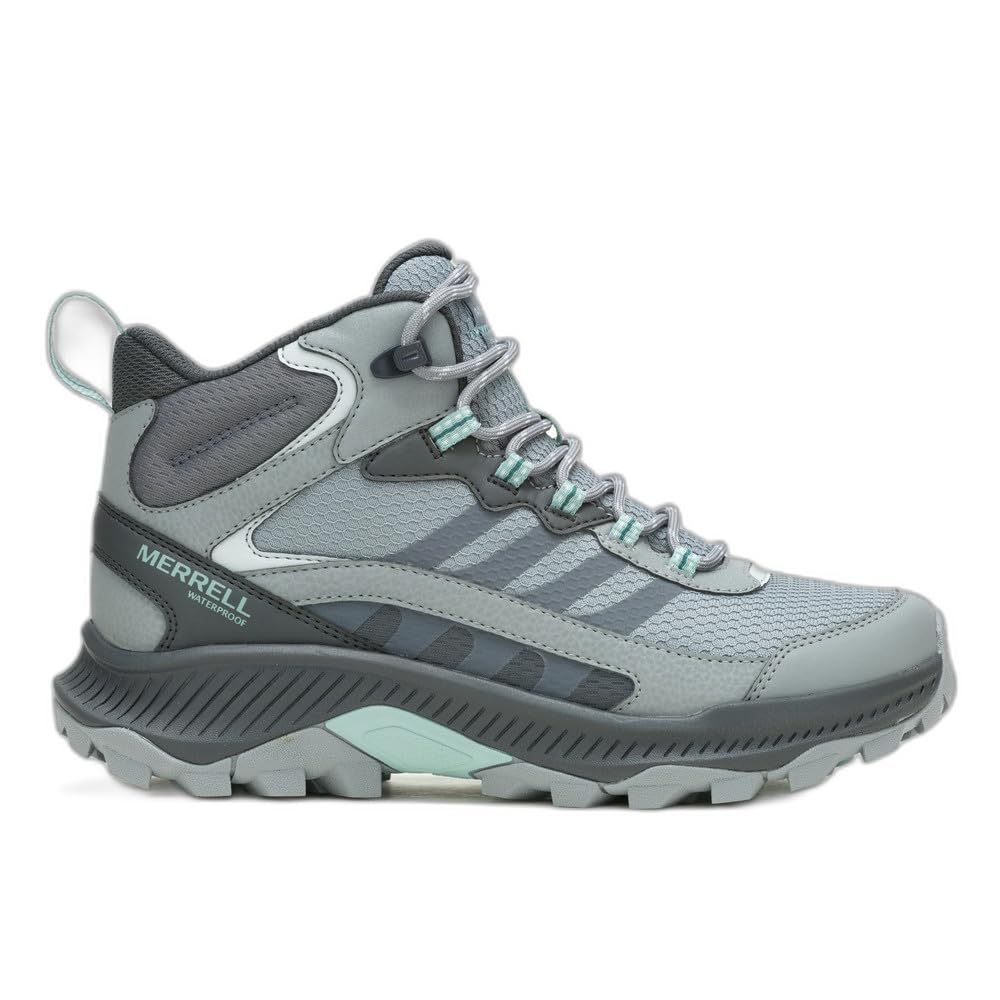
The athletic hiker — a 2-pound waterproof build that still protects your ankles.
Two pounds is the headline number, and it changes how a hike feels. The Speed Strike 2 is built to be faster and more athletic than a traditional hiker, so it suits the hiker who wants to move. Waterproofing is genuine here, not a spray-on coating — the boot is made to handle wet weather while staying light. Underfoot sits a Merrell sticky rubber outsole with durable traction that grips when and where you need it. The EVA foam footbed is removable, and the whole shoe — from laces and webbing to the mesh lining — uses recycled materials.
The comfort story matches the athletic intent. Owners describe good ankle and arch support without the stiffness that usually comes with it. Blisters and discomfort aren’t part of the conversation, and feet stay dry and comfortable after hiking, which is the real test for a waterproof shoe. It’s a boot that feels like it’s working with you rather than weighing you down.
That 2-pound figure comes with a trade-off: less underfoot mass than the Timberland Ledge Mid’s 4 pounds. If you want maximal cushioning for heavy loads or very long days, the extra structure of a heavier boot may serve you better. For fast day hikes and moving comfortably, the lightness is the whole point.
What makes it fast
- At 2 pounds it’s the lightest build here — a full 2.0x lighter than the Timberland Ledge Mid.
- Waterproof construction that keeps feet dry after the hike.
- Merrell sticky rubber outsole for traction on varied ground.
- Ankle and arch support without the usual stiffness.
What you give up
- Less underfoot mass, so heavy backpacking days may want a sturdier boot.
- Athletic styling may not suit hikers who want a classic leather look.
Go with this if: you want to move fast and light without giving up waterproofing or ankle support.
Look elsewhere if: you’re carrying a heavy pack and want maximum underfoot cushioning.
6. Danner Mountain 600 Waterproof Hiking Boots for Women
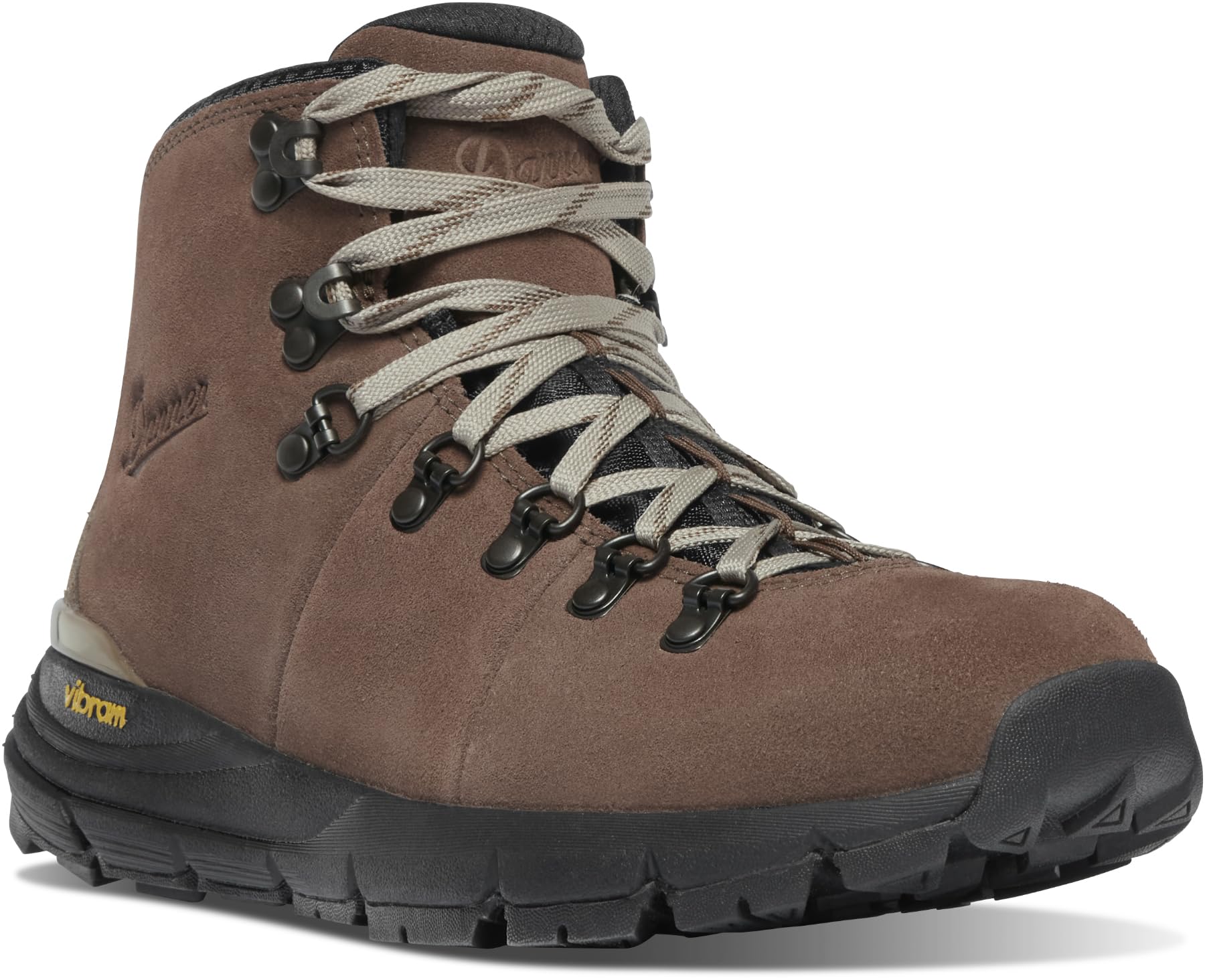
Heritage looks, modern comfort — the premium boot that feels like a sneaker on the trail.
Danner partnered with Vibram on this one, and the hardware shows it. The Vibram SPE midsole cushions, while the Fuga outsole is built for grip on both wet and dry surfaces, and the two are designed to deliver that cushioning without the weight. Danner Dry waterproof protection sits under a suede or full-grain leather upper. The leather is sourced through the Leather Working Group for responsible manufacturing, which matters to buyers who care where their materials come from.
The fit is the defining strength. Fit is the most talked-about aspect among owners, followed closely by comfort, and the recurring description is that they feel like tennis shoes with no pain or blisters. Lightness is part of it — the boot doesn’t feel heavy when you’re hiking. Break-in time is short enough that you’re not nursing blisters for weeks. Durability earns praise too, with some pairs lasting up to three years of regular trail use. Style is a bonus for anyone who wants their trail boots to look as good as they perform on the town.
The honest note: full-grain leather demands a little care to stay supple, and the premium construction means this is a boot you look after. It’s not the cheapest way into a hiking boot, but the comfort and grip are the reason it earns its spot.
The stand-out: Vibram SPE midsole and Fuga outsole make this a cushioned, grippy boot that feels remarkably light for its build.
Worth knowing: full-grain leather needs periodic conditioning to stay comfortable and water-resistant over the seasons.
The premium match for: hikers who want heritage style, short break-in, and confidence-inspiring grip from the start.
Not the pick for: buyers who want a low-maintenance, wipe-and-go synthetic upper.
7. Viakix Monterra Women’s Waterproof Hiking Boots
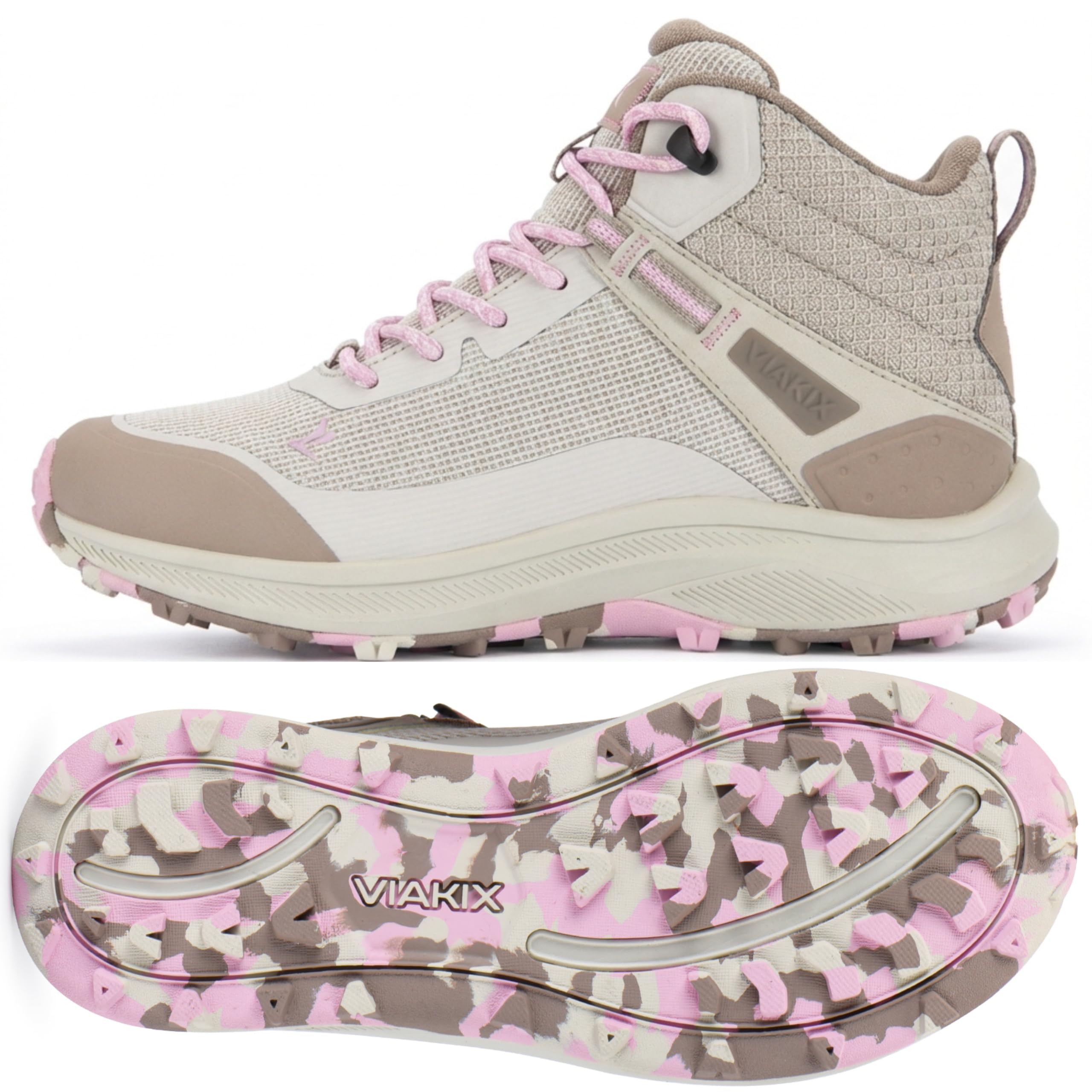
The backpacking boot that stays out of your way — lightweight, waterproof, and sized for the long haul.
Viakix designed this one for the hiker who keeps going. It’s spec’d for hiking, thru-hiking, backpacking, walking, and camping, and the numbers back that up. The weight is 11.7 oz in a size 7, which keeps the boot light enough to lift mile after mile. The Grip360 rubber outsole has 4mm lugs, which gives you bite on loose dirt and mud without a snow-tire feel. The heel-to-toe drop is an ergonomic 8mm, and support is neutral — a comfortable zone for most hikers. The insert is cushioned and removable, and the entire boot is vegan.
Comfort is the clear strength. Buyers report no blisters or sores, and the fit is described as perfect by many. The quality and style get consistent praise, and the arch and ankle support are real. Waterproofing is confirmed as total — no wet-foot stories. The lightweight design makes the long miles easier, which is exactly what a backpacking boot should do.
The honest catch is sizing. Some owners find the boot runs a whole size larger than expected, so you’d do well to size down or confirm fit before committing to a long trip. That’s a fit quirk, not a performance flaw — but it’s the kind of thing that matters when you’re packing for a multi-day hike.
The trail-ready specs: 11.7 oz in a size 7, 4mm lugs, and an 8mm drop combine into a light, neutral boot that suits long-distance walking.
Size it carefully: fit reports are mixed, with some finding it runs a full size large — check sizing before a big trip.
Best for: backpackers and thru-hikers who want a light, waterproof, vegan boot for multi-day miles.
Watch out if: you’re ordering sight-unseen and can’t try on — the sizing runs large for some.
8. KEEN womens Steens Mid Height Leather Waterproof
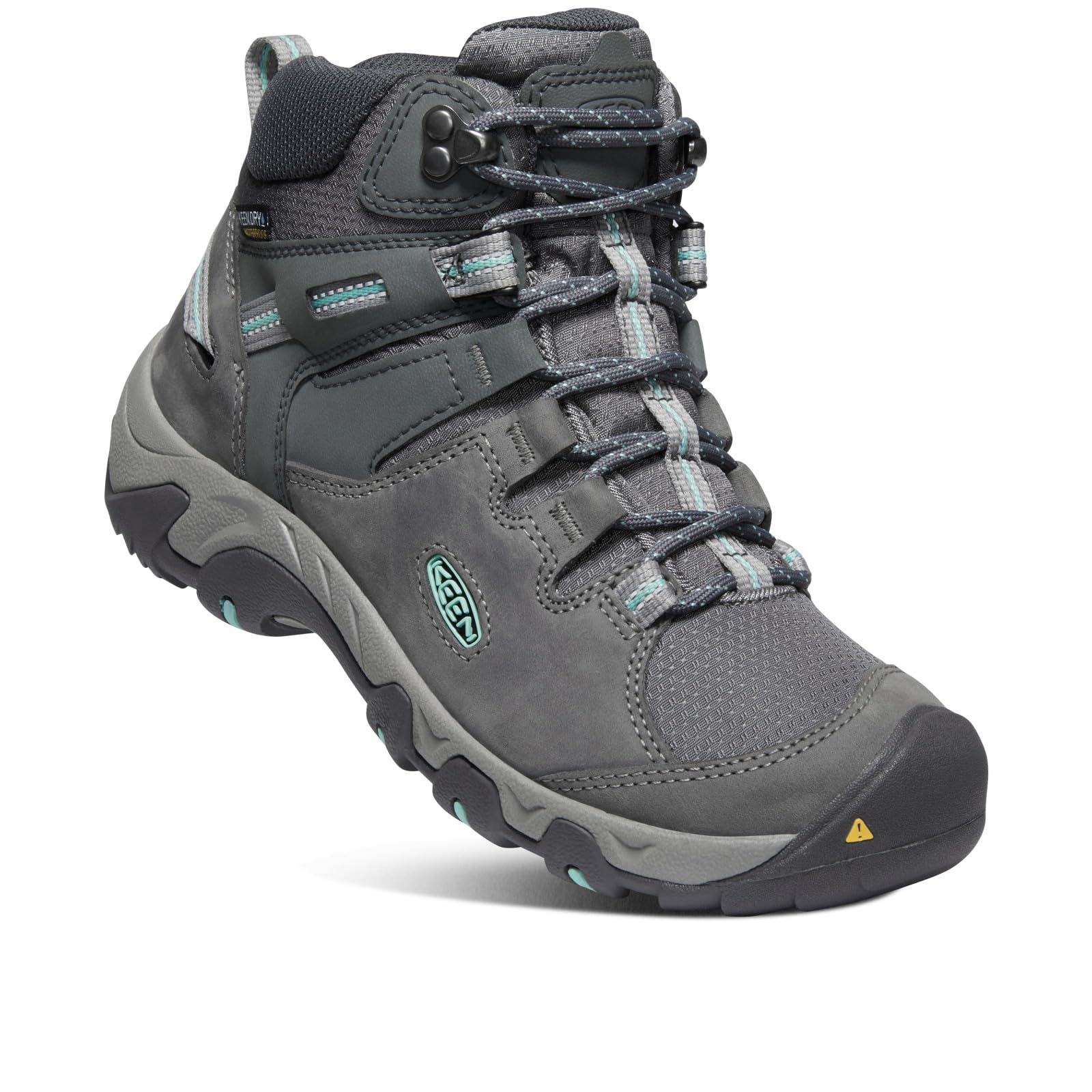
The leather workhorse — waterproof, breathable, and built to take a muddy Appalachian Trail in stride.
KEEN’s waterproofing is the feature that earns this boot its place. KEEN.DRY is a waterproof and breathable membrane — it lets vapor out while blocking water, which is the difference between a boot that stays dry inside and one that traps sweat. The upper is waterproof leather, and the KEEN.ALL-TERRAIN rubber outsole provides higher-traction grip. The EVA midsole adds lightweight cushioning. The leather is sourced from tanneries certified by the Leather Working Group, and the construction is over 95 percent PFC-free, which matters if you care about the chemicals in your gear.
Comfort and quality lead the way for owners, with no blisters reported and good support and stability on the trail. Water resistance gets specific confirmation — one owner wore these through rainy, muddy conditions on the Appalachian Trail and they performed well. The appearance is a draw too, and the overall verdict from some is that these are the best hiking boots they’ve ever worn.
The honest note is fit. Fit reports are mixed, so this isn’t a boot to buy blind — try them on or order with a return plan in mind. Durability and value also get mixed feedback, meaning some owners find them long-lasting and fairly priced while others have a different experience. It’s a solid leather boot that rewards a careful sizing choice.
Why the leather crowd likes it
- KEEN.DRY membrane keeps water out while letting sweat vapor escape.
- KEEN.ALL-TERRAIN rubber outsole for higher-traction grip on wet, muddy ground.
- Waterproof leather upper with EVA midsole cushioning.
- Leather from Leather Working Group-certified tanneries, over 95 percent PFC-free construction.
Where fit is the wild card
- Fit feedback is mixed — sizing is worth confirming before a long trip.
- Durability and value get split feedback, so expectations vary.
Good fit for: hikers who want a waterproof leather boot and real breathability for wet, muddy trails.
Not ideal if: you’re ordering without a way to try them on — the fit is the one thing to verify first.
9. Oboz Women’s Bridger Mid B-DRY Hiking Boot
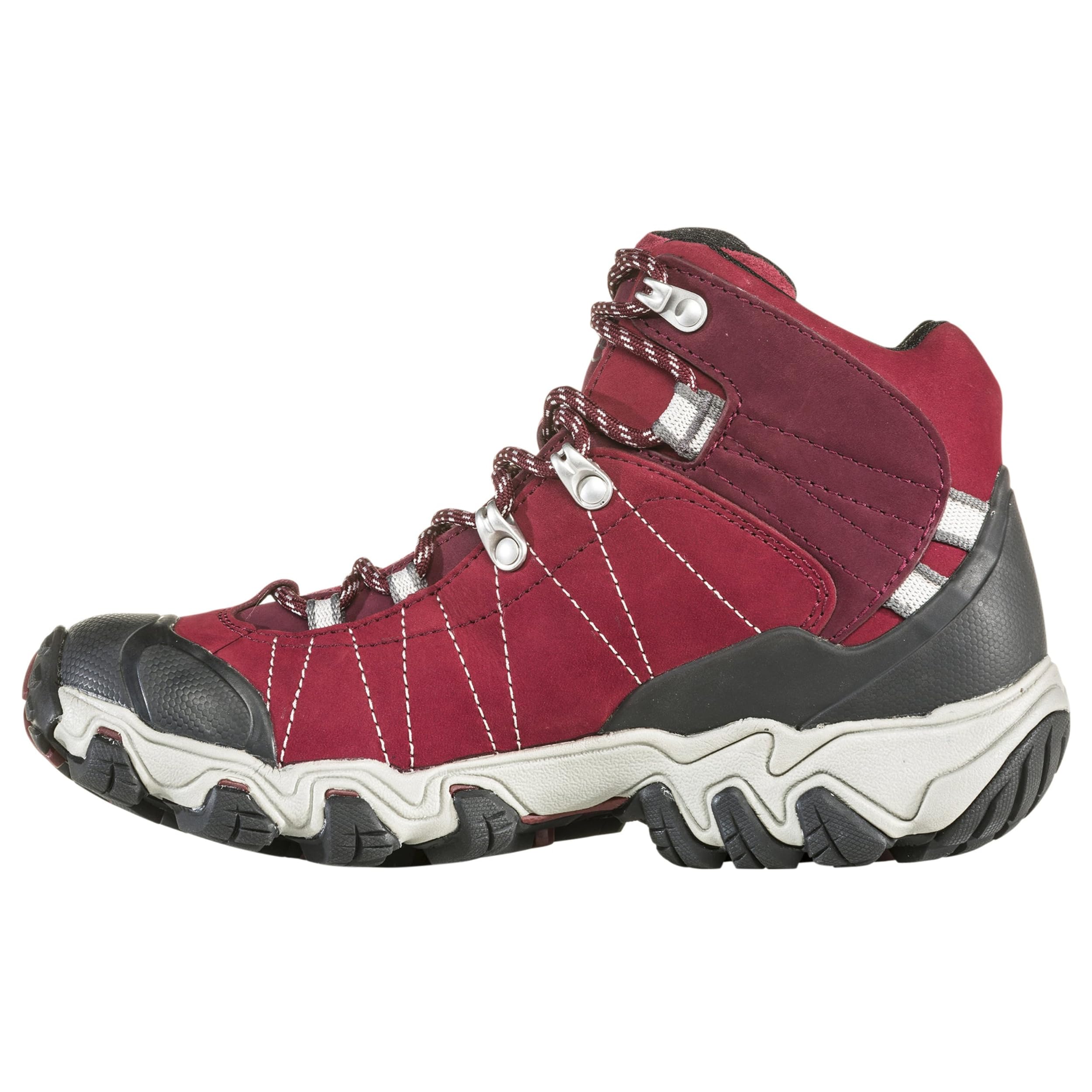
The serious hiker’s boot — short break-in, all-day comfort, and a chassis that handles roots and rocks.
Oboz built this one around support, and the specs tell the story. The B-DRY waterproofing lets sweat escape while blocking moisture, so your feet stay dry on muddy trails. The Granite Peak midsole uses a lightweight TPU chassis for stability and stone protection, paired with EVA cushioning for all-day comfort. The Trail Tread outsole blends purpose-built design with custom rubber compounds for varied terrain. At 19.0 oz / 538 g with a 12mm heel drop, it’s a substantial, stable boot. The O FIT insole is molded to each shoe for a closer fit, and Oboz plants a tree for every pair sold.
Comfort and support are the core strengths, and owners mention feet that never hurt during wear, along with remarkable arch support. Durability gets real-world backing, with owners reporting pairs lasting up to seven years. Traction earns a specific nod, with performance on slippery rocks called out. Fit is the most-discussed aspect, and it’s overwhelmingly positive. Value for money holds up too, which is saying something for a boot that lasts this long.
The honest note is stiffness. Stiffness gets mixed feedback — some find this boot rigid at first, so the short break-in matters. That same structure is what gives you the stability on rocky descents, though, so it’s a trade-off rather than a flaw. If you want a soft, flexible trail shoe, this isn’t it.
The long-haul build: TPU chassis and 12mm heel drop make this a stable boot for multi-day treks, and pairs lasting up to seven years back the durability.
The stiffness trade-off: some find it rigid from the start — short break-in, but a trade-off against flexible trail shoes.
Made for: serious hikers who want stability, arch support, and a boot that lasts years of rocky trails.
Not your pick if: you want a soft, flexible boot that feels broken-in on day one.
Know the Specs
Waterproofing: Membrane vs. Coating
A waterproof membrane like TimberDry, KEEN.DRY, or B-DRY is a sealed layer that lets sweat vapor out while keeping water out — it’s a two-way job. A water-resistant coating on the upper only sheds light rain and soaks through in sustained wet. For wet trails, streams, and mud, choose a membrane boot. For dry paths and light drizzle, a water-and-stain-resistant upper may be enough and often feels more breathable.
Weight: The Number You Feel on Mile Six
Boot weight is the spec that determines how tired your legs are at the end of a hike. A 2-pound boot lifts easily, while a 4-pound boot carries noticeably more mass on every step. Lighter boots often trade some underfoot armor, so match the weight to your load and terrain — light for fast day hikes, heavier for stability under a pack or on rough ground.
Lug Depth and Outsole Rubber
Lugs are the raised rubber teeth on the sole, and their depth in millimeters tells you how much bite you get on loose dirt, mud, and rock. A 4mm lug pattern is a good all-around depth for mixed trails. The rubber compound matters too — a soft compound grips wet rock but wears faster, and a named outsole like Vibram Fuga or Grip360 tells you the maker has specified the grip, not just promised it.
Heel-to-Toe Drop and Support
Heel-to-toe drop is the height difference between the heel and the toe, measured in millimeters. An 8mm drop feels more level and allows a natural stride, while a 12mm drop positions the foot for more support and stability on descents. Neutral support suits most hikers, while firmer support or a TPU chassis earns its place for heavy loads, rocky ground, and long days where ankle roll is a real risk.
Common Questions
How do I know a hiking boot is actually made for women’s feet?
Should I size up for thick hiking socks?
How long does a waterproof membrane actually last?
Are mid-height boots enough for ankle support, or do I need a taller boot?
What is the difference between waterproof and water-resistant hiking boots?
How much does boot weight really matter on a hike?
Do insulated hiking boots work in summer?
How do I stop blisters on a long hike with new boots?
What heel-to-toe drop should I look for in a women’s hiking boot?
Can I wear my hiking boots on pavement and tile too?
The Bottom Line
For most hikers, the top rated hiking boots for women winner is the Columbia Women’s Transverse Suede, because it pairs real waterproofing with a generous, blister-free fit and a sole that adapts across terrain. If you want the lightest, fastest boot on the list, grab the Merrell Speed Strike 2 Mid at 2 pounds. And for wet, cold conditions where dry feet and firm ankle support top your list, the Timberland Ledge Mid is the one to reach for. The single strongest sign you’re buying right is how the boot handles sock thickness and fit — get that right and the miles take care of themselves.
How we choose
We do not accept paid placement. Every pick is matched to a real buyer and a real use-case; we do not hands-on test units.
Sources
Specifications: manufacturer listings and product documentation. Review insights: verified customer reviews, as of November 2026. Pricing: not shown on this page (it changes often); check the current price via the retailer link.
As an Amazon Associate, Tactical Gear Guy earns from qualifying purchases. This does not affect which products we feature.