Specs are compiled from manufacturer listings and verified buyer reviews and can change over time — please confirm the key details on the product page before buying.
Track shoes split into three distinct builds: sprint spikes, distance spikes and throw shoes. A sprinter needs a stiff spike plate that bites the track on the drive phase, a distance runner needs cushioning that survives the final lap, and a thrower needs a flat, stable platform with no pins at all. A sprint plate on a mile race, or a cushioned racer in the 200m, shows up as lost grip or dead legs within a lap. This guide sorts nine real options by event, fit and plate design so you can pick the pair that suits your race instead of guessing from a listing photo.
This guide is built by comparing the manufacturers’ published specifications and the patterns across verified customer reviews, so you get each pick’s real strengths and trade-offs instead of marketing spin.
Fit runs small in more than one pair here, and the difference between a spiked plate and a spikeless trainer decides which events a shoe can legally and safely handle. Below you will find the plate type, the event it suits, and the honest sizing quirks spelled out for each pick. Pick your shoes for track and field sports by event first: sprint, distance or throw decides the plate, the pins and the fit.
Top Picks
How To Choose The Best Shoes for Track and Field Sports
First-time buyers usually shop by colorway, then discover the plate is wrong for their event. Track footwear is a tool built around one question: what does your event ask your foot to do? A 100m sprinter drives forward for a few seconds and needs a plate that grips hard and stays stiff. A miler repeats that motion for four laps and needs cushioning that does not flatten out. A shot putter never sprints at all and needs a flat, planted platform. Once you know your event, plate stiffness, pin count and cushioning all narrow to a short list.
Match the plate to your event
The plate is the stiff layer under the forefoot that the spikes screw into. A sprint plate is aggressive and digs into the track so your force turns into forward speed. A distance plate is more forgiving so your foot can roll through a long race. Throw shoes usually skip pins entirely and rely on a flat rubber outsole plus a midfoot strap to hold you steady during a rotation. Buying a sprint plate for a mile race, or a cushion-heavy racer for the 200m, is the most common way people waste a purchase.
Check the fit notes before you order
Track shoes are built close to the foot so there is no wasted movement inside the shoe. That tight build means sizing is less forgiving than a everyday trainer. Several models in this list draw repeated notes about running small, so reading the sizing comments for your exact pick matters more here than in almost any other shoe category. If you are between sizes on a sprint spike, most athletes size up rather than squeeze into a tight toe box.
Decide if you need pins or a spikeless sole
Spiked shoes are for the track surface. Spikeless models are built for cross-country courses where grass, dirt and uneven ground would make pins a liability. If your season mixes both, you are realistically looking at two pairs — one spiked racer for the oval and one spikeless shoe for the trails. Do not assume a spiked shoe can do both jobs.
Side-by-Side Comparison
| Model | Best For | Plate / Outsole | Stated Weight | Event Focus | Amazon |
|---|---|---|---|---|---|
| Nike Zoom Rival SD 2★ Best Overall | Throwers wanting a Nike fit | — | — | Throwing events | Amazon |
| adidas Adizero DistancestarDistance Engine | 400m through mile races | Extended 6-pin TPU plate | 2.4 lb (package) | Middle and long distance | Amazon |
| adidas Adizero SprintstarCurve Specialist | Sprint events and curve work | Updated 6-pin TPU plate | 2.43 lb (package) | Sprints | Amazon |
| Brooks Draft XC | High school cross-country | Durable outsole lugs | — | Cross-country | Amazon |
| ASICS Hypersprint 8 | Short sprints | Resin plate | 1.44 lb | 100m and 200m | Amazon |
| ASICS Hyper Throw 3 | Throwing events, first-timers | Rubber midsole and outsole | 1.44 lb | Throws | Amazon |
| Nike Zoom Rotational 6 | Shot put, hammer, discus | — | — | Rotational throws | Amazon |
| New Balance FuelCell SC Elite v5 | Race day on the road or oval | Carbon fiber plate (Energy Arc) | — | Racing | Amazon |
| Nike Air Zoom Maxfly 2 | Competitive sprinting | — | — | Sprints | Amazon |
Detailed Reviews
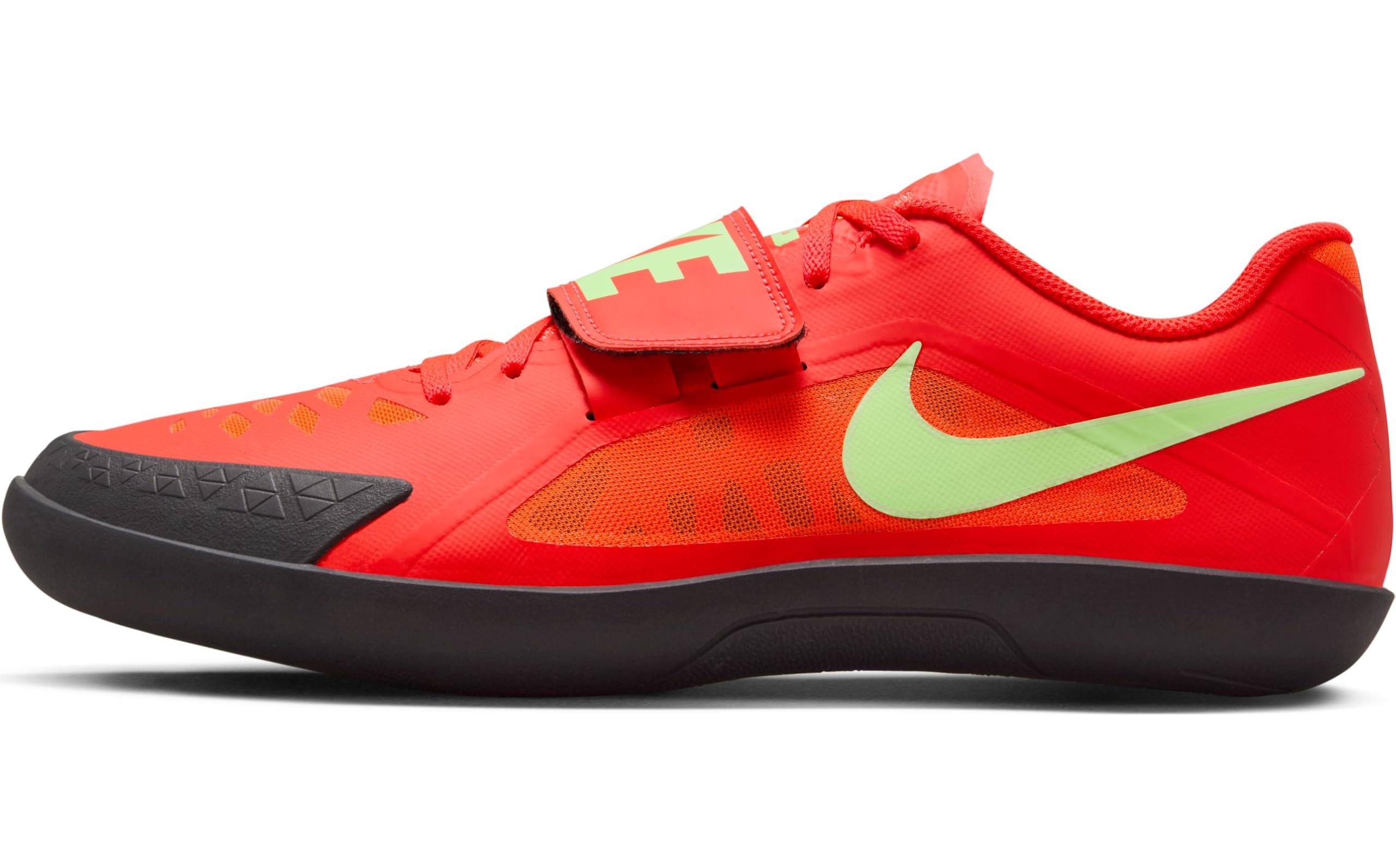
1. Nike Zoom Rival SD 2 Track and Field Shoes
Our pick — 4.5+★ from 250+ verified ratings; the strongest balance of quality and price.
A throw shoe that does the one job throwers need: plant the foot and hold it.
The reason this sits at the top of the list is not a flashy number — it is that the Zoom Rival SD 2 is a genuine throwing shoe that a wide range of athletes can actually wear. Throwers are the group the market serves worst, and this pair handles the discipline without making you hunt through sprint spikes to find it. The shoe is built as a throwing model rather than a repurposed runner, and that is exactly why it earns the top slot for most people shopping this category.
What wins people over is the overall build quality, with fit running a close second. Athletes describe a shoe that slips on and stays put through the throwing motion, which is the whole point of a throw shoe. The price also reads as sensible against the rest of the field, and that combination of a real throwing platform, a snug fit and a fair value is hard to argue with. The verdict from the review pages is practical rather than gushing — these are shoes that do a job, and their owners know it.
The catch is durability, and it is a mixed picture rather than a red flag. Some athletes put in full seasons without trouble, while others notice the sole starting to tear near the toes after heavy use. If you throw year-round on rough surfaces, plan on inspecting that toe area and rotating your shoes. For a school-season thrower who wants one reliable pair without stepping into the premium bracket, this remains the sensible first call in this list.
What earns it the top spot
- A dedicated throwing shoe, not a sprint spike standing in for one
- Fit is the second most-praised quality — the shoe stays put through the throw
- Value that reads reasonable against comparable throw models
Where it asks for care
- Durability is the mixed note — some see the sole tear near the toes
- Built for the throwing circle only, so it is no use on the oval
Go for it if: you throw shot, discus or hammer and want a shoe that behaves like a throw shoe from the first session.
Hold off if: you split your season between throwing and running events — this pair will not cover the running half.
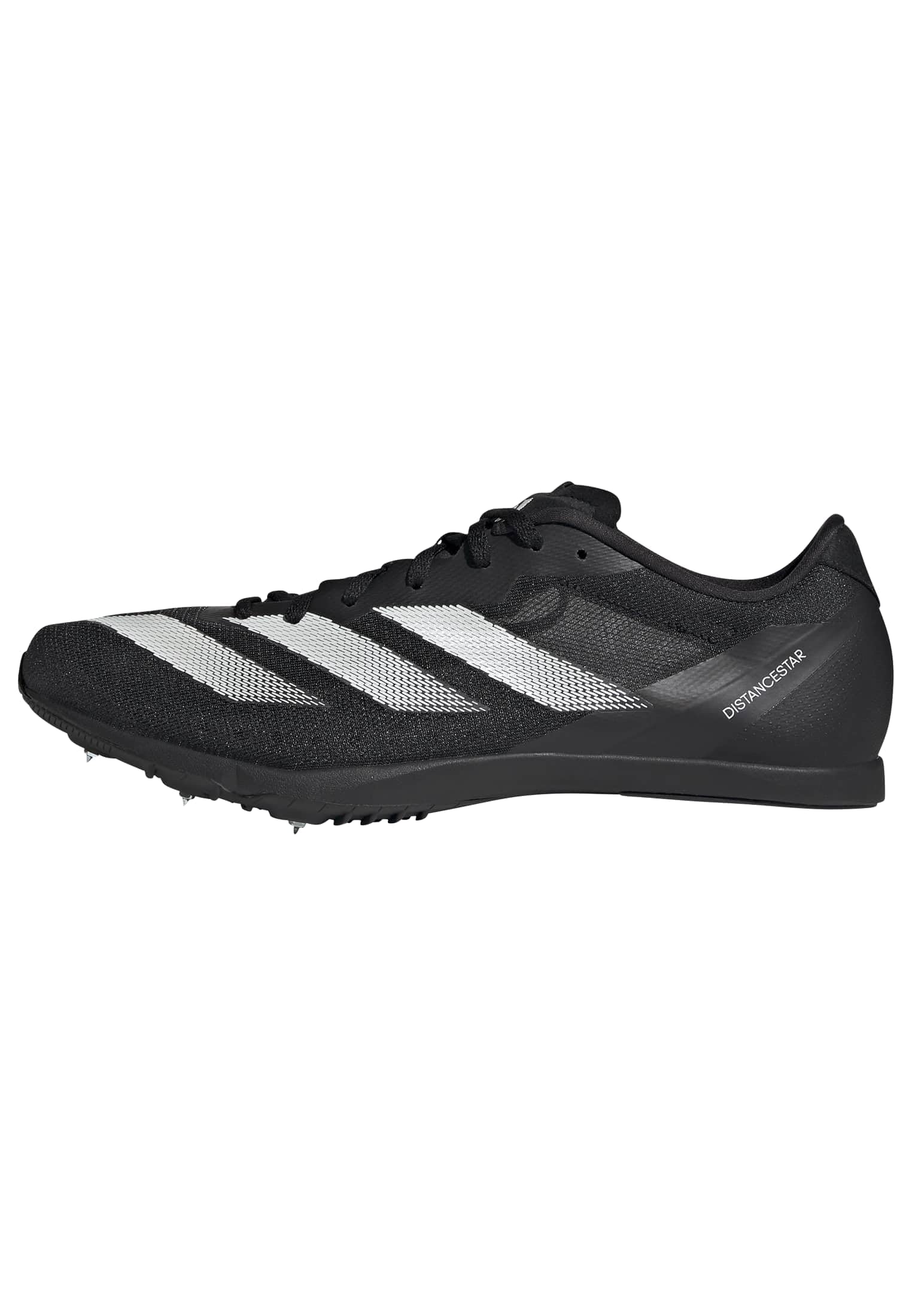
2. adidas Unisex Adult Adizero Distancestar Track and Field
A mile-race spike with cushioning placed exactly where the final lap hurts.
This shoe is built for the races most people actually sign up for: the 400m, the 800m, and the mile. Its extended 6-pin TPU spike plate (six plastic spikes set in a stiff plastic bed under the forefoot) runs wide through the cornering zones, so you keep grip when you lean into a bend instead of losing footing. That longer plate is what separates a distance spike from a pure sprinter’s tool, and it is why this pair holds the curve in a way a dedicated sprint plate does not.
Athletes describe a snappy, energetic ride that keeps its response from the opening meters to the final bell lap. The reason is the Lightstrike Pro foam, a responsive cushioning layer placed under the forefoot — the exact spot a distance runner drives off — so you get propulsion without extra bulk. Below that, lightweight molded EVA (a softer foam layer) runs heel to toe for a balanced platform. And unlike the Adizero Sprintstar in this list, whose 6-pin plate is tuned hard for explosive starts, the Distancestar spreads that same pin count across a longer race, so it suits runners who need grip at lap four, not just at the gun.
The fit-and-airflow read: a breathable synthetic upper wraps the foot to cut wasted movement inside the shoe, which matters more in a distance spike than in almost any other track shoe. The regular fit takes a range of foot shapes, and the lace closure locks you down without a break-in period you have to budget for.
Reach for this: your races live between the 400m and the mile, and you want grip through the corners plus foam under the forefoot.
Look elsewhere if: you are a pure 100m or 200m sprinter — that job belongs to a stiffer sprint plate.
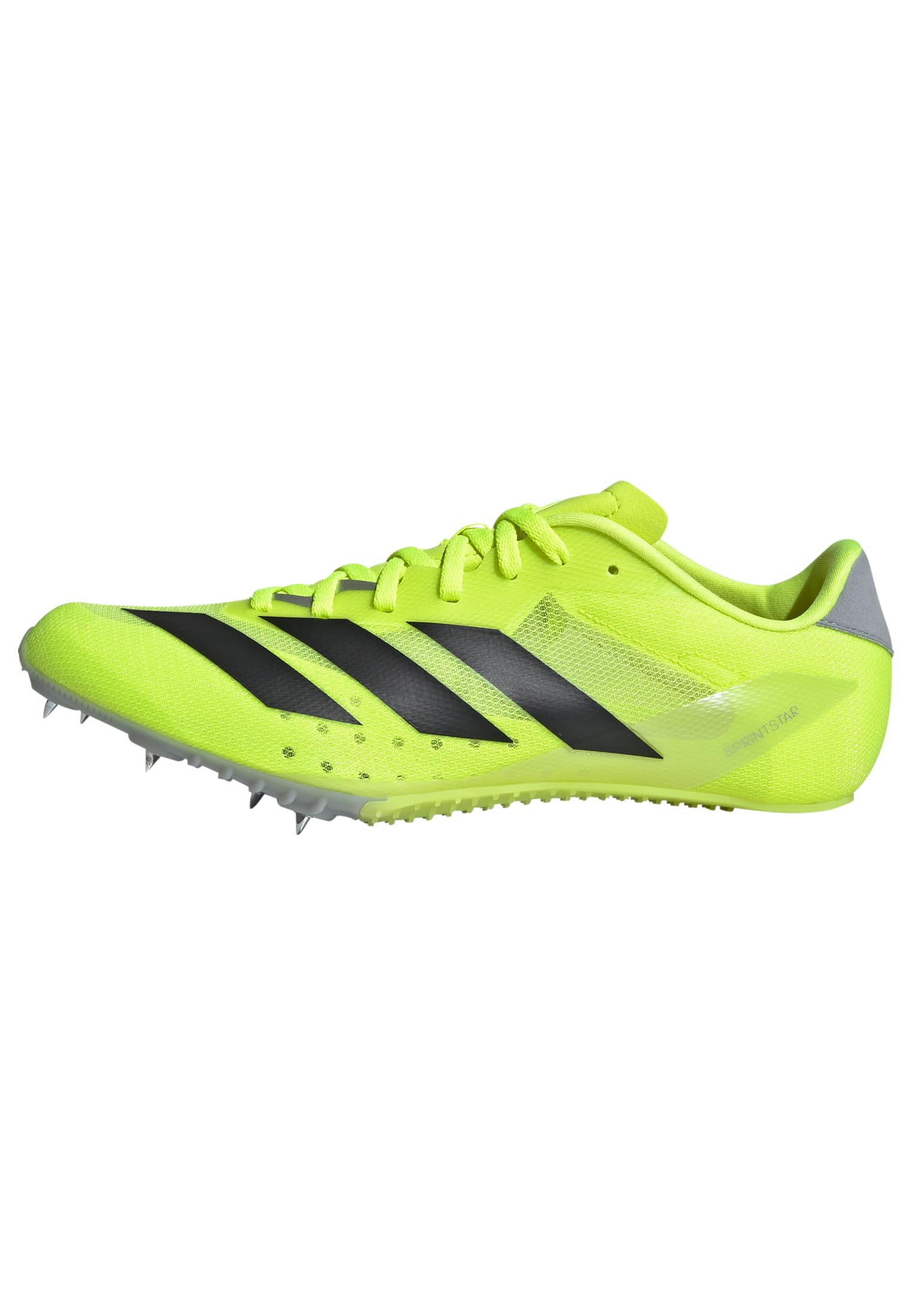
3. Adidas Unisex-Adult Adizero Sprintstar Track and Field
Pins that dig in on the start and hold the bend at full speed.
Sprinters need one thing from a plate: it has to bite. The Adizero Sprintstar’s updated 6-pin TPU plate (six spikes in a stiff plastic bed) is engineered to dig into the track surface and turn your force straight into forward speed. Note the word “updated” — adidas reworked this plate for this model, and it shows up most in the two moments that decide a sprint: the explosive start out of the blocks and the transition onto the curve. Rubberized sections on the outsole sit in the high-wear zones, so the shoe survives the repeated contact that kills cheaper spikes.
On the foot, the breathable synthetic mesh upper keeps air moving while the lightweight molded EVA underfoot delivers response from heel to toe without dulling the direct ground feel a sprinter wants. That is a deliberate trade: the shoe gives you just enough shock absorption and no more, because a sprint spike is not supposed to feel soft. A secure lace closure locks the foot down so energy goes into the track instead of into slippage inside the shoe. The regular fit takes a variety of foot shapes, though the size discussion below is worth reading first.
Now the honest part. Quality is the quality most people point to, but fit draws a mixed reaction, and the recurring theme is a shoe that runs small. Ordering your usual size is the fastest way to be disappointed. There is also a practical bulk note: the Sprintstar arrives in a 14.63 x 10.75 x 6 inch package listed at 2.43 pounds, versus the Adizero Distancestar’s 12 x 6 x 5 inch package. That extra package size reflects a chunkier shoe, so if you are packing a kit bag tight, the Distancestar travels leaner. Size up here and it rewards you.
Who it fits: developing sprinters and championship-level athletes alike, all chasing the same thing — a plate that converts effort into velocity on the straight and the bend.
Suits you when: you race the short sprints and want an aggressive plate for starts and curve transitions.
Size-up warning: the fit runs small in enough hands that ordering your normal size is the risk here, not the shoe itself.
4. Brooks Draft XC Running Shoe
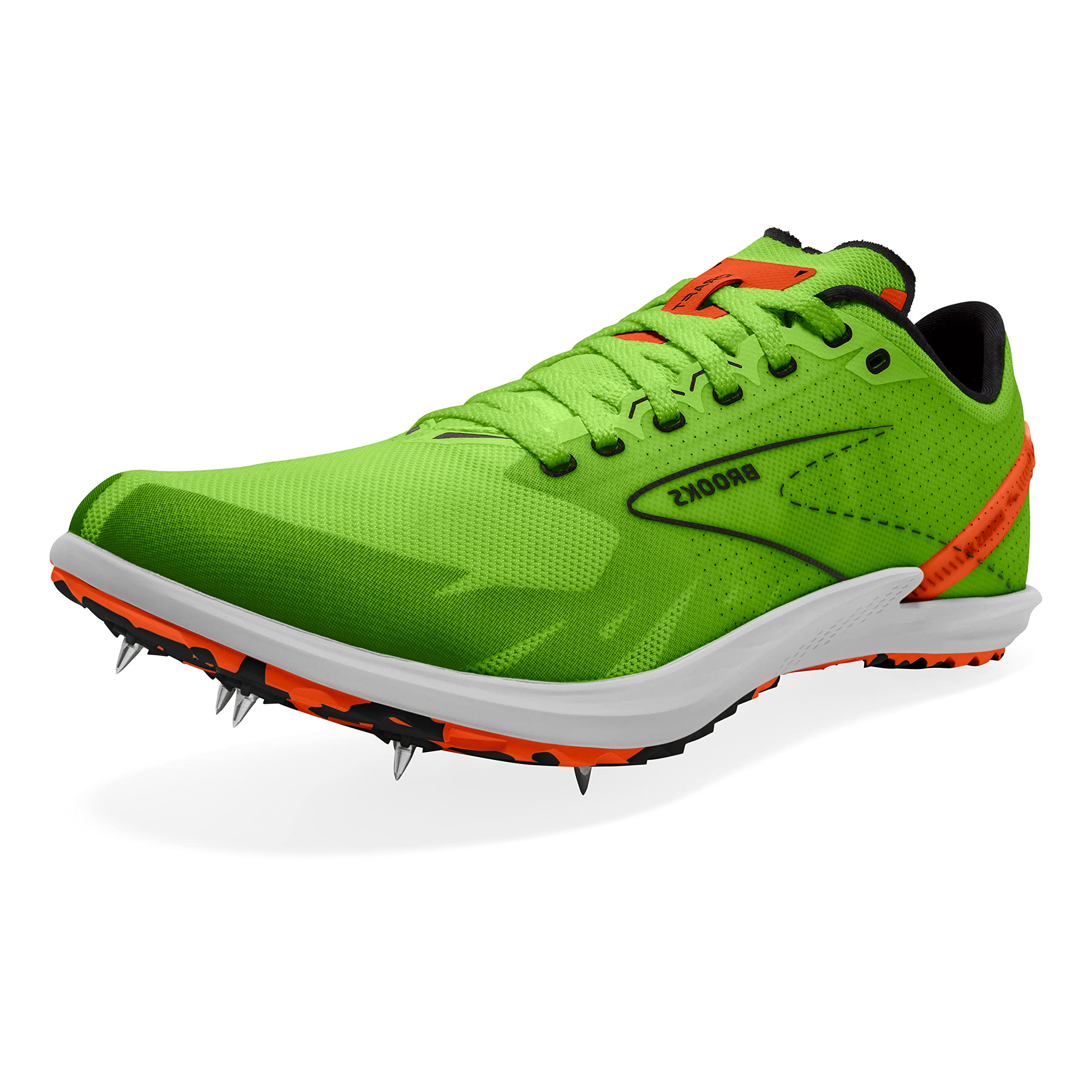
For the cross-country course, not the oval — and the heel is yours to draw on.
This one is aimed squarely at middle and high school runners who spend their fall on grass and dirt rather than a rubber track. It is spikeless by design: instead of pins, durable outsole lugs grab soft and uneven ground, and a wide midfoot platform gives you stable footing when the course turns to mud and cambers. If your season is cross-country, the reason to pick this is simple — pins on a wet grass hill are a hazard, and lugs are not.
Underfoot, BioMoGo DNA cushioning delivers a responsive feel from the start line through to the finish chute, which matters over a full 5K on hard-packed ground. The feature that gets the most affection, though, is the customizable heel piece. You can jot goal times, sketch a mascot or write a team cheer on the heel — a small thing that makes the shoe feel like yours. Owners who pick this up tend to talk about the ride quality and the comfort first, with the team-friendly heel a bonus.
Two notes worth weighing before you buy. First, sizing runs small for some and true for others, so the size conversation is mixed — read the fit comments for your size before committing. Second, spike durability draws split opinions: some find them sturdy, while others report they do not hold up. If you are a heavy-volume cross-country runner and want a spikeless trainer that survives multiple seasons, budget for a replacement sooner than you would on a sturdier build. For a seasonal high schooler who wants a team shoe with personality and a stable platform, it earns its place.
Why cross-country runners pick it
- Durable outsole lugs for grip on grass, dirt and uneven terrain
- Wide midfoot platform for stability on bad ground
- Customizable heel piece you can personalize for team spirit
- Comfort and ride quality are the qualities that come up most
What to keep in mind
- Fit runs small in some hands and true in others
- Spike durability draws mixed reports over heavy use
Pick this for: the cross-country course and a team uniform your young runner will actually want to wear.
Think twice if: you expect multi-season wear from one pair — the sole durability note is the honest risk.
5. ASICS Unisex Hypersprint 8 Track & Field Shoe
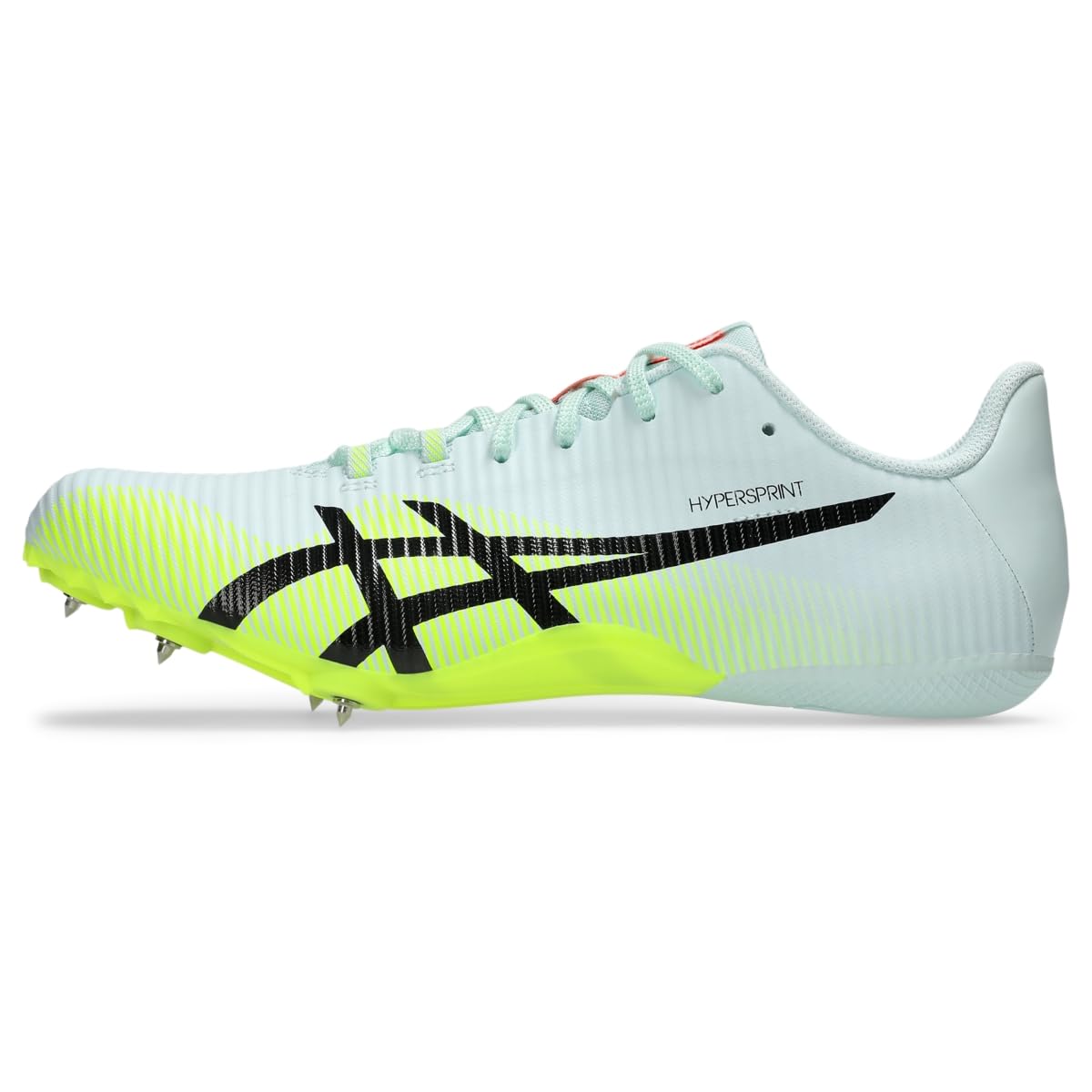
A 1.44-pound sprint shoe built to feel like almost nothing on the start line.
The most striking number on the Hypersprint 8 is its weight: 1.44 pounds. In a sprint spike, that 1.44-pound figure is the difference between a fast drive phase and a sluggish one. Compare it to the Adizero Sprintstar in this list, whose package weighs in at 2.43 pounds — the ASICS is the lighter shoe on paper, and sprinters will feel that difference on the drive phase, where a heavy shoe costs a fraction of a second that adds up over the event. Built for short-distance sprinters aiming at a new personal best, it uses a resin plate under the forefoot to improve propulsion and grip, which stops the foot from slipping during a high-velocity sprint.
Inside, an E.V.A sockliner gives a flexible fit with support in the spots that need it, and comfort and appearance are both noted by athletes who want a sprint shoe that also looks the part. The suitability for sprinting is where it draws the most focus — it is reported to work well for the 100 and 200 meters. The fit is a mixed experience, though, and that is the caveat here. It is a shoe that rewards a correct size and punishes a guess.
Two things you must know before buying. First, the size runs small for many athletes and the sizing notes are the loudest ones attached to this shoe, so try half a size up if you are on the fence. Second, whether it ships with spikes is contested — some find them included, others do not, so check before race day and do not assume pins are in the box. If you are pulling these on the night before a final and expecting pins already installed, that surprise hurts. Order early, check the contents, and the Hypersprint 8 gives you a light, grippy sprint shoe for the short events.
The weight-versus-fit trade: the 1.44-pound build and resin plate favor the sprinter who wants speed, while the sizing warning means the wrong size turns that advantage into a slop in the shoe. Get the size right and it does its job.
Best fit for: the 100m and 200m specialist who wants a lean, grippy plate without a premium price tag.
Watch the box: spices may or may not arrive included, and the shoe runs small in enough cases to justify sizing up.
6. ASICS Men’s Hyper Throw 3 Track & Field Shoes
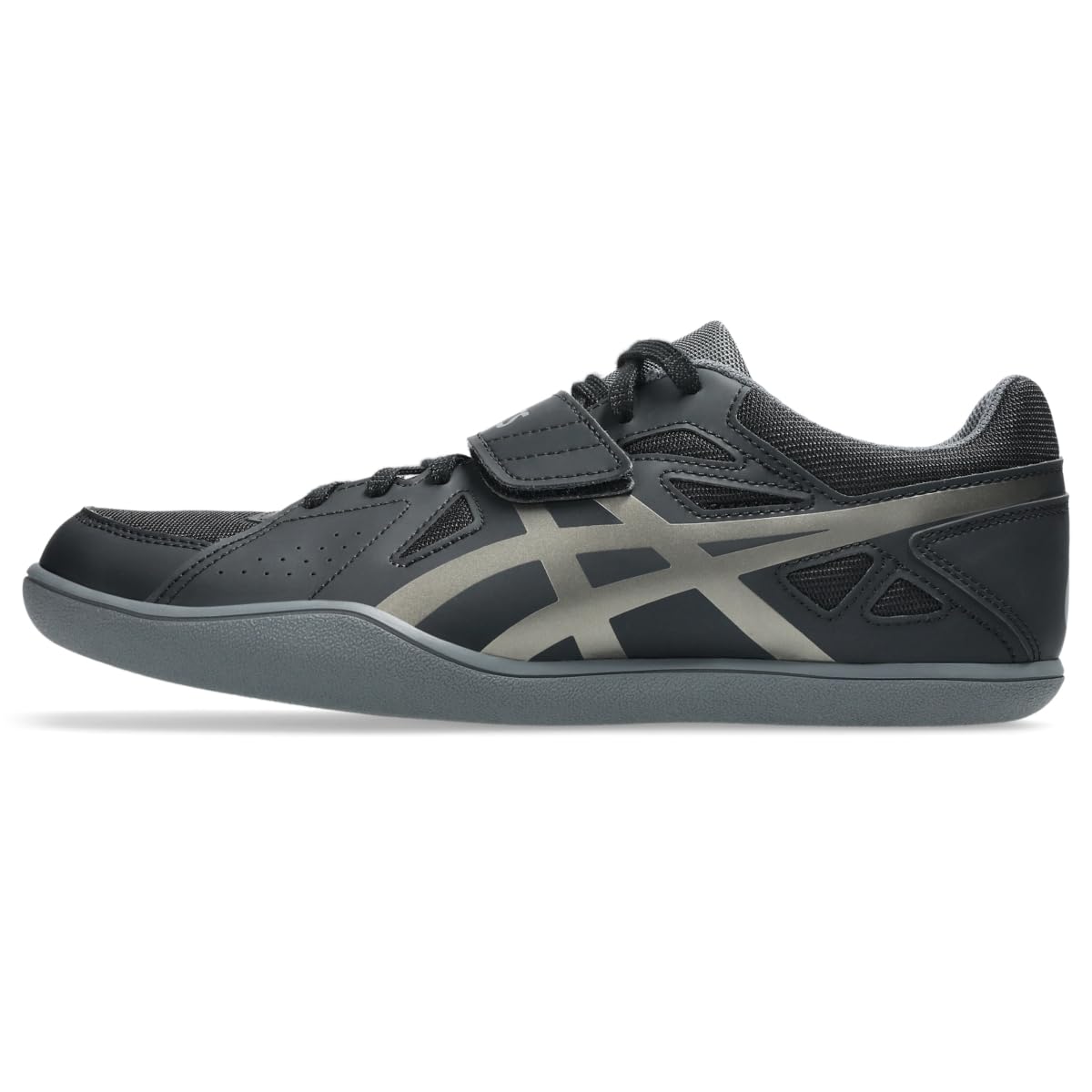
A first throwing shoe that uses a strap instead of pins to hold your foot steady.
Throwing shoes are their own species, and the Hyper Throw 3 gets the basics right. It skips pins in favor of a rubber midsole and outsole, a flat planted platform that suits the throwing circle. The feature that does the real work is a secure midfoot strap combined with the lace closure — two systems working together to keep the foot firmly in place while you throw. That double lockdown is the whole reason this shoe exists, and it is why throwers pick it over a repurposed runner.
The upper is a sturdy mix of synthetic leather panels and breathable mesh, which gives you durability where the foot takes contact and airflow where you need it. A padded collar and tongue add comfort around the ankle and instep, and a raised round toe gives the front of the shoe space where it matters. Athletes describe it as a great first choice for throwers and call it comfortable, with good support that does not feel tight — a balance that is harder to strike than it sounds.
On the durability front, buyers report that the shoes are durable, with one customer reporting they lasted through two seasons of use. The fit is the most praised thing about this pair, so sizing is less of a gamble than on the sprint models here. If you are a high-school or middle-school athlete stepping into throws for the first time, or a coach equipping a team, this is the low-risk pick — comfortable, supportive and built to survive more than one season.
What makes it an easy first buy
- Lace closure plus a midfoot strap for a planted, secure throw
- Synthetic leather and mesh upper balances durability with airflow
- Durability holds up — reported to last through two seasons of use
- Supportive without feeling tight, which is why fit is the top praise
The trade to accept
- Built for the throwing circle only — no use on the track
- Flat platform means no sprint propulsion if you also run events
Ideal for: new throwers and team kit orders that need a shoe built for the circle, with a strap that holds.
Not for: anyone who also needs to run on the oval — this is a throw-only tool.
7. Nike Zoom Rotational 6 Unisex Shoes
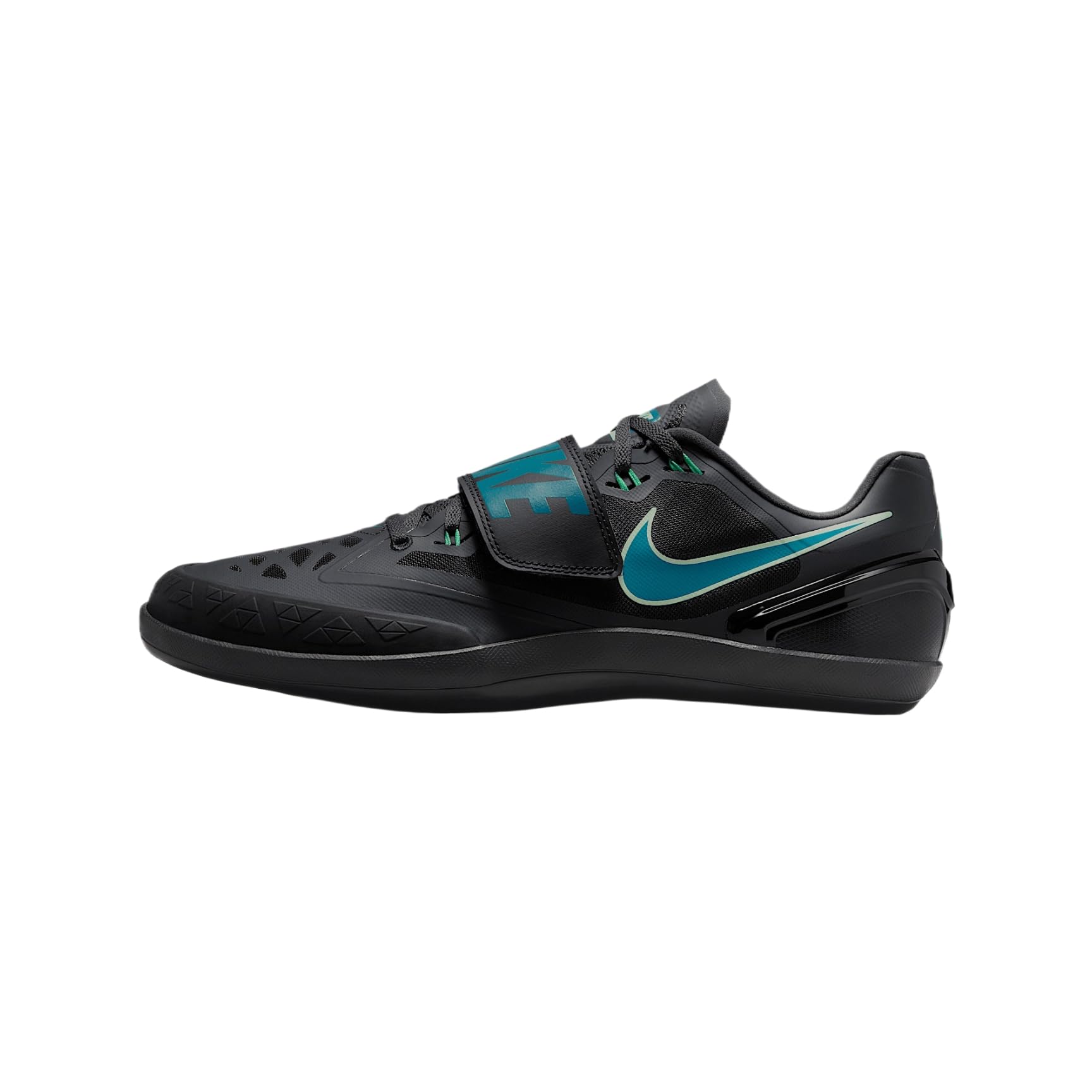
Engineered to hold your foot still while your whole body spins.
The Zoom Rotational 6 has one clear purpose: shot put, hammer and discus. Its defining quality is a technically superior fit made to minimize internal movement, which is exactly what a rotational thrower needs when the body whips around the circle. Any slide inside the shoe during a spin bleeds power and throws off your balance at release. This pair is built to clamp that movement down and boost stability, and that makes it a quick-pivot tool rather than a general-purpose track shoe.
It is a specialist’s shoe, and the rating reflects a small but focused group of throwers who prize that fit. There is no mistaking what it is for, and there is no pretending it does anything else well — it is a rotational-throw platform, and that is the whole point. If you compete in the weight events and have felt a shoe slide during a turn, this build is aimed directly at that problem.
The honest caveat is that this is a niche shoe with a modest review base and a price that sits in the higher bracket, so you are paying for specialization. It is a poor choice for an all-round athlete who wants one pair for sprinting and throwing — the Zoom Rival SD 2 earlier in this list is the more versatile throw option. But if the rotational throws are your only events, and you want a shoe whose entire design is built around keeping your foot planted through a spin, this is the specialized pick.
Best matched to: the dedicated shot put, hammer or discus thrower who wants a stability-first rotational platform.
Skip unless: throws are your only events — this shoe is specialized, not a multi-event all-rounder.
8. New Balance Women’s FuelCell Supercomp Elitev5
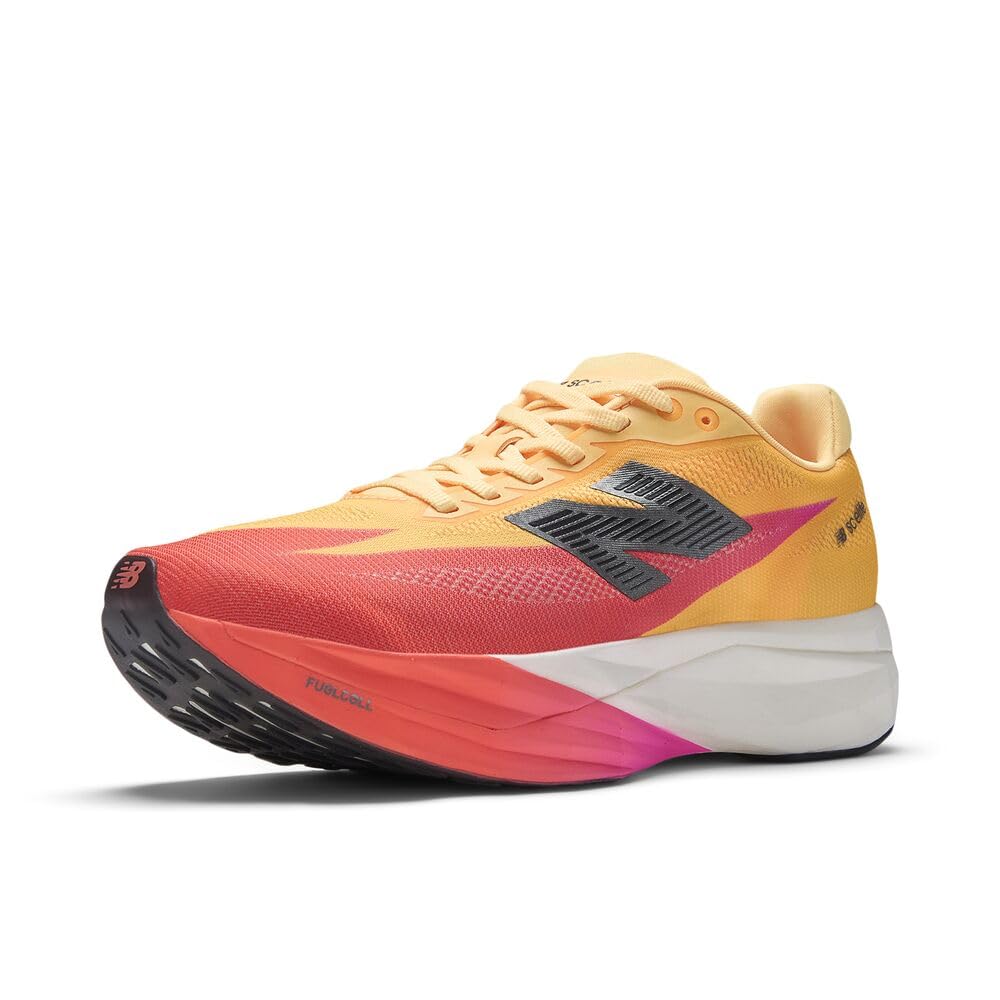
A carbon-plated racer for the miles between the track and the road race.
If your season stretches past the oval — a road 5K, a cross-country race, the treadmill in the off-season — this is a different animal from every spike here. It is a carbon-plated racing shoe built for race day, with an ultra-responsive PEBA FuelCell midsole (a lightweight foam) and a thinner carbon fiber plate running through the Energy Arc system. That plate is there to return energy with every stride, and a rocker profile rolls you from heel to toe without breaking your rhythm.
The FantomFit upper uses bonded support to keep the shoe light on your foot, and the whole package is built to be ultra-lightweight for the moments when seconds count. It is the shoe for the runner who wants energy return over several kilometers, not the plate-and-pins bite of the sprint spikes above. The fit is the quality athletes land on most, with cushioning and lightweight feel close behind — and it works across a spread of efforts, from a marathon to a treadmill session. A carbon racer lives on that combination of a locked-down fit and a lively foam.
Two fair warnings. Comfort splits opinion — some find it plush over long miles, others want more give — so if you are sensitive to a firm race foam, note that. And size draws clear negative notes, with the sizing running off for some runners, so check the size guidance rather than assuming your usual. This is also a women’s-specific shoe, which is good if it fits your foot and frustrating if it does not. Get the size right and it is a serious race-day tool for road and mixed events.
Where it shines
- Carbon fiber plate through the Energy Arc for energy return
- PEBA FuelCell midsole is ultra-responsive under the forefoot
- Rocker profile for smooth heel-to-toe transitions
- Fit and lightweight feel are the qualities runners praise most
Where it cuts close
- Comfort is a split verdict — some want more give from the foam
- Sizing draws clear notes about running off for some runners
Your shoe if: your races are road or mixed-distance and you want carbon-plate energy return on race day.
Not quite if: you are shopping for a sprint spike — this is a distance racer, and it is a women’s-specific fit.
9. Nike Air Zoom Maxfly 2 Track & Field Sprinting Spikes
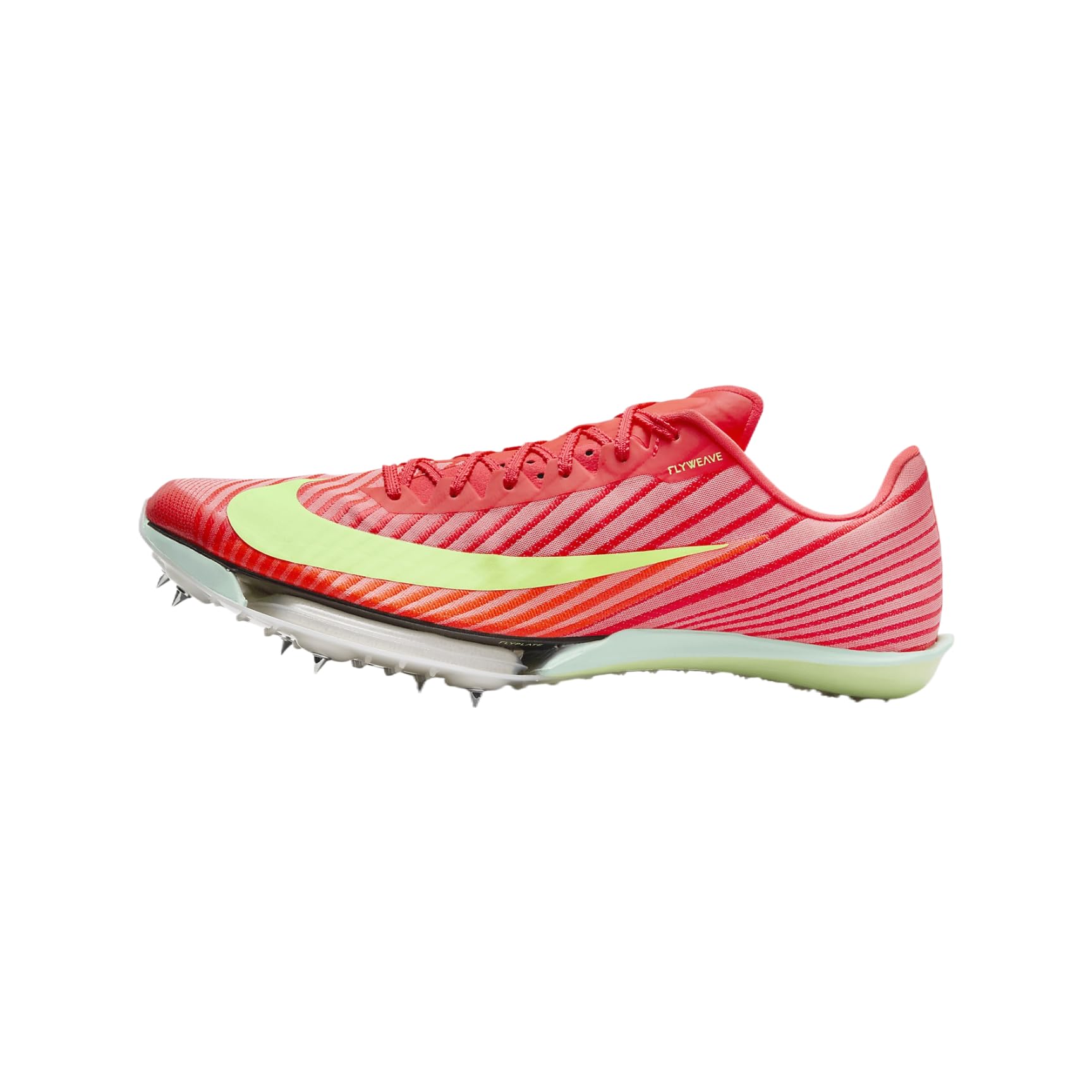
The premium sprint spike — the pair you graduate to once you know you are fast.
The Maxfly 2 sits at the top of the premium bracket, and it is tagged as sprinting spikes rather than a general track shoe. That label is the buying decision in miniature: a competition spike for sprinters, sold as a limited-availability specialty item. If you have already committed to the short sprints and want a premium spike, this belongs on your shortlist. If you are new to the sport or run middle-distance, it is the wrong shoe.
This pair plays at the pointy end of the market, and the price reflects that. You are buying a premium sprint spike, and the elite bracket is small. There are no verified spec notes on its plate or weight in the info here, so I will not pretend there are. What is clear is the positioning: it is a sprint specialist, listed as a premium competition spike, and it is the kind of shoe a sprinter considers once they have outgrown the entry-level options and want the top of the range.
The honest caveat is the two-sided nature of a premium purchase: it is a significant step up in cost from the Hypersprint 8 and the Sprintstar in this list, and it is a narrow-purpose spike. If you are not sprinting competitively, your money is better spent on a shoe that matches your event — the distance racer or a throw shoe. For the committed sprinter, the Maxfly 2 is the elite ceiling of this list, and the reason to look at it is that it is built for the event you actually race.
Read this before you commit: this is a premium sprint spike with a specialized sports purpose. Match it to sprinting, and it earns its place at the top of the bracket. Mismatch it to distance or throws, and you are paying elite money for the wrong tool.
Buy it when: you are a committed sprinter ready for a premium competition spike and want the top of this list.
Leave it if: you are building your first kit or racing middle-distance — the mid-range options here suit you better.
Know the Specs
Spike Plate and Pin Count
A spike plate is the stiff layer under the forefoot that the pins screw into. Six pins in a TPU plate (a plastic bed) is common for sprint and distance models — the Sprintstar and Distancestar both use a 6-pin setup. More bites of the track means more grip and forward drive, but a sprint plate is tuned stiffer than a distance plate. Pick the plate that matches your event, not the one with the most pins.
Weight and Delivered Package
Every gram matters in a sprint, and lighter is usually faster. Weigh the delivered package against a competitor before you buy: the ASICS Hypersprint 8 lists 1.44 pounds while the adidas Sprintstar lists 2.43 pounds. For a thrower or a cross-country runner, weight matters far less than stability on loose ground.
Sizing and Fit
Track shoes are built close to the foot, so a wrong size is felt immediately. Several models here run small: the Sprintstar, the Hypersprint 8, the Draft XC and the FuelCell SC Elite v5 all carry sizing notes. When in doubt on a sprint spike, size up rather than squeeze in.
Spiked vs Spikeless
Spikes are for the rubber track — they bite the surface and drive propulsion. Spikeless models like the Brooks Draft XC use outsole lugs for grass and dirt. A spiked shoe on a soft cross-country hill is a hazard, and a spikeless shoe on the oval gives up grip. Match the sole to the surface.
Common Questions
Do track spikes come with the pins already installed?
Can I wear sprint spikes for middle-distance races?
Do throwing shoes have spikes in them?
Why do track shoes run small?
Can cross-country shoes be used on the track?
What is the difference between a sprint shoe and a distance shoe?
Are carbon-plated racers allowed on the track?
How should I break in a new pair of track spikes?
Do I need separate shoes for throwing and running events?
How long should track shoes last?
The Bottom Line
For most people shopping the shoes for track and field sports category, the Nike Zoom Rival SD 2 is the safe first call — it is a proper throwing shoe with a snug fit and a fair value, and its main risk is the toe-area sole wear rather than anything that stops you throwing. If you race the 400m through the mile and want grip on the corners plus foam where you drive, the adidas Adizero Distancestar is the pick that matches the event. For a high school cross-country squader who wants a team shoe with lugs and a personalizable heel, the Brooks Draft XC is the one to reach for. And if you are a committed sprinter ready to step into the premium bracket, the Nike Air Zoom Maxfly 2 is the elite ceiling of this list. The one nudge worth making: pick the shoe by your event first, and let the brand and looks follow — that is the choice that decides whether a pair works for you.
How we choose
We do not accept paid placement. Every pick is matched to a real buyer and a real use-case; we do not hands-on test units.
Sources
Specifications: manufacturer listings and product documentation. Review insights: verified customer reviews, as of November 2026. Pricing: not shown on this page (it changes often); check the current price via the retailer link.
As an Amazon Associate, Tactical Gear Guy earns from qualifying purchases. This does not affect which products we feature.