Specs are compiled from manufacturer listings and verified buyer reviews and can change over time — please confirm the key details on the product page before buying.
Here is the short answer: the Carhartt Men’s Montana Loose Fit Insulated Vest is the one to buy for most people. It blocks wind, sheds light rain, and warms your core with sherpa fleece and synthetic down insulation — all in a loose fit that leaves room for a sweatshirt underneath. If you want something you can stuff into its own pocket and carry in a golf bag, scroll to the packable pick instead.
This guide is built by comparing the manufacturers’ published specifications and the patterns across verified customer reviews, so you get each pick’s real strengths and trade-offs instead of marketing spin.
A vest that pinches your shoulders or binds at the armholes is the number one reason one gets sent back. So every pick below is judged on room through the shoulders and armholes first. After that, it depends on insulation, pockets, and how the shell handles a damp cold morning. This breakdown of the best vest puffer jacket covers nine real options, from packable golf layers to down-filled alpine insulators.
Top Picks

How To Choose The Best Vest Puffer Jacket
A puffer vest only works if it traps heat around your core without locking up your shoulders. That sounds obvious, but most bad purchases fail on one of two points: the armholes are cut too tight to layer, or the insulation is so thin it does nothing once the wind picks up. Get those two right and the rest is preference.
Fit and armhole room come first
Measure your chest, then add room for whatever you wear underneath. A vest that fits perfectly over a t-shirt can feel welded shut over a medium sweatshirt. Pay attention to the armhole cut — a loose fit gives your arms free travel, while a trim active fit hugs the shoulder. If a listing calls the fit “loose” or “roomiest cut,” that is your signal it will layer easily.
Insulation type: synthetic versus down
Synthetic insulation keeps its loft even when it gets damp, which is why it shows up in water-resistant shells and golf layers. Down fill — measured in fill power, like 600 fill — packs smaller and warms more per ounce, but it loses effectiveness once soaked. For a damp commute, synthetic is the safer bet. For a cold, dry alpine day, down wins on warmth-to-weight.
Shell treatment and what it protects against
Water-repellent means light rain beads up and rolls off; it does not mean you can stand in a downpour. Look for the phrase “water-resistant” or “DWR” (durable water repellent — a coating that makes water bead) and treat that as protection for drizzle and snow, not a storm. A wind-blocking shell matters just as much, because wind strips heat faster than cold air alone.
Pockets, packing, and daily carry
Count the pockets before you commit. Zip pockets keep a phone and keys secure on a trail; snap pockets are faster to reach but less secure. A self-stowing pocket lets the whole vest compress into itself, which is the difference between a layer that lives in your bag and one that stays in the closet.
Side-by-Side Comparison
| Model | Best For | Insulation | Shell | Fit | Amazon |
|---|---|---|---|---|---|
| Carhartt Men’s Montana Insulated Vest★ Best Overall | Overall cold-weather core warmth | Sherpa fleece + synthetic down | Wind-blocking, light-rain shedding | Loose fit | Amazon |
| 33,000ft Men’s Packable Insulated Golf VestMost Packable | Golf and travel packing | Ultra Loft synthetic | Lightweight, quick-drying | Runs a little big | Amazon |
| MEROKEETY Women’s Puffer VestMost Stylish | Everyday winter styling | Padded synthetic | Lightweight padded shell | Roomy enough for thick sweaters | Amazon |
| Columbia Women’s Powder Lite II Vest | Hiking and apres-ski layering | Recycled synthetic + thermal-reflective lining | Water-resistant | Active fit | Amazon |
| CREATMO US Women’s Hooded Puffer Vest | Detachable-hood versatility | Thick synthetic padding | 75D stripe polyester, water-resistant | Runs very small | Amazon |
| Legendary Whitetails Quilted Canvas Vest | Rugged everyday wear | Warm insulated lining | 100% cotton canvas, water repellent | True, sits 4″ below belt | Amazon |
| Columbia Men’s White Out Omni-Heat Vest | Lightweight reflective warmth | Omni-Heat thermal reflective | 100% polyester | Mixed — armholes run small | Amazon |
| The North Face Aconcagua 3 Vest | Cold, dry alpine conditions | 600 fill waterfowl down | Water repellent, wind resistant | True to spot-on | Amazon |
| The North Face Junction Insulated Vest | Streamlined trail layering | Heatseeker synthetic | Water resistant, stretch bindings | Runs somewhat large | Amazon |
Detailed Reviews
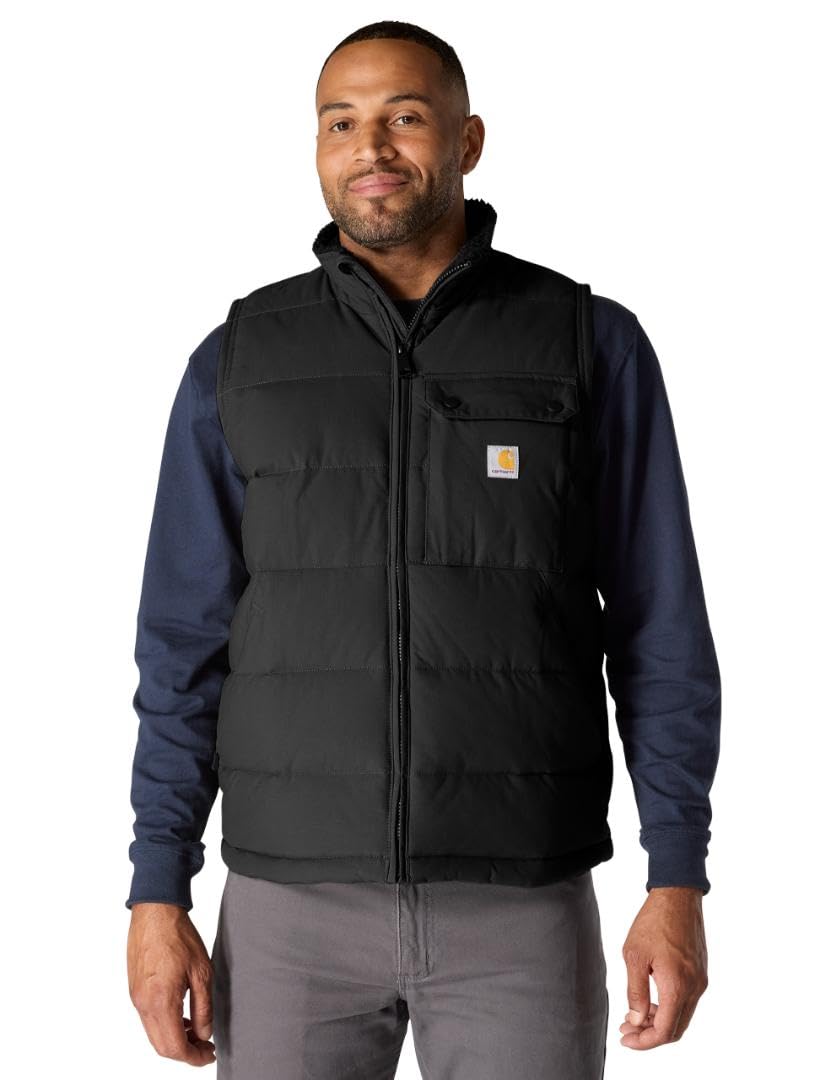
1. Carhartt Men’s Montana Loose Fit Insulated Vest
Our pick — 4.5+★ from 400+ verified ratings; the strongest balance of quality and price.
The everyday work vest that layers over a hoodie without pinching your shoulders.
Two insulation types share the job here. Sherpa fleece sits against your body and traps body heat, while synthetic down fills the rest of the vest to hold warmth in the air pockets. That pairing is why it reads as genuine cold-weather gear rather than a fashion layer. In damp conditions the shell does two things at once: it blocks wind and sheds light rain, so a chilly wet morning does not soak straight through.
The fit is the part that wins people over. Carhartt calls it their roomiest cut, and the reviews back that up — plenty of room left for a light to medium sweatshirt underneath. If you have ever yanked on a vest that felt one size too snug in the shoulders, this is the fix. Pockets inside and out give you spots for a phone and gloves without digging into a bag.
The one honest note is storage and sizing detail: with a loose cut you may want to try your usual size before going up. That is the trade — a roomier fit is the whole point, and it is why this holds the top spot. What else should you know? It is a men’s design, so sizing runs on that chart. For everyone layering over real winter clothing, the room pays off.
What earns it the top slot
- Sherpa fleece plus synthetic down traps core heat two ways
- Shell blocks wind and sheds light rain on damp mornings
- Loose fit leaves real room for a light to medium sweatshirt
- Pockets inside and out keep essentials on you, not in a bag
The honest limits
- Built on a men’s size chart, so women need to size down accordingly
- Loose cut means trim-fit fans may find it too roomy through the body
Buy it for: anyone who wants a genuinely warm core layer that layers cleanly over a sweatshirt all winter.
Look elsewhere if: you want a slim, close-to-the-body profile for dressier wear.
2. 33,000ft Men’s Packable Insulated Golf Puffer Vest
A golf vest that stuffs into its own pocket and waits in your bag until the wind picks up.
Here is the trick that sells this one: unzip the left side self-stowing pocket, turn it inside out, and stuff the whole vest in. The pocket is marked “Packable” on the inside, so you can find it fast. Zip it shut and you have a fist-sized bundle instead of a bulky layer. For a golfer who starts a morning round in mild air and hits a cold front on the back nine, that is the whole value proposition.
Ultra Loft insulation handles the warmth side, and the shell is built to dry fast. That quick-dry behavior matters on a course, where a drizzle or a sweaty back is temporary. You get five large pockets, elastic binding at the openings, a smooth SBS zipper, and a chin guard at the collar. Quality is the thing it is praised most for, and the build feels consistent with that.
One practical caution: sizing leans large. The fit feedback is genuinely split, with some finding it true to size and others reporting it runs a little big. If you are between sizes, think about which layer you plan to wear under it. Compare it to the Carhartt above — this one is far lighter and packs down, but it has nowhere near that vest’s fleece-backed warmth.
Where it shines: travel and golf, because it compresses into its own pocket and dries quickly after light weather. Five large pockets keep tees, a phone, and a scorecard on your body.
The caveat to weigh: the split sizing feedback means you should check the chart carefully rather than assume your usual size fits.
Best fit: golfers and travelers who want a warm layer that disappears into a bag.
Pass if: you need serious cold-weather insulation for a hard winter.
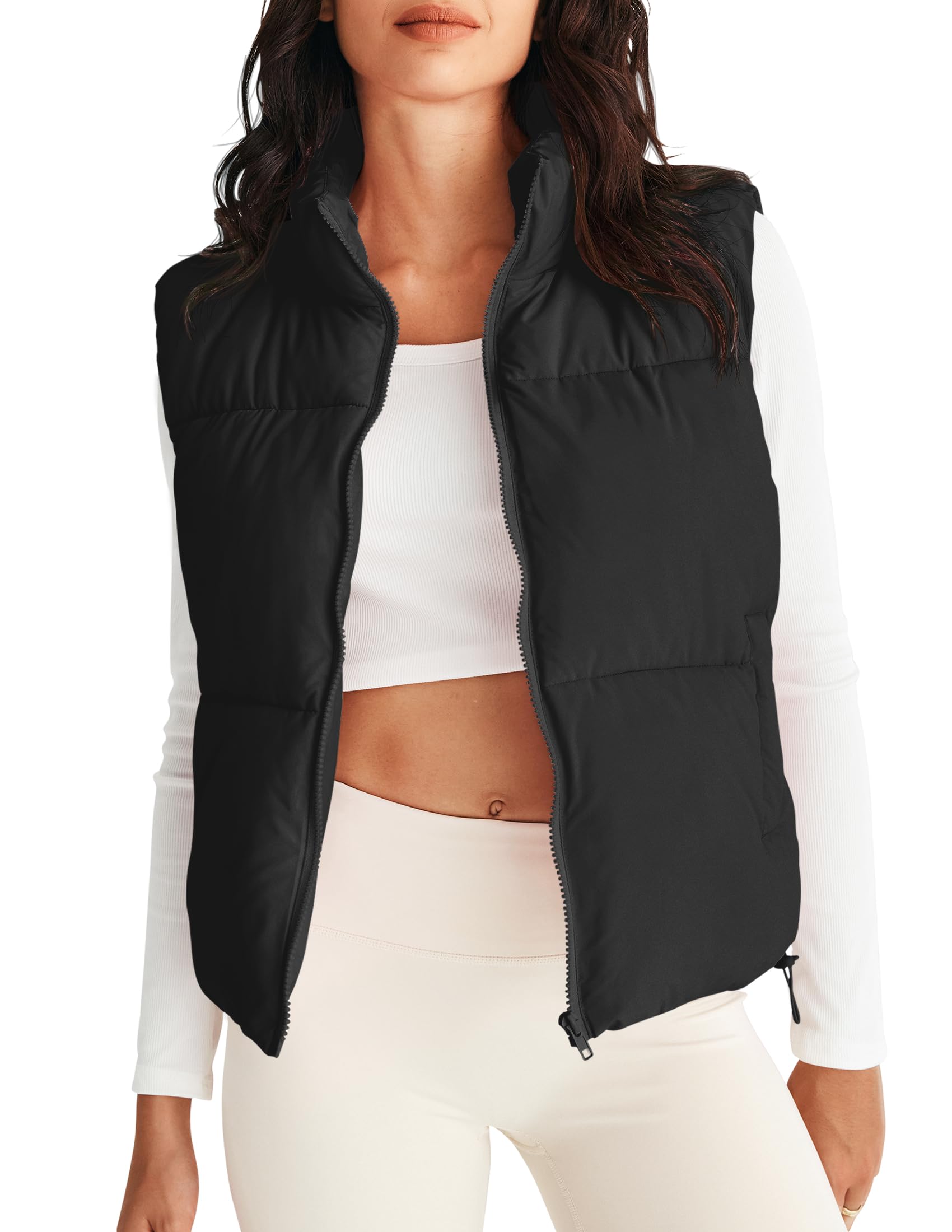
3. MEROKEETY Puffer Vest Women
A padded stand-collar vest that dresses up a plain winter outfit.
Start with the collar. It stands up high around your neck and closes over a full zip, so cold air stays out of the gap where a scarf usually lives. The padding is lightweight rather than expedition-grade, which is exactly right for the in-between weather of fall and early winter. Slip it over a thin knit and you get warmth without the stuffed-arms feeling a full jacket gives you.
The cut leaves real room underneath — thick sweaters fit comfortably, and the quality is the standout. Appearance runs right behind fit in how much people talk about this vest, and the bright green color option is the one that gets noticed. Pockets are stitched into the front for your hands, and the whole thing reads as a casual everyday piece rather than technical gear.
Where it sits against the Columbia Powder Lite II below: this one leans style-first for street and campus wear, while the Columbia is built for trail use with a thermal-reflective lining. Neither replaces the other. The MEROKEETY gives you color and compliments; the Columbia gives you technical layering.
Why it works: a stand collar that seals the neck, a full zip for quick venting, and enough interior room for a thick sweater without strain.
Keep in mind: it is a lightweight padded vest for cool days, not a hard-winter insulator.
Reach for this if: you want a good-looking everyday vest that layers over knits and earns compliments.
Skip if: you need serious warmth for freezing temperatures.
4. CREATMO US Women’s Warm Hooded Puffer Vest
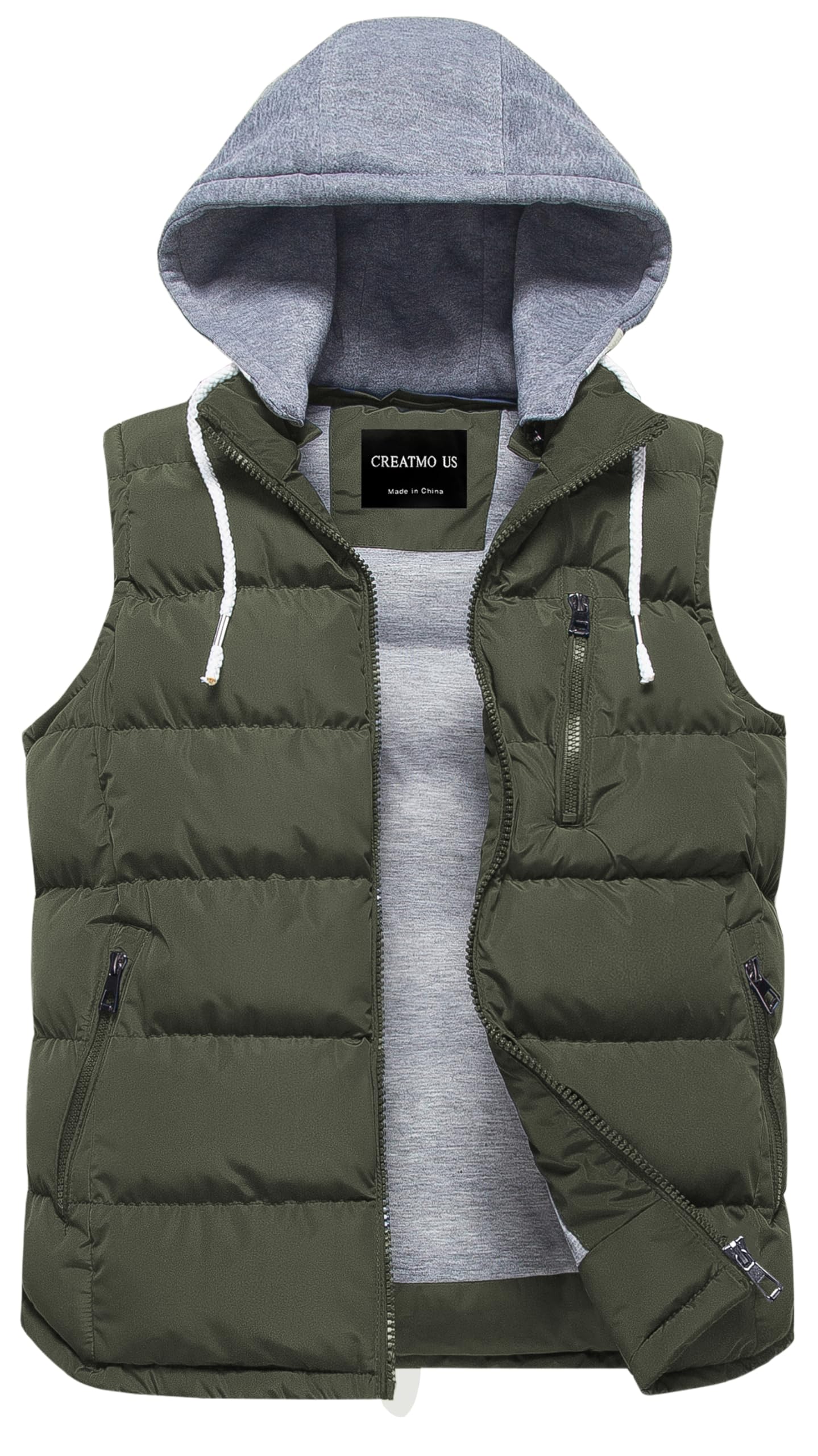
A zip-off hood gives you two vests in one — hooded for wet mornings, clean-collared for dry ones.
The shell is 75D stripe polyester treated to resist water, and the padding is a thick synthetic fill that keeps its loft even when damp. That combination is what makes it useful across a wide chunk of the year. It is a women’s vest built for core warmth, with a curved hem that gives a clean line rather than a boxy one. Layer it over a hoody and there is room to spare.
The hood is the real feature. Zip it off and you have a simple quilted vest for a crisp fall afternoon. Zip it on and you have rain protection for the back of your neck on a wet morning. Four pockets in total, including a zip pocket sized for a phone and cash. Quality is what it earns the most appreciation for, with warmth close behind.
Now the important warning: this one runs very small, and that is repeated across the reviews. Size up, and size up deliberately. The zipper also draws mixed reactions, so treat it with a little care when you pull it closed. Get the sizing right and it is a versatile, well-built layer. Get it wrong and you will be sending it back.
Reasons it earns a place
- Detachable hood switches from wet-weather cover to a clean collar
- 75D stripe polyester shell resists water on drizzle and snow
- Thick synthetic insulation holds loft even when damp
- Four pockets, including a zip pocket for phone and cash
What to plan around
- Sizing runs very small — order up, not your usual size
- Zipper quality draws mixed feedback, so close it gently
The right pick for: women who want one vest that handles both hooded and hoodless days, and who will order a size up.
Not for you if: you already know your exact size and refuse to size up — the small cut will fight you.
5. Columbia Women’s Powder Lite II Vest
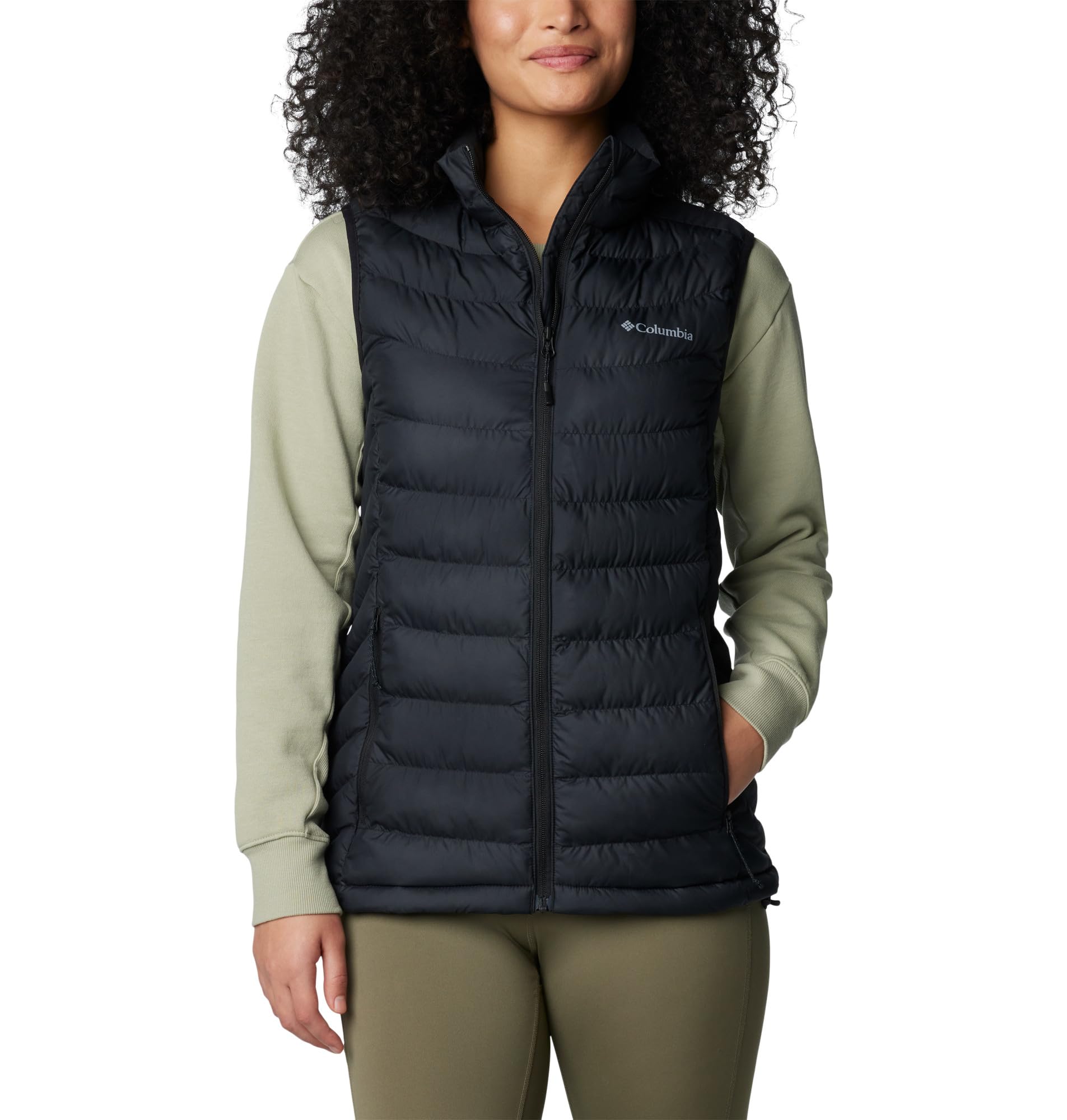
The trail-ready layer that reflects your own body heat back at you on the climb.
Columbia’s trick here is a thermal-reflective lining — a metallic inner surface that bounces the heat your body makes back toward you instead of letting it escape. Combined with recycled synthetic insulation and a water-resistant exterior, that gives you a vest that stays warm and dry for hiking, climbing, or the sit-down after a ski run. The active fit keeps it close to the body, so it moves with you rather than hanging off your shoulders.
This is a women’s vest with extended sizing available and a range of colors. What people praise most is the warmth and comfort together — it feels warm on colder days without feeling heavy. The length earns approval too, sitting where you want it for full core coverage on a cold hike.
Fit is the question mark. Several wearers report it runs too small, and the fit feedback is mixed rather than settled. If you plan to layer a fleece underneath, size up rather than gamble. Compare it to the CREATMO above — that one is bulkier with a detachable hood, while this Columbia is the trimmer, more technical trail piece.
The technical core: thermal-reflective lining plus recycled synthetic insulation keeps your core warm and dry through a hike or ski day.
The catch: an active fit that some wearers find runs too small, so layering plans need a size up.
Made for: hikers and skiers who want a light, body-hugging layer with reflected warmth.
Think twice if: you want a roomy fit for heavy layering — the active cut is close to the body.
6. Legendary Whitetails Men’s Quilted Canvas Zip Up Vest
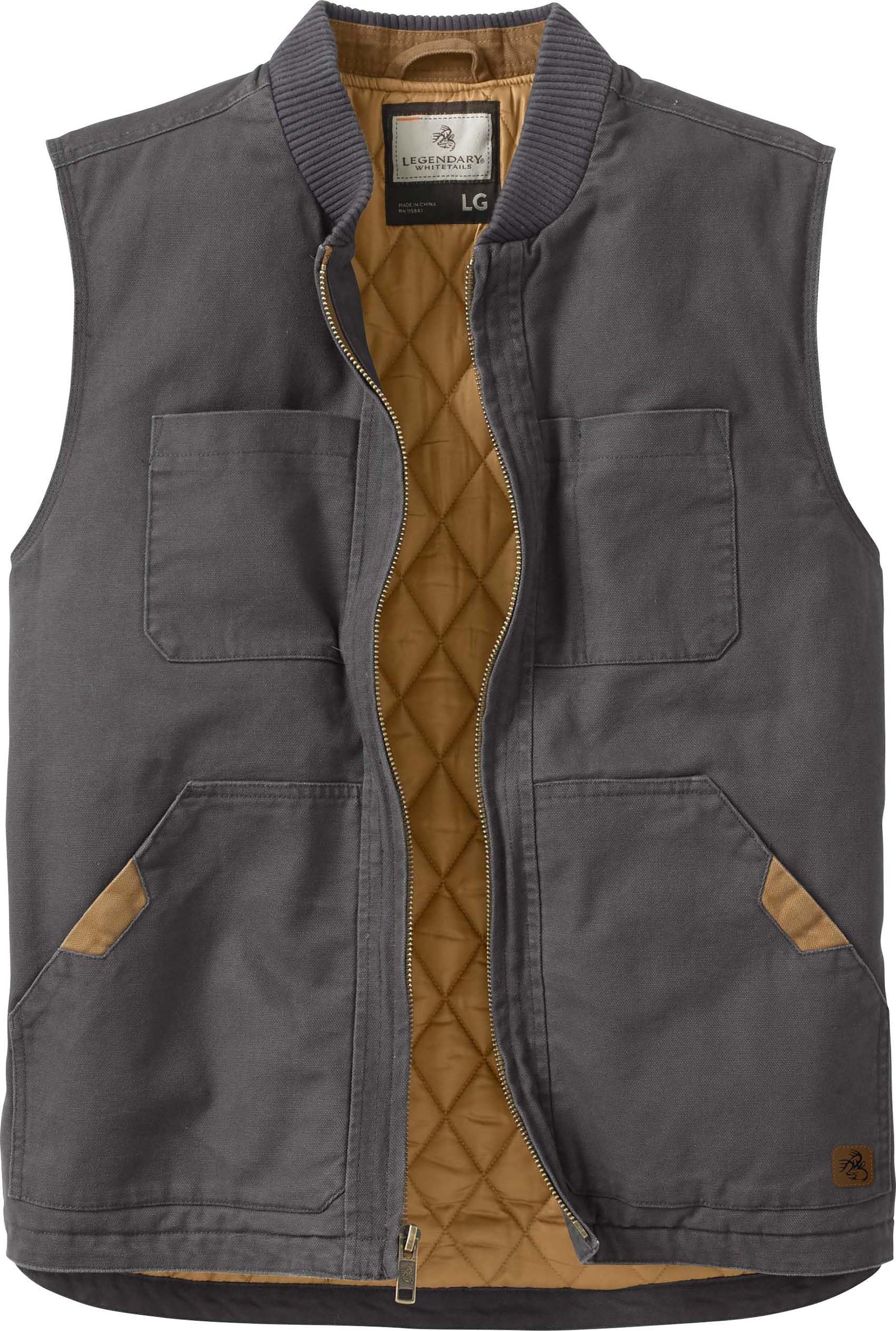
Soft-washed 100% cotton canvas with a broken-in feel and a warm insulated lining.
No synthetic shell here. This one is built from heavy duty soft-washed 100% cotton canvas with a warm insulated lining, and the double-stitched siding is meant to carry it from season to season. It resists water, so light rain rolls off while you are out in the cold. The look is rugged and outdoorsy, which is why appearance ranks among its praised qualities instead of being an afterthought.
The fit is true, and it lands lower than most — buyers report it sits almost 4″ below the belt, so you get hip coverage rather than a cropped look. Two exterior snap-closure pockets keep your hands warm and give you quick storage. A Signature Buck metal zipper runs the full front. Big & Tall sizes add 2″ in body length and 1-1⁄2″ in sleeve length for men over 6’2″.
One thing to be clear on: this is canvas, not an ultralight puffer. It has a real weight to it, and it is the piece you reach for when you want durable daily wear rather than a packable layer. Against the Carhartt above, this one is the more classic canvas look with a lower hem, while the Carhartt brings fleece-backed insulation. Both are built for cold days, just in different ways.
The build story: soft-washed 100% cotton canvas, double-stitched siding, and a warm insulated lining make this a season-after-season vest.
Worth knowing: canvas brings weight, so this is not the piece for packing light.
Suit yourself with this: anyone who wants a tough, good-looking canvas vest with a lower hem and hip coverage.
Choose a different direction if: you need a light packable layer for travel.
7. Columbia Men’s White Out Omni-Heat Puffer Vest
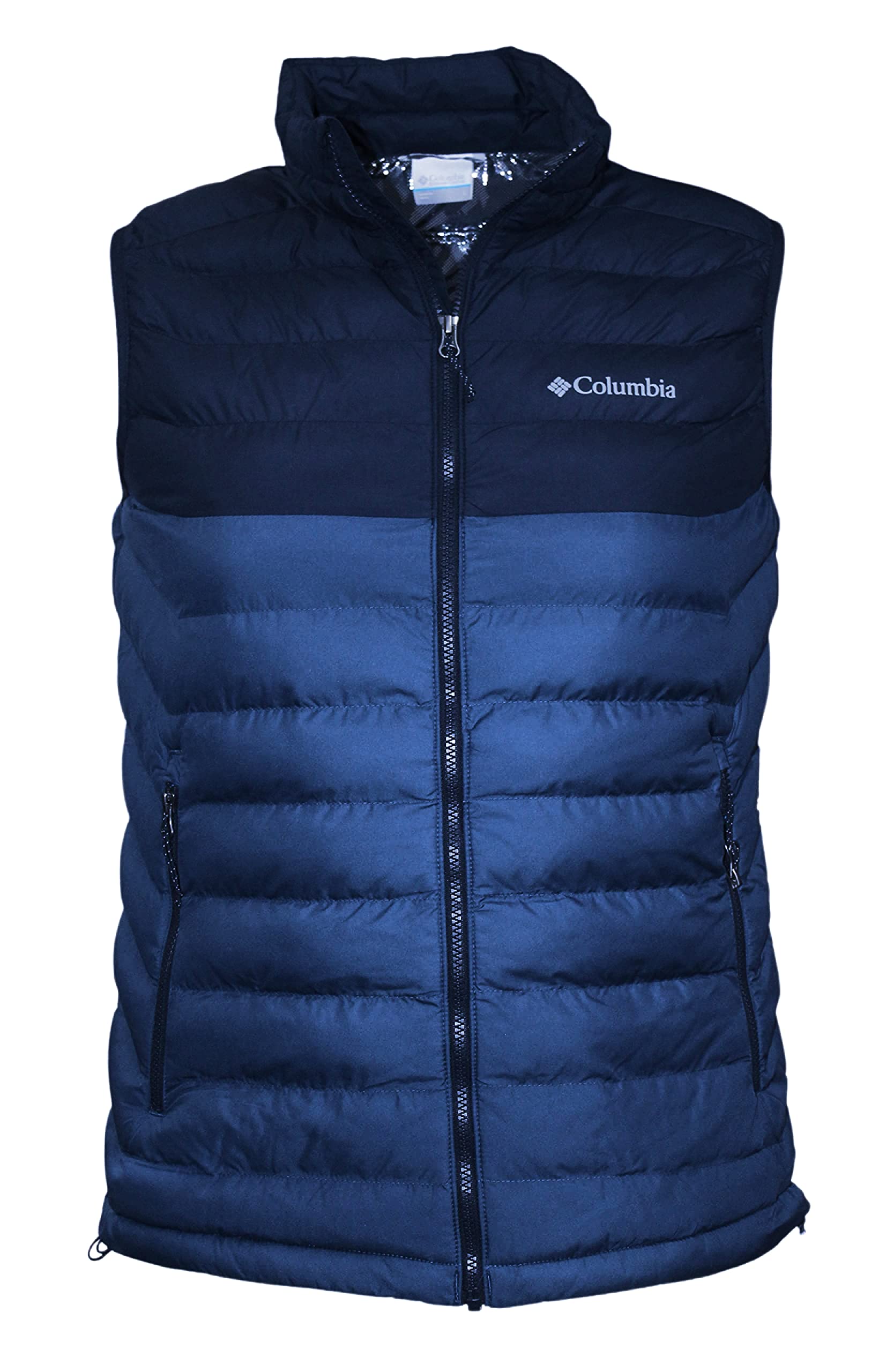
An Omni-Heat reflective lining that bounces body heat back, in a 13-ounce vest.
Omni-Heat is the headline: a thermal-reflective technology that reflects back the heat your body generates. The shell and lining are both 100% polyester, and the vest tips the scale at 13 ounces — that is light enough to forget you are wearing it until you walk into a cold wind. Zip side pockets give you hand warmth, and the lining inside those pockets is warm too, which is a small detail you notice on a freezing morning.
The style is what it gets complimented on, and comfort holds up through a long day. This is a men’s vest built for colder weather as a light mid-layer, not a heavy jacket replacement. The weight claim earns its keep — “very light” is a recurring note, and it balances that against real warmth.
Fit is where you need to pay attention. The armholes run small for some wearers, and the sizing feedback is mixed. If you have broad shoulders or plan to layer a thick hoodie, try it on before committing or go up a size. Value draws mixed opinions, which is fair for a premium-tier piece. Otherwise it is a solid, good-looking reflective layer.
Where this vest delivers
- Omni-Heat lining reflects body heat back toward your core
- Just 13 ounces, so it disappears under a shell or over a shirt
- Warm-lined zip side pockets for your hands on a cold morning
- Style earns consistent compliments
Where to be careful
- Armholes run small for some, and sizing feedback is mixed
- Value opinions are split at the premium tier
Pick this when: you want a featherweight 13-ounce layer that reflects heat and looks sharp.
Go elsewhere if: you have broad shoulders and need generous armholes for thick layering.
8. The North Face Men’s Aconcagua 3 Insulated Vest
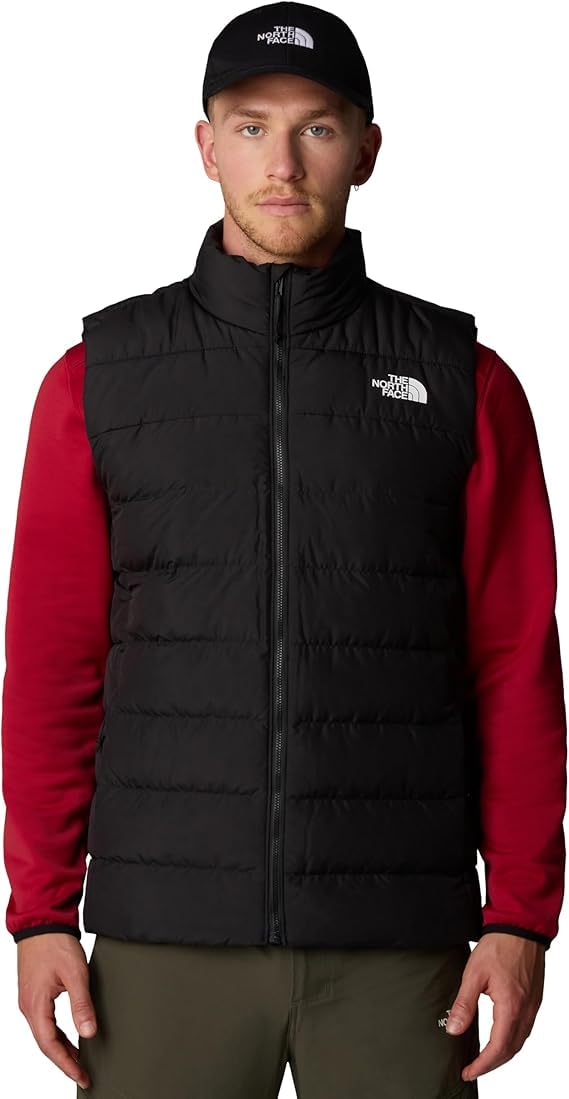
600 fill waterfowl down under a wind-resistant, water-repellent shell for cold, dry days.
600 fill waterfowl down is the number that matters. Fill power measures how much loft a given weight of down traps, and 600 fill is a solid, warm grade that packs down smaller than synthetic. Add a wind-resistant and water-repellent shell, and you have a vest built for cold, dry conditions where wind is the enemy. The non-PFC DWR treatment means snow and light rain bead up and roll off rather than soaking in.
The fit lands well — described as perfect or spot on by plenty of wearers — and warmth is the next most valued trait after the build quality. Style gets noticed too, with a clean look that pairs with casual outfits. This is a men’s vest built to be the mid-layer over a thermal and under a shell on a cold mountain day.
The fair question here is value. Some consider it worth the premium, others find it overpriced, and that is a reasonable split for a branded down vest. Color also draws mixed feedback, with a few noting it is not quite as pictured. If you want down performance and can accept the premium tier, it delivers. If you want synthetic that shrugs off wet weather, the Columbia above is the better match.
The down advantage: 600 fill waterfowl down traps serious warmth at low weight, and the water-repellent, wind-resistant shell keeps it working in cold, dry air.
Worth knowing: it is a premium-budget pick with split value opinions, and down cares about staying dry.
Best for: cold, dry mountain days where you want down warmth and a wind-resistant shell.
Look at the synthetic picks instead if: you spend your time in wet, drizzly weather.
9. The North Face Men’s Junction Insulated Vest
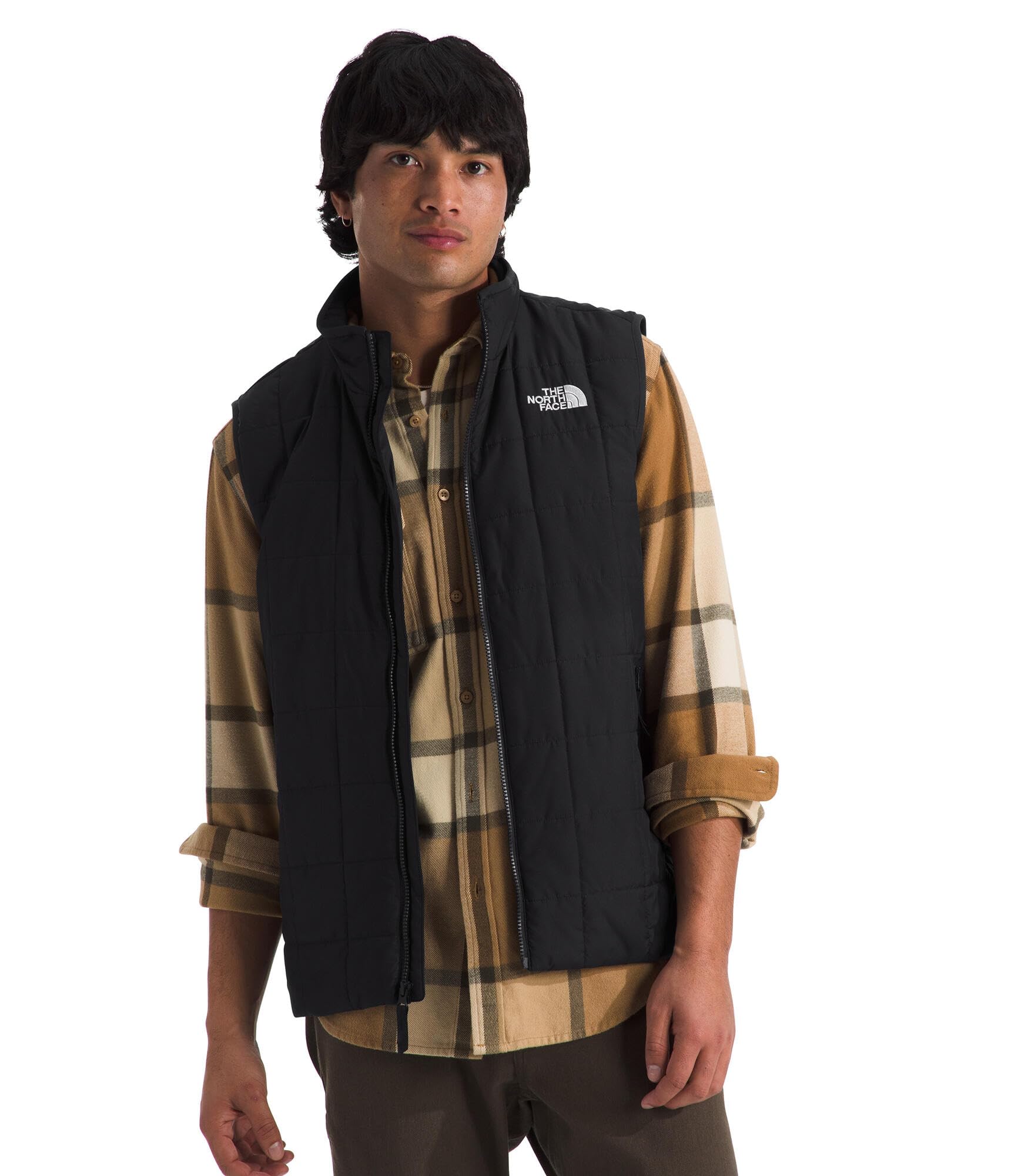
Heatseeker synthetic insulation with stretch bindings that seal the armholes on the move.
Heatseeker is The North Face’s synthetic fill, and its job is to hold warmth without the wet-weather worry down brings. The shell is water resistant and the armholes and hem are trimmed with stretch bindings — elastic edges that hug your body so cold air does not sneak in when you move. Zip pockets keep a phone and keys secure on a trail, and the whole vest stays light enough to layer under a shell.
What it earns praise for is quality and a fit that lands well. Warmth and low weight both get mentioned a lot, and the color options get noticed. It is a men’s vest that works as a mid-layer for hiking, climbing, or daily winter wear. Compared to the down-filled Aconcagua above, this one trades a little warmth for a synthetic fill that handles damp weather better.
One sizing note to plan for: this vest runs somewhat large, so if you are between sizes you may want to go down rather than up. The review base here is smaller than the flagship picks, so treat it as a solid mid-pack option rather than the default. Style and price both sit comfortably, which makes it a sensible pick for a clean, technical trail vest.
What you get: Heatseeker synthetic insulation, water-resistant shell, stretch bindings at the openings, and zip pockets for secure carry.
Plan around: it runs somewhat large, so check sizing behavior before you commit.
Right for: trail-goers who want synthetic warmth and stretch-bindings that seal out cold air.
Not the one if: you want maximum down warmth or the most proven track record — lean toward the Aconcagua instead.
Know the Specs
Fill Power and Insulation Type
Fill power measures how much loft a weight of down traps — higher numbers mean more warmth for less bulk. A 600 fill down vest packs smaller than synthetic for the same warmth, but down loses effectiveness once soaked. Synthetic insulation keeps its loft when damp, which is why water-resistant shells and golf layers tend toward it. Match the insulation to your weather: dry cold favors down, damp cold favors synthetic.
Water Repellent vs Waterproof
Water-repellent means a coating makes light rain bead and roll off. Waterproof means a membrane blocks water from passing through. A water-resistant vest handles drizzle, snow, and a quick commute. It is not built for a soaking storm. The non-PFC DWR treatments on premium vests are a durable water repellent that keeps working longer than a simple spray-on.
Fit, Armholes, and Layering
Armholes decide whether a vest is comfortable over layers. A loose cut gives your arms free travel and room for a sweatshirt; an active fit hugs the shoulder for movement. If a spec sheet lists the fit as loose or roomiest, expect to layer easily. If it says active fit, size up if you plan to wear a thick fleece underneath.
Packability and Weight
A self-stowing vest folds into one of its own pockets and compresses to a bundle that fits in a golf bag or daypack. Down packs smaller than synthetic, and synthetic packs smaller than canvas. Weight matters most for travel and trail use; a 13-ounce vest is a light layer you barely notice, while a heavy cotton canvas vest carries real heft for durability.
Common Questions
Will a puffer vest keep me warm without sleeves?
Is down better than synthetic insulation in a vest?
How do I know if a puffer vest will fit over a sweatshirt?
What does a packable puffer vest actually mean?
Can I wear a puffer vest in the rain?
How should I wash and care for a puffer vest?
Is a puffer vest warm enough for winter on its own?
Do puffer vests run true to size?
What is the difference between water-resistant and waterproof?
Should I choose a hooded or hoodless puffer vest?
The Bottom Line
If you want the safest buy in this lineup, the Carhartt Montana Insulated Vest earns it — sherpa fleece plus synthetic down, a wind-blocking water-shedding shell, and a loose cut that layers over a sweatshirt. It backs that up with 4.5+ stars across 400+ ratings, and the roomy fit is the reason. For golfers and travelers who need a layer that disappears into a bag, grab the 33,000ft Packable Golf Vest. And if you spend cold, dry days in the mountains and want real down warmth, the Aconcagua 3 is the one to reach for.
How we choose
We do not accept paid placement. Every pick is matched to a real buyer and a real use-case; we do not hands-on test units.
Sources
Specifications: manufacturer listings and product documentation. Review insights: verified customer reviews, as of November 2026. Pricing: not shown on this page (it changes often); check the current price via the retailer link.
As an Amazon Associate, Tactical Gear Guy earns from qualifying purchases. This does not affect which products we feature.