Specs are compiled from manufacturer listings and verified buyer reviews and can change over time — please confirm the key details on the product page before buying.
If your exercise ball goes soft within a week and slides out from under you mid-crunch, the shell is usually the reason: most balls sold today are vinyl. A true rubber exercise ball grips better and holds its shape longer. The one worth starting with is the Goonidy Soft Exercise Ball. Its TPE (a rubbery, elastic plastic) shell sits over a mesh and honeycomb layer, and it holds up to 2,200 lbs of pressure before it gives.
This guide is built by comparing the manufacturers’ published specifications and the patterns across verified customer reviews, so you get each pick’s real strengths and trade-offs instead of marketing spin.
Below you get four rubber balls broken down by material, diameter, and how they actually behave under daily use. Whether you are sitting on one at a desk or rolling through Pilates, here is the honest read on four rubber balls, ranked by shell material, diameter, and grip.
Top Picks

How To Choose The Best Rubber Exercise Ball
A rubber exercise ball is only as good as two things: the shell material and the diameter. Get those right and the pump, base ring, and color are secondary. Get them wrong and you will be re-inflating a saggy ball every other day while it rolls out from under your desk.
Match the diameter to your height, not to your floor space
Get the size wrong and your desk setup suffers: too small and your knees sit higher than your hips, too large and you cannot reach the floor comfortably. Diameter is the distance straight across the widest point of a fully inflated ball. A 65 cm ball is the common middle size for average-height adults, while a 55 cm ball runs small. The THERABAND Pro Series is listed at 55 cm yet marketed for users 6’2″ to 6’8″ — that mismatch between the stated diameter and the stated height range is exactly what leaves tall buyers sitting too low.
Look at what the shell is actually made of
Rubber and TPE (thermoplastic elastomer — a rubbery material that flexes without cracking) both grip a smooth floor far better than bare vinyl. A textured or glazed surface adds a second layer of grip on top of that. The Goonidy shell is hybrid construction: a built-in mesh plus a honeycomb layer plus thickened TPE. That is a burst-resistance story, not just a comfort story, and it is the difference between a ball that slowly deflates when punctured and one that pops.
Understand the two different weight numbers
Weight capacity and burst resistance are not the same figure. A capacity rating tells you how heavy a person the ball is built to support — the Gaiam rates to 300 lbs. A burst figure like the Goonidy’s 2,200 lbs describes the pressure the shell survives before failing. Both numbers appear on listings and they are routinely confused; only the capacity is about you.
Side-by-Side Comparison
| Model | Best For | Diameter | Material | Weight | Amazon |
|---|---|---|---|---|---|
| Goonidy Soft Exercise Ball★ Best Overall | All-round home use | 65 cm | TPE + mesh | — | Amazon |
| Gaiam Essentials Balance Ball & Base Kit | Desk sitting | 65 cm | Rubber | 5.4 lb | Amazon |
| THERABAND Pro Series SCP Ball | Tall users | 55 cm | Rubber / PVC | 2.8 lb | Amazon |
| OPTP Soft Movement Ball | Pilates and therapy | 12 in | Latex rubber | 0.34 kg | Amazon |
Detailed Reviews
1. Soft Exercise Ball
Our pick — 4.0+★ from 650+ verified ratings; the strongest balance of quality and price.
The honeycomb shell that shrugs off a puncture and keeps its shape
The headline here is the construction: a built-in mesh, a honeycomb layer, and thickened TPE (a rubbery elastic material) stacked into one shell. Goonidy rates that shell to resist up to 2,200 lbs, and the ball is designed to slowly deflate rather than pop if something sharp gets it. Softness is the second half of the pitch — the surface is genuinely pliable, which matters if you are leaning into it for pregnancy stretches or rolling tight muscles rather than doing box jumps.
You stay planted on hardwood or tile when you shift position mid-set, thanks to a glazed surface with 22 anti-slip lines molded into it — a real, countable texture. Setup does not mean hunting for a bike pump either: the box includes a quick inflation pump, two air stoppers, and a plug remover. It comes in 6 sizes — 25 cm, 45 cm, 55 cm, 65 cm, 75 cm, and 85 cm — a wider ladder than most rivals offer, so short and very tall users both have somewhere to land.
The honest catch is air retention. The recurring theme in owner feedback is that this ball wants topping up more often than you would like — one desk-sitter reports re-inflating every couple of days. Plan on a pump session every week or two and check the stated size carefully before you buy, because the 65 cm version reads smaller than some buyers expect. Both are inherent to a soft TPE shell rather than defects. What wins people over is the material quality — the most-praised trait by a wide margin — and its range across Pilates, birthing work, and desk sitting earns it the top slot.
Where it earns its keep
- Triple-layer mesh, honeycomb, and TPE shell rated to resist 2,200 lbs of pressure
- 22 anti-slip lines plus a glazed finish for grip on smooth floors
- Six diameters from 25 cm to 85 cm, so almost any body height fits
- Pump, two stoppers, and plug remover all included
What to plan around
- Needs re-inflation more often than you might expect
- The 65 cm size runs smaller than some buyers anticipate
- Keep it away from bare wood and painted walls, which the maker flags as unfriendly to the material
Built for: anyone who wants one soft ball that covers Pilates, stretching, and pregnancy support without paying premium money.
Think twice if: you want to inflate once and forget it — this one asks for periodic top-ups.
2. Gaiam Essentials Balance Ball & Base Kit

A ball that stays put behind your desk instead of rolling into the hallway
If the ball is going under a desk, the ring base is the whole reason to pick this one. The kit pairs a 65 cm rubber ball with an inflatable ring that cradles it and stops it rolling away. The two pieces are not attached, so you lift the ball out and you have a plain stability ball for floor work. Anti-burst rubber is rated for users up to 300 lbs, and an air pump ships in the box so nothing extra is needed on day one.
Weight tells you what you are getting: this kit runs 5.4 lbs, against 2.8 lbs for the THERABAND Pro Series. That extra heft is the ring base and the thicker rubber, and it is why the Gaiam feels planted rather than skittery when you sit down. Diameter is also larger — 65 cm here versus 55 cm on the THERABAND — which suits an average-height adult at a standard desk far better than the smaller ball does.
Buyers praise the rubber quality most, and it shows in the quiet: these balls are used in treatment rooms precisely because they do not squeak against a floor. The trade-off is real and worth sizing up front. Size draws more complaints than any other trait, with shorter sitters finding the ball too tall for their desk and others finding it too small for the base ring. Follow Gaiam’s own break-in routine — inflate, let it stand 24 hours, deflate 50%, then refill to 65 cm — and you avoid most of the “it looks wrong” surprise. The pump is the other weak point; it is compact and works, but it is not built to last a decade.
Why it earns second place: the ring base is a genuine convenience no other ball in this group offers, and the 300 lb rating covers heavier sitters that the OPTP’s 220 lb limit does not.
The honest catch: check the 65 cm height against your own desk before ordering — this is the fit issue that comes up again and again.
Reach for this if: you want active sitting at a desk and do not want to chase a runaway ball across the room.
Look elsewhere if: you are on the short side and need a lower seat height.
3. THERABAND® Pro Series SCP Ball
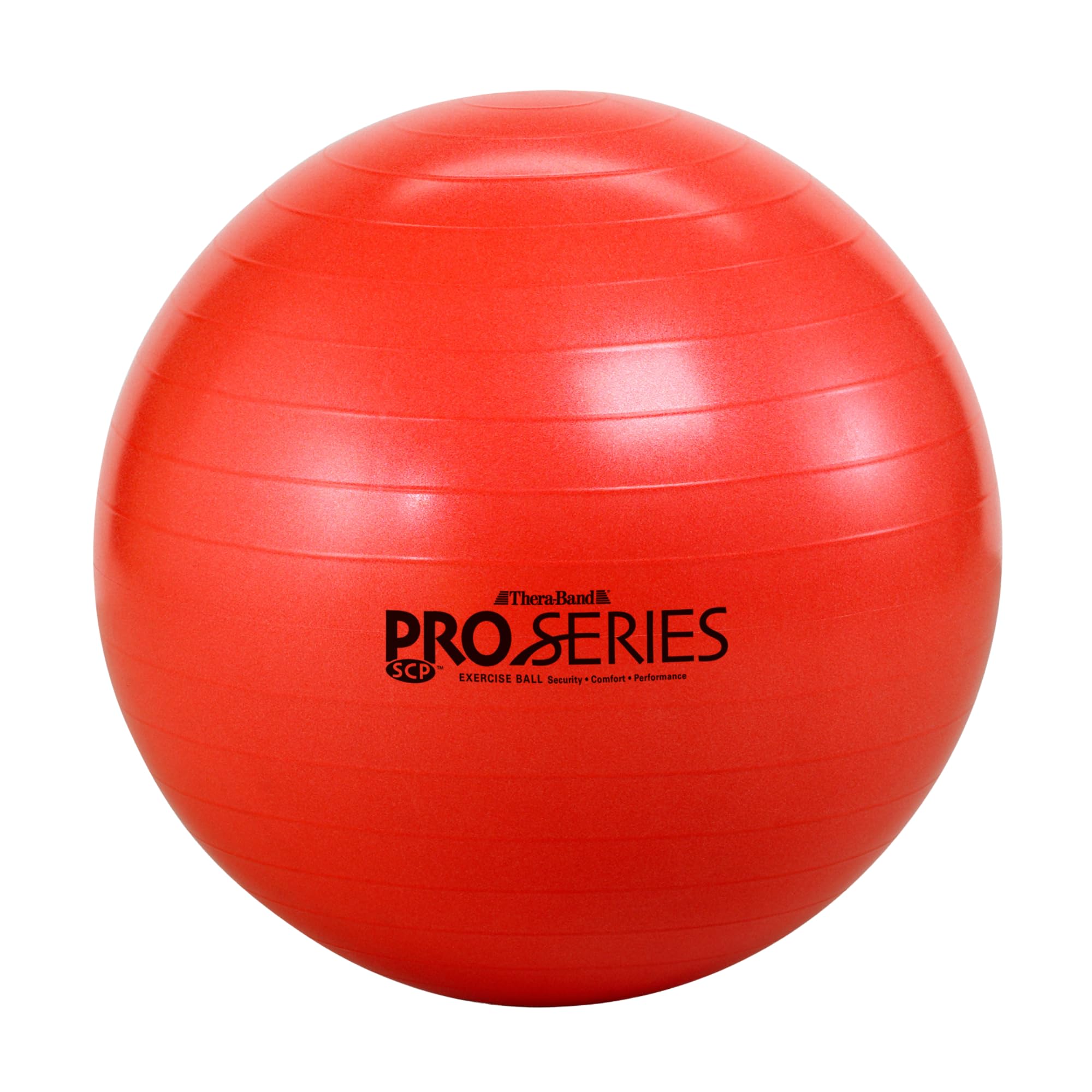
Light, grippy, and built with a deliberate slow-deflate safety valve
This is the lightest full-size ball in the group at 2.8 lbs, and the shell is burst-resistant with a slight texture that resists slipping during movement-heavy work. THERABAND markets the 30-inch (75 cm) version for users between 6’2″ and 6’8″, which tells you the design is aimed at taller frames. The listed spec diameter, though, reads 55 cm — and that is the number to check against your own height before you commit, because a 55 cm ball puts most average-height adults noticeably low.
Where this ball quietly wins is air retention. Owner reports describe it holding pressure well over a month of use with no leaking, which is a step up from the softer TPE shells that want weekly topping up. It wipes clean with a damp cloth, and it handles yoga, Pilates, stretching, and seated balance work without complaint.
Set your expectations on what arrives in the box, though. There is no pump and no real instruction sheet — just the ball and a tape that is meant to help you gauge inflation. That tape is the source of genuine frustration: it does not match the ball’s dimensions well, and without guidance some buyers end up under-inflating. Buy a pump separately and measure your own seated height against the 55 cm figure rather than trusting the tape.
What stands out: the slow-deflate design and textured surface together make this the most controlled-feeling ball here for balance drills.
Budget for a pump: none is included, and the supplied measuring tape is not much help on its own.
Pick this one if: you are tall, want a light ball you can move around easily, and already own a pump.
Pass if: you need a ball that arrives ready to inflate with clear guidance.
4. OPTP Soft Movement Ball
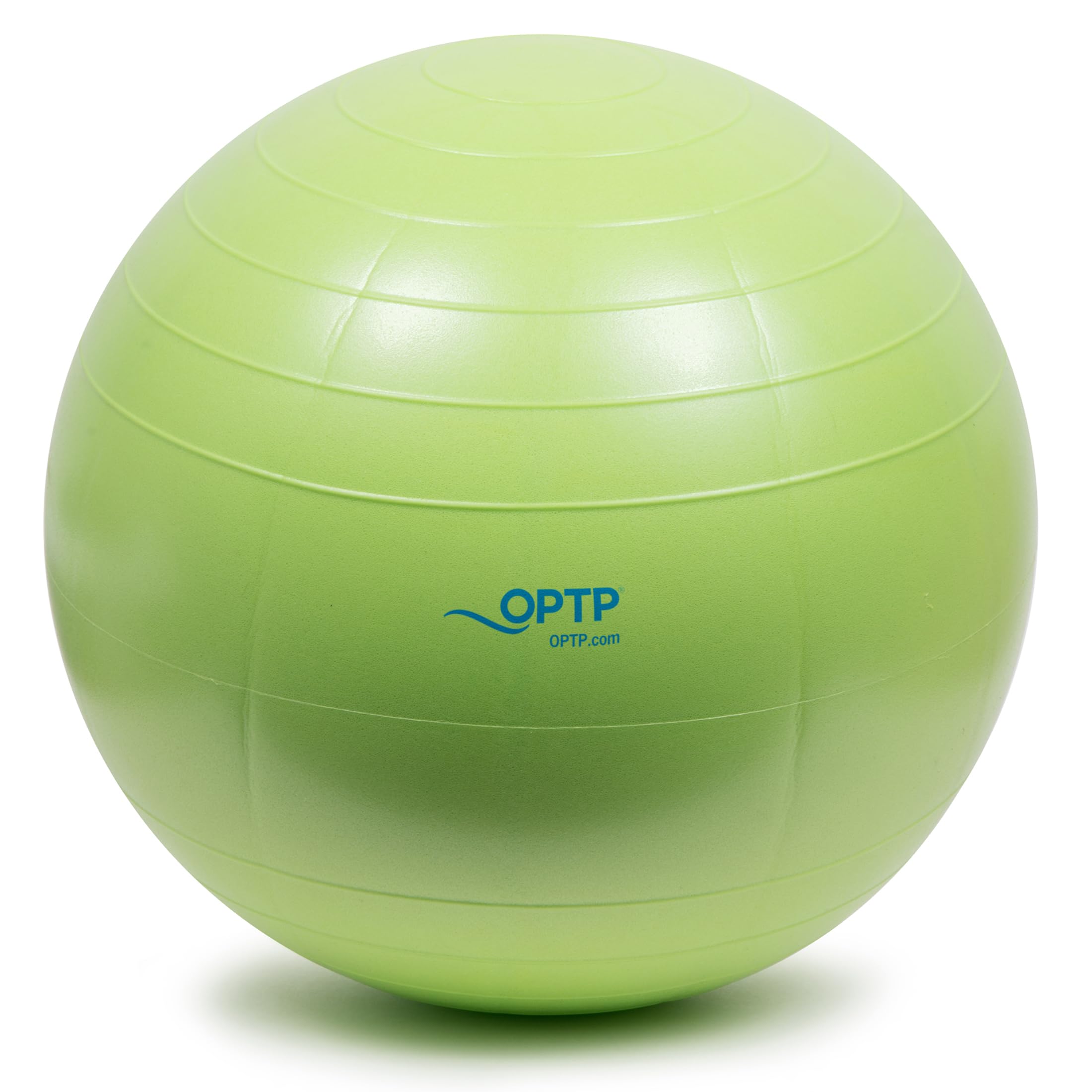
A small green latex ball for Pilates core work, not for sitting at a desk
This is a different animal from the other three. At 12 inches across it is a soft movement ball, not a full-size stability ball — you squeeze it between your knees or brace against it, and it is built for that job. The latex rubber core is phthalate-free, the surface has an easy-grip texture to help with body positioning, and it is made in Italy. Capacity is 220 lbs, the lowest rating here, which is fine for floor work and wrong for anything load-bearing.
Compare it directly to the Gaiam and the gap is clear: 220 lbs capacity against 300 lbs, and a 12-inch ball against a 65 cm ball. Those are not competitors — they do different jobs. For targeted work on the abdominals, psoas, glutes, quads, and hamstrings, a small grippy ball like this one puts pressure exactly where you place it. If you want a ball to sit on, keep looking.
Two things to check before you order: size expectations and durability. The ball runs larger than some buyers picture, so check the 12-inch figure against your routine first. There is also at least one report of a ball splitting after limited use — worth knowing with only 5 durability comments in the mix, so treat it as a light-duty tool and it should serve you well. It needs the OPTP Power Pump (sold separately) to reach full firmness.
The reason to buy: latex grip and a soft density that lets you hold position through a full Pilates set without the ball squirming.
Know before you order: it is 12 inches, it tops out at 220 lbs, and the pump is a separate purchase.
Your match if: Pilates and physical therapy form the bulk of your routine and you want a targeted, textured ball.
Keep shopping if: you need a ball to sit on or support a heavier body.
Know the Specs
Diameter in centimeters and inches
Diameter is the width across the inflated ball, and it decides your seated height. A 65 cm ball suits an average-height adult at a standard desk; a 55 cm ball sits noticeably lower; a 12-inch ball is a hand-held tool rather than a seat. Measure the distance from your floor to the top of your chair before choosing, and remember the ball compresses a little under body weight. When a listing’s stated diameter and its stated height range disagree, trust the diameter — that is the physical number.
Weight capacity versus burst resistance
These are two different safety figures and confusing them is the most common buying mistake. Weight capacity is the user weight the ball is built to carry — 300 lbs on the Gaiam, 220 lbs on the OPTP. Burst resistance is the pressure the shell survives before failing, which is where the Goonidy’s 2,200 lbs figure lives. A high burst number tells you the shell is tough; it does not tell you the ball is right for a heavy sitter. Check the capacity rating against your own weight and the burst rating against your confidence in the material.
TPE, latex, and PVC shells
Your comfort on the ball starts with the shell material. Thermoplastic elastomer (TPE) is a rubbery material that flexes and springs back — soft to sit on and comfortable against skin. Latex is springier and holds a grippier surface, which is why small Pilates balls use it. PVC is the rigid, slick plastic most cheap gym balls are made from, and it is the one that slides. Whichever shell you pick, grip depends on surface finish: molded lines, a glaze, or a fine texture all beat a bare smooth surface on a wood floor.
Anti-burst and slow deflate
An anti-burst ball is built to lose air gradually when punctured instead of splitting wide open in one go. That is a safety feature, and it is worth checking how the maker phrases it — a slow-deflate construction means you have time to get off the ball. It does not mean the ball never needs air. Soft shells stretch, and most need topping up periodically, which is why a pump in the box (or a pump you already own) matters more than the listing suggests.
Common Questions
What is the difference between a rubber exercise ball and a PVC one?
How do I pick the right ball diameter for my height?
Why does my exercise ball keep losing air?
Is a 2,200 lb burst rating the same as weight capacity?
Can I use a 12-inch Pilates ball as a desk chair?
Does an exercise ball come with a pump?
How long should I let a new exercise ball sit before using it?
Can I use a rubber exercise ball on a wood floor?
What does anti-burst actually mean on an exercise ball?
The Bottom Line
For most people, the rubber exercise ball winner is the Goonidy Soft Exercise Ball. Its mesh-and-honeycomb TPE shell resists 2,200 lbs of pressure while staying genuinely soft, and it comes in six sizes from 25 cm to 85 cm. It also arrives with a pump — no separate purchase needed. If the ball is headed under a desk, grab the Gaiam Essentials Balance Ball & Base Kit; its ring base stops the rolling and its 300 lb rating covers more sitters. And for Pilates and therapy work where a small, grippy latex ball does the job better, the OPTP Soft Movement Ball is the one to reach for.
How we choose
We do not accept paid placement. Every pick is matched to a real buyer and a real use-case; we do not hands-on test units.
Sources
Specifications: manufacturer listings and product documentation. Review insights: verified customer reviews, as of November 2026. Pricing: not shown on this page (it changes often); check the current price via the retailer link.
As an Amazon Associate, Tactical Gear Guy earns from qualifying purchases. This does not affect which products we feature.