Specs are compiled from manufacturer listings and verified buyer reviews and can change over time — please confirm the key details on the product page before buying.
You walk out at dawn, the trough is a solid pane, and the horses are standing around waiting on you with a sledgehammer. That is the problem this list solves. A submersible stock tank heater sits down in the water — not floating on top — and holds an open drinking hole through the cold, so you stop breaking ice twice a day. The picks below split cleanly by tank size and by how much water you actually need kept open.
This guide is built by comparing the manufacturers’ published specifications and the patterns across verified customer reviews, so you get each pick’s real strengths and trade-offs instead of marketing spin.
Your trough needs open water, and wattage plus tank capacity are the two numbers that decide if a heater keeps up. Below you’ll find models that hold an open hole, ones built for plastic tanks, and ones made for a drain-plug fitting — a full rundown of the submersible stock tank heater options worth your money this winter.
Top Picks

How To Choose The Best Submersible Stock Tank Heater
The wrong heater does not fail loudly. It runs all night, keeps a thin skin of water open in the middle, and lets the edges freeze into a ring your animals cannot drink past. Getting it right means matching three things to your setup: wattage, gallon size, and how the unit sits in your tank.
Match wattage to gallons, not to how cold it gets
A 1500-watt de-icer is built for a big body of water — the API sinking unit is rated for 100–300 gallons. A 500-watt model is built for a small one — the Farm Innovators 500W is sized for containers up to 50 gallons, and the 2-pack is rated for up to 25 gallons per unit. Putting a small heater in a 300-gallon tank is the most common mistake buyers make. It runs constantly and still loses the edges.
Check whether your tank is plastic or steel
Cast aluminum and stainless steel units are commonly rated safe for plastic and poly tanks, which matters because most modern troughs are poly. If your tank is a Rubbermaid stock tank, one pick here installs through the drain plug instead of dropping in — and that fitting needs a drain hole wider than 1.75 inches, so measure before you order.
Decide if you want a thermostat
A thermostat runs the element only when the water nears freezing, so a mild week draws less power than a constant-on unit. It also means the unit may sit idle on a warm afternoon — which is normal, not a fault. If a new heater will not turn on when you test it in the house, the internal thermostat may simply think the room is already warm enough.
Think about the cord before the heater
Cord length decides where you can plug in. Short cords force an extension run across wet ground. The API unit carries a 15-foot anti-rub cord, and the 2-pack uses a 9.8-foot cord made from cold-resistant material. Both are long enough to reach a barn outlet without a spliced extension sitting in a puddle.
Side-by-Side Comparison
| Model | Best For | Wattage | Tank Capacity | Weight | Amazon |
|---|---|---|---|---|---|
| Farm Innovators H-419 1500W★ Best Overall | Big troughs in hard freezes | 1500W | — | 3.1 lb | Amazon |
| Farm Innovators C-500 500WBest Value | Small troughs, buckets, poultry | 500W | Up to 50 gallons | 1.73 lb | Amazon |
| COICOTTC 2-Pack 500W | Two small water sources at once | 500W each | Up to 25 gallons each | — | Amazon |
| API Sinking De-Icer P15N | Large ponds and big tanks | 1500W | 100–300 gallons | 2.6 lb | Amazon |
| Sxmprail DPH-15 Drain-Plug | Rubbermaid tanks with a drain hole | 1500W | 50/70/100/150/300 gal Rubbermaid | — | Amazon |
| Miller DTS15 1500W | Keeping a whole tank open | 1500W | — | 2.72 lb | Amazon |
Detailed Reviews
1. Farm Innovators Submergible Tank De-Icer, 1500W Water Deicer
Our pick — 4.5+★ from 450+ verified ratings; the strongest balance of quality and price.
The one that keeps swinging through a Minnesota January without a hammer in your hand.
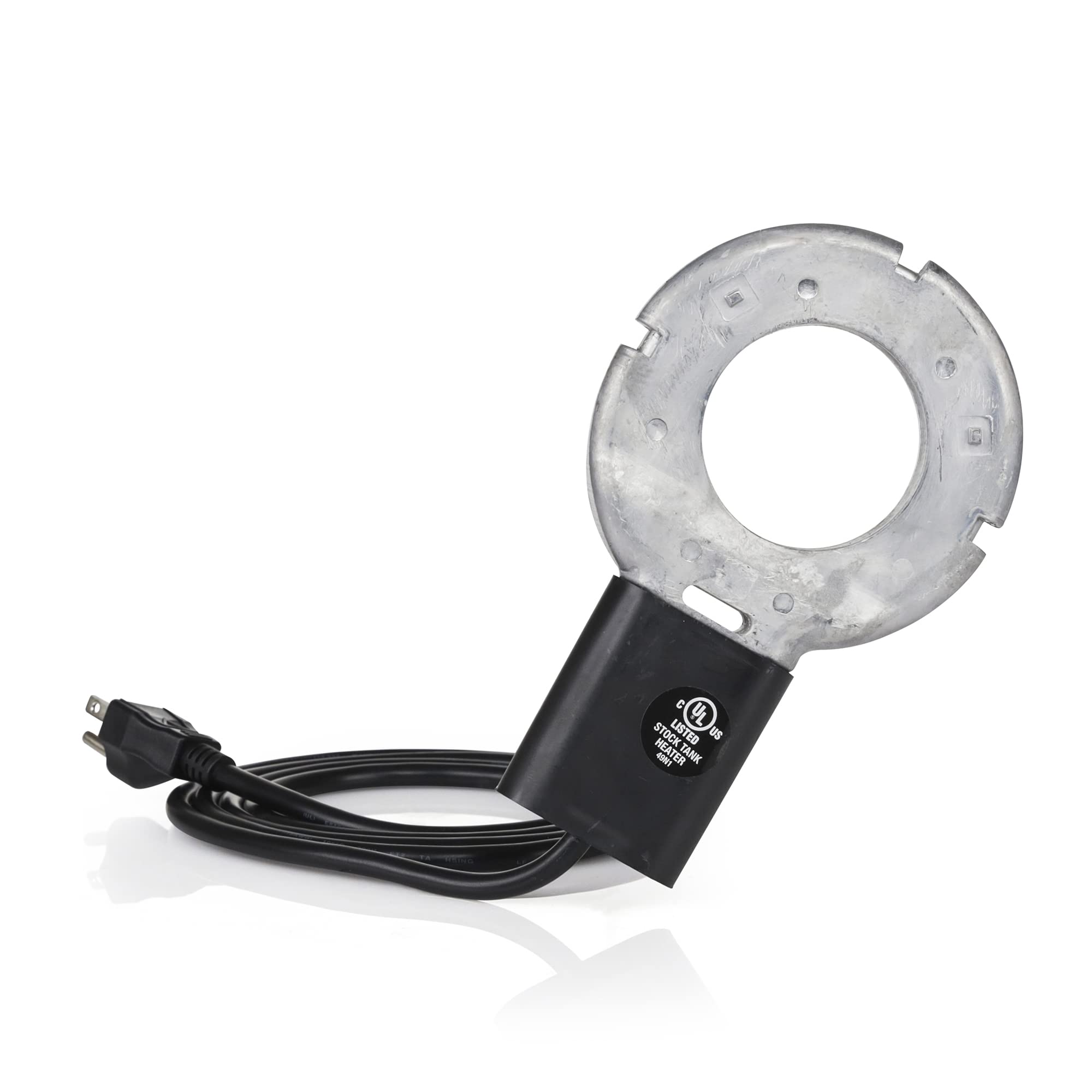
If your trough is a serious size and your winters are serious too, this is the pick the crowd has settled on — 4.5+ stars across 400+ ratings, and the highest-rated heater on this list. The 1500-watt element drops below the surface inside a cast aluminum body, so it heats the water rather than the air above it. Farm Innovators calls that shell Ice Chaser, and it is the reason this unit sheds ice instead of growing a coat of it.
What wins people over is reliability. Buyers report no ice forming in a 25-gallon plastic tank, and the same unit kept working at -20F through Minnesota winters. The thermostat cycles the 1500-watt element on and off, so it is not drawing full power around the clock on a mild afternoon. At 3.1 pounds it sits down in the water on its own rather than drifting to a corner. The cast aluminum is rated safe for plastic and metal bowls, bins and basins, so a poly trough is fine.
The honest catch is durability over the long haul. A handful of seasons is the realistic expectation, not a decade, and the anti-chew cord protector is there for a reason — animals test it. Keep the cord routed out of reach where you can and it earns its place. This is also the heaviest pick here at 3.1 pounds, which is 79% more weight than the 500W Farm Innovators below — worth knowing if you haul the heater in and out by hand every season.
What earns it the top spot
- 1500 watts of heating power in a cast aluminum body that sits below the waterline
- Thermostatically controlled, so it runs only when the water needs it
- Patented Ice Chaser shell with an anti-chew cord protector for livestock duty
- Rated safe for plastic and metal bowls, bins and basins
What to weigh before you buy
- At 3.1 pounds it is the heaviest unit on this list
- Long-term durability is the recurring gripe — plan on replacement rather than a lifetime buy
- Overkill for a small bucket or poultry waterer
Strongest match: a large poly or steel trough that froze solid last year and needs a real heater under the surface.
2. Farm Innovators Submersible Stock Tank De-Icer
Half the wattage of the winner, and the right answer for a small trough or a poultry waterer.
The number that defines this one is its 50-gallon ceiling. If your container holds 50 gallons or less — a chicken fount, a duck pool, a utility tub, a small trough — this 500-watt heater is sized for exactly that job. It drops in, sits flat, and the cast aluminum shell pushes heat into the water faster than a plastic housing would. At 1.73 pounds you can carry it out one-handed and set it in the tub.
Functionality is what people talk about most with this unit, and it holds up across conditions. Owners mention it keeping horse troughs and bird baths open in 15-degree weather. It is rated for plastic as well as steel, so a poly tank or a plastic barrel works fine. Setup is about as simple as it gets: plug it in, set it in the water, done.
Here is the trade-off you should know. A few owners get one season out of it before it gives up, so treat this as a value buy rather than a multi-year investment. And the 500 watts is the real limit — stack it up against the 1500W Farm Innovators above and you are looking at a 3.0x gap in heating power, so it will not keep a big cattle trough open in a hard freeze. That is a fit question, not a fault.
Where it fits: small poly tanks, utility tubs, poultry and bird bath duty where a 50-gallon ceiling is comfortably above your water volume.
The limit to respect: 500 watts is not a scaled-down 1500 watts — it is built for a smaller body of water, and it will lag in a large trough on a brutal night.
Reach for this if: you are keeping a small trough or waterer open and want the lightest, simplest unit in the group. Look elsewhere if: your tank runs large and your winters bottom out well below zero.
3. 2Pack 500 Watt Pond De-Icer
Two heaters, two water sources, one order — the practical pick for a farm with more than one tub.
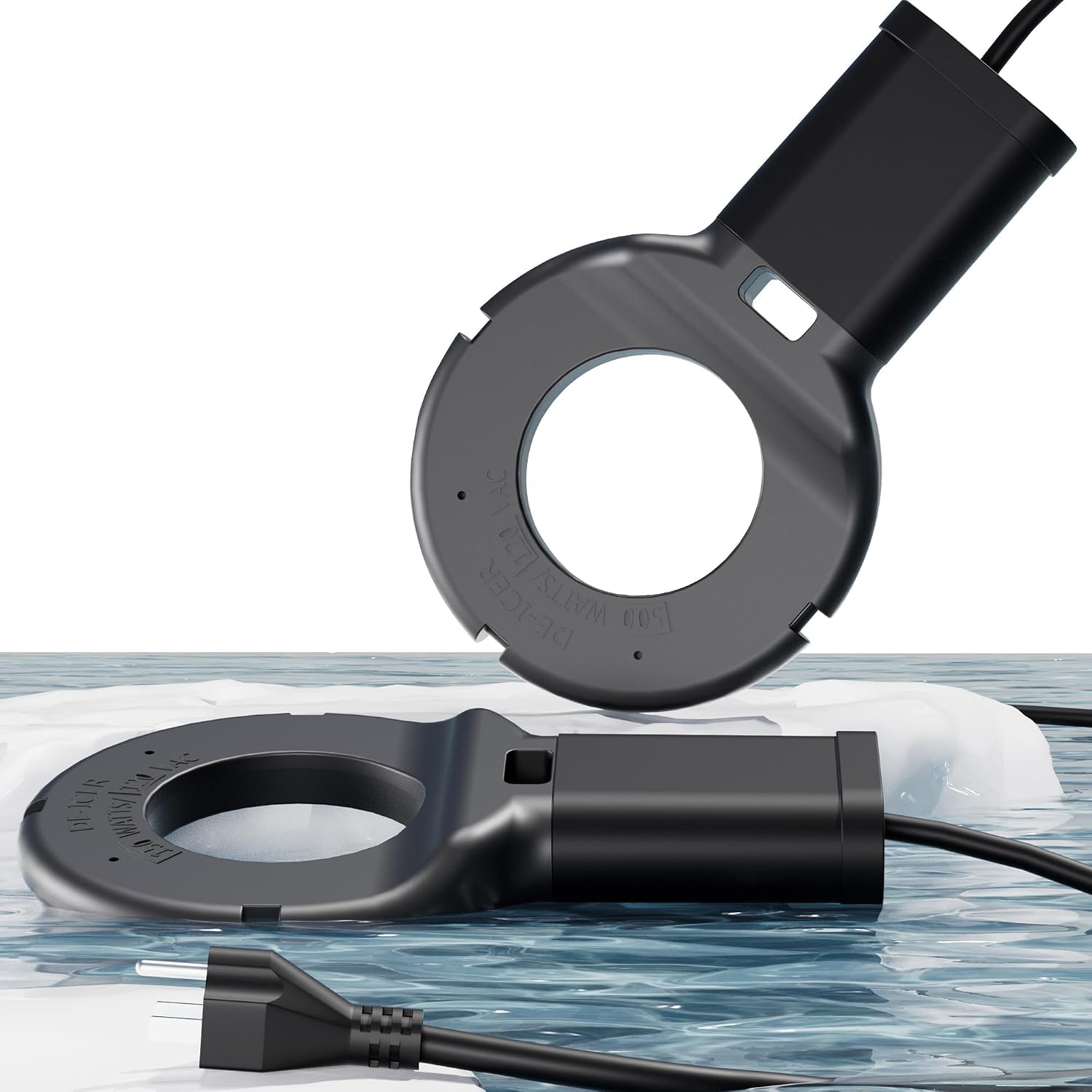
Most buyers on this list are solving one trough. This one solves two at the same time, because you get two 500-watt units in the pack. Each is rated for containers up to 25 gallons — bird baths, chicken drinkers, small ponds — which makes the pair the sensible buy if you run a bird bath out front and a poultry waterer out back and do not want to shuttle a single heater between them.
The thermostat here is the standout spec. Each unit switches on when water falls below 35°F and shuts off at 77°F, so on a mild stretch it stops drawing power entirely. The housing is aluminum, which keeps plastic containers from melting, and the 9.8-foot cord is made from cold-resistant material so it stays flexible in a freeze. Performance is the thing that carries it — it worked at 20 below zero, customers note, and the water stayed open.
Set expectations on capacity. Sixty-nine degrees is a wide gap between on and off, and some owners find the unit does not warm water much at the 32°F mark — it holds a hole open rather than heating the trough to a comfortable temperature. That is the nature of a 25-gallon-rated de-icer. Also note the maker’s own instruction: the entire ring, handle included, has to sit underwater or the unit can dry out and stop working.
Why the pair makes sense: two independent 500-watt heaters cover two small water sources at once, each with its own built-in thermostat and a cord rated for cold weather.
The honest gap: these are 25-gallon units — they hold an opening in a small tub and will not keep a large stock trough clear.
Best fit: a setup with a bird bath and a chicken waterer that both need to stay open through the same freeze. Not the one for you if: you are heating a single large livestock trough — one bigger unit will serve you better than two small ones.
4. API Sinking Pond De-Icer – 1500 Watt – 15 Foot Cord

Rated for ponds and big tanks, with a cord long enough to actually reach an outlet.
Compare capacities and this one wins by a wide margin. The API is rated for 100–300 gallons, against the 25-gallon ceiling on the 2-pack above — that is a 4.0x gap in water volume, and it is the difference between heating a bird bath and heating a pond. If your water body is genuinely large, this is the unit that will not get swamped by the job.
The 15-foot anti-rub power cord is the second thing that matters. Barn outlets are rarely where the water is, and 15 feet is enough to reach without a spliced extension dragged through wet ground. The heating element is stainless steel, which resists rust and corrosion season after season. It is listed to CSA and UL safety standards, and the maker rates it safe for plastic water tanks. Reviewers point out a 150-gallon tank defrosted within 3 hours.
Weigh the practical side before you commit. And the 1500 watts is real draw, so it wants a proper outdoor circuit, not a daisy-chained extension cord. Treat the cord run with the same care you would give any outdoor electric device.
Why it leads on volume
- Rated for 100–300 gallons of water — the largest capacity on this list
- 15-foot anti-rub cord reaches a real outlet without an extension run
- Stainless steel element resists rust and corrosion
- Listed to CSA and UL standards and rated safe for plastic tanks
Where it asks more of you
- 1500 watts needs a proper outdoor circuit, not a light extension cord
- Sinking design means placement in the tank matters
- Far more heater than a small trough or bucket needs
Take this one if: you are keeping a pond or a genuinely large tank open and need the cord to reach. Pass on it if: your water source is a 25- or 50-gallon tub — the capacity rating would simply go to waste.
5. Sxmprail Submersible Stock Tank Heater
It mounts through the drain plug instead of sitting loose in the trough.
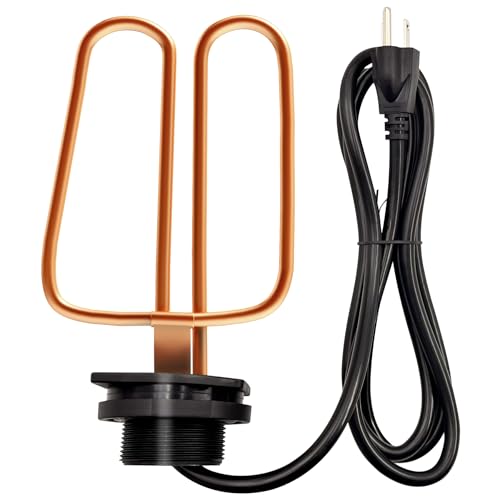
This is a different animal from the bowl-style heaters. The Sxmprail threads into the bottom of a Rubbermaid stock tank through the drain plug, which means no heater floating around for a horse to nose at. It is built to fit the 50, 70, 100, 150 and 300 gallon Rubbermaid tanks, and the copper tubing inside is 385 W/(m·K) high-purity electrolytic copper — high thermal conductivity, so water heats fast from the base of the tank. At 1500 watts it has the power to keep a working trough open.
Measure before you order, because this is where buyers get tripped up. The drain plug hole in your tank has to be wider than 1.75 inches, or the fitting will not seat and you will be drilling. The unit itself measures 10 by 5.5 inches with a 1-1/2 inch MNPT thread, and it ships with two flexible silicone gaskets you can stack inside, or split one in and one out, for a tighter seal. The 8mm nut and deeper threads are there to hold under water pressure. The manufacturer backs it with a three-year free replacement.
There is a trick to testing it. The internal thermostat may keep the unit off in a warm room, so the maker suggests chilling it in the freezer for about 10 minutes before you test — otherwise a perfectly good heater reads as dead. On durability, treat this as the pick that needs a careful install: quality and function get strong marks, but some units fail when the fitting is not seated properly. Get the seal right and it earns its place.
The clever part: a drain-plug mount keeps the heater out of reach of livestock and heats from the bottom of the tank through high-conductivity copper tubing.
The catch to plan around: it only fits a Rubbermaid drain hole wider than 1.75 inches, and a sloppy seal is the usual reason one goes bad.
Right for: a Rubbermaid stock tank owner who wants the heater bolted in and out of the way, backed by a three-year replacement. Wrong for: a tank without a drain hole that already meets the 1.75-inch minimum — you would be drilling first.
6. Miller Manufacturing 1500 Watt Submersible De-Icer

Built to keep the whole tank clear, not just a hole in the middle.
The stated job on this one is narrow and clear: keep the entire tank ice-free without overheating. That is the pitch for a 1500-watt submersible unit, and it is the right ambition for a trough where an animal needs room to drink, not just one warm spot. It weighs 2.72 pounds and uses the Miller model DTS15 body. If you have watched a smaller heater leave a ring of ice around the edge, this is the approach that targets the whole surface.
Function is what carries it. Buyers report the whole tank staying ice-free, with water held between 45 and 50°F — drinkable, not scalding. That temperature range is the useful detail, because it tells you this unit is not trying to boil the trough, just hold it liquid. In a working farm setup, that is exactly the balance you want.
The variable is longevity. Some units run for a long time and are considered excellent value; a minority fail within the first month, and heat dissipation comes back mixed, with a few reporting a unit that never warms. This is common across the category for 1500-watt heaters — an occasional unit arrives bad. The DTS15 is a strong whole-tank heater, but it is not the most consistent performer on the list, so buy it knowing that a defective one is possible and exchange is the answer.
What the whole-tank design buys you: a 1500-watt element aimed at clearing the full surface, with water held in the 45–50°F range.
The roll of the dice: longevity is mixed — most units run long, but some fail early, so factor in a return window.
For you if: your goal is a completely ice-free tank rather than a single open hole, and you want water in the 45–50°F range. Check the winner first if: consistency across the whole season matters more to you than whole-surface clearing.
Know the Specs
Wattage and Gallons Go Together
Wattage is the heating power, and it has to match the volume of water it is working on. A 500-watt heater is built for a small body of water — the Farm Innovators 500W is sized for up to 50 gallons, and the 2-pack is rated for 25 gallons per unit. A 1500-watt unit is built for a big one — the API is rated for 100–300 gallons. When you see wattage alone on a listing, look for the gallon rating right beside it. A small heater in a big tank runs flat out and still loses the edges.
Thermostat Control and Auto Shut-Off
A thermostat runs the element only when the water is near freezing, so a mild afternoon costs you less and the heater lasts longer. The 2-pack has a wide band — it kicks on below 35°F and shuts off at 77°F. That wide band is why some owners see the heater idle on a cool day: it has decided the water is already warm enough. This is also why a brand-new unit tested in a warm room may appear dead. Chill it first, or trust it in the tank.
Cast Aluminum vs Stainless vs Copper
Cast aluminum is the common housing for drop-in heaters — it moves heat into the water and is rated safe for plastic tanks. Stainless steel is used for the heating element on the API unit to resist rust over time, and copper tubing inside the Sxmprail drain-plug unit carries heat from the base. All three materials are there for the same reason: survive a season of freeze and thaw without corroding through.
Cord Length and Cold-Resistant Wire
The cord decides where you can plug in. A short cord forces an extension run across wet ground, which is the last thing you want around a trough. The API carries 15 feet of anti-rub cord; the 2-pack uses 9.8 feet of cold-resistant material. Look for cord rated for cold weather so it stays flexible instead of stiffening and cracking. And check that your outlet is a proper outdoor circuit, since a 1500-watt heater is real draw.
Common Questions
What size heater do I need for a 100-gallon stock tank?
Will a submersible heater work in a plastic stock tank?
Why won’t my new de-icer turn on when I plug it in?
Does the Sxmprail heater fit every Rubbermaid stock tank?
How long do these heaters usually last?
Can I use a stock tank heater in a bird bath or chicken waterer?
Will a 1500-watt heater keep my whole trough ice-free?
Do I need a special outlet for a 1500-watt de-icer?
Is a sinking de-icer different from a cast aluminum bowl heater?
Can a small 500-watt heater keep up in a hard freeze?
The Bottom Line
For most setups, the submersible stock tank heater to beat is the Farm Innovators H-419 1500W — it puts 1500 watts under the water in a cast aluminum body, runs on a thermostat, and holds a track record the rest of the list is chasing. If your trough is small, the Farm Innovators 500W is the practical value buy for up to 50 gallons. And if you own a Rubbermaid tank with a drain hole, the Sxmprail gets the heater out of the way entirely — measure that hole before you order, because it wants more than 1.75 inches.
Whatever you pick, buy the one with the longest warranty you can get. A heater that lives outdoors in freezing weather is equipment, not a gadget, and the three-year covers on the H-409 and the Sxmprail are the smartest insurance in this group.
How we choose
We do not accept paid placement. Every pick is matched to a real buyer and a real use-case; we do not hands-on test units.
Sources
Specifications: manufacturer listings and product documentation. Review insights: verified customer reviews, as of November 2026. Pricing: not shown on this page (it changes often); check the current price via the retailer link.
As an Amazon Associate, Tactical Gear Guy earns from qualifying purchases. This does not affect which products we feature.