Specs are compiled from manufacturer listings and verified buyer reviews and can change over time — please confirm the key details on the product page before buying.
Most outdoor spigots fail for one boring reason: the inlet thread does not match your pipe. Match that thread and a brass valve will outlast three hoses. Mismatch it and you will be back at the hardware store with a wrench and a puddle. The picks below cover the three inlet sizes you will actually meet at your wall — 1/2-inch NPT, 3/4-inch NPT, and 3/4-inch female iron pipe — plus the frost-free versions for cold-climate walls.
This guide is built by comparing the manufacturers’ published specifications and the patterns across verified customer reviews, so you get each pick’s real strengths and trade-offs instead of marketing spin.
You will see ball-valve spigots, multiturn sillcocks, and frost-free models side by side, with the exact thread sizes, pressure ratings and flow notes that decide which one threads onto your wall. Start with the thread size on your old spigot, then use this list of the water hose spigot options to pick the right one.
Top Picks


How To Choose The Best Water Hose Spigot
The first decision is not brand, finish, or handle style. It is thread size. A hose spigot has two ends — an inlet that screws into your house plumbing and an outlet that takes your garden hose. The outlet is almost always 3/4-inch GHT (Garden Hose Thread, the standard thread every hose coupler uses). The inlet is where buyers get burned. Measure it before you order anything.
Match the inlet to what is already on your wall
A 3/4-inch NPT inlet (National Pipe Tapered, the tapered thread used on metal pipe fittings) screws onto a 3/4-inch male pipe stub. A 1/2-inch NPT inlet is the smaller residential size and needs a 1/2-inch pipe stub. A 3/4-inch FIP inlet (Female Iron Pipe) means the threads are inside the valve body, so the pipe screws into it rather than the other way around. Buy the wrong inlet size and no amount of thread tape will seal the joint.
Ball valve or multiturn — pick by how you water
A quarter-turn ball valve opens fully with a 90-degree twist of the handle. One 90-degree flick gives full flow, which is why ball valves suit sprinklers and fast bucket filling. A multiturn sillcock takes several rotations to open and closes gradually, which some buyers prefer for fine flow control and for winter shutoff habits. Both seal fine; the difference is quarter-turn speed versus multiturn finesse.
Cold climate means a frost-free sillcock
If your wall freezes, a standard spigot traps water right at the exterior where it splits the body. A frost-free sillcock puts the actual valve seat deep inside the wall so the water drains back before it can freeze. That is why frost-free models come in lengths — 8 inch and 10 inch cover the common wall depths. Measure the distance from the outside face of your siding to the supply pipe inside, and buy a length that reaches.
Side-by-Side Comparison
| Model | Best For | Inlet Connection | Max Pressure | Valve Type | Amazon |
|---|---|---|---|---|---|
| Quarter Turn Hose Bibb, Brass Ball Valve Spigot★ Best Overall | High-pressure and rain barrel setups | 3/4″ Male NPT | 600 psi | Quarter-turn ball | Amazon |
| Brass Ball Hose Bibb 79-210Best for Tight Stubs | Tight 1/2″ pipe stubs and boiler drains | 1/2″ Male NPT | 125 PSI | Quarter-turn ball | Amazon |
| TianTianUp 1/2″ NPT Brass Hose BibBest Flow | Long hoses and sprinkler runs | 1/2″ NPT (0.81″ thread) | 125 psi | Quarter-turn ball with extended handle | Amazon |
| Eastman 48625 Heavy-Pattern No-Kink Bibb | Screwing onto an existing male pipe end | 3/4″ FIP | 125 psi | Heavy-duty handle | Amazon |
| EFIELD 3/4″ Sillcock Hose Bibb Valve | Everyday garden and carwash duty | 3/4″ Male NPT | 125 PSI | 1/4-turn valve | Amazon |
| Windblowgrass 304 Stainless Steel Hose Bib | Rust resistance and big flow | 3/4″ Male NPT | — | 1/4-turn ball with 20mm core | Amazon |
| LDR 020 6103 Brass Sillcock Valve | Flush wall mounting with a flange | 1/2″ IPS | — | Multiturn with neoprene seal | Amazon |
| Eastman 80222 Frost Free Sillcock, 10 Inch | Freezing walls, new installs | 1/2″ MIP x 1/2″ Sweat | — | Multiturn wheel with vacuum breaker | Amazon |
| Himaweek 8 Inch Anti-Siphon Frost Free Sillcock | Shallow walls and backflow protection | 1/2″ MNPT | 80 psi | Multiturn large handwheel | Amazon |
Detailed Reviews
1. Quarter Turn Hose Bibb 3/4 Male NPT
Our pick — 4.5+★ from 900+ verified ratings; the strongest balance of quality and price.
The brass ball valve that shrugs off 600 PSI and still turns with two fingers.
This is the one to buy when your water pressure is high, your setup involves a rain barrel, or you simply want a valve that will not start weeping in year three. The headline is a maximum operating pressure of 600 psi, versus a 125 psi ceiling on the 1/2-inch NPT brass bib below. That is far above normal household pressure, so the brass body runs well within its limit on everyday garden duty.
It threads on with a 3/4-inch male NPT inlet (the tapered pipe thread that seals metal-to-metal on a standard 3/4-inch stub) and feeds a 3/4-inch male hose thread outlet, so any standard garden hose coupler screws straight on. The 90-degree quarter-turn handle opens full flow in a single flick — handy when you are holding a hose in one hand and a bucket in the other. The whole thing weighs 6.88 ounces, light enough that it will not sag on a short pipe stub.
The honest catch here is flow. Several buyers report the water stream is more restricted than they expected, and a few report the unit failing before it ever got hooked up. Owners talk most about brass quality and function, but check the full-flow claim against your own setup. If you are running a long sprinkler line, a full bore model like the TianTianUp below may suit you better. The crowd favorite sits at 4.5+ stars across 900+ ratings, and that is a fair reflection of a solid valve with one honest weak spot.
What earns it the top slot
- 600 psi maximum pressure — the widest margin of any pick here
- 90-degree quarter-turn handle opens full flow in one motion
- Brass body that holds up outdoors, working with rain barrels and boiler drains alike
- Standard 3/4-inch male NPT inlet and 3/4-inch hose outlet for out-of-the-box fit
Where it asks for care
- Flow restriction shows up in enough owner feedback to be worth planning around
- Apply pipe thread sealant and check the joint before you trust it
- A small number of units arrive defective, so inspect the body on arrival
Reach for this if: your line runs high pressure, feeds a rain barrel, or you want a valve with headroom to spare.
Look elsewhere if: you need maximum unrestricted flow on a long sprinkler run — a full bore model serves you better.
2. Brass Ball Hose Bibb 79-210 1/2″ Male NPT
A compact 1/2-inch brass bib that threads straight onto a smaller residential pipe stub.
If your house pipe is a 1/2-inch stub, the big 3/4-inch valves above simply will not screw on. This bib solves that with a standard 1/2-inch male NPT inlet feeding a 3/4-inch hose thread outlet — so you get a full-size hose connection even off a smaller supply line. It is the smaller sibling of the top pick, and it weighs 6 ounces against that model’s 6.88, with a compact 1 x 2 x 3 inch body that tucks neatly against the wall.
The quarter-turn handle turns smoothly, and buyers consistently report it shuts water off completely rather than dribbling. It also handles heat, rated for water up to 248°F (120°C) and pressures over 125 PSI — useful if you ever run a boiler drain or a hot-water hose flush through it. Brass quality is the thing owners praise most, and installation ranks right behind it: it goes on without drama.
One practical note the marketing skips: at 125 PSI this valve sits well under the 600 psi ceiling of the top pick. That is fine for normal residential supply, but on a hard-hitting line the 3/4-inch ball valve above offers far more headroom. For a standard 1/2-inch stub, though, this is a clean, proven fit that does its job quietly for years.
Fit and finish: A compact brass bib with a smooth quarter-turn handle and a 3/4-inch hose outlet, sized for smaller 1/2-inch supply stubs.
Pressure reality: The 125 PSI rating is standard for home supply but well under the top pick’s 600 psi — check your line if you push higher pressure.
The right thread for 1/2-inch pipe: Buy this when your stub is 1/2-inch NPT and you still want a full 3/4-inch hose connection.
Think twice: if your line runs aggressive pressure — the higher-rated ball valve above is the safer bet.
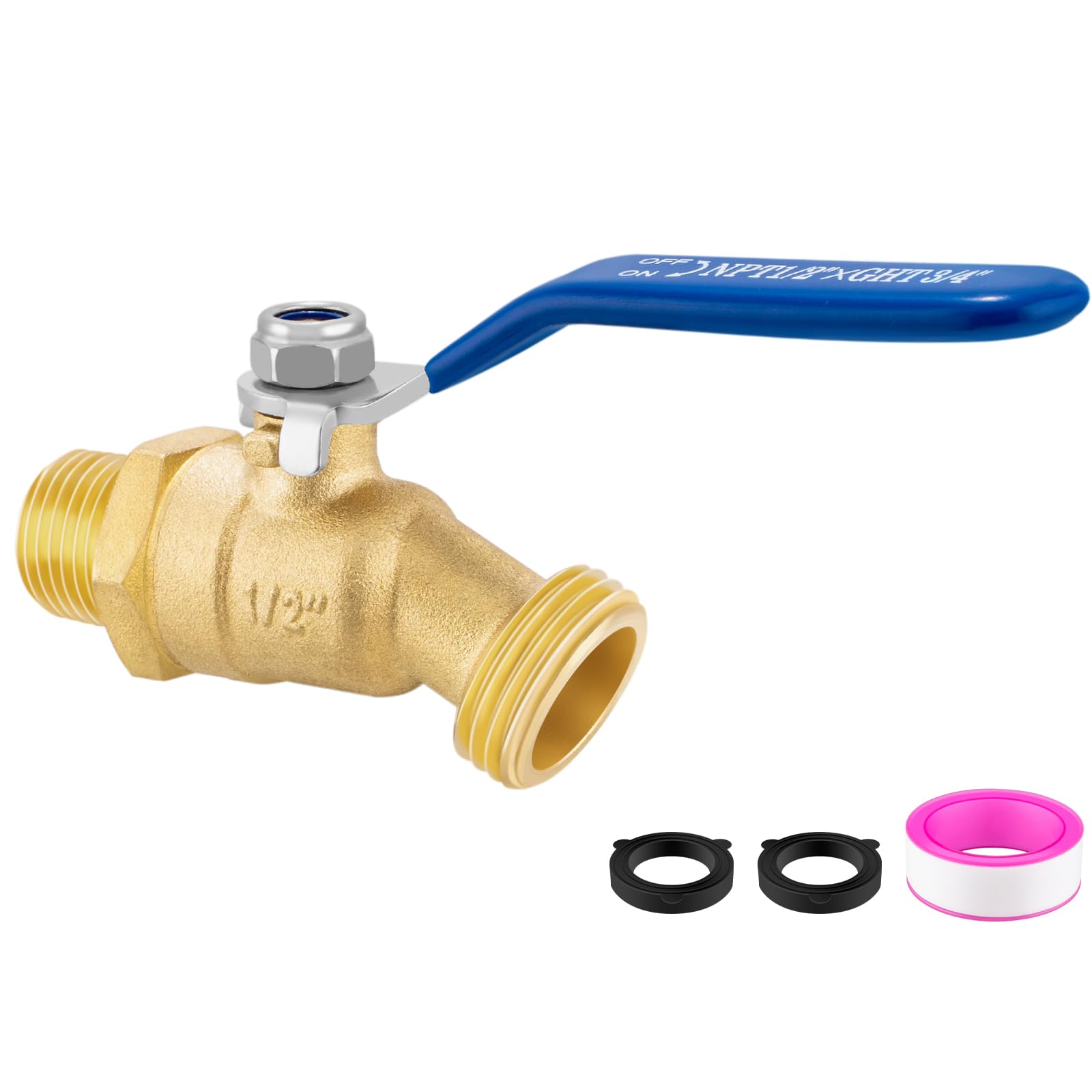
3. TianTianUp 1/2″ NPT Brass Hose Bib, 3/4″ GHT Outlet
A full bore valve built for long hoses that refuse to lose pressure at the far end.
Where the top pick guards against pressure with a heavy rating, this bib attacks the opposite problem: flow loss. The full bore design runs a 0.5-inch ball core through the body, which the maker says keeps water moving through sprinklers and long hoses with minimal pressure drop. If your garden is at the end of a long run and the sprinkler always looks half-hearted, that core size is the spec to focus on.
The handle is the other clue that somebody thought about real use. It is extended for leverage and wrapped in non-slip rubber, so turning the water on with wet hands is not a wrestling match. Underneath it is stainless steel, which resists corrosion outdoors, and it works as a quarter-turn valve (a valve you open or close with a single twist) for quick on and off. The inlet is 1/2-inch NPT (a standard US pipe thread) with an actual thread diameter of 0.81 inches, and the outlet is 3/4-inch GHT (garden hose thread) at 1.04 inches. Measure both against your pipe before ordering.
Fit is the one mixed note in the feedback: some buyers find it shorter than expected against their wall setup. Order with the dimension diagram in hand and you sidestep that. Rubber washers and Teflon tape are in the box, which takes care of the leak-proofing basics on install.
The flow case: A 0.5-inch ball core plus an oversized grip makes this the pick for long hose runs and anyone who wants an easy grab-and-go handle.
Measure first: Fit is the recurring complaint, so confirm the 0.81-inch inlet against your stub before you buy.
Pick this for flow: A full bore ball valve with a grippy extended handle, ideal for sprinklers and long hoses off a 1/2-inch stub.
Not for: buyers who cannot verify the inlet depth — measure the stub wall first to avoid a short fit.
4. Eastman Female No-Kink Hose Bibb 48625
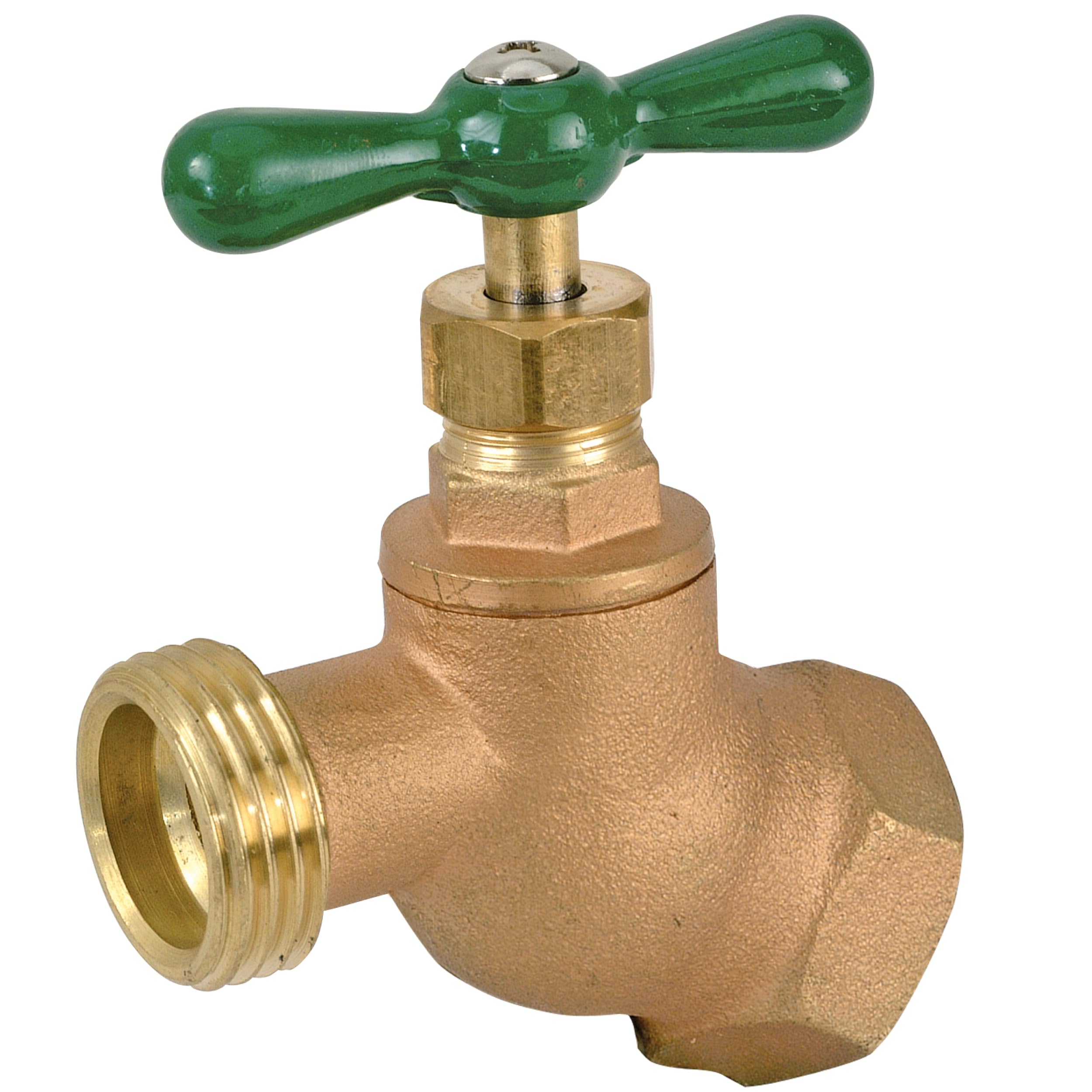
The valve that screws onto your pipe instead of the other way around.
Most spigots here have a male inlet, meaning they screw into a female fitting. This one flips it: the 3/4-inch FIP inlet (Female Iron Pipe, threads on the inside of the body) lets a male pipe end screw into the valve. If your wall already has a threaded male stub sticking out, that is the difference between a five-minute swap and a plumbing project.
It carries CUPC certification from the Canadian Uniform Plumbing Code, and the heavy-duty handle gives solid leverage for turning water on and off. One clear boundary: the maker states it is for irrigation only and not for drinking water, so keep it on the garden side of your system.
Leakage is the split in the feedback. Some owners mention a dry joint; others find it weeps, which with a threaded fitting usually depends on tape and torque on install. Wrap the threads properly, tighten firmly, and pressure-check the joint before you bury it behind a hose reel.
The install story: A no-solder, screw-on job that works when your wall already presents a male pipe thread.
Care on the joint: Threading is fussier with a female inlet — tape it well, since some buyers see leaks and some see none.
Suits the threaded-stub wall: A heavy forged brass bibb with a 3/4-inch female inlet for irrigation, not drinking water.
Skip if: your stub is female too — you need a male-inlet valve from higher up this list.
5. EFIELD 3/4″ Sillcock Hose Bibb Valve, MNPT x GHT

A plain, well-made brass spigot that handles garden duty without fuss.
Not every job needs a 600 psi rating or a frost-free barrel. Sometimes you just want a solid brass spigot on a 3/4-inch stub that turns on, turns off, and does not leak. This EFIELD valve is that pick. It runs a 3/4-inch male NPT inlet into a 3/4-inch male GHT outlet, with brass construction that resists corrosion, and it caps out at 125 PSI and 160°F — normal household ranges for a garden line.
The quarter-turn handle gives you a quick on and off, useful when you are swapping between the hose and a bucket. Function and quality are the two things buyers bring up most, and the recurring theme is that it behaves like a ball valve should: crisp shutoff, no dribbles. Installation is straightforward, and the value reads well for a brass valve.
The honest bit: flow control splits opinions. Some buyers get strong flow; others find it is not a full-flow valve and the stream is more modest than a full bore design. If you are feeding a single hose for the garden, that rarely matters. If you are running a long irrigation line, the full bore TianTianUp above flows more freely. Also note the maker flags it for non-drinking water only.
Why it earns a spot
- Brass body with real corrosion resistance for outdoor service
- Quarter-turn handle makes on and off a one-second job
- Closes fully — customers note a tight, no-dribble shutoff
- Standard 3/4-inch NPT inlet and 3/4-inch GHT outlet
The fair caveat
- Flow is not full bore — long lines can feel a touch weak
- Rated to 125 PSI, so not the choice for high-pressure lines
- Non-drinking water use only
The default choice: A clean brass quarter-turn spigot for a standard 3/4-inch stub and a single garden hose.
Pass it by if: you need maximum flow for an irrigation run or higher pressure tolerance.
6. Windblowgrass 304 Stainless Steel Garden Hose Bib, 3/4″
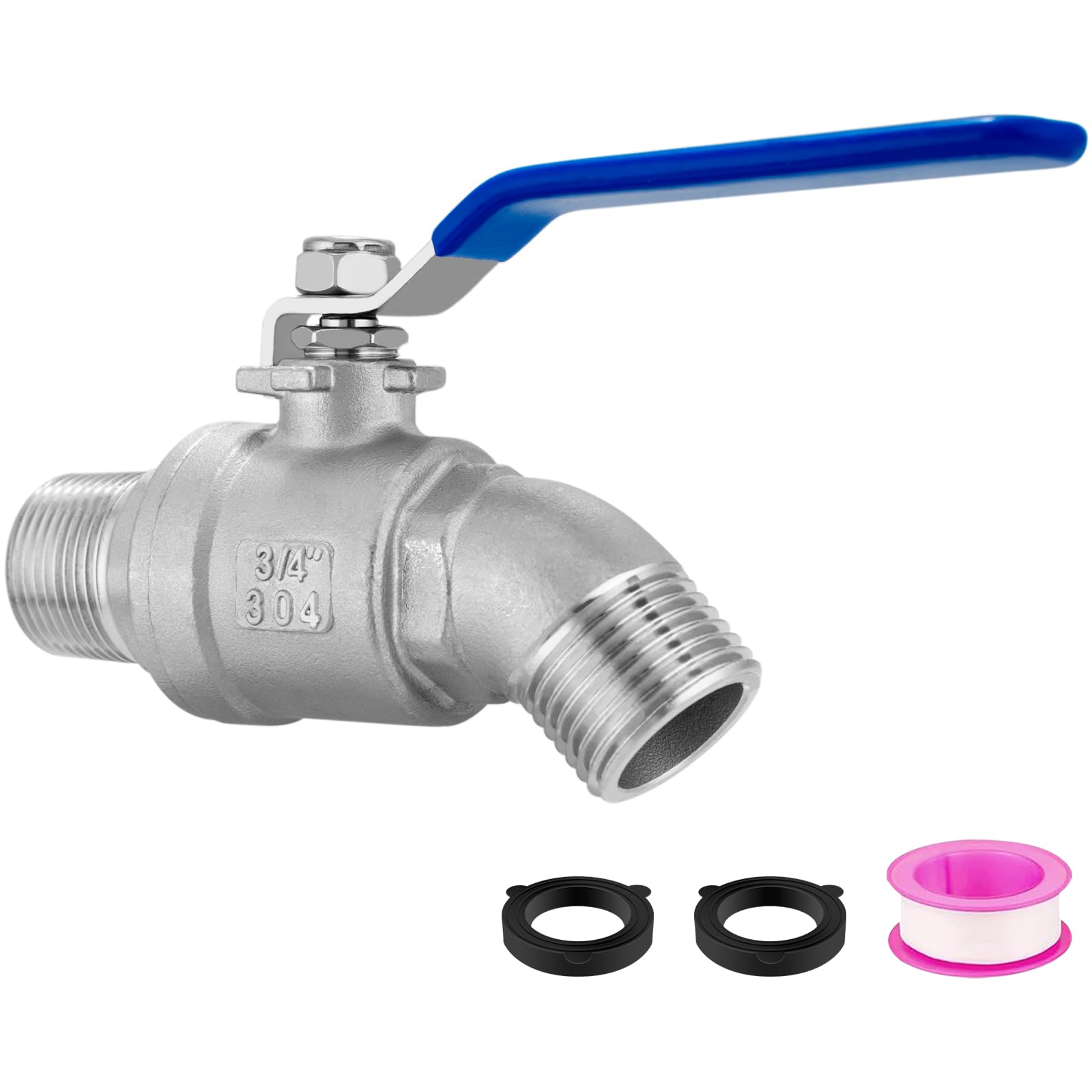
Stainless steel instead of brass, with a 20mm core that pushes water hard.
Nearly every valve on this list is brass. This one is 304 stainless steel, which is the grade used in kitchen sinks and outdoor hardware because it resists rust and corrosion without relying on a coating. If your wall is on a coast, in a humid yard, or you have watched brass fittings go green, that material choice is the reason to look here.
The flow side is just as deliberate. An upgraded 20mm large ball core is a wider passage than a standard valve, so it moves more water per turn for washing a car, filling a trough, or hosing down a patio. The oversized non-slip handle is sized for a comfortable grip and works even with low hand strength — a genuine help if arthritis makes twisting a small metal handle painful. It turns as a smooth 1/4-turn ball valve for fast open and close.
Sealing is handled with precision-machined threads, and the box includes PTFE thread tape plus two silicone hose washers as spares. Leakage is the one mixed signal: some buyers run it dry, others find it weeps until the joint is dressed properly. Tape the inlet, snug it down, and check before you call it done. It fits a 3/4-inch NPT male inlet and 3/4-inch GHT male outlet, with an actual hose-thread diameter of 1.05 inches.
Material plus flow: Stainless steel durability paired with a 20mm core — the rare valve that guards against both rust and weak streams.
Get the joint right: Leak reports track to installation, so use the supplied tape and test the seal before trusting it.
Choose stainless: A rust-resistant 304 body with a big 20mm flow core and a grab-friendly oversized handle.
Not your valve if: you expect a brass finish to match the rest of your outdoor fixtures.
7. LDR 020 6103 Brass Sillcock Valve
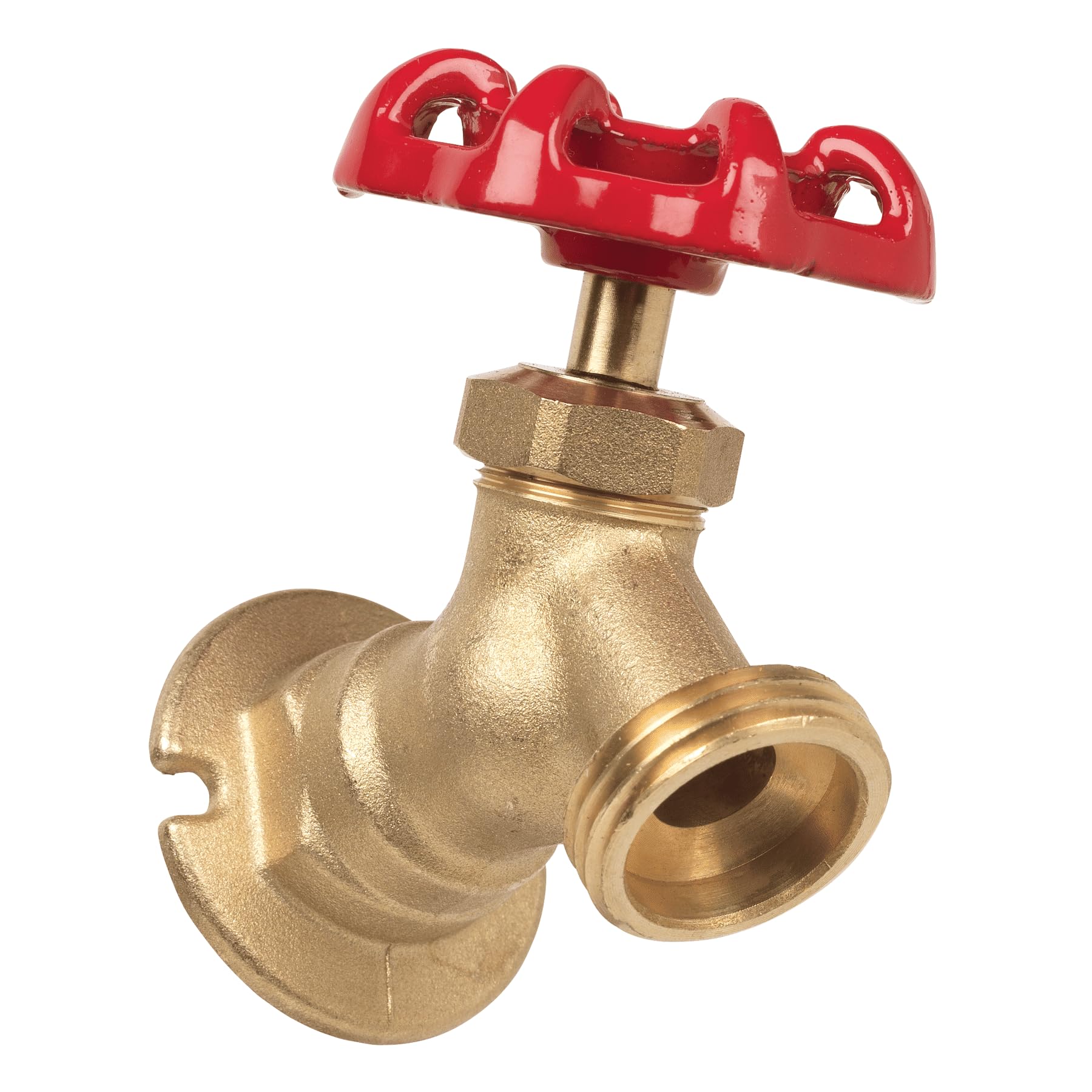
The flange-mount brass valve that holds steady against the wall while you tighten it.
The problem with a lot of spigots is that they want to spin or wobble against the siding while you are trying to seat them. LDR solves it with a notched flange — a flat plate with cut-outs that sits flush on the wall and keeps the body steady during and after installation. On a siding wall where the pipe exits at an awkward angle, that small design choice saves a lot of swearing. It connects 1/2-inch IPS to a 3/4-inch hose thread outlet, so standard hoses fit.
Inside, a neoprene seal disc does the shutoff work, giving a tight, drip-free close turn after turn without the metal-on-metal wear of a simple ball valve. It meets ANSI and ASTM standards and is 100% pressure tested by the maker, and it carries a limited lifetime warranty. Function and quality are what buyers talk about most, and leak-proof operation is a common note.
The genuine caveat is that rubber seals wear. One buyer found the valve lasted about a year and a half before needing replacement, so if longevity tops your list, weigh a solid ball valve against this disc-seal design. For a practical wall-mounted hookup that installs clean, it still holds up well.
Built for the wall: A notched flange holds the valve steady on siding, and the neoprene disc seals without a ball valve’s metal wear.
Seal life: The rubber disc is the wear part — expect a solid run but not forever.
Good on siding: A flushed, flange-mounted brass sillcock with a drip-free neoprene seal for standard 1/2-inch IPS supply.
Want forever-durable? A solid brass ball valve above may outlast the disc-seal design.
8. Eastman 80222 Frost Free Sillcock
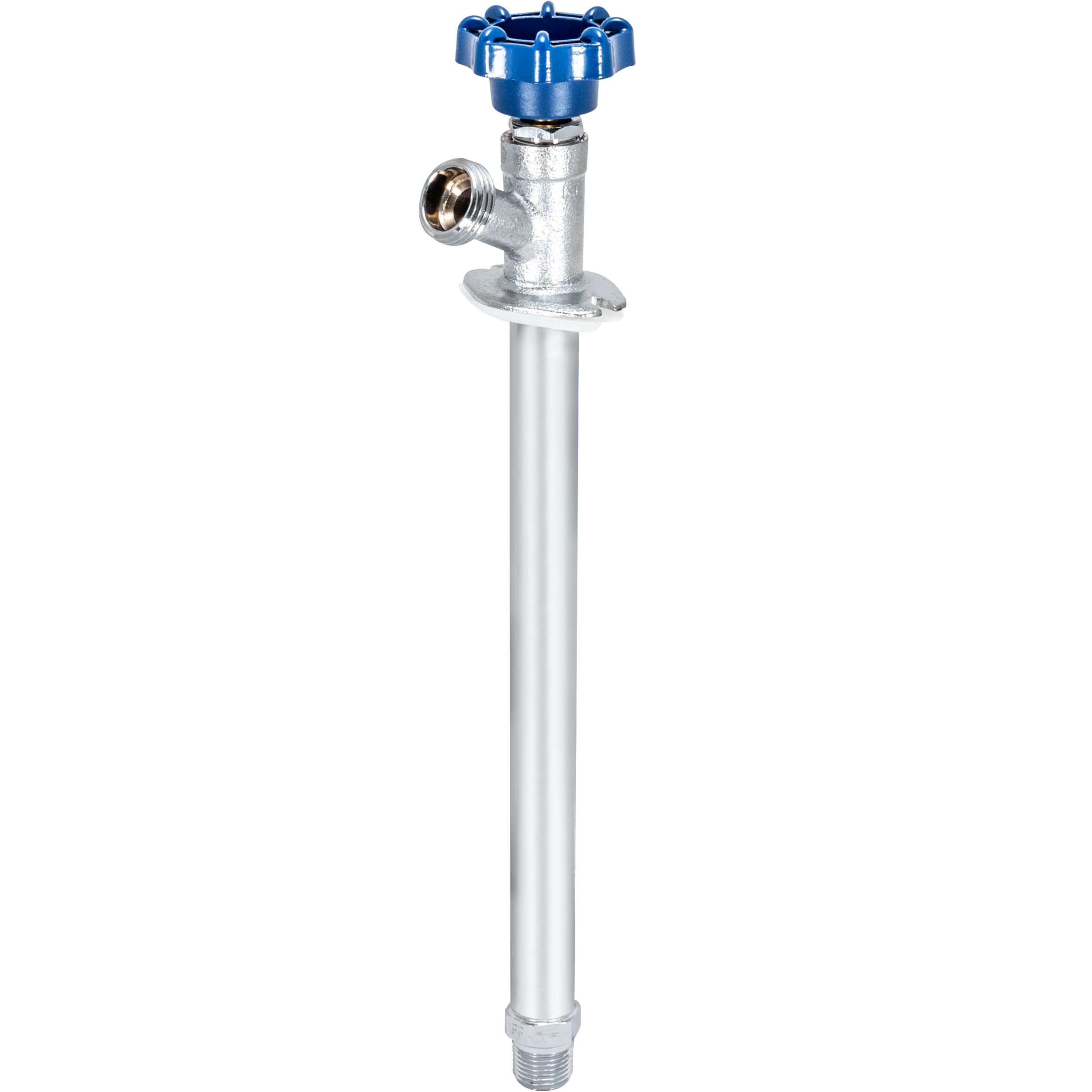
A 10-inch frost-free barrel that buries the valve seat deep where the cold cannot split it.
If your spigot splits every hard winter, the fix is not a heavier valve — it is a longer one. This Eastman sillcock is 10 inches long, so the actual shutoff valve sits deep inside the wall while the spout stays outside. Water drains back after each use, which keeps the freeze-prone section empty. It also carries a vacuum breaker, which is a one-way air valve that stops dirty hose water from being pulled back into your household supply.
It is built for fresh runs, not just replacements — the maker lists it for new installation or swapping out an old sillcock. The inlet is a 1/2-inch MIP x 1/2-inch Sweat connection, meaning one end threads on and the other solders, so it covers the two most common hookups. The large wheel handle is easier to grip than a lever in gloves. A notched flange sits flush against the siding to keep it planted.
Two things to know. And leakage is mixed — most run dry, some weeps, which tracks to the solder joint as often as the valve. Get the sweat side bright and clean before you heat it and the odds swing your way.
Cold-climate logic: The 10-inch body puts the valve seat inside the warm wall, and the vacuum breaker stops backflow — a genuine freeze-season fix.
Measure before you cut: Picture dimensions are the recurring gripe, so confirm the real length against your wall thickness first.
For the freezing wall: A 10-inch frost-free sillcock with a vacuum breaker, sized for fresh installs or replacing a split valve.
Wrong fit if: your wall is shallow — the longer barrel needs real depth to reach inside.
9. Himaweek 8 Inch Frost Free Sillcock Valve
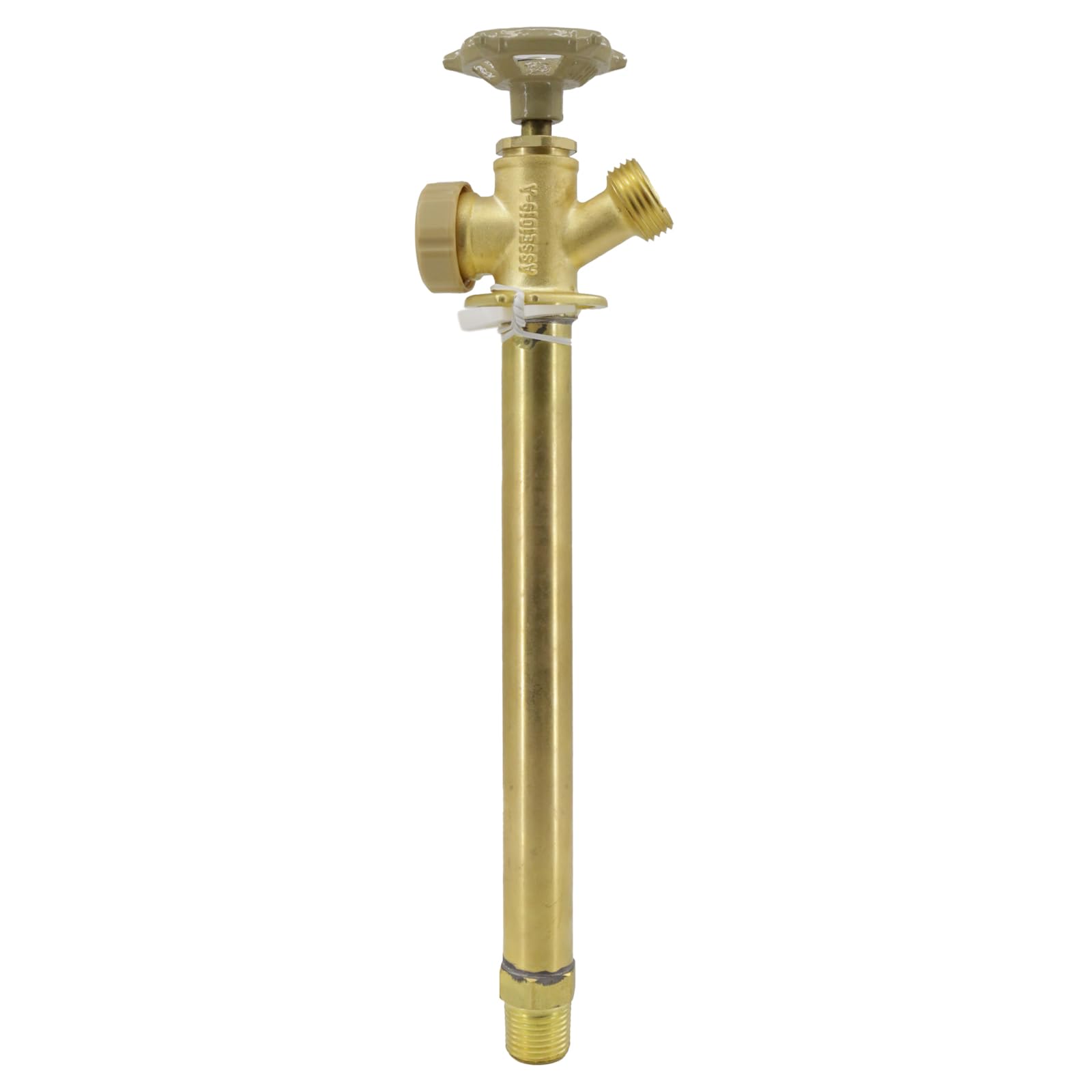
An 8-inch anti-siphon valve for thinner walls that still need freeze protection.
The Eastman above reaches a full 10 inches. This Himaweek runs 8 inches — two inches shorter, which is the difference between a clean install and a valve that bottoms out on a thin or shallow wall. It is the frost-free pick when your siding is close to the interior supply line. The anti-siphon design stops water backflow and, per the maker, also guards against water theft from the faucet and helps in freezing cold.
It uses multiturn operation with a large handwheel, so you open and close it by turning several times. That gives you finer flow control than a flip ball valve, and the big wheel is easy to grab. The inlet is 1/2-inch MNPT (male national pipe tapered) and the outlet is 3/4-inch hose thread. The maker rates maximum pressure at 80 psi, the lowest ceiling on this list, so it is suited to normal residential supply but not a high-pressure line.
Valve operation and leakage both come back mixed — some run dry and turn smoothly, others hit snags or leaks. On a multiturn unit, a leak is usually a seat that needs a firm close or a joint short on tape. Quality is what buyers praise most here, and it fits well for a lot of them. Just go in expecting an 80 psi limit and check the joint carefully.
The shallow-wall answer: An 8-inch anti-siphon barrel with a big multiturn wheel — the pick for thin walls that freeze.
Pressure ceiling: At 80 psi it ranks lowest here, so confirm your line pressure before swapping it in.
Right for thin walls: An 8-inch frost-free, anti-siphon valve with an easy-grip multiturn wheel.
Watch the rating: The 80 psi limit is the lowest on this list — not for high-pressure lines.
Know the Specs
NPT versus GHT thread
NPT stands for National Pipe Tapered — the thread that seals metal pipe fittings. GHT means Garden Hose Thread, the standard on every hose coupler. Your spigot has an NPT inlet that goes into the house and a GHT outlet that takes the hose. A 3/4-inch GHT outlet fits a standard hose; the inlet could be 1/2-inch NPT, 3/4-inch NPT, 3/4-inch FIP, or an IPS flange. Measure the inlet before buying.
Maximum operating pressure
This is the highest water pressure the valve body is rated to handle, usually written as PSI (pounds per square inch). Higher ratings give more safety margin over normal household supply. A ball valve rated to 600 psi, for instance, sits far below its limit during everyday garden use, while a valve rated to 80 or 125 psi is doing its normal job on a standard line.
Quarter-turn versus multiturn valves
A quarter-turn ball valve opens fully with a 90-degree twist — one motion, full flow. A multiturn valve takes several rotations to open and close, giving finer control. Ball valves suit hoses and quick fill jobs; multiturn suits buyers who like adjustable flow or gentler shutoff. Neither valve type is better — pick by if you want speed or fine flow control.
Frost-free sillcock length
A frost-free sillcock comes in lengths measured from the outside face to the inner valve seat. An 8-inch or 10-inch length determines whether the shutoff reaches far enough inside a freezing wall so the water drains below the freeze line. Buy a length that matches your wall depth — too short and the water sits outside where it freezes.
Common Questions
How do I know if my spigot is 1/2-inch or 3/4-inch?
Will a frost-free sillcock fit my wall?
Is a quarter-turn ball valve better than a multiturn valve?
Why does my new hose spigot leak at the inlet?
Can I use a garden hose spigot for drinking water?
What does the vacuum breaker on a frost-free sillcock do?
Why does my water flow feel weaker after replacing the spigot?
How do I stop a brass spigot from freezing and splitting in winter?
Does the thread count or size matter when attaching a hose?
The Bottom Line
For most walls, the Quarter Turn Hose Bibb is the pick to beat. It is a 600 psi brass ball valve (a valve with a bored ball inside that opens and closes the flow), which gives a real safety margin over household pressure. It has a 3/4-inch NPT inlet and a 90-degree handle that answers in one flick. If your stub is the smaller 1/2-inch size, the Arrowhead-style Brass Ball Hose Bibb threads right on and shuts off clean. For freezing walls, reach for the Eastman 80222 Frost Free Sillcock. Its 10-inch barrel puts the valve seat inside the wall where the cold cannot split it, which is what you want before the first hard frost.
How we choose
We do not accept paid placement. Every pick is matched to a real buyer and a real use-case; we do not hands-on test units.
Sources
Specifications: manufacturer listings and product documentation. Review insights: verified customer reviews. Pricing: not shown on this page (it changes often); check the current price via the retailer link.
As an Amazon Associate, Tactical Gear Guy earns from qualifying purchases. This does not affect which products we feature.