Specs are compiled from manufacturer listings and verified buyer reviews and can change over time — please confirm the key details on the product page before buying.
Here is the short answer: buy the NEMO Switchback if you want a foam pad that cannot deflate on you, and buy the OGERY if you want actual mattress padding under your hips. Everything else below is a trade between packed weight, thickness, and how much cold ground you plan to sleep on.
This guide is built by comparing the manufacturers’ published specifications and the patterns across verified customer reviews, so you get each pick’s real strengths and trade-offs instead of marketing spin.
Thin padding and lost air ruin more nights out than weather does. Picking well means matching insulation and thickness to your trip, so this outdoor sleeping pad breakdown ranks foam and air pads by how they actually sleep.
Top Picks

How To Choose The Best Outdoor Sleeping Pad
Three things decide whether you sleep well outside: how much cold the pad blocks, how thick the padding is under your hip, and how much room it eats in your pack. Nail those three and the rest depends on personal preference.
R-value is the number that keeps you warm
R-value measures how well a pad resists heat loss to the ground, and higher is warmer. A pad rated 2 (like the NEMO Switchback) suits mild nights and summer camping. A pad rated 9.5 (like the Hikenture) is built for frozen winter ground.
Air alone is not insulation. A thick air pad with no reflective layer will feel colder than a thin foam pad that reflects heat back at you.
Closed-cell foam versus self-inflating versus air
Closed-cell foam is solid material with sealed bubbles, so it cannot spring a leak and leave you on the dirt. Self-inflating pads combine foam with an air valve, so you get more cushion for a slightly bigger packed size. Air pads pack smallest but depend on the valve and the fabric holding.
Thickness and packed size trade-off
Two inches is fine for a back sleeper. Three to four inches is what side sleepers need so a hip does not bottom out. The catch is that padding adds bulk — a 4-inch pad rolls larger than a foam mat, which matters if you are carrying it rather than loading it into a vehicle.
Side-by-Side Comparison
| Model | Best For | Pad Type | R-Value | Thickness | Amazon |
|---|---|---|---|---|---|
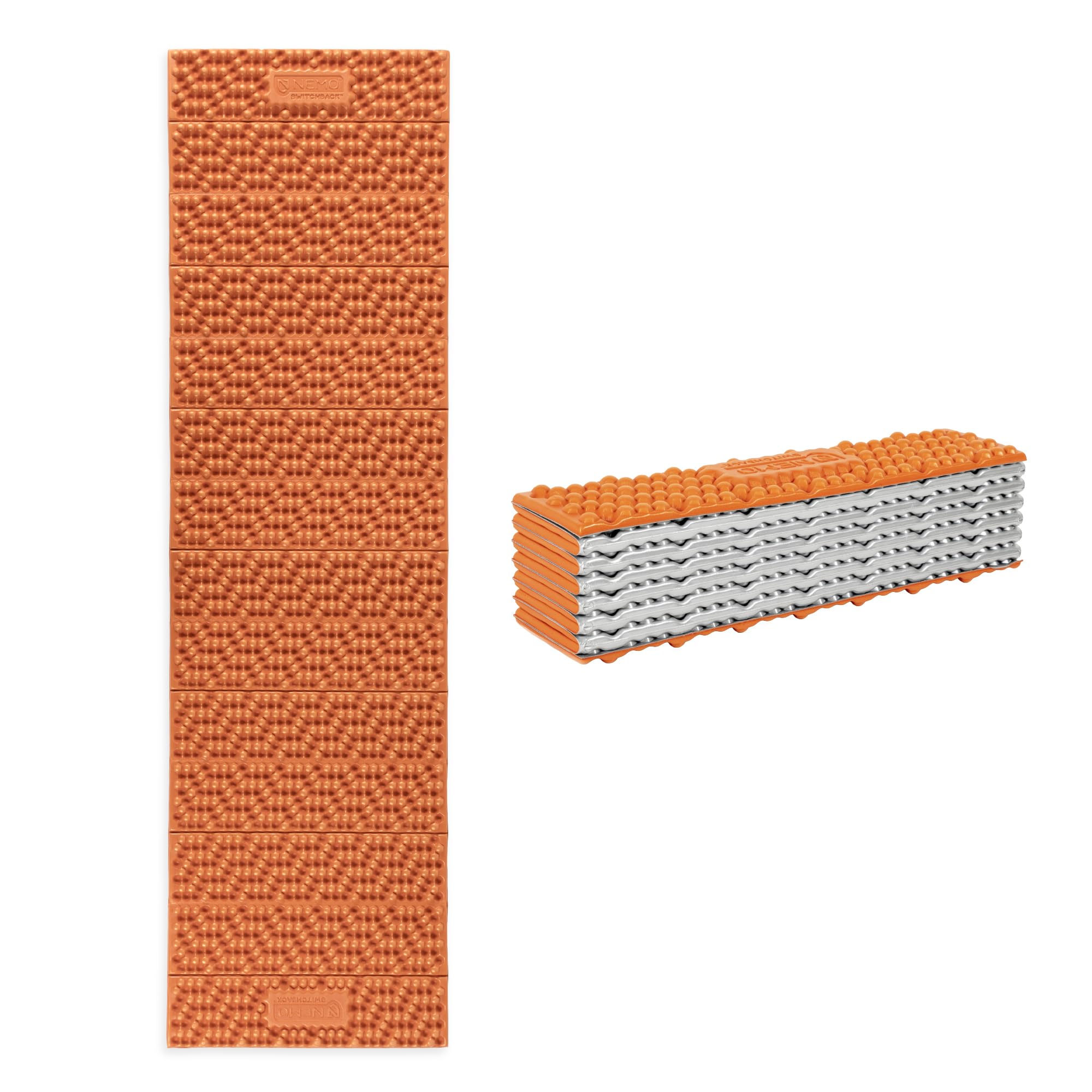
| NEMO Switchback★ Best Overall | Backpacking on a budget | Closed-cell foam | 2 | 5.5″ packed nodes | Amazon |
| Featherstone El CordionBudget Layer | Thru-hikers who hate leaks | Closed-cell foam | 2.1 | 14 cm | Amazon |
| HomeMate Memory Foam PadCot Ready | Cot and car sleeping | Memory foam | — | 3″ | Amazon |
| OGERY Self-Inflating Pad | Side sleepers in tents | Foam + air | — | 3.15″ | Amazon |
| MLILY Memory Foam Mattress | Roll-up travel comfort | Memory foam | — | 2.5″ | Amazon |
| Sea to Summit Camp Plus SI | Four-season tent camping | Self-inflating foam | 4.3 | 2.6″ | Amazon |
| Hikenture 4″ Self-Inflating | Winter and overlanding | Foam + air, electric pump | 9.5 | 4″ | Amazon |
| Therm-a-Rest BaseCamp | Frontcountry base camp | Self-inflating foam | 6 | 2″ | Amazon |
| Sea to Summit Ether Light XR | Backpacking in cool weather | Air sprung cell | 4.1 | 4″ | Amazon |
Detailed Reviews
1. NEMO Equipment Switchback Foam Sleeping Pad
Our pick — 4.5+★ from 650+ verified ratings; the strongest balance of quality and price.
The pad that cannot leak, priced for anyone who has been stranded by a flat air mattress.
This is a closed-cell foam mat — solid foam with sealed air bubbles, not an inflatable — so there is no valve to fail and no seam to split at 2 a.m. It carries an R-value of 2, meaning it slows heat loss to the ground well enough for mild nights. The hexagon nesting pattern packs the taller nodes tightly together, so the folded mat takes up less room in your pack than the surface area suggests.
What wins people over is the build. The dual-density Axiotomic foam puts a soft layer next to your body and a firmer one under it, and a metallized thermal film reflects your own body heat back at you. Buyers report it surviving hundreds of outings, and it holds 4.5+ stars across 600+ ratings. It is also genuinely light, which is the other reason backpackers keep coming back to it.
The honest catch is comfort on its own. Foam gives you support, not cushion, and some sleepers find a 3-inch air pad noticeably softer. Owners also split on size, so check the dimensions before you buy. Treat it as a base layer or pair it with a light air pad if you want plush.
Why the crowd keeps buying it
- Cannot deflate — no valve, no leak, no ruined night
- Reflective film plus R-value 2 traps warmth on mild ground
- Packs tighter than the hex node surface suggests
Where it gives ground
- Foam support, not air-pad softness
- Size runs small for some frames
Go for it when: you hike, you hate punctures, and you camp in summer or mild weather.
Think twice if: you need the sink-in cushion of a thick air mattress.
2. Featherstone Outdoor El Cordion Insulated Sleeping Pad
Cheap, warm enough for a summer thru-hike, and guaranteed for life if it ever fails.
The number to look at is the 2.1 insulation rating, tested to the ASTM F3340 standard — an independent test that checks how much heat a pad holds in. That figure is what tells a hiker this mat will keep them warm on cool summer ground, not just off the dirt. Its hexagonal nodes also stand higher off the ground than a traditional egg-shell pad, giving more coverage and more air gap under your body.
At 455 g, it barely registers in a pack, and closed-cell foam means it will not deflate mid-trip. The lifetime manufacturing warranty backs that up. Quality is the thing buyers trust most here, and the listing sits at 4.5+ stars from 200+ ratings.
Comfort is where this one splits. Some sleepers find the node pattern supportive, others find it too firm for a full night on their side. The thickness spec reads 14 centimeters on the listing, so take the sizing seriously before you commit.
Warranty note: a limited lifetime manufacturing warranty from a U.S. company covers defects and workmanship, so a broken mat has a path to repair or replacement.
Fit call: best for backpackers on a tight budget who value reliability over plushness.
Pick this for: solo summer trips where pack weight is the boss.
Leave it for: anyone who knows they need a soft air mattress.
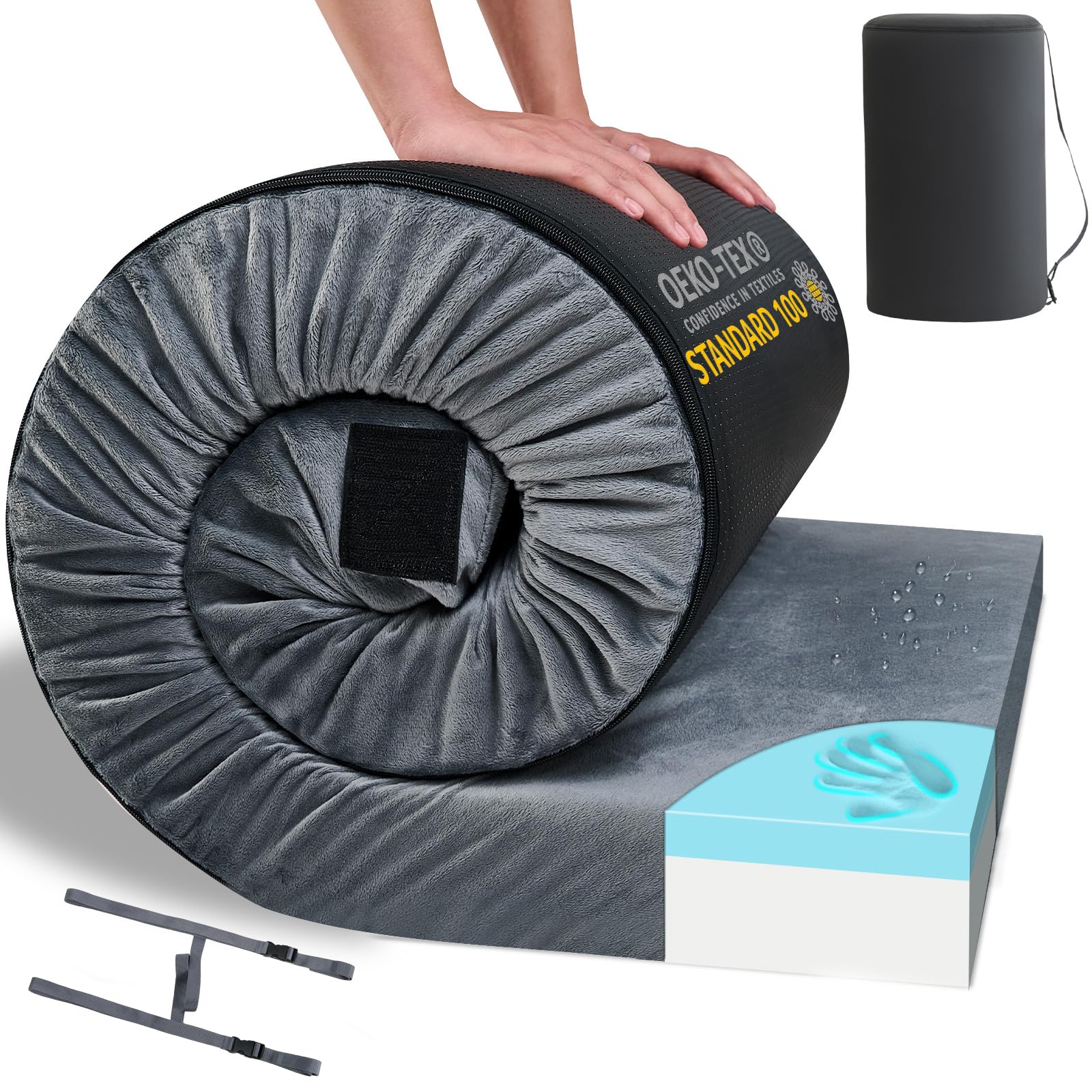
3. HomeMate Memory Foam Camping Mattress Pad
A 3-inch memory-foam topper that turns a hard cot into something you can actually sleep on.
Treat this as a bed you happen to roll up, not a hiking pad. It pairs memory foam with high-density support foam, so it absorbs weight instead of bouncing you. That makes it a strong match for a camping cot, a truck bed, or a guest room floor. The bottom is waterproof and non-slip, and the zippered cover comes off for washing.
Comfort is why people buy it, and buyers consistently report waking up without the ache thin foam leaves. It rolls with straps into the included travel bag, so storage between trips is not a chore. Sizes run from kid through twin XL, and Velcro connectors join two pads for a wider sleeping area.
Here is what you accept: 7.8 pounds. Put that next to the OGERY’s 6 pounds for similar padding, and you can see this one is the heavier of the two. That is fine strapped to a vehicle, less fun on your back. Allow 72 hours for the foam to fully expand before your first night on it.
Where it shines: uneven ground and hard cots, where both the foam and the non-slip base do real work.
Reach for this if: your car, truck, or SUV is the bedroom and comfort beats carrying weight.
Look elsewhere if: the pad needs to live in a backpack.
4. OGERY Self-Inflating Sleeping Pad
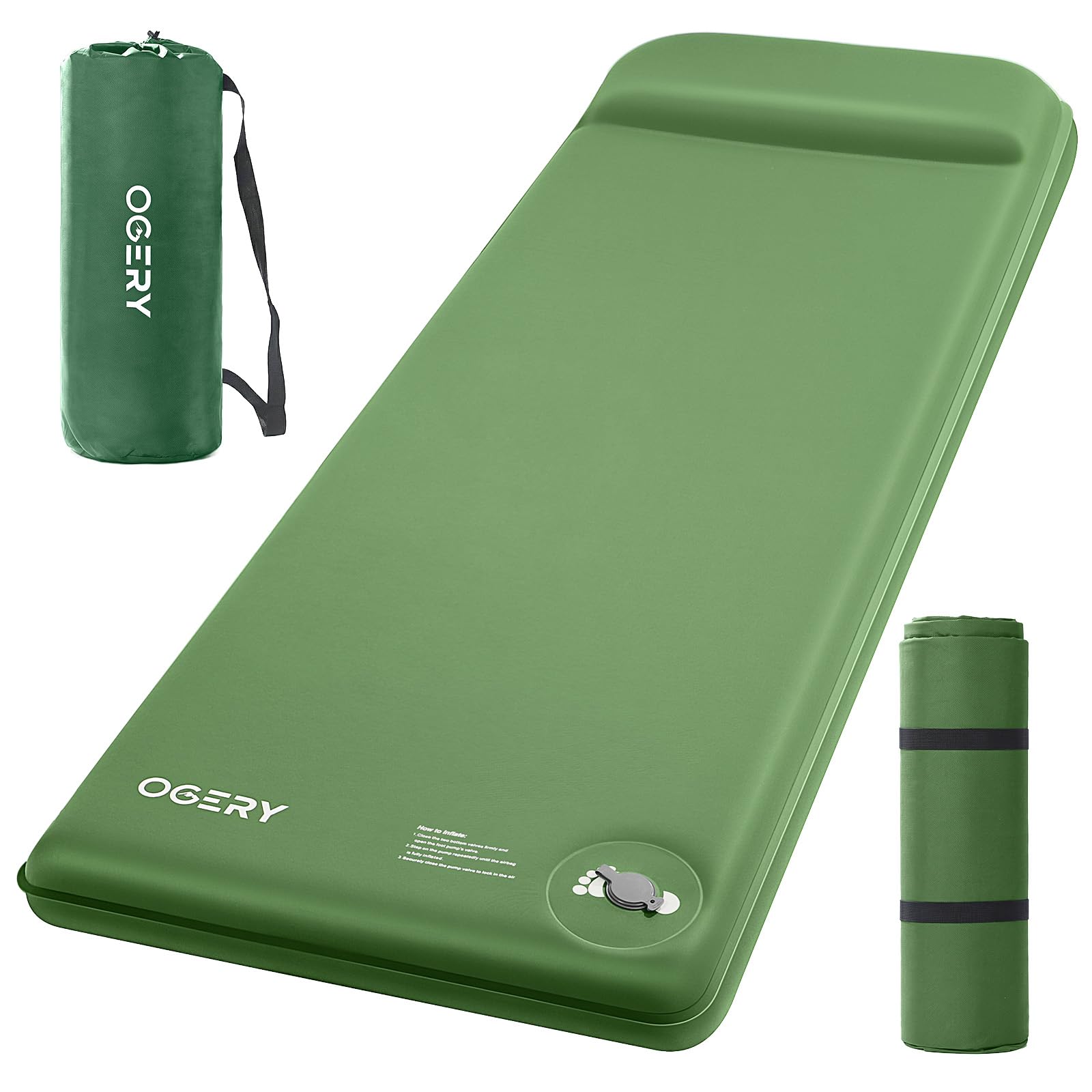
Hips and shoulders get real support here — the hybrid foam-and-air build stops the sink that pure air pads allow.
At 3.15 inches thick and 76.77 x 27.17 inches across, it gives a side sleeper’s hip real clearance. The foam-and-air hybrid reduces the springy bounce of a pure air pad, so your body settles instead of wobbling. Open the valve and the foam draws air in on its own; the built-in foot pump lets you top it up to your preferred firmness without mouth-blowing.
The nylon face fabric resists abrasion on tent floors and truck beds, and the textured base keeps it from sliding on a cot. Buyers keep returning to comfort, and the recurring theme is waking up without a backache. Owners mention it holding air for three straight nights, and one compared the feel to a firm foam mattress. The 4.5+ star rating reflects that satisfaction.
What you trade is weight and quiet setup. At 6 pounds it is a car-camping pad, not a thru-hike pad. The foam does mute the crinkle of an air-only mattress, but you still need to let it inflate and fine-tune it with the pump.
What earns its spot
- 3.15″ thickness supports side sleepers without bottoming out
- Foot pump fine-tunes firmness with no separate pump
- Textured base grips tent floors and cots
What you give up
- 6 pounds is car-camping weight
- Needs a little setup time with the valve and pump
The fit: side sleepers who want mattress feel inside a tent or car.
The snag: too heavy to carry far on foot.
5. MLILY Memory Foam Camping Mattress 2.5 inch
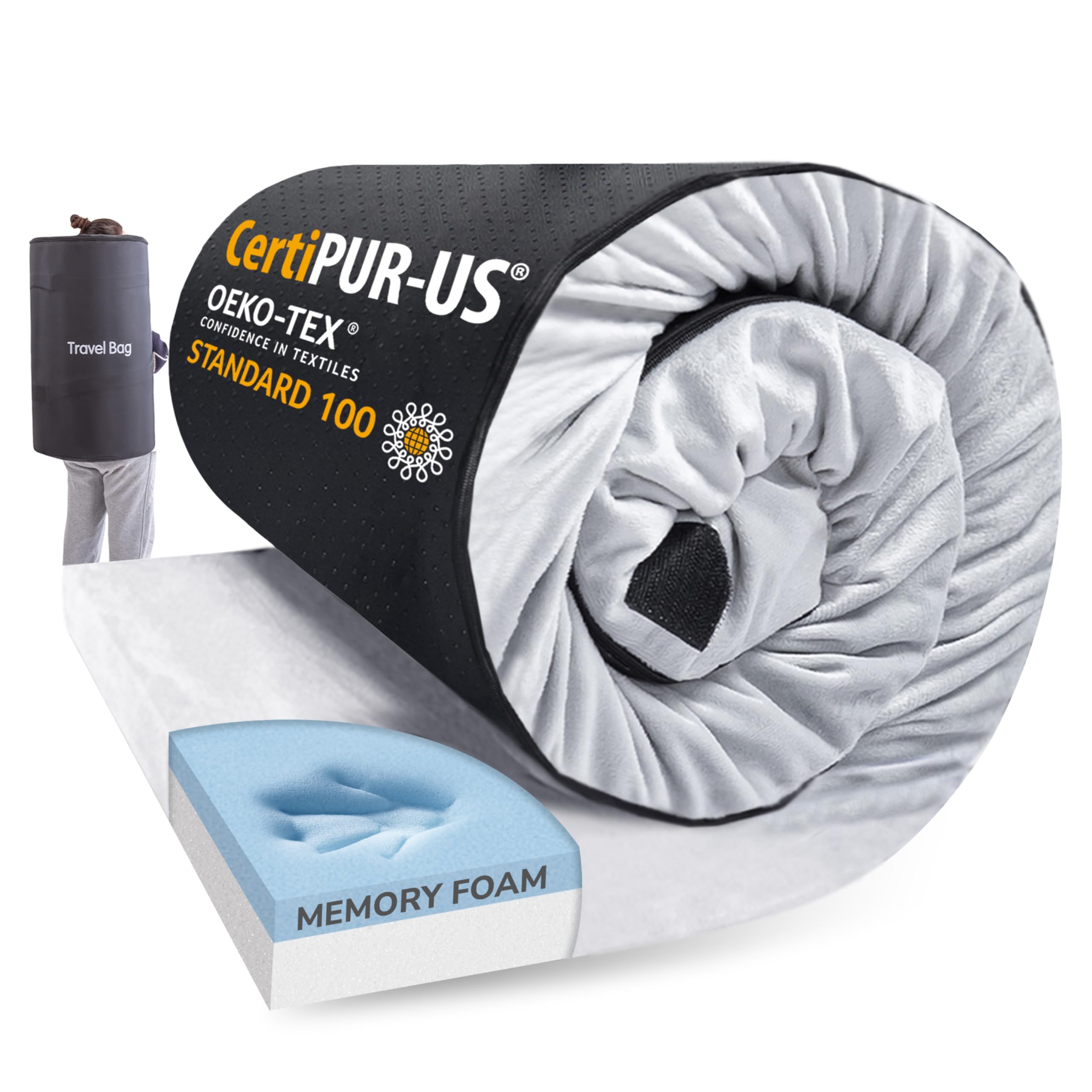
The roll-it-up pad that slides back into its bag without a fight — 2.5 inches of certified foam.
Two layers do the work: AeroFusion memory foam that molds to your curves on top, and a Flex Support Foam base underneath. A 100% polyester top cover keeps the surface smooth and not sticky in warm weather. The bottom is waterproof and non-slip, which matters on damp grass or a slippery bunk frame.
Its real trick is rollability — it rolls in seconds and goes straight into the included travel bag, and the listing rates 4.5+ stars for that reason. The memory foam carries CertiPUR-US certification, which is a program verifying foam content and emissions, not just a label slapped on a box. Quality and comfort are the two things buyers value most in it.
At 2.5 inches it is the thinnest foam pad here, so a heavier side sleeper may feel the ground through it. Size feedback is mixed, so measure your cot or car space first. It is a room-and-vehicle pad, not a backcountry one.
Best use case: guest floors, kid play areas, and car camping where you want to pack up fast.
Choose it for: fast pack-up and certified foam comfort at a mid-range tier.
skip it if: you need 3 or 4 inches of separation from rough ground.
6. Sea to Summit Camp Plus SI Sleeping Mat
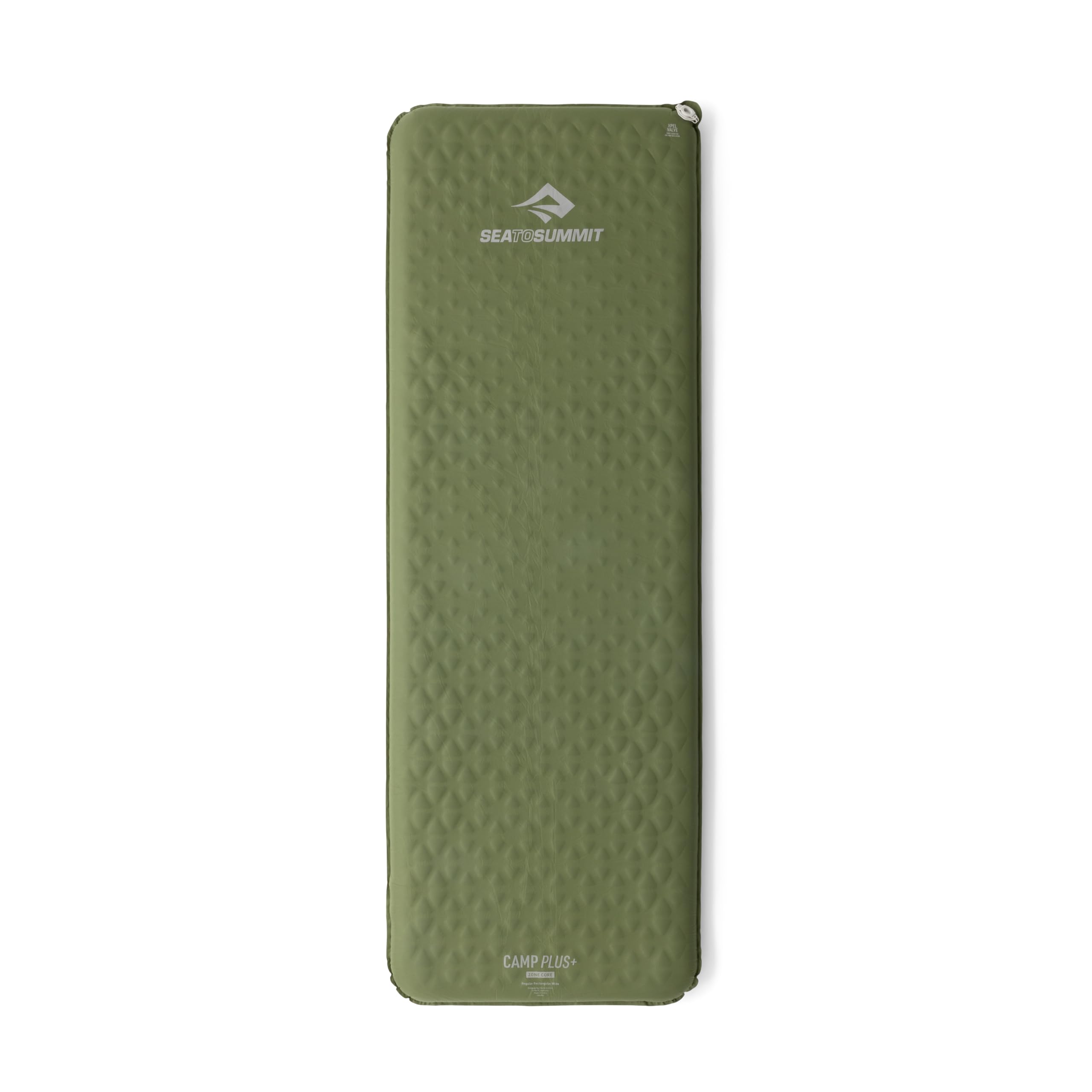
A 4.3 R-value at 2.6 inches thick — this is the pad for cold ground without going full winter spec.
The 4.3 R-value is the headline: that insulating figure is high enough to block cold from all but the coldest ground, so shoulder-season trips stop being a test of endurance. The 2.6-inch latex foam gives you a medium-firmness bed that stretches out over a rectangular 72 x 25.2-inch footprint. The reversible xpel valve lets you inflate, deflate one-way, then fine-tune pressure without losing air.
Its coring technique keeps the body-contact zones warm while cutting bulk elsewhere, and the durable 75D polyester face fabric is built to survive seasons of use. That build quality is what owners single out as its best trait. Packed, it measures 13 x 7.5 inches and weighs 3.2 pounds, and it ships with a stuff sack, field repair kit, and PillowLock patches for holding a Sea to Summit pillow in place.
The mixed part is the self-inflating behavior — some find it fills fully on its own, others need to add breaths. Sizing and weight feel bulky to some backpackers. Price sits in the premium tier, so buy it for the insulation, not the portability.
Insulation verdict: 4.3 R-value at 2.6 inches is the strongest warmth-to-thickness balance on this list.
Set-up note: give it time to self-inflate, and top it up by breath if it feels soft.
Worth it for: campers who sleep out in spring and autumn and hate waking up cold.
Hold off if: every ounce in your pack is weighed.
7. Hikenture 4″ Thick Self Inflating Sleeping Pad
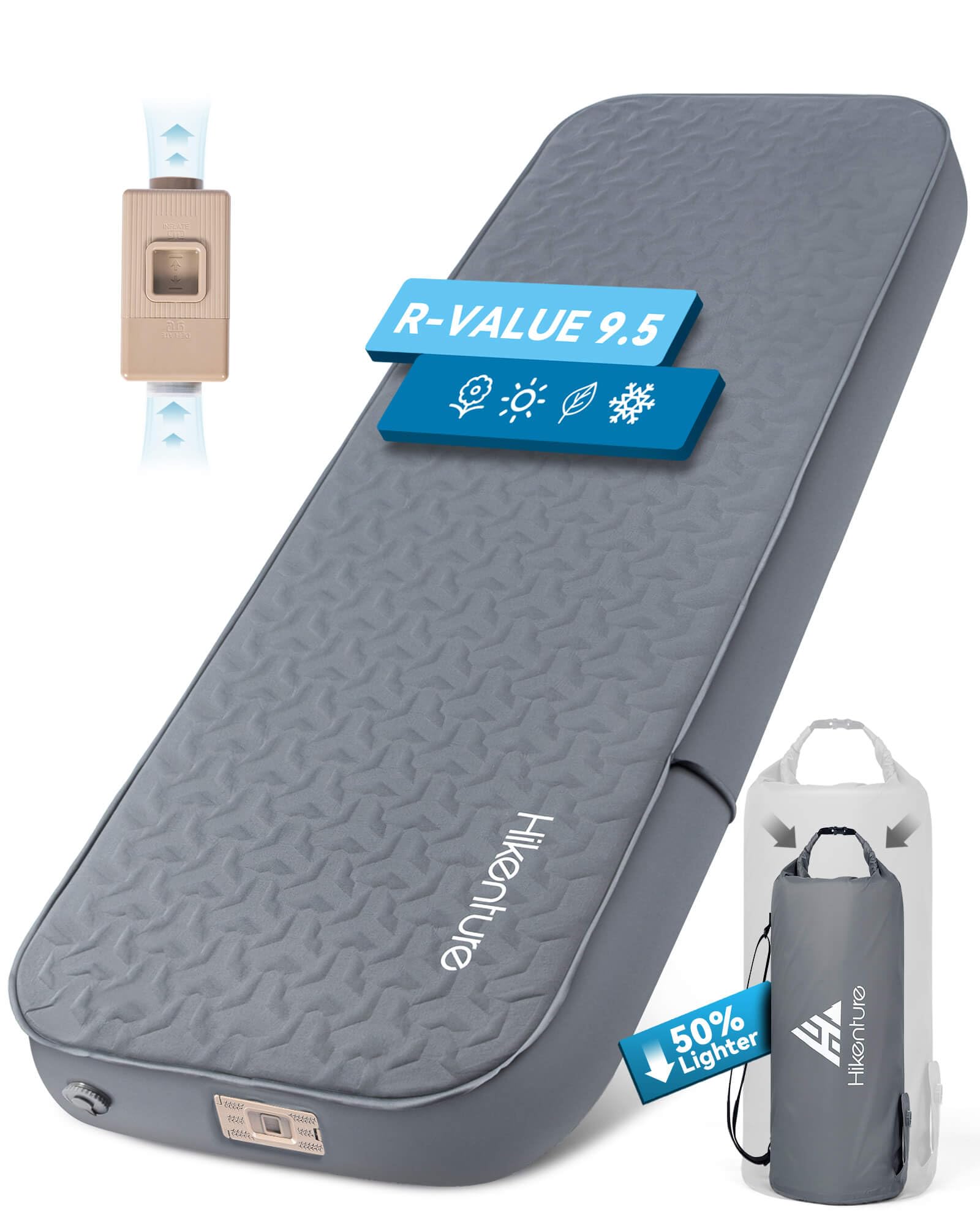
A 9.5 R-value and a built-in electric pump — the pad built for frozen ground and no patience.
This is the warmest pad here by a wide stretch: R-value 9.5, which the maker presents as an all-season barrier against cold and damp ground. At 4 inches thick across an 80 x 28-inch footprint, it also gives the most room and padding of any pick on the list. The Y-structure foam-and-air core cradles hips and shoulders and resists bottoming out, and the stretch-knit cover is designed to move quietly.
Setup is the other selling point. The built-in electric pump is listed at 90 seconds to full firmness, and a button deflates it for the included travel bag. That makes it a natural match for a truck, RV, or overlanding rig. Quality and comfort are the two things buyers value most in it, and the stretch-knit top cuts the crinkle that light sleepers hate.
Two honest notes. Air retention gets mixed feedback, with some mats holding firm and others losing pressure, so check the valve seating before a trip. And a 460-plus rating pool still leaves it at 4.0+ stars, a step behind the foam pads above. Buy it for insulation and setup speed.
The case for it
- 9.5 R-value handles winter ground
- Built-in electric pump inflates in 90 seconds
- 4″ of padding across an 80 x 28″ footprint
What to watch
- Air retention is inconsistent across owners
- Premium-tier pricing for an electric-pump pad
Built for: cold-weather campers, overlanders, and anyone who wants push-button inflation.
Reconsider if: you want a pad with nothing that can fail.
8. Therm-a-Rest Basecamp Self-Inflating Camping Sleeping Pad

Year-round warmth at 2 inches thick, from the brand that has been making self-inflating pads longest.
The R-value 6 is the reason to buy it: that insulation rating covers year-round camping, so it handles cold nights the foam mats above cannot. The WingLock valve is claimed to inflate three times faster than a classic valve, which matters when you pitch at dusk. Thick thermal foam gives you the comfort, and the PFAS-free DWR coating on the stuff sack keeps your gear dry without the chemical treatment.
Quality is the trait owners trust, and the general read is that it feels like a real bed on a cot. It measures 72 x 20 x 2 inches and rolls to 21 x 7 inches at 2 pounds 8 ounces, so it packs more compactly than the 4-inch pads. A pump sack is included, and it is made in the USA.
Two realities to plan around. Self-inflation is mixed — some find it easy, others need to add air by breath or with the pump sack. And 20 inches wide is narrow for a big frame, so it suits a solo sleeper better than a sprawler.
The real trade: R-value 6 keeps you warm, but the 2-inch thickness means less padding under a heavy hip than the Hikenture’s 4 inches.
Great for: frontcountry campers who want proven insulation and a valve that works fast.
Not for: wide sleepers or anyone who rolls a lot at night.
9. Sea to Summit Ether Light XR Insulated Sleeping Pad

Four inches of air-sprung cushion with reflective insulation — built for cool-weather backpacking.
The ASTM-tested R-value of 4.1 is what makes this an air pad you can trust in cool conditions, since it reflects infrared heat back at you through multiple TRM layers. Air Sprung Cell construction gives you stable, cushioned support that adapts whether you sleep on your side, back, or stomach. At 4 inches thick, it rivals the thickest pads here on padding while packing far smaller than memory foam.
The integrated Airstream Pumpsack fills it fast, and the XPRESS valve makes pressure tweaks and deflation quick. It comes with a carry bag. Comfort and sleep quality are the two things buyers praise most, and it is a genuine side-sleeper favorite — the kind of pad where you roll over and never wake. It holds 4.0+ stars from 100+ ratings.
Two things to know. The tapered shape narrows toward the feet, so the regular size measures 72 x 21.7 inches at its widest — narrower than the OGERY or Hikenture. And the R-value of 4.1 trails the Camp Plus SI’s 4.3, so it is an air-pad alternative, not a winter pad. Insulation is good, not extreme.
For the weight-obsessed: thick air-pad comfort in a packable form, built for backpacking and bikepacking in cool weather.
Best match: backpackers who want cushion and insulation without memory-foam bulk.
Second thought: the tapered shape narrows for wide sleepers.
Know the Specs
R-Value
R-value measures resistance to heat loss, so higher means the pad blocks more cold from the ground. A pad rated 2 is a summer pad. One rated 4 and above covers three seasons. At 9.5 you are into winter territory. If you sleep cold or push into shoulder seasons, that number matters more than thickness.
Thickness and Packed Size
Thickness is your clearance from the ground, and it is what side sleepers need to keep a hip from bottoming out. Three to four inches does the job. The trade is bulk: memory foam at 3 inches rolls far larger than a 4-inch air pad, so pick by how you carry the pad, not by which number sounds bigger.
Closed-Cell versus Inflatable
Closed-cell foam has sealed bubbles and cannot leak, so it is the fail-safe option. Inflatable and self-inflating pads give more cushion and pack smaller, but depend on the valve and the fabric holding air. If a leak would ruin your trip, foam wins.
Insulation Type
Air alone does not insulate; you need a reflective layer or foam filling to trap warmth. A metallized thermal film reflects body heat back at you, while foam creates a physical gap from the ground. Pads with both — like a foam-and-air hybrid — tend to be warmer than air alone at the same thickness.
Common Questions
What R-value do I need for summer camping?
Can a closed-cell foam pad deflate overnight?
How thick should a sleeping pad be for side sleeping?
Is a memory foam pad too heavy for backpacking?
What is the difference between self-inflating and air pads?
Do I need a pump for a self-inflating sleeping pad?
Will a 4-inch sleeping pad fit inside a tent footprint?
How do I stop a camping mattress from sliding on a cot?
Can I use a camping mattress pad indoors?
Is a higher R-value always better?
The Bottom Line
The outdoor sleeping pad to start with is the NEMO Switchback — it can’t leak, it holds warmth at R-value 2, and it packs down for a backpack. If side sleeping is your problem, the OGERY gives you 3.15 inches of foam-and-air support. For winter and overlanding, the Hikenture with its 9.5 R-value and electric pump is the one to reach for.
How we choose
We do not accept paid placement. Every pick is matched to a real buyer and a real use-case; we do not hands-on test units.
Sources
Specifications: manufacturer listings and product documentation. Review insights: verified customer reviews, as of November 2026. Pricing: not shown on this page (it changes often); check the current price via the retailer link.
As an Amazon Associate, Tactical Gear Guy earns from qualifying purchases. This does not affect which products we feature.