Specs are compiled from manufacturer listings and verified buyer reviews and can change over time — please confirm the key details on the product page before buying.
If you want one answer: the Columbia Firecamp is the safest buy on this list, because it pairs real waterproofing with cold-weather warmth and one of the best owner-consensus records here. But the honest truth about men’s hiking boots is that “waterproof” and “durable” get printed on almost every box, and the trail decides which ones actually were. So this guide separates the boots that stay dry on a wet ridge from the ones that only look the part.
This guide is built by comparing the manufacturers’ published specifications and the patterns across verified customer reviews, so you get each pick’s real strengths and trade-offs instead of marketing spin.
You’ll see what each boot genuinely does well, where it falls short, and who it fits. Below are nine tested-by-owners top rated men’s hiking boots, sorted so you can match one to your own terrain and foot.
Top Picks

How To Choose The Best Top Rated Men’s Hiking Boots
Most buying mistakes in this category come down to one thing: choosing a boot for a hike you don’t actually do. A light mid-cut trail boot and a heavy leather hunting boot are both “hiking boots,” but they solve completely different problems. Match the boot to the terrain and weather you really walk in, then worry about the details.
Waterproofing Is a System, Not a Badge
A waterproof membrane (a thin liner that blocks water but lets sweat vapor escape) only works if water can’t get in around it. That’s why a fully gusseted tongue — a tongue attached to the upper on both sides — matters. On a wet hike, water enters through the laces more often than through the sole. Look for seam-sealed construction and treated leather or a breathable liner, and accept that no boot stays dry if you stand in a stream.
Weight and Height Decide Your Day
A mid-cut boot (ankle-height collar) gives support on uneven ground without the bulk of a full mountaineering boot. Weight is the spec buyers most regret ignoring — every extra pound on your foot costs energy on a long climb and hammers your knees on the way down. If you hike fast and light, a mid cut around 2.5 pounds is a different animal from a 4.5-pound leather boot. Neither is wrong; they’re for different days.
Fit, Toe Room, and Break-In
Your heel should lock in place while your toes still wiggle. A boot that’s tight in the toe box will bruise your toes on the descent no matter how good the cushioning. Leather uppers often need a break-in period; mesh and synthetic uppers usually feel ready on day one. Try boots at the end of the day when your feet are at their largest, and wear the socks you plan to hike in.
Side-by-Side Comparison
| Model | Best For | Upper Build | Waterproofing | Stated Weight | Amazon |
|---|---|---|---|---|---|
| Columbia Firecamp | Cold-weather day hikes | Waterproof synthetic | Waterproof construction | — | Amazon |
| Columbia Strata Trail Mid | Light trail and everyday wear | Synthetic mesh | Waterproof | — | Amazon |
| Merrell Speed Strike 2 Mid | Fast, light day hikes | Outdoor mesh | Waterproof | 2.5 lb | Amazon |
| KEEN Hightrail Mid | Quick-paced day hikes | Water-resistant leather | Waterproof | — | Amazon |
| ROCKY Outback GORE-TEX | Rugged brush and all-day wear | Full-grain leather | GORE-TEX lining | 4.5 lb | Amazon |
| Timberland White Ledge Mid | Daily trail and casual wear | Waterproof leather | Seam-sealed | 1.1 lb | Amazon |
| Merrell Moab 3 Mid GORE-TEX | Comfort on rough terrain | Mesh and leather upper | GORE-TEX | 1.5 lb | Amazon |
Detailed Reviews
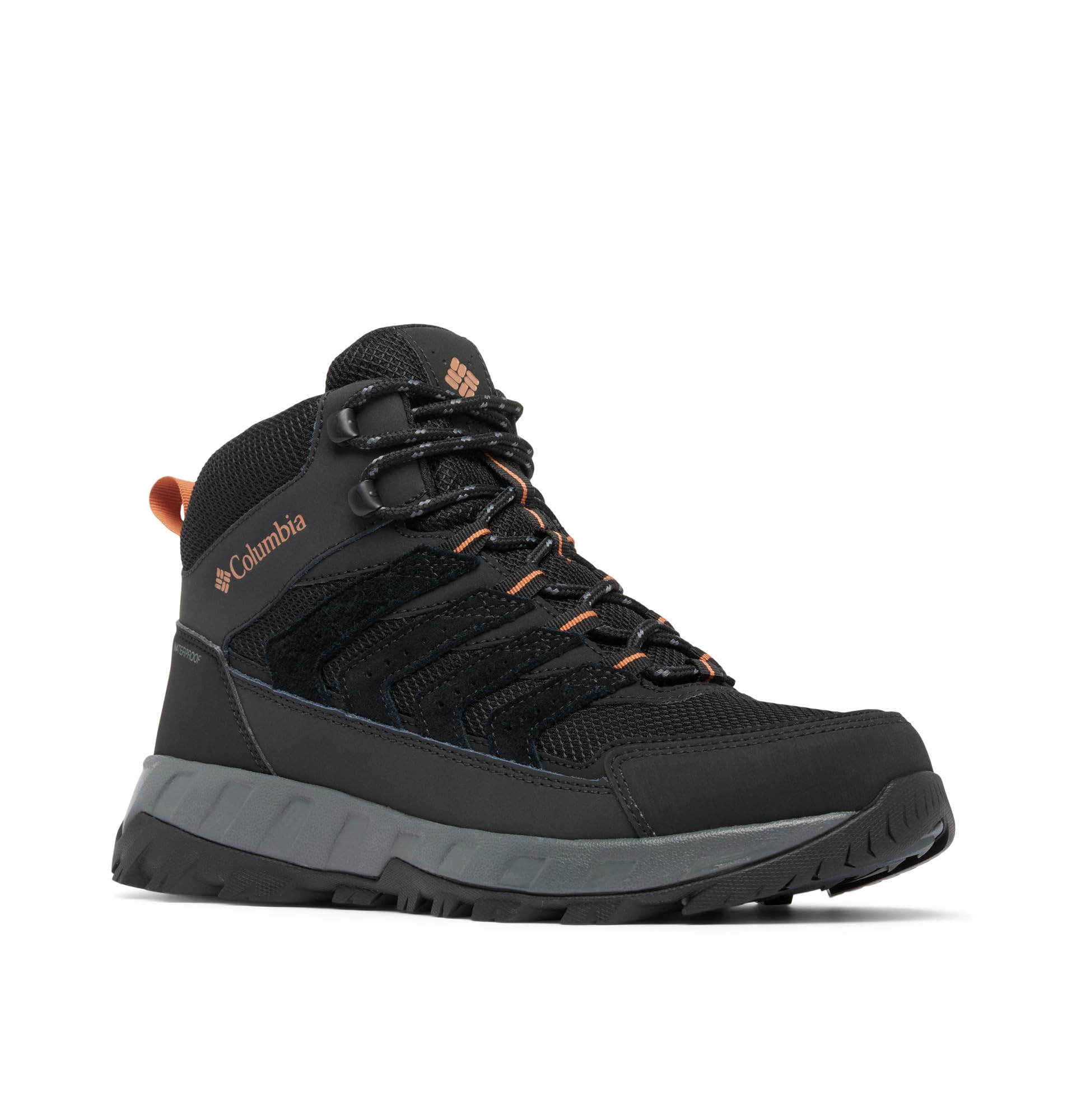
1. Columbia Men’s Firecamp Boots
The insulated waterproof boot for cold, slushy shoulder-season hikes.
The Firecamp is the pick here for anyone whose hikes happen in the shoulder seasons — cold mornings, wet leaves, a bit of frost. Its build is waterproof, and the inside carries low-bulk insulation (a thin layer of warmth that doesn’t turn the boot into a winter brick) plus plush cushioning. In plain terms: you get a warm, comfortable boot that doesn’t feel like you’re dragging a duffel bag up the hill.
What wins people over is the build quality first, with comfort close behind — the two things that make a boot something you reach for on a gray Saturday rather than a box that lives in the closet. Water resistance and outright warmth both get real credit from owners, and the fit draws praise for toe room, which matters on the downhill. It’s a multi-sport boot in Columbia’s catalog, offered in multiple colors and sizes, so you can match it to your wardrobe instead of living with whatever color was left.
The catch is honest and simple: this is a versatile mid-cut, not a load-hauler. Nobody claims it’s a technical mountaineering boot, and the “technical specifications” list here is thin — no published weight, no stated membrane name, no listed outsole compound. So if you need documented specs to compare against a spreadsheet, the Moab 3 or the Rocky give you more paper. If you want a warm, waterproof boot that just works for three seasons of hiking, this is the one to beat.
What Owners Keep Coming Back To
- Waterproof build that keeps socks dry in muck and slush.
- Insulation and cushioning make cold-weather walks comfortable, not punishing.
- Toe room in the fit reduces downhill toe-bruising.
- Available in multiple colors and sizes.
Where It Stops Short
- No published weight or membrane name — hard to compare on paper.
- Built as a multi-sport mid, not a technical mountaineering boot.
- Insulation runs warm in summer heat.
The right call if: you hike in cool, wet, unpredictable weather and want a boot that’s warm the moment you lace up.
Think twice if: you mostly hike in summer heat or want documented spec numbers to compare.
2. Columbia Men’s Strata Trail Mid Waterproof
A lightweight trail mid that feels broken in before you leave the driveway.
If your version of hiking is a two-mile loop, a dog walk, or a weekend trail near town, you probably don’t need a heavy leather boot. The Strata Trail Mid is built for exactly that — a lightweight, durable shoe for multiple activities on the trail. It’s waterproof, and it’s a mid cut, so you get ankle coverage without the bulk.
Comfort is the story here: owners describe these as extremely comfortable right from the start, with a fit that runs true to US measurements. That “no break-in” quality is the real value. A boot that fits correctly from day one means you’re not limping through a month of blisters learning to love it. The styling also draws compliments, which is more than most trail boots earn.
Here’s the thing a buyer needs to know: durability and water resistance are the mixed signals on this boot. Some owners find them quite durable and waterproof; others report tears within months or find them not very waterproof. That’s not a reason to avoid it — it’s a reason to think about your use. If you hike hard and often, step up to the Merrell Speed Strike 2 or the Merrell Moab 3. If you hike light and want comfort from day one, this is a bargain.
The honest read: this is a comfort-first trail boot, not a durability-first one. The waterproofing is there on paper but the owner experience varies on how long it holds up. Buy it for the fit and the easy first day, not for the multi-season beating.
Reach for this if: you want trail-ready comfort the moment they arrive and your hikes are short and casual.
Look elsewhere if: you’re planning long, wet, or hard-use seasons where the upper has to take abuse.
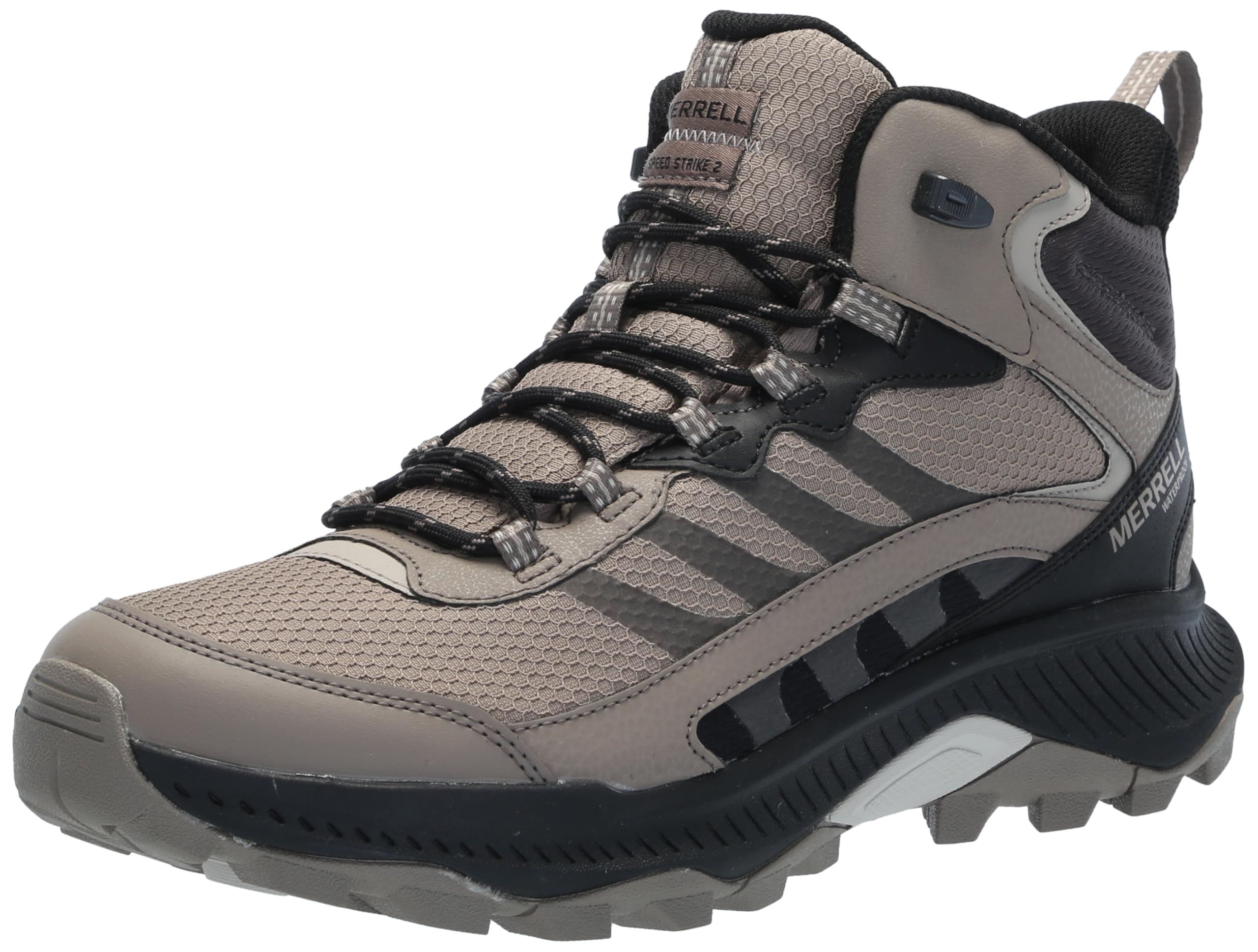
3. Columbia Mens Redmond IV Mid Waterproof
At 2.5 pounds, it’s a boot that hikes more like a sneaker.
Put this next to the Rocky Outback and the gap is enormous: 2.5 pounds versus 4.5 pounds, and 12 x 8 x 4.5 inches versus 5 x 5 x 0.7 inches. That difference is what you feel on a climb — the Speed Strike 2 is the athletic hybrid hiker in this lineup, built with durable outdoor mesh uppers and a sticky trail outsole for grip on uneven ground.
You get comfort with toe space, and that is what this boot does best. Owners mention good build quality and a fit they like, and they say it supports without feeling bulky. That support without bulk is the whole point of a hybrid hiker, and this one delivers it. On a fast day hike on a groomed trail or a mixed-terrain walk, the mesh upper (a woven fabric top that lets air through) keeps the boot breathable and light in a way a leather boot can’t.
Where it differs from the heavier leather picks is endurance — durability and water resistance are the two mixed notes. Mesh boots trade ruggedness for ventilation, and that’s the trade here. So be realistic: this is the boot for the hiker who values pace and comfort over bushwhacking through thorns. For everything from a local ridge to a resort trail, it’s an excellent, lightweight choice.
The trade you’re making: speed and comfort for a lighter-duty upper. You get a 2.5-pound boot with a sticky outsole and mesh that breathes — and you give up the leather-boot armor that the Rocky provides.
The fit note: toe room draws praise, which is the fix for downhill toe-bruising on long descents.
Go with this if: you hike fast, want a boot that feels athletic from the first step, and don’t need a leather tank.
Pick a heavier leather boot instead if: your trails run through brush, scree, or thorny ground.
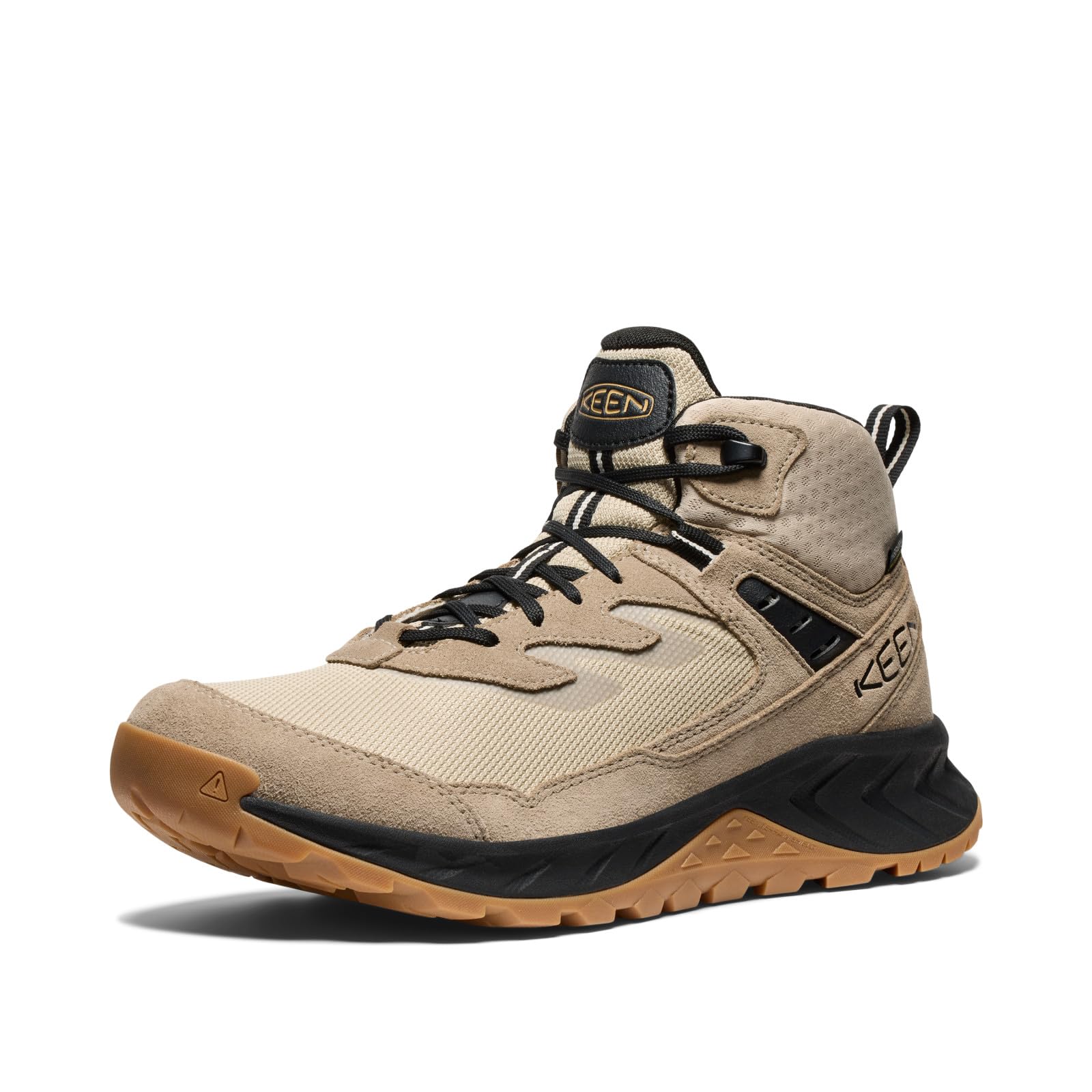
4. KEEN Men’s Hightrail Mid Waterproof Hiking Boots
A classic leather boot built to move at a quicker pace.
KEEN’s pitch for the Hightrail is specific: you want a classic leather hiking boot but don’t want to slog. The answer is a sneaker-like design fused with water-resistant leather and the support of a hiking boot. It’s built on KEEN’s Contoured Fit — a last that curves with the natural shape of your foot for a more secure fit — which is the detail that makes or breaks this boot for you.
Quality, comfort, and durability all get real love from owners, and the ankle support is a standout. Lightweight, too, for a leather boot. There’s also a note that it doesn’t look entirely out of place in the city, which fits the sneaker-leather hybrid idea. For fast day hikes, weekend trips, or a walk that starts on pavement and ends on dirt, the Hightrail makes the transition easily.
The recurring gripe is fit. Some say it runs true to size; others find it very narrow. That’s not a defect — it’s a shape mismatch. If you have a wide forefoot, this contoured last may pinch. If you have a standard or narrow foot, it may lock in beautifully. The water resistance also gets mixed notes, so treat the leather as weather-ready rather than monsoon-proof. Buy from a seller with easy returns and try your true size first.
what separates it
- Contoured Fit curves with the foot for a secure lock-in.
- Leather upper with a sneaker-like feel for faster pace.
- Ankle support and durability both draw praise.
- Lightweight for a leather boot, and clean enough for town.
What To Watch
- Fit is split — narrow for some, true to size for others.
- Water resistance gets mixed feedback.
Best for: standard-to-narrow feet that want leather looks with sneaker pace.
Try a different boot if: your forefoot is wide — the contoured last is the deciding factor.
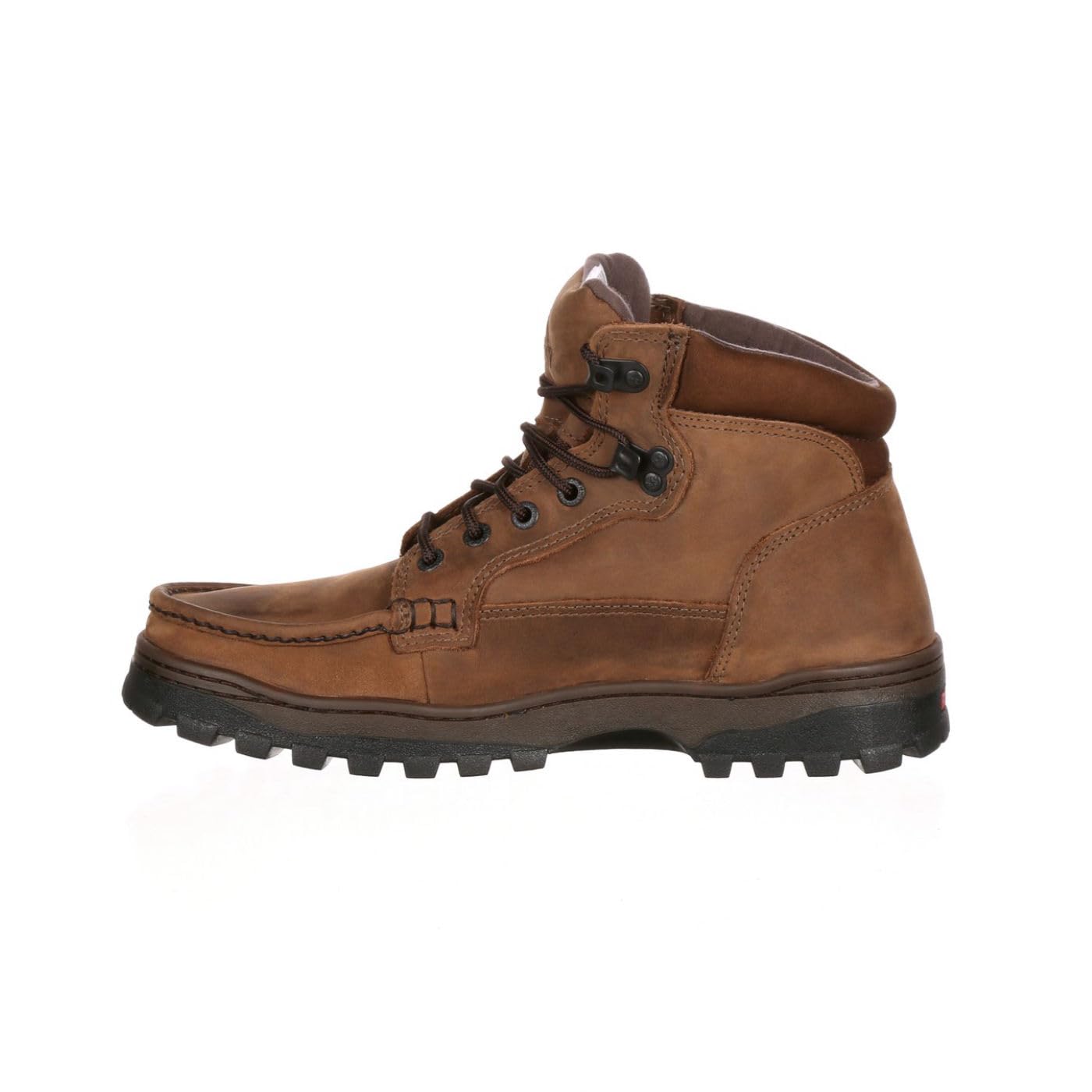
5. ROCKY Men’s Outback GORE-TEX Waterproof Hiking Boots
The heavy leather workhorse that keeps feet dry for years, not seasons.
At 4.5 pounds in a 5 x 5 x 0.7-inch package, the Outback is a full-grain leather boot with a GORE-TEX waterproof, breathable lining — a membrane that blocks water while letting sweat vapor out. It’s a substantially heavier boot than the Speed Strike 2’s 2.5 pounds, and that weight is the whole point: you’re buying durability and weather protection, not a racing shoe.
The construction is the story. Customers note the full-grain leather upper holds up for four to five years of daily use, and the GORE-TEX lining keeps feet dry in wet brush. That durability claim is rare in this category and worth taking seriously. The full-grain leather upper arrives with a soft, broken-in feel, an anti-friction mesh interior that wicks moisture, and a perforated footbed for airflow. The deep-tread rubber sole handles rugged terrain, wet or dry.
The fit note is the honest one: sizing is split, with some finding the toe area too narrow. A leather boot like this rewards a careful size choice and a short break-in. It’s also a hunting-and-work boot in spirit, so it looks rugged rather than sleek — if you want a trail boot that doubles as a town shoe, this is a different look.
What’s actually distinctive: the GORE-TEX lining plus full-grain leather is a wet-weather combination that most mid-range boots don’t offer. Owner reviews back that up: reviewers point out the leather upper lasting four to five years of daily use.
Buy this if: you want a leather boot that survives years of brush, work, and wet weather.
Look at a mid-cut instead if: you want a lighter, sleeker trail boot for short hikes.
6. Timberland Men’s White Ledge Mid Waterproof Hiking Boots

The most-reviewed boot here: 4.5+ stars across 67,000+ ratings.
The White Ledge is the proven daily-trail pick: a seam-sealed waterproof leather boot with 67,000+ ratings and a 4.5+ star average. On the spec side, it’s built with 100% premium waterproof leather from an LWG Silver-rated tannery — the LWG rating is a leather-industry environmental and quality standard, so the material itself is a step up from entry-level synthetic. Seam-sealed construction and a fully gusseted tongue keep water out at the laces, while rustproof speed-lace hardware and top hooks make it quick to get on.
Underfoot, an EVA footbed and midsole sit over a solid rubber outsole with multi-directional lugs — the lug pattern is what gives you grip in different directions on loose ground. The package lists at 1.1 pounds, and owners describe it as lightweight, water-resistant, and good value. Comfort, fit, and appearance all draw strong praise; this boot is easy to live with.
The durability is the honest split: some owners say it holds up great, others say it falls apart after a year. That spread is common on a high-volume boot — at this price tier and this many owners, you’ll get both ends. Treat it as a dependable daily and casual-trail boot rather than a decade-long expedition boot, and it will serve you well.
Why It’s The Safe Bet
- 100% premium waterproof leather from an LWG Silver-rated tannery.
- Seam-sealed construction with a fully gusseted tongue.
- 1.1 pounds and described as lightweight by owners.
- Huge owner base with strong comfort and fit feedback.
The Honest Split
- Durability is mixed — some report failure after a year.
- Not built for the hardest expedition use.
Pick this for: everyday trail and casual wear, backed by the largest owner base on this list.
Set expectations on: lifespan — this is a daily boot, not an expedition boot.
7. Merrell Men’s Moab 3 Mid Gore-tex®

The boot whose out-of-the-box comfort built the Moab line’s reputation.
You can expect the Moab 3 Mid to feel right on day one, because Merrell’s Moab line has that reputation. Merrell claims the Moab has been the world’s bestselling hiker for over 15 years — a maker’s claim, not a spec sheet fact. The Moab 3 Mid backs that up with a GORE-TEX waterproof liner (a breathable membrane that keeps water out) and a 1.5-pound stated weight, so it is noticeably lighter on paper than the thick leather Outback at 4.5 pounds.
Comfort is the reason people buy it: owners describe no blisters or hotspots, and report it handles rough terrain well. Durability draws credit, with owners noting it lasts over a year of use. The appearance and value hold up too, and for a boot with this much history, that consistency is exactly what you’re paying the premium for.
Sizing is the recurring question: some find it true to size, others say it runs a bit small. That’s worth a half-size test if you’re between sizes, especially with thicker hiking socks. It’s the most expensive boot on this list, so the honest trade is simple: you’re paying for a known, comfortable fit and a reputation built over years rather than for the loosest price.
The reputation, in plain terms: 1.5 pounds, a GORE-TEX liner, and an out-of-the-box comfort record that owners keep confirming is the whole case. It’s not the cheapest, and it’s not the lightest, but it’s the boot most likely to feel right immediately.
The one caution: sizing runs slightly small for some buyers — test a half size up if your toes crowd the front.
This is your boot if: you want proven comfort, GORE-TEX waterproofing, and a name that has earned its place on the trail.
Look at a lighter mid if: you want to shave bulk for fast summer day hikes.
Know the Specs
Waterproofing: Membrane vs. Coating
A waterproof boot relies on either a membrane — a thin liner like GORE-TEX that blocks liquid water but lets sweat vapor escape — or a treated upper that sheds water. Membranes tend to hold up longer in wet conditions, while treated leathers and synthetics need re-proofing over time. For hiking, the membrane plus a fully gusseted tongue (attached at both sides) is the combination that actually keeps water out at the laces, not just at the sole.
Weight in Pounds: What It Costs You
Boot weight is the spec most buyers regret overlooking. The difference between a 1.5-pound mesh-and-leather mid and a 4.5-pound full-grain leather boot is the difference between a fast day hike and a slow, load-bearing slog. Lighter boots save energy on climbs and reduce knee stress on descents. Heavier boots buy you durability and protection from roots, rocks, and brush. Pick based on your terrain, not on the spec sheet alone.
Cuts and Ankle Support
A mid-cut boot covers the ankle without rising to a full mountaineering height. That ankle coverage matters on uneven ground, where a low-cut shoe lets your ankle roll. Boots with dedicated ankle support structures — like the Merrell Wildwood and the KEEN Hightrail — give you a more locked-in feel on loose rock and roots. If you hike mostly on smooth paths, you can trade that support for a lighter, more flexible boot.
Outsole and Lugs
The outsole is the rubber bottom of the boot, and the lugs are the raised tread blocks. A deep-tread rubber sole grips on wet rock and mud; a flatter sole is better on pavement and groomed trails. Multi-directional lugs — arranged to bite in several directions — help with side-slopes and loose gravel. If your hikes are wet and rocky, prioritize deep lugs and a sticky rubber compound. For dry, well-groomed paths, a simpler tread is fine.
Common Questions
Are these men’s hiking boots actually waterproof, or just water-resistant?
How long does a pair of men’s hiking boots last?
Do men’s hiking boots run true to size?
How long does it take to break in leather hiking boots?
Are mid-cut hiking boots better than low-cut for ankle support?
Can I wear men’s hiking boots for everyday casual use?
Do I need GORE-TEX in a hiking boot?
What’s the difference between the Merrell Moab 3 and the Merrell Speed Strike 2?
How should I care for waterproof leather hiking boots?
How do I stop my toes from bruising on steep descents?
The Bottom Line
For most hikers, the top rated men’s hiking boots winner is the Columbia Firecamp — it delivers waterproofing, cold-weather warmth, and comfort from day one, and owners back it consistently. If you want proven all-day comfort with GORE-TEX waterproofing, grab the Merrell Moab 3 Mid GORE-TEX. And for rugged leather durability that survives years of brush and weather, the ROCKY Outback GORE-TEX is the one to reach for. Match the boot to your terrain and your foot, and you’ll get years of dry, supported miles.
How we choose
We do not accept paid placement. Every pick is matched to a real buyer and a real use-case; we do not hands-on test units.
Sources
Specifications: manufacturer listings and product documentation. Review insights: verified customer reviews, as of November 2026. Pricing: not shown on this page (it changes often); check the current price via the retailer link.
As an Amazon Associate, Tactical Gear Guy earns from qualifying purchases. This does not affect which products we feature.