Specs are compiled from manufacturer listings and verified buyer reviews and can change over time — please confirm the key details on the product page before buying.
Your flat-screen TV has speakers that fire backward or downward into a plastic chassis, which is why every explosion sounds like a paper bag and every whispered line disappears under the music. A cheap TV soundbar fixes that one problem in about two minutes of setup. The nine bars below all connect to your TV with a single cable, all sit in the budget-to-mid range, and all are chosen because real buyers report a genuine jump in clarity, not just louder volume.
This guide is built by comparing the manufacturers’ published specifications and the patterns across verified customer reviews, so you get each pick’s real strengths and trade-offs instead of marketing spin.
You will see which bars run a wireless subwoofer for real low-end, which squeeze bass from a built-in driver, and which drop HDMI entirely and still sound fine. Every pick here is backed by verified owner reviews, so you can match the bar to your room size and layout. The shortlist below covers the best cheap TV soundbar options that reliably beat built-in television speakers.
Top Picks

How To Choose The Best Cheap TV Soundbar
The wrong assumption most buyers carry into this purchase is that a soundbar without a separate subwoofer box cannot produce bass. A well-built bar with a beefy built-in driver and side-firing ports can put a bass line in the room, and it saves you a second power socket and a floor footprint. What you are really buying is clearer dialogue, and the bass is a bonus.
Count your cables before you count watts
Check the back of your TV for an HDMI port labelled ARC or eARC. That single port lets one cable carry the sound from the TV to the bar and lets your TV remote control the bar’s volume at the same time. If your TV has no ARC port, you fall back to an optical cable, which works but normally means two remotes. AUX is the last resort and the least clean signal.
The subwoofer question
A wireless subwoofer (a separate bass box that needs only a power outlet, not an audio cable to the bar) gives you the deepest low end and lets you tuck the box in a corner. The catch is one more device to power and one more thing to find space for. A 2.1 bar with a built-in subwoofer keeps everything in one unit — good for a bedroom, a tight console, or a wall-mounted setup.
Match wattage to your room size
Total output ratings like 100W, 120W, 220W and 240W roughly track how loud the bar can go before it starts to strain. In an apartment bedroom, a 100W bar is plenty. In a larger living room where you want a movie to feel physical, the higher-rated units with a dedicated subwoofer hold together better at volume. Bigger wattage numbers do not automatically mean cleaner sound, though — driver quality and tuning decide that.
Height clearances and placement
Measure the gap between the bottom of your TV and the surface below it. Bars around 2.36 inches to 2.5 inches tall are the low-profile ones that slide under most screens without blocking the picture. Longer bars — the 31.89-inch models — suit TVs roughly 50 inches and up, so the bar does not look stunted beneath a big panel.
Side-by-Side Comparison
| Model | Best For | Channels / Power | Bass Source | TV Connection | Amazon |
|---|---|---|---|---|---|
| ULTIMEA 2.1ch Built-in Subwoofer★ Best Overall | One-box bass in a small room | 2.1 / — | Built-in 3-inch subwoofer | Optical, AUX, USB, Bluetooth 5.3 | Amazon |
| TCL S45HDialogue Champ | Dialogue clarity in an apartment | 2.0 / 100W | Bar drivers only | HDMI eARC/ARC, optical, Bluetooth, AUX | Amazon |
| ULTIMEA Wireless SubwooferBass Leader | Biggest bass in a mid-size room | 2.1 / 240W peak | Wireless subwoofer | HDMI ARC, optical, Bluetooth | Amazon |
| Amazon Fire TV Soundbar | Fire TV households | 2.0 / — | Bar drivers only | HDMI eARC/ARC, Bluetooth | Amazon |
| Hisense A620 | Hisense TV owners | 2.1 / 240W | Visualized built-in subwoofer | HDMI ARC, AUX, USB, Bluetooth 5.3 | Amazon |
| TCL S55H | Best all-rounder with a subwoofer | 2.1 / 220W | Wireless subwoofer | HDMI eARC/ARC, optical, Bluetooth, AUX | Amazon |
| Westinghouse 2.0 | Roku TV owners who want one remote | 2.0 / 120W | Bar drivers only | HDMI ARC, optical, USB, AUX, Bluetooth 5.3 | Amazon |
| Hisense HS2100 | Affordable 2.1 with a sub box | 2.1 / 240W max | Wireless subwoofer | HDMI ARC, optical, USB, Bluetooth 5.3 | Amazon |
| JBL Bar 2.0 All-in-One (MK2) | Brand-name simplicity in a tight space | 2.0 / — | Bar drivers only | Bluetooth | Amazon |
Detailed Reviews
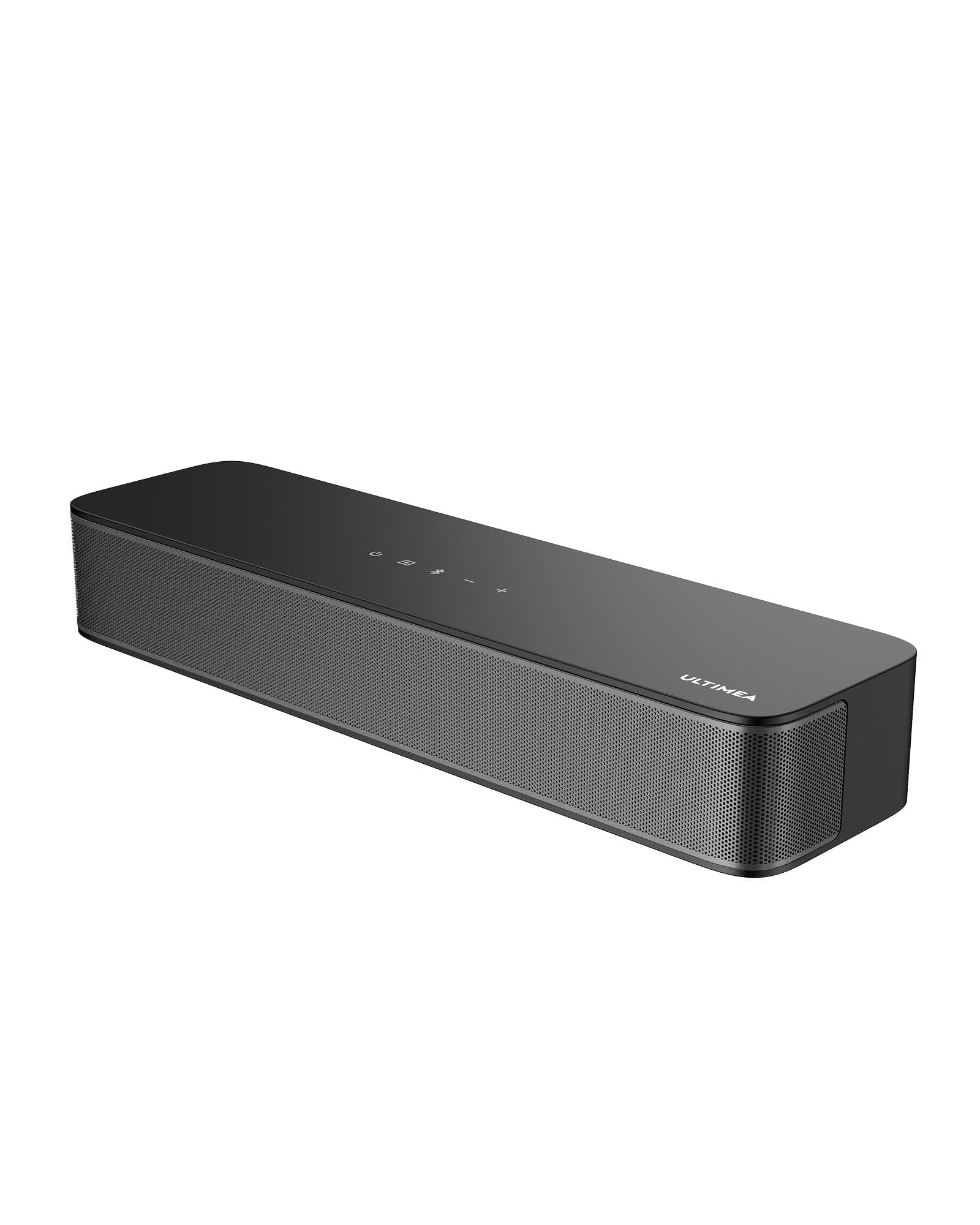
1. ULTIMEA 2.1ch Soundbar
A 15.75-inch bar that hides a real subwoofer inside its own cabinet.
If you have one shelf, no floor space, and zero appetite for a second power brick, this is the bar that solves the whole problem in one box. A 3-inch subwoofer and side-firing bass ports (openings on the ends that let low notes escape sideways) sit inside the cabinet, so the deep end comes from the bar itself. Owners keep coming back to one thing: the sound is clean even at low volume, which is exactly what late-night TV needs.
At 4.4 pounds it is light enough to lift onto a wall bracket with one hand, and the 15.75-inch width suits a smaller TV without looking lost underneath it. The bigger sibling in this list, the ULTIMEA with the wireless subwoofer, measures 23.62 inches across — this one is the compact answer for a bedroom or a desk setup. The depth of 4.25 inches is the trade-off: it sits a little further forward than a slim bar, so check your console depth before you commit.
Setup is optical, AUX, USB or Bluetooth 5.4, and the optical cable and a 1.5m AUX cable both come in the box. There is no HDMI here, so your TV remote will not control the volume — you will use the included remote or the app. That app is the surprise: 121 preset EQ matrices across Bass, Pop, Classical and Rock, plus a 10-band equalizer (ten sliders that shape the tone) and six preset modes named Movie, Music, Voice, Sport, Game and Night. The catch worth knowing is the mixed reports around connectivity and reliability — a handful of units have given owners trouble, so buy from a seller with a straightforward return window.
Bottom line: this is the best cheap TV soundbar for anyone who wants bass without a second box on the floor.
What earns the top spot
- Real bass from a built-in 3-inch subwoofer, no separate box or outlet needed
- 121 EQ matrices and a 10-band equalizer give you more tuning than anything else here
- Bluetooth 5.4 streaming plus a SUB OUT port for adding an active subwoofer later
- Sound quality is what owners praise most by a wide margin, with value for money close behind
Where it asks you to compromise
- No HDMI, so the TV remote will not run the volume
- Remote batteries are not included
- 4.25-inch depth needs a little more console room than a slim bar
Buy this one if: your TV sits on a cabinet or a wall bracket and you refuse to give floor space to a subwoofer.
Think twice if: you want one remote to rule both devices — the missing HDMI port rules that out.
2. TCL S45H 2.0 Sound Bar
A slim 31.89-inch bar that makes whispered dialogue audible from the sofa.
This one is for the viewer who keeps reaching for the subtitle button during quiet scenes. It is a 2.0 bar — no subwoofer, no bass box — with up to 100 watts of total output and a 60 hertz lower frequency limit. That 60 hertz figure is the number to understand: it is the lowest note the bar can reach, and it means you get warmth and body in music but not the chest-thump of an action trailer. In an apartment or a small-to-medium room, that is a fair trade.
The setup story is where this bar wins people over. HDMI eARC/ARC means one cable carries the audio and lets your TV remote adjust the volume. The included HDMI cable, power cord, remote with batteries and a wall-mount kit all arrive together, so there is nothing extra to buy on day one. Owners mention the install runs about “1-2 minutes,” and owners of LG sets in particular note it hooks up without a fight.
Movies sound wider than a plain stereo bar because Dolby Atmos and DTS Virtual:X (two surround formats that fake height and rear effects from a single bar) are on board. A one-time setup in the TCL app runs AI Sonic auto room calibration, which tunes the sound to your room’s layout. Two honest limits: Dolby Atmos only works if your TV passes it through, and the bar’s own volume ceiling is the one point where feedback splits. On the numbers, the TCL S45H sits well below the ULTIMEA 240W bar in raw output and reaches only down to 60 hertz against that unit’s 45 hertz — a modest but real gap in low-end reach.
Why it stays near the top: the low profile — 2.36 inches tall and 31.89 inches wide — slips under a large TV without blocking the panel or hiding the IR sensor. Sound quality and build quality are the two things buyers rate highest here, and there are more of those comments than anything else.
The honest caveat: no subwoofer means big-budget action films will not rattle the room. If you want to feel the bass, look at the 2.1 bars further up this page.
Reach for this if: clear speech matters more to you than explosion rumble, and your TV has an HDMI ARC port.
Look elsewhere if: you are shopping for a bar that can shake a living room — this one is tuned for clarity, not force.
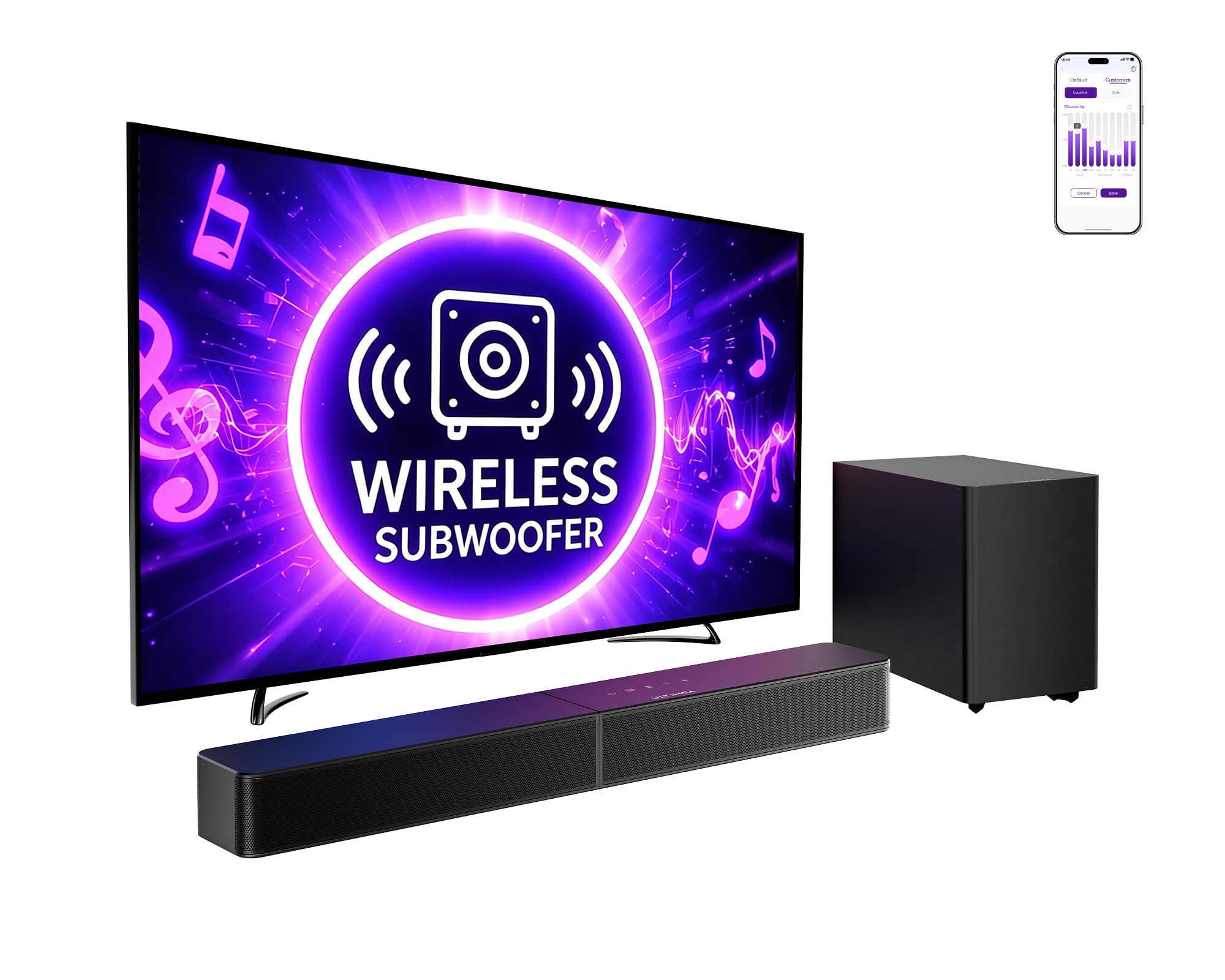
3. ULTIMEA Sound Bar with Wireless Subwoofer
Two hundred and forty watts of peak power with a bass box you can park anywhere.
Start with the number that separates this bar from everything else in the mid-range: 240 watts of peak output from a 2.1 channel system — the “2.1” meaning two main channels plus one dedicated bass channel. The TCL S45H tops out at 100 watts, so if you are the person who wants a car chase to feel like a car chase, this is the bar that delivers it. A frequency response down to 45 hertz backs that up with genuine low-end reach.
The wireless subwoofer is the practical win. It needs only a power outlet — no audio cable back to the bar — so you can drop it behind the sofa or in a corner and the room stays tidy. The subwoofer handles the rumble while the bar keeps dialogue and mids clean. VoiceMX technology reinforces the vocal range between 120 Hz and 6 kHz in real time, which is the technical way of saying quiet dialogue gets pulled forward instead of buried.
Mica-reinforced drivers are the other detail worth knowing. The maker states the stiffer diaphragms cut distortion, and on paper that shows up as steadier, less muddy sound at higher volume. Connections run HDMI ARC, optical and Bluetooth, and the app gives you a 10-band equalizer with 121 preset EQ matrices plus over-the-air updates. Cabling is generous — an HDMI cable, both power adapters, wall brackets and a mounting kit all ship in the box. Reliability and connectivity are the two areas where feedback splits, so keep the receipt handy and test the wireless pairing in your first week.
The case for it: at 23.62 inches wide, this bar looks right under a bigger TV instead of getting lost. Buyers praise sound quality and value for money more than anything else, by a long way. Bedrooms and smaller living rooms are where it reportedly fits best.
Give it a pass if: you have no spare outlet for the sub box or you simply want fewer devices on the floor.
The short version: it leads this list on pure output, so it is the pick for anyone who wants movie night to have weight behind it.
The trade-off: the separate subwoofer needs its own socket — if your room cannot spare one, the one-box ULTIMEA above is the better fit.
4. Amazon Fire TV Soundbar

One HDMI cable in, one remote for everything, done in a minute.
If your living room already runs on Fire TV, this is the bar that removes the second remote from your coffee table. It is designed and tested to work with Fire TV so a single remote handles both the TV and the audio. Plug the included HDMI cable into your TV’s HDMI eARC/ARC port and the audio syncs automatically — no menu diving, no lip-sync drift.
It also fits where space is tight. At 24 inches long and just 2.5 inches tall, it slides onto most entertainment consoles and under most TV stands. Dual speakers plus DTS Virtual:X and Dolby Audio (formats that spread sound around the room from a stereo bar) do the heavy lifting. Bluetooth lets your phone or tablet push music through it when the TV is off. Even the materials get a thought — the device is made from 18% recycled materials, though the power adapter and cable are not included in that figure.
Now the part you would want to know before buying. The bar is a 2.0 design with no subwoofer, so bass lives in the drivers and stops short of room-shaking. More important, reliability is the one thing feedback splits on — the bar works steadily for plenty of living rooms, while a smaller group reports it randomly cutting out. That is worth sizing against the huge volume of people running it happily, but it is the honest footnote. With the largest owner base of anything on this list, the pattern is clear enough to trust, and the easy setup is the reason it keeps getting picked.
What it gets right: setup speed and the remote consolidation. If the thought of configuring a soundbar app makes you tired, this bar asks nothing of you.
Keep in mind: DTS Virtual:X creates a sense of surround, not real rear speakers. Expect a wider wall of sound, not a home theater.
Pick it if: you own a Fire TV and want the least complicated sound upgrade available.
Pass if: you want deep bass or you have had flaky electronics in that room before — a wired 2.1 setup may suit you better.
5. Hisense A620 2.1ch Sound Bar

A transparent window lets you watch the subwoofer move while it works.
The A620 makes a visual argument most soundbars cannot: a 75 by 160 mm built-in subwoofer sits behind clear acrylic, so you can see the woofer vibrate as the bass hits. It is a gimmick on paper and strangely satisfying in practice. Underneath the show, it is a 2.1 channel all-in-one delivering 240 watts, matching the peak output of the bigger ULTIMEA bar without needing a separate sub box on the floor.
Pair it with a Hisense TV and it earns its place fast. EzPlay lets your TV remote control the soundbar and shows the bar’s settings menu on the TV screen, so you never juggle two remotes. The TV mode is the clever bit: if your Hisense TV can decode Dolby Atmos, the bar borrows that decoding power through HDMI ARC/eARC to play Atmos sound — a workaround for the fact that entry-level bars cannot decode Atmos themselves. Dolby Digital Plus and DTS Virtual:X handle spatial effects otherwise.
Bluetooth 5.3 covers phone streaming, and HDMI ARC, AUX and USB round out the ports. Bass, dialogue and presentation get strong marks, with owners describing it as sounding bigger than its size suggests — a compact-cabinet achievement. The one thing to weigh is reliability: a small number of units have stopped working after a short stretch of use, which is the kind of unit-specific risk any budget electronics purchase carries. Buy with a return window you trust and test it thoroughly in week one.
Where it shines: the visible woofer is more than decoration — the built-in design means one box, one outlet, and genuine bass response for a console or shelf setup.
Consider the alternative if: you do not own a Hisense TV. EzPlay and TV mode are the best features here, and they lose value on another brand.
Strong fit for: Hisense TV owners who want a matching bar that the existing remote can run.
Less compelling for: anyone outside the Hisense ecosystem — you would be paying for one-remote features you cannot switch on.
6. TCL S55H 2.1 Sound Bar with Wireless Subwoofer for Smart TV

The full 2.1 package: 220 watts, a wireless sub, and Atmos on top.
Take the S45H above, add a wireless subwoofer, and you get this — a 2.1 system rated at up to 220 watts with a dedicated bass box. That is the practical difference between the two TCL bars in this lineup, and it is the difference between hearing a bass line and feeling it. The subwoofer frees the main bar to focus on dialogue and mids, so you get both clean speech and real low-end punch at the same time.
Dolby Atmos and DTS Virtual:X handle the spatial side (formats that simulate height and surround from a single bar), and AI Sonic auto room calibration dials the sound to your room through a one-time TCL app setup. Connectivity is wide: HDMI eARC/ARC, optical, Bluetooth and AUX, with a 10-meter Bluetooth range so your phone can stream from across the room. A 5.5-inch driver in the bar and a subwoofer measuring 7.68 inches wide by 12.60 inches tall give the system some physical presence.
The layout note matters if you are short on floor: the subwoofer is a real box that needs its own space. Set against that, this bar is a clear step up from internal TV speakers in every way that counts, and setup is quick with the included HDMI cable, remote and batteries. Performance is the one area where feedback splits — plenty of customers note it running flawlessly while a smaller group hit recurring trouble — so treat the warranty and return path as part of the purchase. Check the subwoofer pairing works on day one and you will know where you stand.
Reasons this earns its price
- Up to 220W with a wireless subwoofer, so dialogue and bass do not compete
- Dolby Atmos and DTS Virtual:X support plus AI room calibration
- HDMI eARC/ARC, optical, Bluetooth and AUX all on board
- Complete in the box — HDMI cable, remote, batteries and wall-mount kit
Points to weigh first
- The subwoofer is a separate box that needs floor space and an outlet
- Volume control is the weakest-reported aspect, so plan to tune it in the app
- Some units have had performance issues — buy where returns are simple
The ideal buyer: someone with a mid-size living room, a spare corner for the sub, and a taste for movie sound.
The wrong buyer: a bedroom setup where a second box has nowhere to go.
7. Westinghouse 2.0 Sound bar
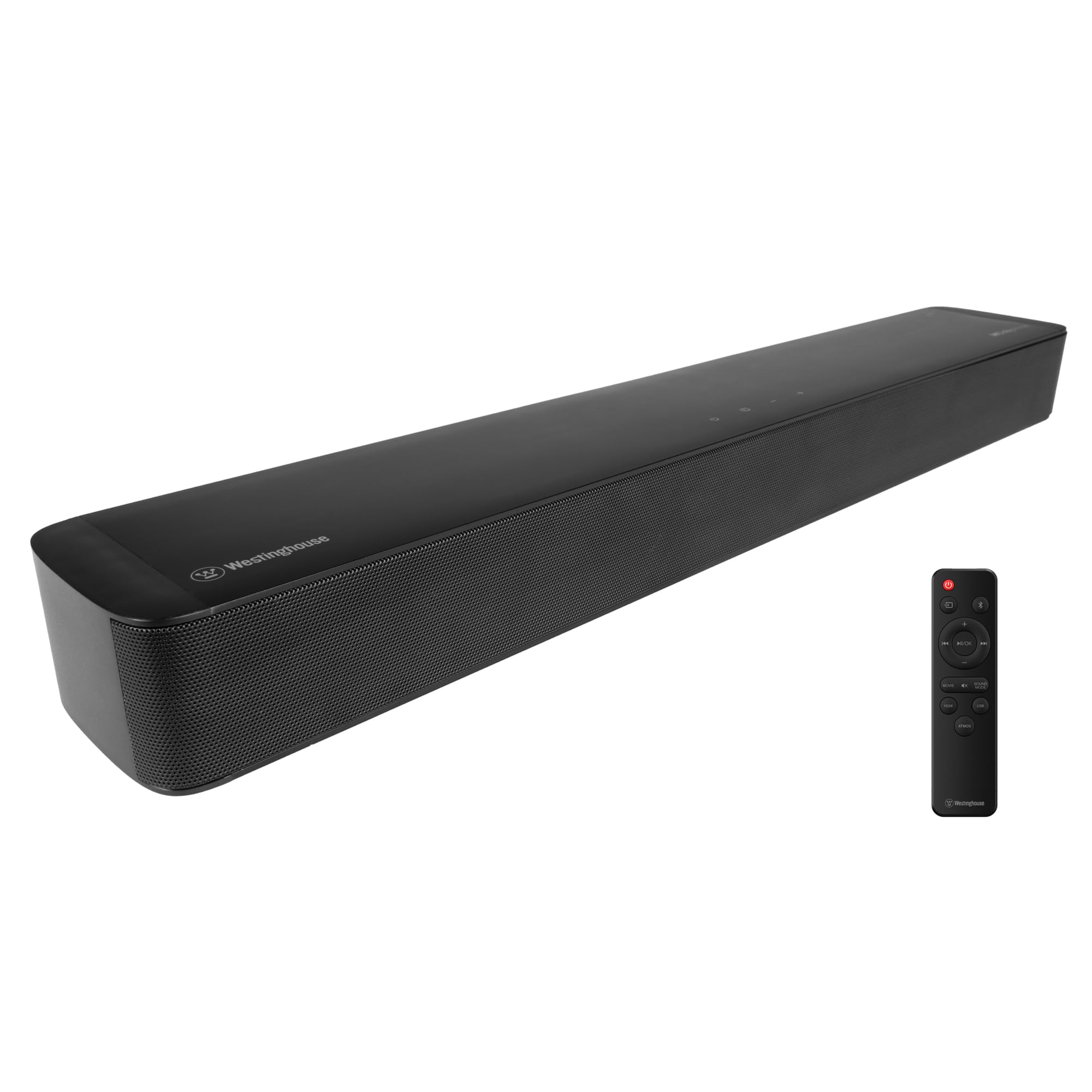
One hundred and twenty watts tuned for Roku households and one-remote living.
If your TV runs Roku, this bar was built for you. It is Roku TV Ready certified, which means smooth setup, easy access to the sound settings and compatibility with any Roku remote. Connect it over HDMI ARC and the bar turns on and off with your TV remote, so the whole sound system becomes invisible in the best way. That certification is rare in this range and it is the reason to look here first.
The 120-watt 2.0 setup handles Dolby Atmos and Dolby Digital Plus, giving you better sound direction and a wider sense of space than the down-firing speakers in a thin TV. Bass is the surprise for a bar with no subwoofer — it reaches lower than its size suggests. Owners describe sound that projects well into the room and bass that extends further than a bar this compact has any right to. Connections cover HDMI, optical, USB, AUX and Bluetooth 5.3, so a phone, a projector or a laptop can all feed it.
Here is where you should be honest with yourself about the math. This is a newer listing with a smaller batch of reviews than the big-name bars above, so feedback is thin. What feedback exists is mostly positive on sound quality, connectivity and setup, with value for money the one split opinion — some find it a great buy, others think the asking price is a touch high. That is a normal split for a mid-tier bar, not a warning sign. The kit is complete too: a 3-foot HDMI cable, power cord, remote, wall-mount kit and a battery all come with it.
The Roku advantage: one remote, native settings access and certified compatibility mean the Westinghouse disappears into your existing setup instead of adding to it.
Do not expect: a subwoofer-grade thump. This is a 2.0 bar, and the low end lives within the cabinet.
It makes sense when: you own a Roku TV and value the single-remote convenience over a subwoofer.
It does not when: you want proven long-term reliability data — this one is still building its track record.
8. Hisense HS2100 2.1ch Soundbar
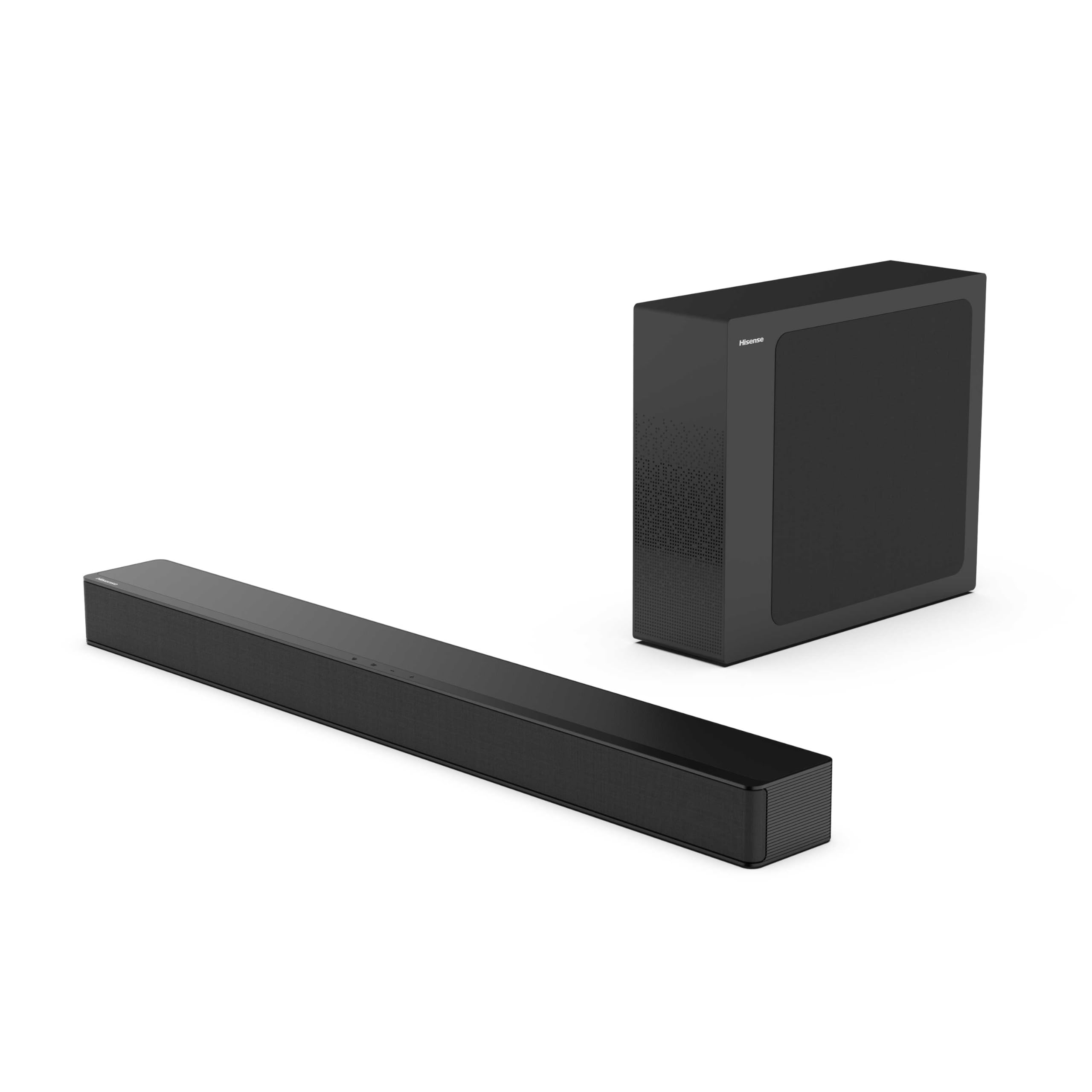
Two speakers, one wireless subwoofer, and 240 watts of maximum power.
You get a real 2.1 system without the usual cable mess. Two front-facing speakers handle the bright high and mid-range, while a wireless subwoofer handles the low end that punctuates movies and music — and since the sub is wireless, you only need to find it a power outlet, not run a cable across the room. It is rated at 240W max audio power, the same ceiling as the higher-priced Hisense A620 and the ULTIMEA bass leader, so you are not giving up output to save here.
Connections are simple and one-cable friendly. HDMI ARC carries the audio and lets one remote control both the TV and the bar. Bluetooth 5.3 covers phone streaming with a 10-meter range, and six EQ presets let you switch between movie, music, sports and game modes with the remote. EzPlay shows the soundbar’s settings on your TV screen if you pair it with a Hisense set, which keeps you out of menus you cannot read from the sofa.
Now the honest part, and it matters more here than anywhere else on this list. Reliability is the one area that draws genuinely negative attention, with a portion of units failing after roughly a month of use. Sound quality, by contrast, is the most-praised thing about it and draws far more positive comments than anything else. That pattern — great sound, question mark on longevity — is exactly why you should buy this one from a seller with a no-friction return policy and register the warranty the day it arrives.
Why it makes the cut: 240W and a wireless subwoofer at an entry-tier ask is a lot of low-end for the money, and setup is quick enough that you are watching a movie the same evening.
The risk to price in: a small but real slice of reviewers point out early failures. That is not a reason to avoid the model — it is a reason to keep the box and the receipt for the first few weeks.
Worth a look if: you want genuine bass on a tight budget and you are comfortable leaning on the return window.
Think hard if: you want the lowest-fuss ownership — the reliability pattern here asks more of you than the TCL bars.
9. JBL Bar 2.0 All-in-one

One box, one plug, and a name most people already know from audio.
Buying a JBL is partly a bet on the brand behind it, and this 2.0 all-in-one is the simplest expression of that. No subwoofer, no app, no calibration routine — just a compact low-profile bar that fits in front of your TV, with built-in Dolby Digital for a more cinematic feel and Bluetooth streaming from your phone or tablet. The surround effect comes from JBL’s own processing rather than extra speakers or wires.
What the design gets right is restraint. It is a 2.0 channel bar with a 6.35 cm driver, built to sit low and disappear in front of the screen rather than become a feature of the room. If you have a clean setup and want to keep it that way, the simplicity is the point. Bluetooth range is rated at 10 meters, so streaming from a phone across the room works without fuss, and setup plus connectivity are the two things that draw the steadiest appreciation.
You should know what you are and are not getting. Sound quality is the most-discussed topic in the feedback and the verdict there is genuinely mixed — some find it strong for the size, while others note it does not deliver the surround experience the marketing implies. Bass adjustment is the thinnest area, so do not count on dialing in a punchy low end. What does hold up is the value question and the ease of getting it running. If you want a recognizable brand, a small footprint and a bar that simply works over Bluetooth, this is a defensible pick. If you want deep bass or EQ tuning controls, the 2.1 bars higher up will serve you better.
What you are buying
- Compact low-profile cabinet that slips in front of the TV
- Bluetooth streaming with a 10-meter range
- Built-in Dolby Digital for a more cinematic feel
- Setup and connectivity are the steadiest points of praise
What you give up
- No subwoofer and limited bass adjustment
- Surround effect is simulated, not real rear channels
- Feedback on sound quality splits, so audition it with a return window
Choose this when: the JBL name, the compact footprint and Bluetooth simplicity matter more to you than deep bass.
Choose differently when: bass and tuning controls are the point — a 2.1 system will make you happier.
Know the Specs
2.0 vs 2.1 channel: what the numbers mean
The first number is how many main speakers the bar has. A 2.0 bar has two channels and no dedicated bass driver, while a 2.1 adds a separate bass channel — either a built-in subwoofer inside the cabinet or a wireless box you place elsewhere. A 2.1 system can usually go deeper, but a well-built 2.0 bar can still put respectable bass in a small room. If floor space is tight, a 2.1 with a built-in subwoofer is the compromise to look for.
Watts: how much power you actually need
Wattage ratings tell you roughly how loud a bar can play before it strains. In this lineup you will see 100W, 120W, 220W and 240W. For a bedroom or apartment, anything around 100W to 120W is comfortable. For a larger living room where you want the sound to physically fill the space, the higher-rated bars hold together better. More watts is not automatically better sound — driver size and cabinet tuning matter just as much.
Frequency response in hertz
Frequency response describes the range of notes the bar can reproduce. A lower starting figure means deeper bass. The TCL S45H starts at 60 hertz, while the ULTIMEA wireless-subwoofer model reaches down to 45 hertz — a real, if modest, difference in low-end reach. Lower is generally better for movies, but in a small room the difference between 45 and 60 hertz is less dramatic than it looks on paper.
HDMI ARC, optical and Bluetooth
HDMI ARC or eARC is the cleanest connection: one cable carries the audio and lets your TV remote control the bar’s volume. Optical is the reliable fallback for older TVs, but usually means a second remote. Bluetooth is for streaming music from a phone, not for your TV’s main audio. Bars with Bluetooth 5.3 or 5.4 hold a more stable link than older versions, which matters if you stream from across the room.
Common Questions
Will a cheap TV soundbar work with my older TV that has no HDMI ARC port?
Do I need a soundbar with a separate subwoofer for a small bedroom?
What is the difference between Dolby Atmos and DTS Virtual:X?
Will a soundbar block my TV’s remote sensor or the bottom of the screen?
Can I use my TV remote to control the soundbar volume?
Is 100W loud enough for a living room?
Can I connect my phone to a soundbar for music?
Does a soundbar need a separate power outlet?
How do I set up a soundbar with a Roku or Fire TV?
What should I do if my soundbar loses its Bluetooth connection?
Is a 2.0 soundbar better than a 2.1 for an apartment?
The Bottom Line
For most people, the cheap tv soundbar that gets the job done is the ULTIMEA 2.1ch with the built-in subwoofer, because it delivers real bass from a single box and its sound quality is what owners rave about more than anything else. If cinematic low-end matters and you have a corner for the sub, the ULTIMEA wireless-subwoofer bar leads the pack on output. And if you just want clearer dialogue with one remote and the least fuss, the TCL S45H is the one to reach for. Any of the three will make your TV sound like a completely different set, and the built-in-sub ULTIMEA is the one that keeps you to a single outlet while still delivering the low end.
How we choose
We do not accept paid placement. Every pick is matched to a real buyer and a real use-case; we do not hands-on test units.
Sources
Specifications: manufacturer listings and product documentation. Review insights: verified customer reviews, as of November 2026. Pricing: not shown on this page (it changes often); check the current price via the retailer link.
As an Amazon Associate, Tactical Gear Guy earns from qualifying purchases. This does not affect which products we feature.