Specs are compiled from manufacturer listings and verified buyer reviews and can change over time — please confirm the key details on the product page before buying.
A water life jacket only does its job when you actually wear it, and the ones that get worn are the ones that fit snug and let your arms swing free. Every pick below follows that rule: reliable flotation in a vest you will still want on after two hours on the water. The list covers open-side boating vests, neoprene wake-and-ski jackets and a self-inflating option, sorted so you can match one to how you actually spend your day on the lake.
This guide is built by comparing the manufacturers’ published specifications and the patterns across verified customer reviews, so you get each pick’s real strengths and trade-offs instead of marketing spin.
Fit decides whether a vest gets worn, because one that rides up under your chin ends up left in the car. Below you get what each vest is approved for, how it closes, and who it genuinely suits. The comparison table and sizing notes below should get you to the right water life jacket in one pass.
Top Picks


How To Choose The Best Water Life Jacket
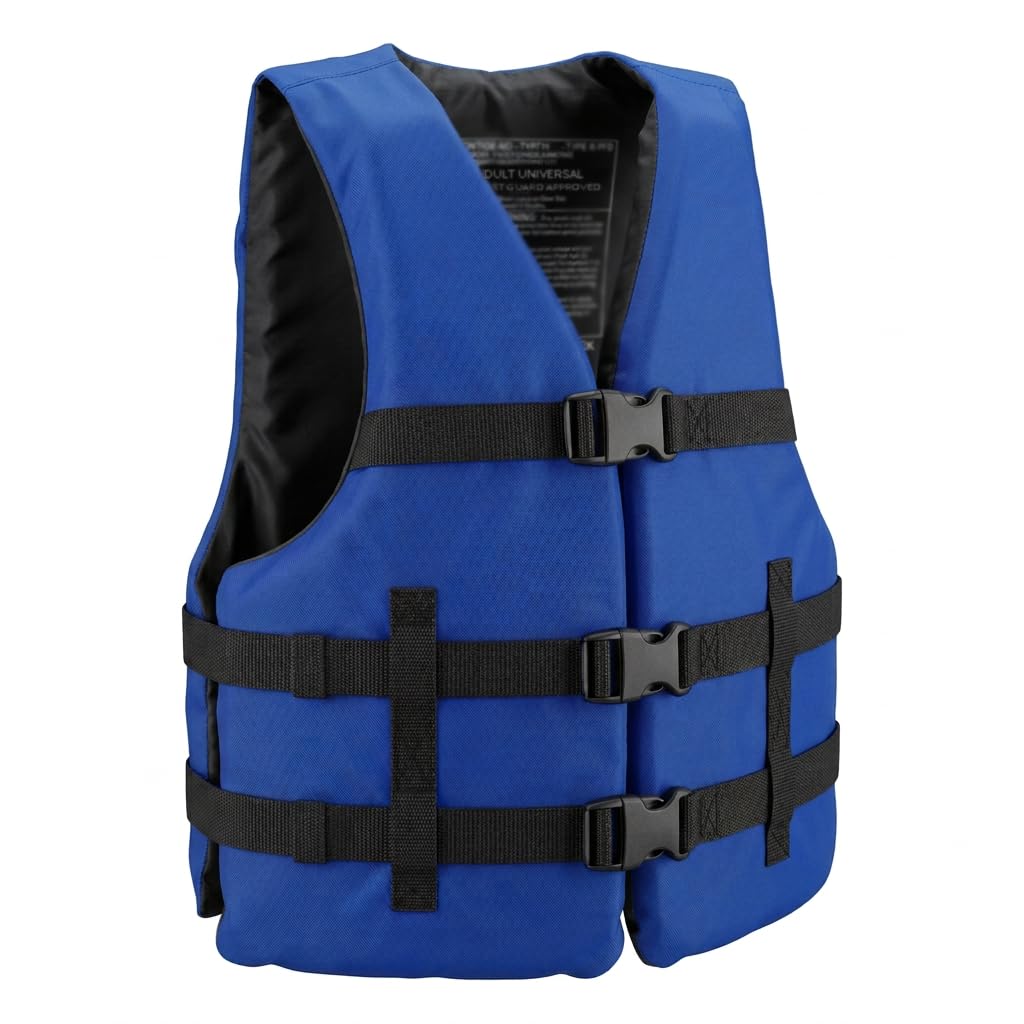
Start with your activity, not the colour. A jacket approved as a Type III personal flotation device (a vest built for general boating where rescue is likely to be quick) covers tubing, paddling and pontoon days. Open water, rough chop or solo sailing pushes you toward more buoyancy or an inflatable. Get that decision right and the rest is fit and comfort.
Match the approval type to your water
A Type III foam vest is the workhorse of lake and river boating. It is designed for use when a quick response is likely, so it suits jetski runs, wakeboarding and a slow float near shore. A Type II inflatable, by contrast, is meant to turn you face-up and is rated for more buoyancy in a slimmer package — the trade-off is that it only works if the cylinder is charged and the vest is worn properly.
Buoyancy in pounds, not vibes
Buoyancy is measured in pounds of lift, and it is the number that decides whether a vest actually holds you up. The Stratus 35 inflatable is rated at 35 lbs of lift, which its maker describes as a 2.5x higher rating than Type 3 foam vest life jackets. Foam vests rely on their foam core and body belts instead. Either way, the rating matters more than how thick the vest looks on the rack.
Closure and fit decide whether you wear it
Three body belts with side-release buckles let you cinch a vest down fast and pop it off in a hurry. A zipper front with two adjustable belts gives a snugger, more locked-in feel that wake and ski riders tend to prefer. Whichever you pick, check the chest range before you buy — several jackets here publish a chest span, and the ones that run small are the ones that get returned.
Side-by-Side Comparison
| Model | Best For | PFD Type | Closure | Weight | Amazon |
|---|---|---|---|---|---|
| HyperLite Men’s Elite Life Jacket★ Best Overall | All-round water sports | Level 70 buoyancy aid, USCG approved | Zipper | 2.2 pounds | Amazon |
| Airhead Sportsman Life VestFeatherweight Value | Fishing and stealth paddling | USCG Type III | Buckle | 12 ounces | Amazon |
| Hardcore Paddle VestActivity All-Rounder | Jet ski and wakeboard days | USCG Type III | Buckle | 14.56 ounces | Amazon |
| Sportstuff Stars & Stripes | Family boating and tubing | USCG approved | Buckle, Zipper | 16 ounces | Amazon |
| Hardcore Life Jacket 2 Pack | Two riders, one purchase | USCG Type III, UL listed | Buckle, Hook | 1.9 pounds | Amazon |
| O’Brien Men’s Traditional Neoprene | Ski and jetski riders | USCG and Transport Canada approved | Zipper | 1.5 pounds | Amazon |
| O’Brien Women’s Focus Neoprene | Women riders wanting arm freedom | USCG and Transport Canada approved | Zipper | — | Amazon |
| NRS Ninja PFD | Serious paddlers and rowers | Low-profile PFD | Zipper | — | Amazon |
| BLUESTORM Stratus 35 | Hot-weather offshore wear | USCG Type II inflatable | Buckle | — | Amazon |
Detailed Reviews
1. HyperLite Men’s Elite Life Jacket
Our pick — 4.5+★ from 200+ verified ratings; the strongest balance of quality and price.
A zip-front vest that holds you snug without turning you into a marshmallow.
The HyperLite Elite earns the top slot because it solves the thing that ruins most lake days: a vest that floats you but fights your arms. Its buoyancy comes from a foam core with constructed buoyancy panels, and the whole jacket weighs 2.2 pounds. That panel layout is also why the fit holds — the contoured shape wraps rather than hangs, so it stays put when you move instead of riding up.
Hypervent is the other feature worth knowing about. The maker describes it as temperature-regulating technology that keeps you comfortable in and out of the water, and the biolite exterior is quick to dry. The material itself is Biolite foam with a neoprene lining and a zipper closure — a snug, secure fit that the adjustable straps and buckles let you dial in. Think of it as a jacket for the person who alternates between paddling, towing a tube and jumping in.
The honest catch sits with sizing. The panels help a 2XL body fit better, yet the overall cut runs big for some buyers, so measure yourself against the chart rather than ordering your usual shirt size. It is also a heftier 2.2 pounds, which is a fair trade for the secure full-wrap feel but noticeable next to the featherweights further down this list.
What earns it first place
- Buoyancy panels inside a foam core keep you floating without a stiff, boxy feel
- Adjustable straps and buckles let you lock the fit down for a full day
- Quick-drying Biolite exterior and neoprene lining handle repeated splash-and-dry cycles
- Full range of motion built into the contoured shape
Where it asks you to be careful
- The cut runs big for some body types, so check the size chart first
- At 2.2 pounds it is heavier than the open-side buckle vests in this list
- A zip-front means more careful on-and-off than a three-buckle vest
Fits your day: You paddle, ski or tube the same lake all summer and want one vest that handles all three with a locked-in fit.
Order with caution: Size runs generous, so go by your chest measurement rather than your usual size.
2. Airhead Sportsman Life Vest with Pockets
Twelve ounces of camo-covered float that disappears onto your back.
If you fish from a kayak or sneak up a river channel, the Sportsman is built around that exact trip. Two sturdy body belts cinch it down, and the oversized front pockets plus a D-ring give you somewhere to stash pliers, a licence or a short rope.
The approval line is USCG Type III, meaning it is built for general boating and fishing where quick help is likely. Inside is a Poly-E flotation layer wrapped in 200-denier nylon that resists UV and stains, and the camo and earth-tone colourways are clearly aimed at the paddler who does not want to glow. It fits the youth-to-adult band, and families report it working well on kids around the 12-year-old mark.
What it will not do is wrap you in neoprene softness or give you a zipped-in, snug ride — the buckle-and-open-side format is looser by design. That is fine for a seated float, less ideal if you want a locked-down fit for towing. A few owners also find the size runs big. Neither is a fault so much as a shape preference.
Light on the shoulders: At 12 ounces it is the lightest vest in this whole rundown, so hours of paddling leave you far less fatigued than a heavier jacket would.
Pockets do real work: The oversized front pockets and D-ring turn the vest into a small gear caddy, so you stop juggling a tackle box and a paddle at the same time.
Grab it for: The angler or casual paddler who wants approved flotation that barely registers on their shoulders.
Sit this one out: You want a snug zip-front fit for high-speed tow sports rather than an open, breathable boating vest.
3. Hardcore Paddle Vest
The blank-slate vest that outfitters and rental racks keep coming back to.
Hardcore strips the branding off entirely, which is why this vest feels at home on a rental rack, at a water park or on your own boat if you dislike a logo shouting across your back. It is a USCG Type III PFD — the general-boating approval that covers jetski runs, wakeboarding and tubing — and the adjustable straps are meant to hold it snug no matter how hard you get thrown around.
The construction is nylon over a polyester Cordura lining, and the vest weighs 14.56 ounces, so it stays light enough to forget you have it on. What wins people over is the fit: owners describe it as comfortable and well-fitting, fully adjustable, and generous enough in the armholes that it does not fight your stroke. One rider specifically noted it does not impede arm movement. That is the whole point of a paddle vest — you want flotation that moves with your shoulders instead of pinning them.
Colour is your only real decision, with a classic black and a bright blue on offer. The trade-off is that a two-belt buckle vest will never feel as locked-in as a zipped neoprene jacket, so freestyle riders chasing maximum performance may want the snuggier fit of the O’Brien jacket further down. For everyone else, this is the safe, sensible daily driver.
The universal fit story: Hardcore designed this around adjustable straps and a broad universal fit, so one vest covers a wide range of adults without a custom moulded shell — handy if the whole family shares it.
Why the armholes matter: Generous cut around the shoulders means you keep your full range of motion for paddling, tubing and wakeboarding, instead of feeling locked into a barrel.
Made for: Mixed groups, rentals and anyone who wants one clean, unbranded approved vest for a bit of everything.
Not the pick for: Riders who insist on a zipped, form-hugging shell and would find open-side straps too loose.
4. Sportstuff Stars & Stripes Life Jacket

The patriotic open-side vest that keeps a whole boatload cooler on the water.
This one is a weekend-family workhorse. It is USCG approved for use when a quick response is likely, and it uses an open-sided design so air moves through and you stay cooler across a long day. Three body belts with side-release buckles are the safety backbone — they open and close fast, which is exactly what you want when you are getting a wriggling kid into a vest at the dock.
The shell is soft 200-denier polyester that resists UV and stains, with Poly-E flotation inside, and the vest weighs 16 ounces. Sizing follows the USGC chart and is built for adults over 90 pounds with a 30 to 52-inch chest, and the maximum weight recommendation runs to 300 pounds. The stars-and-stripes print is the reason the design scores so well with owners, and the floatability holds up comfortably in ordinary boating conditions.
Here is the trade-off to take seriously: this vest runs small for a significant chunk of buyers, so size up rather than trusting your usual shirt size. It is also 16 ounces, heavier than the Airhead Sportsman at 12 ounces. Fine if the boat is your home base; less fun if you are paddling miles with it.
Why the family votes for it
- Three quick-release buckles get everyone strapped in fast
- Open sides vent heat on a full sunny day on the boat
- Prints that kids actually want to wear, which means less arguing
- Stain-resistant 200-denier shell holds up to seasons of lake duty
Where it bites
- The sizing runs small, so go up rather than matching your T-shirt size
- Heavier than several lighter buckle vests on this list
- Open-side design trades a locked-in feel for ventilation
Best for: Families who need several approved vests for a pontoon or bowrider and want everyone buckled in without a fight.
Size up: Order at least one size larger than your usual, because this vest is cut tight through the chest.
5. Hardcore Life Jacket 2 Pack Paddle Vest
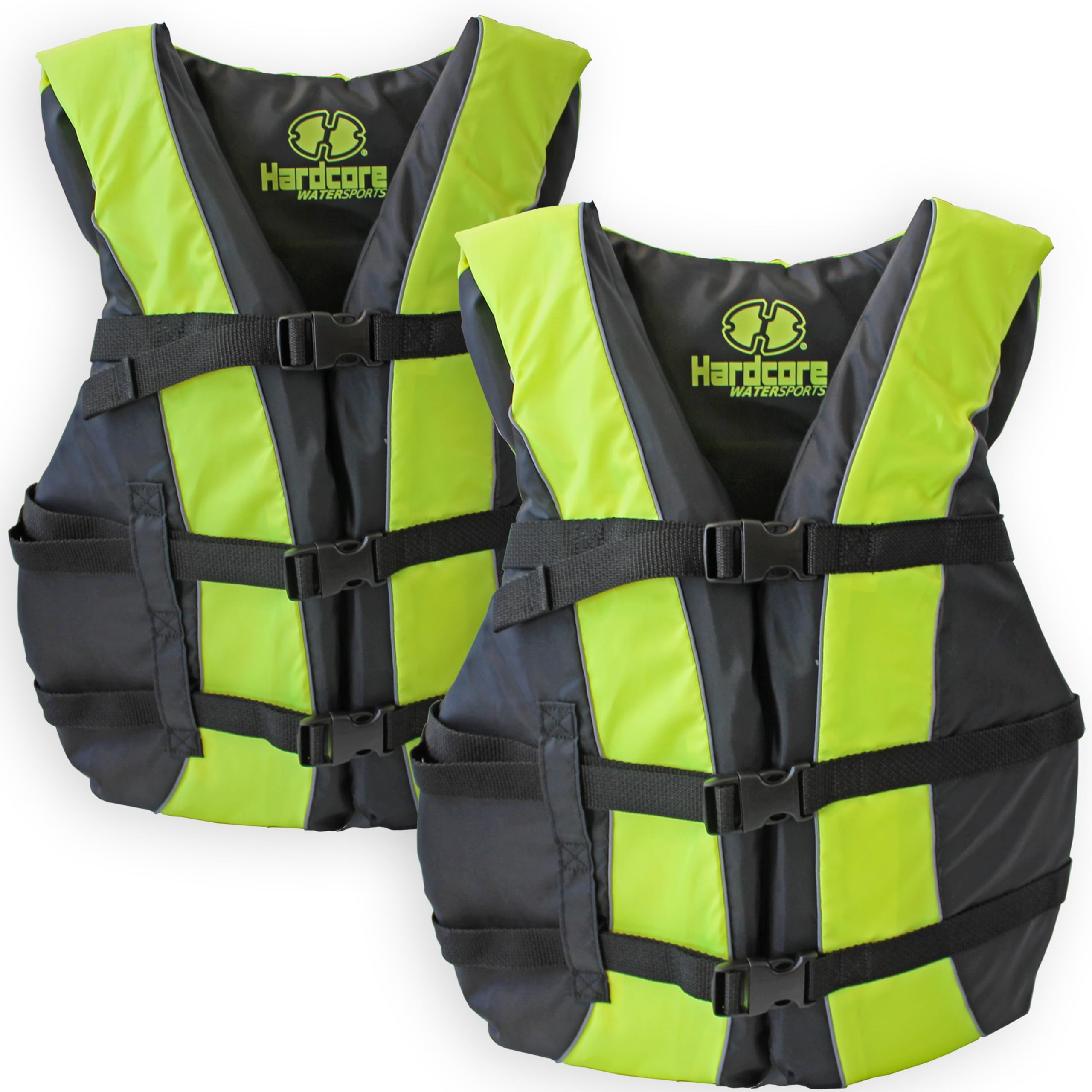
Two neon-bright vests in one box, so a buddy always has float on board.
Buying a pair solves a very specific problem: the friend who shows up for a boat day without a vest. This set is UL listed and USCG Type III approved, and each vest weighs 1.9 pounds — noticeably lighter than the 2.2-pound HyperLite, so the pair is easy to stash in a locker and forget until needed.
The build is polyester fabric over closed-cell PE foam, with 1-inch adjustable straps and quick-release buckles. The high-visibility neon yellow is the standout: owners describe it as easy to spot from across the water, which is exactly what you want on a busy lake. The cut under the arms also allows free mobility, and the adjustable straps are designed to cover adults and teens across a range of body sizes.
What it will not do is fit an extreme build — larger or very small frames can fall outside the adjustable range, so check that before you commit. And a buckle vest is never going to feel as snug as a zipped neoprene jacket for serious towing. For a pair of grab-and-go vests for general boating, though, it does exactly the job.
The value play: Two approved Type III vests in a single purchase, which is the cleanest way to get a spare on board without hunting for a second deal.
Visibility wins: The neon yellow shell is the thing people notice first — it reads instantly on the water, so you can see who is where in choppy conditions.
Reach for it when: You want a spare vest ready for guests without buying two separate jackets.
Look elsewhere if: Your frame sits well outside average sizing, since the adjustable straps only stretch so far.
6. O’Brien Men’s Traditional Neoprene Life Jacket

A soft neoprene jacket built for the rider who lives behind a boat.
O’Brien’s traditional cut leans into the tow-sports crowd. It closes with a zipper plus two adjustable belts, which gives a snug, locked-in ride that does not shift when you get yanked out of the water. The BioLite construction is described as soft, lightweight and breathable, and the vest weighs 1.5 pounds — lighter than the HyperLite — while wide armholes keep your reach free for a tow rope or a paddle.
The feature that tells you who this is for is the PWC lanyard attachment ring — a dedicated spot to clip your jetski’s kill-switch cord so you are not fumbling for it. It is approved under a harmonized US Coast Guard and Transport Canada standard, so it works on both sides of the border. Neoprene against the skin is what owners praise most, and that softness is the whole appeal.
The catch is size. It runs small, so size up, and a few buyers find the zipper fussy around the chin. The snug fit that makes it great for skiing makes it less forgiving to throw on quickly. If you want a ski jacket with real range of motion, though, this delivers.
The tow-sport arguments
- Zipper with two belts locks the vest in place during hard turns
- PWC lanyard ring clips your jetski kill cord within easy reach
- Soft neoprene against skin keeps chafing down
- Approved for both US and Canadian waters
What you should know going in
- The fit runs small, so plan on going a size up
- The zipper can take some care to close smoothly
- Snug cuts down on how quickly you can don the jacket
Made for: Jetski and wakeboard riders who want a snug neoprene fit and a lanyard ring built in.
Skip the size guess: This runs small, so go up a size and expect a snug, locked-in feel.
7. O’Brien Women’s Focus Neoprene Life Jacket

A women’s cut that trades bulk for reach, with a purple front that stands out.
O’Brien shapes this one specifically around arm movement. A front hinge and wide armholes are the design choices that let you pull a tow rope or a paddle stroke through without the vest catching you up. The zip closure with two concealed adjustable belts keeps it secure, and the concealed belts are the neat part — they tuck away so the front reads clean.
The lining is BioLite, described as a lightweight, breathable, eco-conscious alternative that stays soft like neoprene, and it is harmonized for both US Coast Guard and Transport Canada approval. The purple front is what draws eyes, and owners describe it as comfortable and easy to move in. There is also a PWC lanyard attachment ring for clipping a jetski cord.
The one thing to plan for is the sizing. This jacket runs very small, and a fair share of buyers would have been better off with a bigger size, so do not order your usual. The front-hinge fit is snug by intent, but the fit itself is the thing that wins people over, and that starts with the right size on the body.
Freedom to move: The front hinge and wide armholes mean you keep your range of motion for paddling and towing rather than fighting the vest.
Comfort where it touches you: The BioLite lining is a soft, breathable, eco-conscious layer that does not feel like plastic sheeting against your skin.
Reach for it if: You want a women’s-specific neoprene jacket with arm freedom and a colour that stands out on the water.
Size up, seriously: This one runs very small, so check the chart and go up rather than trusting your normal size.
8. NRS Ninja PFD Life Jacket

The low-profile paddling vest that keeps your arms free and your camp coffee close.
NRS builds the Ninja for people who spend real hours in a boat — kayak anglers, rafters, rowers. It sits low-profile for athletic performance, with an Orbit Fit System for comfort and graded sizing that takes into account the flotation each body type actually needs. The outer fabric is 100% recycled 420-denier ripstop nylon, with a 4-way stretch double-knit polyester lining that manages moisture, which matters on a long day in a spray jacket.
Two features separate it from the mass-market foam vests. A compartmentalized, zippered, drop-down clamshell pocket stores and organizes on-person gear — think a phone case, snacks and a headlamp. And it is hydration-pack compatible, so a reservoir hose runs cleanly to your shoulder without needing a separate pack. Reflective accents add visibility, and the design cuts snag points down, which is why it moves so well.
The honest caveat is front bulk. Owners note it feels somewhat bulky across the chest, which is the cost of those pockets and the flotation panel. It also carries a narrower range of what it plays with — this is a paddling vest, not a wakeboard jacket. For a rower or angler, though, the reach and the pocketing are worth every ounce.
Pocket and hose routing: The clamshell drop-down pocket and hydration compatibility turn the Ninja into a light carry system, so you keep gear and water on your body instead of in a separate pack.
Where it sits: Graded sizing and a low-profile shell keep the flotation where you need it — with reduced snag points and reflective accents for safety.
The right buyer: Kayakers, rafters and anglers who want a low-profile vest with real pocket space and hydration routing.
Know the trade: The front chest area feels bulky compared with a slim tow-sport jacket.
9. BLUESTORM Stratus 35 Inflatable Life Jacket

A collar-style inflatable that stays out of the way until the moment you hit water.
The Stratus 35 is the pick for anyone who finds foam vests too hot to wear past noon. It is a USCG-approved Type II inflatable, which means it is rated to turn you face-up, and it fills automatically the moment you hit the water via a replaceable CO2 cylinder. The cylinder is included. If something goes wrong with the automatic trigger, you also have a manual “jerk to inflate” cord and a backup oral inflation tube.
The numbers here are the story. It delivers 35 lbs of buoyancy, which the maker describes as a 2.5x higher minimum buoyancy than Type 3 foam vest life jackets, so it replaces a bulky foam vest while wearing like a light collar. The 2-inch waist belt with a large adjustment slider fits chest sizes from 30 to 56 inches, and the soft breathable polyester collar wicks moisture away from your neck without chafing. There is also a large zippered front pocket for sunglasses, pliers or a licence.
The catch is maintenance, and it is a serious one. An inflatable works only if the cylinder is charged and the vest is worn properly, so you need to inspect it each season — no foam core means no passive backup if the charge is spent. That said, owners describe it as comfortable and easy to get on and off, and its slim shape is what makes people actually wear it on a long paddle.
Why paddlers love the collar
- 35 lbs of buoyancy in a slim collar that wears nothing like a foam vest
- Automatic inflation on water entry, plus a manual cord and oral tube backup
- Wide 2-inch belt with slider fits chest sizes from 30 to 56 inches
- Breathable collar wicks moisture instead of trapping heat
What to keep in mind
- It needs a charged cylinder and seasonal inspection, unlike a foam vest
- No passive foam core, so you depend on the inflation system working
- Auto-inflation can trigger in heavy spray or rain if you are careless
Perfect for: Hot-weather paddlers and offshore anglers who want serious buoyancy in a vest they will not overheat in.
Do not skip: Check the CO2 cylinder and inflation trigger every season, because this vest has no foam backup.
Know the Specs
PFD Type and Approval
The PFD (personal flotation device) type tells you where a vest is meant to be used. A Type III is the general-boating grade — built for calmer water where help is likely to be quick — so it covers tubing, paddling, fishing and jetskiing. A Type II, which is what the Stratus 35 inflatable carries, is rated to turn you face-up in the water, so it suits more open conditions. Always match the type to the water, not just to the activity name.
Buoyancy in Pounds
Buoyancy is the lift a vest offers, measured in pounds. The Stratus 35 inflatable carries 35 lbs of lift, which its maker describes as a 2.5x higher rating than Type 3 foam vest life jackets. Foam vests like the Hardcore pair and the Airhead Sportsman rely on closed-cell foam and body belts instead of a stated lift figure. When you compare, look at whether the vest gives a clear number or just a “Type III” label.
Closure Type in Plain Terms
A buckle closure uses body belts with side-release buckles that you clip and cinch — quick on, quick off, and easy to adjust for a range of bodies. A zipper closure locks a jacket down more firmly and is the choice for ski, wake and tow sports. Some vests combine both. Think about who puts the vest on and how fast they need to do it.
Shell Fabric and Drying
The outer fabric matters for durability and for how fast you dry off. A 200-denier polyester shell like the Sportstuff’s resists UV and stains, while a nylon or Cordura lining stands up to repeated water exposure. Neoprene and BioLite linings stay soft against skin but hold a little more water, while ripstop nylon and polyester linings dry quicker. Match the fabric to how long you stay wet.
Common Questions
What is the difference between a Type II and Type III life jacket?
Will the Sportstuff vest fit an adult with a larger chest?
How does the BLUESTORM Stratus 35 inflate, and does it need a new cylinder each time?
Can I use the O’Brien Men’s Traditional jacket for kayaking?
How do I know what size life jacket to order?
Is an inflatable life jacket as safe as a foam vest?
How should I store my water life jacket between seasons?
Can kids wear an adult life jacket like the Airhead Sportsman?
Why does my life jacket feel bulky around the chest?
Do I need a life jacket for paddleboarding and kayaking?
The Bottom Line
For most people, the best water life jacket on this list is the HyperLite Men’s Elite, because it pairs a snug zip-front fit with a foam core that keeps you afloat without locking your arms in place. If you want a featherweight vest for hot fishing days, the Airhead Sportsman weighs in at just 12 ounces. And for paddlers who want to skip the foam entirely, the BLUESTORM Stratus 35 gives you 35 lbs of buoyancy in a slim collar you will actually keep on. Measure your chest before you order anything, and check the manufacturer’s size chart — that one step prevents most returns.
How we choose
We do not accept paid placement. Every pick is matched to a real buyer and a real use-case; we do not hands-on test units.
Sources
Specifications: manufacturer listings and product documentation. Review insights: verified customer reviews, as of November 2026. Pricing: not shown on this page (it changes often); check the current price via the retailer link.
As an Amazon Associate, Tactical Gear Guy earns from qualifying purchases. This does not affect which products we feature.