Specs are compiled from manufacturer listings and verified buyer reviews and can change over time — please confirm the key details on the product page before buying.
A chair for a sore back is not about extra padding — it is about whether the lumbar panel lands on your lower back and stays there when you shift. Everything else is decoration. This guide walks through eleven chairs that all put a real lumbar component at the center of the design, and explains in plain terms which ones fit which body and which postures.
This guide is built by comparing the manufacturers’ published specifications and the patterns across verified customer reviews, so you get each pick’s real strengths and trade-offs instead of marketing spin.
You will see how seat depth, height range and lumbar travel separate a chair that helps from one you fight all day. Below is a working shortlist of the sore back office chair options that get the lower-back geometry right.
Top Picks
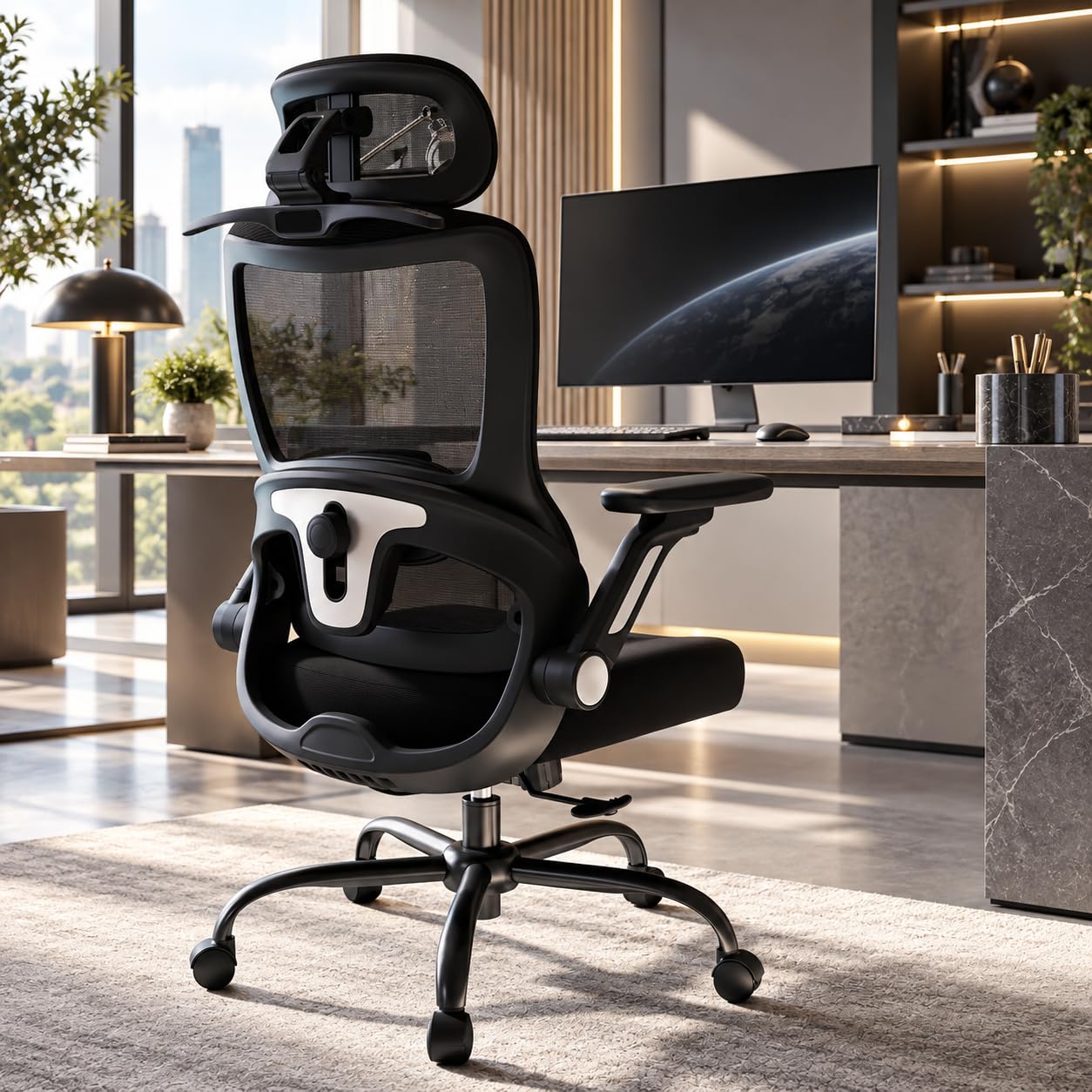

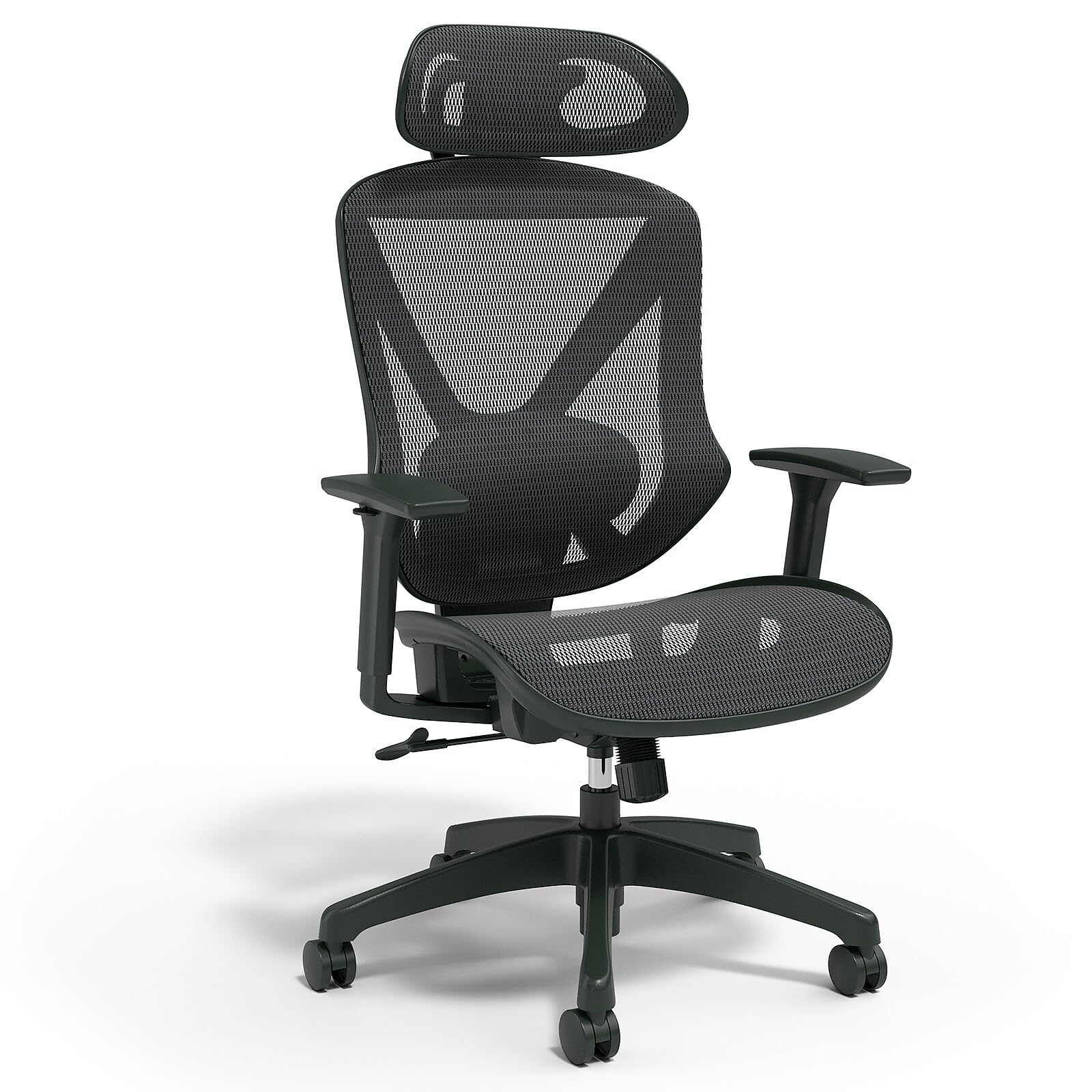
How To Choose The Best Sore Back Office Chair
Most people shopping for back pain buy on cushion softness, then discover the chair never touches the part that hurts. The fix is to buy on geometry: where the lumbar support sits, how far it moves, and whether the seat depth lets your back reach it at all.
Lumbar adjustment range is the number that matters
A fixed lumbar curve only works if your spine happens to match it. Look for a lumbar panel that moves vertically and in and out — the wider that travel, the better your odds of parking it on your own lower-back curve. A dual-panel design supports both sides of the lower back rather than one central bump.
Seat depth decides whether the lumbar ever reaches you
If the seat is too deep, you slide forward to bend your knees and your back leaves the lumbar panel entirely. A sliding seat depth lets you shorten the cushion so your back stays in contact. Without it, a tall backrest and a deep seat can work against each other.
Height range and weight rating
Seat height range tells you whether your feet will rest flat on the floor at your desk. Weight ratings tell you how much structure the base and gas lift were built for — a reinforced metal base rated higher will generally feel steadier under daily use than a lighter-duty frame.
Mesh back or foam back
A breathable mesh back keeps airflow moving across your back during long sessions. Foam and upholstered backs feel softer against the spine but trap more heat. Neither is wrong; match it to how long you sit and how warm your room runs.
Side-by-Side Comparison
| Model | Best For | Weight Rating | Seat Height Range | Recline | Amazon |
|---|---|---|---|---|---|
| Solviva Big and Tall 400 LBS★ Best Overall | Larger frames and long shifts | 400 lbs | — | 90°–135° | Amazon |
| X XISHE Mesh ErgonomicBest Value | Small rooms and tight desks | — | 18.8″–22.63″ | Rocking function | Amazon |
| Staples DexleyBest for Tilt Control | Adjustable tilt tension | 275 lbs | 17.4″–21″ | 3-position tilt lock | Amazon |
| Solviva Mesh with Headrest | Wide seat and head support | 300 lbs | from 20.47″ | 120° | Amazon |
| SIHOO B100 SE | Cushioned seat over mesh | — | 18.3″–21.9″ | 110°/125°/135° | Amazon |
| YFO Bonded Leather | Leather look and quiet casters | — | — | Adjustable recline | Amazon |
| ProtoArc EC200 | Sliding seat depth | under 220 lbs | — | 90°/105°/120°/130° | Amazon |
| MOLENTS Mesh | BIFMA X5.1 build | — | 19.5″–23.3″ | 90°–120° | Amazon |
| MIMOGLAD Dual Lumbar | Recline with a footrest | — | 17″–20″ | 145° | Amazon |
| FLEXISPOT ErgoX | 5-level back adjustment | — | 20.1″–22.4″ | Tilt with footrest | Amazon |
| Sharper Image S600 | Massage and heat built in | — | — | — | Amazon |
Detailed Reviews
1. Solviva Big and Tall Office Chair 400 LBS
Our pick — 4.5+★ from 250+ verified ratings; the strongest balance of quality and price.
A dual-panel lumbar cushion that slides in two directions and a seat built for larger frames.
This is the pick for anyone whose main frustration is that lumbar bumps never land in the right spot. The lumbar cushion moves 2 inches vertically and 1.2 inches horizontally, so you can walk it up and down until it presses into your own lower-back curve rather than hovering above it. That adjustability, not the foam, is the reason it takes the top spot.
The seat is the other half of the story. At 20.5 inches deep and 20.9 inches wide with 3.9 inches of high-density foam, it spreads load across the hips and thighs — useful if a narrow cushion leaves you shifting from cheek to cheek. For reference, the Staples Dexley below runs an 18.3-inch seat depth, versus 20.5 inches on this chair.
The weight rating is where it separates hardest. It is built to 400 lbs with a reinforced 5-prong metal base and 360° silent casters, against the 275 lbs the Staples Dexley is rated for. The armrests flip 90° upward and slide 1.2 inches front to back while swiveling a full 360°, and the headrest raises 3.9 inches with 45° and 90° tilt positions. Recline locks at 90°, 115° and 135°, versus the 120° maximum on the Solviva mesh model further down. A rear clothes hanger rounds it out.
Where it earns the top slot
- Lumbar cushion adjusts 2 inches vertically and 1.2 inches horizontally so it meets your spine where it actually curves
- 400 lb rating with a reinforced 5-prong metal base for heavier users and long daily shifts
- Three recline locks at 90°, 115° and 135° let you change posture without losing lower-back contact
- 4D armrests flip up 90° so the chair tucks under the desk
What to weigh first
- The 20.5-inch seat depth is generous — shorter frames may want the sliding seat depth of the ProtoArc instead
- Mesh back means no padded surface against the spine if you prefer upholstery
Buy this one for: heavier or taller users who need a lumbar panel with real travel and a wide foam seat under them.
Think about the ProtoArc instead if: you are around 5’4″ and a deep seat tends to push you forward.
2. X XISHE Mesh Ergonomic Office Chair
The tight-space answer: flip the arms up, roll it under the desk, get your back supported.
If your desk setup shares a room with a bed or a door, this is the chair that stops being in the way. The arms flip up 90°, so the whole thing slides under the desk when you are done. What buyers keep coming back to, though, is the build — the frame and finish get more praise than the comfort, and the adjustable lumbar hold-up is the specific reason it stays in the shortlist.
Seat height runs 18.8 inches to 22.63 inches on a gas lift, which covers a wide spread of body heights without a wrench. The backrest is curved to follow the full spine rather than hitting one spot, and the rocking function gives you movement during breaks instead of locking you in place. Thick high-density cushion tops a PU leather seat that wipes clean.
The honest trade-off is that a rocking chair is not a fixed lumbar position. If you want a lumbar panel you can lock exactly where your back hurts, the Solviva above or the MIMOGLAD below give you that; this one supports through shape rather than precision. Assembly is a 20–30 minute job for one adult with the included tools.
The honest read: this is a chair you buy because it fits your room and your routine, with lumbar support that follows your spine’s curve rather than a panel you dial in.
Where it sits: the widest seat-height range in this group — 18.8 to 22.63 inches — makes it the easiest fit for mixed-height households.
Reach for this if: you work in a small room and need the chair to disappear under the desk at the end of the day.
Look elsewhere if: your priority is a lumbar panel you can lock into one exact position.
3. Staples Dexley Ergonomic Mesh Task Chair
A tension knob that decides how hard your back has to work to lean into the recline.
Here is a feature most people never touch and should: the tilt tension knob. On this chair you dial how much resistance the recline gives you, so leaning back feels like a controlled stretch instead of a drop. Pair that with a 3-position tilt lock and you can hold a slight recline — often the most comfortable angle for a sore lower back — while you keep typing.
The lumbar support is the feature reviewers with lower-back trouble single out, and the height-adjustable arms rise to shoulder level so you don’t hunch down to them. The headrest adjusts for both height and angle. The mesh back and seat keep air moving through a long workday.
Two numbers to know before you buy. The seat depth is 18.3 inches, versus 20.5 inches on the Solviva big-and-tall chair, which suits shorter legs but can feel tight for very tall users. And the rating is 275 lbs based on a 5–10 hour workday. Durability and adjustability are the two areas where opinions split most, so treat this as a solid daily chair rather than an overbuilt one. It meets or exceeds ANSI/BIFMA standards.
The recline argument: the combination of a tension knob and a 3-position tilt lock is the closest thing here to tuning a recline to your own back instead of accepting a preset.
This suits you if: you want to set a gentle recline and hold it all afternoon while working.
Differently built than the Solviva: 275 lbs rated against 400 lbs, so heavier users should size up.
4. Solviva Mesh Office Chair with Headrest and 3D Arms
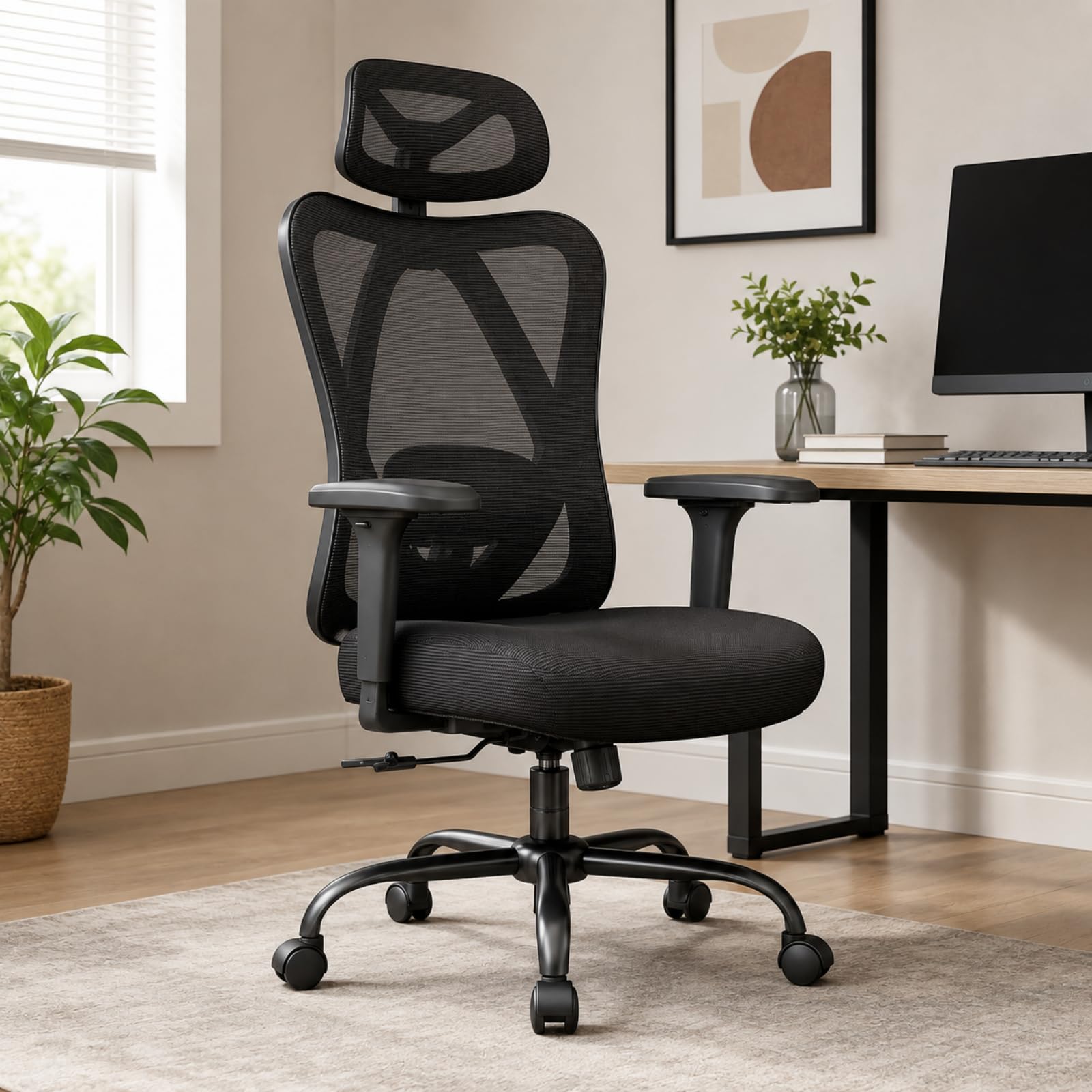
Shoulder room and side-to-side arm positions — for anyone who feels boxed in by a standard task chair.
The backrest here measures 20.67 inches wide, versus a 19.1-inch back on the Staples Dexley. If your shoulders feel pinched against a narrow backrest, that extra width is the difference between sitting back and sitting hunched forward away from the lumbar contact.
The 3D armrests are the sleeper feature. They adjust in height, forward and back, and side to side, so you can bring each arm in or push it out to match your keyboard position rather than your chair. The headrest moves up, down and rotates. A 2.96-inch seat-height range lets you fine-tune the fit, and the seat starts at 20.47 inches — one of the higher starting points in this group, worth checking against your desk height.
The chair is rated to 300 lbs on a reinforced five-star metal base with an SGS-certified gas lift — an independent third-party certification for the lift cylinder. Recline tops out at 120° with a rocking function and a tilt-tension control, plus full 360° swivel. Buyers single out the look of this chair more than anything else; the comfort side is decent but not the loudest praise in its reviews. Keep that in mind if cushion feel is your top priority.
What makes it easy to live with
- 20.67-inch backrest width gives shoulders more room than narrower task chairs
- 3D armrests adjust in height, depth and width for a real keyboard-matched fit
- 300 lb rating on a reinforced five-star metal base with an SGS-certified gas lift
- 120° recline with rocking function and tilt-tension control
Fit notes to check
- Seat height starts at 20.47 inches — measure your desk before committing
- Owners praise the appearance most; cushion softness draws less enthusiasm
Fits you when: a narrow backrest is what keeps pushing you forward out of lumbar support.
Worth measuring first: a 20.47-inch minimum seat height sits high for shorter users.
5. SIHOO B100 SE Ergonomic Office Chair
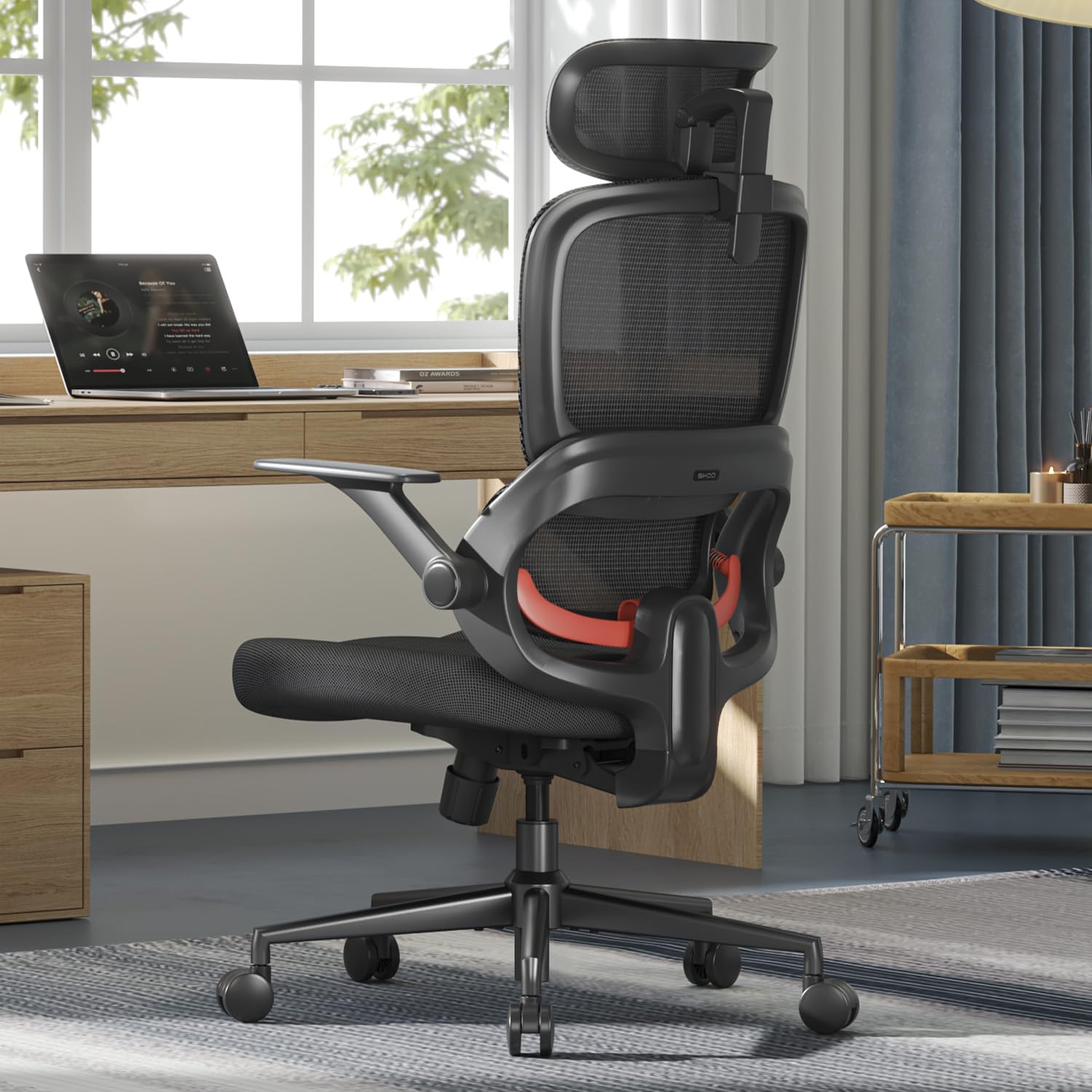
The one to pick when a hard mesh seat is exactly what makes your hips ache by lunchtime.
SIHOO’s approach here is a foam and memory-foam seat in place of a taut mesh sling, so the pressure under your hips and thighs is spread over plush padding rather than concentrated on two contact points. Its lumbar panel is dynamic: it tracks the curve of your spine as you lean forward or sit upright, so you are not re-adjusting a knob every time you change posture.
It is also the chair with the deepest well of owner experience behind it by a wide margin — this is the crowd favorite of the group, with 4.0+ stars across 17,000+ owners. Reviewers most often mention durability and all-day comfort, with many reporting they get through a full workday without back pain. Three recline locks at 110°, 125° and 135° let you switch from upright work to a full lean-back.
Seat height adjusts from 18.3 inches to 21.9 inches, versus the 20.47-inch floor on the Solviva mesh chair, and so suits shorter sitters better. It is built to meet SGS and BIFMA standards and carries a 36-month coverage window. The honest catch: adjustability and firmness are the two things opinion divides on most — some find the seat softer than they want, others want more tuning range. Neither is a defect, just a personal fit question.
Why the foam wins out: if you have ever stood up from a mesh seat with a numb patch on the back of your thighs, a plush memory-foam cushion is the direct fix.
The fit question: adjustability and firmness split opinion — if you want a chair you dial in precisely, look at the ProtoArc’s sliding seat instead.
Pick it if: you want a plush, pressure-spreading seat under you and a lumbar panel that moves with your posture.
Not the one for: sitters who prefer a firm seat and a lot of manual adjustment range.
6. YFO Home Office Desk Chair in Brown Leather

Leather-look comfort for a home office that has to impress on video calls.
Buyers compare the stitching and colour on this one to a high-end car interior, and the wheels glide so quietly they get the roller-blade comparison. That is not a trivial detail — a hardwood floor in a quiet house makes cheap casters sound like gravel. The rubber casters here roll smoothly across wood, carpet and marble, and YFO points out that they protect the floor and save you buying replacement wheels later.
For your back, the support comes from a genuinely wide seat — 22 inches across and 20 inches deep — over a wooden board, soft sponge and a spring pack. That spring pack keeps the cushion from flattening into a plank after months of daily sitting. The backrest is padded to support the lower back through a full workday, not just to look the part.
The 2-in-1 design is the unusual bit: you can leave the arms off and use it as a cross-legged chair, which suits people who shift positions constantly. Size is where feedback splits — a 22-inch seat and 15.8-inch backrest width will feel generous to some and oversized to a smaller frame. Check your desk clearance before you commit.
Why it stands out
- 22-inch seat width and 20-inch depth with a spring-pack cushion that resists flattening
- Rubber casters glide quietly across wood, carpet and marble
- Backrest padded for lower-back support through a full day
- Arms come off for cross-legged sitting if that is your habit
Before you commit
- Size draws mixed feedback — the 22-inch seat is roomy but can feel oversized on a small frame
- 15.8-inch backrest width is narrower than the seat, so broad shoulders may overhang
Go for it when: your home office is on show and you want a chair that looks the part with a wide, springy seat.
Handle with care if: you are small-framed and a 22-inch seat tends to leave you sliding.
7. ProtoArc EC200 Ergonomic Office Chair
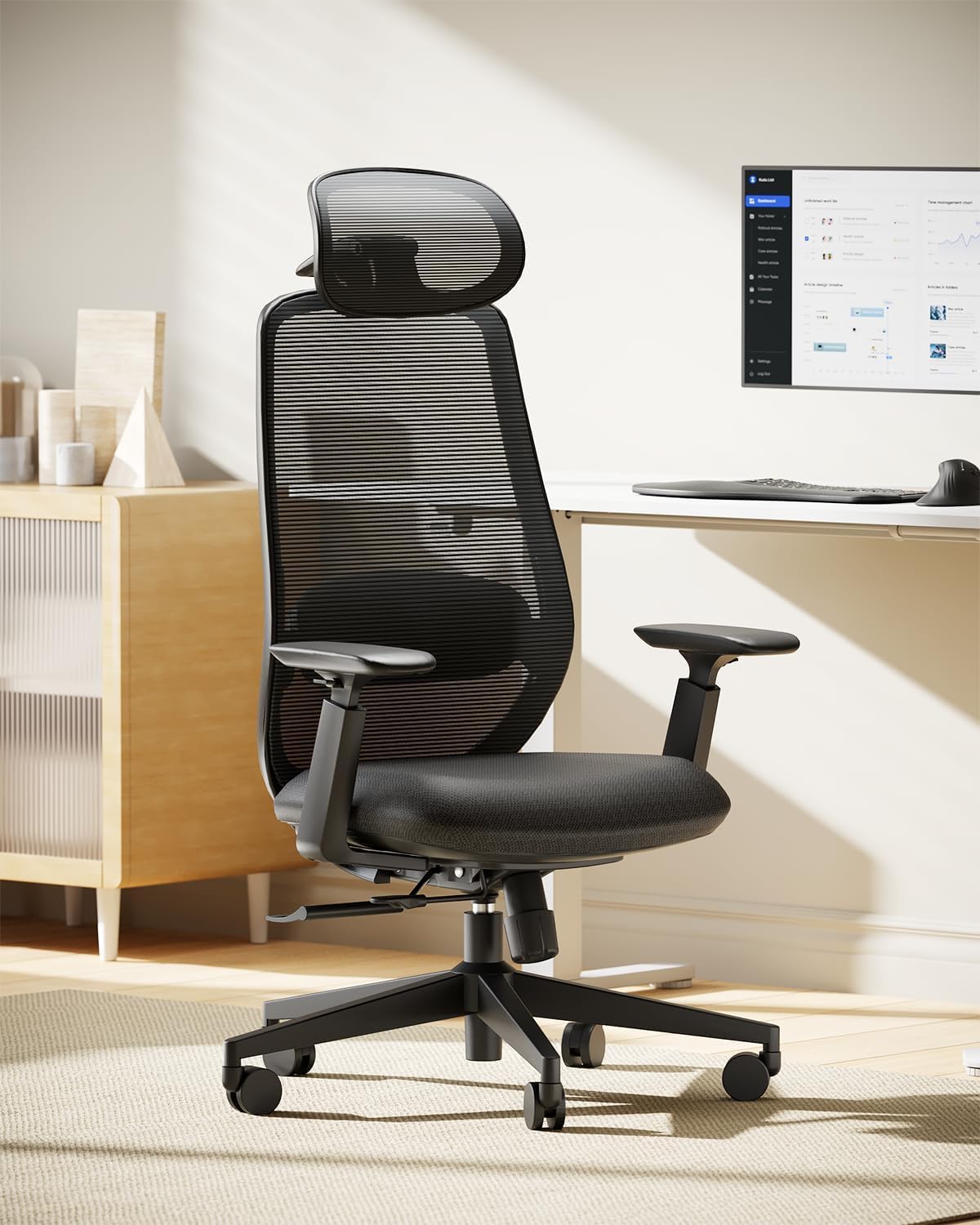
A seat that slides forward and back so your back can actually reach the lumbar panel.
Here is the feature that fixes the most common fitting failure in office chairs: the seat depth slide. This one has five positions across 1.97 inches of travel, so you can shorten the cushion under your thighs while keeping your back pinned to the lumbar support — no more sliding forward and losing contact, no more pressure behind the knees. That is rare at this level.
It is also honest about who it is for. ProtoArc calibrates the EC200 for users between 5’4″ and 6’0″ and under 220 lbs, which is unusually specific and worth taking seriously. If you fall outside that window, the lumbar, headrest and armrests are positioned for a body type you do not have. The adjustable lumbar adds 2.36 inches of height and 0.8 inches of depth travel, and the 55D foam cushion (a density rating — higher means it resists collapse) holds its shape through daily use. The four-position recline locks at 90°, 105°, 120° and 130°.
The build carries BIFMA X5.1 and BS EN 1335 certifications with a TÜV-tested Class 4 gas lift. The catch: lumbar support and cushioning are the two areas where feedback splits — some find the lumbar sits a touch high and the headrest firm. Setup runs about 20 minutes and the footprint suits a studio or bedroom corner.
What you are really buying: the sliding seat depth is the single most useful dry-run feature for anyone whose back keeps losing contact with the lumbar panel as they shift through the day.
The hard limit: the 5’4″–6’0″ and under-220-lbs body window is a real filter — outside it, this chair’s geometry is not aimed at you.
Built for you if: you sit between 5’4″ and 6’0″, weigh under 220 lbs, and seat depth is your fit problem.
Look at the Solviva big-and-tall instead if: you are heavier or taller than that window.
8. MOLENTS Ergonomic Office Chair, BIFMA X5.1 Certified

Adjustable lumbar and 3D arms on a certified frame, built as a daily workhorse.
The lumbar support on this chair adjusts both up and down and forward and back, so you can move it off the exact spot that hurts without moving your whole seat position. The 3D armrests go one step further than most — they slide forward and back, adjust for height and width, and the arm panel pivots. That means you can angle the armrest to follow the line of your forearm instead of forcing your elbow to a fixed pad.
The frame carries BIFMA X5.1 certification — an industry standard for office chair durability. The mesh is described as high-elastic, and the full mesh seat is a breathable alternative to the foam seats on the SIHOO and the YFO. The tilt runs three positions from 90° to 120°, so you can drop back for a rest without losing the lumbar contact.
It is one of the slightly more involved assemblies here because a part is packed inside another — remove the base leg from inside the seat before you start, or the parts list will look short. Seat height runs 19.5 inches to 23.3 inches, and the seat depth is 18.9 inches. MOLENTS offers an alternate gas lift for shorter or taller users if the stock range does not fit — worth asking about before you struggle with a chair that sits a half-inch wrong.
The case for it
- Lumbar panel adjusts up, down, forward and back for a targeted lower-back fit
- Full 3D armrests that slide, lift and pivot to match your forearm angle
- BIFMA X5.1 certification backs the built quality
- Seat height from 19.5 to 23.3 inches — wider top end than most here
What to keep in mind
- Assembly is fiddly — the base leg ships inside the seat, so check the parts list carefully
- 18.9-inch seat depth is on the shorter side for very tall sitters
The one for you if: you want lumbar and arm support that adjust in every direction and a certified frame that lasts.
Manage the setup: reserve fifteen minutes and read the manual before you open the bags.
9. MIMOGLAD Ergonomic Office Chair with Footrest
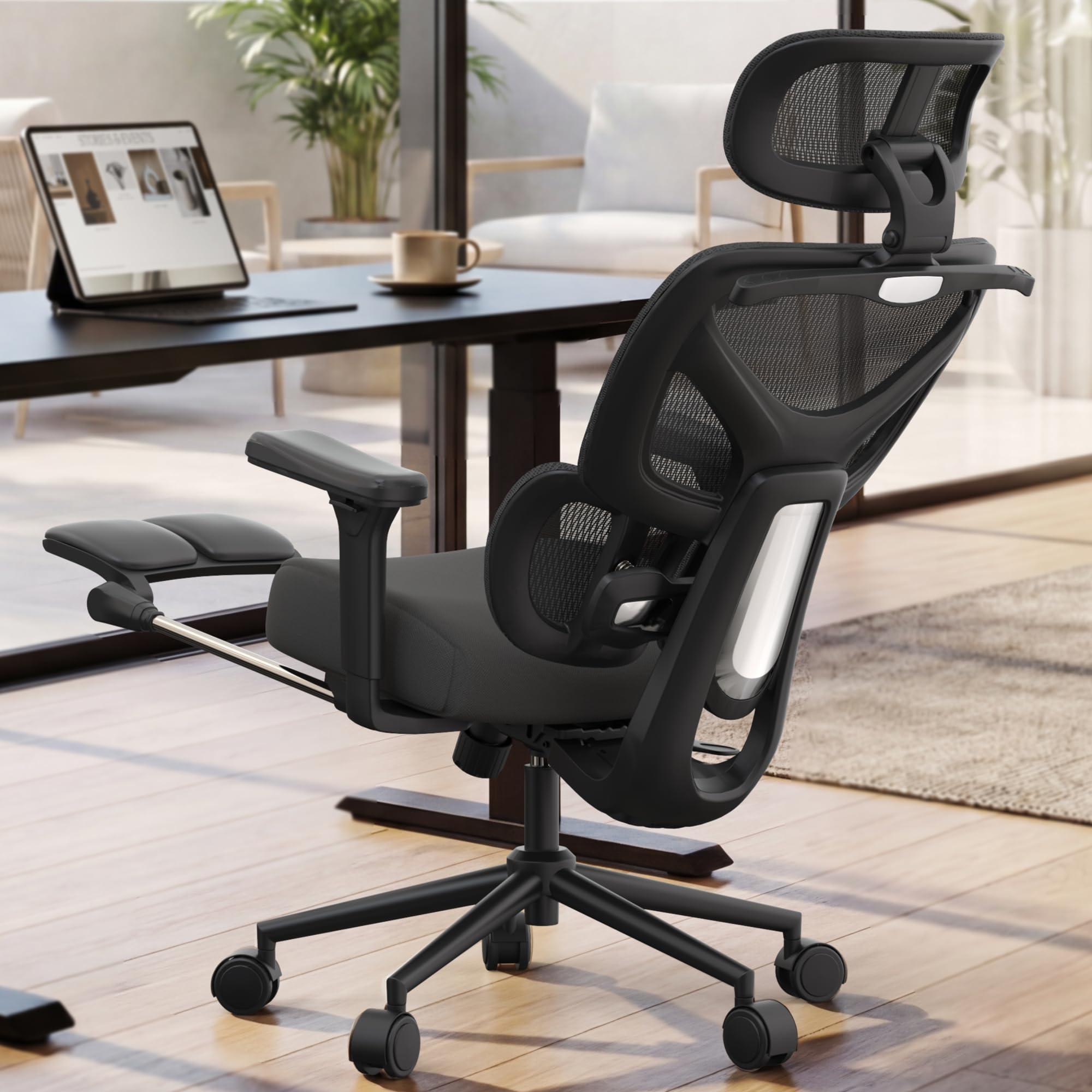
A dual-panel lumbar that flexes with pressure instead of pushing back stiffly.
The dual-lumbar system here is the most thought-through part of the chair. You adjust both panels through a 1.77-inch height range and 1.5-inch depth range, then lock them. Once set, springs inside the panel flex under your body weight, so the support follows your back as you shift instead of jamming a hard point into your spine. If you have found lumbar bumps too firm, this is the design that answers that.
The recline is the reason it tops the comfort list for long sessions. It goes to 145° with an 18.7-inch extendable footrest, versus a 135° maximum on the Solviva and SIHOO models and 130° on the ProtoArc. When your back needs a real break, a recline that deep plus a footrest lets you fully unload instead of holding yourself in a half-lean. The 3.94-inch foam cushion and 13.8-inch extra-wide 3D headrest — raising 3.6 inches, tilting 45°, flipping 75° — fill in the rest, and the headrest is sized for users from 5’1″ to 6’2″.
The mechanical components come with a 5-year warranty and free replacement parts on covered issues, which is the most generous coverage in this group. Assembly hardware is labelled by step to cut the guesswork. A hook on the back holds a jacket, bag or headphones. Quality and assembly are the brightest notes in its feedback; the cushion sits on the firmer side, which not everyone wants.
Standout spec: a 145° recline with an 18.7-inch footrest makes this the pick for anyone who wants to lie back between tasks rather than perch.
What to accept: a firm seat cushion — some prefer plush, and this is not that.
Made for you if: you want deep recline, a footrest and a lumbar panel that gives with your back.
skip it if: a soft, sink-in cushion is what your back finds comfortable.
10. FLEXISPOT ErgoX Premium Ergonomic Office Chair
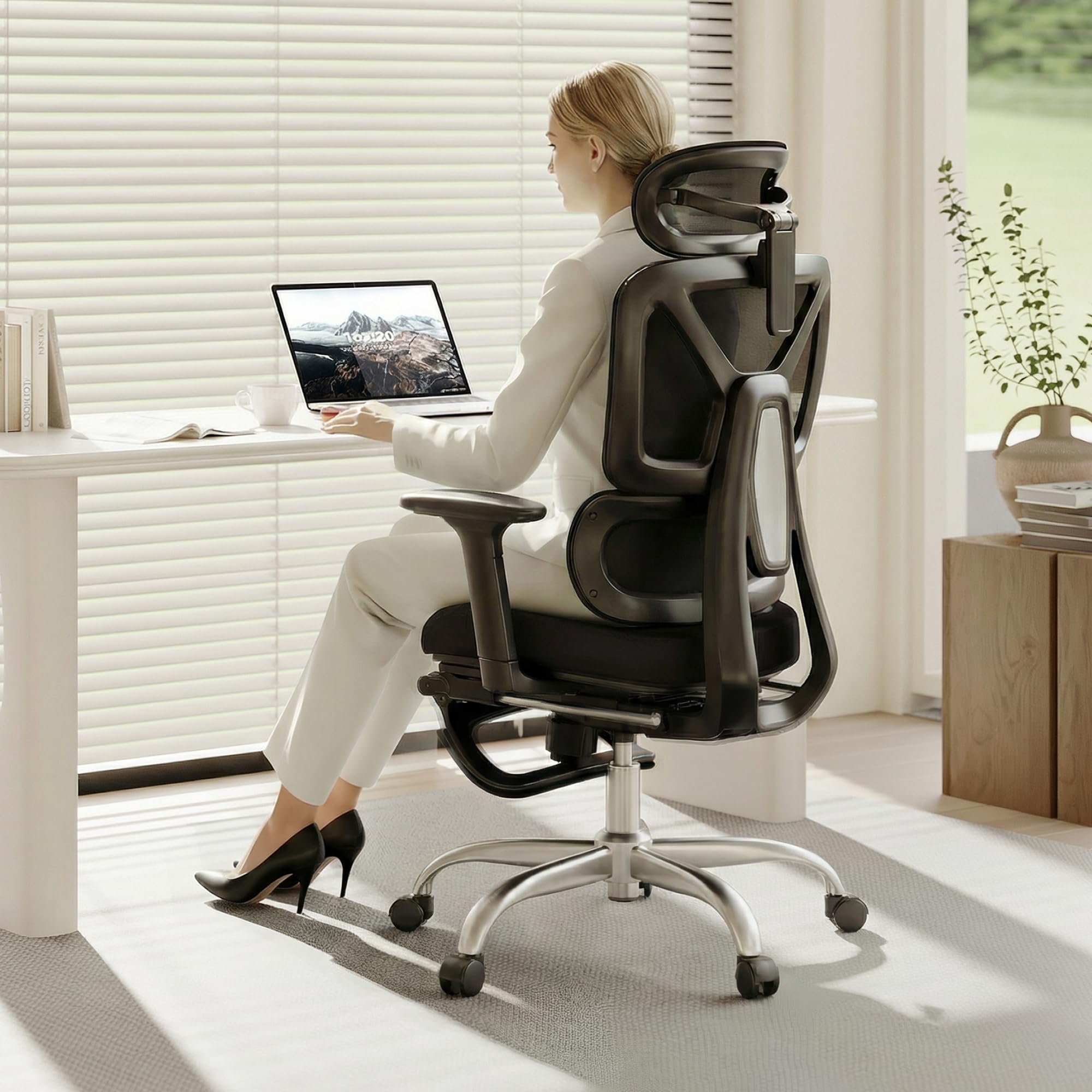
Five levels of back adjustment plus a footrest — for the sitter who never stops tuning.
If you have ever wished a chair’s back height could move one more notch, this is the one to look at. The back adjusts through five levels, and the dynamic lumbar support shifts with you, so you are not locked into a single preset spine curve. The 3D headrest adds height, tilt and forward positioning for neck support when you are staring down at a screen.
The 3D armrests adjust for height, forward and back, and swivel, so your elbows can rest at the angle your shoulders actually want. There is a nap footrest and a tilt function for breaks — this is a chair built to move through work and rest in one footprint, whether that is an office, bedroom or gaming setup. Seat height runs 20.1 inches to 22.4 inches, and seat depth slides from 16 to 17.2 inches.
Here is the balanced picture. Comfort, back support and the sturdy build get the most positive attention, and the cushion is described as cushioning without being too hard. The softer spots are assembly and adjustability — instructions draw mixed reactions, and one reviewer’s take on range does not land the same for everyone. Seat depth only reaches 17.2 inches, so tall sitters will want to check that before buying. That is your fit question to resolve, not a flaw.
Strong points
- 5-level back adjustment and dynamic lumbar support let you tune the curve to your spine
- 3D headrest moves in height, tilt and forward reach for neck support
- Nap footrest and tilt make it a work-and-rest chair in one footprint
Trade-offs to weigh
- Assembly instructions split opinion — some find them confusing
- Seat depth tops out at 17.2 inches, shorter than most here, so tall sitters should measure
The one for you if: you want to fine-tune back height and headrest position and want a footrest for breaks.
Not ideal if: you are tall and need a deeper seat — 17.2 inches is the ceiling here.
11. Sharper Image S600 Active Lumbar Ergonomic Leather Chair
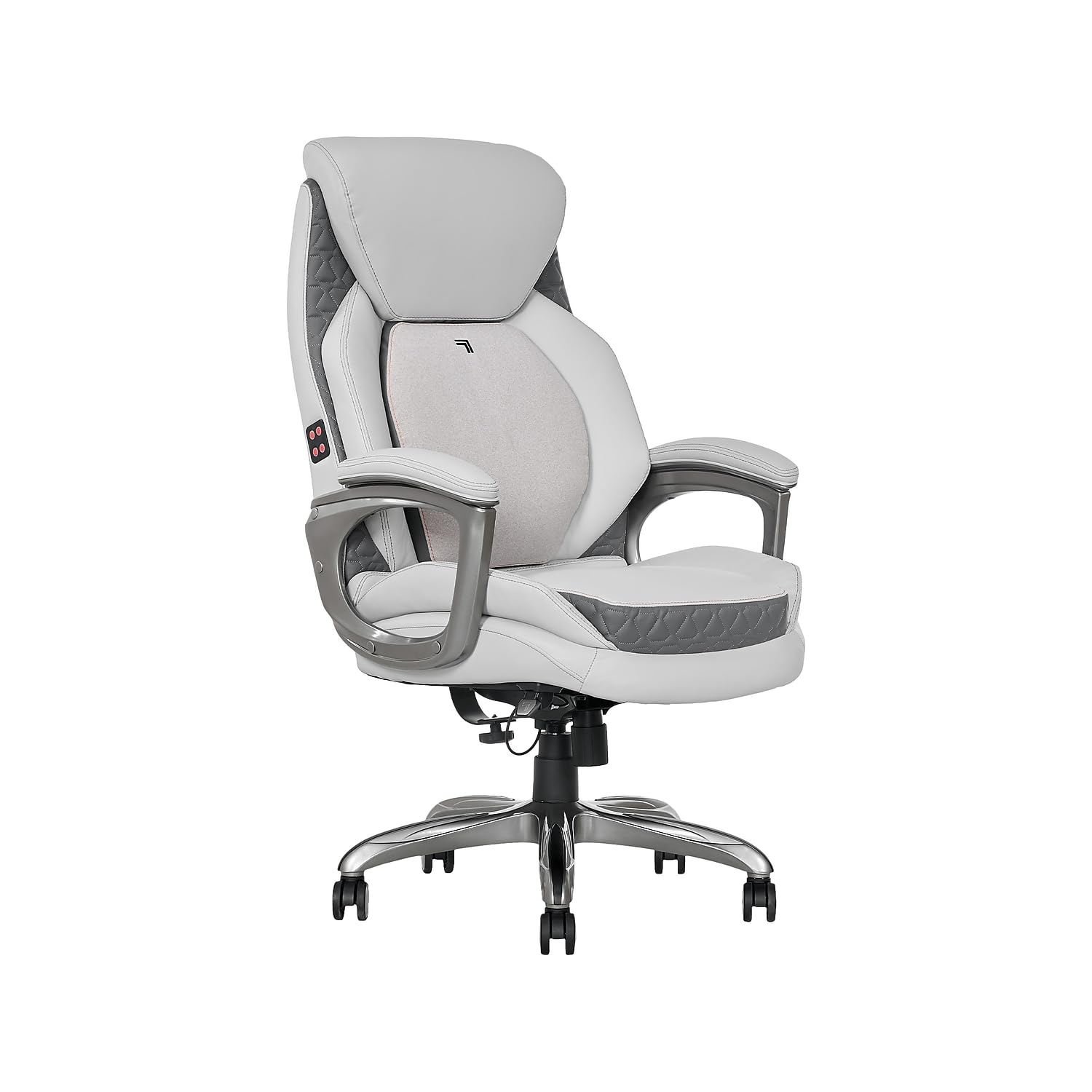
The executive chair with a built-in massage and heat for the end of a long sitting day.
Active lumbar here means the panel shifts with your posture rather than sitting at one fixed point, so your lower back stays supported as you lean and shift. On top of that, this chair pairs bonded leather and high-density foam upholstery with heated massage and multiple massage modes — a rare extra for a chair on this list, and a reason it stands apart for anyone who wants more than passive support during a long workday.
The look is a step up from the mesh task chairs: bonded leather in off-white with pillow-top armrests, a continuous back, and 360° swivel casters. The armrests adjust from 26.75 inches to 29.75 inches for height alignment with your desk. Overall the frame runs 45.25 to 48.25 inches tall, 27.75 inches wide and 30 inches deep — a substantial footprint, so check your floor space before committing.
The honest read: the build quality, comfort and lumbar support get the most attention in feedback, and the massage and heat are the nice-to-have bonus people mention. It is the priciest pick here, and it is a leather executive chair rather than an adjustable mesh ergonomic chair — so if you need a lumbar panel you dial in precisely with a headrest and recline range, a pick like the MIMOGLAD or ProtoArc fits the brief better. As a comfortable, good-looking chair with relief extras, though, it stands on its own.
The luxury angle: massage and heat built into the backrest is something no other chair here offers, and it changes how a long sitting day ends.
The fit catch: this is a fixed-position leather chair with height-adjustable arms only — no sliding seat depth or multi-position lumbar tuning.
Choose this if: you want an executive leather chair with massage, heat and an active lumbar panel for all-day comfort.
Differently built than the ergonomic picks: arms adjust for height only, so precision tuners should look to the MIMOGLAD.
Know the Specs
Lumbar travel in inches
Lumbar travel is how far the support moves up, down and in toward your back. More travel means a better chance the panel lands on your own curve, which is the whole point for a sore back. A 2-inch vertical range or an adjustable-height range of a couple of inches is enough to make a real difference; a fixed bump is a guess at where your spine curves.
Seat height and seat depth
Seat height keeps your feet flat and your knees near a right angle. Seat depth keeps your back against the lumbar panel — too deep and you slide forward, too short and your thighs hang. A sliding or adjustable seat depth (usually an inch or two of travel) solves the fit question for shorter legs. The seat-height range should include the height you actually sit at, measured to your desk.
Recline degrees and lock positions
Recline range is measured in degrees from upright. A small lean of 105°–120° takes pressure off the spine while you keep working; a deeper 135°–145° is for real breaks. A lock lets you hold an angle instead of bouncing, and a tension control sets how hard you have to push to lean. Together these let you change posture through the day without changing chairs.
Weight ratings and base materials
The weight rating tells you what the frame, base and gas lift were engineered to hold, so match it to your own weight with a margin to spare. Bigger ratings usually come with reinforced metal bases and heavier-duty casters, which feel steadier under daily use. Check the gas lift class and any certification such as ANSI/BIFMA or SGS for a build that is independently checked.
Common Questions
Will a chair with adjustable lumbar support actually help my sore back?
How do I know if a chair’s seat depth will fit my legs?
What is the difference between mesh and foam chairs for a sore back?
Do the pound ratings on office chairs matter?
Which recline is best for a sore back at a desk?
Can I use a chair with a footrest in a small home office?
Are 3D armrests worth it for back support?
What does BIFMA or SGS certification mean on an office chair?
How long should assemblying an office chair take?
Is a heated massage chair a good choice for a sore back?
The Bottom Line
For most people with a sore back, the sore back office chair winner is the Solviva Big and Tall 400 LBS because its dual lumbar cushion moves 2 inches vertically and 1.2 inches horizontally until it meets your own curve, and the 400 lb reinforced base keeps it steady under daily use. If a plush seat under pressure is your priority, grab the SIHOO B100 SE — the crowd favorite with 4.0+ stars across 17,000+ owners and a memory-foam cushion. And for a chair that slides in depth to keep your back in contact, the ProtoArc EC200 is the one to reach for if you fall within its 5’4″–6’0″ fit window.
Whichever you pick, treat the lumbar panel as the deciding spec: measure where your lower back curves, then choose the chair that lets its support travel to meet it.
How we choose
We do not accept paid placement. Every pick is matched to a real buyer and a real use-case; we do not hands-on test units.
Sources
Specifications: manufacturer listings and product documentation. Review insights: verified customer reviews, as of November 2026. Pricing: not shown on this page (it changes often); check the current price via the retailer link.
As an Amazon Associate, Tactical Gear Guy earns from qualifying purchases. This does not affect which products we feature.