Specs are compiled from manufacturer listings and verified buyer reviews and can change over time — please confirm the key details on the product page before buying.
Most WiFi wildlife camera disappointment comes from one misunderstanding: these cameras do not join your home network. They broadcast their own short-range hotspot that your phone connects to on the spot. Once you accept that, choosing gets simple — you are really shopping for trigger speed, night-vision reach, and power that survives weeks in the woods. This guide sorts the eight strongest options by what each one genuinely does well.
This guide is built by comparing the manufacturers’ published specifications and the patterns across verified customer reviews, so you get each pick’s real strengths and trade-offs instead of marketing spin.
You will see which camera handles fast deer, which one keeps itself charged through a season, and which app setup stays painless. Every pick below earns its place for a specific job, so the right WiFi Wildlife Camera for your treeline is somewhere in this list.
Top Picks
How To Choose The Best WiFi Wildlife Camera
Start with the job you actually need done. A camera watching a scrape line for one autumn needs a blistering trigger and good night vision. A camera parked on a bird feeder for eight months needs cheap, self-renewing power. Those two jobs point at very different units, and no single camera wins both.
The hotspot rule you cannot ignore
Almost every camera here makes its own WiFi signal, which means you must stand near it with your phone to pull images. Some models pair over Bluetooth first, then switch to the camera’s WiFi. Read how far that signal reaches — a 165 ft open-air figure shrinks fast through brush and trunks.
Trigger speed in seconds
A trigger speed of 0.1 seconds means the camera fires almost the instant the motion sensor trips. Numbers like 0.05s are faster still. A slow trigger catches the back half of a passing deer, or nothing at all. Match the number to how fast your target moves.
Power you can live with
Disposable AA cells mean a trek out to swap them. A built-in rechargeable pack paired with a solar panel means fewer visits. Look at the milliamp-hour (mAh) figure on rechargeable units — it is the size of the fuel tank, and bigger means longer between charges.
Side-by-Side Comparison
| Model | Best For | Photo Resolution | Trigger Speed | Weather Rating | Amazon |
|---|---|---|---|---|---|
| KJK Trail Camera WiFi 4K 84MP (8GB)★ Best Overall | Sharpest stills on a mid-range budget | 84MP | 0.1s | IP67 | Amazon |
| MAXDONE Solar Trail CameraBest Solar Pick | Set-and-leave solar power | 64MP | 0.1s | IP66 | Amazon |
| Meidase P300Longest Range | Longest WiFi reach | 64MP | 0.1s | IP66 | Amazon |
| KJK Trail Camera WiFi 4K 84MP (64GB) | Big storage from the start | 84MP | 0.1s | IP67 | Amazon |
| VOOPEAK TC37XF Dual Lens | Low-light color footage | 60MP | 0.1s | IP66 | Amazon |
| NOXOWL PR801W-2P 2-Pack | Two camera setups at once | 60MP | 0.05s | IP66 | Amazon |
| GardePro E9 3.0 Pro | Home WiFi alerts and AI sorting | 64MP | 0.1s | IP66 | Amazon |
| GardePro E8 2.0 Pro | WiFi 6 on-site connection | 64MP | 0.1s | IP66 | Amazon |
Detailed Reviews
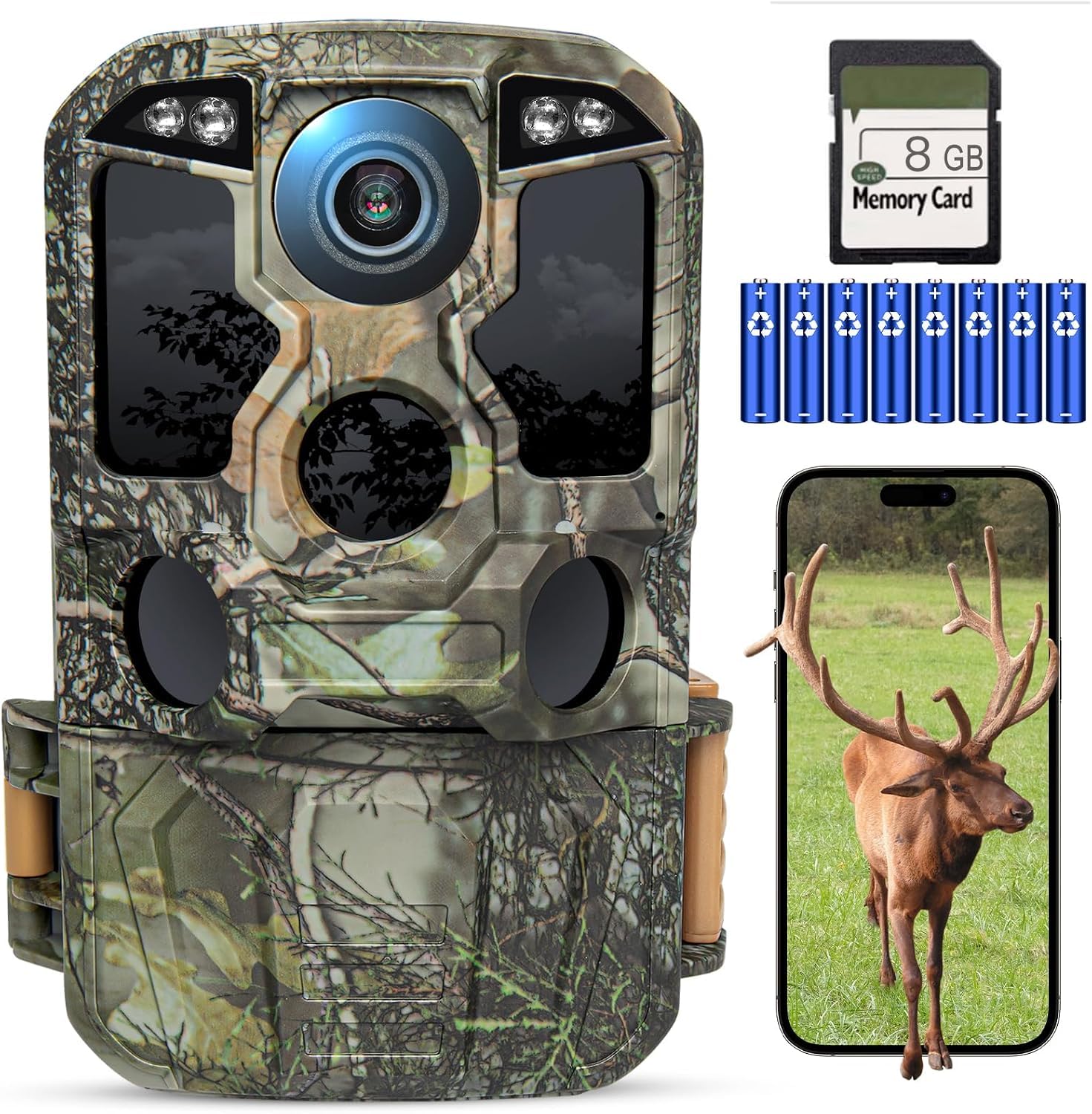
1. KJK Trail Camera WiFi 4K 84MP with 8GB Memory Card
Our pick — 4.5+★ from 60+ verified ratings; the strongest balance of quality and price.
The 84MP sensor here out-resolves every other still image on this list.
84 megapixels is the headline, and it is genuine: stills at that resolution give you the luxury of cropping into a head or a rack of antlers without the picture falling apart. Video runs 4K UHD with audio, so you get the sound of movement along with the frame. For a camera in the mid-range tier, that is a lot of image for the job.
Connectivity is the part to understand before you buy. This unit links to your phone over 2.4GHz WiFi plus Bluetooth, and the free TrailCam app lets you change settings, browse shots, and watch clips without ever pulling the card. It all happens within the camera’s own signal, so you walk out to it with your phone rather than checking from the kitchen.
Build is where it earns the top slot. The IP67 rating means it is sealed against dust and survives a dunking, not just a drizzle. It runs from -22°F to 158°F, which covers a hard winter night and a hot August afternoon alike. You also get an 8GB card and 8 AA batteries in the box, so it is operating an hour after you unbox it.
Where it pulls ahead
- 84MP stills beat the 64MP MAXDONE and GardePro bodies for detail you can crop into
- IP67 sealing is a step above the IP66 rating on most rivals here
- 130° wide PIR detection with a 65ft range sweeps a broad trail section
- Batteries and memory card included, so day one is painless
What to weigh up
- Only 8GB of storage ships in this version — the 64GB KJK further down fixes that
- The 5.29-inch height makes it a little more noticeable on a trunk than slimmer bodies
Point it at your best trail: a buyer who wants maximum still-image detail and a housing that shrugs off rough weather.
Do the storage math: if you plan on long 4K recording stretches, pay the small step up for the 64GB KJK instead.
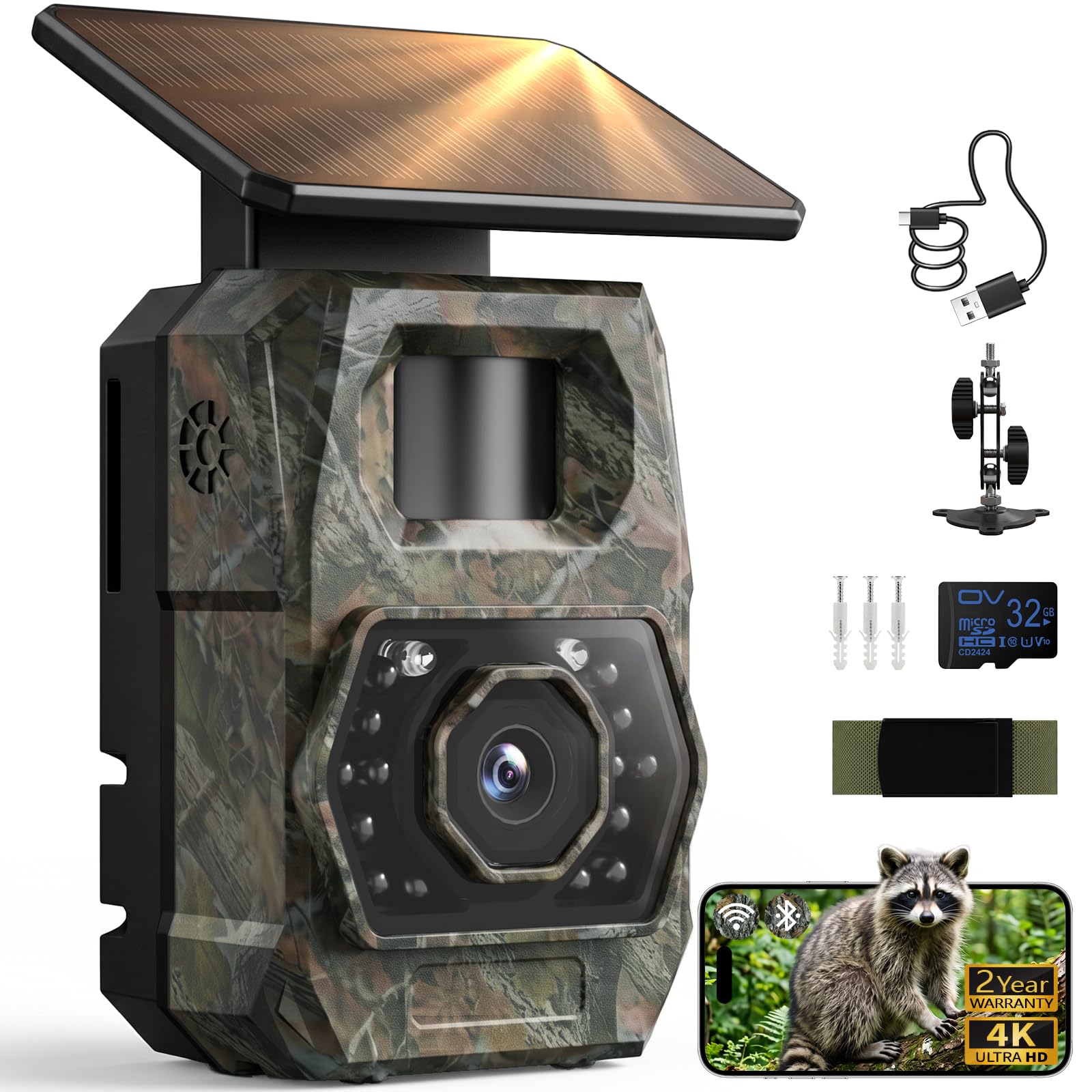
2. MAXDONE Solar Trail Camera WiFi Bluetooth
The camera that charges itself while you are three ridges away.
What wins people over on this one is not a number on the box — it is the fact that you stop driving out to swap AA cells. The 6000mAh rechargeable battery pairs with built-in solar panels to trickle power back in through daylight. Camera quality is the single thing buyers bring up most often, and the solar trickle is the reason they keep coming back to it.
Imaging sits at 64 megapixels for stills with 4K video at 30 frames per second, and night range reaches 65 ft on low-glow infrared. The low-glow emitters are dim rather than a bright flash, so a nervous doe is less likely to spook. Trigger speed is 0.1 seconds with a 130° detection angle and a 5-shot burst to follow a moving animal across the frame.
Here is the catch you must plan around: it will not join your home WiFi. It broadcasts its own hotspot, and you pair your phone within 0.5 ft for the first connection, then work inside roughly 55 ft. There is no monthly fee on the app. On the storage side it ships with a 32GB card and accepts up to 256GB — half what the Meidase P300 takes.
Season-long power play: solar plus a 6000mAh pack is the least-maintenance power setup in this group, and the no-subscription app keeps the ongoing cost at zero.
The honest limit: heavy cloud cover and deep shade slow the solar top-up, and the short hotspot range means you still walk to the tree to see anything.
Built for the long unattended stretch: a camera-site you only want to visit once a month.
Look at the GardePro E9 instead if: you need motion alerts pushed to your phone from home.
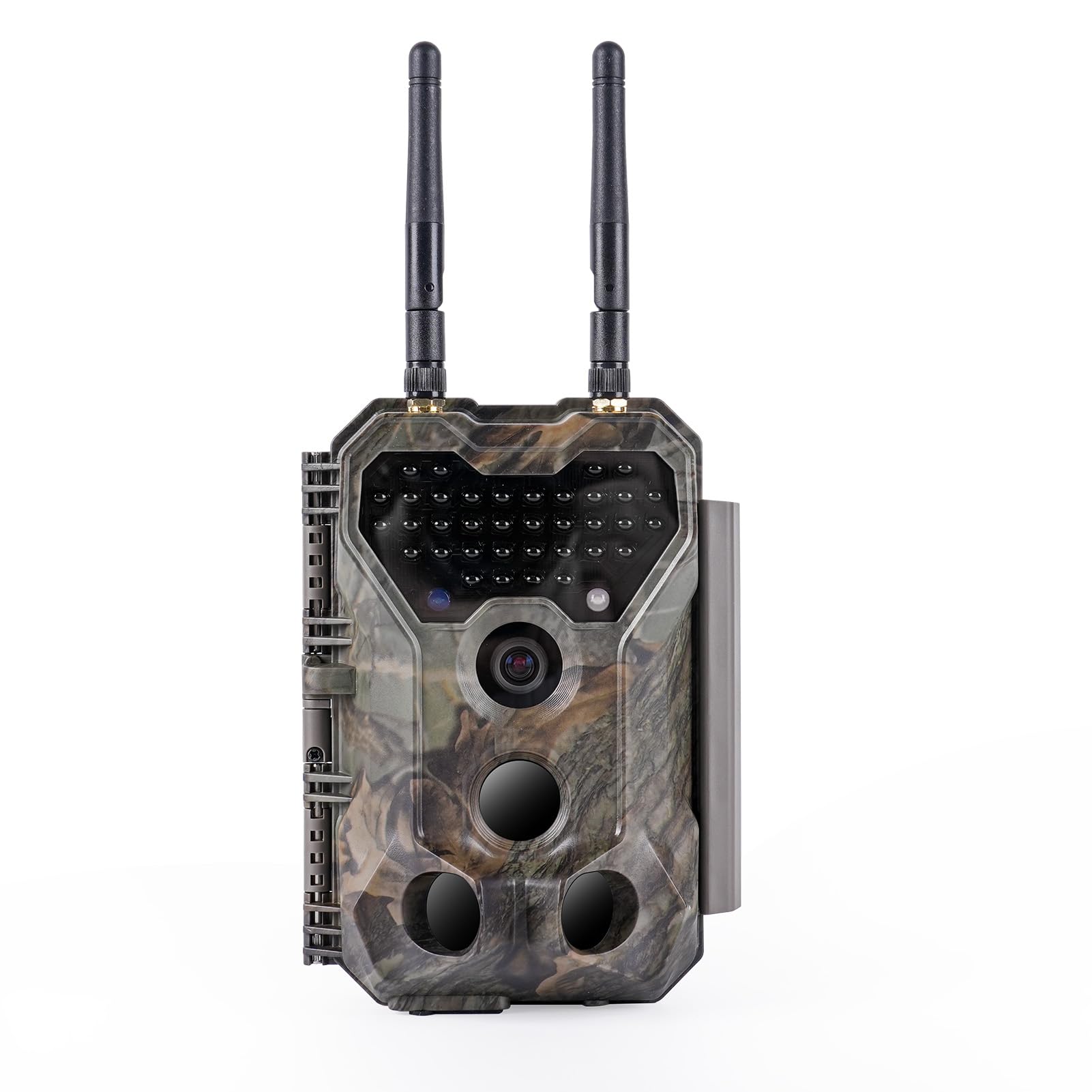
3. Meidase P300 WiFi Trail Camera
Two external antennas push the phone connection further than any rival here.
The dual-antenna design advertises up to 165 ft in open air — that is 65 ft further than the MAXDONE’s hotspot reach, and the widest figure on this list. Two antennas work to keep the link steadier as you back away from the tree. Signal still thins through walls, metal and dense vegetation, which is normal for this class of camera.
Image quality is the thing that gets praised most, and the P300 backs it with 64MP stills and 1296p HD video with audio. Night vision reaches 100 ft on no-glow infrared — 35 ft beyond the MAXDONE’s 65 ft, which matters on a long field edge or a big food plot. Trigger speed is 0.1 seconds across a 120° detection angle.
The 2.4-inch color screen is the quiet perk most buyers undervalue: you can frame the shot and check playback right at the tree without opening the app. Power comes from 8 AA batteries, with the SP350 solar panel sold separately for year-round running. Storage tops out at 512GB, double the MAXDONE’s ceiling, though the card is not in the box. The realistic gripe is the advertised WiFi range — treat 165 ft as an ideal-day number.
Screen-side review wins: the built-in 2.4-inch display lets you confirm aim and playback on the spot, and 512GB of supported storage suits long 4K runs.
Buy a card and batteries: neither comes included, and the range claim is best-case, so plan your approach accordingly.
Reach for this if: you position cameras on wide open ground and want the phone link to hold at distance.
Budget for extras: the memory card and batteries are on you, and the solar panel is a separate purchase.
4. KJK Trail Camera WiFi 4K 84MP with 64GB Memory Card

Same 84MP punch as the top pick, now with eight times the card inside.
The 64GB card bundled here is a big jump over the 8GB in the Best Overall KJK — literally eight times the storage in the box, which is the whole reason this version exists. Eight AA batteries come with it too. For a hunter planning weeks of 4K capture without a mid-season card pull, that headroom is the point.
Picture quality is what carries this camera with buyers, and night shots stay clear thanks to a 42-piece 850nm no-glow LED array with adaptive illumination that fights overexposure and washout. Stills hit 84MP and video is 4K H.264 MP4 with audio. The custom camo pattern on the housing blends into bark better than a plain green shell.
Trigger speed is 0.1 seconds with a 130° wide PIR angle and a 65ft detection distance, and you can set 1 to 5 photos per trigger. The IP67 housing runs from -22°F to 158°F. Where it asks patience is battery endurance and long-term reliability — those are the recurring themes to manage, so pack spares and check the seal each season.
Why hunters lean this way
- 64GB card and 8 AA batteries included — eight times the storage of the 8GB KJK
- 84MP stills top the 64MP MAXDONE and GardePro options
- 42-piece no-glow LED array keeps night frames clear without a visible flash
- IP67 rating and camo housing suit wet, wooded ground
Set your expectations here
- Battery drain shows up more than on solar-assisted models
- Settings changes need your phone close to the camera’s own signal
Made for the long sit: the hunter who wants maximum card capacity and a camo body that disappears into cover.
Bring spare cells: power runs down without solar help, so plan a mid-season swap.
5. VOOPEAK TC37XF Dual Lens Trail Camera
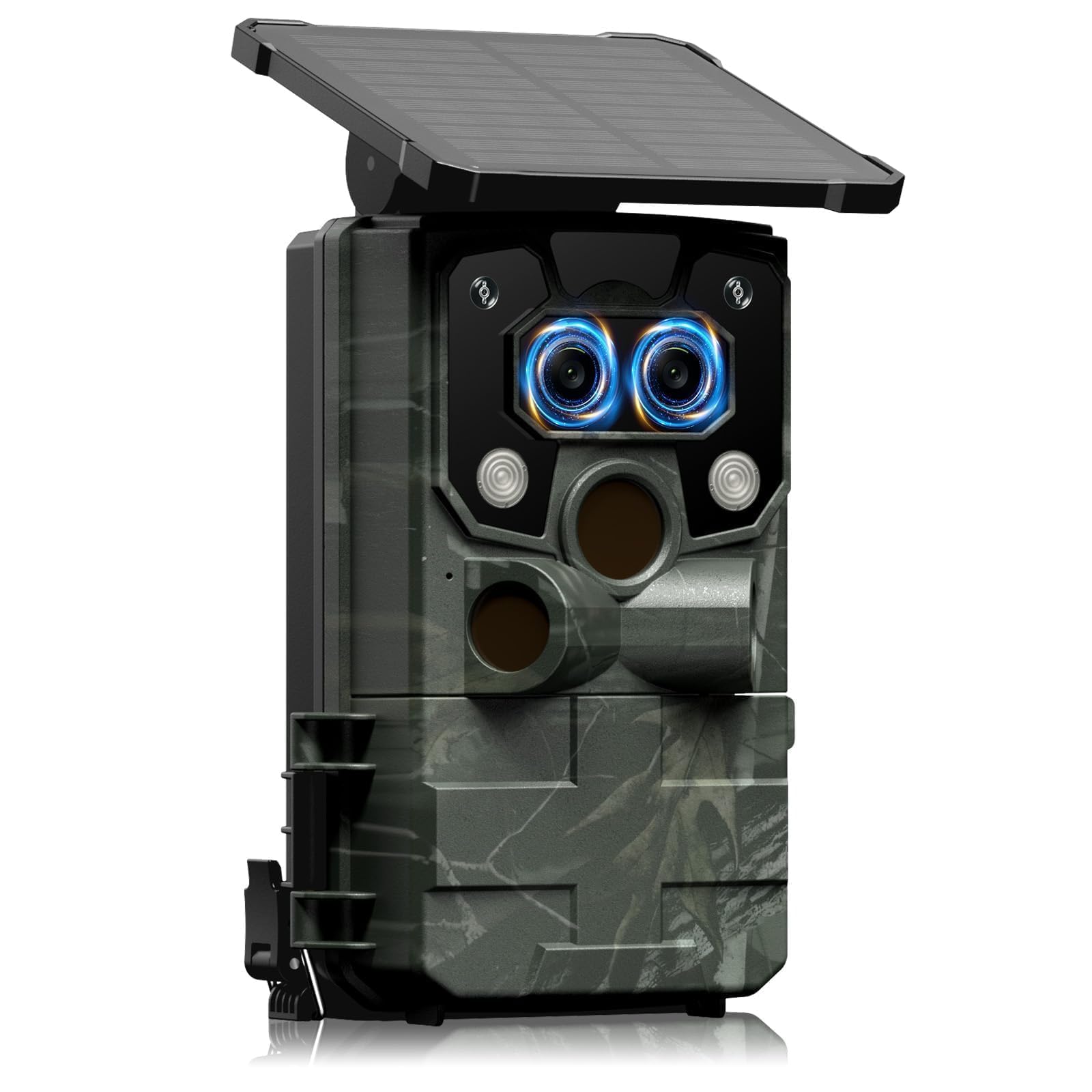
A second lens takes over after dark, pulling color where most cameras go gray.
Two lenses is the idea that sets this camera apart: one records 4K color in daylight, and a night-tune lens switches on automatically after dark with starlight sensor noise reduction. That pairing means cleaner low-light frames than a single-lens body typically manages. The image quality is the quality buyers key on here, and the dual-lens trick is the reason.
Power is a triple system — a built-in 2W solar panel feeding a 5200mAh internal battery, with a 4xAA backup bay as a second layer. That stack is what keeps it running through long unattended weeks without a swap. Trigger speed lands at 0.1 seconds, and the 850nm low-glow infrared gives only a faint red glow rather than a bright flash, so wildlife stays calm.
The 2-inch color display lets you review images and confirm angle right at the tree. Loop recording overwrites the oldest footage once the card fills, so capture never stalls on a full card. The IP66 housing handles rain, snow and dust. Do note the memory card is not included, so add one before you deploy.
Low-light edge: the dual-lens setup plus starlight noise reduction is the strongest low-light arrangement in this group, and the 2W solar panel backs it with free daily charging.
Pick up a card: no SD card ships in the box, and 4K 30FPS files fill storage quickly.
Ideal for dusk and dawn watches: a buyer who cares most about usable color footage in low light.
Shop the card separately: budget for storage since nothing is included.
6. NOXOWL PR801W-2P 2-Pack Trail Camera
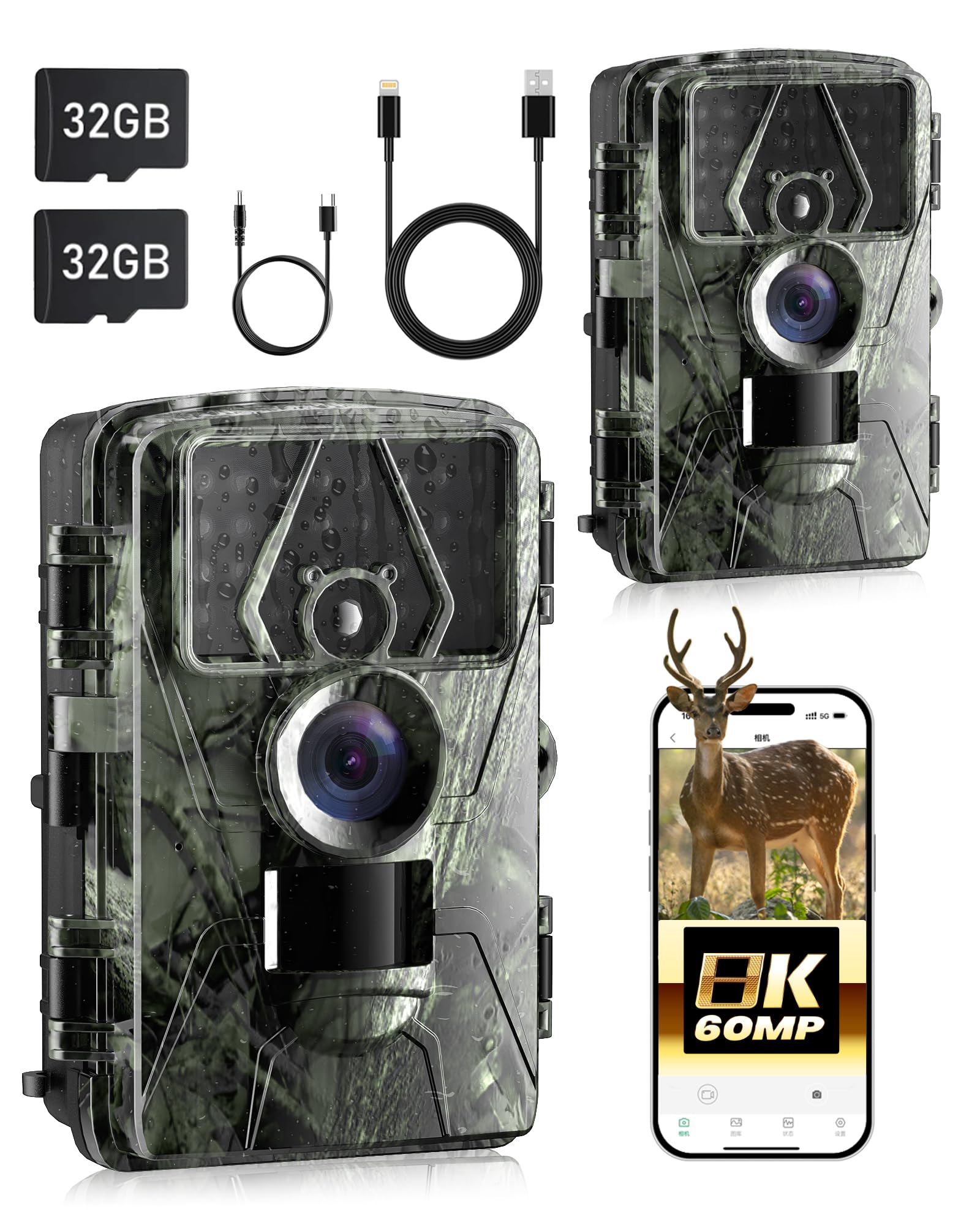
Two cameras, two cards, and the fastest trigger on this entire page.
For a two-camera setup, this pack is the smart buy: you get two full cameras, two 32GB micro SD cards, two straps and two USB cables in one go. The 0.05-second trigger is quicker than the 0.1s units that make up most of this list, and the 130° wide lens grabs a broad slice of ground. For covering two food plots or a plot plus a feeder, it is a practical arrangement.
Video goes to 8K resolution and stills to 60MP, with 940nm infrared for no-glow night shots. The PIR sensor (passive infrared, which feels body heat and motion) trips fast on movement. GPS tagging pins each camera’s location, and you can adjust PIR sensitivity and set timed shots or custom recording lengths.
The realistic caveat: picture quality is mixed across the reviews. Night images often land well while some daytime shots fall short of what buyers hoped. IP66 waterproofing covers rain and dust, and the app connection works within roughly 165 ft in open, unobstructed ground — it is not a router. Go in expecting a value pair rather than flagship imaging.
Cover ground fast: two cameras with two cards at once, plus a 0.05s trigger that beats every other model on this page.
Image quality varies: expect strong night frames and some softer daytime results, and keep your expectations set to value tier.
Best if you need coverage, not a showpiece: two spots watched for the price of one camera elsewhere.
skip it if: pixel-perfect daytime stills are your top priority.
7. GardePro E9 3.0 Pro Home WiFi Trail Camera

The one camera here that can actually text your phone from the house.
If your router reaches your backyard or property, these two connection options make the E9 the pick. It runs two WiFi modes. Join it to your home’s 2.4GHz network (the standard WiFi band most routers broadcast) and you get remote motion alerts plus photo and video previews on your phone. Or use Direct Connection, which pairs over Bluetooth (a short-range wireless link) and the camera’s own WiFi, for on-site viewing up to 165 ft in open ground. One catch: Live View is not supported in home mode.
On-camera Edge AI is the smart layer. It identifies wildlife directly on the device, tags photos so you can filter for what you want, and Smart Capture lets you choose a target species such as deer to upload only the shots that matter. That cuts false uploads and battery drain. Image quality is the strength buyers land on, with 64MP stills and 4K video with audio.
Capture runs through a 3-PIR sensor system at 0.1 seconds across 100 ft of detection, with a 5-shot burst, motion, time-lapse and hybrid modes, plus loop recording and in-camera playback. The built-in 8000mAh lithium battery pack is pre-installed. The honest catch: WiFi connectivity divides opinion, some report connection issues, and there is no memory card or power adapter in the box.
What the E9 gets right
- Home WiFi mode delivers remote motion alerts — a feature no other pick here offers
- Edge AI tags wildlife and filters uploads by species to save battery
- 8000mAh pre-installed battery pack, the largest in this group
- 3-PIR detection and 0.1s trigger across a 100ft range
Before you commit
- Home mode must sit inside your router’s coverage area
- Connection reliability is the most-reported frustration, with some buyers reporting dropped links
- Card and power adapter are not in the box
The right fit if your signal reaches the trees: a backyard or property owner who wants alerts without driving to the camera.
Check your router first: the whole remote feature depends on solid coverage where you mount it.
8. GardePro E8 2.0 Pro WiFi Bluetooth Trail Camera
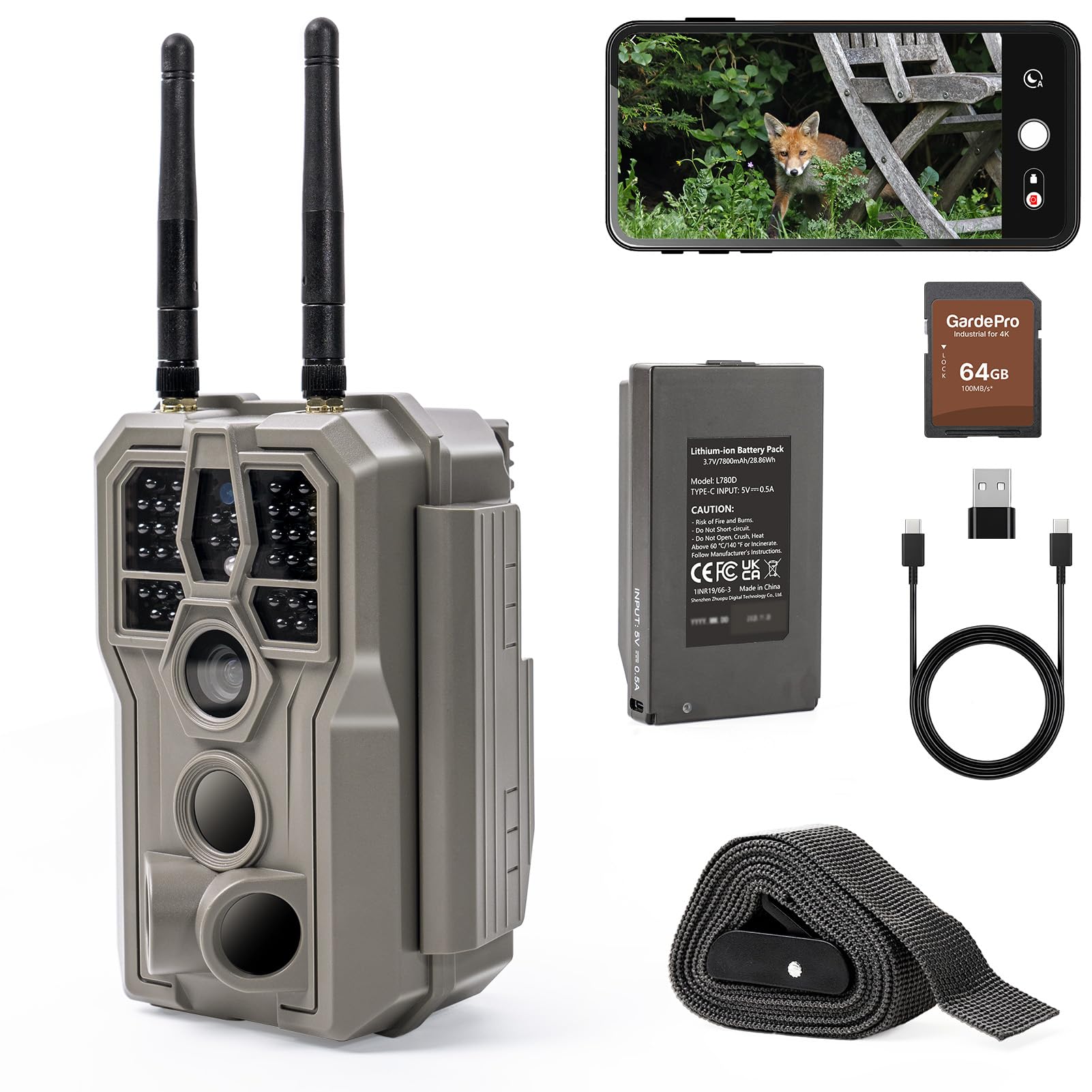
WiFi 6 and a factory 64GB card make this a strong on-site reviewer.
WiFi 6 with dual antennas is the draw here — a newer wireless standard built to reduce interference and hold a steadier link, rated to 165 ft in open areas. Walls, metal and dense foliage still cut that down, so treat the figure as a clear-line-of-sight number. It pairs over Bluetooth and connects straight to your phone through the GardePro Mobile app, with no monthly fee.
Stills reach 64MP and video is 4K with synchronized audio. A 7800mAh rechargeable battery carries the load, and the maker rates that life on roughly 20 daytime and 20 nighttime photos per day. It works with GardePro’s SP350 and SP1000 solar panels, sold separately, for continuous charging. A high-endurance 64GB industrial-grade card comes in the box, built to handle 4K recording and cold or wet field conditions.
Capture is 0.1 seconds across a 120° wide PIR angle with 5-shot bursts and 940nm no-glow infrared for discreet nights. Storage supports full-size SD cards up to 512GB, and you get in-camera playback, loop recording, motion, time-lapse and hybrid modes, plus a password lock. Understand what it is not: it will not join home WiFi or use cellular, and it links to a smartphone only — no PC or browser access.
Great for the phone-in-hand check: you want a fast on-site connection and a card already inside.
Not a remote monitor: if you need push alerts from the house, the GardePro E9 above is the one built for that.
Know the Specs
Photo resolution in megapixels (MP)
A megapixel is one million pixels in the image, so a higher MP count means a file with more detail to crop into. An 84MP still lets you zoom onto a buck’s antlers; a 64MP shot gives you less room before it softens. For most trail use, anything from 60MP up is plenty — the lens and sensor quality matter as much as the raw number.
Trigger speed in seconds
Trigger speed is the delay between the motion sensor noticing an animal and the camera firing. A 0.1s trigger catches a walking deer cleanly; a 0.05s trigger is quicker still and better for fast movement. On a slow trigger, the animal often walks out of frame before the shutter opens.
Night vision range in feet
Night range is how far the infrared light reaches in darkness. A 100ft no-glow range covers a long field edge, while 65ft suits a tighter trail crossing. No-glow or low-glow infrared matters because a bright visible flash can startle wildlife.
IP waterproof ratings
The IP rating tells you how sealed the housing is against dust and water. IP66 handles powerful rain and dust jets; IP67 survives a brief dunking as well. Both keep rain and grit out of the electronics over a season, so match the rating to how exposed your mount is.
Common Questions
Will a WiFi wildlife camera connect to my home internet router?
How close do I need to stand to pull photos off the camera?
Does a faster trigger speed really matter for deer?
Will a solar trail camera keep running through winter?
What SD card size should I use for 4K trail camera video?
Can I get alerts on my phone without a monthly subscription?
Do no-glow infrared lights actually keep animals calm?
Is a dual-lens camera better for night footage than a single lens?
How many batteries do these cameras take and will they last a season?
Can I mount one on a tree and also watch my driveway?
The Bottom Line
For most people, the wifi wildlife camera winner is the KJK Trail Camera WiFi 4K 84MP with 8GB Memory Card because its 84MP stills top the list and its IP67 housing handles rougher weather than the IP66 rivals. If you want the longest phone range on open ground, grab the Meidase P300. And for alerts to your phone from the house, the GardePro E9 3.0 Pro is the one to reach for. Whichever you choose, check that your mount sits inside the camera’s own signal reach before you commit a season to it.
How we choose
We do not accept paid placement. Every pick is matched to a real buyer and a real use-case; we do not hands-on test units.
Sources
Specifications: manufacturer listings and product documentation. Review insights: verified customer reviews, as of November 2026. Pricing: not shown on this page (it changes often); check the current price via the retailer link.
As an Amazon Associate, Tactical Gear Guy earns from qualifying purchases. This does not affect which products we feature.