Specs are compiled from manufacturer listings and verified buyer reviews and can change over time — please confirm the key details on the product page before buying.
Cold hands ruin a workday faster than any other gear failure. When a glove soaks through at 7 a.m., your fingers go numb by nine. The gloves below all claim waterproof winter protection, so the real question is which ones actually keep a liner dry through a full shift. The short answer: the Carhartt A511 is the crowd favorite — 4.5+ stars across 37,000+ owners — and the SHOWA TEMRES 282-02 is the pick for deep snow and sub-zero job sites.
This guide is built by comparing the manufacturers’ published specifications and the patterns across verified customer reviews, so you get each pick’s real strengths and trade-offs instead of marketing spin.
You will see which gloves have a sealed membrane rather than a coating, how much insulation each one packs, and where the sizing runs tight. Read on for the nine pairs worth your money in waterproof winter work gloves.
Top Picks


How To Choose The Best Waterproof Winter Work Gloves
A winter work glove has one job that matters more than any other: keep the liner dry. Once the lining soaks, insulation stops trapping heat and your fingers get cold no matter how thick the glove is. Everything below is about spotting that difference before you buy.
Waterproof insert vs. water-repellent shell
A DWR (durable water repellent) finish makes sleet bead up and roll off the outer fabric. That handles a light snow flurry, but it wears off and it does not stop water once the fabric is saturated. A sealed membrane sits inside the glove as a physical barrier, so the wet shell never reaches your skin. Look for the words “waterproof insert” or “membrane” — that is the difference between a glove that survives a wet shift and one that quits at lunch.
Insulation weight and why it is not just about warmth
Insulation is measured in grams, and that number trades directly against dexterity. A glove insulated with 100 grams of Thinsulate keeps heat in while letting you feel a latch or a strap. A dual-zone glove may run 40 grams on the palm and 70 grams on the back — more warmth on the exposed side, more feel where you grip. The thicker the insulation, the warmer the glove, and the less you can feel through it. Match the grams to the job, not to the coldest number on the listing.
Sizing: the number one complaint in this category
Winter gloves run small more often than any other workwear item. Reviews across nearly every glove here flag tight sizing. Measure your palm and check the maker’s chart before you commit. If you land between two sizes, size up — you want a little room for the insulation to loft, not a glove stretched tight across your knuckles.
Side-by-Side Comparison
| Model | Best For | Waterproofing | Insulation | Cut / Impact Rating | Amazon |
|---|---|---|---|---|---|
| Carhartt A511 Knit Cuff★ Best Overall | All-around winter work | Waterproof insert | Ultrasoft insulation | — | Amazon |
| SHOWA TEMRES 282-02Deep-Snow Pick | Deep snow, sub-zero sites | 100% liquid-proof TEMRES seal | Acrylic fleece liner | — | Amazon |
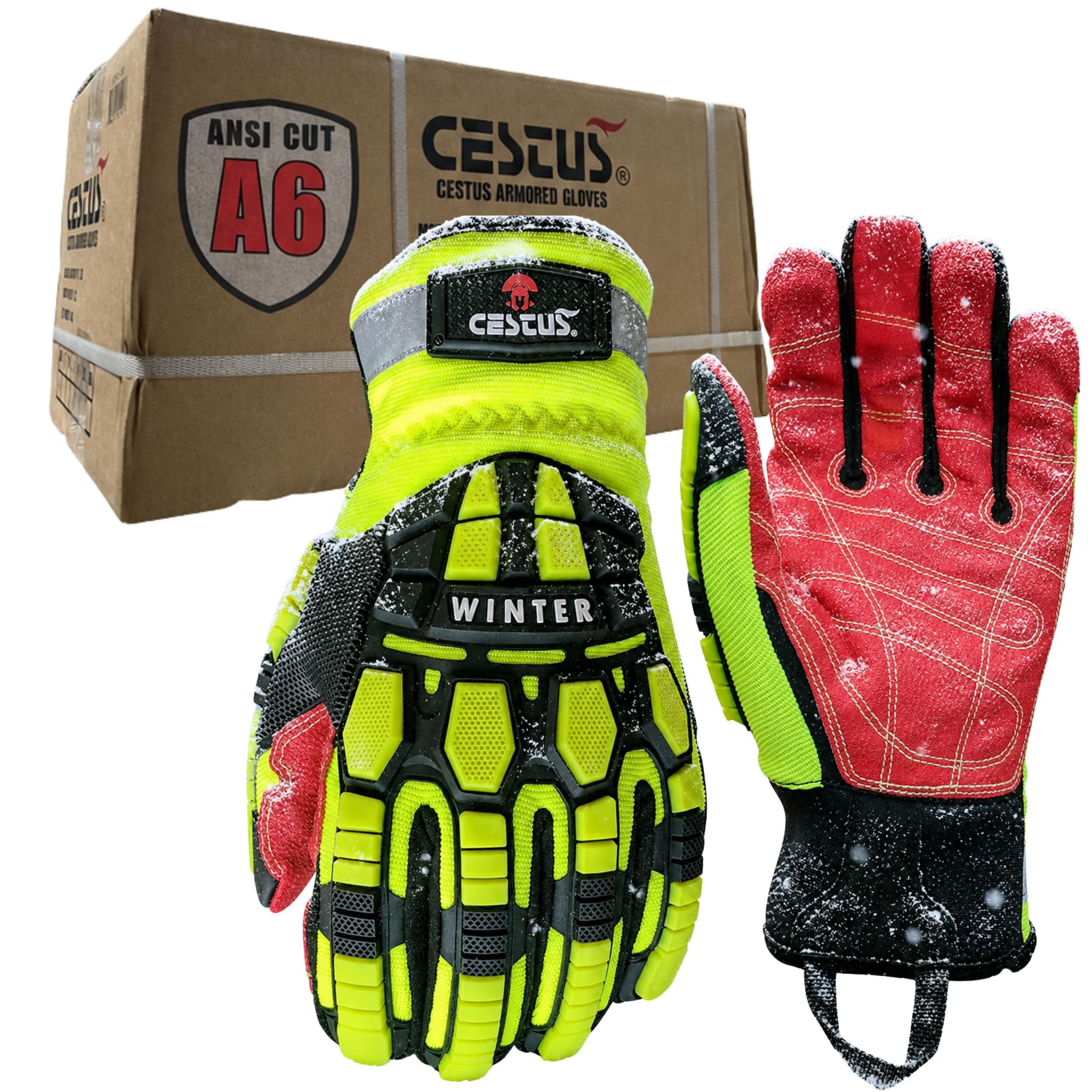
| Cestus 5207 Impact WinterRough-Handling Armor | Rough handling, rough terrain | Water barrier, 10000 mm/cm³ | 100 grams | ANSI Cut A6 (palm side) | Amazon |
| Carhartt (see above) | Cold-weather general work | Waterproof insert | Ultrasoft insulation | — | Amazon |
| Vgo CA7722FW Leather Impact | Heavy-duty cold-weather work | Waterproof | Lined | — | Amazon |
| Ergodyne ProFlex 818WP | High-visibility signalling | Breathable membrane insert | 40g palm / 70g back Thinsulate | EN 388: 3423 X | Amazon |
| toolant 100% Waterproof Fleece | Wet-weather daily work | Water-based PU membrane | Fleece lining | — | Amazon |
| toolant Winter Work Gloves | Grip and abrasion on the job | Water-repellent shell + sealed membrane | 100g Thinsulate | EN388 / EN511 / ISO 21420 | Amazon |
| HANDLANDY 2 Pairs | Freezer and multi-pair value | Waterproof latex cover | Thermal fleece lining | — | Amazon |
| Schwer CR3308 Long | Water work up to 30 cm deep | 100% waterproof PU coating | Imitation lamb wool | — | Amazon |
Detailed Reviews
1. Carhartt Men’s Waterproof Insulated Knit Cuff Glove
Our pick — 4.5+★ from 37,000+ verified ratings; the strongest balance of quality and price.
The default winter work glove — the pair most buyers reach for first, and the one to beat.
The A511 runs on a simple formula: a waterproof insert under a durable reinforced shell, ultrasoft insulation inside, and sweat-wicking tech that moves moisture off your skin. That insert is the part that matters — it is a physical barrier, not a sprayed-on coating. Through a wet, slushy shift the shell gets damp while your hands stay dry underneath. A grippy palm means a shovel handle or a frozen strap does not slide, and the soft fleece cuff with an adjustable wrist strap keeps snow from working its way in.
The small touches show up on long days. There is a clip off the wrist to keep the pair together when they are off your hands, and a nose wipe for when the cold air makes your eyes water. An adjustable wrist strap is not glamorous until you have fought a drift with a glove full of snow.
Two things to know before you order. Sizing runs small for many buyers, so check the chart and lean up a size if you are between. And a handful of owners find the water resistance less than advertised in extended soaking. Neither is a deal-breaker for general cold-weather work; both are worth planning around. What the majority of owners rave about is the build — the shell holds up and the warmth is real.
What keeps owners loyal
- A genuine waterproof insert, not a coating that wears off
- Grippy palm holds tools in wet, cold conditions
- Adjustable wrist strap plus fleece cuff blocks snow and slush
- Sweat-wicking tech keeps the inside dry from effort, not just weather
The honest trade-offs
- Sizing runs small for many buyers
- Extended soaking can still find a way through
Reach for this if: you want one glove for shovelling, loading, and general outdoor work in wet cold.
Look elsewhere if: you need a sub-zero heavy-work glove or you have very large hands — the fit runs tight.
2. SHOWA TEMRES 282-02 Waterproof Insulated Winter Work Gloves
The one that laughs at deep snow — a sealed gaiter cuff and a -58°F rating make it a sub-zero workhorse.
The TEMRES 282-02 solves the problem every other glove here leaves open: the gap between cuff and jacket. A built-in nylon sleeve with an adjustable drawstring toggle cinches tight around your arm or sleeve, so snow, ice, and debris stay out when you are knee-deep in a drift or working a windy site. Then there is the temperature rating — good to -58°F (-50°C), with a polyurethane coating that stays flexible instead of cracking in the cold. That combination is why this is the pick for the nastiest conditions on the list.
The TEMRES membrane is 100% liquid-proof while still letting moisture and heat escape, so a hard climb up a ladder does not turn the inside into a swamp. Owners consistently put warmth and quality at the top of what they notice — the acrylic fleece liner is genuinely warm without the bulk. The textured finish holds wet pipe and frozen tool handles, and the anatomical shape reduces hand strain over a long shift.
There is one catch you should plan for: sizing runs small. Check the chart carefully before ordering. It is a work glove built for construction, ice fishing, and landscaping — not for a desk, and not for someone who wants a dress-glove fit.
Where it beats the field: the sealed gaiter cuff is a genuinely different class of snow protection than the knit cuff on the Carhartt — one keeps out drifts, the other keeps out slush. Its -58°F rating is the lowest temperature number on this list.
The fit warning: several buyers find these run small, so measure before you commit — a tight glove kills the dexterity advantage this pair is built for.
Built for: winter construction, ice fishing, landscaping, and anyone working in deep snow or sub-zero wind.
Not the one if: you want a relaxed fit — order a size up or look at a knit-cuff glove.
3. Cestus 5207 Impact Winter Work Gloves
A cut-rated, impact-backed glove for moving rocks and debris in the cold — stiffness is the price of the armor.
This is the only pair here with an ANSI cut rating, and it is a serious one: A6 on the palm side, tested for cut, puncture, and abrasion. That rating covers the palm only, which matters if your job involves grabbing scrap metal, moving debris, or lashing loads — the kind of work where a normal glove gets sliced. The back of the hand carries impact protection for those same rough jobs. Insulation is 100 grams, rated for weather between 25 and 50 degrees Fahrenheit, and the interior water barrier is rated at 10000 mm/cm³, so rain and wet snow do not reach your skin.
The honest part, and the maker says it plainly: the red palm and the cut-resistant underside are stiff and take time to break in. You get moderate control, ideal for push-and-pull rough handling, not for fiddly precision work. The liner also cannot create heat — if your hands are already cold when you pull them on, the glove maintains that temperature rather than warming you. Start with warm hands or two pairs.
Owners who work the tough jobs — energy construction, firefighter rescue, container lashing, recycling — keep coming back to the warmth and the build. Just know these are not the pair for a quick frozen-latch twist.
The case for the armor
- ANSI Cut A6 on the palm — the only cut-rated glove here
- Interior barrier rated 10000 mm/cm³ keeps water out
- 100 grams of insulation for 25-50°F weather
- Impact protection on the back of the hand
Know before you buy
- Stiff palm that takes time to break in
- Moderate dexterity, not for precision handling
- Insulation maintains warmth but cannot create it
For the rough stuff: pick these for debris moving, scrap metal, and high-cut-risk work in cold weather.
Pass on them if: you need to feel small parts — the stiff palm trades dexterity for protection.
4. Vgo… -4°F Men’s Lined Leather Impact Winter Gloves

A lined leather glove built for drivers, mechanics, and anyone who needs a firm grip on a cold tool.
The Vgo CA7722FW says -4°F right in the name — that is the temperature rating on the label. The leather shell and lined interior are made for the auto industry, power tools, motorcycling, and heavy-duty construction work where you need a firm grip and real protection. The waterproofing holds up in rain and snow, and owners who work outside in the cold consistently put warmth at the top of what they like about it. It is the heaviest-duty leather option here.
Where it earns its place is in the grip. Leather on a frozen wrench or a cold steering wheel beats a coated knit hand. A category-wide truth worth knowing: the fit is where most people get tripped up, and Vgo is no exception — some owners find it true to size, others find it runs large. Measure your hand.
The trade-off that shows up in the long run is durability. A few buyers report them falling apart within two months of hard use. For lighter daily work they hold up well, but if you are putting them through repeated heavy abuse, treat them as a wear item and expect to replace them sooner than a knit glove.
What sells it: the -4°F rating and a leather shell do something no coated knit glove on this list can — a firm grip on cold metal plus real cold protection.
The value question: durability is mixed. Some owners run them hard; a few have had them fail within months. For lighter winter work, the leather and the warmth are a fair trade.
The right call for: mechanics, drivers, and trade workers who need a leather grip and a -4°F rating.
Skip if: you want a glove that shrugs off heavy abuse for years — a few owners have had them wear out within months.
5. Ergodyne ProFlex 818WP High-Vis Waterproof Gloves

The high-vis glove that lets you signal, swipe, and wipe your brow without ever pulling it off.
The 818WP is built around visibility and dexterity. High-vis materials and reflective accents make your hands readable in low light and let a crew chief see a hand signal across a site. Inside, it is dual-zone insulated — 40 grams of Thinsulate on the palm and 70 grams on the back — so you get more warmth on the exposed side and more feel where you grip. A breathable membrane insert blocks cold, moisture, and wind while letting moisture out, and the lightweight insulation keeps full dexterity. The touchscreen thumb and index mean you can swipe, tap, and type without pulling the glove off.
Small details separate it from a generic winter glove. The soft thumb area is there for wiping a nose or brow, the extended neoprene cuff fits under or over a jacket sleeve and tightens with a hook-and-loop closure, and there is an ID space on the cuff. It is tested to EN 388: 3423 X. The orange ripstop shell carries a DWR water-repellent finish, and the glove runs 15 inches long, which keeps the cuff well up your forearm.
Honesty up front: quality, warmth, and fit all draw mixed feedback across the crowd. It is a solid high-vis working glove, not a deep-cold glove. For moderate cold and a job that needs signalling and touchscreen access, it holds its own.
Its real edge: high-vis + touchscreen + 15-inch length is a combination no other glove on this list offers. For a crew that signals and checks a phone in cold, wet conditions, it is the practical choice.
The honest fit note: comfort and warmth are moderate by consensus — this is a working glove for cool-to-cold days, not a sub-zero heater. Pair it with a liner for real cold.
Made for: site crews, traffic control, and anyone who needs a visible hand signal plus touchscreen access.
Not a deep-cold glove: for below-freezing work, look at a rated glove like the SHOWA TEMRES or the Cestus.
6. toolant Waterproof Winter Work Gloves

A water-based membrane, a thick fleece liner, and a one-handed drawstring — built for wet-cold daily work.
The 100% waterproof claim here rests on a water-based PU coating, which isolates water molecules at the membrane level. A micro-porous membrane lets sweat vapor escape while blocking water from getting in — so the glove stays dry inside even when the outer shell is soaked. That matters for cold, wet jobs like washing equipment or working around water. A thick fleece lining locks in the heat your body and movement generate, and the micro-porous surface amplifies friction for a better grip in the wet.
What makes it genuinely usable is the one-handed drawstring adjuster. You can cinch the cuff with one hand while the other holds the tool. The material is also DMF-free, which is a healthier formula than some PU coatings — a small plus if you work with the gloves right against your skin all day.
Owners find these excellent for cold, wet conditions, with hands staying dry and good weather protection overall. It is a daily-work glove, not a sub-zero mountain glove. If your winter work involves water, wet equipment, or cold handling, this is the value pick that delivers on the waterproof promise.
Why it earns a slot
- Water-based PU membrane isolates water at the barrier
- Micro-porous membrane lets sweat escape
- One-handed drawstring cinches with a tool in the other hand
- Fleece lining traps body heat
Where it stops
- Built for wet-cold daily work, not sub-zero extremes
- No dedicated cut rating
Pick it for: plumbing, washing equipment, and any job where water is the real enemy.
Not for the deep cold: if you are working below freezing for hours, look at a rated glove like the SHOWA TEMRES.
7. toolant Winter Work Gloves with Reinforced Palm

The all-day grind glove — reinforced everywhere the wear happens, with 100 grams of Thinsulate inside.
Toolant’s other pair solves the problem of wearing out too fast. Gravel-texture PVC overlays sit on the palm, fingers, and thumb web — the three zones that get hammered by hand trucks, rails, and rough lumber. A second-knuckle reinforcement adds armor at a classic wear point. Under it all, 100 grams of Thinsulate traps warmth without bulk, so you can still feel a latch or pull a strap. Touchscreen thumb and index let you check a route or capture proof-of-delivery without pulling the glove off. It is tested to EN388, EN511, and ISO 21420, with S through 2XL sizing.
The comfort details are for shift work. A cold-stable nitrile-gel pad under the palm softens vibration and tool impact without muting your feel. Natural-flex segmented fingers keep small work possible. The shell is water-repellent and teams with a sealed waterproof membrane, so sleet rolls off instead of soaking in. The extended cuff overlaps a jacket and the adjustable strap locks out drafts.
The catch is that feedback is uneven on the water resistance — some buyers confirm they stay dry, others disagree. If your job is dry cold rather than wet cold, that is no problem. If you are working in flowing water, the other toolant or the SHOWA is the better bet.
Where it shines: the wear-zone reinforcement strategy — palm, fingers, and thumb web get the PVC overlay, and a second knuckle gets a patch. That is the right answer to a glove dying on the palm.
What’s mixed: water resistance draws split feedback, so it is better suited to cold and damp than to full immersion.
Suits: warehouse runs, garage projects, and daily rough handling where the palm wears first.
Not if: you are working in flowing water — the waterproofing gets mixed word-of-mouth.
8. HANDLANDY 2 Pairs Insulated Waterproof Work Gloves

Two pairs in one box — the freezer-work value play for a household that wears through gloves fast.
Handlandy sells these as a two-pair set, which changes the math. Polyester fully covered with waterproof latex blocks ice, water, and wind while keeping hands dry. The palms carry a sandy latex coating for grip that holds tools in both dry and wet conditions. Inside, a thermal fleece lining retains body heat, and Warm Plus insulation is rated for active use down to -20°F (-29°C). Touchscreen fingertips let you answer a call without pulling a glove off. Sizing is straightforward: measure your palm against the chart, and size up if you are between.
The two-pair set has a practical edge for freezer work or a family that wears gloves out. One pair on, one pair drying. Care matters here: the maker recommends hand washing in cold water and air drying to protect the waterproof layer, though they are machine washable on a gentle cycle inside out.
Two things to know before you buy. Owners mention mixed results on warmth: some hands stay warm, others still feel the cold. A few customers note the fit runs small, so size up if you are between sizes. For freezer work and cold-weather chores, getting two pairs at this tier is tough to top on value.
The two-pair advantage: one on, one drying is how you actually get through a freezer shift or a wet week. That is what the set buys you.
The warmth question: rated to -20°F for active use, but word-of-mouth on warmth is mixed — if your hands run cold, layer up or look to the SHOWA.
Ideal for: freezer work, ice handling, and anyone who wants two pairs to rotate.
Not the pick if: your hands run cold even in gloves — the warmth feedback is mixed.
9. Schwer Long 100% Waterproof Winter Work Gloves with Grip
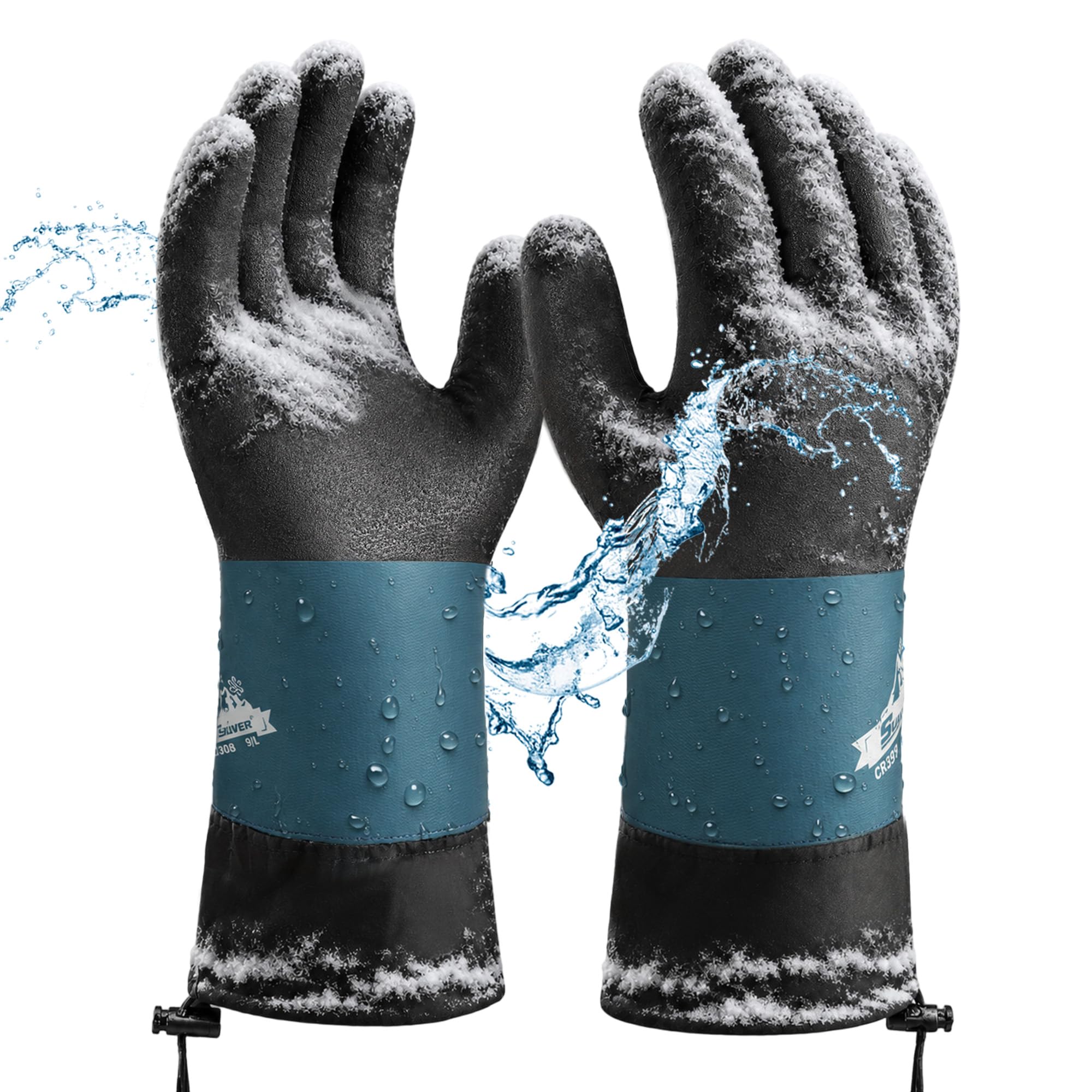
The one that goes into the water with you — 100% waterproof protection for short tasks up to 30 cm deep.
Most winter gloves resist water from outside. The Schwer CR3308 handles short tasks in water up to 30 cm deep — which is the difference between a wet job and a ruined liner. The waterproof, wind-resistant shell keeps cold air out while moving sweat away, and the extended cuff covers most of the wrist and forearm for added warmth and coverage. The water-based PU coating has an eco-friendly formula that reduces solvent use and VOC emissions, and the low-odor material stays soft and flexible even at -22°F (-30°C).
A textured palm improves grip and slip resistance in wet, icy, or freezing conditions. Inside, a plush imitation lamb wool lining keeps hands warm. The one-hand adjustable cuff cinches for a snug fit that keeps drafts and snow out. It is designed for ice fishing, waterfowl hunting, cold storage work, snow removal, and winter camping — jobs where you might dunk your hand in the lake or reach into a wet catch.
The honest limitation is durability. Some reviewers point out the gloves puncturing after a week of hard use. For occasional water work or cold-weather chores, they are a solid budget-friendly choice. For daily abuse, expect wear.
Where it wins: 30 cm of water depth coverage plus a -22°F coating that stays flexible — that is a genuinely different glove from a weather-resistant knit.
The wear question: durability is mixed, with some pairs puncturing within a week of use. Best for the occasional wet-cold job, not the daily grind.
Best suited to: ice fishing, waterfowl hunting, and any task where your hands may go into the water.
Avoid if: you need a glove for daily heavy work — punctures show up in extended use.
Know the Specs
Waterproofing: membrane vs. coating
A coating sits on the outside of the fabric and sheds water until it wears through. A membrane sits inside the glove and blocks water at the barrier, so the outer shell can get soaked while your hand stays dry. Coatings like PU or acrylic cover the whole hand and are more affordable; membranes cost more but keep the liner dry through a full wet shift. If you work in water, look for the word “membrane” or “insert” — not just “water-repellent.”
Insulation weight and temperature ratings
Insulation is measured in grams — a 100-gram glove is warmer than a 40-gram glove but less dexterous. Some gloves split the weight between palm and back. The temperature rating (like -4°F, -22°F, or -58°F) tells you the maker’s coldest test point. Remember: insulation traps heat, it does not create it. If your hands are already cold when you put the glove on, the glove maintains the cold. Start warm.
Dexterity, cut rating, and impact protection
Dexterity is the glove’s ability to let you feel and manipulate small things. Insulation and armor both cost dexterity — a 100-gram glove with a cut-resistant palm will be stiffer than a knit glove. ANSI cut ratings (like A6) apply to the palm side only and tell you how much slicing force the glove can take. Impact protection guards the back of the hand from knocks. Pick your level of armor to match the job: more armor, less feel.
Cuff style: knit, gaiter, and extended
A knit cuff is flexible and comfortable but lets snow in on a deep drift. A gaiter cuff with a drawstring seals around the sleeve or arm and keeps snow, ice, and debris out — the pick for deep snow. An extended cuff covers the wrist and forearm for warmth and coverage, especially when reaching into water. Match the cuff style to the winter conditions you work in, not to how the glove looks on the shelf.
Common Questions
What is the difference between waterproof and water-resistant winter work gloves?
Do these gloves really keep your hands dry in deep snow?
How do I size winter work gloves when they run small?
Can I use touchscreen gloves if the fingertips are wet?
Is a 100-gram insulated glove warm enough for below-freezing work?
What does ANSI Cut A6 mean on a winter work glove?
Should I buy a two-pair set or a single pair of winter work gloves?
How should I wash waterproof winter work gloves without ruining them?
Will waterproof work gloves still let sweat escape?
What is the coldest temperature a winter work glove can handle?
The Bottom Line
For most people shopping for the best waterproof winter work gloves, the Carhartt A511 is the safest pick: a real waterproof insert, a grippy palm, and a build that owners trust day in and day out. If you work in deep snow or sub-zero wind, the SHOWA TEMRES 282-02 with its sealed gaiter cuff and -58°F rating is the one to reach for. And if you need cut protection for rough handling, the Cestus 5207 with its ANSI A6 palm is the only glove here built for scrap metal and debris. Whichever you choose, measure your hand against the size chart before you order — sizing is the one consistent complaint across the whole category.
How we choose
We do not accept paid placement. Every pick is matched to a real buyer and a real use-case; we do not hands-on test units.
Sources
Specifications: manufacturer listings and product documentation. Review insights: verified customer reviews, as of November 2026. Pricing: not shown on this page (it changes often); check the current price via the retailer link.
As an Amazon Associate, Tactical Gear Guy earns from qualifying purchases. This does not affect which products we feature.