Specs are compiled from manufacturer listings and verified buyer reviews and can change over time — please confirm the key details on the product page before buying.
You want a blower that clears the driveway without dragging an extension cord through wet grass and without a gas engine screaming at your neighbours. The nine battery-powered handhelds below all do that job. What separates them is airflow, run time, and how much weight you carry in one hand. This wireless leaf blower rundown compares those three things directly so you can pick your finalist in a few minutes.
This guide is built by comparing the manufacturers’ published specifications and the patterns across verified customer reviews, so you get each pick’s real strengths and trade-offs instead of marketing spin.
Most cordless blowers fail buyers on run time, not power — the airflow sounds impressive but dies at the twenty-minute mark. Below, each pick gets a plain call on airflow, run time, weight, and the honest trade-off; the following picks are the strongest options for a wireless leaf blower.
Top Picks
How To Choose The Best Wireless Leaf Blower
The single biggest mistake buyers make here is shopping by CFM alone. A high airflow number is meaningless if the battery dies before the front walk is finished, or if the tool weighs so much your wrist gives out halfway down the driveway. Match all three numbers to your yard size, not to the loudest spec on the box.
Match airflow to the job, not the marketing number
CFM (cubic feet per minute) measures how much air volume the blower pushes — think of it as the width of a snow shovel. MPH (miles per hour) measures how fast that air leaves the nozzle — think of how hard you throw the snow. A high-CFM, moderate-MPH blower moves big piles of dry leaves on a lawn. A high-MPH blower blasts wet leaves off a concrete patio or water out of driveway seams. For most suburban yards a 400 to 680 CFM handheld with a boost button handles everything.
Read the battery spec in minutes, not volts
Amp-hours (Ah) tells you tank size; voltage tells you motor power. A 4.0Ah battery in a 40V platform typically runs longer than a 2.0Ah cell in a 20V tool. That is why dual-battery kits are so common on cordless blowers — one battery works while the other charges. If your property is bigger than a quarter acre, pick a kit with two batteries or a single large Ah pack and a fast charger.
Weigh the tool before you buy it
Handheld blowers range widely in weight, and a few pounds adds up fast on a one-handed tool. A lightweight design under 4 pounds is comfortable for patio, steps, and tight spaces. An 11-pound unit is a two-handed tool for long cleanup sessions. Read the item weight specification — not just the marketing “lightweight” badge — and match it to how long you plan to hold it.
Side-by-Side Comparison
| Model | Best For | Airflow (CFM) | Battery Spec | Item Weight | Amazon |
|---|---|---|---|---|---|
| Milwaukee 2724-21HD M18 Fuel Blower Kit★ Best Overall | Yard pros who want M18 platform power | 450 cfm | M18 FUEL kit | 11 pounds | Amazon |
| RYAHT Cordless Leaf Blower (DD8179)Featherweight Pick | Patio and step cleanup on a light tool | — | 2 × 20V 2.0Ah | 3.4 pounds | Amazon |
| JAGROM Electric Leaf Blower 680CFMBest MPH Punch | Small yards that need 230 MPH punch | 680 cfm | 2 × 3.0Ah lithium | 4.4 pounds | Amazon |
| ZARIMI Cordless Leaf Blower BL5001 | 5-speed variable control for mixed cleanups | 680 cfm | 2 × 21V rechargeable | 3.6 pounds | Amazon |
| Greenworks 40V Leaf Blower BLF442 | Ecosystem buyers sharing 40V batteries | 550 cfm | 4.0Ah battery + charger | 5.1 pounds | Amazon |
| CRAFTSMAN V20 RP Blower CMCBL730P1 | Quiet handheld with boost for stubborn debris | 410 cfm | 5.0Ah battery | — | Amazon |
| EGO POWER+ LB6703 Leaf Blower | Long runtime for big properties | 670 cfm | 4.0Ah battery + 320W charger | 11.7 pounds | Amazon |
| Makita XBU02PT 36V LXT Blower Kit | Quiet-operation pros on the LXT platform | 473 cfm | 2 × 18V 5.0Ah | 16.9 pounds | Amazon |
| EGO Power+ LB8803-2 Leaf Blower | Biggest jobs, biggest airflow | 880 cfm turbo | 2 × 56V 4.0Ah | — | Amazon |
Detailed Reviews
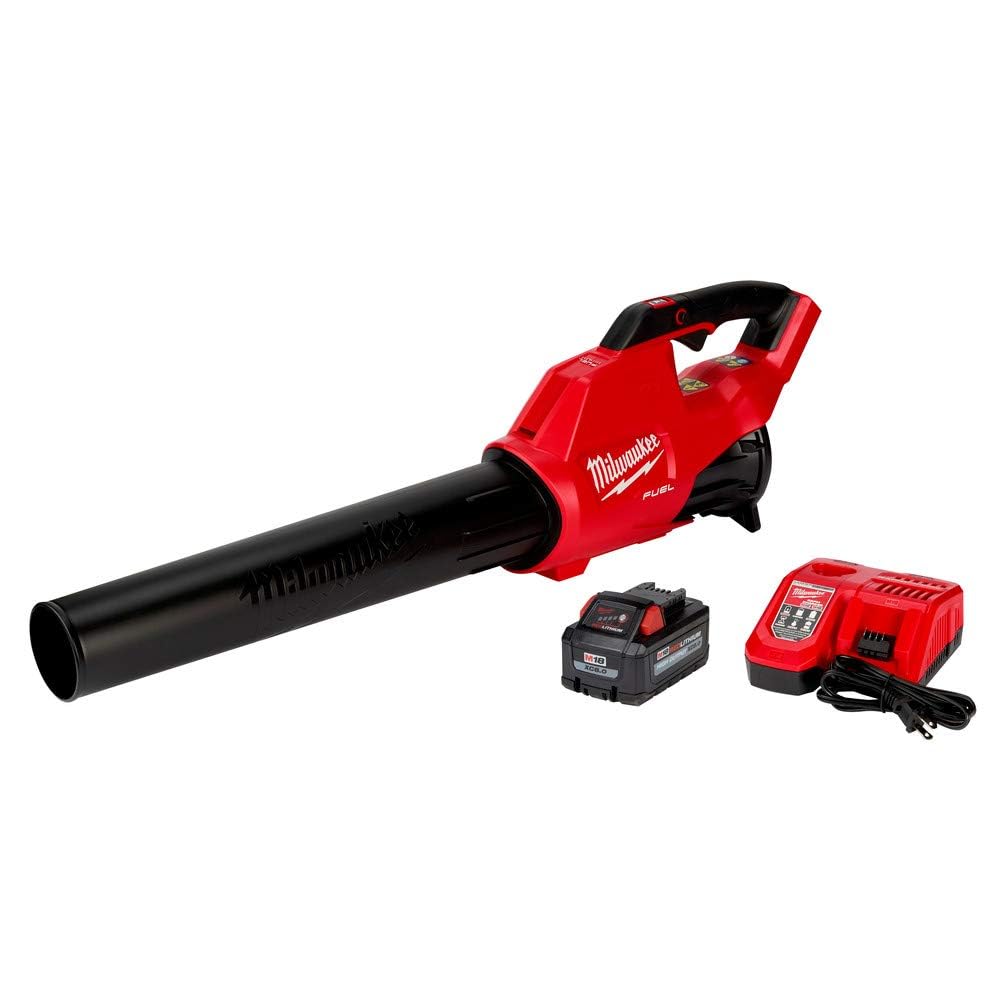
1. Milwaukee 2724-21HD M18 Fuel Blower Kit
Our pick — 4.5+★ from 600+ verified ratings; the strongest balance of quality and price.
M18-toolbox power in a handheld, with the tool weight to prove it.
If you already keep Milwaukee M18 batteries in a toolbox, this kit means one more tool instead of a whole new platform. The airflow sits at 450 CFM with a top speed of 120 MPH — enough for wet leaves, matted grass, and the small rocks a traditional rake misses. It is a two-handed tool at eleven pounds, so plan to carry it, not flick it one-handed over a flower bed.
What earns its reputation in daily use is the two-speed dial paired with an adjustable-speed trigger. Dial to low for delicate beds and light dust, then jump to high for the driveway pass. The kit ships with a charger and an M18 battery, so no separate purchase is needed on day one. The trade-off worth knowing: that eleven pounds is a lot of handheld tool to swing after twenty minutes, and the battery life reads as the most-discussed gripe in the review pages rather than a runaway strength.
The 450 CFM here versus the 680 CFM class is a gap you feel on a full-lawn leaf pile, not on a patio. Against the EGO LB8803-2, the airflow gap is even wider. Buy it for the M18 platform loyalty and the punch-per-pass on stubborn debris, not for a big open yard.
What This Blower Brings
- 450 CFM and 120 MPH handles wet leaves and small rocks without a second pass
- Two-speed dial plus adjustable trigger makes switching from delicate beds to driveway straightforward
- M18 FUEL kit ships ready to run — battery and charger in the box
What To Weigh First
- 11 pounds on a handheld is a two-handed tool, not a one-handed patio flicker
- 450 CFM lands below the 680 CFM class — a real gap on full-lawn piles
- Battery life lands in the mixed column on the review pages
Reach for this if: you are already inside the Milwaukee M18 battery system and want a handheld blower that punches through wet debris.
Look elsewhere if: you need one-handed maneuverability for steps and patios — the 11-pound body fights you there.
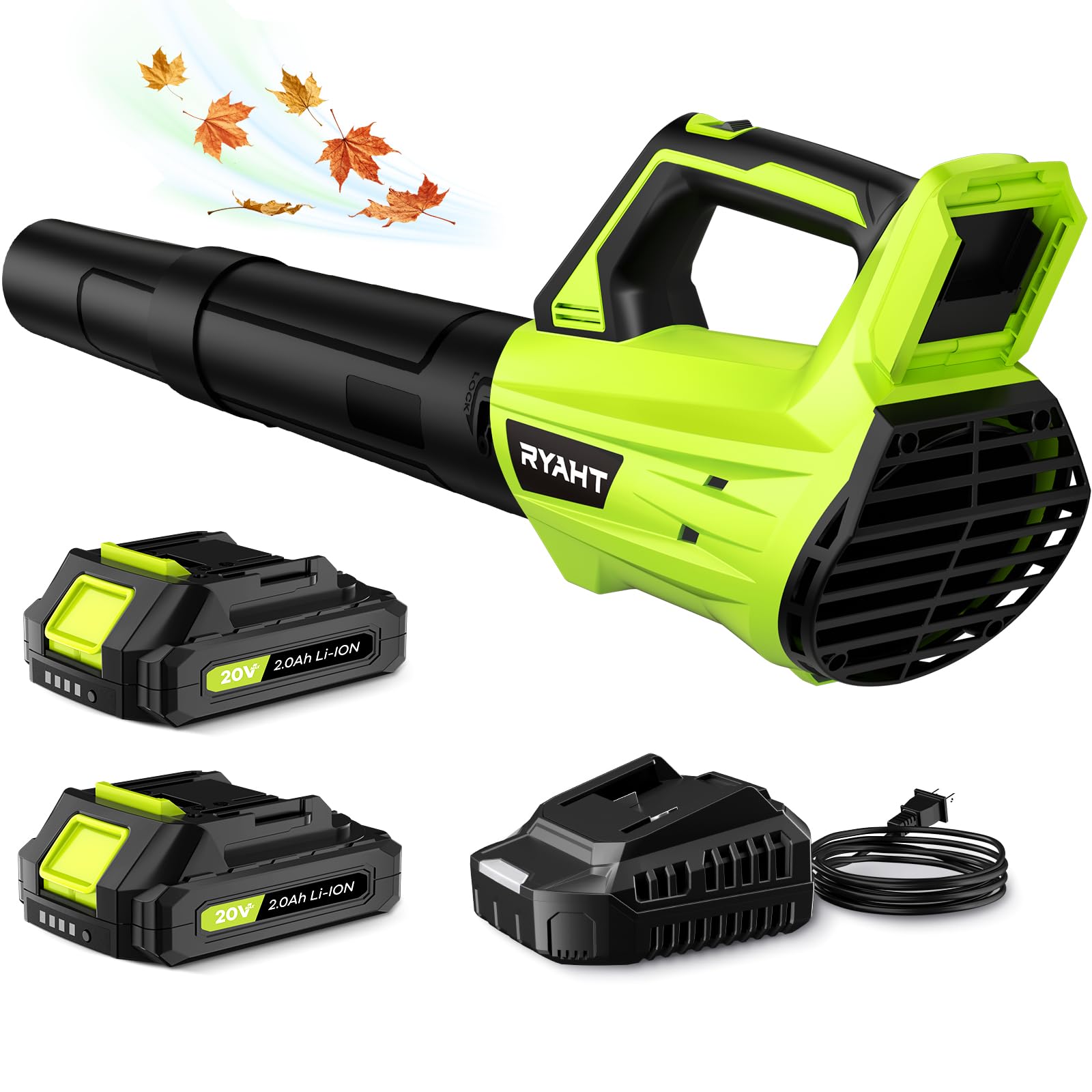
2. Leaf Blower Cordless 2 Batteries 20V
The 3.4-pound one-hander that makes cord-dragging feel silly.
At 3.4 pounds, this is one of the lightest handhelds in the group — a two-battery 20V kit that is built for patios, steps, tight planters, and drying a car after a wash. Store it on a shelf and grab it for a five-minute cleanup. The dual batteries swap interchangeably, and on low speed the maker rates run time up to 60 minutes per full charge. A 60-minute low-speed run is enough for the average patio and porch.
Weight and battery life are the biggest reasons this one sells. Owners consistently say the light body is what makes it practical for errands around the house — and it weighs 3.4 pounds versus the Milwaukee M18 at 11 pounds. The catch, and the review pages say it plainly, is the airflow: some find it does not blow very well on heavy, wet leaf piles. Pair low airflow with a high-priced leaf job and you will be working the same spot twice.
On a small city lot with dry leaves, the 3.4-pound body is worth the lower airflow. For a large yard covered in wet oak leaves, reach for the JAGROM or the EGO instead.
Where the value lands: You get a light-duty cleaner for steps and patios that weighs just 3.4 pounds, plus two interchangeable 20V 2.0Ah batteries (20-volt packs you can swap between tools) and a fast charger in one box. On weight alone, that package is tough to top.
What to go in knowing: airflow lands in the mixed column — light dry dust moves fine, heavy wet leaf piles need a second pass.
Suited to: anyone who wants a grab-and-go clean on a patio, steps, or tight garden corners — not a full-yard leaf blitz.
Think twice if: your yard is bigger than a small lot or your leaves arrive wet and matted.
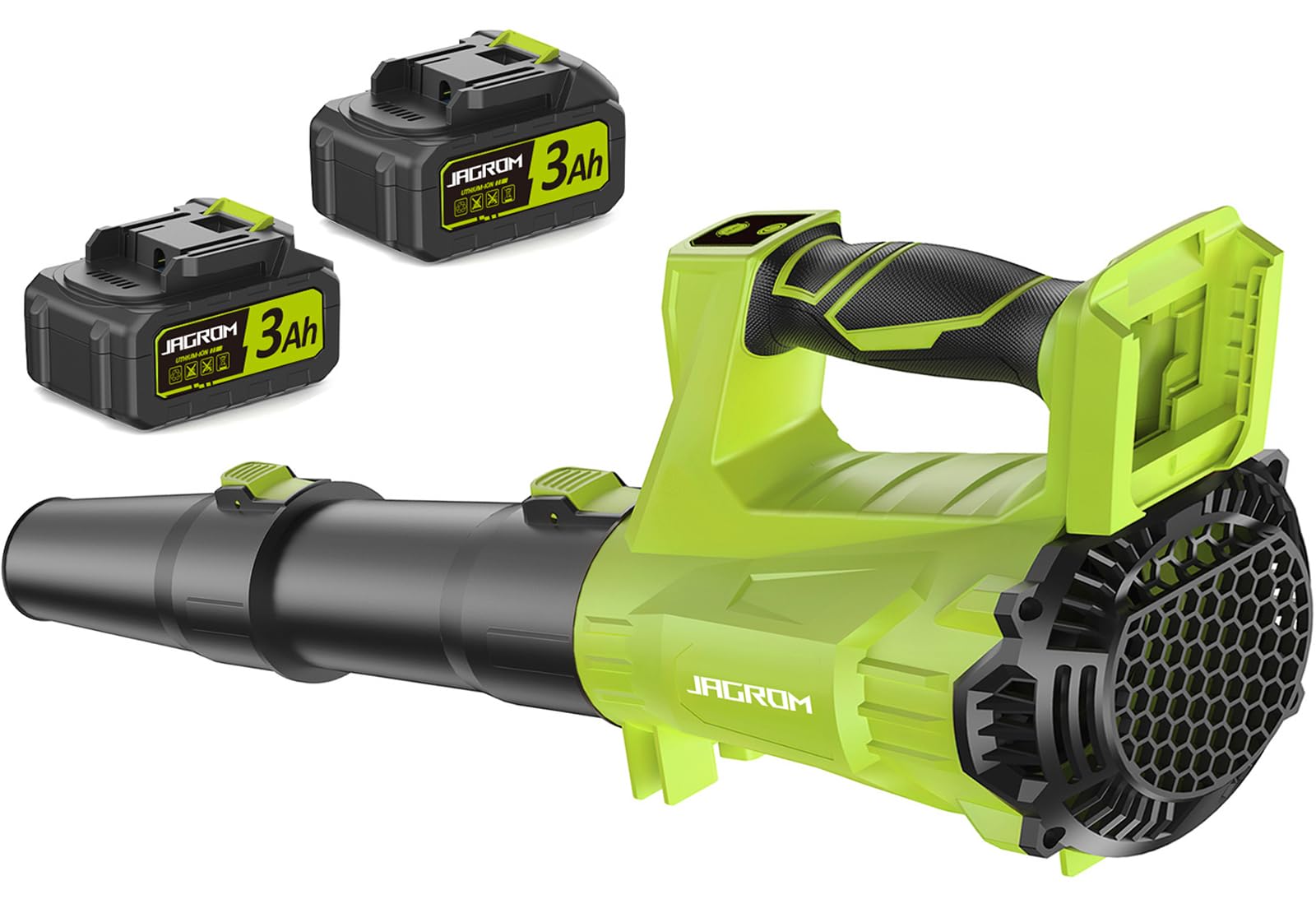
3. Electric Leaf Blower Cordless 680CFM
The fastest-air pick here at 230 MPH — it throws what it touches.
Speed is the defining number on this one. It pushes 230 MPH (miles per hour, how fast the air leaves the nozzle) through a 680 CFM nozzle (cubic feet per minute, how much air it moves). That is more velocity than any other pick in this guide, and it is what moves wet leaves, snow, and gravel out of seams and driveway cracks. Against the ZARIMI 680 CFM tool at 150 MPH, the JAGROM at 230 MPH wins the wind-speed duel. That gap is exactly the difference between a blower that slides wet leaves and one that slings them.
Two 3.0Ah lithium batteries come in the box and swap in a second. The maker rates about 40 minutes of continuous run with both batteries fully charged — enough for a single-pass cleanup on a small yard. A power indicator light tells you what is left so you know whether to keep going. Assembly is minutes: tube on, battery in with a click, done. It weighs 4.4 pounds, so it can be used one-handed on a patio but is better as a two-grip tool at full turbo.
The honest caveat: 40 minutes total across two batteries reads thin if you plan a full afternoon on a bigger lot. Airflow is 680 CFM at peak, but the smaller battery pack means it is not a marathon tool. Buy it for speed and the no-cord, no-gas convenience — not for a big-property marathon session.
Strongest card: 230 MPH is the highest wind speed in this whole roundup — this is the pick for wet leaf blasts and driveway-seam water removal.
Caveat worth weighing: two 3.0Ah batteries plus a 40-minute combined run means a small-yard tool, not a full-afternoon blower.
Pick this if: wet leaves, gravel, or driveway seams are the daily battle and you want the fastest air in the guide.
Not for you if: your cleaning sessions easily stretch past the combined run of the two included batteries.
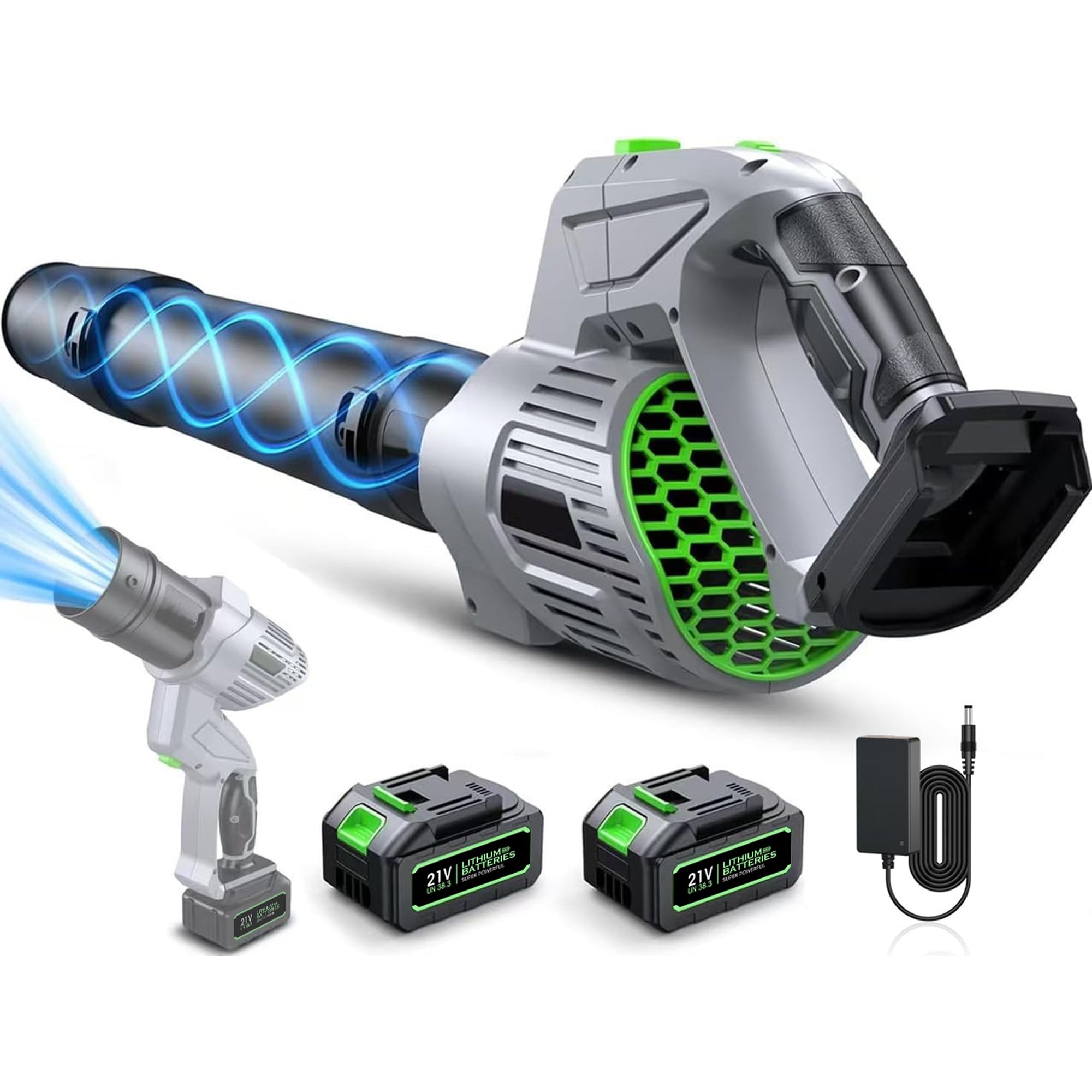
4. Cordless Leaf Blower 680 CFM 2 Batteries
Five speeds on a 3.6-pound frame — the fine dial on a light blower.
Most handhelds here give you a boost button or two speeds. This one gives you five. The 5-speed variable control lets you drop airflow to a whisper for delicate beds and light dust, or step up for heavy leaves and grass clippings. That granularity saves battery, since you are not always in turbo. The 680 CFM airflow moves a substantial amount of dry and damp debris at full dial.
The weight and the 21V dual-battery setup are the other two useful numbers. 3.6 pounds keeps it comfortable in one hand for extended passes down a sidewalk. Two 21V rechargeable batteries plus a charger are included, so you can rotate while one tops up. At 150 MPH it is the slowest nozzle in this group of three 680 CFM tools — the JAGROM, at 230 MPH, leads on wind speed. If you are chasing wet leaves off concrete and want maximum velocity, that gap matters.
Where five speeds genuinely pays off is mixed jobs: a low pass for flower beds beside a high pass for the driveway, without switching tools or battery-draining a full-power trigger. On a standard suburban yard, that low-pass-then-high-pass mix covers most cleanup jobs.
What Works Day To Day
- 5-speed variable dial tunes airflow to light dust or heavy leaves without swapping tools
- 680 CFM at the top end clears dry and damp debris from lawns, driveways, and patios
- 3.6-pound body with an anti-slip handle keeps one-handed work comfortable
Where It Falls Short
- 150 MPH lands well below the 230 MPH JAGROM on wet-leaf velocity
- Two 21V batteries and a charger ship in the box — a full kit you need to recharge between runs
- Concentrator nozzle is one piece; larger lawn piles will want a wider spread
Go for it when: a five-speed dial on a 3.6-pound body is the control setup you want — light dust to heavy leaves, one tool.
Pass if: maximum air velocity on wet concrete is the goal — that is the JAGROM’s fight to win.
5. Greenworks 40V Leaf Blower 550 CFM

If you already run Greenworks 40V tools, this is the obvious add-on.
This blower earns its spot as the platform move. It runs on the same 40V batteries as 75+ other Greenworks tools, so buying the kit means adding a blower to your yard lineup instead of starting a third battery system. The 40V brushless motor delivers 550 CFM and 130 MPH — enough for wet leaves, gravel, and snow on a driveway or patio. The brushless motor keeps the noise rating at 78 dB, quiet enough for an early-morning pass.
Run time on the included 4.0Ah battery is rated at 20 minutes of continuous use, so the kit is a pass-by-pass tool rather than an all-morning marathon. A turbo button punches peak power on demand for stubborn mud, puddles, and pet-food spills. Cruise control holds the speed so you are not squeezing a trigger for 20 minutes straight — a real comfort point on slopes and flower beds.
The trade-off that shows up most in discussion is battery life and weight: the 5.1-pound body is heavier than the 3.6 to 4.4-pound cluster, and the 20-minute runtime needs an honest plan if your yard is large. If you want to clear a whole property in one session, add a spare 4.0Ah pack. For a mid-size lawn and a garage floor, this is a well-priced, well-built tool.
Standout: 550 CFM and 130 MPH off a 40V brushless motor, and the same battery runs 75+ other Greenworks tools.
Honest limit: 20 minutes of rated continuous runtime on the 4.0Ah pack is a per-pass tool, not a full-afternoon blower.
Worth it if: you already own Greenworks 40V batteries and want a 550 CFM blower that shares them.
Skip if: you need a standalone blower system for a large property and no spare battery is in your future.
6. CRAFTSMAN V20 RP Leaf Blower Cordless

A quieter handheld with a boost button and a trigger you’ll actually like using.
This CRAFTSMAN does not try to win the airflow race. It wins on control and quiet operation. The brushless motor and V20 RP platform are rated for up to 24 minutes of runtime with the included 5.0Ah battery. The boost button tops out at 410 CFM and 110 MPH for the stubborn debris, then you back off for the routine pass. Up to 50% less noise than a gas blower is the pitch that matters most on a suburban street.
Weatherguard protection is designed to shield the tool from moisture and dust, though the maker specifies tool only, not the battery or charger. A compact body and a VERSATRACK-compatible hook add up to easy storage in a garage or shed.
Where 410 CFM shows its limit is on full-lawn leaf piles and wet matted debris. This tool is best targeted at driveways, patios, garage floors, and a light fall pass. For driveways, patios, and garage floors, the 410 CFM boost button covers the pass.
Pick-up-and-use factor: up to 50% less noise than a gas blower and a progressive trigger — this is the pick for a quiet neighborhood pass at a reasonable hour.
Ceiling to know: 410 CFM and 110 MPH is the cap, so wet matted leaves and full-lawn piles want a bigger tool.
Reach for this if: quiet operation and trigger control matter more than raw airflow on your street.
Not your pick if: the leaves come wet and thick — 410 CFM will need repeat passes.
7. EGO POWER+ LB6703 Leaf Blower

The runtime number that changes the whole afternoon — up to 80 minutes on one charge.
The lead spec is the 80-minute rating on the included 4.0Ah EGO battery (a 4.0 amp-hour pack, meaning it holds a larger charge than a 2.0Ah pack). That runtime is what turns a cordless blower from a patio tool into a whole-yard tool, and it sits at the top of the runtime range in this guide. Turbo mode still delivers 670 CFM and up to 180 MPH for wet leaves, caked grass, and rocks. A variable speed dial running from 250 to 530 CFM with a lock-on button is exactly the control setup you want on a long pass.
The turbine fan and brushless motor are rated to sustain the 80-minute runtime without overheating, with low vibration and a long motor lifespan. The included 320W charger tops the 4.0Ah battery in 55 minutes, so a mid-session recharge is realistic. Tapered and spread nozzles come in the box for different jobs. The EGO 56V platform runs on all EGO ARC Lithium batteries, so this battery also works in other EGO tools.
The honest weight is 11.7 pounds, a serious two-handed tool for an all-morning cleanup. And the review pages split on runtime — some get a full session, others report as little as 20 minutes on the highest turbo setting. Plan on a mid-length session rather than an all-day marathon, and the 5-year tool warranty backs the purchase.
What The EGO Gets Right
- Up to 80 minutes on a single 4.0Ah charge — the longest rated runtime in this group
- Turbo hits 670 CFM and 180 MPH for wet leaves, rocks, and caked grass
- 5-year tool warranty and 3-year battery warranty back the purchase
Trade-offs You Should Expect
- 11.7 pounds means two-handed carry for the whole session
- Turbo drains the battery faster than the 80-minute rating implies
- Performance on the highest setting is loud enough to notice
The pick for: a mid-size-to-large yard where runtime beats raw airflow on the priority list.
Look elsewhere if: an 11.7-pound handheld is too much to carry — the ZARIMI at 3.6 pounds wins there.
8. Makita XBU02PT LXT Blower Kit

The quietest heavy hitter here — 61 dB on the Makita LXT platform.
For a blower that runs on two 18V LXT batteries, sound is the standout spec. The Makita’s pressure rating of 61 dB is measured under the ANSI B 175.2 standard, and it is the lowest noise figure in this entire roundup. That figure is the whole pitch for anyone who cleans up in the early morning or lives close to neighbours. The brushless motor delivers 473 CFM and 120 MPH through a 6-stage ventilation dial with a variable-speed trigger — a proper 6-step speed ladder instead of a basic high/low switch.
Run time at mid-speed (15,800 RPM) is rated at up to 28 minutes using both 5.0Ah batteries. That pair ships in the box alongside a dual-port charger, so you can rotate as they top up. Zero emissions and reduced maintenance come with the cordless design — no gas, no oil. The kit weighs 16.9 pounds, which is the heaviest single-tool number in the guide; that weight is mostly the two LXT batteries on board. Buyers report the 16.9-pound kit still running hard after three years of use.
The honest limit: 473 CFM is below the 680 CFM cluster and far below the EGO 880 CFM. This is the pick for someone whose priority is a quiet, long-lasting LXT-platform blower — not a leaf-pile bulldozer.
The standout number: It runs at a 61 dB pressure rating under ANSI B 175.2 (a standard test that measures blower noise) — the quietest running blower in this guide by a clear margin, so you can clear the driveway without waking the street.
What you trade: 16.9 pounds in hand — the heaviest body here — and 473 CFM that sits below the 680 CFM tools.
Made for: LXT battery owners and anyone who wants a 61 dB blower that will not wake the block.
Weigh this first: 16.9 pounds is a two-handed commitment for the whole session.
9. EGO Power+ LB8803-2 Leaf Blower

880 CFM and 200 MPH — the blunt-force answer to a full-lawn leaf pile.
No other blower in this guide comes close to the airflow on this one. It moves 880 CFM in turbo mode and air speeds up to 200 MPH, which overrides the “small job cordless blower” stereotype entirely. If your property produces a genuine leaf pile each fall, this is the tool that moves it in fewer passes. The dial runs from 270 to 700 CFM in normal mode, and the turbo button delivers the full 880 when the leaves are wet and matted. An 880 CFM pass versus a 450 CFM pass is a different job order — fewer passes, less sweeping follow-up.
Two 4.0Ah EGO batteries come in the kit, and a single charge across both is rated at up to 90 minutes. A digital display tracks blower performance, battery charge status, and cruise-lock in real time, which is genuinely useful when you are working through a big cleanup. Tapered and spread nozzles are in the box. The brushless motor keeps vibration low. The full EGO 56V platform compatibility means the batteries also run other EGO tools, backed by a 5-year tool warranty.
The trade-offs to plan for: turbo drains the two 4.0Ah packs faster than the 90-minute figure suggests, and the weight splits the conversation — the carbon-fiber handheld body carries it well, but it is not a one-handed patio flicker. This is the blower for the big-yard buyer.
Headline spec: 880 CFM and 200 MPH turbo — the highest airflow number here by a wide margin.
The other side of the card: turbo pulls the two 4.0Ah batteries down faster than the 90-minute rating implies, and the weight demands a two-handed grip.
Buy it for: big yards, wet leaf piles, and the biggest airflow any cordless handheld here delivers.
Overkill if: your cleanup is a patio and a short driveway — the ZARIMI at 680 CFM covers that without the bulk.
Know the Specs
CFM and MPH — two halves of the same job
CFM (cubic feet per minute) is how much air the blower pushes per minute, and MPH (miles per hour) is how fast that air travels out of the nozzle. High CFM shifts a big pile of dry leaves on a lawn; high MPH blasts wet leaves off concrete or water out of driveway cracks. A single blower rarely wins both at once — the JAGROM at 230 MPH and 680 CFM is one of the few tools that carries both figures, while the CRAFTSMAN’s 410 CFM and 110 MPH keeps it a light-duty cleaner.
Voltage and Ah — what run time actually comes from
Voltage sets the motor’s power ceiling (20V, 40V, 56V). Amp-hours (Ah) set the tank size — how much charge a battery holds. Two 4.0Ah batteries run longer than a single 2.0Ah cell. The Greenworks 40V kit’s 4.0Ah pack gives a 20-minute-rated run; the EGO LB8803-2’s two 4.0Ah 56V batteries deliver up to 90 minutes. That is why dual-battery kits exist — one battery runs while the other charges.
Weight — the spec you feel in every minute
The gap between the lightest and heaviest blower here is a wide one: 3.4 pounds on the RYAHT versus 16.9 pounds on the Makita. On a handheld, that difference is the gap between a comfortable one-handed pass and a two-handed session. For patios, steps, and tight spaces, a lightweight body under 4 pounds is the spec to target. For a full afternoon on a big yard, a heavier body with better leverage and bigger batteries is a reasonable trade.
Boost vs variable speed — control in two different forms
A boost button gives instant peak airflow for stubborn debris — the CRAFTSMAN’s boost button and the Milwaukee’s high-speed setting both do that job. A variable-speed dial (five steps on the ZARIMI, six on the Makita, three running modes with cruise control on the EGO LB6703) lets you pick the exact airflow for the task. Five to six speeds save battery because you are not stuck in a single power level all session. Boost is for the bad pass; variable is for the whole pass.
Common Questions
How many minutes will a cordless leaf blower actually run on a charge?
Is 680 CFM enough to clear a whole lawn?
What is the difference between CFM and MPH on a leaf blower?
Can I use a wireless leaf blower to dry my car after a wash?
How much does a cordless leaf blower weigh and does weight matter?
Can I use the same battery in a leaf blower and other tools?
Is a 20V or 40V cordless leaf blower better for a typical yard?
Does a cordless leaf blower work on wet leaves and snow?
How loud is a cordless leaf blower compared to a gas blower?
What should I check before buying a cordless leaf blower for steps and tight spaces?
The Bottom Line
The wireless leaf blower that answers the platform issue best is the Milwaukee 2724-21HD M18 Fuel Blower Kit — if you already own M18 batteries, this gives you 450 CFM and 120 MPH of wet-debris power from a battery you already own. If a lighter, patio-first tool is what you actually need, the RYAHT Cordless Leaf Blower at 3.4 pounds is the easiest one to hold one-handed. And when a big yard needs the biggest airflow in this guide, the EGO Power+ LB8803-2 and its 880 CFM turbo is the pick to reach for.
One last nudge worth naming: the CRAFTSMAN V20 RP sits at 4.5+ stars across 400+ ratings, so if quiet running and a progressive trigger matter more to you than raw CFM, that is the honest upgrade path for a suburban street. Whichever you choose, match CFM, battery Ah, and tool weight to your yard size — a 3.4-pound 20V kit for a patio, an 11-pound 670 CFM unit for a half-acre.
How we choose
We do not accept paid placement. Every pick is matched to a real buyer and a real use-case; we do not hands-on test units.
Sources
Specifications: manufacturer listings and product documentation. Review insights: verified customer reviews, as of November 2026. Pricing: not shown on this page (it changes often); check the current price via the retailer link.
As an Amazon Associate, Tactical Gear Guy earns from qualifying purchases. This does not affect which products we feature.