Specs are compiled from manufacturer listings and verified buyer reviews and can change over time — please confirm the key details on the product page before buying.
Your splitter’s ram stopped moving, and now you need a replacement cylinder that actually bolts up to your machine — not one that shows up with the wrong pin holes or a port in the wrong spot. The short answer: the Magister Hydraulics WLS 4×24 is the safest all-around swap for most standard splitters, while the AMRAP and the MTD each win on specific mounts. The rest of this page lines up bore, stroke, port size and mounting so you can match your old cylinder before you order.
This guide is built by comparing the manufacturers’ published specifications and the patterns across verified customer reviews, so you get each pick’s real strengths and trade-offs instead of marketing spin.
Fitment, not brand loyalty, decides whether a cylinder works on your splitter. This breakdown covers bore and stroke, rod diameter, port threads and mount style so you can swap in a working ram without guesswork. Every pick below is a double-acting cylinder you can match to your own machine — read on for the best wood splitter hydraulic cylinder choices.
Top Picks

How To Choose The Best Wood Splitter Hydraulic Cylinder
A hydraulic cylinder is the muscle of your splitter — pressurized oil pushes a rod out, and that rod drives the wedge through the round. Get the mounting and the bore wrong and the part simply will not work, no matter how well it is built. So you measure your old cylinder first, then you shop.
Start with bore, stroke and rod diameter
Bore is the inside width of the cylinder tube, and it sets how much force the ram produces at a given pressure. Stroke is how far the rod travels — 24 inches is the common figure on these replacement units. Rod diameter tells you the thickness of the chrome shaft that actually pushes the wood. Write all three down off your old part before you look at anything else.
Check the ports and the pins
Your hoses screw into the cylinder’s ports, and the thread type has to match or you are hunting adaptors. You will see 1/2″ NPT, 3/4 NPT and JIC-8 male threads across this list, plus 1/2″ NPTF female on one. The pin holes matter just as much: a 1-1/8″ clevis hole and a 9/16″ rod-end hole are the standard sizes, and a mismatch means drilling or a return.
Match the mount type, then the tonnage
Clevis mounts pin at both ends; trunnion mounts hang on trunnion pins cast into the cylinder body, which is how the MTD unit attaches. A clevis cylinder will not drop into a trunnion cradle. Tonnage is the last filter — the splitter’s rated tonnage tells you which pressure class of cylinder belongs on it, and the listings here state 3500 PSI as the working ceiling.
Side-by-Side Comparison
| Model | Best For | Bore and Stroke | Rod and Pin Holes | Ports and Pressure | Amazon |
|---|---|---|---|---|---|
| Magister WLS 4×24★ Best Overall | Most standard splitters | 4″ bore (4.5″ OD) x 24″ stroke | 1.75″ rod; 1-1/8″ and 9/16″ pinholes | 3500 PSI max | Amazon |
| AMRAP AH4024-LSPLongest Warranty | Major-brand swaps with warranty cover | 4″ bore (4.5″ OD) x 24″ stroke | 1.75″ rod; 1-1/8″ and 9/16″ pinholes | 1/2″ NPT; 3500 PSI | Amazon |
| The ROP Shop Universal | 22 to 25 ton splitters | 4″ bore x 24″ stroke | 1-3/4″ chrome rod; 1-1/8″ clevis holes | 3/4 NPT; 3500 PSI | Amazon |
| ToolTuff 4.5″ x 24″ | OEM clevis-mount replacement | 4.5″ bore x 24″ stroke | — | 3500 PSI | Amazon |
| MTD 918-0769A | Troy-Bilt and Cub Cadet trunnion mounts | 4.5″ bore (5″ OD) x 24″ stroke | — | JIC-8 male and 1/2″ NPTF female; 3500 PSI | Amazon |
Detailed Reviews
1. Log Splitter Cylinder 4 in Bore x 24 in Stroke
Our pick — 4.5+★ from 100+ verified ratings; the strongest balance of quality and price.
The universal 4×24 that drops into Champion, YARDMAX, Huskee and a long list of other frames.
You get a straight swap without measuring three times with the Magister WLS 4×24. It carries a 4″ bore (the inside width of the oil chamber, which sets the ram’s force) and a 24″ stroke (how far the rod travels to shove the round through the wedge). It is rated to 3500 PSI (pounds per square inch, the working pressure ceiling you want to stay under on a standard splitter). The rod measures 1.75″, and the pin holes come in at 1-1/8″ and 9/16″, the common clevis (the forked end that pins to the frame) and rod-end sizes on most frames.
Where this one earns its keep is the fit — it is a universal aftermarket replacement listed for Champion, YARDMAX, CountryLine, Huskee, SuperHandy and BOSS splitters, and Magister makes the part rather than reselling it. Buyers report it pushing through 36″ twisted oak rounds that would stall a tired old ram. Reviews lead with replacement quality — how cleanly it bolts up — and that reputation is why it holds the top spot here.
Here is the honest bit. It weighs 67 pounds versus the AMRAP at 62 pounds, so plan for a second set of hands lifting it into the cradle. It measures 34.5″ retracted and 58.5″ extended, so confirm those before you order — a splinter frame that wants a shorter cylinder will not take this one. Made in Europe to US standards, per the maker, with carbon steel construction and black finish.
What earns the top spot
- 4″ bore and 24″ stroke suit a long list of common splitter frames
- 3500 PSI working pressure ceiling matches standard setups
- Double-acting, so the wedge retracts under power instead of by spring
- 1-1/8″ and 9/16″ pin holes are the standard pair, cutting adaptor hunting
What to weigh first
- 67 pounds versus the AMRAP’s 62 pounds to lift and hold
- 34.5″ retracted and 58.5″ extended must match your cradle before ordering
- Universal fit still needs you to compare port locations on your old unit
Grab this one if: you run a common 4×24 clevis frame and want a manufacturer-built cylinder with a broad brand fit list.
Measure first if: your cylinder sits in a trunnion cradle — this clevis unit is not the pattern you need.
2. 4×24 Hydraulic Log Splitter Cylinder
The same 4×24 footprint as the winner, but backed by a two-year manufacturer’s warranty.
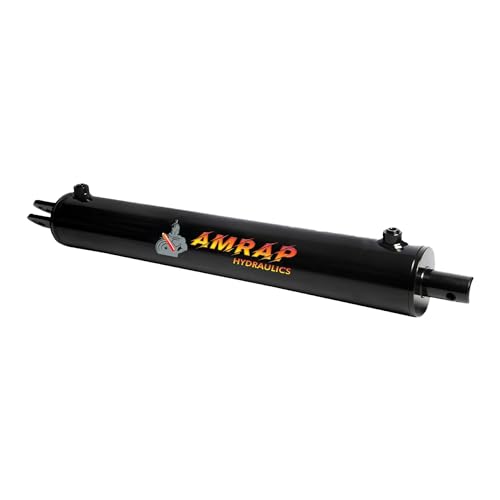
The AMRAP AH4024-LSP matches the Magister on the numbers that matter: a 4″ bore, 24″ stroke and 1.75″ rod, with 34.5″ retracted and 58.5″ extended lengths. That means the same frame compatibility. It is a welded double-acting unit rated to 3500 PSI, and the ports are 1/2″ NPT — the tapered thread most splitter hoses use. If your hoses end in a standard half-inch fitting, this screws straight in without an adaptor crawl.
What separates it is the cover sheet. AMRAP backs every cylinder in its line with a 2-year manufacturer’s warranty — real money on a 62-pound part if a seal starts weeping. It is all-welded heavy-duty steel with compact seals meant to keep out leakage and rust particles, and the maker lists fit for Dirty Hand Tools, TSC, CountyLine, Huskee, MTD, Oregon, SpeeCo and SplitMaster frames. Rated for 18-ton splitters per the listing, so know your tonnage before you commit.
At 62 pounds versus the Magister’s 67 pounds — a small edge when you are wrestling it into place alone. The catch is that this is the newest cylinder of the group and its review base is thin, so there is less owner history to lean on than the Magister carries. The warranty is the equalizer there. Port placement can still differ from your original, so hold the old cylinder next to the listing diagram.
Where it wins: the 2-year manufacturer’s warranty is the standout on this whole list, and the standard 1/2″ NPT ports mean your existing hoses likely bolt on. The 4″ bore and 24″ stroke make it a direct spec match to the top pick — the choice between them is warranty versus track record, not capability.
The trade-off: listed as good for an 18-ton splitter, so a bigger, higher-tonnage machine needs a cylinder rated for its tonnage — size this to your frame, not the other way round.
Reach for this if: you want two years of manufacturer cover on a 4×24 that matches the winner’s bore, stroke and rod sizes.
Pass it by if: your splitter is well above the 18-ton class this cylinder is listed for.
3. The ROP Shop Universal Hydraulic Cylinder
A 22 to 25 ton clevis cylinder you can take apart and reseal instead of replacing.
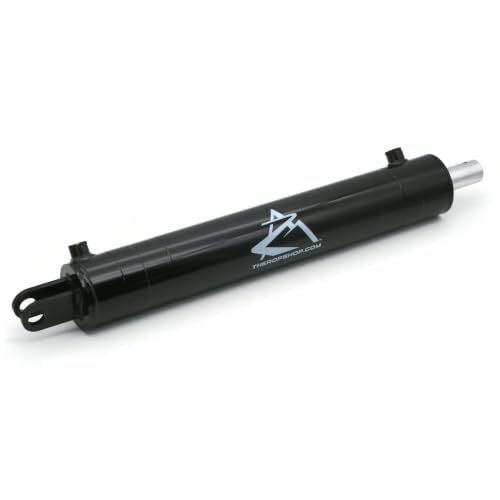
Start with the tonnage band: this ROP Shop cylinder is listed for 22-25 ton splitters, so it slots into the mid-size machines that are not 18-ton light but not full commercial either. Bore is 4″ and stroke is 24″, the same core measurements as the Magister and AMRAP above. The chrome rod measures 1-3/4″ and takes a 9/16″ mounting hole, while the clevis holes come in at 1-1/8″ — the standard pin pair, so existing pins should slide in.
Your hoses decide this one: it uses a 3/4 NPT thread (a standard tapered pipe thread) rather than the 1/2″ NPT you see on the AMRAP and Magister, so if your hoses end in a bigger fitting this one may be the closer match. It is a welded, double-acting cylinder (it pushes and pulls under pressure) rated to 3500 PSI maximum operating pressure. And it is rebuildable — the seals can be replaced when they wear, so you are not buying a whole new ram every time a seal weeps. Brand fit covers TSC, CountyLine, Huskee, MTD, Oregon, SpeeCo and SplitMaster.
Weigh it at 64.9 pounds and you are between the AMRAP at 62 pounds and the Magister at 67 pounds — middle of the pack in hand. ROP Shop is upfront that fitting locations can differ from the original equipment, and extra fittings or adaptors might be needed to line everything up. It also notes a new cylinder can arrive with chipped paint in spots. Neither affects how it splits wood. Verify your specs and part number against the listing before you order.
The rebuild angle: a resealable cylinder is the long-game buy on this list. When the seals eventually wear, you replace them rather than the whole ram, which suits an owner who plans to keep the same splitter for years.
Know before the click: the 3/4 NPT port and the possibility of moved fitting locations mean you should compare thread size against your hoses first — this is the pick where an adaptor is most likely needed.
Made for you if: you run a 22 to 25 ton splitter and like the idea of resealing the cylinder instead of scrapping it.
Think twice if: your hoses use small half-inch fittings and you would rather not source a 3/4 NPT adaptor.
4. ToolTuff 4.5″ x 24″ Hydraulic Log Splitter Cylinder

A 4.5″ bore clevis cylinder built as a no-modification drop-in for a long list of OEM frames.
This one steps up to a 4.5″ bore versus the 4″ bore on the cylinders above, which means more push at the same 3500 PSI working pressure. Stroke stays at 24″, so the travel matches the rest of the group. It is a double-acting cylinder, so the rod retracts under pressure rather than by spring, and it is finished in black. ToolTuff lists it as a direct replacement for many OEM double-acting, clevis-mount cylinders.
This pick sells on a no-modification claim: it is listed as a common swap for Tractor Supply Co., Husky, SplitMaster, Oregon, SpeeCo and others. Those brands also show up in the fit lists of the cylinders above, so if your old ram came off one of those frames, this is a contender. ToolTuff points you to a diagram for the detailed dimensions, and that diagram is the thing to check before you commit, because the listing itself does not spell out the rod and pin-hole sizes in text.
Reviews say it performs as expected as a straight replacement part, with no drama reported. The honest gap here is information, not build: if you need to confirm rod diameter or pinhole size before ordering, you will be reading that diagram carefully rather than seeing it in the bullet list. Do that homework and this is a clean fit for the right clevis frame.
Why it makes the list
- 4.5″ bore versus 4″ bore gives more push at the same 3500 PSI
- Listed as a direct clevis-mount replacement for several OEM frames
- Double acting, so retraction is powered
The fine print
- Rod and pin-hole sizes live in the diagram, not the text specs
- Confirm your frame is on the OEM fit list before ordering
Worth it for: owners of an OEM clevis-mount splitter who want a bigger 4.5″ bore with a 24″ stroke and no fabrication.
Check the diagram if: you need rod and pin sizes confirmed in writing before you buy.
5. MTD Log Splitter Cylinder 918-0769A

The trunnion-mount cylinder for Troy-Bilt and Cub Cadet frames that pins through the body, not the ends.
If your splitter uses a trunnion mount — the cylinder hangs on pins cast into its own body instead of pinning at both ends — this is the pattern you need, and a clevis cylinder will not substitute. The MTD 918-0769A fits log splitters that use that exact cylinder part number, running on Troy-Bilt, Cub Cadet, Bolens and MTD frames rated 27 to 30 tons. Bore is 4-1/2″ with a 5″ outside diameter and a 24″ stroke, all double acting.
The pressure ceiling is 3500 PSI max operating, the same working limit as the rest of the group. Ports are JIC-8 male and 1/2″ NPTF female — that JIC-8 flare fitting is a different thread type from the NPT ports on the others, so check what your hoses run before ordering. It is all-welded and rebuildable, so the seals can be replaced to stretch its life rather than binning the whole ram. Owners rate functionality and fit first, and the consensus is original-equipment quality.
Two warnings worth taking seriously. It has no handle mounting flange, so check how your old cylinder carries the handle before you order — if yours needs a flange, this is not the part. And at 4.5″ bore versus 4″ bore on the cylinders above, budget for a careful lift. Compare the sizes and specs against your machine first; the fit is precise by design, which is exactly why it works so well on the frames it is built for.
Built to the drawing: the part-number match is what makes this one work — if your splitter calls for 918-0769A or 718-0769, this drops in with the trunnion pins and correct JIC-8 port already in place.
The honest limit: the missing handle mounting flange and the trunnion-only mount mean this is a niche fit — perfect for the right Troy-Bilt or Cub Cadet, wrong for a clevis frame.
Buy this one if: your splitter’s parts list names 918-0769A or 718-0769 and it runs a trunnion cradle.
Look elsewhere if: your cylinder has a handle flange or a clevis mount — this pattern will not line up.
Know the Specs
Bore and Stroke
Bore is the inside diameter of the cylinder tube — how much oil pushes on the piston — and it sets the force the ram delivers at a given pressure. Stroke is how far the rod extends; 24″ is the common figure on these splitter cylinders. A 4″ bore and a 4.5″ bore are not interchangeable — the 4.5″ bore gives more push at the same 3500 PSI, but it only fits a frame built for it. Match bore and stroke to your old cylinder before anything else.
Port Threads (NPT vs JIC)
Ports are where your hydraulic hoses screw in, and the thread type has to match or you are chasing adaptors. NPT is a tapered pipe thread — you will see 1/2″ NPT and 3/4 NPT on this list. JIC-8 is a flare fitting, a different style entirely, and it shows up on the MTD. Check the end of your hoses against the listing’s port spec; a thread mismatch is the most common reason a cylinder comes back.
Mount Style: Clevis vs Trunnion
Clevis mounts pin the cylinder at both ends — one pin at the base, one at the rod. Trunnion mounts hang the cylinder on pins cast into its own body, like the MTD unit. These are not swappable. A clevis cylinder will not drop into a trunnion cradle, and a trunnion cylinder will not pin at the ends. Find your mount type before you shop.
Pressure Rating and Rebuildability
3500 PSI is the working pressure ceiling stated across these cylinders — stay under it and the seals last. Double acting means the oil pushes the rod both out and back, so the wedge retracts under power. Rebuildable means the seals can be replaced instead of buying a whole new cylinder when they wear. If you plan to keep the splitter for years, a resealable unit saves you the price of a whole new cylinder later.
Common Questions
Will a 4″ bore cylinder replace my 4.5″ bore cylinder?
What does double acting mean on a log splitter cylinder?
How do I know if my splitter is clevis or trunnion mount?
Can I use a 1/2″ NPT cylinder if my hoses are 3/4 NPT?
What do the 1-1/8″ and 9/16″ pin holes fit?
Can a hydraulic cylinder be rebuilt instead of replaced?
What pressure should I run my splitter at with these cylinders?
Will a universal cylinder fit my specific brand of splitter?
Why does a new cylinder sometimes arrive with chipped paint?
The Bottom Line
For most owners, the best wood splitter hydraulic cylinder is the Magister WLS 4×24. It is the manufacturer’s own part, not a reseller’s, and it carries the standard 4″ bore and 24″ stroke that fit a long list of frames. It holds 4.5+ stars across 100+ ratings, so the swap has a track record behind it. If you want the safety net of a manufacturer’s warranty, the AMRAP AH4024-LSP matches those same bore, stroke and rod numbers and adds a 2-year cover. And if your splitter is a Troy-Bilt or Cub Cadet with a trunnion cradle (the pivoting mount that holds the cylinder), the MTD 918-0769A is the part-number match that drops straight in. Measure your old cylinder first — bore, stroke, port thread and mount type — and any of these will get you splitting again.
How we choose
We do not accept paid placement. Every pick is matched to a real buyer and a real use-case; we do not hands-on test units.
Sources
Specifications: manufacturer listings and product documentation. Review insights: verified customer reviews, as of November 2026. Pricing: not shown on this page (it changes often); check the current price via the retailer link.
As an Amazon Associate, Tactical Gear Guy earns from qualifying purchases. This does not affect which products we feature.