Specs are compiled from manufacturer listings and verified buyer reviews and can change over time — please confirm the key details on the product page before buying.
Your zone damper choice starts with one thing: the actuator style (the motor that moves the blade). A power-close/spring-open damper shuts only when the zone thermostat calls, then springs back open on its own if power drops. A power-open/power-close damper needs voltage to move both ways. Pick wrong and your system fails in the position you did not plan for, so match the actuator to your control board before you compare blade seals or price tiers.
This guide is built by comparing the manufacturers’ published specifications and the patterns across verified customer reviews, so you get each pick’s real strengths and trade-offs instead of marketing spin.
Below you get nine motorized dampers sorted by duct size, actuator type, and real install feedback, plus a plain-English rundown of how each one behaves when the thermostat stops calling. That way you can pick the right zone dampers hvac match for your duct run in one pass.
Top Picks
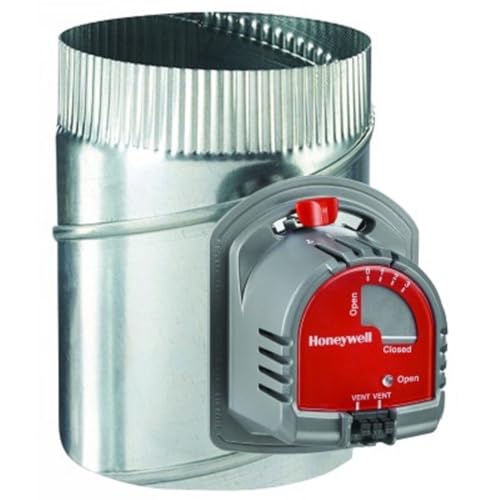


How To Choose The Best Zone Dampers HVAC
Zoning is simple in theory: one thermostat closes a blade in the duct so the blower sends its air somewhere else. In practice the wrong damper either won’t seat, won’t wire up, or sits in the wrong position when a fuse blows. Three things decide that — actuator type, duct size, and the pressure the blade has to hold against.
Normally open or normally closed — get this right first
A normally open (power close) damper stays open when there is no 24-volt signal on the coil, and the motor shuts it only while powered. That default-open behavior suits a main supply branch you never want to block, because if the board or transformer dies the air still flows. A normally closed (power open) damper does the opposite: it sits shut and the motor opens it, which fits a dedicated zone you want quiet by default. Check what your zone controller expects before anything else, because you cannot fix the wrong default with a clever install.
Why the pressure rating in inches of water column matters
Inches of water column (often shortened to in. wc) is a small pressure unit used in ductwork — one inch of wc is the tiny push that lifts a column of water one inch. Honeywell rates its round automatic dampers to operate up to 1-inch wc, so they’re built for residential supply and return branches rather than high-static commercial trunks. If your blower pushes harder than the blade is rated for, the motor can strain or the seal can leak by.
Measure the inner diameter, not the label
Round dampers scale with the pipe they slide into, from a compact 6-inch unit all the way to a 14-inch trunk. Manufacturers in this category repeatedly warn buyers to confirm the inner diameter before ordering, because a damper sized to the outside of the pipe won’t seal and one sized too large won’t slide in. Measure the inside of the duct with a tape, write the number down, and shop that figure. It saves a return and a second shipping wait on a part your heating season depends on.
Side-by-Side Comparison
| Model | Best For | Duct Size | Actuator Type | Weight | Amazon |
|---|---|---|---|---|---|
| Honeywell ARD14TZ★ Best Overall | Large supply trunks | 14 inches | Power closed / spring return open | 5 pounds | Amazon |
| Suncourt ZO208Best 8-Inch Fit | Duct runs that must stay open if power drops | 8 Inch | Normally Open (power closed) | — | Amazon |
| Suncourt ZC210Best Normally Closed | Quiet zones you want shut by default | 10 Inch | Normally Closed (power open) | 3.9 pounds | Amazon |
| ZoneMaster ZO212 | 12-inch fresh-air and make-up air intakes | 12″ | Normally Open (power closed) | 5.7 pounds | Amazon |
| ECOJAY Zone Damper 6″ | Small round branch zones | 06 | Power Open – Power Close | 3.14 pounds | Amazon |
| Honeywell ARD12TZ | Honeywell zoning system retrofits | 12 inches | Power closed / spring return open | 5 pounds | Amazon |
| ECOJAY 10″ Round | Low-leakage pro-grade zoning | 10 | Power Open – Power Close | 5.14 pounds | Amazon |
| PATIKIL 6″ Duct Damper | Budget air balancing on small ducts | 6 Inch | Motorized adjustable (0°–90°) | 1.88 pounds | Amazon |
Detailed Reviews
1. Honeywell ARD14TZ Round Automatic Damper, 14″
Our pick — 4.5+★ from 60+ verified ratings; the strongest balance of quality and price.
The 14-inch trunk damper that seals on a gasket and springs open the moment power drops.
This is the biggest round damper here at a 14-inch inlet connection — the size you fit on a main supply trunk feeding a large zone rather than a single bedroom branch. Its single-blade design closes tightly against a gasket, which is the detail that keeps leak-by low when the zone is satisfied and you want that air pushed elsewhere. The body is galvanized steel, so it resists the surface rust that eats painted mild steel in a humid basement.
The actuator is power closed with a spring return open: the motor shuts the blade against the spring while your zone board holds 24 volts on it, and the spring reopens it if the signal dies. That fail-open behavior is the safe default on a trunk you never want blocked, and it’s the main reason this earns the top spot over the cheaper 6-inch PATIKIL unit’s adjustable-motor approach. Honeywell rates it to operate up to 1-inch wc, the small pressure unit that roughly matches residential supply-and-return static rather than high-pressure commercial ductwork.
Honeywell also builds in field conversion, so the same part can be set up as an independent zone or a fresh-air intake rather than only as part of a Honeywell zoning system. What buyers consistently value is the fit and finish — the pinned, gasketed blade and the clean spring action are why this holds the highest score in the lineup, 4.5+ stars, and it’s been steady there. The one honest catch is weight: at 5 pounds it is the heavier end of this group, so plan a second pair of hands when you lift it into a ceiling-run trunk.
What earns it first place
- 14-inch inlet covers a large supply trunk in one part
- Gasket-sealed single blade keeps leak-by low when closed
- Spring return opens the blade on power loss — the safe trunk default
- Field-convertible to an independent zone or fresh-air intake
What to plan around
- At 5 pounds it’s awkward to hold overhead alone
- Best behavior tied to a Honeywell zoning system; elsewhere it needs field conversion
- Rated to 1-inch wc, not high-static commercial trunks
Reach for this if: you’re zoning a large supply trunk and want the blade to fail open, not shut, when the board loses power.
Look elsewhere if: your duct run is a compact branch — a 14-inch body simply won’t fit, and you’d be better served by the 6-inch round option further down.
2. Suncourt 8-Inch NO 24V Motorized Damper ZO208
The 8-inch normally open damper that ships with its own plug-in transformer, so wiring is two conductors.
Some zone dampers leave you hunting for a 24-volt supply. This one includes the UL-listed 24VAC/20VA plug-in transformer in the box, so you can run it as a standalone fresh-air or make-up air damper without buying anything else. Being normally open (power closed) means it holds air flowing when unpowered — the right default for an intake you don’t want to choke off if a fuse lets go.
The patented 0°–90° adjustable coupler lets you dial the blade’s range in both the powered and unpowered positions, which is a real advantage when your duct run needs a partial stop rather than a hard open-shut swing. A two-wire install keeps the electrical side simple, and Suncourt builds in a free-wheeling motor coupling to take the stress off the motor at the end of travel. A 3-year warranty covers the part.
Where it pulls ahead of the 10-inch ZC210 below is that normally-open default plus the transformer at the smaller size. Functionality is what owners note most often, and the part earns steady praise for simply working the way a zone damper should. The trade-off: plastic blade material means you won’t want to lean on it hard during a tight fit-up, and the smaller 8-inch throat moves less air than the 10- and 12-inch options.
Straight read: an 8-inch normally open damper with transformer, adjustable coupler, and a 3-year warranty is a lot of capability for a fresh-air intake.
The catch to size: plastic blade and an 8-inch throat — great for an intake or a small zone, thin for a trunk that needs volume.
Go with this one if: you want a standalone normally-open damper for an intake and don’t want to source a transformer separately.
Skip the 8-inch if: your duct is a 10- or 12-inch run and you need the airflow a bigger throat delivers — step up in size instead.
3. Suncourt 10-Inch NC 24V Motorized Damper ZC210
A 10-inch blade that sits shut until the zone thermostat asks it to open.
This is the normally closed twin of the 8-inch unit — it stays closed when unpowered and opens only when powered. That’s the right default for a dedicated bedroom or office zone you want quiet by default, so the room isn’t getting conditioned air unless its own thermostat calls.
The patented 0°–90° adjustable coupler comes standard here too, so you can trim the blade travel in both powered and unpowered states for a partial-damper install. Two-wire hookup and a free-wheeling motor coupling round out the install side, and the included UL-listed 24VAC/20VA transformer means it runs independently of a zone board. Silver metallic finish and a 3.9-pound body keep it manageable to lift into place.
Here is what separates it from the normally open Suncourt above: normally closed means a power or control failure leaves the zone shut. So this is not the damper for a trunk you always want flowing. Buyers report they value the functionality and build, and it earns a solid reputation. Still, weigh that fail-shut behavior against your own comfort plan before committing.
Why it earns its slot: normally closed with a transformer, an adjustable coupler, and 10 inches of throat is a clean fit for a single comfort zone.
The honest trade-off: a fail-shut default — confirm that’s what your system should do before you mount it on a supply branch.
This suits you if: your zone is a room you want closed by default and opened only when its thermostat calls.
Think twice if: the branch must keep airflow alive on a power loss — you’d want the normally open Suncourt above instead.
4. ZoneMaster 12-Inch Normally Open Motorized Damper ZO212

A 12-inch normally open damper that sips 6 watts and springs open on power loss.
For a 12-inch intake or make-up air run, this is the size-and-default combo that fits: normally open (power closed), so the blade swings back open on its own if the signal drops. The 6-watt motor draw is modest — a detail that matters on a zoning board rated for limited total load. The spring-return action means no power is used to hold the blade open, only to close it.
It carries the same patented 0°–90° adjustable coupler as the rest of the Suncourt line, so you can trim the blade range for a partial-damper setup. The included UL-listed 24VAC/20VA transformer lets it run independently, and a free-wheeling motor coupling eases the motor at end of travel. Compare it to the 12-inch Honeywell ARD12TZ below: this one adds the built-in transformer and a spring-return fail-open on the same duct size, at a 5.7-pound weight that’s comparable to the 5-pound ARD12TZ.
A 3-year warranty backs it. The catch buyers should size for is simple: an intake damper rated to a modest pressure band won’t suit a high-static commercial trunk, and this is a residential fresh-air part. On a basement make-up air run it’s exactly the fit it was built for.
Where it fits best
- Normally open spring return fails open — the safe intake default
- 6-watt draw keeps the board load low
- 12-inch throat moves real volume on an intake
- Transformer included; runs standalone
Where it stops
- Residential pressure band only — not a commercial high-static duct
- Plastic/composite build means care during a tight fit
- Overkill on a small branch zone
The match for you: a 12-inch fresh-air or make-up air intake that has to fail open when power dies.
The mismatch to note: a high-static commercial trunk — this is a residential intake part, so go commercial elsewhere.
5. Zone Damper 6″ Round Professional-Grade 06

A 6-inch round damper that opens and closes under power, built as a pro-grade replacement part.
The defining feature here is the pattern: power open and power close, meaning the motor drives the blade both ways rather than relying on a spring. That behavior suits a zone board that actively commands open and shut, as many multi-zone controllers do. At 24 volts and a 6-inch round size, it’s a drop-in for small branch zones. ECOJAY positions it as a premium replacement for Honeywell, EWC, and Durozone dampers, so it’s aimed at retrofits.
It’s a compact 3.14-pound part with commercial construction called out in the listing, and the 6-inch throat matches the small duct runs that feed a single room. That’s 2 inches smaller than the 8-inch Suncourt and roughly a third the blade area of the 14-inch Honeywell, so don’t size it for a trunk — size it for the branch it was made for.
What to keep straight with buyers: power-open/power-close means no spring return to fail safe. On a power loss the blade stays where it was, which is fine if your system tolerates that but wrong if a branch must open automatically. Confirm the actuator pattern against your controller before ordering. The 4.5+ star score reflects a well-built replacement part, and the 3.14-pound weight makes ceiling work easier than the bigger round dampers.
Why it’s worth a look: a 6-inch, 24-volt power-open/power-close damper sized for a single-zone branch, built as a Honeywell/EWC/Durozone replacement.
Set your expectation: no spring fail-safe — the blade holds position on power loss, so match it to a controller that tolerates that.
Best if you’re replacing: an existing 6-inch round zone damper on a branch fed by a controller that powers both directions.
Not for a fail-open trunk: the power-open/power-close pattern won’t spring the blade open on a power loss, so a trunk damper is a different pick.
6. Honeywell ARD12TZ Round Automatic Damper, 12″
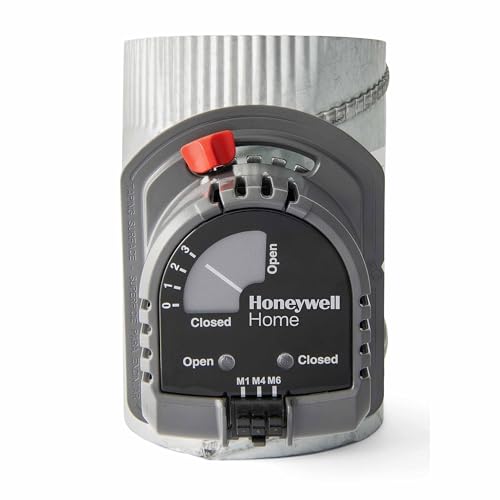
A 12-inch Honeywell damper built for zoning-system retrofits, with a quick-connect and a spring return.
If you’re already inside a Honeywell zoning setup and need a 12-inch round damper, this is sized to slot straight in. It’s a power-closed/spring-return-open part, so it fails open on a signal loss, and the blade seals against a gasket for minimal leakage. Galvanized/metal construction holds up in a humid mechanical closet.
The electrical details point to a clean retrofit: a quick-connect connector, a normally open contact, and a wired parallel circuit type. Insulation resistance of 100 megaohms and a 100 contact-resistance figure are the sort of spec details a tech will check when matching this to an existing board. It’s rated to operate up to 1-inch wc and weighs 5 pounds — same as the 14-inch ARD14TZ, despite the smaller throat.
On the same 12-inch size, here is how it differs from the ZoneMaster ZO212 above: this one uses a spring return and quick-connect to fit a Honeywell system, while the ZoneMaster adds a built-in transformer for standalone use. Neither is better on its own — match it to your control setup. The honest note is the same as any spring-return part: it holds open on power loss. That is welcome on a trunk and less welcome if your setup wants a zone to close for comfort.
Why a tech would pick it
- 12-inch round, sized for larger branch and trunk runs
- Quick-connect makes retrofit wiring cleaner
- Spring return opens the blade on power loss
- Gasketed single blade keeps leak-by low
Where buyers pause
- No transformer in the box — needs a 24V supply
- Spring-return-open default isn’t right for a fail-shut zone
- 5-pound body needs a steady hand overhead
The pick for you: a Honeywell zoning system retrofit where a 12-inch round damper must fail open and the board already supplies 24 volts.
Shop a different part if: you need a standalone transformer or a fail-shut zone — the ZoneMaster 12-inch covers standalone, and a normally closed damper covers quiet-default zones.
7. 10″ Round Professional-Grade 10

A 10-inch pro-grade damper with a full-seal blade and a Belimo motor, made in the USA.
The standout here is the blade seal: a full-seal design for low leakage, the detail that matters most when one zone runs while the other sits idle and you don’t want conditioned air leaking past a closed blade. It uses a Belimo motor described as low-power, high-torque, and it’s a power-open/power-close pattern that drives the blade both ways. Made in the USA, with a 5-year replacement warranty — the longest warranty in this article.
At 24 volts and a 10-inch round size, it’s built as a premium replacement for Honeywell, EWC, and Durozone dampers. The 5.14-pound body is heavier than the 6-inch ECOJAY at 3.14 pounds, so plan for that when fitting it into a tight ceiling space. Compared to the 10-inch Suncourt ZC210, this one leads on the sealed blade and warranty length, while the Suncourt adds the built-in 24V transformer.
What earns it steady approval is a blend of appearance, install, and the way it runs quiet and efficient — the silent operation is called out directly in the listing. The honest limit is that power-open/power-close means no spring fail-safe, so confirm what your controller wants before ordering a 10-inch branch damper.
The reason to shortlist it: a full-seal blade, a low-power high-torque Belimo motor, and a 5-year replacement warranty on a 10-inch pro-grade damper.
Plan for this: 5.14 pounds and a power-open/power-close pattern — no spring return, so match it to a board that tolerates that.
Reach for this if: leak-by and warranty length top your list and you’re replacing a 10-inch Honeywell, EWC, or Durozone damper.
Choose differently if: you need a spring fail-safe on power loss, or a built-in transformer — those point to a spring-return or Suncourt part instead.
8. PATIKIL 6″ Duct Damper Stainless Steel

A 6-inch stainless volume damper you slide into the pipe and clamp — budget balancing, not trunk duty.
This one plays a different role than the round automatic dampers above: it’s a volume damper for air balancing, not a fail-safe zone blade. Made of 201 stainless steel, it resists corrosion and rust, and it adjusts up to 90 degrees to trim how much air passes through a duct. That makes it the part for dialing in a stubborn branch rather than for zoning a whole floor.
The motorized mechanism gives precise, convenient control, and the listing describes the operation as quiet. Install is the simple part — slide it into the pipe, then fix it with a pipe clamp and tape (neither included). It also has a backdraft-prevention feature: a silicone sealing ring helps keep air moving in the intended direction so you don’t get unwanted drafts. The recommended operating range is -10 to 70 Celsius, so it’s a mild-to-typical HVAC-environment part, not an extreme-heat unit.
The weight contrast is real: at 1.88 pounds it’s far lighter than the 5.7-pound ZoneMaster 12-inch, which is the point — it’s a small, slip-in volume damper. Confirm the inner duct diameter before ordering, because this sits inside the pipe and a size miss means a return. For a small-duct balancing job on a budget, it does exactly one thing well.
What it does well
- 201 stainless steel resists rust and corrosion
- Adjusts to 90 degrees for air balancing
- Silicone sealing ring helps stop backdrafts
- 1.88 pounds — light and easy to fit in place
What it doesn’t claim
- Pipe clamp and tape not included
- Volume-balancing role, not a fail-safe zone default
- Confirm inner duct diameter before ordering
The fit for you: a small-duct air-balancing job where you want a light stainless volume damper that trims airflow up to 90 degrees.
The mismatch to note: zoning a trunk that needs a fail-safe default — this balances airflow, it doesn’t guarantee open or closed on power loss, so a round automatic damper is the right tool there.
Know the Specs
Actuator Type: Normally Open vs Normally Closed
Normally open means the blade sits open with no power and the motor closes it only while energized — the right fail-open default for a trunk you never want blocked. Normally closed does the reverse: blade shut until the motor opens it, which fits a dedicated zone you want quiet by default. A third pattern, power open and power close, drives the blade both ways and holds position on power loss, so it has no spring fail-safe. Match the pattern to what your zone controller expects before choosing anything else.
Pressure Rating in Inches of Water Column
Inches of water column (in. wc) is a small-pressure unit used for ductwork — one inch of wc is roughly the push that lifts a column of water one inch. Honeywell rates its round automatic dampers to operate up to 1-inch wc, which suits residential supply and return branches. A blade rated for that band may strain on a high-static commercial trunk, so check the rating against how hard your blower pushes.
Duct Size and Inner Diameter
Round dampers run from a compact 6-inch volume damper up to a 14-inch trunk damper. Size is not cosmetic — a damper seals on the inside of the pipe, so an undersized or oversized blade leaks or won’t slide in. Measure the inner diameter, not the outside, and shop that figure. The manufacturers in this category repeatedly remind buyers to confirm the inner diameter before ordering to avoid a return.
Blade Seal and Leakage
A gasketed single blade presses tight against a seal when closed for minimal leakage, and a full-seal blade design goes further for low leakage on a quiet zone. If your blower runs oversize or you have one zone running while another is off, leakage is what you feel as uneven room temperatures. A better seal protects the comfort you paid to zone in the first place.
Common Questions
What is the difference between a normally open and a normally closed zone damper?
Will a zone damper work with my existing Honeywell, EWC, or Durozone controller?
Do I need a transformer for a 24V zone damper?
What does 1-inch wc pressure rating mean on a damper?
How do I measure for a round zone damper?
Can I install a zone damper myself or should I hire an HVAC tech?
What is a power open and power close damper vs a spring return damper?
Why does leak-by matter when a damper is closed?
Will a zone damper improve energy efficiency?
Does blade material affect damper durability?
The Bottom Line
For the best balance of fail-open safety, gasketed sealing, and a size that covers a real supply trunk, the Honeywell ARD14TZ earns the top spot. It is a 14-inch round automatic damper rated to 1-inch wc (inches of water column, a measure of air pressure) with a single blade that seals on a gasket. If you need a standalone 12-inch intake that springs open on power loss, the ZoneMaster ZO212 brings the included transformer and a 6-watt draw. And when the job is trimming airflow on a small duct rather than zoning a whole floor, the stainless PATIKIL6″ Duct Damper is the light, budget-friendly pick. One honest nudge before you commit: confirm your inner duct diameter and your actuator pattern first. Those two facts decide whether any of these fit, regardless of how good the part is. Match the default to your system’s fail-safe expectation, measure the pipe, and the rest follows.
How we choose
We do not accept paid placement. Every pick is matched to a real buyer and a real use-case; we do not hands-on test units.
Sources
Specifications: manufacturer listings and product documentation. Review insights: verified customer reviews, as of November 2026. Pricing: not shown on this page (it changes often); check the current price via the retailer link.
As an Amazon Associate, Tactical Gear Guy earns from qualifying purchases. This does not affect which products we feature.