Specs are compiled from manufacturer listings and verified buyer reviews and can change over time — please confirm the key details on the product page before buying.
Buying a wooden canoe paddle is mostly a length decision and a wood decision — get both right and the paddle disappears into the stroke. Get them wrong and you will feel it in your shoulders after twenty minutes on the water. On this page you get the picks worth your money, sorted by how you actually paddle rather than by marketing language.
This guide is built by comparing the manufacturers’ published specifications and the patterns across verified customer reviews, so you get each pick’s real strengths and trade-offs instead of marketing spin.
Start with the shaft. A paddle too short makes you reach and a paddle too long makes you lean, so the length match matters more than brand. Keep reading for the full wood-by-wood breakdown in this buying guide to the best wooden canoe paddle.
Top Picks

How To Choose The Best Wooden Canoe Paddle
The first thing to settle is length, because a wood paddle cannot be adjusted later. Sit in your canoe, reach for the water, and see where the grip lands. Most lake paddlers end up happy somewhere in the four-and-a-half to five-and-a-half foot range, which is why the picks below cluster around 48 to 60 inches.
Length has to match the hull, not your height
A wide canoe with high gunwales pushes the paddle up and out, so you need more length to reach clean water. A low, narrow solo hull lets you sit closer to the surface and run shorter. The 60-inch Attwood and the 48-inch pine pairs live at opposite ends of that spectrum for exactly this reason.
The shaft wood decides how the stroke feels
Basswood is the light, springy option — it flexes slightly through the pull and takes the jolt out of a hard stroke. Pine is stiffer and cheaper to mill, and the cheaper the pine build, the more likely it splits along the grain. Solid basswood shafts sit on the premium Bending Branches picks, while most mid-range value paddles are pine.
Tip protection is the wear point that matters
Nearly all paddle damage happens at the very bottom, where the blade drags on gravel and rock. A hardwood blade edge with an added protective strip takes that punishment far better than a bare varnished edge. If you launch from a muddy dock and paddle open lake, this is a nice-to-have. If you push off gravelly shallows, it changes how long the paddle lasts.
Side-by-Side Comparison
| Model | Best For | Length | Weight | Grip Style | Amazon |
|---|---|---|---|---|---|
| Attwood Wooden Canoe Paddle★ Best Overall | Everyday lake paddling | 60 in | 1.5 lb | Ergonomic top handle | Amazon |
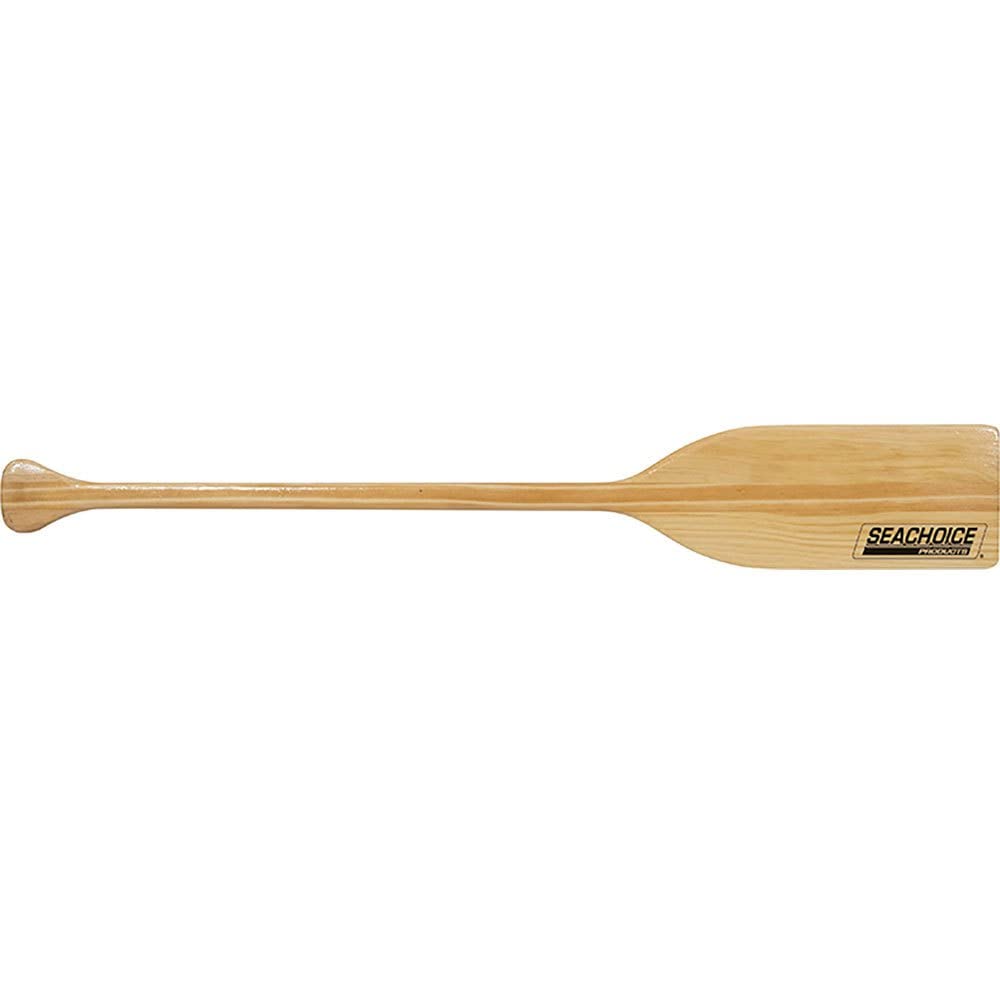
| Seachoice Wood PaddleWidest Top Grip | Wide-grip top hand comfort | 5 ft | — | Wide top hand grip | Amazon |
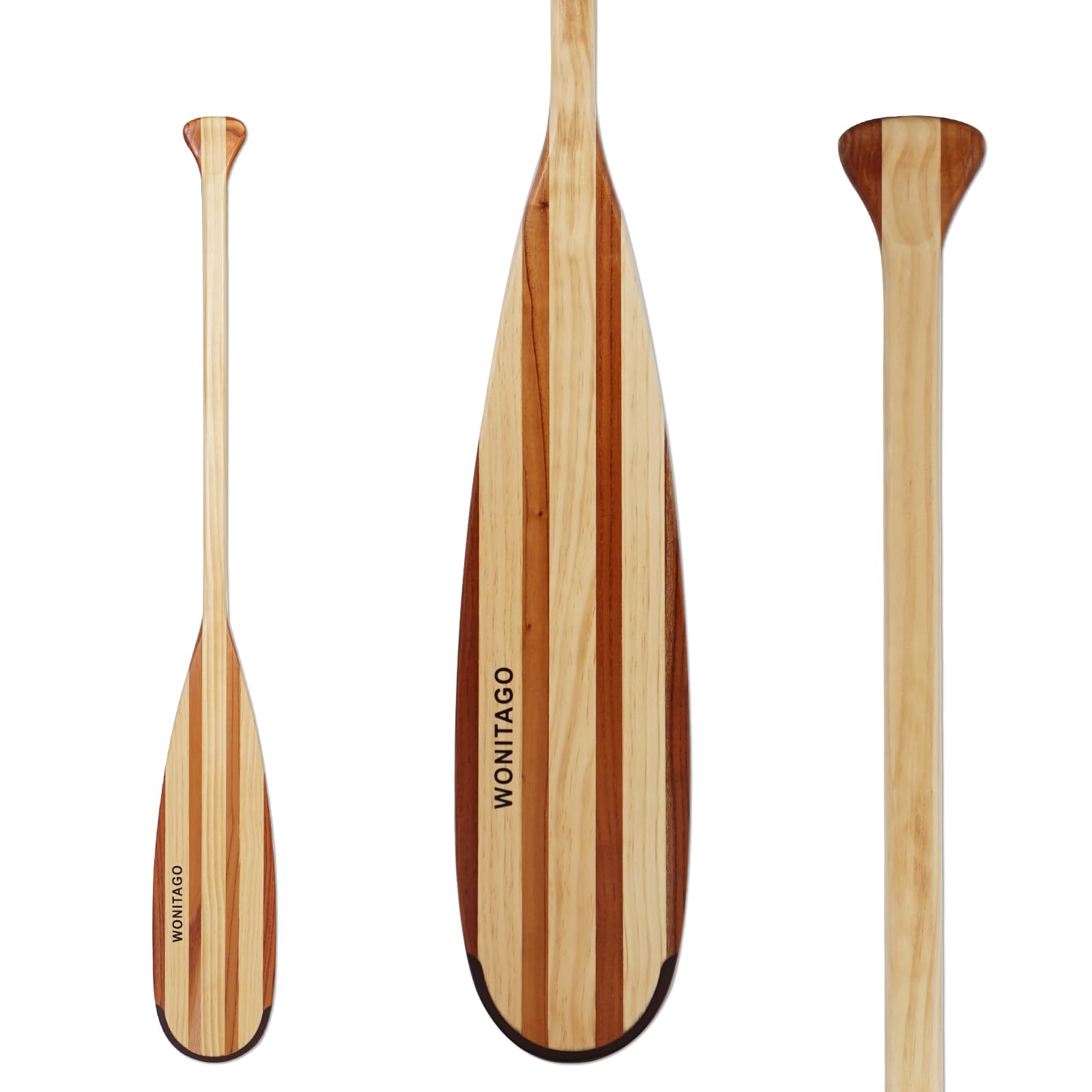
| WONITAGO Wooden Canoe PaddleMost Size Choices | Beginners wanting choice | 4.0 ft | — | Ergonomic palm grip | Amazon |
| RUBAPOSM 2-Pack Pine Oars | Two paddlers, one purchase | 48 in | 1.5 lb | T-grip | Amazon |
| Y&K Homish Wooden Canoe Paddles | Pairing for a two-person canoe | 48 in | — | T-shaped handle | Amazon |
| Bending Branches BB Special | Long days on lakes and gentle rivers | 56 in | — | Palm grip | Amazon |
| BENDING BRANCHES Beavertail | Deep water touring | 54 in | 16 oz | Freestyle palm grip | Amazon |
Detailed Reviews
1. Attwood Wooden Canoe Paddle
Our pick — 4.5+★ from 3,500+ verified ratings; the strongest balance of quality and price.
A five-foot wooden paddle at 1.5 lb, which is the weight of a full water bottle.
At 60 inches, this is the long-reach option in the lineup — the kind of length you want in a wide tandem canoe where the water sits far from your seat. The shaft is sized so your lower hand gets a sure grip, which is what gives you purchase on the power phase of the stroke rather than just slapping at the surface.
Weight is where it separates itself. At 1.5 pounds it stays light through an afternoon instead of loading your shoulder. A varnish coating seals the wood against water, and the ergonomic top handle is contoured to ease fatigue on long stretches. What wins people over here is straightforward value — this is the paddle that keeps coming back as the sensible first or second buy.
The honest catch is in the length and the finish. Attwood notes a variance of up to 2 inches, so what arrives may not be exactly 60 inches. The varnish also needs a wipe-down and a dry before storage, because a coated edge left wet in a hull will start to look tired.
What carries the day
- 60-inch length gives real reach from a wide canoe seat
- 1.5 lb weight keeps the stroke light over a long day
- Ergonomic top handle and sized lower shaft for a secure grip
- Varnish coating protects the wood between outings
Where it asks a little of you
- Length can vary by up to 2 inches from the stated 60
- Coated wood wants drying and storage out of standing water
Go for this if: you paddle a tandem canoe on open lakes and want one wooden paddle that just works.
Think twice if: your hull is low and narrow, where a shorter shaft will feel better in the water.
2. Seachoice Wood Paddle
Built around the top hand, with a wide grip that spreads the load across your palm.
Most paddles treat the top hand as an afterthought and give it a narrow knob. Seachoice goes the other way, shaping a wide grip for the hand that steers. Five feet of New Zealand Pine under a clear finish, with a blade measuring 17¾ inches by 5⅞ inches — enough surface to move water without turning the stroke into a shovelling contest.
Quality is the thing that keeps coming up about this paddle, and it shows in the clear finish rather than a thick coat. That finish is also where the honest limitation sits. The wood scratches easily when it meets a gunwale or a rocky landing, so a hull-side paddle holder or a padded thwart is worth the small effort. Blade size is likewise a matter of opinion — some find the stated dimensions just right and others expect more blade in the water.
The case for it: if your top hand cramps on long crossings, the wide grip here is the fix, and 5 feet of pine gives you reach for a beamy boat.
The fair warning: that clear finish is a surface finish, not armour — treat it like a wooden item and it stays looking new.
Reach for it if: you want a comfortable cruising paddle and do not mind wiping it down after a gravel launch.
Look elsewhere if: you want a blunt, hard-wearing edge for rocky shallow rivers — the Bending Branches picks handle that better.
3. Wooden Canoe Paddle Anti-Collision Edge
Three lengths, two colours, two blade shapes — the paddle you configure rather than settle for.
Few wooden paddles give you this much choice before you buy. WONITAGO offers 2.5 ft, 4.0 ft and 4.8 ft lengths, wood colour or splicing colour, and a rectangle or slender blade. That matters if you are outfitting a short solo hull or a child’s first boat, where a standard five-footer is simply too long.
The build is Monterey Pine with a protective varnish layer to keep the wood from corroding, and the blade runs on an anti-collision strip at the tip to guard the head against knocks. The oval shaft is sanded smooth, and the ergonomic palm grip is contoured so it sits in your hand without scraping. It floats in both saltwater and freshwater, so a dropped paddle is a swim you can skip. The 4.0 ft size is listed as a beginner skill-level fit.
Why it earns a slot: quality is the strongest signal on this paddle, and the configurable lengths put a proper wooden paddle within reach of small boats and new paddlers alike.
Know before you order: check the 2.5 ft option carefully against your hull — a short paddle is ideal in a low solo canoe and a chore in a wide one.
Suits you if: you need an unusual length or a specific colour and blade profile, and want wood at an accessible tier.
Skip the short size if: your canoe is wide and tall-sided — the reach will not be there.
4. Oar Canoe/Kayak Paddle 2 Pack

Two 48-inch pine paddles in one box, so a friend in the bow is not left empty-handed.
Each oar runs 122 cm, or 48 inches, with a 14.5 cm blade width. That is a manageable length for a kayak or a small canoe where you sit low and close to the water. The T-shaped handle gives you a firm pull with control, and a hole through the grip takes a lanyard so the paddle stays tethered on windy days.
Pine, artificially polished, then coated in waterproof paint — that coating is the difference between a paddle that survives a splashy afternoon and one that drinks river water. The wood also takes paint or stickers well if you want to decorate a pair, and a matched set makes an easy gift for someone starting out on the water.
What this pair does not give you is the spring of a basswood shaft. Treat it as a value set for calm water and relaxed outings, not a paddle for hard touring strokes.
The practical wins
- Two paddles in one order for a tandem or a shared kayak
- 122 cm length suits low-seat paddling
- Waterproof paint coating resists everyday splashing
- Lanyard hole in the grip keeps the paddle tethered
What to plan around
- Pine shaft is stiffer than the basswood premium picks
- 48 inches is short if your canoe has high gunwales
Best matched to: two people heading out on a calm lake who want a matched wooden pair without hunting for a second paddle.
The trade-off: short length and a stiff pine shaft — fine in a low hull, less so in a wide tandem.
5. Wooden Canoe Paddles 4 ft
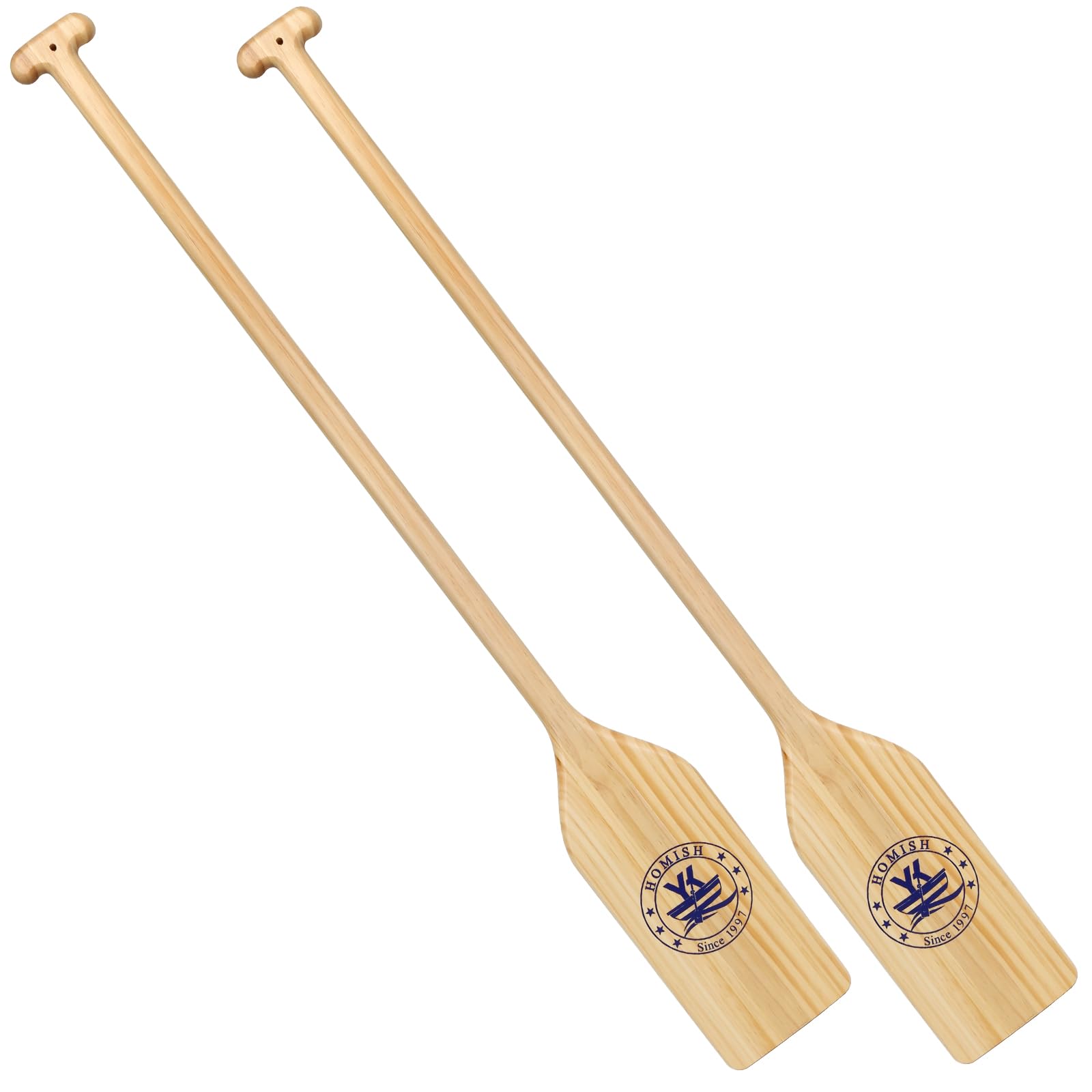
A hand-polished pine pair finished in oil or wax rather than a hard varnish shell.
Two 48-inch paddles at 122 cm with a 14.5 cm blade, handmade from pine and polished by hand so the surface stays smooth. The finish is the interesting part. Instead of a thick coating, the wood is treated with oil or wax to extend its life while keeping the natural grain visible — which means it feels like wood in the hand, not plastic.
The T-shaped handle balances the pull for control, and a hole through the grip takes a tether rope. Pine takes acrylic paint and colour stickers easily, so a set can be personalised for a family boat or a gift. The maker backs the pair with a one-year warranty.
Compare it against the RUBAPOSM pair above and the split is the finish and the wood treatment: this one goes oil-and-wax for texture, that one goes waterproof paint for water rejection. If you want a pair that feels warm under the hand, this is the one to take.
Worth grabbing if: you want a matched pair that keeps its wood texture and can be customised to taste.
Keep in mind: oiled and waxed wood wants re-treating from time to time — a varnish shell asks less of you.
6. Bending Branches BB Special Bent Shaft
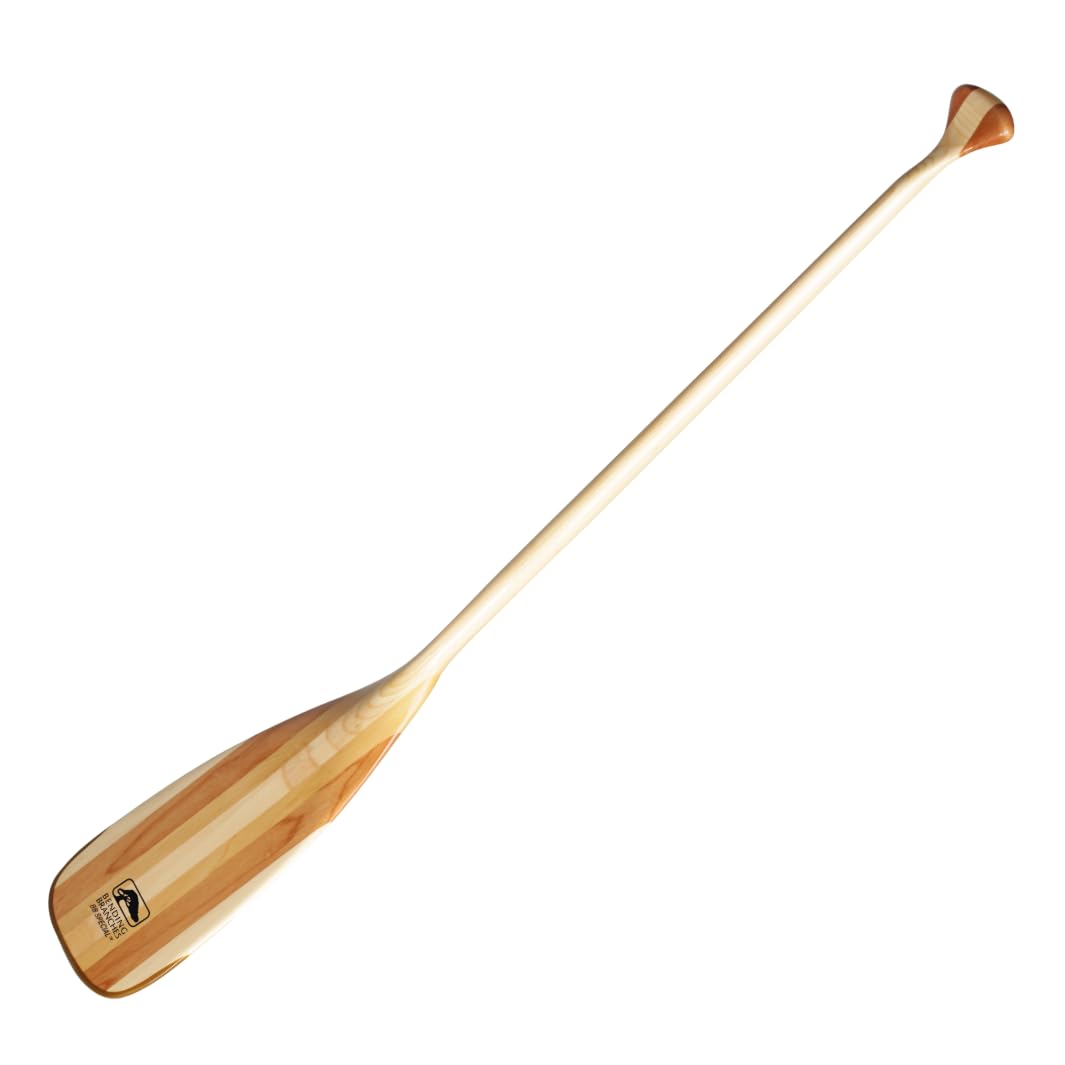
A bent-shaft basswood paddle built to save your arms on a long recreational run.
Where the flat-shaft paddles above ask your wrist to do the work, the BB Special bends the shaft so your hand sits at a more natural angle through the pull. The shaft is solid basswood — light, with a natural flex that softens the stroke — at 56 inches, against the Attwood’s 60 and the 48-inch pine pairs, so it splits the difference for a mid-size canoe.
The blade is hardwood with Rockgard edge protection, which is the feature owners single out most. That strip guards the tip against shorelines and shallow bottoms where a bare varnished blade would chip. The classic palm grip gives a secure hold, and the whole package is aimed squarely at recreational canoeing on lakes and gentle rivers.
Craftsmanship is the recurring theme — beautifully made, no visible wear after real use, and light enough that arm fatigue is not the thing that ends the day.
Drawing the best from it
- Bent shaft reduces wrist strain across a long paddle
- Basswood gives a light, springy feel through the stroke
- Rockgard tip guards the blade edge against shoreline wear
- Hardwood blade transfers power cleanly
Setting expectations
- 56 inches is shorter than a full 5 ft if your canoe sits high
- A bent shaft suits relaxed cruising more than quick whitewater corrections
Ideal for: the paddler doing long, steady lake miles who wants their arms to still feel good at the put-in.
One caveat: the bent geometry asks a slightly different stroke — give yourself a lap or two to find it.
7. BENDING BRANCHES Beavertail

The long, narrow blade made for water that is deep enough to swallow a wide one.
The Beavertail is a shape as much as a paddle. That slender blade is built for deep water paddling, where a wide blade flutters and a narrow one cuts clean. At 54 inches and 16 ounces, it is a light paddle in the hand.
It is made in Osceola, Wisconsin, and carries the same Rockgard tip as the BB Special, a hardened strip the maker says outlasts a bare varnished edge on gravel and rock. The freestyle palm grip cups your top hand comfortably, and the solid ovalized basswood shaft stays light while standing up to hard strokes.
One thing to know before you commit: the narrow blade trades surface area for slicing. It is happy on open lake water and less happy pushing off a muddy bank in a hurry.
Why pick it: a US-made basswood paddle shaped for touring, with a palm grip and a protective tip that both make sense on long days.
Where it wants care: short, choppy corrections in shallow water are not its strength — that is the design, not a fault.
Made for: deep-water tourers who want a light, narrow blade and a warm palm grip.
Look at the BB Special instead if: you split your time between deep lake and shallow river work.
Know the Specs
Shaft length and why it varies
A wooden paddle is cut once and cannot be lengthened, so length is the spec to lock down first. Tall-sided canoes push the water further away and need a longer shaft; low solo hulls let you sit close and run shorter. The listed sizes above run from 48 to 60 inches, and some makers warn of a small variance in shipped length. Measure your seat-to-water distance before ordering.
Basswood, pine and the tip treatment
Basswood shafts are light and flex slightly, which takes the jolt out of a hard stroke; pine is stiffer and more affordable. The tip is where paddles fail, so a hardwood blade edge with an added protective strip handles gravel and rock better than a bare varnished edge. If you launch from a soft dock on open water, the tip is a nice extra. If you push off from gravel shallows, it will extend how long the paddle stays in service.
Common Questions
What length wooden canoe paddle fits a wide tandem canoe?
Is a basswood shaft better than pine for a canoe paddle?
What does a Rockgard tip actually do?
Will a wooden canoe paddle float if I drop it?
How do I stop a varnished paddle from going dull or cracking?
Does a bent shaft make a real difference on the water?
Can I paint or decorate a wooden canoe paddle?
Is a two-pack worth it if I only paddle solo?
Do T-grip and palm-grip paddles feel different day to day?
The Bottom Line
If you want one wooden paddle that covers the everyday lake trip, the Attwood Wooden Canoe Paddle takes the top spot — 60 inches of reach at 1.5 lb, with an ergonomic grip and a varnish finish to protect it. When you plan to paddle long days and want your arms to survive them, the Bending Branches BB Special is the one to reach for, with its basswood shaft and Rockgard tip. And for deep-water touring, the BENDING BRANCHES Beavertail pairs a 54-inch frame at 16 ounces with the narrow blade that water rewards.
How we choose
We do not accept paid placement. Every pick is matched to a real buyer and a real use-case; we do not hands-on test units.
Sources
Specifications: manufacturer listings and product documentation. Review insights: verified customer reviews, as of November 2026. Pricing: not shown on this page (it changes often); check the current price via the retailer link.
As an Amazon Associate, Tactical Gear Guy earns from qualifying purchases. This does not affect which products we feature.