Specs are compiled from manufacturer listings and verified buyer reviews and can change over time — please confirm the key details on the product page before buying.
Your feet take the hit every shift, so the boot you lace up matters more than almost any other gear you buy. The short answer: a good work boot needs a safety toe that meets a real standard, a sole that grips wet concrete, and a leather upper that survives the job without shredding your heels during break-in. The nine picks below cover soft-toe comfort, steel-toe protection, rubber waterproofing, and a lace system you can tighten with gloves on.
This guide is built by comparing the manufacturers’ published specifications and the patterns across verified customer reviews, so you get each pick’s real strengths and trade-offs instead of marketing spin.
Below you will find out which toe type suits your site, how waterproofing really works, and where each boot gives up comfort for toughness. The right pair of work boots and clothing can turn a long shift into a manageable one.
Top Picks


How To Choose The Best Work Boots and Clothing
Most people buy a work boot on looks and regret it by the second week. The boots that hold up share a few physical traits: a sole that resists oil and heat, a toe that meets a published safety standard, and leather thick enough to take a scuff without splitting. Get those three right and the rest is fit.
Match the toe to your actual hazard
A soft toe is the lightest and most flexible option. It suits drivers, warehouse walkers, and anyone whose feet mostly meet flat ground. A steel toe puts a metal cap over your toes to guard against impact and compression, and it usually carries an ASTM rating printed in the listing. A composite toe does the same protective job with a non-metal cap, which stays non-conductive to heat and cold and often leaves a roomier toe box.
Read the sole, not the slogan
The outsole is the rubber or synthetic layer that touches the ground. Look for wording like oil-resistant, heat-resistant, or slip-resistant if you work near grease, hot asphalt, or wet floors. Goodyear welt construction means the upper is stitched to the sole so a cobbler can rebuild it — a repairable boot usually outlives a glued one.
Plan for the break-in
Full-grain leather softens as it molds to your foot, and that takes time. Pair a thick leather upper with a moisture-wicking lining and the process goes smoother. Size is the other half of comfort: several boots here are documented to run big or narrow, so read the fit notes on each pick before you order.
Side-by-Side Comparison
| Model | Best For | Toe Type | Waterproofing | Weight | Amazon |
|---|---|---|---|---|---|
| Irish Setter Marshall 11″ Soft Toe★ Best Overall | All-day comfort with a soft toe | Soft Toe | UltraDry Waterproof | 4.67 lb | Amazon |
| CAT Men’s Second Shift Steel ToeBest Value | Budget steel-toe protection | Steel Toe | — | 4 lb | Amazon |
| Hunthor Steel Toe Rubber BootsWettest Sites | Wet and muddy sites | Steel Toe | Waterproof rubber | 4.41 lb | Amazon |
| Wolverine Men’s W03120 | No break-in, instant comfort | Steel Toe | — | — | Amazon |
| Wolverine I-90 EPX Boa CarbonMax | Gloved-hand lacing | Composite Toe | Waterproof leather | 1 lb 13 oz (single boot) | Amazon |
| Georgia Boot Lace-to-Toe Steel Toe | Mud, sand, and rough terrain | Steel Toe | Georgia Waterproof System | 4.5 lb | Amazon |
| Timberland PRO Titan EV 6″ | Sneaker-like comfort on site | Composite Toe | Internal Waterproof Membrane | 4.21 lb | Amazon |
| Ariat Workhog Waterproof Composite Toe | Stability on uneven ground | Composite Toe | DRYShield Waterproof | 5.5 lb | Amazon |
| Thorogood 1957 Series 8″ Steel Toe | Repairable American-made build | Steel Toe | Waterproof, gusseted tongue | 4.9 lb | Amazon |
Detailed Reviews
1. Irish Setter Marshall 11″ Mens Soft Toe Work Boot
Our pick — 4.5+★ from 400+ verified ratings; the strongest balance of quality and price.
The soft-toe workhorse that lets you rebuild the sole instead of replacing the boot.
Here is the detail that earns this boot the top spot: it is stitched together with Goodyear welt construction, which means the upper is sewn to the sole rather than glued. That lets a cobbler replace the sole when the tread wears flat, so the leather you broke in stays on your feet. The upper is full-grain waterproof leather paired with UltraDry waterproofing, and the outsole carries a heat-resistant rating alongside slip resistance and an electrical hazard rating.
The comfort picture is the real story. This boot weighs 4.67 pounds, so it is not the lightest thing to walk in all day. But the removable polyurethane footbed is what sells it — pull it out and swap in your own insert if you have a preferred one. As owners put it, breaking them in takes roughly an hour of wear rather than a painful week. That quick settle-in is why soft-toe buyers keep coming back.
Where the boot splits opinion is fit. The two areas with the most mixed feedback are comfort and size, and the pattern points to the same root cause — some buyers find them true to size while others say they run slightly big. The spec sheet backs the heaviness too: it is heavier than the CAT Second Shift below, so if you are on ladders all day, that weight matters. What most pleases owners is the leather itself — the quality of the build is the aspect that draws the heaviest praise by a wide margin.
What Works In Its Favor
- Goodyear welt construction means the sole can be rebuilt, not just replaced
- Full-grain waterproof leather with UltraDry keeps feet dry through wet shifts
- Removable polyurethane footbed takes your own insert
- Outsole is rated heat resistant, slip resistant, and electrical hazard safe
- Breaks in fast — about an hour of wear per owner reports
Where It Asks More Of You
- At 4.67 pounds it is on the heavy side, so long ladder days feel it
- Sizing is genuinely split — order with a return plan if you are between sizes
- Soft toe means no impact cap, so this skips true toe protection
Made for: the worker who wants a leather boot that outlasts several glued pairs and has no need for a steel cap over the toes.
Think twice if: your site requires a rated safety toe — this one is a soft toe with no metal or composite cap.
2. CAT Men’s Second Shift Steel Toe
Steel-toe protection at the lowest sticker in this lineup, with the build to back it up.
If you need a metal cap over your toes and you do not want to spend much, this is the boot that makes the case. The leather upper is the part that wins people over — build quality is the thing owners praise most, comfortably ahead of comfort in the feedback. The leather also holds its looks, which matters if you wear the same pair from the job site to the truck and straight into town. At 4 pounds it also undercuts the Irish Setter above by a noticeable margin.
The honesty note sits with the sole and the width. Fit and durability are the two areas where feedback splits. Some buyers report the boots fit right from the start, while others find them too narrow — so a wide foot should plan to try before committing. On durability, the recurring gripe is the sole separating from the boot over time. That is a real weakness worth knowing about before you buy, not a reason to rule the boot out.
What you get for a budget-tier price is a genuine steel toe, a comfortable footbed, and leather that looks good through the day. The thing that keeps buyers loyal is comfort — it trails only build quality in the feedback, which is a strong pairing for a value boot. If your budget is tight and you need protection, this is the obvious starting point.
Fit before you commit: a snug boot is a daily problem, and this one runs narrow for some feet. Try your normal size on a carpeted floor first.
The long-game watch: the sole separation pattern means you should keep an eye on the welt area after a season of hard use.
Go here for: a first steel-toe boot or a second pair the budget can actually absorb.
Look elsewhere if: you have wide feet or need a boot that survives years of heavy sole abuse.
3. Hunthor Steel Toe Rubber Work Boots
The rubber pull-on that keeps feet dry in mud, muck, and standing water.
Rubber boots solve a problem leather cannot: full submersion. The shell here is waterproof rubber, so puddles and wet ground stop at the surface instead of soaking through. Under your foot sits a steel shank — a stiff metal strip that runs through the midsole to support your arch and stiffen the boot — plus a puncture-proof layer to guard against nails and debris. The back gusset adjusts to fit different calf sizes, which is the detail buyers flag as the fix for that cramped-feeling rubber-boot problem.
Owners mention these go above the calf, and the feedback lines up: quality is the aspect praised most by far, followed by comfort and fit. The insole is built for long, demanding shifts on construction ground. Weight is 4.41 pounds, and that is the trade-off with any rubber shell — it reads heavy to some feet, so if you are on your feet moving fast for ten hours, expect to feel it.
The one weakness to know is the material itself. Durability feedback is mixed, with some reporting cracks developing in the rubber over time. That is the nature of a molded boot — it does not have the rebuild-ability of a welted leather pair. So treat this as the boot for wet, dirty, low-impact work rather than a decade-long investment. For that job, nothing here comes close.
Reach for it when: the ground is wet, muddy, or flooded and leather will not cut it.
Keep looking if: you work near sparks or heat and need a leather pair that resists cracking.
4. Wolverine Men’s W03120 Work Boot
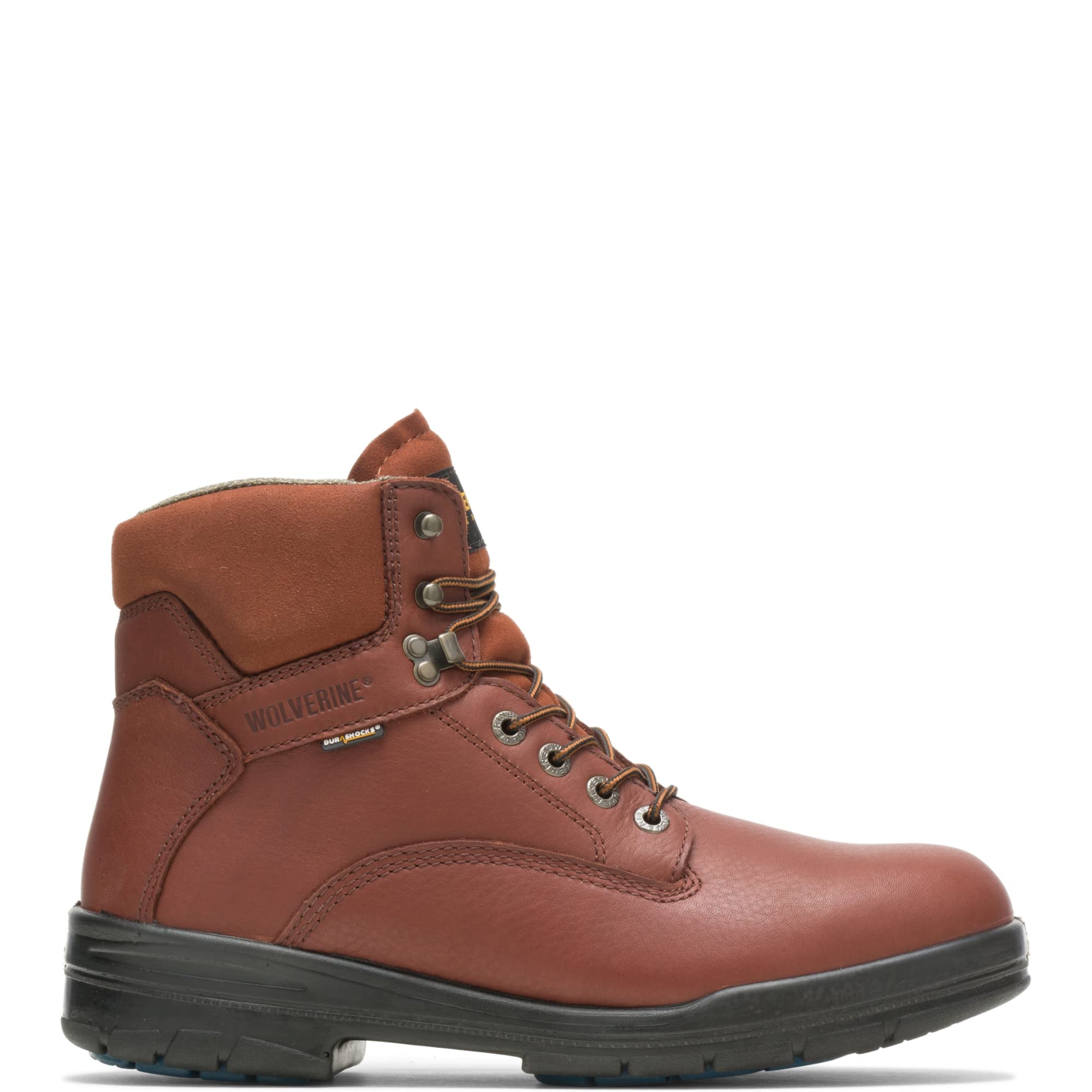
The boot that skips the break-in week and goes straight to work.
Comfort is the headline here, and the spec sheet explains why: compression pads are molded directly into the outsole — the brand calls this Durashock — to soak up impact on hard ground. Add a removable full-cushion footbed and a moisture-managing mesh lining, and you have a boot designed to feel broken in on day one. The steel toe covers the protection side.
What the feedback confirms is exactly that. Heels feel fine on concrete, no sore feet show up, and the fit lands right from the start. Comfort is the aspect buyers call out most, with fit right behind it, and the break-in period barely registers as an issue. That is rare for a leather work boot. It also wins on weight in owner feedback — people call it light on the foot, and it feels that way against the beefier picks above.
How long the boots last is the one open question. Buyers split sharply on durability: some report the boots lasting a long time, while others report them falling apart after a few weeks. That gap usually depends on how hard you work the boot, so treat it as a note rather than a verdict. Sizing runs as the brand recommends, so follow the size-up guidance in the listing.
Right the first time: this is the boot for someone who cannot spend two weeks softening leather before the job starts.
Watch the wear: check the stitching on the sole after the first month, since durability reports range widely.
Suits you if: you need comfort on concrete and steel protection without a break-in wait.
skip it if: you expect a boot to survive several heavy seasons and want proven long-haul toughness.
5. Wolverine Men’s I-90 EPX Boa CarbonMax 6″ Boot
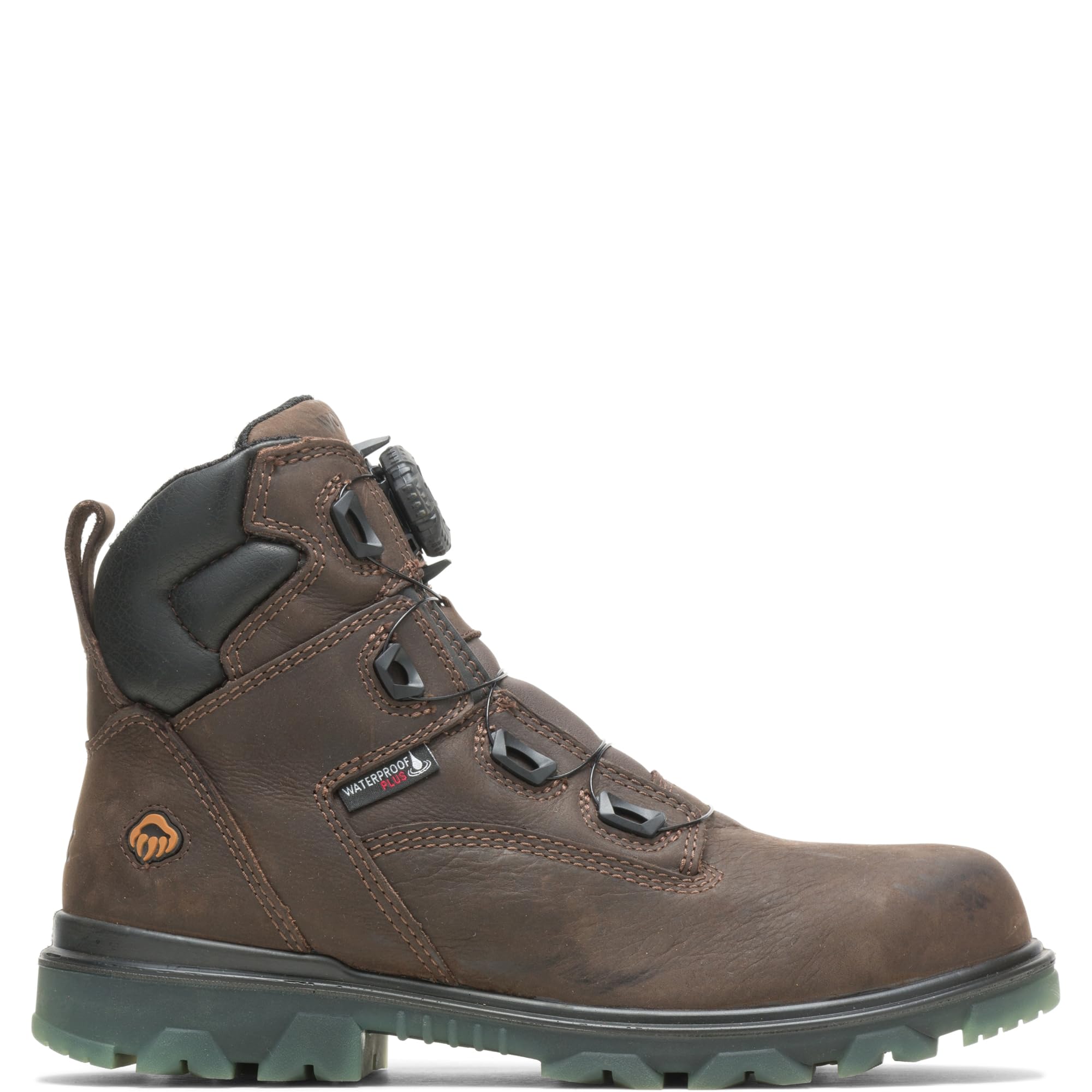
A twist-dial lace system that tightens the whole boot without taking off your gloves.
The Boa Fit System is the star. Instead of tying laces, you turn a dial to tighten and pop it to release — the brand says it sheds ice, dirt, and oil and works with gloves on. That is the kind of detail that changes a winter shift. The CarbonMAX toe is a composite cap that meets ASTM F2413-18 F I/75 C/75 EH standards, and the upper is waterproof full grain leather.
Underfoot is where the comfort comes from. The EPX footbed flexes with your foot, a polyurethane midsole handles shock, and a nylon shank adds stability without the weight. The outsole is an abrasion-resistant TPU compound with a pronounced lug pattern, and the brand states it lasts three times longer than traditional rubber. Weight is 1 lb 13 oz for a single boot, which makes it the lightest pair in this lineup by a wide margin.
Fit is the honest catch. Owners love the comfort and the way the dial tightens the entire boot evenly, but the fit and easy-on-off feedback is mixed. Some find them snug and simple to slip on, while others say they run narrow and take more effort to get into. Size feedback leans smaller than expected, so size up if you are between sizes. Step-in feel and break-in are easier here than on the heavier leather boots above.
The Case For The Boa Dial
- Turn-dial lacing works with gloves on and sheds ice, dirt, and oil
- CarbonMAX composite toe meets ASTM F2413-18 and keeps feet protected
- 1 lb 13 oz single boot makes it the lightest pick here
- EPX footbed and polyurethane midsole fight fatigue on concrete
- TPU outsole with pronounced lugs grips varied ground
What To Weigh First
- Narrow fit and a size that runs small — sizing up is the safe move
- Getting them on and off takes more effort than a pull-on
- Composite toe protection is real, but the fit limits who can enjoy it
Built for: cold-weather workers who want to tighten their boots without baring their hands.
Try another route if: you have wide feet or want an easy-on pull-on style.
6. Georgia Boot Lace-to-Toe Steel Toe Waterproof Work Boots
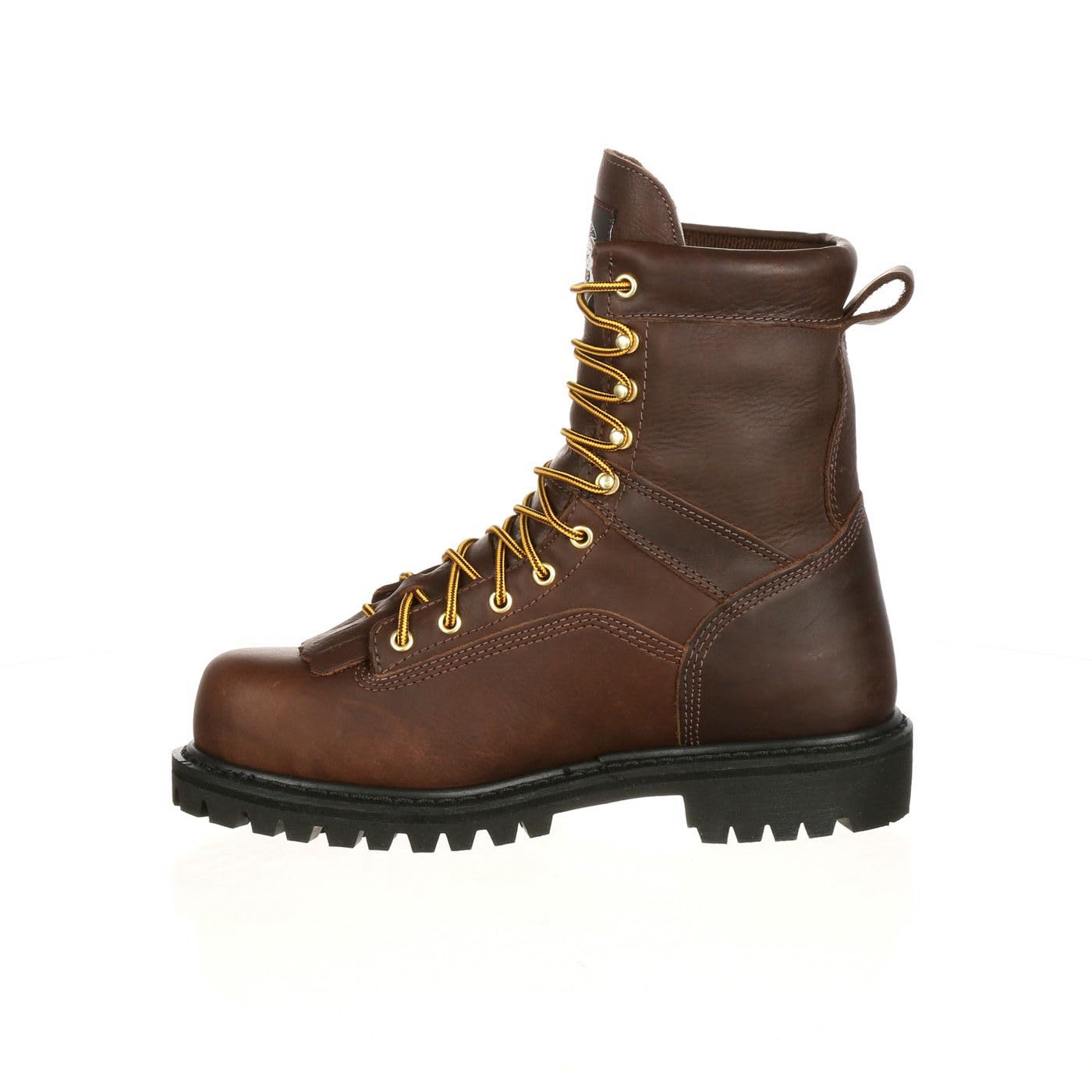
Lace-to-toe leather with a Vibram lug sole, built for mud, sand, and grit.
The lace-to-toe design is the defining feature. Lacing all the way down the front lets the boot hug your foot more closely than a standard short lacing, which is why customers note these handle mud, sand, and outdoor terrain so well. The outsole is a Vibram lug pattern that resists oil, and the whole boot is built with Goodyear welt construction — stitched, not glued, so it can be repaired rather than thrown out.
Inside, a steel shank supports your arch and steadies the boot, and the leather is premium with a quick break-in. Waterproofing comes from the Georgia waterproof system, and the steel toe meets ASTM standards for impact and compression while also carrying an electrical hazard rating. At 4.5 pounds it lands in the same weight class as the Irish Setter up top, so it is a solid, planted boot rather than a featherweight.
The notes to weigh are two. Material quality is mixed, with feedback noting the leather is not as thick as some expect. And several reviewers point out the boots run half a size too big, so sizing down may be the safer call. Set those aside, though, and the build quality is what carries it — that is the second most-praised aspect behind overall quality, and it shows in the repairable welt and the grippy Vibram sole.
Pick this for: outdoor and field work where grip on loose ground matters most.
Consider the size risk: order prepared for a half-size-down swap if your normal fit is snug.
7. Timberland PRO Titan Ev 6 Inch Composite Safety Toe Waterproof
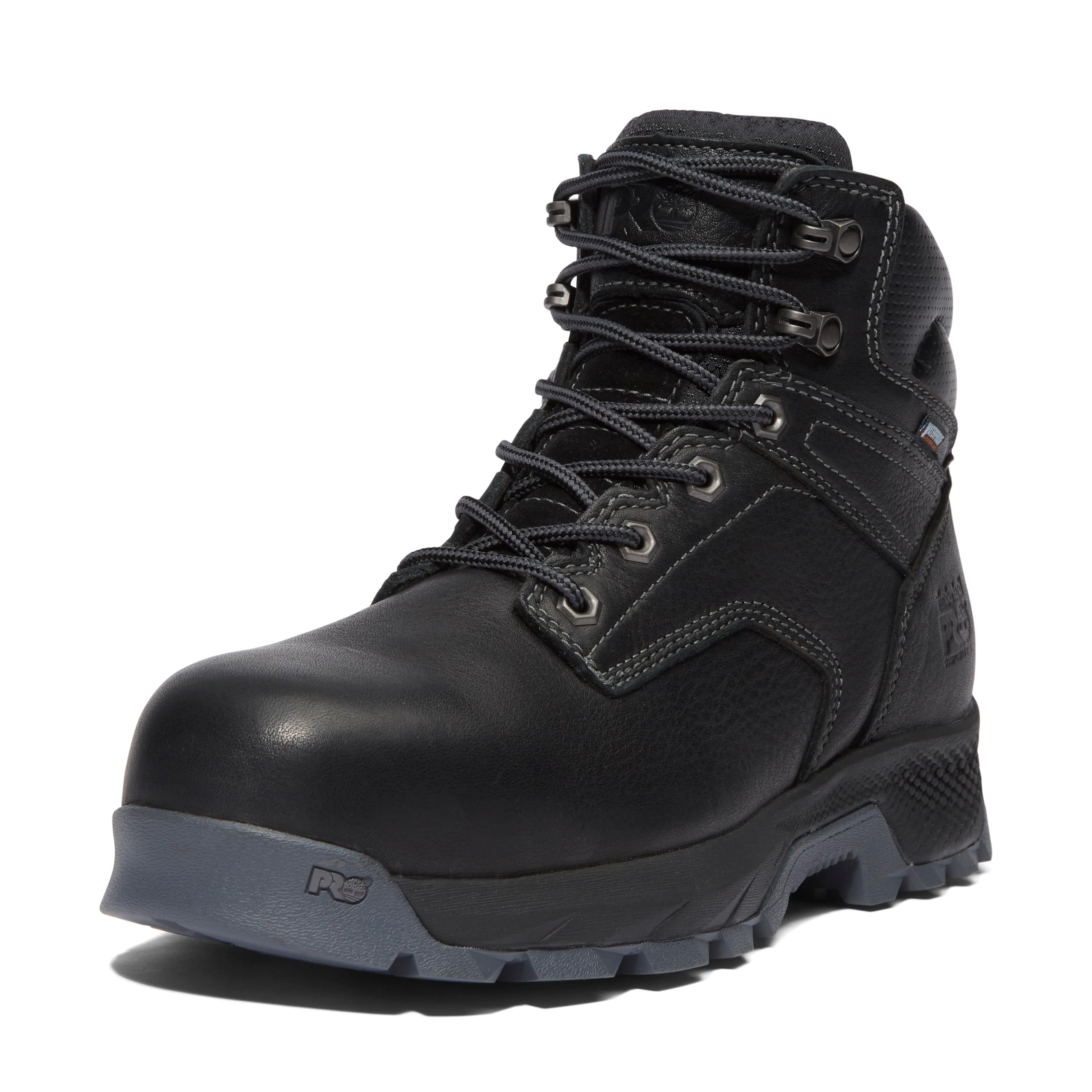
The composite-toe boot built to feel like a sneaker, not a brick.
The Hover Spring foam midsole is the reason buyers call these feel light like sneakers. Foam in the midsole flexes and springs back with each step, which is the opposite of a stiff leather slab under your arch. Pair that with the Anti-Fatigue Technology footbed — designed for shock absorption and energy return — and the boot is engineered to keep your feet going through a long shift. The upper is full-grain waterproof leather with an internal waterproof membrane underneath.
Protection is handled by a composite safety toe, which stays non-conductive to heat and cold and leaves a roomier toe box than steel. The outsole is a non-marking rubber convex shape that resists heat, oil, slip, and abrasion, so it works both indoors and out. Even the lining is a ReBOTL fabric made with at least 50% recycled plastic. Weight lands at 4.21 pounds, and for a boot with a full membrane and a safety toe, that is a reasonable number.
The fit story here is the best in the group. The feedback describes a true-to-size fit with a roomy toe box, and comfort and quality are the two aspects praised most, well ahead of the rest. The catch is narrow: slip resistance and durability are the mixed areas, so if your site is soaked in oil or you need a boot to outlast a decade of concrete, weigh that. For the vast majority of buyers, though, the sneaker-like feel and true fit make this the standout.
Why it wins on feel: a foam midsole and energy-return footbed are a genuine comfort upgrade over stiff leather.
The honest limit: slip resistance and durability are mixed, so treat it as an all-day comfort boot rather than an armored one.
The match for you: a true-to-size, roomy-toe boot that eases the ache of long hours on hard floors.
Not the pick if: your job involves heavy oil slicks that demand top-tier grip.
8. Ariat Men’s Workhog Waterproof Composite Toe Work Boot

A square-toe, 11-inch shaft boot that holds your ankle steady on uneven ground.
The 11-inch shaft and square toe are the look, but side-to-side stability is the function. Ariat designed the Workhog for lateral support, and the block heel and single-welt stitch add to that planted feel. The composite toe meets ASTM F2413 M/I/C EH, and the boot meets ASTM F3445 for slip resistance, with a Duratread outsole that resists oil and slips. DRYShield waterproofing keeps feet dry through wet jobs.
Comfort comes from a performance cushion insole that handles shock absorption, and quality is the thing owners praise most here — it stands clear of comfort in the feedback. Buyers describe the waterproof membrane doing its job and keeping feet dry, which matters for anyone working outdoors in the rain or near standing water.
The catch lands in fit and value. The overall fit feedback is mixed — the area on top of the foot can feel tight for some, even where width is fine. Durability and value also split, with some saying the boots outlast expectations and others finding them not worth the outlay. At 5.5 pounds this is the heaviest pair on the list, so it is a boot for planted work, not a light day of walking. Size it for your normal foot and give the instep room.
Where The Workhog Shines
- Lateral stability from the block heel and single-welt build
- Composite toe rated ASTM F2413 M/I/C EH
- DRYShield waterproofing keeps feet dry on wet jobs
- Duratread outsole resists oil and slips
- Performance cushion insole absorbs shock
The Weigh-In
- At 5.5 pounds it is the heaviest boot here
- Instep can feel tight for some feet
- Durability and value feedback split both ways
Best if you want: ankle and side stability on rough, sloped, or oil-field ground.
Avoid if you want: a light boot for fast-paced walking shifts.
9. Thorogood 1957 Series 8” Waterproof Steel Toe Work Boots

The American-made moc-toe leather boot with a vintage look and a repairable soul.
Premium full-grain saddle leather defines this one. The Trail Crazyhorse finish gets a special wax that gives it an Old West patina, and the moc toe stitching is a heritage detail you rarely see on modern work boots. The steel toe meets ASTM F2413-18 for impact and compression, and the MaxWear 90 outsole grips loose gravel and oily surfaces while meeting ASTM F3445-21 slip-resistance standards. The boot is American-made with USA and globally sourced components.
Waterproofing comes from a gusseted tongue that keeps liquids out and a moisture-wicking lining that pulls sweat away. Underfoot, a polyurethane footbed and a steel shank support the arch. The shaft stands 8 inches, and the boot weighs 4.9 pounds, which puts it at the heavy end of the leather options here. Once they are broken in, the leather molds nicely to your foot, and the fit settles after that initial wear.
The split worth knowing is durability — the leather holds up well, but some report soles ripping off over time. Fit and break-in also carry mixed feedback, so expect a real breaking-in period before the moc toe leather softens. Quality is what people praise most, ahead of comfort, and it shows in the resole-ready leather build. This is the boot for someone who wants a pair they can rebuild and keep wearing.
Worth the patience: the waxed Crazyhorse leather softens into a personal fit after a real break-in period.
Know the risk: sole separation shows up for some owners, so keep an eye on the welt and stitch line.
The fit for someone who: wants an American-made leather boot with heritage looks and a steel toe.
Pass if you value: a featherweight feel or a boot that needs zero break-in time.
Know the Specs
Safety Toe Ratings Explained
A safety toe that carries an ASTM rating has been tested for impact and compression resistance, which is the protection you need if something heavy drops on your foot. Steel toes are the classic choice, while composite toes use a non-metal cap that stays non-conductive to heat and cold and leaves a roomier toe box. A soft toe has no cap, so it is lighter and more flexible but offers no impact protection. Match the toe to your site’s rules and your actual hazard.
Waterproofing and Outsole Materials
Waterproofing comes in two forms: a rubber shell that blocks water entirely, or a leather upper with a membrane or gusseted tongue that stops liquid while letting sweat escape. For dry-ground work, a breathable leather is more comfortable; for wet, muddy, or flooded ground, a rubber boot is the right tool. The outsole is the rubber and synthetic layer touching the floor, and the words that matter are oil-resistant, heat-resistant, and slip-resistant. A Goodyear welt stitch lets a cobbler rebuild the sole, so a welted boot can outlive a glued one.
Common Questions
What is the difference between a soft toe and a steel toe work boot?
Do composite toe boots meet the same safety standards as steel toe?
How long does it take to break in a leather work boot?
Should I size up or down in work boots?
Are rubber work boots better than leather for wet sites?
What does electrical hazard rated mean on a work boot?
Can a work boot sole be replaced?
How do I know if a work boot runs narrow?
Is a waterproof work boot too hot for summer work?
The Bottom Line
For most buyers, the work boots and clothing winner is the Irish Setter Marshall 11″ because its welted build can be rebuilt and its waterproof leather breaks in fast. If you want steel-toe protection on a tight budget, the CAT Second Shift is the one to grab. And for wet, muddy ground where leather fails, the Hunthor rubber boot is the tool to reach for.
How we choose
We do not accept paid placement. Every pick is matched to a real buyer and a real use-case; we do not hands-on test units.
Sources
Specifications: manufacturer listings and product documentation. Review insights: verified customer reviews, as of November 2026. Pricing: not shown on this page (it changes often); check the current price via the retailer link.
As an Amazon Associate, Tactical Gear Guy earns from qualifying purchases. This does not affect which products we feature.