Specs are compiled from manufacturer listings and verified buyer reviews and can change over time — please confirm the key details on the product page before buying.
Most beginners buy a thin, pretty mat and then spend their first month sliding around on it and feeling every knot in the floor. The fix is simpler than the fitness industry makes it sound: you want real cushioning under your knees, a surface that holds your hands in a downward dog, and a size that fits your body. Below are nine mats that get those basics right, sorted by who each one genuinely suits.
This guide is built by comparing the manufacturers’ published specifications and the patterns across verified customer reviews, so you get each pick’s real strengths and trade-offs instead of marketing spin.
You will see thickness in millimeters, width in inches, and material names like TPE, NBR foam, and PVC — each one explained in plain words as it comes up. The best yoga mat for beginners is the one that cushions your joints without turning into a wobbly slab under your feet.
Top Picks

How To Choose The Best Yoga Mat for Beginners
Your first mat has one job above all others: keep you comfortable enough to show up again tomorrow. Here is what actually decides whether a beginner mat works for you.
Thickness decides how your knees feel on day three
Cushioning is measured in millimeters or inches, and it is the single biggest comfort lever you control. A 6mm mat is roughly a quarter inch — enough padding for standing poses and gentle flows on carpet or a studio floor. A 10mm or 1-inch mat puts far more foam between your joints and a hard floor, which matters if you are doing kneeling poses, Pilates, or floor stretches on tile or concrete. Thicker is not automatically better, though. The more foam you add, the less stable the surface becomes for balancing poses, so think about what you actually plan to do.
Grip is the thing that ruins a beginner’s first month
A slippery surface turns a simple plank into a slide, and it is the most common reason people give up early. Textured surfaces and materials that grab harder as they get damp help here. Cork is the classic example — it grips more firmly once your hands get sweaty, which is why hot yoga regulars like it. Foam mats rely on surface texture instead, and their grip can fade if the mat gets dusty or if you practice with dry hands on a smooth floor.
Width and length decide whether your hands stay on the mat
Most standard mats run 24 inches wide and around 68 to 72 inches long. That works fine for narrow poses, but wide-legged stretches and any floor work with outstretched arms will push your hands past the edge. A 32-inch-wide mat hands you noticeably more room. If you are taller than average, look at the 72-inch and 80-inch lengths rather than assuming one size fits everybody.
Material names explained without the chemistry degree
PVC is a dense, durable plastic that holds cushioning well but can carry a strong smell when new. TPE is a softer, more rubbery plastic that tends to be lighter and lower-odor. NBR foam is the plush, spongy foam used in the thickest mats — it cushions deeply and weighs very little. Natural rubber and cork are the plant-based route, heavier and usually pricier. Whatever you pick, expect a new-mat smell on some materials and plan to unroll it for a day or two before your first session.
Side-by-Side Comparison
| Model | Best For | Thickness | Length x Width | Weight | Amazon |
|---|---|---|---|---|---|
| Gaiam Premium Yoga Mat, 6mm Print★ Best Overall | Standing poses and style on a budget | 6 mm | 68″ x 24″ | 3.1 lb | Amazon |
| Gaiam Thick Yoga Mat with StrapKnee-Friendly Pick | Knee-friendly floor work at home | 10 mm | 72″ x 24″ | 1.27 kg | Amazon |
| Tone Fitness 1″ Extra Thick MatDeep Cushion Pick | Deep cushioning for Pilates and stretching | 1 in | 72.05″ x 24.02″ | 3.8 lb | Amazon |
| YOTTOY 12mm TPE Mat | Joint support in kneeling poses | 12 mm | 72″ x 24″ | 4 lb | Amazon |
| KEEP Extra Wide Yoga Mat | Wide poses for broader bodies | 7 mm | 72″ x 32″ | 2.8 lb | Amazon |
| YOTTOY 72″x32″ Wide Mat | Beginners who want alignment marks | 8 mm | 72″ x 32″ | 1.8 lb | Amazon |
| Retrospec Solana 1″ Mat | Padded support for studio classes | 1 in | 72″ x 24″ | 2.2 lb | Amazon |
| Karma Fitness Large Workout Mat | Home gym and HIIT work | 10 mm | 72″ x 32″ | 1.8 kg | Amazon |
| Satori Concept Cork Yoga Mat | Hot yoga and sweaty sessions | 6 mm | 80″ x 26″ | 8 lb | Amazon |
Detailed Reviews
1. Gaiam Premium Yoga Mat, 6mm Thick Print Mat
Our pick — 4.5+★ from 22,000+ verified ratings; the strongest balance of quality and price.
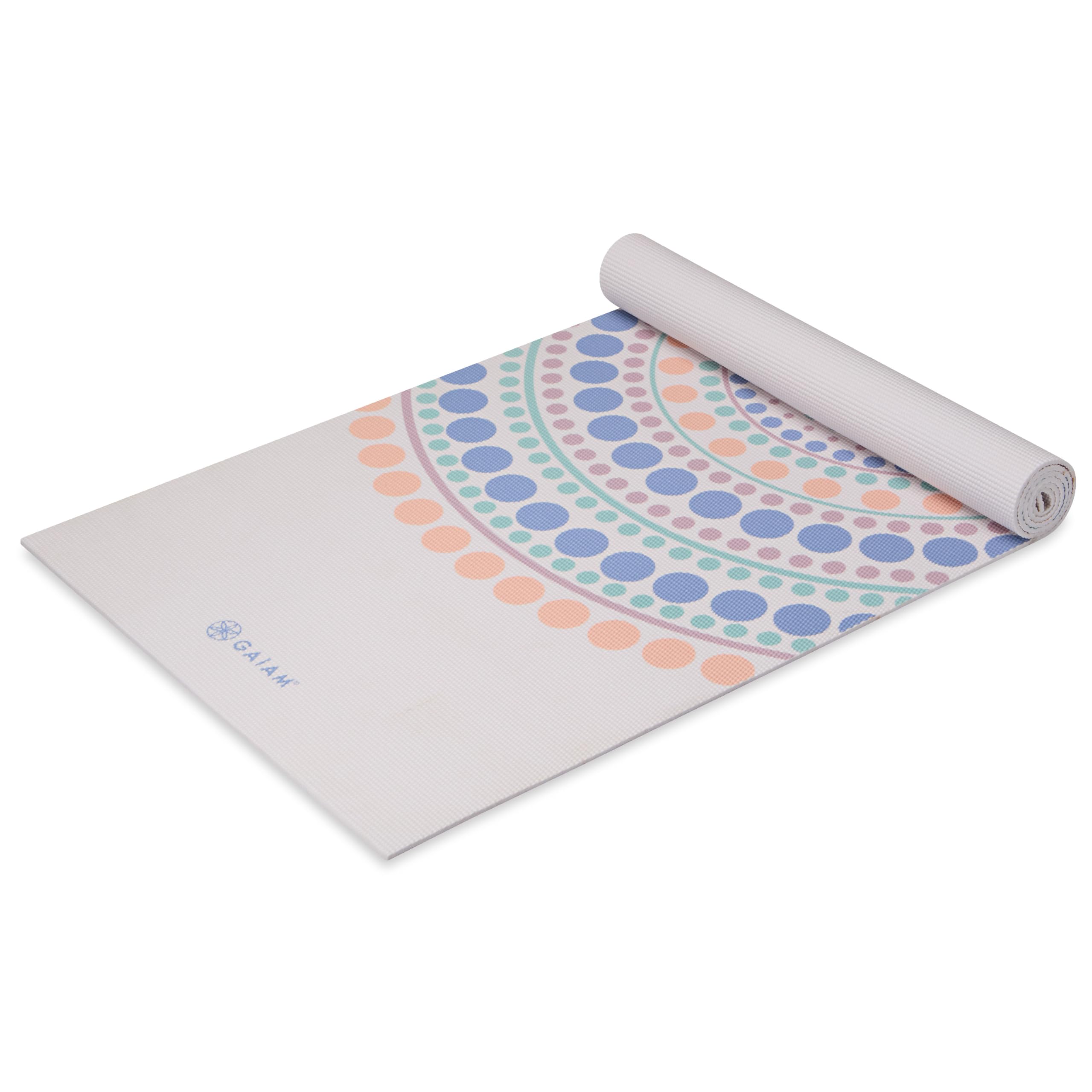
The mat beginners keep coming back to, with a pattern you will not hide in the corner.
If you want one mat that handles a beginner class, a home flow, and a floor stretch without asking you to think about it, this is the crowd favorite — 4.5+ stars across 22,000+ owners. What wins people over is the look: the print range is the most-discussed thing about this mat by a wide margin, and that matters more than beginners admit.
The cushioning is genuinely there too. At 6mm thick (about a quarter inch), it is the middleweight option — enough padding that your spine and hips are not complaining through a long savasana (the resting pose at the end of class), but thin enough that you can still feel the floor for balance. It measures 68 inches long by 24 inches wide and weighs 3.1 pounds, light enough to sling over a shoulder. It is 4.9 pounds lighter than the YOTTOY 12mm mat further down this list, so if you carry it to a studio several times a week, that difference shows up in your shoulder.
Here is the honest catch. Grip on this mat divides people cleanly — some find it holds firm on the floor, others find it slippery, especially with dry hands on a polished floor. It is also a PVC mat, and PVC has a reputation for a strong new-mat smell. Gaiam’s own care sheet asks you to unroll and air it out for two to three days before first use, which is worth planning for. Buy it for the looks and the cushioning; treat the grip as something you manage with a towel or a slightly damp hand.
What earns it first place
- Print selection is the most-praised feature, so you get a mat you want to look at daily.
- 6mm of cushioning at 3.1 lb balances comfort with carry-ability.
- 68″ x 24″ covers standard poses without excess bulk.
- A free downloadable yoga workout is included to get you started.
Where it asks patience
- Expect a strong harmless odor on unwrapping — air it out for two to three days.
- Grip feedback is mixed, so dry hands on a smooth floor can slide.
- PVC is the heavier, less breathable material choice here.
Reach for this if: you want a good-looking all-rounder for standing poses and gentle flows, and you are happy to air it out first.
Look elsewhere if: you plan hot, sweaty sessions or you know your hands run dry — cork or a textured TPE surface will serve you better.
2. Gaiam Thick Yoga Mat
Ten millimeters of plush foam that makes tile and concrete floors feel like a padded room.
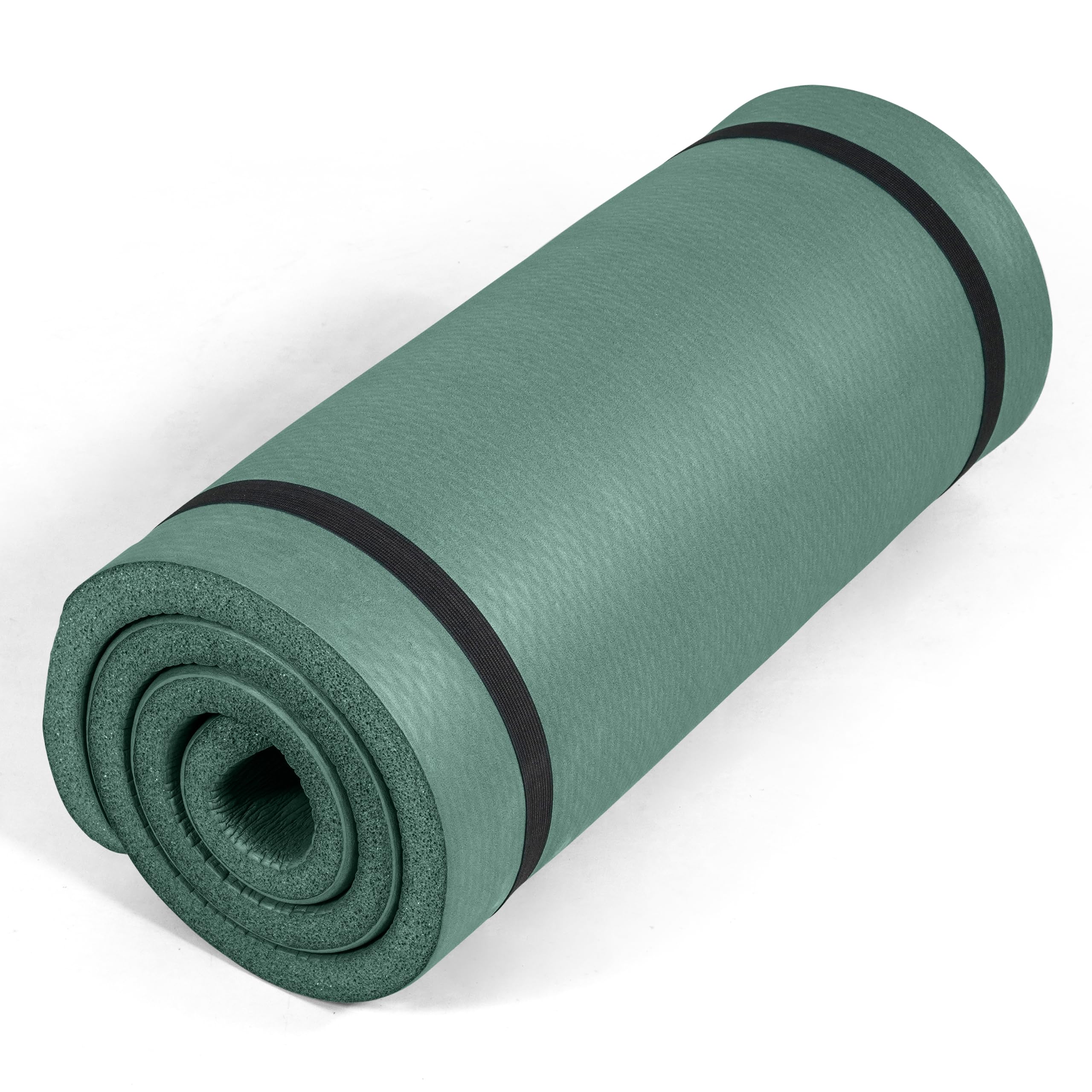
If kneeling poses are what make you wince, start here. The full 10mm of high-density NBR foam — roughly two-fifths of an inch — is the feature buyers praise most, and the comfort that comes from it is right behind. NBR is a soft, spongy foam, so this mat sinks slightly under your knees and hips instead of fighting back. That makes it a natural fit for Pilates, stretching, and any floor-based routine on a hard surface.
At 72 inches long and 24 inches wide, it gives taller beginners a little more length than the 68-inch Gaiam Premium above. It rolls up fast and ships with an adjustable carry strap, so moving it from living room to class is a one-handed job. The textured foam surface is described by the maker as reducing slipping on most hard floors during dry workouts — a claim worth testing barefoot before you commit to a fast flow.
The trade-off is on the durability side. This is a soft foam mat, and soft foam gives before it holds — some long-term users report tearing at the edges and the mat sliding on smooth floors during faster movement. It is also an NBR mat, so a bit of foam odor on opening is normal and usually fades after a day or two of airing. Neither issue changes the fact that this is the most comfortable cushioning per pound on the list.
Comfort that shows up immediately: deep NBR foam (a soft, spongy foam) at 10mm gives among the most forgiving surfaces here for knees and hips — exactly what most beginners need in week one, when kneeling poses still feel new.
The long-term watch-out: soft foam is the least durable material on this list — keep it off rough floors and store it rolled, and it will serve you well for a good while.
Best for: beginners doing Pilates, stretching, and floor work on tile or concrete who want maximum cushioning.
Think twice if: you want a firm surface for balance poses or you plan to practice on a polished hardwood floor.
3. Tone Fitness 1″ Extra Thick Yoga Mat
A full inch of foam for anyone whose hips and back complain the moment they lie down.
This is the mat for the beginner who has already tried a thin mat and hated it. One solid inch of high-density NBR foam (a firm, spongy foam) sits between you and the floor, and buyers point to that thickness as the reason it works — quality and cushioning are the two things it gets praised for most. If you do Pilates, core work, or long stretching sessions on a hard floor, the difference is immediate.
It measures 72.05 inches long and 24.02 inches wide — a touch longer than the standard 68 inches, which helps if you are on the taller side. A carry strap is included for rolling it up and tucking it away. The surface is textured NBR foam, latex-free, and wipes clean after a session — hand wash only, so no machine cycles.
The caveat here is stability. An inch of soft foam is a wobbly platform, and the recurring note on this mat is that it slides on hardwood floors during use. Put a rug or a grippy surface underneath and that problem mostly disappears. It is also worth knowing that the review base is smaller than the Gaiam mats above, so you are trusting a thinner track record — though the quality consensus is clear.
The comfort case: a full inch of high-density NBR foam gives the deepest cushioning on this list, and the people who need it really need it.
The honest limit: thick soft foam moves under you — this is a floor-work mat, not a balancing mat.
Worth it for: anyone with sensitive knees, hips, or back who wants the plushest possible floor surface at home.
Not the one for: fast vinyasa flows or balance-heavy practice where you need a firm, planted base.
4. YOTTOY Yoga Mat Extra Thick 12mm

Padded to 12mm with a pebbled surface that grabs sweaty hands instead of letting them slide.
Twelve millimeters is a serious amount of cushioning — exactly double the 6mm Gaiam Premium at the top of this list — and it is the reason this mat suits kneeling and seated postures so well. The surface is the other half of the story: small granular bumps across the top add friction and soak up sweat, while a water-ripple texture underneath grips a range of floors. Between the two, you get a mat that stays put in both directions.
The material is TPE, a rubbery plastic the maker says is SGS and TUV certified and free of heavy metals and ten types of phthalate. It is waterproof, sweat-proof, and wipes clean with a damp cloth and mild detergent. It weighs 4 pounds — the heaviest of the YOTTOY pair here — so it is a mat you carry deliberately rather than toss in a tote. A strap is included for that.
What you give up for the depth is stability and a little longevity. Deep soft foam moves under faster movement, and some users find it shifts more than they would like during a flow. The durability picture is mixed in the same way — this is a comfortable mat first and a long-haul mat second. For slow, joint-friendly sessions it is a strong fit; for a fast class, it is not the firmest base.
Why it suits stiff joints
- 12mm of TPE cushioning for kneeling and seated poses.
- Granular top surface adds friction and absorbs sweat.
- Water-ripple underside grips a range of floor types.
- Waterproof and wipe-clean, with a strap included.
The compromises to expect
- At 4 lb it is the heavier of the two YOTTOY options here.
- Soft foam can shift under faster movement.
- Durability and cleanability feedback is mixed rather than glowing.
Pick this one for: gentle, joint-focused sessions where comfort under knees and wrists matters more than a rock-solid base.
Better options exist if: you practice fast flows or want a mat that stays planted through quick transitions.
5. KEEP Extra Wide Yoga Mat, 7mm Thick 72″ x 32″ Exercise Mat
Eight extra inches of width, so your hands stop sliding off the edge mid-pose.
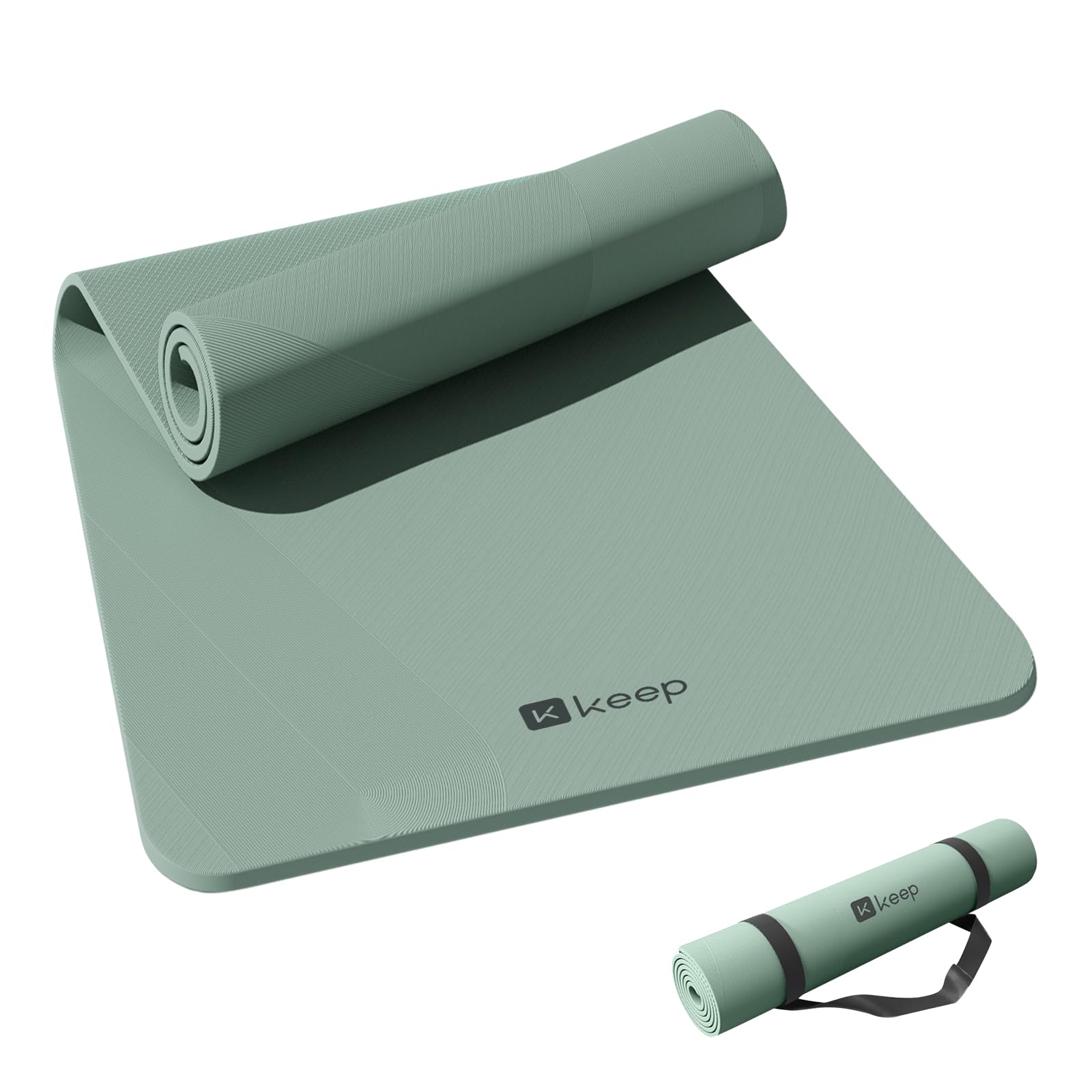
Standard mats stop at 24 inches wide. This one runs 32 inches — a third wider than the Gaiam Premium — so a beginner with long limbs or a broader frame gets a confident wide-legged stretch instead of an awkward shuffle to stay on the mat. It is the second thing people praise about this mat, right behind overall quality, and it is easy to see why.
The padding is 7mm, a sensible middle ground — more cushioning than a 6mm mat, less wobble than a 1-inch slab. Dual surfaces handle grip from both sides: a fingerprint-style textured top for control and a patterned base to hold the floor. The material is TPE, free of plasticizers and formamide, and it weighs just 2.8 pounds with an adjustable polyester strap included. That makes it one of the easier wide mats to actually carry.
The honest trade-off: slip resistance gets mixed feedback, so some users find it slick on a dry, smooth floor. There is also a note in the maker’s care instructions about airing the mat out before first use to clear any packaging smell. Neither is unusual for a TPE mat, but it means you should test grip before you trust it in a fast flow.
Room to spread out: 72″ x 32″ at 2.8 lb gives you extra width without the weight penalty of the thicker foam mats.
Test the grip first: feedback on slip resistance is mixed, so break it in on a dry session before you rely on it for a sweaty class.
Great match for: taller or broader beginners, and anyone whose hands keep wandering off a 24-inch mat during wide poses.
Less ideal for: people who need maximum cushioning — 7mm is comfortable but not plush.
6. YOTTOY Yoga Mat 72″x 32″x 1/3″
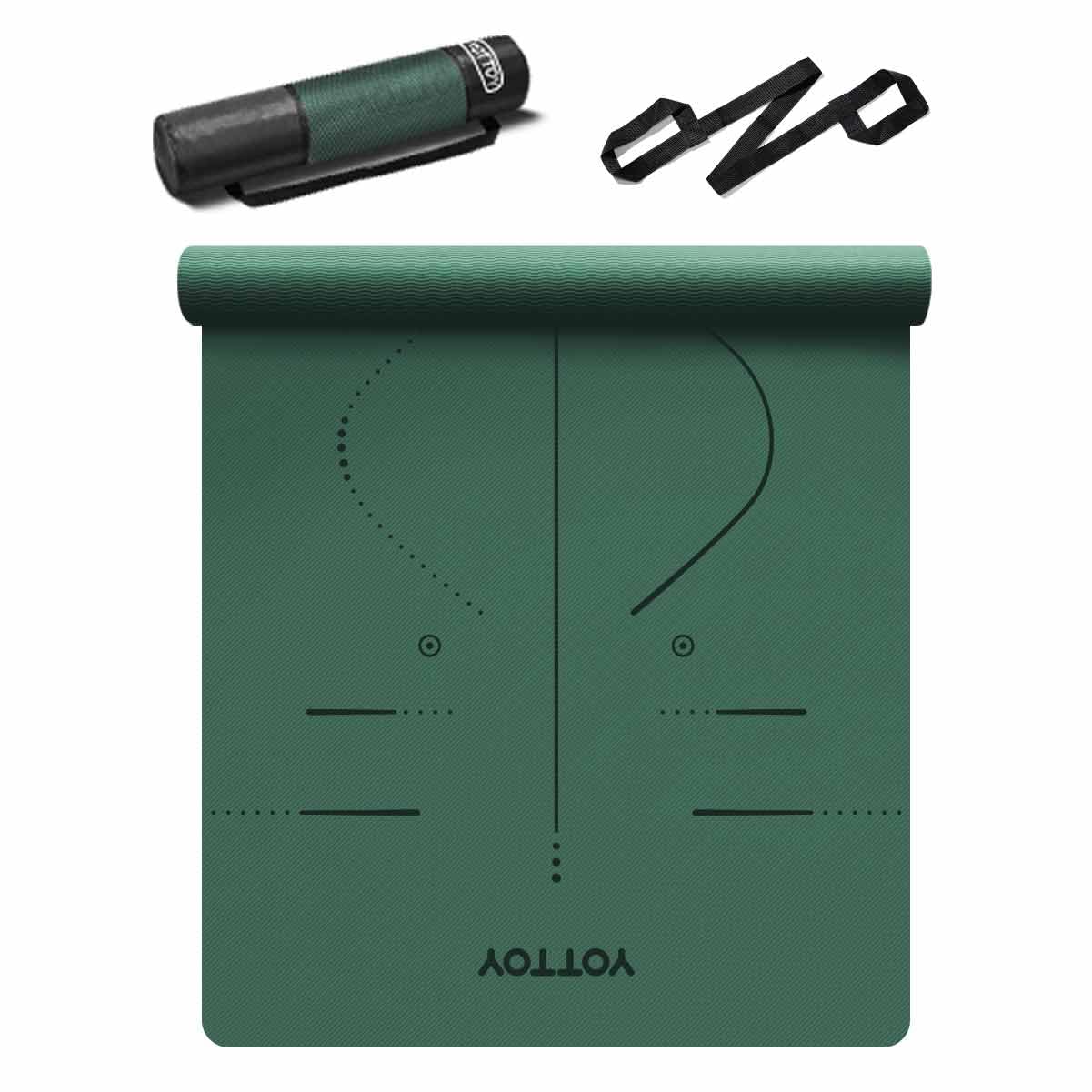
Wide, light, and printed with alignment marks to keep a beginner’s hands and feet honest.
Alignment marks are the smartest beginner feature on this list. Lines printed on the mat tell you where to put your hands and feet, so you are not guessing at your stance in every pose. The maker built this one around that idea, and it pairs with a 72-inch by 32-inch footprint — the same generous width as the KEEP mat above — plus 8mm of TPE padding.
What makes it stand out in the hand is the weight: 1.8 pounds. That is remarkably light for a mat this size, and it makes this the easiest wide mat here to carry to a class. The surface uses a flipper-inspired webbing pattern to raise grip and shed sweat, and the maker says the TPE is SGS and TUV certified and odorless. It ships with a strap and bag.
The caveat is honest and worth naming. The most-discussed aspect of this mat is grip, and the feedback on it is mixed rather than unanimous. A few users also flag durability as something to watch as the mat ages. Neither spoils the package — the size and lightness are genuinely useful — but if a non-slip surface is your top priority, break this one in and test it dry before a hot class.
Beginner-friendly strengths
- Alignment marks guide hand and foot placement pose to pose.
- 72″ x 32″ gives wide-mat room for outstretched poses.
- Just 1.8 lb, so carrying it to class is genuinely easy.
- Comes with both a strap and a bag.
Things to know first
- Grip is the most-discussed topic and the feedback is split.
- Durability is flagged as a watch-point by some users.
- 8mm of soft foam is not the firmest base for balance work.
Choose it when: you are brand new and want the alignment lines plus wide-mat space in a genuinely light package.
skip it if: a rock-solid non-slip surface is your number one requirement over everything else.
7. Retrospec Solana Extra Thick Yoga Mat 1″

A firmer take on a full inch of padding — the version that stays put in a studio class.
Most 1-inch mats are soft. The maker describes this one as a firm 1-inch mat, and that is the whole reason it earns a place here. The foam eases pressure on joints, hips, hands, and knees while giving you a base with more backbone than the plush NBR mats above — a real advantage if you do balance work or a moving flow. It measures 72 inches by 24 inches by 1 inch and weighs 2.2 pounds, light for its depth.
Appearance is what buyers rave about most, and the cushioning follows close behind — the mat is often singled out for supporting bad knees. Ergonomics get consistent praise from Pilates regulars, and the size feels right for most bodies. It comes with a nylon carrying strap, so moving it from home to studio is straightforward, and the material is free of phthalate, heavy metals, and latex.
Two things to plan around. A harmless odor can show up on opening, and the maker’s own solution is a day or two of airing out before use. Durability and portability feedback is mixed — an inch of foam is a bulky roll to carry and soft foam wears over time. It is a comfortable, good-looking mat, not an indestructible one.
Firm where it counts: a genuinely supportive 1-inch base at 2.2 lb, which is lighter than most mats this thick.
Anticipate the new-mat smell: air it flat for a day or two before your first session and the odor clears.
A good call for: beginners who want thick padding but still need a base firm enough for Pilates and balance poses.
Not the lightest: an inch of foam rolls up bulky, so it is happier living in one spot than commuting daily.
8. Karma Fitness Large Workout Mat, 10mm Extra Thick 72″x32″

Built for press-ups and lunges as much as downward dog — a wide mat that will not squirm.
If your “yoga” is really a home workout mix of stretching, planks, and bodyweight training, this is the mat shaped for that. The 72-inch by 32-inch footprint is 33% wider than a standard 24-inch mat — the maker’s own comparison — so sumo squats and lateral lunges stay on the mat instead of drifting onto bare floor. The dual-layer TPE is denser than standard NBR foam, which means it cushions without the wobble you get from a plush sponge.
Construction is what buyers rate highest here, and the size is the runner-up. The diamond texture provides multidirectional grip on both sides, so it holds whether you flip it or not. It is waterproof and sweat-resistant, wipes clean easily, and works on carpet, hardwood, or gym flooring. A carry bag with an adjustable shoulder strap comes in the box, and at 1.8 kg it is portable without being dainty.
One thing to set expectations on: 10mm of TPE is a compromise thickness. It is thicker than the 7mm KEEP mat for cushioning, but softer than the firm Retrospec for balance work. If you mostly stand and balance, it will feel a touch spongy. If you mostly stretch and press into the mat, it is exactly right.
What it does well
- 72″ x 32″ wide surface keeps lunges and squats on the mat.
- Dense dual-layer TPE cushions without excessive squirm.
- Waterproof, sweat-resistant, and easy to wipe down.
- Carry bag and shoulder strap included.
Where it flexes
- 10mm of TPE is not the firmest surface for balancing.
- At 1.8 kg it is a stay-home mat, not a class mat.
- Maximum comfort seekers may want more padding still.
Well suited to: beginners treating the mat as a full home workout surface for stretching, strength, and floor work.
Might frustrate: anyone who wants a compact mat to roll up and carry to a studio three times a week.
9. Satori Concept Cork Yoga Mat with Natural Rubber Base
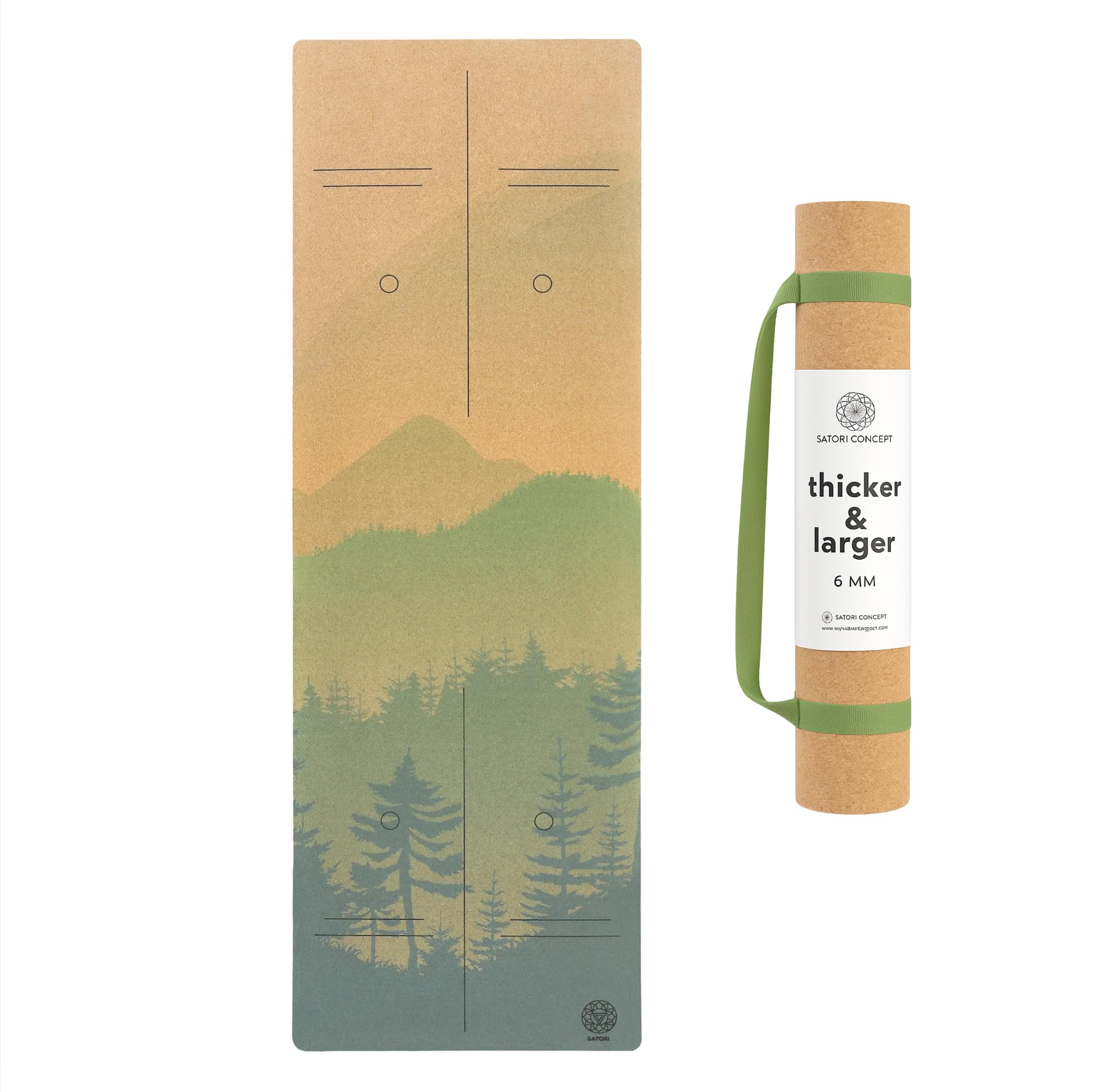
The one mat where sweaty hands make it grip harder instead of letting go.
Cork is a different animal to every foam mat on this list. The surface grips more firmly as it gets damp, so the sweat that turns a PVC or TPE mat slick actually improves this one. If you do hot yoga, or you simply sweat through a session, that single property is worth more than any pattern. The mat measures 80 inches long by 26 inches wide — the longest here, and about two inches wider than standard — with 6mm of thickness and an 8-pound weight.
The build is natural cork over a tree rubber base, both plant-based materials. The maker pitches it as free of the synthetic components used in some cork-TPE mats and free of chemical smells. Comfort is the most-praised quality, with grip right behind it, and the rubber base adds durability underneath. A free strap is included, and the 80-inch length is a genuine advantage for taller beginners who normally hang off the end of a 68-inch mat.
The trade-off is weight. At 8 pounds it is the heaviest mat here — nearly three times the 2.8-pound KEEP mat — so it is not a mat you cheerfully sling over a shoulder on a commute. It is also the priciest route to cushioning, and 6mm is modest padding if you want plush support under your knees. It is also the least-reviewed mat of the nine, so the track record is shorter.
Grip that improves as you sweat: the cork surface gets grippier with moisture, which is exactly what a hot-class beginner needs.
The weight is real: at 8 pounds, this is a mat to leave at home or the studio rather than carry on foot.
A confident choice for: hot-yoga beginners, sweaty practicers, and taller users who want an 80-inch mat with natural materials.
Consider the alternatives if: you want plush 10mm+ cushioning or a mat you can carry easily.
Know the Specs
Thickness in mm and inches
Thickness is the padding between your body and the floor, and it is usually listed in millimeters or fractions of an inch. A 6mm mat is a slim all-rounder — enough cushioning for standing and seated poses on a softer surface. A 10mm mat roughly doubles that padding and suits kneeling poses, Pilates, and floor stretching on tile or concrete. A full 1-inch mat is the plush extreme, great for stiff joints and less ideal for balance poses. As a rule, thicker means more comfort and less stability, so match the depth to what you actually do.
Material: PVC, TPE, NBR foam, cork
PVC is a dense plastic that cushions well and lasts, but it is heavier and can carry a strong new-mat smell. TPE is a softer, rubbery plastic that tends to be lighter, lower-odor, and easier to clean. NBR foam is the spongy material behind the thickest mats — deep cushioning, very light, but softer and more prone to wear. Cork over natural rubber is the plant-based route: cork grips harder when damp, rubber adds durability, and the whole mat weighs more. Each one changes grip, durability, and carry weight, so pick by how you practice.
Common Questions
How thick should a beginner’s yoga mat be?
Will a thick mat make balancing poses harder?
Do I need to air out a new yoga mat before using it?
What width do I need if my hands keep sliding off the mat?
Is a cork mat better than foam for a sweaty practice?
How do I clean a yoga mat without damaging it?
Are shorter users or taller users better off with a longer mat?
What does “6P free” mean on a yoga mat listing?
Can I use one of these mats for Pilates and general workouts too?
Do any of these mats come with a carry strap?
The Bottom Line
For most beginners, the yoga mat for beginners winner is the Gaiam Premium Yoga Mat, 6mm because it pairs genuine 6mm cushioning with a print range that makes you want to unroll it — that comfort-plus-looks balance is why it sits atop a field of winners. If joint comfort is your priority, the Gaiam Thick Yoga Mat gives you 10mm of plush NBR foam and a strap in the box. And for a sweaty practice, the Satori Concept cork mat grips harder the damper it gets. Whichever you choose, check the thickness against your knees before anything else — that single number decides whether you keep showing up.
How we choose
We do not accept paid placement. Every pick is matched to a real buyer and a real use-case; we do not hands-on test units.
Sources
Specifications: manufacturer listings and product documentation. Review insights: verified customer reviews, as of November 2026. Pricing: not shown on this page (it changes often); check the current price via the retailer link.
As an Amazon Associate, Tactical Gear Guy earns from qualifying purchases. This does not affect which products we feature.