Specs are compiled from manufacturer listings and verified buyer reviews and can change over time — please confirm the key details on the product page before buying.
You want a headset that talks to your Xbox Series S without a dongle fight, a cable tangle, or a mic that makes your squad wince. That last part is the real problem: a wireless headset can nail the connection and still lose the match on chat quality. The picks below are sorted by what actually matters on Series S — how the connection holds, how long the battery runs, and whether your friends can hear you clearly.
This guide is built by comparing the manufacturers’ published specifications and the patterns across verified customer reviews, so you get each pick’s real strengths and trade-offs instead of marketing spin.
Some headsets here connect straight to the console over a low-latency radio link, others run Bluetooth, and a few do both at once. Sorting the real differences takes reading the fine print on drivers, battery hours, and mic design. Here is the straight answer on the best Xbox Series S Wireless Headset.
Top Picks

How To Choose The Best Xbox Series S Wireless Headset
The Series S has no optical audio output and no spare USB ports to waste, so the connection method is the first decision you make. Get that wrong and everything else is noise. Here is what to weigh before you commit.
Connection type: dongle first, Bluetooth second
A 2.4GHz wireless dongle (a small USB transmitter that plugs into the console and carries audio with very little delay) is the safest bet for competitive play. The signal stays synced to the action, so a footstep lands when you hear it. Bluetooth is fine for chat and music, but some headsets here run both — and dual-mode does not always mean simultaneous.
Driver size and what it does for footsteps
Drivers are the speaker units inside each earcup, measured across in millimeters. A larger driver, like a 50mm unit, can move more air for deeper bass and a wider soundstage that helps you place a sound. A 40mm driver can still sound balanced — tuning matters as much as size.
Battery hours and fast charge
Battery life is quoted in hours of playback, and it varies wildly here. A headset rated for up to 110 hours will outlast a weekend of heavy play, while a 24-hour model needs a recharge every couple of sessions. Look for quick-charge claims too, since a short top-up can buy you hours back.
Microphone design and chat balance
A cardioid mic (one that picks up sound mostly from the front) rejects noise from the sides and back, which keeps keyboard clatter out of chat. A flip-to-hide boom folds into the earcup and can mute on close. Game/chat balance controls let you tilt the mix toward your squad or the game without leaving the match.
Side-by-Side Comparison
| Model | Best For | Driver Size | Battery Life | Wireless Type | Amazon |
|---|---|---|---|---|---|
| RIG 600 PRO HX★ Best Overall | All-day comfort | 40mm | 24 hrs (BT) | 2.4GHz + Bluetooth 5.3 | Amazon |
| Razer BlackShark V3 XFeatherweight Pick | Lightweight play | 50mm | — | 2.4GHz + Bluetooth 5.3 | Amazon |
| SteelSeries Arctis Nova 3XBattery Champ | Marathon battery | — | 40 hrs | USB-C dongle + Bluetooth 5.3 | Amazon |
| Razer Kaira HyperSpeed | Console-tuned audio | 50mm | 30 hrs | 2.4GHz + Bluetooth 5 | Amazon |
| Logitech G Astro A20 X | Two-system switching | — | — | Wireless + Bluetooth 5.3 | Amazon |
| ASUS ROG Delta II | Tri-mode versatility | 50mm | 110 hrs (2.4GHz) | 2.4GHz + Bluetooth 5 + wired | Amazon |
| SteelSeries Arctis Nova 7X | Simultaneous audio | — | 50 hrs+ | 2.4GHz + Bluetooth 5 | Amazon |
| Turtle Beach Stealth Pro II | Noise cancellation | 60mm | 80 hrs (2 batteries) | 2.4GHz + Bluetooth 5.3 | Amazon |
Detailed Reviews
1. RIG 600 PRO HX Dual Wireless Universal Gaming Headset
Our pick — 4.0+★ from 350+ verified ratings; the strongest balance of quality and price.
The dual-radio workhorse that jumps between console and phone, with a boom mic that hides on cue.
What makes the RIG 600 PRO HX the top pick is flexibility without a compromise tax. It carries a low-latency 2.4GHz connection through a USB-C wireless transmitter (with a USB-A adapter included), and a separate Bluetooth 5.3 connection for your phone or handheld. Dual mode is not simultaneous, so you pick your lane, but both lanes are fast and clean.
The audio side runs bass-boosted 40mm drivers inside tuned acoustic chambers, and a game/chat balance control sits right on the earcup so you can tilt the mix mid-match. The flip-to-hide boom mic folds discreetly into the cup and mutes automatically when closed — a small design touch that saves you a button press every time you answer the door. The headset is rated for up to 24 hours over Bluetooth and up to 18 hours when you use the 2.4GHz transmitter, with a full charge in 2 hours. Against the RIG’s 2-hour charge, the Kaira HyperSpeed lists a far longer charge time.
Comfort is the other reason this one sits at the top. The Snap-Fit design lets you size the headband for small, medium, or large heads, and breathable fabric pads the cups. Owners are firm that the sound is the star of the show, and the tuning backs that up with a balanced mix rather than a bass wall. Chat is the soft spot: the mic does not match the audio quality, so if you stream or record voice, set expectations. Connectivity also draws grumbles from some buyers who hit dropouts.
Why it holds the crown
- Two wireless modes: 2.4GHz dongle plus Bluetooth 5.3
- Snap-Fit sizing for small, medium, and large heads
- Flip-to-hide mic mutes automatically when closed
- Up to 24 hours on Bluetooth, up to 18 hours on 2.4GHz
Where it lets you down
- Mic clarity trails the audio quality
- Dual modes do not run at the same time
- Some units hit connection dropouts
- 2-hour charge time is slower than the SteelSeries fast charge
Reach for this if: you want one headset that moves from Series S to your phone without a second purchase, and you value a proper size adjustment over one-size-fits-all.
Look elsewhere if: clear voice chat is your priority — that is the one spec this headset does not ace.
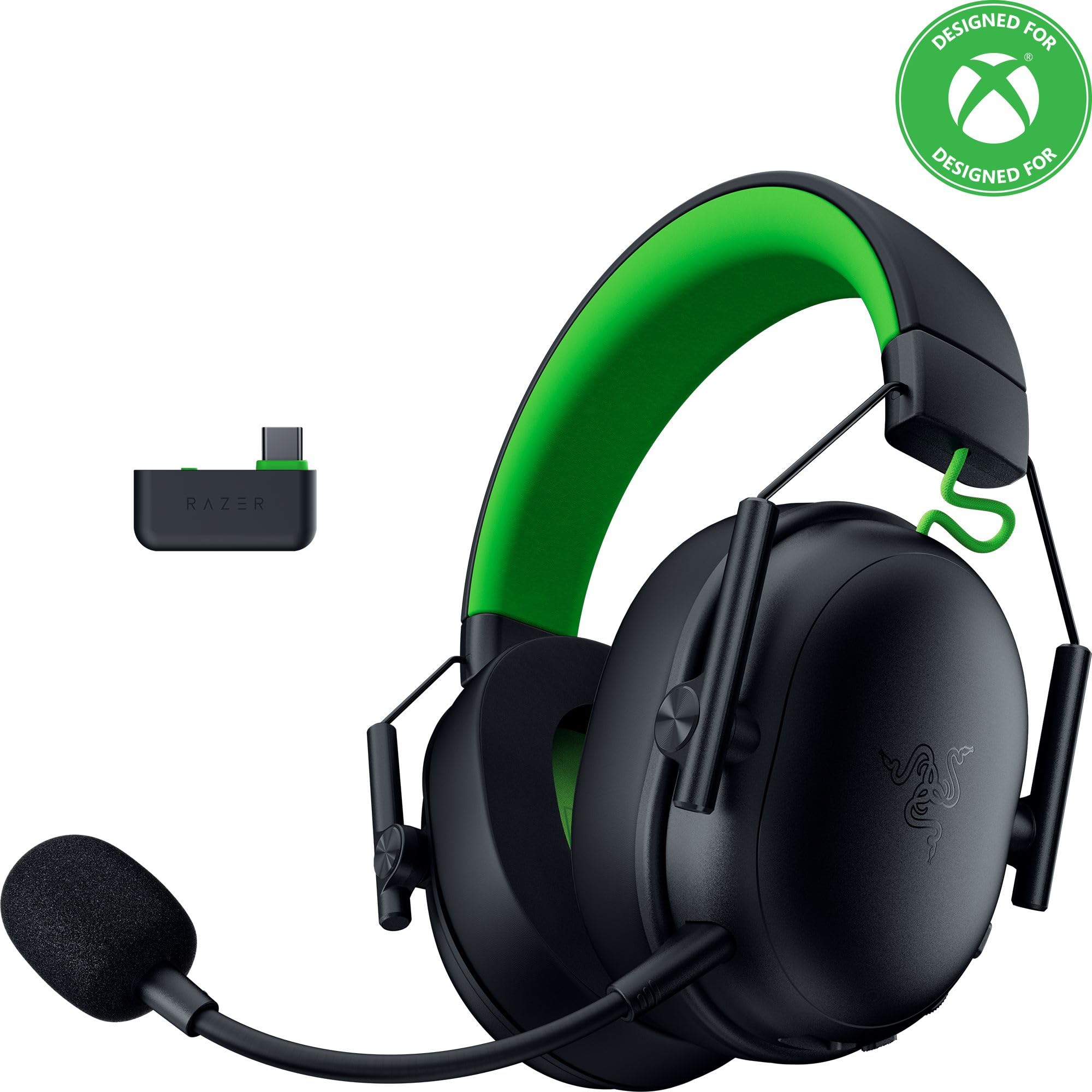
2. Razer BlackShark V3 X HyperSpeed
Forty grams lighter than the SteelSeries below, and it brings a detachable boom mic to the fight.
Fifty-millimeter TriForce Gen-2 drivers give the BlackShark V3 X a wider soundstage than the RIG’s 40mm units — a 50mm-versus-40mm gap that puts more air behind every footstep and reload cue. Razer tuned this generation for clarity and positional accuracy, so you hear the flank before you see it. On PC you can also open 7.1.4 surround sound for pinpoint placement.
The 270g build is the spec that sells it day to day. At 270g against the Arctis Nova 3X’s 260g, the two are close, but both are the kind of weight you forget about mid-session. Plush earcups back it up for long scrims. The detachable HyperClear cardioid mic uses a unidirectional pickup pattern to pull in your voice and push out room noise, and you can pull it off entirely when you are playing solo.
Three connection modes cover a lot of ground: 2.4GHz HyperSpeed wireless for low-latency console play, Bluetooth via SmartSwitch Dual Wireless, and a USB-C plug-in for nonstop use. The recurring hiccup is Xbox handshake trouble — a few buyers could not get the console to recognize it. The other noise is durability, with plastic wear called out over time. What everyone agrees on is the build quality overall and the sheer playtime, so the core hardware is sound.
The tonal read: the Triforce tuning favors detail over boom, so footsteps and voice lines land with precision instead of overwhelming bass — good for ranked play, less thrilling for cinematic games.
Worth knowing: 270g keeps fatigue down, but the plastic-to-metal mix means you should treat the headband joints with a little care.
The verdict in one line: a light, detailed competitor’s headset that shines on PC and mostly delivers on console.
Pass if: you want zero setup friction on Series S — the Xbox pairing reports make this a riskier first choice than the RIG.
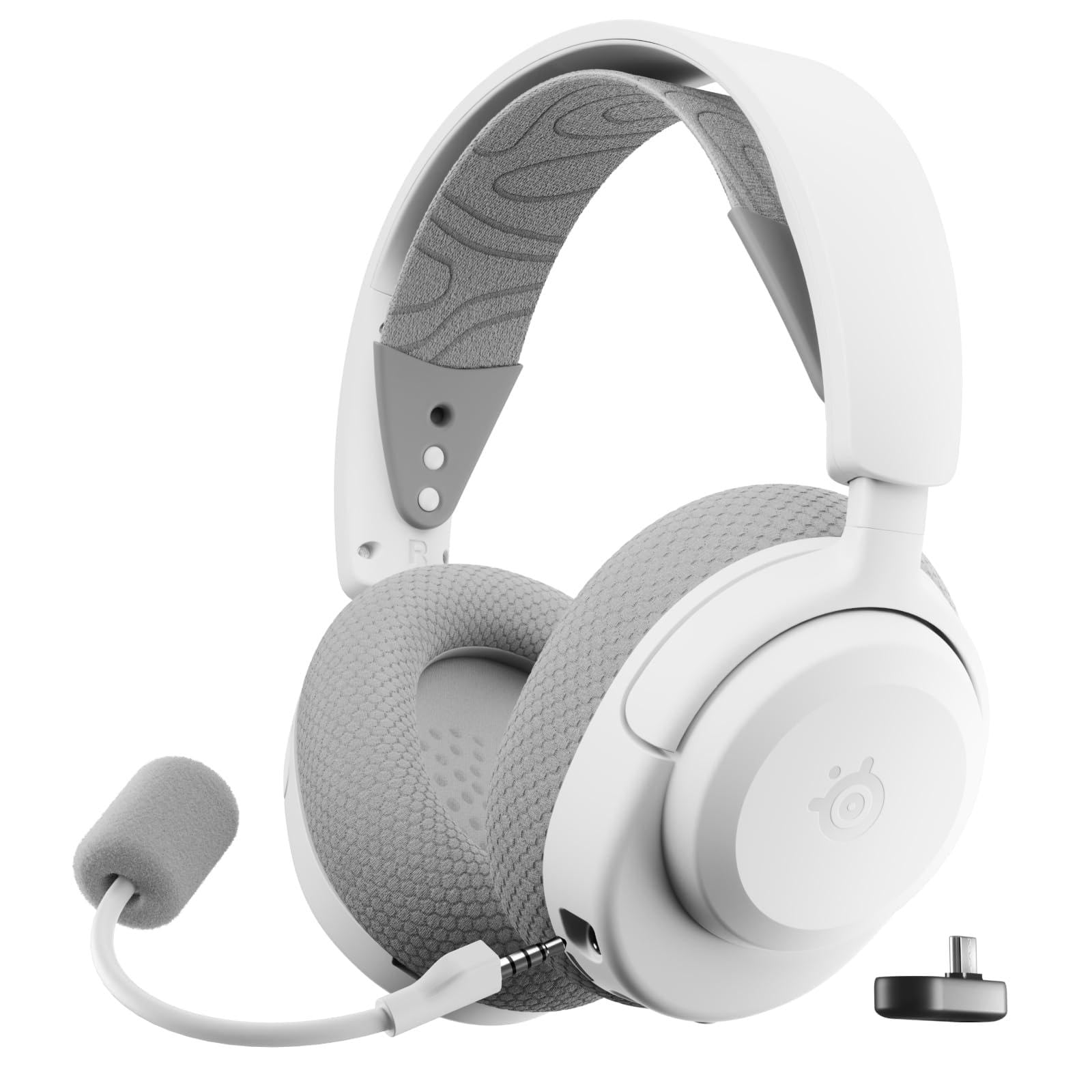
3. SteelSeries Arctis Nova 3X Wireless Gaming Headset – White
A 15-minute top-up buys you 9 hours — the fast-charge spec that saves a dead-battery night.
Forty hours of playback on a full charge puts the Arctis Nova 3X ahead of the RIG’s 24-hour ceiling, and the fast charge is the real story: 15 minutes on the cable equals up to 9 hours back. If you are the type who forgets to plug in, that single spec is your insurance policy. A USB-C dongle handles the connection across Xbox, PC, PlayStation, Switch, handhelds, and phones.
Neodymium magnetic drivers do the audio work, tuned for clear highs and deep bass, and the 260g build with a stretchy headband plus multiple adjustment points aims at headset headache relief. It is 260g against the BlackShark V3 X’s 270g — effectively the same weight class. The companion app adds 200+ presets for titles like CoD and Fortnite, so you can load a footstep-friendly profile instead of EQing by ear.
Sound is clearly what wins people over here, with long-session comfort running a close second. The friction sits in Bluetooth connectivity, where the mixed feedback says pairing is not always smooth, and value is debated — some buyers expected more for the price. The mic is serviceable but not a standout. For the Series S player who wants to charge once and forget it, though, the runtime math is hard to argue with.
Battery math that matters: up to 40 hours means several sessions between charges, and the 15-minute/9-hour fast charge rescues you when you forget.
Where it stumbles: Bluetooth pairing quirks and a mid-tier mic keep it from being the do-everything pick.
Best served to: the player who wants to charge rarely and play long, and who leans on app presets instead of manual tuning.
Hard skip if: you swap between console and phone constantly — the Bluetooth pairing reports make the RIG’s dual mode a smoother daily driver.
4. Razer Kaira HyperSpeed

Officially licensed for Xbox, with titanium-coated 50mm drivers and a bendable noise-rejecting mic.
Razer built the Kaira HyperSpeed alongside Xbox, so the console knows it by name. A 2.4GHz HyperSpeed dongle handles the low-latency link, and a low-latency Bluetooth Gaming Mode (triple-tap and hold the SmartSwitch button) covers phones and tablets. TriForce Titanium 50mm drivers split highs, mids, and lows so each band gets its own tuning, which gives voices and impacts their own space.
Battery is rated at up to 30 hours, and that beats the RIG’s 24-hour Bluetooth figure outright. Against the RIG’s 2-hour charge time, the Kaira’s stated charge time is far longer — worth knowing if you top up in short windows. The FlowKnit memory foam cushions use a breathable weave to cut sweat buildup and lower clamping force, which matters on hot, long sessions.
The HyperClear cardioid mic bends toward your mouth and rejects noise from the back and sides. For a white headset that matches a console aesthetic, this one is purpose-built for the Xbox shelf rather than adapted to it. It is a focused pick: console-first, with Bluetooth as a bonus rather than the headline.
What earns its place
- Officially licensed and developed with Xbox
- TriForce Titanium 50mm drivers with separate band tuning
- Up to 30 hours of battery life
- FlowKnit memory foam cushions for heat and clamp relief
Trade-offs to know
- Stated 30-hour charge time is a long wait
- Console-led design, so Bluetooth is secondary
- Fewer review voices than the bigger sellers here
Pick it when: Series S is your main console and you want a headset made for it, not adapted to it.
Think twice if: you need fast turnaround charging — the slow charge cycle rewards overnight habits.
5. Logitech G Astro A20 X
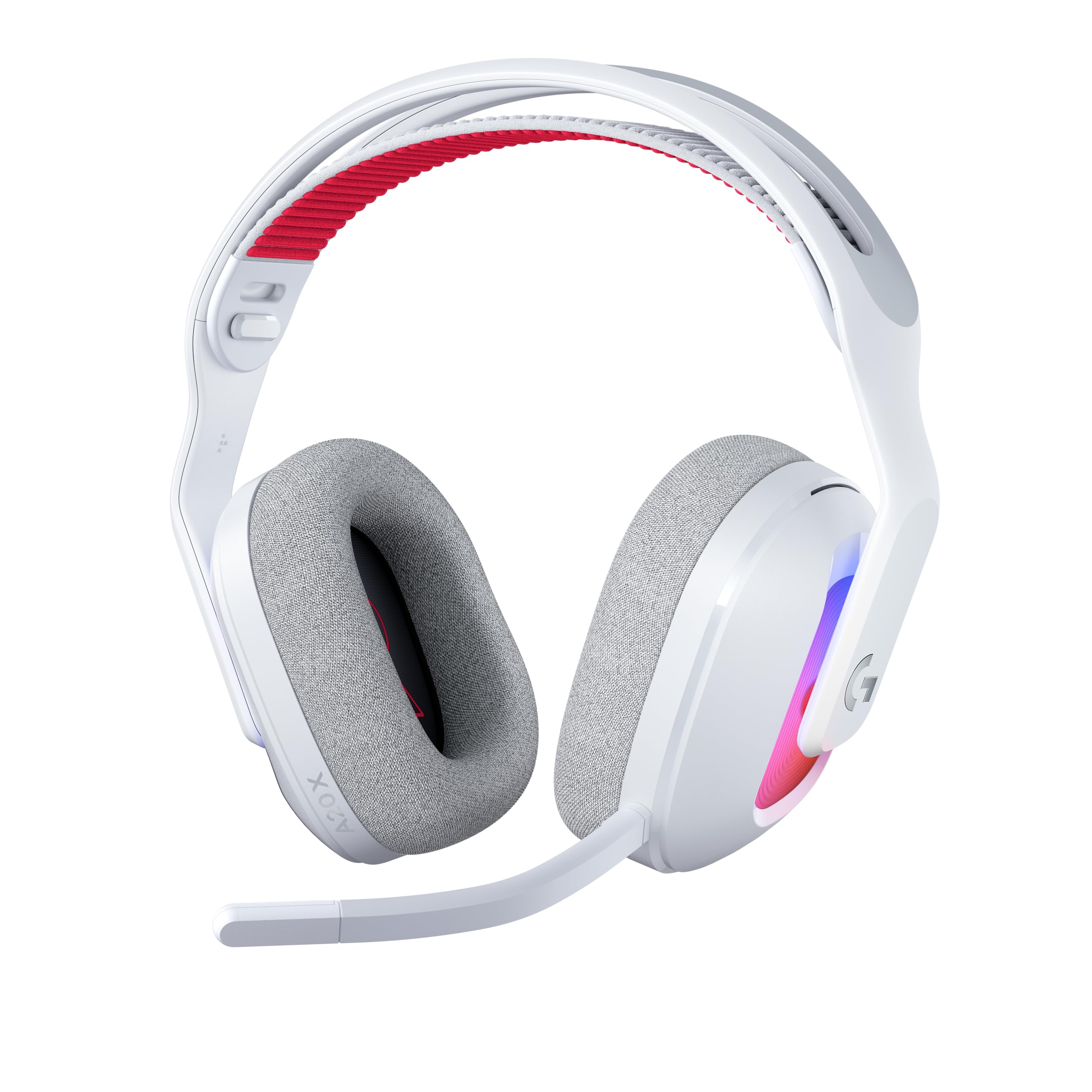
Built-in MixAmp balancing and a 48 kHz mic for the player who juggles two systems in one night.
The A20 X is for the household where the Xbox and the PlayStation share a TV. PLAYSYNC Audio lets you switch between Xbox/Switch/Switch 2 and PS5/PC on the fly, so you do not re-pair a dongle every time you change seats. Built-in MixAmp technology brings game/chat balancing to PC and Xbox, letting you tilt the mix without a menu.
The 48 kHz mic supports Blue VO!CE customization, so you can shape your voice tone instead of accepting the default. At under 300 g, it is light enough to wear through a full evening without pressure buildup.
What buyers talk about most is the sound and the way friends hear them clearly on the other end. The comfort holds up over hours, which is the other half of the story. It is the least gaming-branded-looking headset here, so if your setup is more living room than battle station, it blends in.
The standout: PLAYSYNC two-system switching is a spec the single-console picks simply do not offer, and it earns its keep in a multi-console house.
The honest limit: those same single-console buyers are paying for switching they will never use — the RIG covers one console for less.
Made for: the two-console household that wants one headset to rule both systems.
Not for: Series S-only players who would rather spend the difference on better audio than on switching.
6. ASUS ROG Delta II

Up to 110 hours on 2.4GHz with the RGB off, and an 11-hour refill from a 15-minute charge.
The battery spec is the headline here: up to 110 hours of use on 2.4GHz with RGB off. Compare that to the RIG’s 24-hour Bluetooth figure or the Nova 3X’s 40 hours and the gap is enormous. Quick charge delivers 11 hours of gameplay from just 15 minutes on the cable. If you hate charging, this is the pick that removes the chore.
Audio comes from 50mm titanium-plated diaphragm drivers pushing high-resolution 24-bit/96 kHz audio in 2.4GHz mode — a step up from the standard Bluetooth codecs most headsets run. DualFlow Audio lets you connect to two devices at once over 2.4GHz and Bluetooth, so you can take a phone call with one press of the earcup button without dropping game audio. A 10mm detachable super-wideband boom mic rounds it out.
Connection options are three: Bluetooth, 2.4GHz via ROG SpeedNova wireless technology, and a 3.5mm wired cable. That makes it the most flexible headset on this list for hopping between PC, console, and mobile. At 318g with D-shaped ear cushions it is heavier than the 270g BlackShark, so long-session comfort is the one spec worth trying before you commit. Buyers praise the sound and the dual connectivity above all, though fit and durability draw mixed notes.
The runtime story: up to 110 hours on 2.4GHz with RGB off, plus an 11-hour fast-charge refill, makes charging an afterthought.
Consider the weight: 318g is noticeably heavier than the 270g BlackShark V3 X, and fit gets mixed feedback — worth checking if you have a larger head.
Choose it for: the player who wants one headset across PC, console, and mobile, and who refuses to babysit a charger.
Weigh the trade-off: that 110-hour runtime and tri-mode flexibility come with more weight on your head than the lighter picks.
7. SteelSeries Arctis Nova 7X

Simultaneous 2.4GHz and Bluetooth mixing — game audio and a phone call can share the same earcups.
Unlike the RIG 600 PRO HX, which runs its dual modes one at a time, the Nova 7X Gen 2 runs 2.4GHz and Bluetooth at the SAME time. That means game audio and a Discord call or phone call blend inside the headset, and you control the mix. For a player who streams or takes calls mid-session, that is a genuinely different feature set.
Battery is rated at 50H+ — the maker claims over 40% more charge than the previous generation — with tune USB-C fast charge. That is well beyond the Nova 3X’s 40 hours. Neodymium magnetic drivers deliver a detailed soundscape with 360° Spatial Audio support, and the ClearCast Gen 2 mic reduces background noise by up to -25db to keep keyboard clatter out of chat.
Its 200+ game-specific presets run the same tuning engine as the Nova 3X, aimed at pinpointing enemy audio. A rugged steel frame and elastic headband with memory foam cushions handle the build side. Owners describe the fit as light enough to forget you are wearing it, and the cross-device support — Xbox, Switch, PC, phone — earns consistent praise.
Arguments for it
- Simultaneous 2.4GHz + Bluetooth audio mixing
- 50H+ battery with USB-C fast charge
- ClearCast Gen 2 mic reduces noise by up to -25db
- 200+ game presets and 360° Spatial Audio support
Reasons to hesitate
- Premium tier, so you pay for the dual-audio feature
- Heavier build than the featherweight picks
- Overkill on one console with no phone calls in the mix
The one to buy if: you want game audio and a live voice call playing together — no other pick on this list does simultaneous mixing.
Save your money if: you only ever connect one device, where the Nova 3X delivers the same tuning for less.
8. Turtle Beach Stealth Pro II
Sixty-millimeter dual drivers, Dolby Atmos, and two batteries that swap so you never stop playing.
The Stealth Pro II runs the largest drivers on this list: 60mm Eclipse dual drivers, versus the 50mm units in the Razer BlackShark V3 X and the ROG Delta II. More driver area means more bass and more detail, and the certified high-resolution audio pairing backs it up. Dolby Atmos Spatial Audio adds a 3D layer for games and movies, so overhead sounds land where they should.
Its Infinite Power system pairs 2 swappable batteries for up to 80 hours total, and the dock charges one while you play on the other. That is the cleverest battery spec here: no downtime, no waiting. Advanced Active Noise Cancellation (electronics that cancel room noise so you hear only the game) reduces background distractions, which helps in a shared living room. A 9mm floating microphone handles voice with vibration reduction, flip-to-mute, and AI noise reduction.
Comfort is the debate point. The dual-layer memory foam cushions with athletic fabric are comfortable for many, but a heavier build and a tight initial fit get mixed notes — leather-ready larger heads may want to test first. What lands consistently is the audio detail and the cross-device wireless, plus the interchangeable battery durability. At 20 milliseconds of audio latency, the wireless link stays on the fast side.
The battery answer: two swappable cells rated for up to 80 hours with a charging dock turn a charger into a non-event.
The honest catch: a heavier chassis and a snug initial fit mean this one rewards a try-before-you-buy approach.
For the player who: games in a noisy room and wants the soundstage and bass a 60mm driver can deliver.
Best skipped by: anyone sensitive to a tight, weightier fit — the lighter Razer and SteelSeries picks suit them better.
Know the Specs
2.4GHz vs Bluetooth
A 2.4GHz connection is a dedicated radio link carried by a small USB dongle. It stays tightly synced to the game, so a footstep plays the instant it happens. Bluetooth is a general-purpose wireless link with more delay, which is why it suits calls and music more than competitive play. Some headsets here run both at once (the Nova 7X), some switch between them (the RIG), and some add a wired 3.5mm option (the ROG Delta II).
Driver size and spatial sound
Drivers are the speakers inside each earcup, measured in millimeters. A 40mm unit can sound balanced with good tuning, and a 50mm or 60mm driver can push more bass and detail. Dolby Atmos and 360° Spatial Audio are software layers that place sounds around you, so a sound from behind reads as behind. They do not replace a good driver, they build on one.
Battery hours and charge speed
A quoted battery figure is the ceiling under ideal conditions, and real playtime depends on volume and features like noise cancellation. Fast-charge claims matter more than raw hours for forgetful players. The spreads here run from 18 hours on the RIG’s transmitter up to 110 hours on the ROG Delta II. Swappable-battery designs (the Turtle Beach and Nova Elite) sidestep the wait entirely.
Mic pickup and chat balance
A cardioid mic picks up sound mostly from the front, rejecting noise from the sides and back. That keeps keyboard clatter and fan hum out of your voice. Flip-to-mute booms, like the RIG’s, silently mute when folded. Game/chat balance controls let you tilt the mix toward your squad or the game without opening a menu.
Common Questions
Will these headsets connect wirelessly to an Xbox Series S?
Do I need a dongle if I use Bluetooth instead?
Which headset has the longest battery life on this list?
Can I use these headsets with a phone or a Switch too?
Does a bigger driver mean better sound?
Which pick has the clearest microphone for chat?
How long does a full charge take?
What does noise cancellation actually do for gaming?
Can I run game audio and a phone call at the same time?
Is a premium headset worth it over a mid-range one?
The Bottom Line
For most players, the xbox series s wireless headset that gets the most right is the RIG 600 PRO HX — dual wireless, Snap-Fit sizing, and an auto-muting flip mic at a mid-range tier. The ASUS ROG Delta II is the one to reach for if battery life is your obsession, with up to 110 hours on 2.4GHz. And if you want game audio and a phone call mixed together at once, the SteelSeries Arctis Nova 7X Gen 2 is the pick that does what the others cannot.
How we choose
We do not accept paid placement. Every pick is matched to a real buyer and a real use-case; we do not hands-on test units.
Sources
Specifications: manufacturer listings and product documentation. Review insights: verified customer reviews, as of November 2026. Pricing: not shown on this page (it changes often); check the current price via the retailer link.
As an Amazon Associate, Tactical Gear Guy earns from qualifying purchases. This does not affect which products we feature.