Specs are compiled from manufacturer listings and verified buyer reviews and can change over time — please confirm the key details on the product page before buying.
You want to stay warm outside without turning into a sweaty, itching mess under your jacket. That is the whole job of a wool base layer. The ones worth owning share three things: merino fiber (very fine wool that can sit on bare skin without itching), a fabric weight matched to how hard you move, and seams that do not rub once you start sweating. Below are the picks that deliver on those points, from the strongest all-rounder down to the best budget-friendly buys.
This guide is built by comparing the manufacturers’ published specifications and the patterns across verified customer reviews, so you get each pick’s real strengths and trade-offs instead of marketing spin.
Cold weather layering works best when the fabric closest to your skin moves sweat away and holds heat without bulk. I ranked these Merino picks on fiber weight, fit, and how they perform when the temperature drops, so you can choose a wool base layer for cold weather that fits how you actually spend your winter.
Top Picks


How To Choose The Best Wool Base Layer for Cold Weather
A wool base layer is the first thing you put on and the last thing you think about — until it fails. Get it right and you forget it is on. Get it wrong and you spend the day either shivering or sweating through your mid layer. The good news: you can settle the decision from four things printed on the label before you buy.
Weight Is The Whole Game
Merino is sold by fabric weight in grams per square meter (g/m²), which tells you how much wool sits in a square meter of cloth. A lighter weight like 165 g/m² suits high-output days and milder cold. A heavier knit like 250 g/m² or 400 g/m² is built for standing around in deep winter. The counterintuitive rule is this: the harder you work, the lighter the weight you want. Move fast in a heavy layer and you will soak it from the inside.
Micron Count And Itch
Micron is a measure of fiber diameter, and it is the reason some wool feels like sandpaper and some feels like nothing at all. A superfine 17.5 micron merino is finer than a human hair, which is why it can sit against sensitive skin without the prickle people remember from coarse sweaters. Standard wool at 25 microns and up is where the itch reputation comes from.
Fit For Layering
A base layer should sit close to the skin so it can move moisture, but it should not bind at the shoulders or bunch at the knee. If you plan to wear it under ski gear or a snug shell, sizing down one is a common approach with merino. If you want to wear it on its own around the house, your regular size is the better call.
Side-by-Side Comparison
| Model | Best For | Piece Type | Fabric Weight | Fiber | Amazon |
|---|---|---|---|---|---|
| Minus33 Merino Wool Bottoms★ Best Overall | Overall warmth and build | Bottoms (long johns) | Lightweight | 100% Merino Wool | Amazon |
| Merino.tech Half ZipBest for Layering | Layering under a shell | Half-zip top | — | 17.5 micron Merino | Amazon |
| LAPASA Men’s SetBest Complete Set | Complete top-and-bottom set | Top + bottom | Lightweight | 100% Merino Wool | Amazon |
| LAPASA Women’s Set | Women’s full set | Top + bottom | — | 100% Merino Wool | Amazon |
| MERINNOVATION Set | Multi-day wear and sleep | Top + bottom | 165gsm / 250gsm options | 100% Merino Wool | Amazon |
| icebreaker 175 Leggings | Everyday leg warmth | Leggings | 175 | 100% Merino Wool | Amazon |
| icebreaker Oasis Crewe | Mid-weight top layer | Long-sleeve crew | 200 | Merino Wool | Amazon |
| MERIWOOL 400g Pants | Deep cold, low activity | Bottoms | 400g | 100% Merino Wool | Amazon |
| Merino.tech Women’s Set | Women’s set with extras | Top + bottom | 250 GSM | 17.5 micron Merino | Amazon |
Detailed Reviews
1. Minus33 100% Merino Wool Bottoms
Our pick — 4.5+★ from 950+ verified ratings; the strongest balance of quality and price.
The leg layer that has quietly outlasted every trend in cold-weather gear.
If your winter weakness is your legs — the cold that creeps up through jeans on a chairlift or a slow morning hunt — this is the pair that keeps coming back as the answer. Minus33 builds these from 100% merino wool with flat lock seams (seams sewn flat against the fabric instead of raised), so they don’t dig in behind the knee or along the hip when you sit, kneel, or climb.
Warmth without bulk is what carries the reputation here. Owners describe them as genuinely toasty without the padded, stuffed-sausage feel of heavy synthetic long johns, and the itch-free merino is the detail that converts people who swore off wool. Minus33 says the wool absorbs up to 30% of its weight in moisture without feeling wet or clammy — the property that matters when you sweat on the climb and then stand still at the top.
The Saratoga Lightweight build is the milder-weather version in the Minus33 range, so treat this as a three-season leg layer rather than an arctic expedition piece. Cost is the one line that draws mixed feelings — good wool at this level is a real outlay, and a few buyers would rather have paid less. Against that, the brand’s wool pedigree goes back to a family textile business in the industry since 1916, and the flat lock construction is the kind of detail that usually shows up in more expensive gear.
What earns its keep
- Warmth without the bulky, padded feel of synthetic long johns
- Flat lock seams sit flush so they don’t chafe behind the knee
- Merino absorbs up to 30% of its weight in moisture before feeling damp
- Itch-free fiber that suits people who normally avoid wool
Where it asks for patience
- A real outlay for a single pair of bottoms
- Lightweight build, so it is not a deep-winter-only layer
Reach for this if: you want one leg layer that handles ski days, cold commutes, and late-season hikes without bulk.
Look elsewhere if: you need a heavyweight pant for standing still in single-digit temperatures — the 400g MERIWOOL is the better fit for that job.
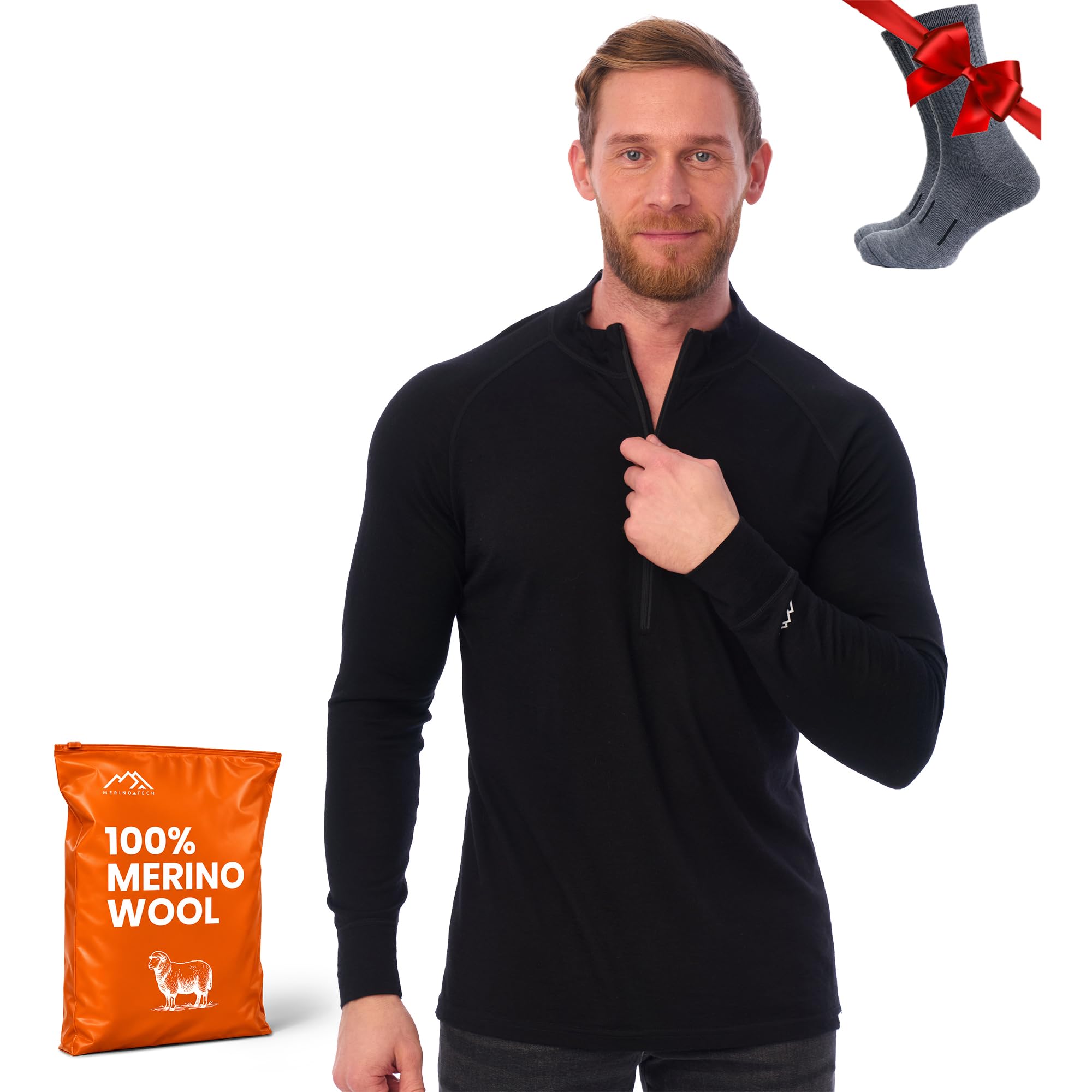
2. Merino.tech 100% Merino Wool Half Zip Sweater
A half zip you can vent on the climb and seal on the summit.
The number to know here is 17.5 micron. That is the fiber diameter of the merino used, and it is the reason this can go against bare skin without the prickle that sends most people running from wool. For comparison, standard wool runs 25 microns and up, which is where the itch reputation lives. Finer fiber means more of it bends instead of poking.
The half zip is the feature that makes this the layering pick. Unzip it on the uphill and you dump heat without stripping off a shell. Zip it back up at the top and you trap warmth again. The brand also sells this in three weights — 165 g/m² (grams per square meter, a measure of fabric thickness) for active pursuits at 40–60°F, 250 g/m² for most cold-weather activity at 25–45°F, and 320 g/m² for frost and low activity at 10–35°F — so you can match the fabric to your winter rather than guessing.
Certification backs up the softness story: the merino is RWS certified (an independent farm audit covering animal welfare and land management) and the finished garment is OEKO-TEX Standard 100 tested against 100+ harmful substances. The honest limit is durability — a fine-gauge knit this soft is not indestructible, and it needs cold machine washing on a delicate cycle, inside out, laid flat to dry. Tumble drying merino permanently damages the fibers, so the dryer is off limits.
The 17.5 micron payoff: fiber finer than human hair is what lets this sit against sensitive skin without itch, and the half zip gives you on-the-move temperature control that a crew neck cannot.
Care is the trade-off: lay it flat to dry and never tumble it — a few minutes in a hot dryer is what turns a good merino top into a shrunken one.
Pick this one if: you want a single merino top that works as a base layer under a shell and as a standalone sweater on a cool evening.
Pass it by if: you want zero laundry fuss — this one demands cold water and flat drying to stay in shape.
3. LAPASA Men’s 100% Merino Wool Base Layer Set
Top and bottom in one box, so you are not hunting for a matching pair.
Buying a set solves a problem single pieces create: you end up with a merino top from one brand and a bottom from another, and the weights never quite match. LAPASA puts both in one package in a lightweight build aimed at cool and brisk weather — the kind of day where a cotton tee leaves you shivering but a heavy layer leaves you sweating on the walk to the car.
What wins people over is the overall quality of the knit, with warmth close behind. Owners wear the set as an under-layer for skiing, running, and cycling, and just as readily as pajamas or home wear, which says something about how comfortable the merino is against skin. That versatility is the real argument for a set over a single piece.
The catch worth knowing: several people find the fabric very thin, and there are mixed reports on whether it is truly 100% wool and on long-term durability. Thin is not automatically bad in a base layer — a lighter knit is what lets you move without overheating — but if you want a thick, plush feel, this will read as flimsier than you expect. Treat it as a first layer, not a standalone winter pant.
The set advantage: matching top and bottom in one lightweight merino build means consistent warmth from shoulder to ankle, and owners happily wear both pieces as loungewear too.
Set your expectation on thickness: this is a genuinely thin knit — great under other layers, underwhelming if you were hoping for a plush, heavy feel.
This is your match if: you want one purchase that covers your whole body for ski days and cold commutes.
Keep looking if: you want a thick, substantial knit — this one is deliberately light.
4. LAPASA Women’s 100% Merino Wool Base Layer Set

The women’s cut that keeps its shape from the trailhead to the lodge.
Here is the thing about women’s base layers: the men’s version rarely works as a substitute, because the shoulder and hip cut is wrong and you feel it within an hour. LAPASA builds this set specifically for a women’s fit, top and bottom, in 100% merino wool that regulates temperature rather than simply trapping heat.
Warmth is what owners talk about first, followed closely by the quality of the knit. It earns credit for keeping you warm without the scratchy feel some wool carries, and it holds up in genuinely extreme cold rather than just chilly mornings. The lightweight build is the reason it layers under real winter clothing without turning you into a marshmallow.
The honest note is fit and sizing, where feedback splits. Some find it spot on, others find the cut needs adjusting, so measure yourself against the size guide rather than assuming your usual letter size. Fabric quality also draws a mixed word here and there. None of that is unusual for a full-body merino set — sizing is simply the one thing you should not guess on.
Strengths that show up on cold days
- Warmth that holds in extreme cold, not just a brisk morning
- Merino that regulates temperature so you don’t overheat indoors
- Lightweight enough to disappear under jeans and sweaters
- Full matching set built on a women’s cut
The honest caveats
- Sizing feedback is split, so check the size guide carefully
- A minority question whether the wool content is fully merino
Worth it for: women who want a genuinely warm merino set cut for their body instead of a men’s shrug-on.
Think twice if: you are between sizes — the fit feedback is mixed enough that getting the size right matters more here than usual.
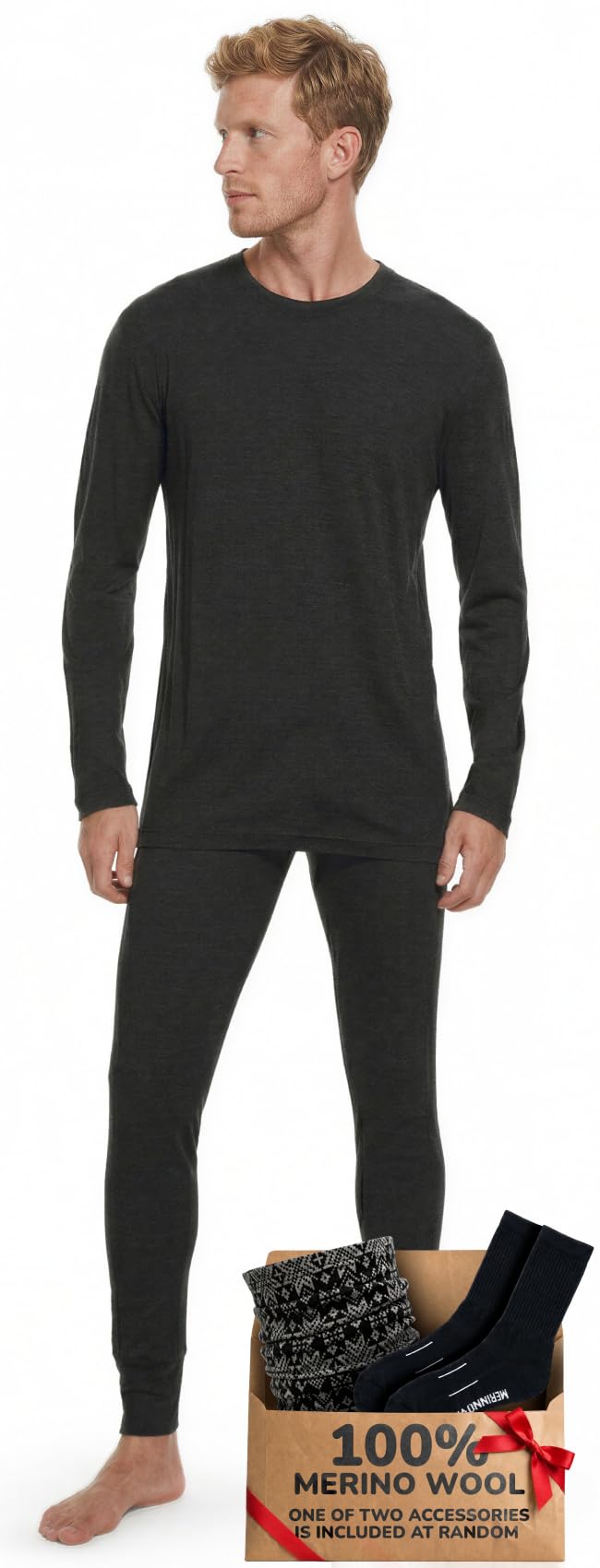
5. MERINNOVATION Merino Wool Base Layer Set
Built for the trip where you wear the same layer four days straight.
Merino’s quiet superpower is that it resists the odor that builds up in synthetic fabrics after a day of wear. On a multi-day hike, a travel stretch with limited luggage, or back-to-back training sessions where laundry access is not a given, that property is worth more than any spec on a hangtag. This set leans into it deliberately, and it also works as a thermal sleep set if you run cold at night.
You get a choice of two weights in the same 100% merino construction: 165 g/m² for higher-output activity and milder cold, or 250 g/m² for sustained cold and deep-winter layering where retained warmth matters more than breathability. The open knit is designed to ventilate as your effort rises, so you are not stopping mid-hike to strip layers because you overheated on the climb.
Sizing is the one point to research before you buy — some find it true to size, others find it runs small, so check the size guide rather than assuming. Durability feedback also points to hand-washing as the way to make it last. The package itself is listed at 14 ounces, so it packs down without eating your bag space.
The multi-day argument: odor resistance and an open knit that vents as you work make this the set for trips where you cannot wash between wears.
Size it deliberately: fit feedback splits between true-to-size and running small, so measure rather than guess.
Choose this if: your winter involves backpacking, travel with tight luggage, or consecutive days in the same layer.
Not the one for: you if you want a single weight you never have to think about — picking between 165 and 250 g/m² takes a minute of honest self-assessment.
6. icebreaker Men’s 175 Everyday Merino Leggings

A rib-knit legging that handles the whole cold season without drama.
The 175 in the name is the fabric weight (175 g/m², a mid-light thickness), and it puts this squarely in everyday territory — substantial enough for real cold, light enough to wear under regular trousers without looking like you have extra legs. icebreaker builds it from 100% merino wool in a rib knit (a stretchy raised-ridge weave), so the fabric moves with you rather than fighting your movement.
Temperature management is where this earns its praise, and comfort follows close behind. It holds up for extended wear in cold conditions, which is the real test of a base layer — a piece that gets clammy after two hours is not doing its job. Owners mention it working well for early-season use, when the air is cold but the ground is not frozen solid yet.
Cost draws a split reaction, with some finding the price justified by the quality and others feeling it is steep for a single pair. The other thing to keep in mind is longevity: durability is the one area where the feedback is less than glowing, so treat these as a piece that earns care. Cold wash, flat dry, and they will serve you far better than the machine-dry treatment.
Why it works as a daily layer
- 175 weight layers under normal trousers without bulk
- Rib knit stretches with you for easy movement
- Comfortable for extended wear, not just a two-hour stint
What to weigh up
- Feedback on long-term durability is the weakest point of this pair
- Value for money splits, with some feeling the cost is high for one legging
For you if: you want a base legging you can wear under work trousers or hiking pants all winter without thinking about it.
Consider a heavier option if: you need a pant for standing still in the cold rather than moving through it.
7. icebreaker Oasis Mid-Weight Merino Long Sleeve Crewe

The crew neck that turns a thin jacket into a winter-ready shell.
If you already own a mid layer you like, the missing piece is often not a warmer jacket but a warmer shirt underneath it. The Oasis sits at a 200 mid-weight, which is the middle of the range — heavier than a summer tee, lighter than a dedicated cold-weather knit. That middle position is why it works as both a base layer and a top on its own.
Warmth is the thing owners bring up most, and for good reason. It works under a jacket, and it works on its own in weather that does not demand full winter gear — the kind of variable day where a thicker knit would leave you overheating by noon. The crew neck keeps the profile clean under a collared shirt or a hoodie.
Where it differs from the Merino.tech half zip above is the delivery: the Oasis is a pull-on crew with no zipper to vent, so you commit to a neckline. That is fine for most wear, but if you run hot on the move, the half zip gives you more control. The consistent knock on this shirt is value — it is a considered purchase, and whether the cost lands depends on how much you will wear it.
What it does well: a 200 mid-weight that warms a thin jacket into a real winter layer, with a clean crew profile that disappears under a shirt.
Weigh the value: this is a premium-priced basic, so it only makes sense if you will wear it several days a week.
Reach for this if: you need a warm crew neck to slip under your existing jacket and don’t want a zipper.
Look at the half zip instead if: you overheat on climbs and want to vent without taking layers off.
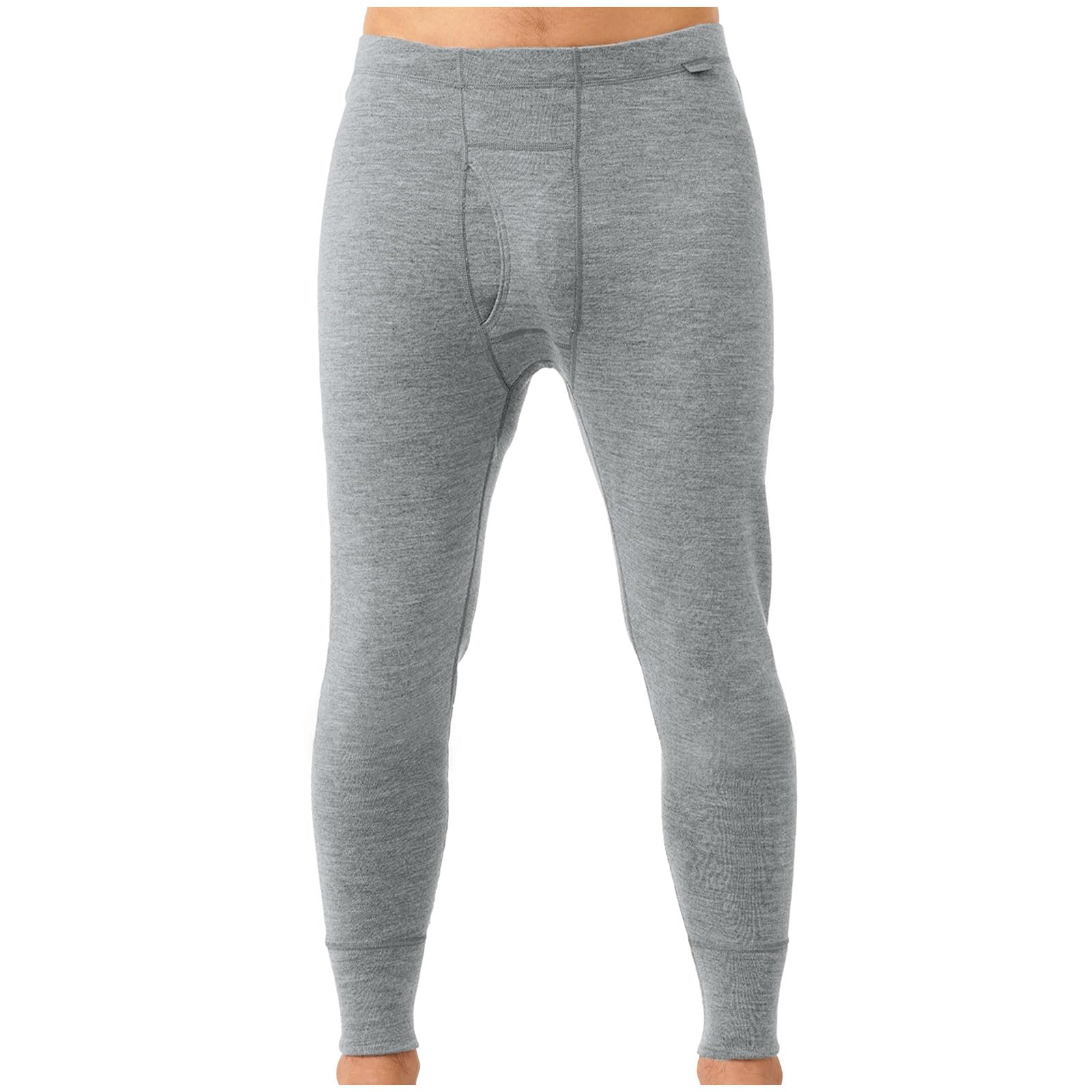
8. MERIWOOL Men’s Heavyweight 400g Thermal Pants
The heavy gun for the days you are outside but barely moving.
400g merino (a heavy fabric weight) is a different animal from the lightweight layers above. This is the weight you reach for when you are ice fishing, sitting in a blind, watching a winter game, or working a slow outdoor job — situations where your body is not generating heat and the fabric has to do all the work. MERIWOOL builds it from 100% merino wool with a fit that owners describe as generous.
The feel against the skin gets consistent credit, which matters when you are wearing a heavy layer for hours. Wool’s insulation advantage is that it keeps warming you even when it takes on moisture, so a long day outdoors does not turn into a cold, clammy slog. If you have ever had a synthetic layer go cold and wet once you stopped moving, you know exactly why this matters.
The honest trade-off is that a 400g pant is a lot of fabric. Owners note the weight and thickness, and it is not the piece you reach for on a mild day or under slim trousers. Value also draws a split verdict, which is fair for a heavyweight pant that only earns its keep in genuinely cold weather. Buy it for deep-cold, low-activity days and it earns its keep; buy it as an everyday layer and it sits in the drawer.
The heavyweight case: 400g of merino is what keeps you warm when you are stationary in real cold, and the roomy fit lets you wear it over a light liner or under loose outer pants.
Know what you’re buying: this is a specialist piece for cold, low-activity days — not a daily wearer.
Pick it for: ice fishing, hunting, stadium seats, and any winter day where you stand still more than you move.
Skip the heavy weight if: you want an everyday pant for commuting — the Merino.tech or icebreaker options suit that better.
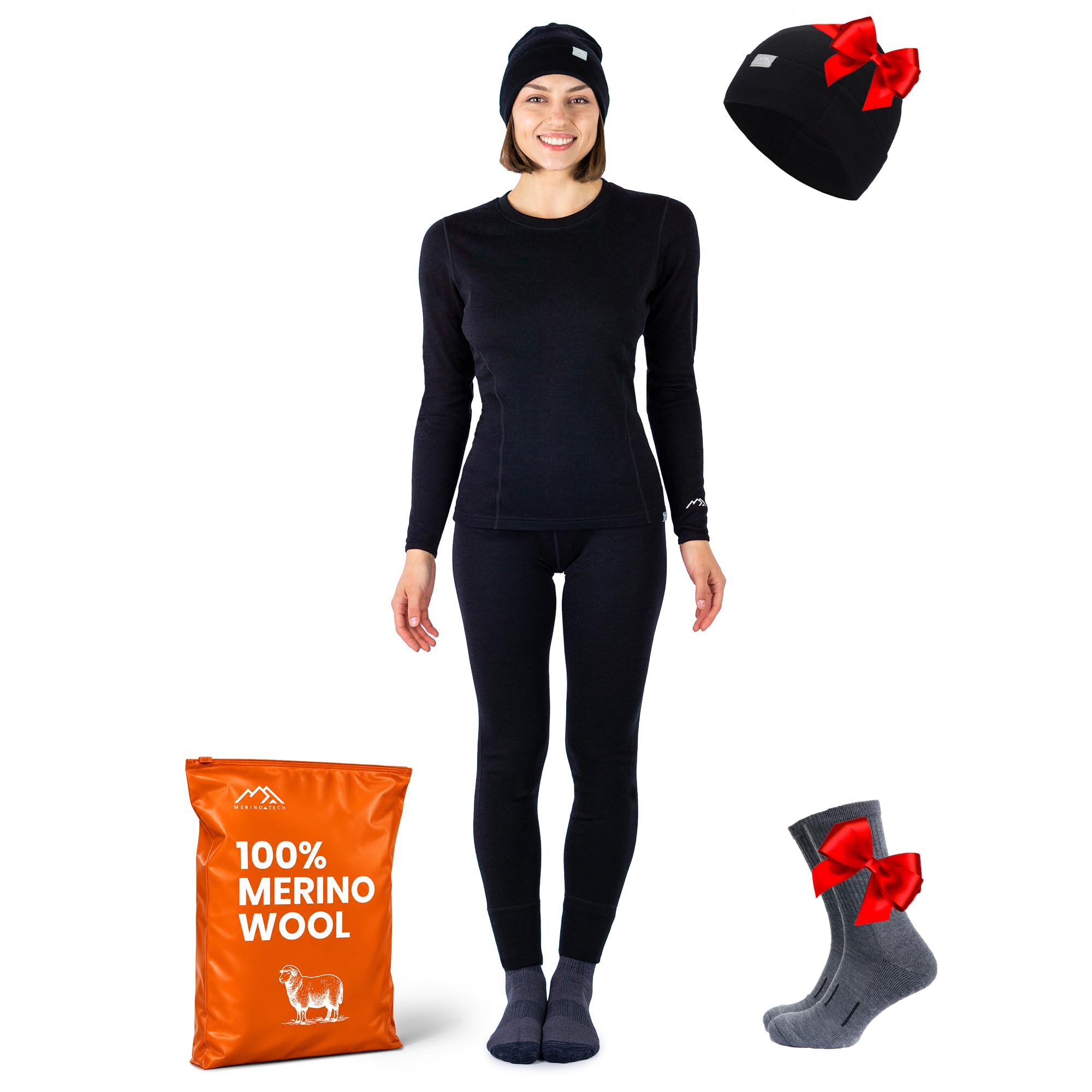
9. Merino.tech 100% Merino Wool Base Layer Women’s Set
A full set that comes with the hat and socks already handled.
Most base layer sets stop at the top and bottom. This one goes further — the set includes a pair of hiking socks and a beanie, which covers three of the four things you need for a cold day out without any extra shopping. The fabric is 250 GSM merino, the midweight zone that handles genuine winter temperatures rather than just cool mornings.
The same 17.5 micron fiber story applies here: superfine merino that bends rather than pricks, fine enough to go against sensitive skin without itch. Owners find it comfortable and soft, and it draws praise for keeping you dry — which is the actual mechanism behind warmth, since moisture is what robs a layer of its insulating power. It works under jeans and sweaters for outdoor activity, which says the cut is streamlined enough to disappear.
Certification adds a layer of confidence: Australian merino, RWS certified through independent farm audits, and OEKO-TEX Standard 100 tested against 100+ harmful substances. The catch is care — cold wash at 30°C max on a delicate cycle, inside out, then lay flat to dry. Tumble drying damages merino permanently. Also worth knowing: the brand says to wear it 3–5 days between washes because merino resists odor, so your laundry routine can be lighter than you expect.
What’s in the box: top, bottom, hiking socks, and a beanie — one order covers most of a winter kit in 250 GSM merino.
The maintenance reality: cold delicate wash and flat drying only, because a hot dryer will shrink and damage the merino fibers.
The right pick for: women who want a full winter set with accessories included and a fine-gauge fiber that won’t itch.
Not for you if: you prefer to choose your own hat and socks — you would be paying for extras you may not want.
Know the Specs
Fabric Weight (g/m² or GSM)
This measures how much wool sits in a square meter of fabric — think of it as the density of the knit. A 165 g/m² layer behaves very differently from a 250 g/m² or 400 g/m² one. The lighter weights breathe better and suit high-output activity, while heavier weights retain more heat for stationary time in real cold. The rule to remember: harder activity calls for a lighter weight, and lower activity calls for a heavier one.
Micron Count And Skin Comfort
Micron is fiber diameter, and it drives whether wool feels soft or scratchy. A 17.5 micron merino is finer than a human hair, which is why it can sit against bare skin without itch. Standard wool at 25 microns and up is the level that gives wool its prickly reputation. If itch has put you off wool before, look for a number in the fine-merino range rather than assuming all wool feels the same.
Common Questions
Will merino wool still itch if I have sensitive skin?
What weight merino should I get for skiing?
Can I tumble dry a merino base layer?
Should I size down a merino base layer for a snug fit?
How many days can I wear a merino base layer between washes?
Does merino keep you warm if it gets wet?
Is a base layer set better than buying a single top or bottom?
What does OEKO-TEX Standard 100 mean on a merino layer?
Can I wear a heavyweight merino pant under regular jeans?
How do I stop my merino base layer from shrinking?
The Bottom Line
For most people buying a wool base layer for cold weather, the Minus33 Merino Wool Bottoms are the safest place to start — 100% merino, flat lock seams, and warmth without the padded feel of synthetic long johns. It is the one pair you will reach for on ski days, cold commutes, and late-season hunts alike.
If you want a top that lets you vent heat on the move, the Merino.tech Half Zip gives you that control in 17.5 micron fiber that sits against bare skin without itch. And for the deep-cold days when you are standing still rather than moving, the MERIWOOL 400g Thermal Pants are the specialist piece that earns its place in the drawer. Every pick here is a real merino layer with a clear job — choose by how hard you move and how cold you get.
How we choose
We do not accept paid placement. Every pick is matched to a real buyer and a real use-case; we do not hands-on test units.
Sources
Specifications: manufacturer listings and product documentation. Review insights: verified customer reviews, as of November 2026. Pricing: not shown on this page (it changes often); check the current price via the retailer link.
As an Amazon Associate, Tactical Gear Guy earns from qualifying purchases. This does not affect which products we feature.