Specs are compiled from manufacturer listings and verified buyer reviews and can change over time — please confirm the key details on the product page before buying.
Your engine needs a strong burst of current on a cold morning, and that is what a YTX4L-BS battery should deliver. The four-digit model number only tells you the size and terminal layout your bike, scooter or small ATV expects — it says nothing about whether the battery inside that box will actually spin your engine on a frosty morning. The number that does that job is CCA (cold cranking amps, the burst of current a battery can deliver in the cold), and it swings wildly across this shelf: some packs list 140 CCA, others list 50 CCA for the same fitment. Match the physical size and polarity first, then buy the highest CCA your charging system can safely feed.
This guide is built by comparing the manufacturers’ published specifications and the patterns across verified customer reviews, so you get each pick’s real strengths and trade-offs instead of marketing spin.
You will see lead-acid, AGM (absorbent glass mat, a sealed design that holds the acid in fiberglass so it cannot spill) and lithium packs side by side, and the chemistry matters as much as the amps. This breakdown of the ytx4l-bs battery covers fitment, cranking power and charger rules for each option.
Top Picks


How To Choose The Best YTX4L-BS Battery
Your old battery already told you the shape you need. Before you buy anything, copy down three things from the dead unit: the model number stamped on the case, the voltage rating, and which side the positive terminal sits on. A YTX4L-BS is a small case format, and it will not fit a bike that was built around a YTX5L-BS or YTX7A-BS — the numbers are the size, not a quality grade.
Start with cold cranking amps, not brand names
CCA is the current a battery can push out in cold conditions, and it is what actually turns your starter motor. The replacement’s CCA should be no lower than the original battery’s rating, or you are asking a weaker pack to do the same job. A 140 CCA pack and a 50 CCA pack can both bolt into the same tray — the difference shows up on the first cold morning.
Decide if you want sealed AGM, GEL, or lithium
You never need to top up water with AGM or GEL batteries, because both are sealed lead-acid designs. GEL packs the electrolyte into a paste that resists vibration and spills, while AGM holds it in glass matting. Lithium (LiFePO4, a lithium iron phosphate chemistry) is the outlier: far lighter for the same fitment, but it demands a compatible charger and a vehicle with a regulated voltage output, and it will not tolerate the pulse or desulfation modes built into lead-acid chargers.
Check whether the battery ships dry or pre-filled
Some packs arrive dry, with the acid stored in a separate bottle that you pour in and seal yourself before the first charge. Others are factory-sealed and ready to bolt in. If you want zero prep work, choose a sealed, pre-charged unit and confirm the terminal layout matches your wiring before it ships.
Side-by-Side Comparison
| Model | Best For | Cold Cranking Amps | Capacity | Chemistry | Amazon |
|---|---|---|---|---|---|
| Yuasa YUAM62X4B★ Best Overall | Buyers who want a bottle-supplied AGM they activate themselves | — | — | Lead-Acid, AGM | Amazon |
| HEOMAITO YTX4L-BSMost Cranking Power | Riders who want the strongest cold-cranking number on the shelf | 140 CCA | 4Ah | AGM | Amazon |
| ZIPPBATTERY YTX4L-BSReady to Ride | Scooter and mini-ATV owners who want it pre-charged from the start | 50 CCA | 4Ah | AGM | Amazon |
| Daakmax YTX4L-BS | Honda and Polaris owners who want a no-maintenance sealed pack | 50 CCA | 3Ah | AGM | Amazon |
| ExpertPower YTX4L-BS | Cold-climate starts where a GEL pack makes sense | 120 CCA | 4Ah | GEL SLA | Amazon |
| Mighty Max YTX4L-BS GEL | Seasonal riders who leave the machine parked for weeks | 50 CCA | 3Ah | GEL | Amazon |
| MMG YTX4L-BS | Wide 50cc-700cc fitment at the entry end of the range | 50 CCA | — | Lead Calcium | Amazon |
| TYKOOL LFP4L-BS-STD | Weight savings with a built-in digital voltage readout | 140 CCA | 3Ah | Lithium Ion | Amazon |
| Forgetyo YTX4L-BS | Riders chasing maximum cranking from the lightest pack | 250 CCA | 2.5Ah | LiFePO4 | Amazon |
Detailed Reviews
1. Yuasa YUAM62X4B YTX4L-BS Battery
Our pick — 4.5+★ from 300+ verified ratings; the strongest balance of quality and price.
The brand owner’s own battery, and the one that turns an empty tray into a running engine with a bottle of acid in the box.
If you like knowing exactly what you installed, this is the pick. Yuasa ships it as a bottle-supplied (BS) dry pack — the electrolyte travels in a separate plastic container and you fill and seal the battery yourself before its first charge. That sounds like extra work, and it is about ten minutes of it, but it means the battery has not been sitting wet on a shelf slowly self-discharging before it ever reaches your bike.
The internal chemistry is lead-calcium rather than the older lead-antimony recipe, and Yuasa states it holds its specific gravity more than three times longer than conventional lead-antimony batteries. In plainer terms, it loses its charge more slowly while parked, which is the difference between a machine that fires up after a winter under a cover and one that needs a jump box. The AGM separator absorbs the electrolyte so the case is nonspillable, and the valve-regulated design is why there is no water to top up.
Buyers talk most about the build quality, and they describe installation as a breeze to drop in. The honest catch is charge retention over the long haul: plenty of riders say it holds well, and a fair number report it does not keep its charge the way they hoped, so plan on a trickle charger if your machine sits for months. It is also the heaviest pack here at 3.4 pounds, and unlike the lithium options further down it arrives dry rather than ready to bolt in.
maintenance free AGM build
- Lead-calcium plates hold specific gravity more than 3x longer than lead-antimony, so it sits better between rides
- Bottle-supplied dry pack means the acid goes in fresh, not months before you bought it
- Sealed AGM case is nonspillable and needs no water refilling
- Installation is repeatedly called a breeze
pricey for 4Ah
- You fill and seal it yourself before first use
- 3.4 pounds — the heaviest pack on this list
- Some riders find it needs periodic charging to keep its edge when stored
stock replacement: you want a name-brand AGM and do not mind the ten-minute acid fill to get a freshly activated battery.
cheaper alternatives: you want to bolt something in straight from the box — the sealed, pre-charged packs below skip that step.
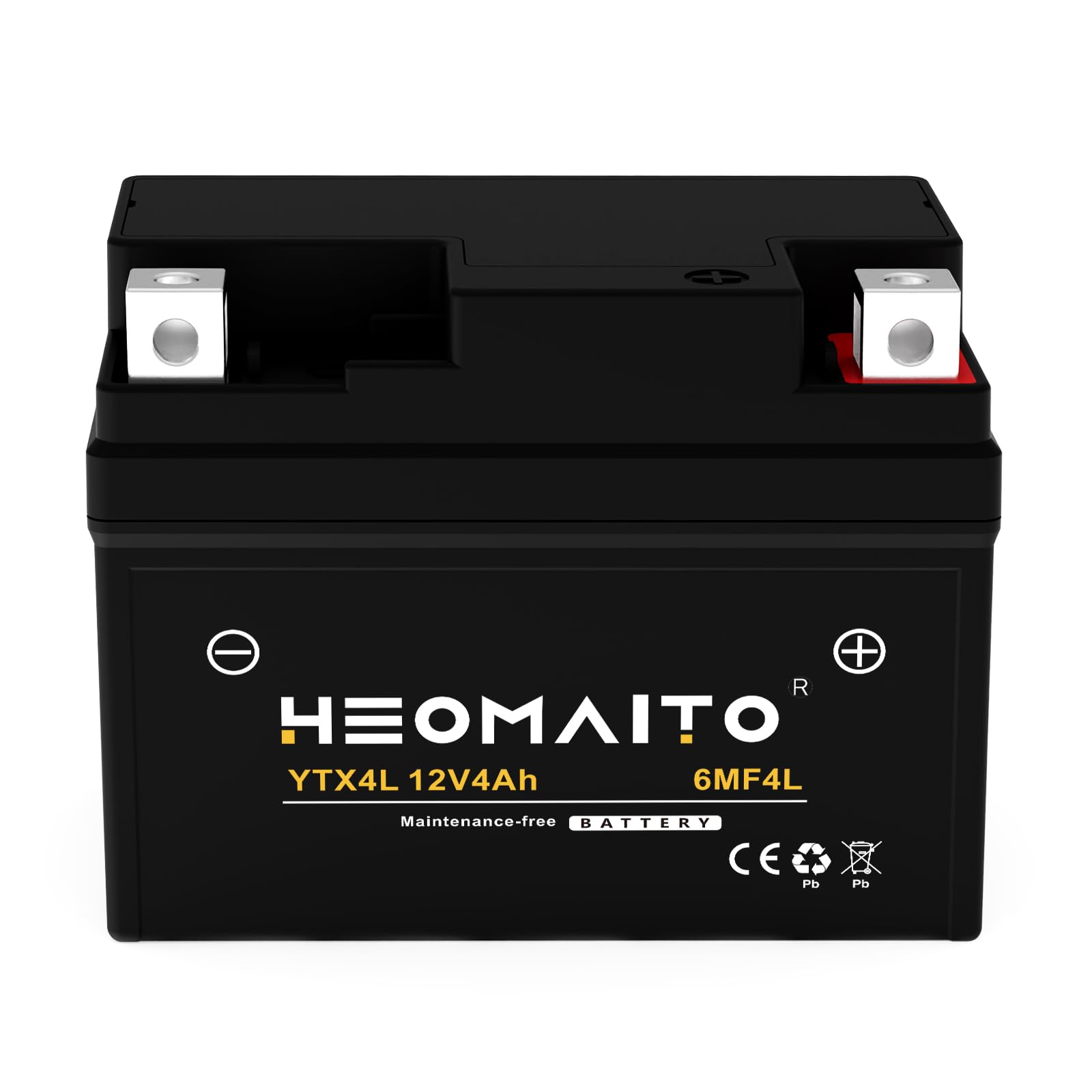
2. YTX4L-BS Battery HEOMAITO
Same case size as everything else here, but nearly triple the cold-cranking punch of the 50 CCA packs.
The headline is 140 CCA against the 50 CCA that the ZIPPBATTERY and several other packs here list — a 2.8x gap in the burst of current available for a cold start. Pair that with the 4Ah capacity and you have a battery that spins a small engine with authority rather than a lazy crank. That extra amperage is why it suits 50-100cc motorcycles, scooters and 50-90cc ATVs that ask a bit more of their starter.
Fitment is well documented: 4.45 x 2.72 x 3.35 inches, terminals clearly marked positive and negative, and a compatibility list that runs through the whole equivalent-model family — GTX4L-BS, CTX4L-BS, PTX4L-BS, BTX4L-BS and the rest. The ABS housing and sealed AGM construction are there to resist vibration and keep acid where it belongs. It arrives as a usable battery rather than a dry shell, so there is no bottle to pour.
strong 140CCA cranking: this is one of the lighter-reviewed models on the list, so the long-term track record is thinner than the established names. Quality feedback splits both ways rather than settling into a clear consensus, which is normal for a newer listing. Buy it for the cranking number and check the CCA on your old battery first — the maker’s own advice is that the replacement should never be lower than the original.
cold starts: a small bike whose original battery felt weak on cold mornings and you want more amps in the same tray.
accessory power: a quick check of your terminal positions before ordering — the layout is marked, but your wiring decides whether it drops straight in.
3. ZIPPBATTERY YTX4L-BS 12V 50 CCA AGM Battery
Comes from the start already charged, which matters when your scooter is sitting dead in a driveway right now.
This is the convenience pick. ZIPPBATTERY ships it fully charged, so the job is connect the terminals and ride — no bench charger, no acid bottle, no waiting. The case measures 4.45 x 2.76 x 3.39 inches and weighs 3 pounds, and the sealed AGM design keeps it spill-resistant and vibration-tolerant on a mini ATV or pit bike.
The model coverage is broad for a small pack: Honda Spree NQ50, Yamaha TTR125E, Polaris Scrambler 90, Can-Am DS70 and TaoTao 50 are all named fitments. It is also UL-certified for safety and built to Japanese QC standards, and the warranty runs 18 months with a 60-day refund window for U.S. orders. Those are the kinds of terms that make a cheap battery feel less like a gamble.
Here is the trade-off, and it is a real one: 50 CCA is the lowest cranking rating on this list, and the long-term durability is the recurring complaint — some packs quit within a couple of weeks rather than a couple of seasons. Treat it as a fit-and-forget starter for a light machine you use often, not a long-haul investment. Compare it to the 140 CCA HEOMAITO above and you can see exactly where the extra amps went.
small engines: you need a charged, sealed battery in a hurry for a scooter or small ATV and want a warranty behind it.
big bore bikes: your engine is a hard cold starter — the 50 CCA rating is the weakest crank here.
4. Daakmax YTX4L-BS 12V 3Ah Sealed AGM Motorcycle Battery
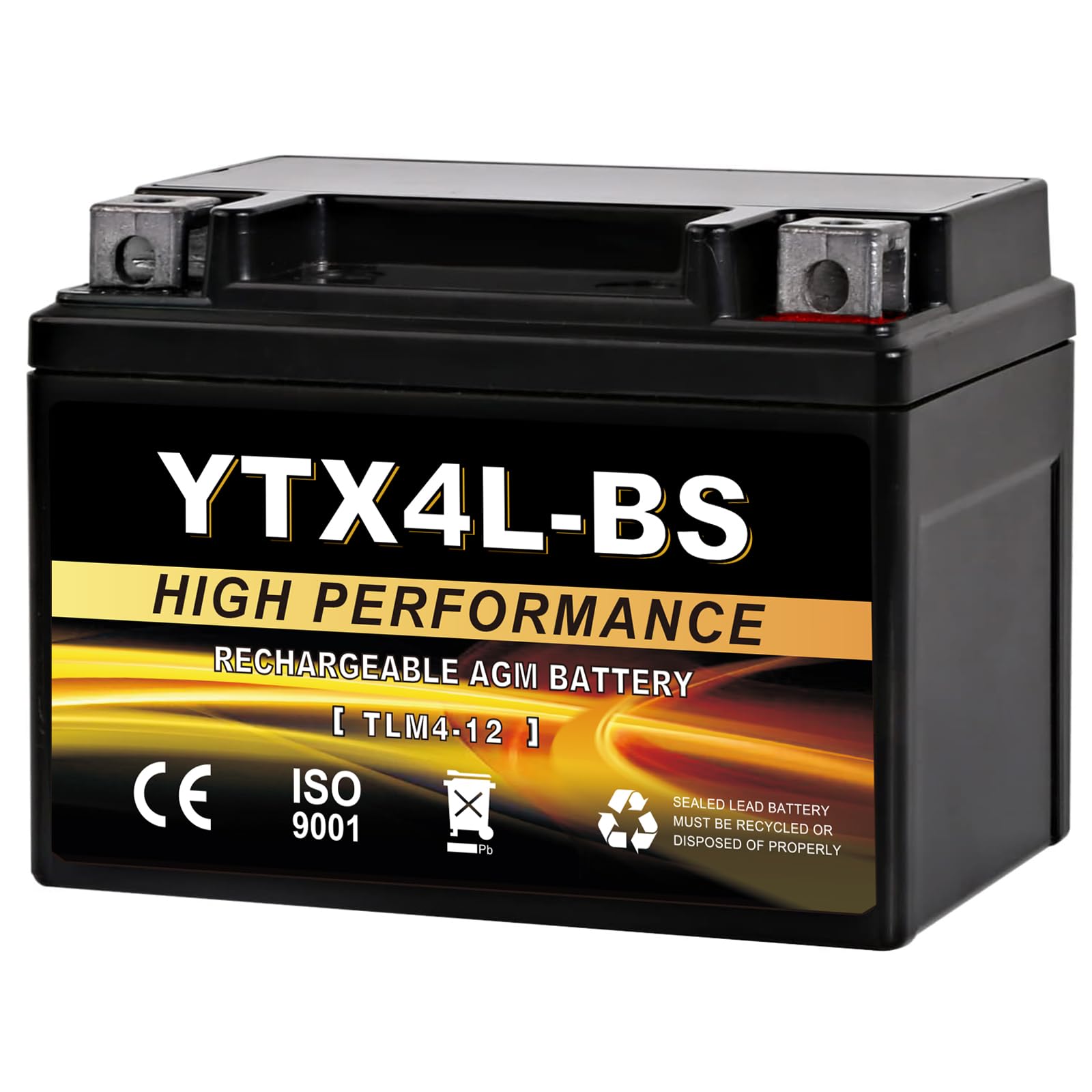
The quiet crowd favorite — a sealed pack that owners simply bolt in and forget about.
Nothing on this shelf gets more consistent praise for build quality and fit than this one, and it earns that by doing the boring things right. It arrives factory sealed, so there is no acid to pour and no water to add later, and it shows up charged and ready to connect. The 12V 3Ah rating with 50 CCA is enough for the everyday start on a 50cc-125cc machine, and the case runs 4.48 x 2.79 x 3.38 inches.
Fitment covers the usual suspects and then some — Polaris Scrambler 90 and Sportsman 90/110, Honda Spree NQ50 and Grom MSX125, Kawasaki KLX110, Yamaha TTR125E/LE, Can-Am DS70. Terminal layout is left negative, right positive, so check that against your harness. Vibration resistance and leak-resistant construction are aimed squarely at trail riding and daily commuting, and there is a one-year warranty behind it.
sealed leakproof case: fit and starting power are what owners talk about, and it has the largest review base of any pack here — 4.0+ stars across 900+ ratings. It is the safest bet on the list if you want a consensus pick rather than a spec-sheet gamble.
modest 3Ah capacity: at 3.5 pounds it is the heaviest option, and the terminal bolts split opinion — some find them long enough to work easily, others hit connection snags. It is a minor annoyance on an otherwise easy install, not a reason to steer clear.
tight battery boxes: anyone who wants the most proven, no-fuss sealed battery and does not need the highest cranking number.
high drain setups: lithium-weight chasers and hard cold-start riders — the 50 CCA and 3.5 pounds are the trade-off.
5. ExpertPower YTX4L-BS Battery

A GEL pack with 120 CCA that starts a cold bike every morning and asks nothing back.
The number to note here is 120 CCA — well above the 4Ah OEM spec most small machines ask for, and enough to fire a reluctant engine in cold weather. Add the 4Ah capacity, which the maker points out exceeds the standard 3Ah rating, and you have a pack with headroom rather than a bare minimum. The sealed GEL construction is spill-proof and vibration-resistant, and it needs no water refilling.
Fitment is a direct OEM swap for YT4L, GTX4L and GT4L models, and the case is 4.45 inches long by 2.76 wide by 3.34 high. The named applications run the small powersports gamut — 50cc scooter SA50 Elite LX, youth ATVs like the Cobra CX50 and Scrambler 50/90, and two-stroke dirt bikes. Cranking performance is the thing riders praise, and installation is straightforward enough for a driveway job.
The battery-life story is split, though — plenty of riders report it holds charge well, and some say it fades within about eight months. That is the nature of a sealed-lead-acid pack that sits unused; a battery tender during the off-season does more for it than any spec on the label. Compare it to the ZIPPBATTERY: both are small sealed packs, but this one brings 120 CCA against that pack’s 50 CCA.
drop in swap: a cold-climate rider who wants GEL durability and a cranking number that clears the OEM spec comfortably.
warranty seekers: it is still lead-acid, so factor in a tender if the machine sits for long stretches between rides.
6. Mighty Max Battery YTX4L-BS

Built for the machine that sits all winter and still needs to start on the first spring crank.
This is a 12V 3Ah GEL pack rated at 50 CCA, but the spec that matters most is its slow self-discharge rate. Compared to AGM, GEL loses its charge more slowly while idle, which is exactly what you want if your dirt bike or quad spends weeks under a tarp. It also holds up across temperature swings, from summer heat to winter chill, thanks to that GEL paste.
The thick, non-spillable gel is the safety story too — less chance of an acid spill or fumes, and better resistance to the vibration and shocks of trail riding. The case is 4.4 x 2.75 x 3.42 inches, it carries a one-year manufacturer warranty, and fitment covers the typical scooter and small-ATV applications. Owners routinely report it performing well on 50cc machines and fitting exactly where the old one came out.
GEL deep cycle life: battery quality and performance are the two things buyers talk about most, and the slow-discharge GEL chemistry backs up why. If you are tired of jump-starting a parked machine, this is the design that helps.
slower recharge: the lifespan is genuinely mixed — some packs run beyond a year, others give up around the 60-day mark. At 50 CCA it is not built for hard cold cranking, and a tender still helps. It is a good fit for light, seasonal use rather than a daily hard-start machine.
seasonal storage: a seasonal ATV or pit bike where the battery sits idle for weeks and slow drain is the enemy.
fast charging: a machine that needs maximum cold cranking — 50 CCA is the floor of this list, not the ceiling.
7. MMG YTX4L-BS Gel Battery for ATV/Powersports
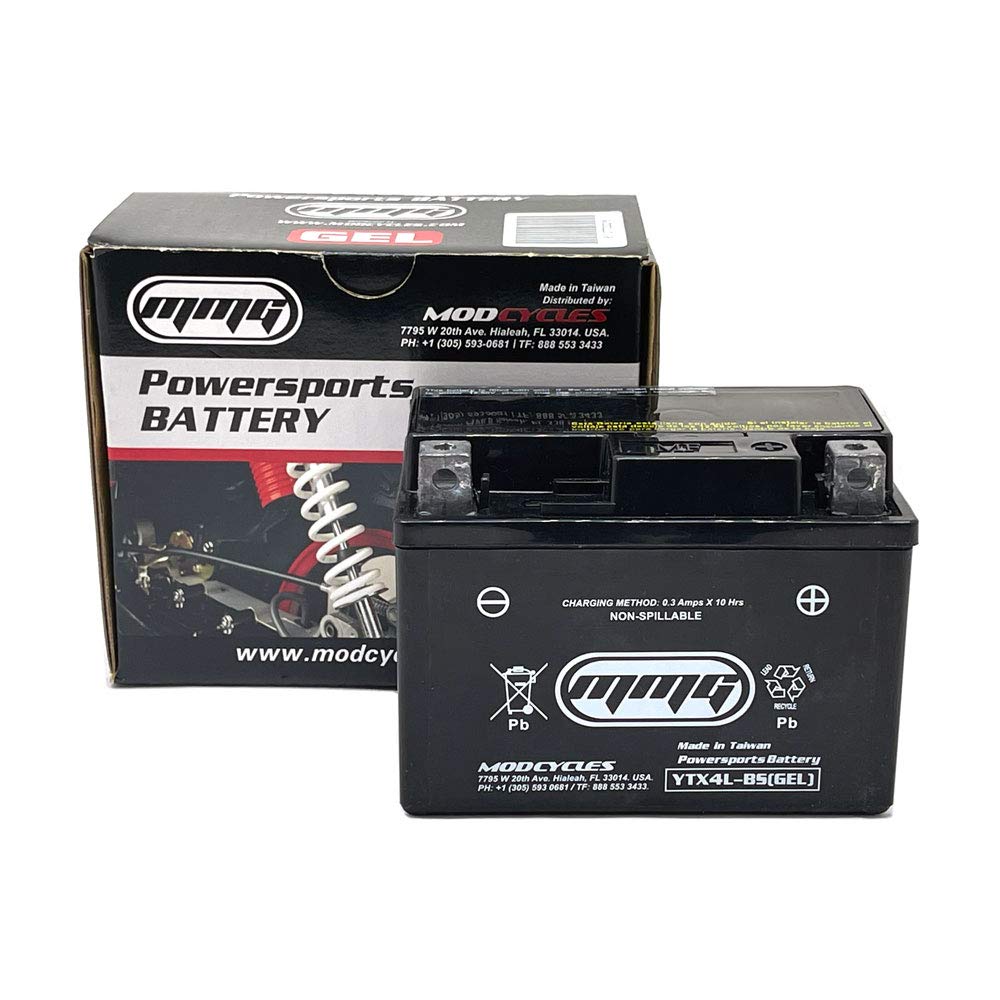
The universal replacement that claims coverage from tiny 50cc scooters all the way up to 700cc machines.
MMG sells this as a broad fit — 50cc to 700cc, motorcycles, scooters and ATVs alike — and backs it with a long cross-reference list. It replaces PTX4L-BS, GT4L-BS, 4L-BS and a whole lineup of store-brand equivalents from Interstate, NAPA, DieHard and more. If you are unsure which battery your old machine used, that reference list is genuinely useful.
It ships fully charged and factory sealed, so no acid handling and no waiting on a charger. The sealed design keeps electrolyte contained with no bottles to pour. Case dimensions run 4.5 x 2.8125 x 3.375 inches at a claimed 2.9 pounds, which makes it one of the lighter lead packs here. It handles shocks and vibration for off-road use, and the resistance figure sits at 20 milliohms.
Now the honest part: this one has a shorter warranty than most — six months, and you cover shipping for any replacement. Reliability and value are the two areas where feedback splits, and keeping a charge over time is where it draws the most criticism. It is a fine budget fit for a light machine, but it is not the pack to bet a hard-starting engine on. Compare it to the Daakmax above and the difference is warranty and consistency, not fitment breadth.
off road quads: an oddball application where you need the widest possible model cross-reference and pre-charged convenience.
weight watchers: the six-month warranty and split long-term feedback mean it suits light, low-stakes use rather than daily hard starts.
8. TYKOOL LFP4L-BS-STD Lithium Battery, Replaces YTX4L-BS
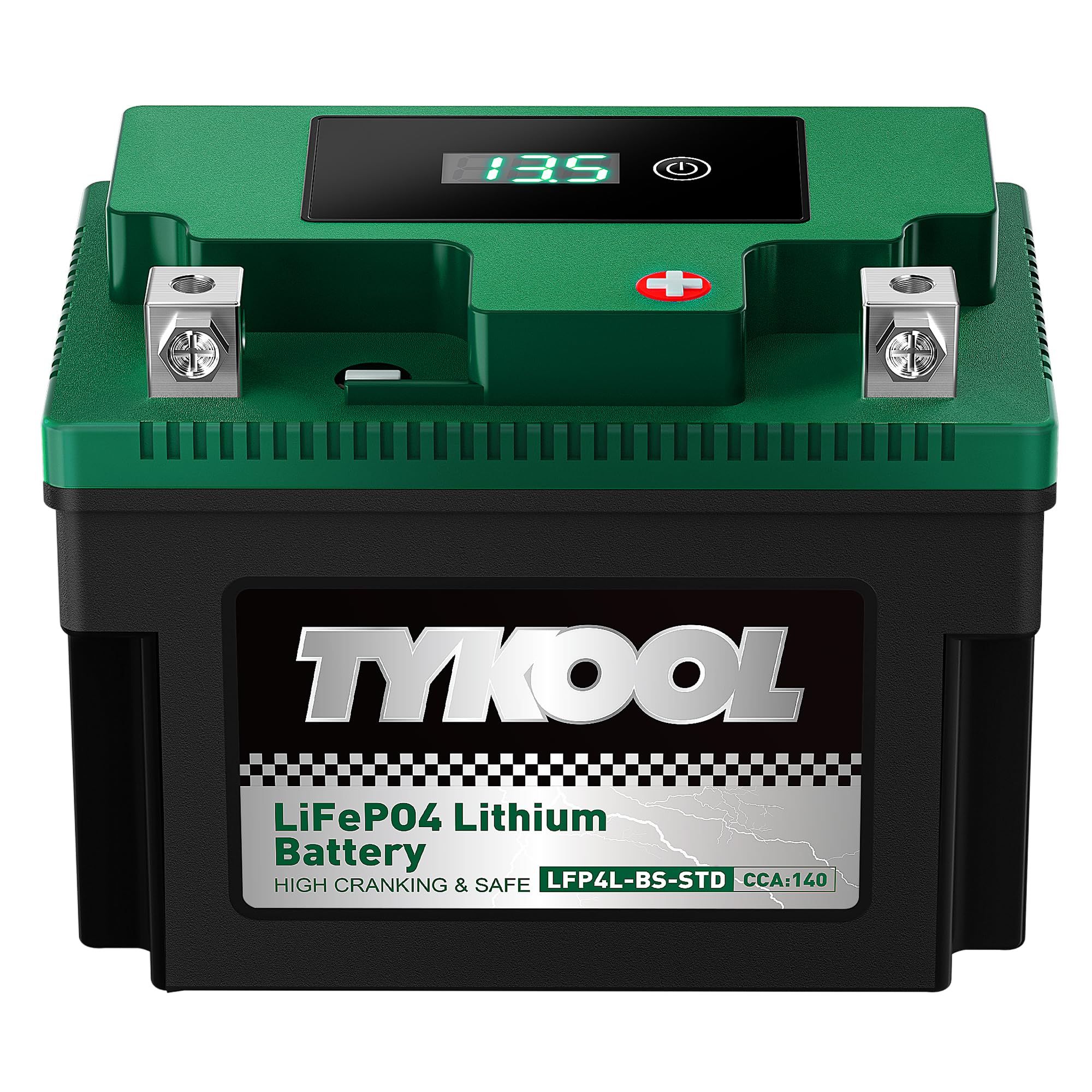
A lithium drop-in that cuts the weight dramatically and shows you the voltage on a built-in screen.
At 140 CCA and 3Ah, this pack matches the cranking punch of the strongest AGM here while weighing in far lighter — 1.26 pounds, which the maker says is 70% lighter than a lead-acid YTX4L-BS. That weight saving is real when you are lugging a battery up a trail or fitting it to a small bike. The internal BMS (battery management system, a circuit that guards against overcharge and over-discharge) protects the cells, and the built-in LCD shows real-time voltage so you can see its state at a glance.
It is IP66-rated (resistant to heavy rain, mud and power-wash spray), fits the standard 4.45 x 2.76 x 3.35 inch tray with [- +] polarity, and comes with vibration-proof terminal bolts. The low self-discharge rate of under 1% means it starts after months of storage, and it is pre-set to replace YTX4L-BS, YT4L-BS and GT4L-BS.
This is not a universal swap, though. It requires a regulated vehicle output under 15.0V and a proper LiFePO4 charger — lead-acid chargers with pulse or desulfation modes can damage the BMS. It is also explicitly not compatible with TaoTao series or unregulated systems without a full-wave regulator upgrade. The battery-life feedback is mixed, with a few reports of early failure. If you run a modern regulated bike, it is a clever choice; if you have an old unregulated scooter, stick with lead.
race builds: a modern, regulated bike where the 1.26-pound weight saving and on-screen voltage readout pay off.
stock charging: TaoTao or unregulated systems, or anyone still charging with a lead-acid unit.
9. Forgetyo Lithium YTX4L-BS 12V 2.5AH 250CCA LiFePO4 Battery
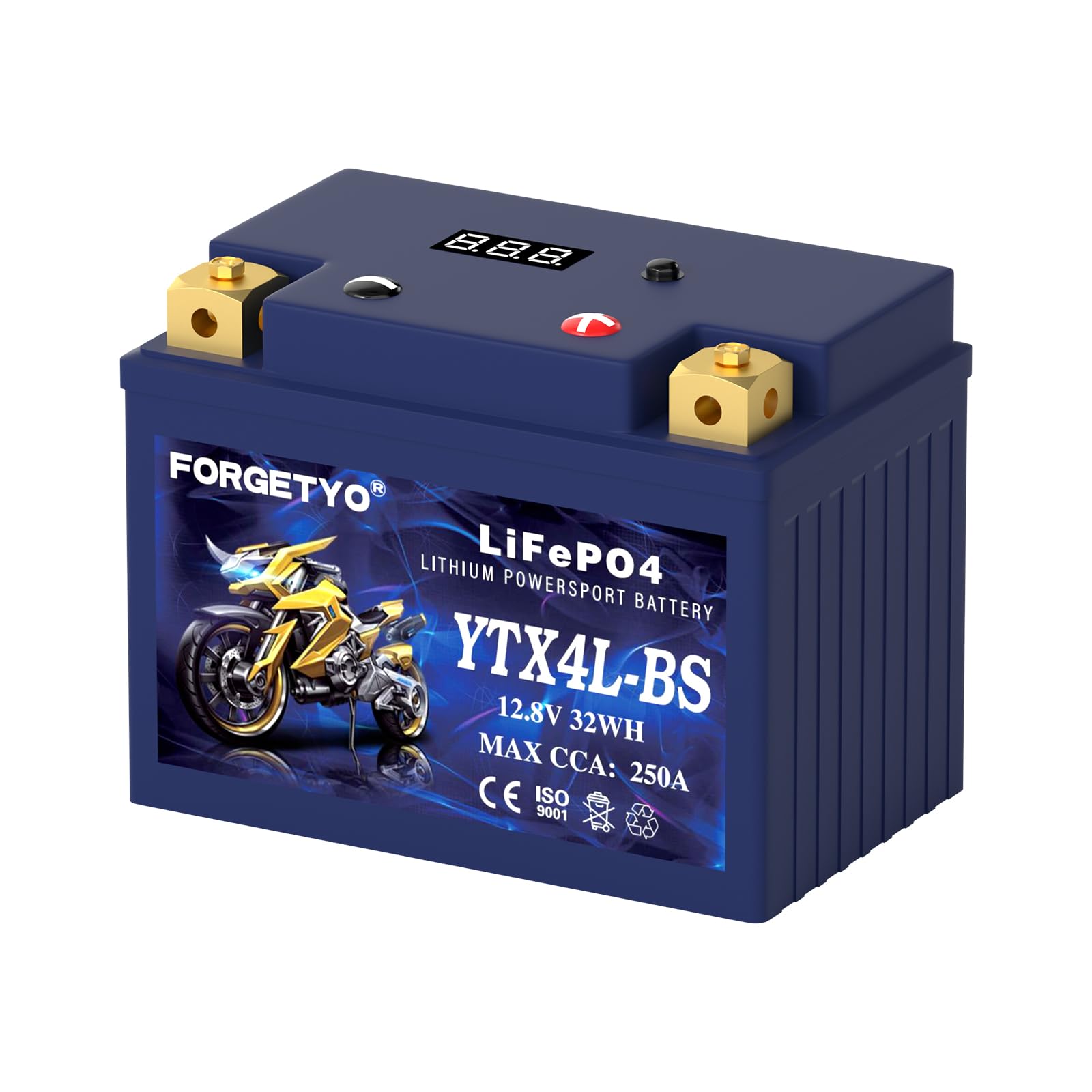
The highest cranking rating on the whole list, from a pack that weighs under a pound.
Forgetyo lists 250 CCA from a 12.8V 2.5Ah cell — a cranking number no lead-acid pack here comes close to, and a straight 2X over a typical lead pack per the maker’s own claim. Add the 32Wh capacity and it is a genuine cold-start monster. It weighs just 0.99 pounds, about a third of a lead-acid AGM equivalent, and it packs an energy density the maker puts at 3-5 times greater.
The BMS cuts the circuit automatically if it detects overcharge, over-discharge, a short or overheating, which is the safety backbone of any lithium pack. Polarity is right-positive, left-negative, and the case fits the standard 4.45 x 2.76 x 3.35 inch tray. It suits ATVs, UTVs, PWCs, jet skis, quads, 4-wheelers, scooters, snowmobiles and generators, with a claimed 2000 discharge cycles versus 300 for lead-acid. It also carries a two-year warranty on defects.
The catch with any lithium is the charger — you need a 14.6V DC lithium unit at around 1A, not your old lead-acid tender. Battery life is the mixed note, with some reports of early trouble, and at 2.5Ah the capacity is lower than the 4Ah lead packs if you run accessories off the battery. Still, for raw cranking in a featherweight package, nothing here competes.
hard cranking: raw starting power in the lightest possible package, especially on a jet ski or quad where every ounce counts.
tight budgets: a proper lithium charger — the wrong charger is the fastest way to hurt this pack.
Know the Specs
Cold Cranking Amps (CCA)
CCA is the burst of current a battery can deliver in cold conditions to turn your starter. A higher number means a stronger, faster crank, which matters on a cold morning or a hard-starting engine. The packs here stretch from 50 CCA to 250 CCA, and the replacement should never be lower than your original.
Battery Chemistry: AGM, GEL, and Lithium
AGM holds the acid in glass matting and is spill-resistant; GEL turns it into a paste that resists vibration and drains slowly when idle; LiFePO4 packs the same fitment into far less weight. GEL suits machines that sit for long stretches, while lithium demands a matching charger and a regulated voltage output.
Terminal Polarity and Case Size
Polarity — which side is positive and which is negative — decides whether a battery drops straight in or fights your wiring. Case dimensions matter too; a YTX4L-BS tray will not accept a larger model like a YTX5L-BS. Always compare your old battery’s size, terminal layout and voltage before buying.
Capacity and Self-Discharge
Capacity, in amp-hours, is how much energy the battery stores; Ah is not the same as CCA, which is starting burst. Self-discharge is how fast it loses charge while parked, and GEL lasts longer here than AGM. A lower-capacity pack still starts an engine fine, but drains faster if you run lights or accessories off it.
Common Questions
Will a YTX4L-BS battery fit my bike?
What is the difference between YTX4L-BS and YT4L-BS?
How many cold cranking amps do I need?
Do I need a special charger for a lithium YTX4L-BS?
Can I use a GEL battery in place of an AGM one?
How long does a YTX4L-BS battery last?
What does “bottle supplied” mean on the Yuasa battery?
Is a lithium battery safe in a motorcycle?
Can I jump-start a lithium YTX4L-BS battery?
What terminals does a YTX4L-BS use?
The Bottom Line
For most riders, the ytx4l-bs battery to get is the Yuasa YUAM62X4B, because its bottle-supplied dry pack and lead-calcium chemistry give you a freshly activated battery that holds its charge longer between rides. If you want more cranking amps without leaving the AGM world, grab the HEOMAITO 140 CCA pack. And for a featherweight lithium pack that cranks hardest of all, the Forgetyo 250 CCA is the one to reach for.
How we choose
We do not accept paid placement. Every pick is matched to a real buyer and a real use-case; we do not hands-on test units.
Sources
Specifications: manufacturer listings and product documentation. Review insights: verified customer reviews, as of November 2026. Pricing: not shown on this page (it changes often); check the current price via the retailer link.
As an Amazon Associate, Tactical Gear Guy earns from qualifying purchases. This does not affect which products we feature.