Specs are compiled from manufacturer listings and verified buyer reviews and can change over time — please confirm the key details on the product page before buying.
You want a step count on your wrist that you don’t have to charge every night or pair to a phone. The Garmin Forerunner 570 gets the most of that right: 4.5+ stars across 600+ owners, an aluminum bezel, and up to 10 days of smartwatch battery. The other watches here answer a different question: how much do you actually want your watch to do?
This guide is built by comparing the manufacturers’ published specifications and the patterns across verified customer reviews, so you get each pick’s real strengths and trade-offs instead of marketing spin.
The shortlist splits into two kinds of buyers — app-free step counters and phone-paired smartwatches — and once you know which one you are, the choice gets simple fast. Both kinds win, as long as you match the tracking depth to how much you really want to wear the thing.
Top Picks


How To Choose The Best Wrist Watch Step Counter
The most common mistake is buying a full training computer when all you want is a step tally. A step counter only works if you actually wear it, and every feature you never touch costs charging time and wrist weight.
Start with if you want a phone in the loop
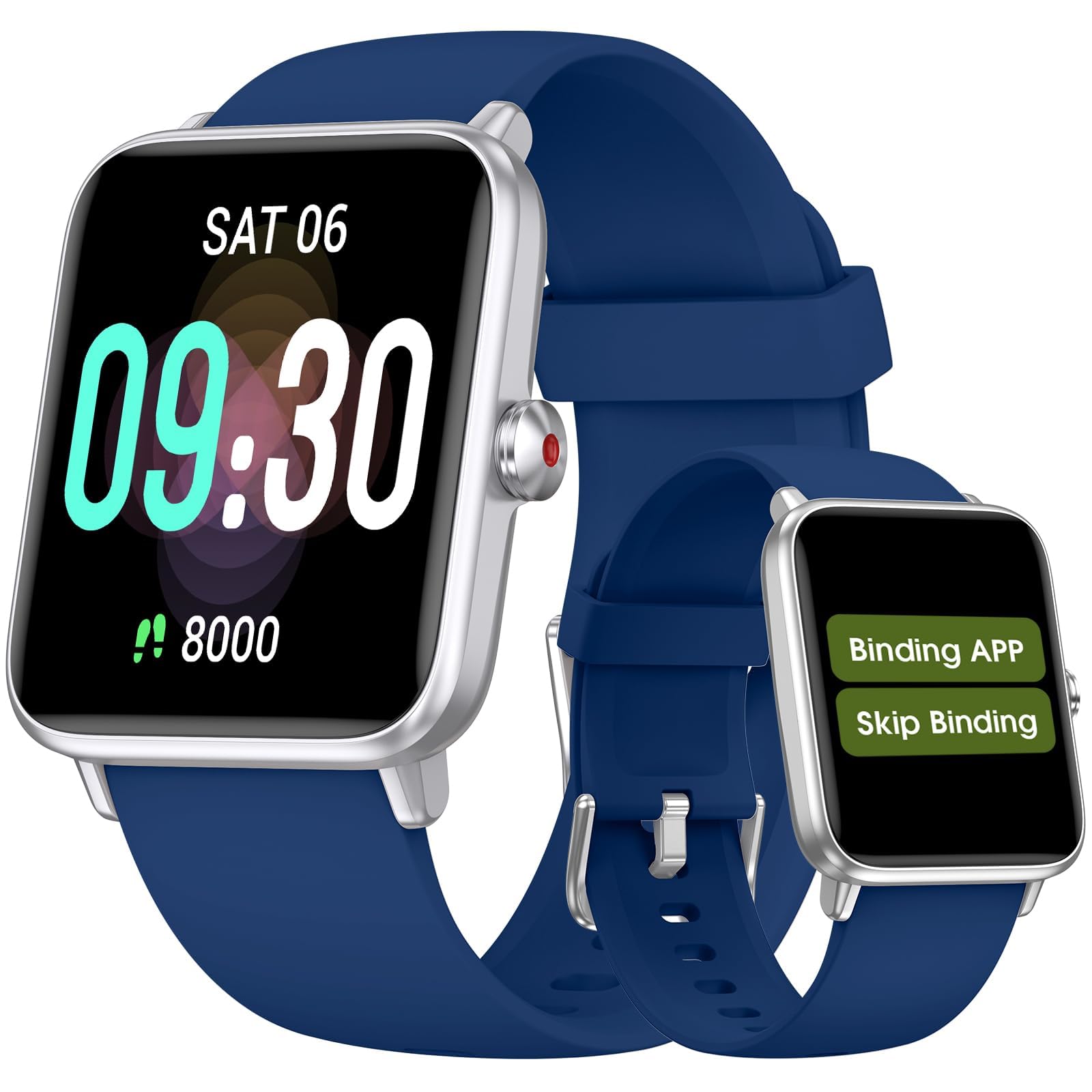
Some step counters run entirely on their own. The Stiive pedometer watch sets up right on the screen and stores activity for a fixed local window, so nothing needs an app. Most others sync to a phone over Bluetooth, which gives you history and sleep breakdowns but means one more thing to connect.
Read the battery number in two parts
Watches quote battery life in smartwatch mode and again in GPS mode, and those two numbers are far apart. The Garmin Forerunner 570 runs up to 10 days in smartwatch mode but only up to 18 hours with GPS running. If you hike with tracking on all day, plan around the second figure.
Match the case size to the wrist
A large watch on a small wrist catches sleeves and feels heavy by evening. The 42 mm Forerunner 570 and the 40 mm Galaxy Watch are built for smaller wrists, while the 45 mm Instinct 3 sits larger on purpose.
Decide how much water and rough handling you’ll throw at it
Water-resistance ratings differ sharply. An IP68 rating handles rain, sweat and hand washing, while a 10 ATM rating is built for real submersion and watersports. If you swim laps, that distinction decides your shortlist.
Side-by-Side Comparison
| Model | Best For | Battery (Smartwatch) | Display | Water / Build | Amazon |
|---|---|---|---|---|---|
| Garmin Forerunner 570 (42mm)★ Best Overall | All-round training and daily steps | Up to 10 days | AMOLED touchscreen | Aluminum bezel | Amazon |
| Stiive Pedometer WatchNo-Phone Simplicity | No phone, no app, simple setup | Up to 7 days | 1.4″ touchscreen | IP68 | Amazon |
| HOMOGO Smart Watch for WomenBest for Calling | Calling plus 100+ sport modes | — | 1.83″ HD LCD | IP68, two bands | Amazon |
| Fitbit Inspire 3 | Set-and-wear everyday tracking | Up to 10 days | Slim tracker display | Resin case | Amazon |
| Amazfit Active 3 | Battery-first GPS tracking | Up to 12 days | 1.32″ AMOLED | Sapphire glass, stainless steel | Amazon |
| Garmin Forerunner 70 (43mm) | Running plans on a budget Garmin | Up to 13 days | AMOLED touchscreen | ABS case | Amazon |
| COROS PACE 4 | Race-day training on low weight | Up to 19 days | 1.2″ AMOLED | Silicone, 32g | Amazon |
| Garmin Instinct 3 Solar | Rugged outdoor and solar charging | Up to 28 days | 0.9″ display | 10 ATM, MIL-STD-810 | Amazon |
| Samsung Galaxy Watch9 (40mm) | Android users who want health detail | — | Touchscreen | Graphite finish | Amazon |
Detailed Reviews
1. Garmin Forerunner 570 42mm
Our pick — 4.5+★ from 600+ verified ratings; the strongest balance of quality and price.
A 42 mm running watch that counts steps and then explains them.
The Forerunner 570 is the pick for the person who started wanting a step count and ended up curious about everything else — sleep, recovery, training load. Its brightest AMOLED touchscreen pairs with physical button controls, so you can swipe through a stats screen or press through it with wet hands. The aluminum bezel and 42 mm case are sized for smaller wrists, which matters when a watch is meant to stay on through the night.
Battery is where it separates from the simplers on this list. You get up to 10 days in smartwatch mode and up to 18 hours with GPS recording, a spread that tells you plainly what tracking costs. Unlike the Amazfit Active 3 below, which stretches to 12 days of typical use, this Garmin trades a couple of days of idle time for the deeper training features. The built-in microphone and speaker let you take calls from your wrist when paired to your phone.
What wins people over is the overall build and feel — it is the most-discussed strength on the Forerunner’s review pages by a wide margin, and owners talk about it as a watch first and a tracker second. Sleep and GPS accuracy come up repeatedly as the two things that actually hold up day after day. There is an honest catch on the money side, though: plenty of buyers find the feature set worth it while a visible share question whether the price matches what they use. Set up so it powers on with basic step tracking already running from the start.
Where it pulls ahead
- Up to 10 days in smartwatch mode, so charging becomes a weekly habit rather than a nightly one
- Physical buttons plus a touchscreen mean you can control it in rain or with gloves on
- 42 mm case and aluminum bezel suit smaller wrists without looking like a training brick
- Built-in mic and speaker let you answer calls from your wrist when paired to a smartphone
What to weigh first
- GPS mode drops the battery to up to 18 hours, so long days of route tracking eat into it fast
- Some owners feel the price is steep relative to the features they personally use
- The training metrics go deeper than a pure step counter needs — a lot of screen real estate if you only count steps
Reach for it if: you want one watch that counts steps all day, tracks sleep all night, and has room to grow into real training.
Think twice if: you only ever look at the step number — the extra training layers cost battery and wrist presence you may never use.
2. Pedometer Watch Senior Friendly
The step counter for anyone who does not want a second phone on their wrist.
Here is the watch that answers the question a lot of buyers are too polite to ask: do I have to set up an app? No. Turn it on, set the time and your details right on the watch face, and start walking. It reads the time, counts steps, monitors heart rate and SpO2 (blood oxygen), tracks sleep, and records workouts with distance, calories and duration — plus a stopwatch and alarm.
The self-contained design carries one trade-off worth knowing before you buy. Activity data is saved locally on the watch for up to 7 days, and you need the companion app to sync that history for long-term viewing. If you never install the app, you simply see the recent window and nothing older. The up-to-7-day battery life matches that same weekly rhythm, and a charge takes roughly 1.5 hours. IP68 water resistance covers daily use — rain, sweat, hand washing — without asking you to baby it.
The 1.4-inch square touchscreen keeps the numbers large and readable, which is exactly the point for a first smartwatch or a watch for someone who wants tracking without tech support calls. Build quality is what buyers praise most here, with battery life close behind. The honest note is that it is a basic tracker, not an athlete’s tool — no GPS, and no long-term history without the app. A solid everyday choice if simplicity is the whole point.
The daily truth: the 7-day local storage and the app-free setup mean the watch works on its own terms — you get a clear step count without a phone in the room.
The limit to know: skip the app and you also skip the long history, so decide up front whether you care about past months or just today’s number.
Good match for: a first-time tracker, an older wearer, or anyone who resents pairing a watch to a phone just to see a step count.
Look elsewhere if: you want to review months of step history or need GPS route tracking — this one keeps things deliberately local and simple.
3. Smart Watches for Women
A step counter that also lets you answer the phone without digging it out.
Folks who want the watch to double as a phone accessory should start here. The HOMOGO pairs over Bluetooth to iOS or Android, makes and answers calls with noise reduction, stores 20 contacts for dialing from the wrist, and pushes SMS plus app notifications. The step side is no afterthought: the pedometer tracks steps, calories, distance and duration, auto-detects walking and running, and opens up 100+ sport modes for everything from cycling to yoga.
The screen is a big part of the pitch. A 1.83-inch HD touchscreen runs 100+ watch faces through the VeryFit app, and you can load your own photo as the backdrop. Health tracking runs 24/7 across heart rate, blood oxygen, stress, sleep and menstrual cycle. The 300 mAh battery is the largest capacity on this list — the Garmin Forerunner 570 carries 270 mAh in comparison. Two bands come in the box, a stainless steel one for work and a soft silicone one for training or sleep.
IP68 water resistance covers rain, sweat and hand washing, though hot water and seawater are worth avoiding. Owners describe it as a stylish watch with serious battery endurance, and buyers put its full feature spread on par with name-brand alternatives. Small daily extras pile up nicely too — remote camera control, music playback, find-my-phone, sedentary and drink reminders. The catch is the notification load: a watch this busy can feel like a second inbox if all you wanted was a step tally.
What earns its place
- Answer and place calls from the wrist with 20 stored contacts and noise reduction
- 300 mAh battery — larger capacity than the 270 mAh Forerunner 570
- 100+ sport modes with automatic walking and running detection
- Two bands included, so one watch covers the office and the gym
Where to stay careful
- Every feature runs through the phone over Bluetooth — no true standalone tracking
- IP68 handles rain and sweat, but hot water and seawater are off-limits
- Notification and calling features can feel like more than you asked for
Reach for it if: you want calls, notifications and step tracking in one wrist piece with two bands to swap.
Pass if: you want a watch that tracks entirely on its own — this one leans on your phone for the smart features.
4. Google Fitbit Inspire 3
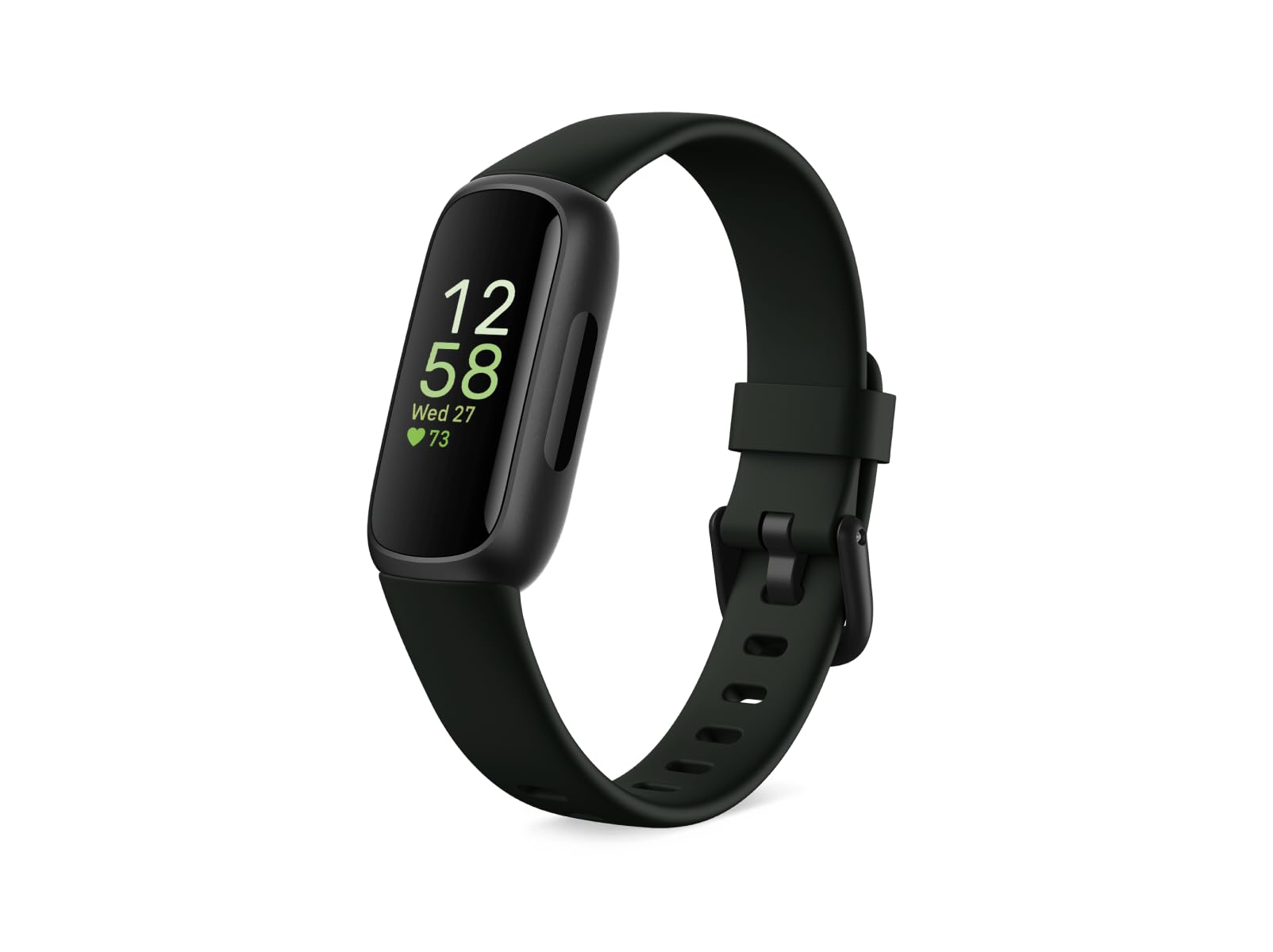
The sleeper pick: a slim band that counts steps and stays out of the way.
If a watch-shaped thing on your wrist feels like too much, the Inspire 3 is the answer. It is a slim tracker with a resin case and a silicone band, sized to wear through sleep and workouts without catching on a sleeve. It runs all-day activity tracking with 24/7 heart rate, 40+ exercise modes, automatic exercise tracking and reminders to move. The stated step-tracking performance is one of its clear strengths.
The deeper health layer is what keeps people wearing it. You get a Daily Readiness Score, Active Zone Minutes, a daily Stress Management Score, relax breathing sessions, sleep tracking with a detailed Sleep Score, a smart wake vibrating alarm and irregular heart rhythm notifications with SpO2. Charging takes 2 hours and buys up to 10 days of use. It works with Apple iOS 16.4 or higher and Android OS 11.0 or higher.
Here is the honest part every slim tracker faces. Some buyers report the charging connection stops working after a couple of months, while many others call the battery amazing. So reliability, not the feature list, should drive your decision. This is still among the most widely worn fitness trackers around, and that many people wearing one says a lot about how well it fits daily life. Treat the charger and its contact with care and you play to its strengths.
What it does best: it counts your steps and heart rate in a band so light you forget it is there. It also tracks a full night’s sleep, which most watches on this list offer too, but at a fraction of the bulk.
The one caution: the charging setup is the recurring pain point, so keep the cable in one safe place and treat it as the part that wears.
Fit for: the buyer who wants quiet, near-invisible tracking rather than a training computer on the wrist.
Best for: anyone who wants a step count, sleep score and heart rate in a band that barely registers on the wrist.
Consider another pick if: you want a visible watch face, built-in GPS, or a charging connection you never have to think about.
5. Amazfit Active 3
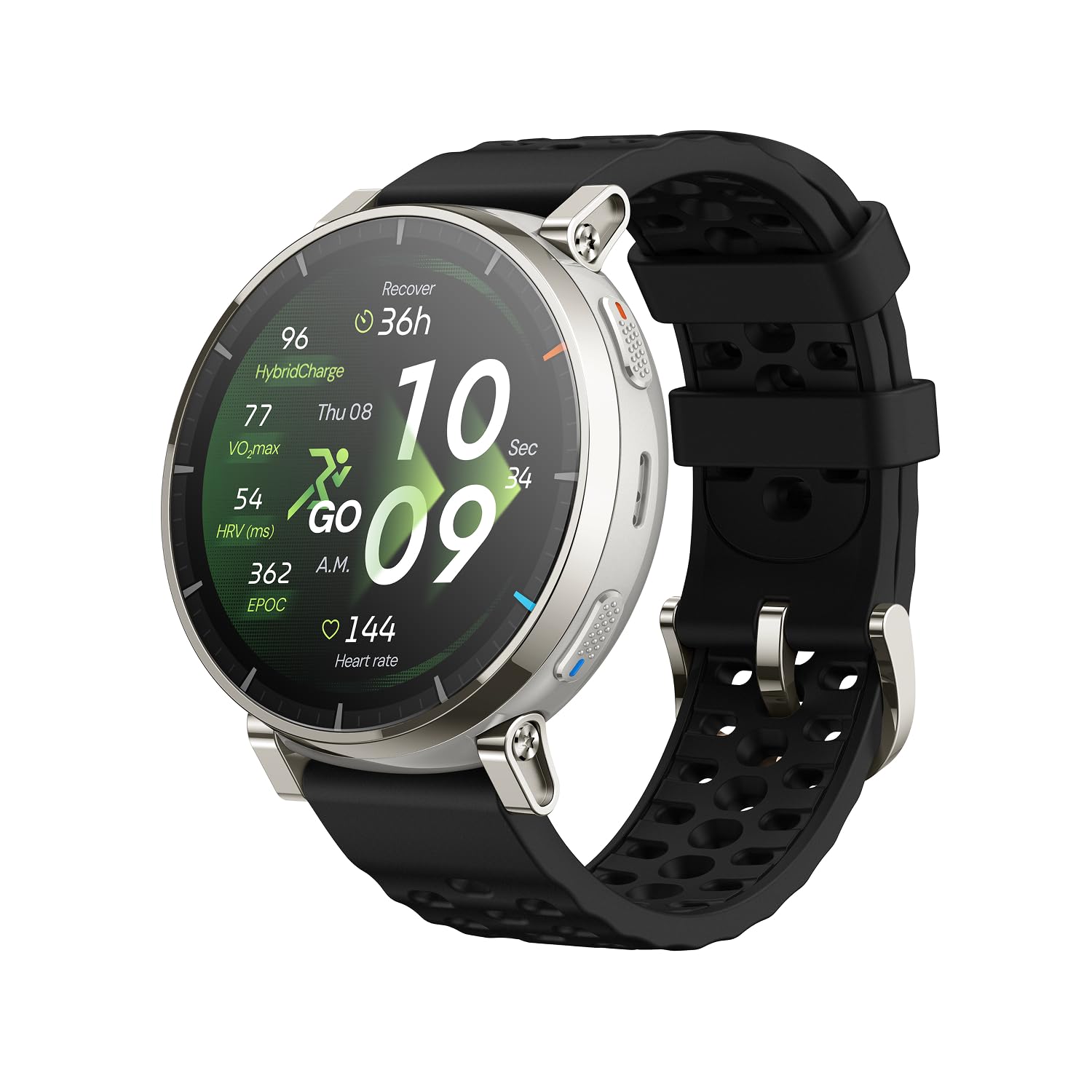
Twelve days a charge, with a sapphire face that shrugs off scrapes.
You charge this watch less often, and that is the whole story here. The Active 3 runs 12 days of typical use, holds up for 7 days of heavy use, and manages 24 hours of continuous GPS route tracking. Against the Forerunner 570’s up to 10 days in smartwatch mode, that stretches noticeably further between charges. The 1.32-inch AMOLED display (a bright screen you can read in daylight) sits in a stainless steel frame under scratch-resistant sapphire glass.
There is no subscription trap either. The Zepp app is free across all Amazfit products, so health and workout trends, sleep analysis and progress data stay open to you. GPS draws on six satellite systems for location, and you can download free offline maps with turn-by-turn directions and automatic rerouting without needing your phone. Over 170 workouts are built in, covering HYROX training, runs, swimming and more, with Zepp Coach programs running from 5K to marathon distance. Hands-free Bluetooth calling and Voice Control round out the workday angle.
Owners notice the build first and the features second. The stainless steel and sapphire combination looks far more expensive than the spec sheet suggests, and buyers give steady credit to the health tracking, including automatic workout detection and sleep monitoring. Accuracy is the one metric that splits buyer opinion, which is fair for a watch at this tier. Want the best battery-to-price balance on this list? It is right here.
What it gets right
- 12 days typical use, 7 days heavy use, and 24 hours with continuous GPS
- Sapphire glass and a stainless steel frame that resist daily scrapes
- Free Zepp app with no subscription to access your own data
- Offline maps with turn-by-turn and automatic rerouting, no phone needed
What to keep in mind
- Accuracy is the mixed view among buyers — solid, but not the most trusted on this list
- Over 170 workouts can bury the basic step stats if you never dig into menus
- The charger is a magnetic base without a USB Type-C cable in the box
Reach for it if: you want long battery, a scratch-resistant face and full GPS without paying for a subscription.
Skip if: pinpoint accuracy on every metric is the one thing you will not trade — some buyers find the readings less consistent than they hoped.
6. Garmin Forerunner® 70, 43mm, Whitestone
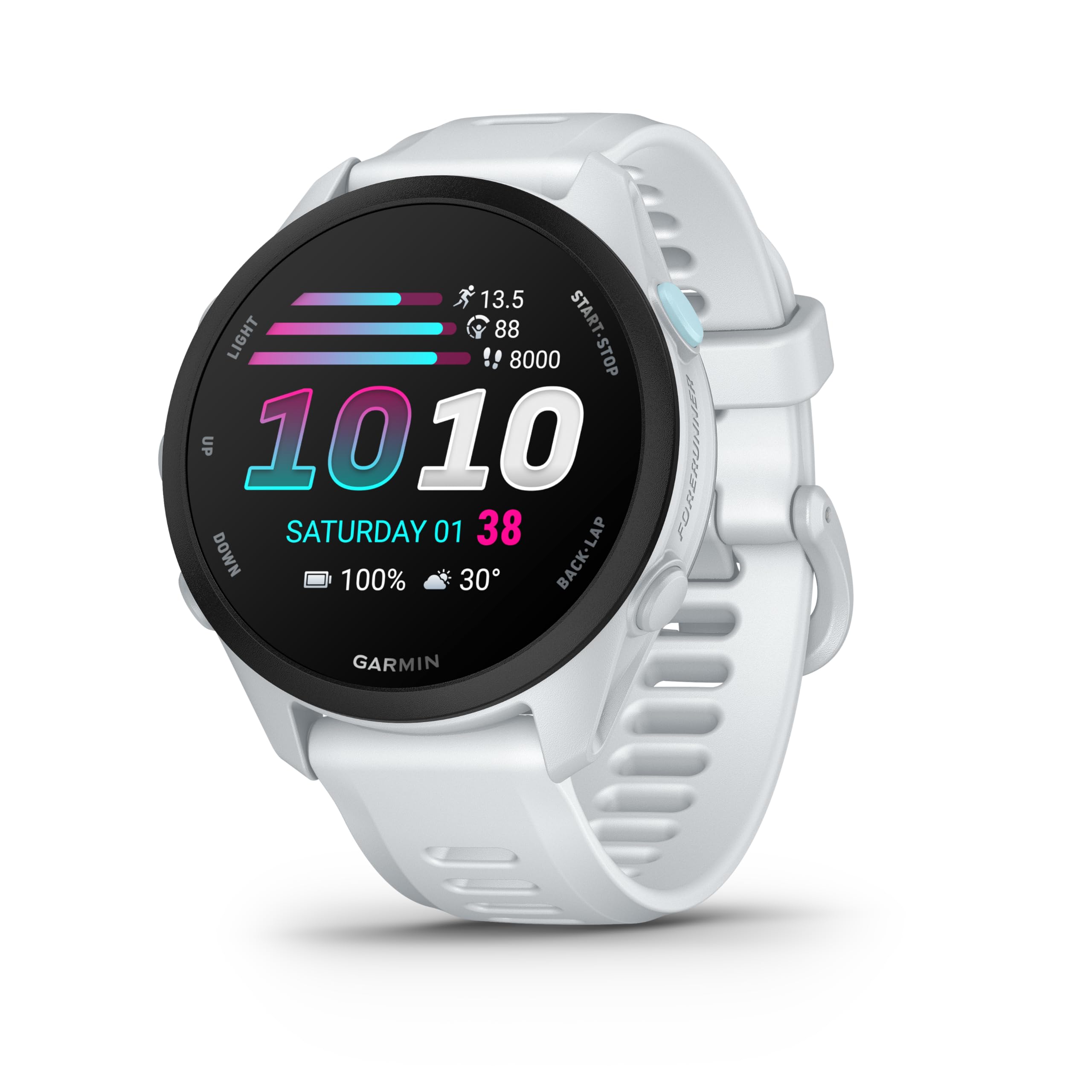
A running watch that stretches to 13 days between charges.
Here is the value play for someone who wants Garmin’s coaching without the top-of-line outlay. The Forerunner 70 carries up to 13 days of smartwatch battery and up to 23 hours in GPS mode — a little longer between charges than the Forerunner 570’s 10 days and 18 GPS hours. The 43 mm ABS case and a bright AMOLED touchscreen with button controls keep it light on the wrist, and built-in GPS delivers pace and distance with wrist-based heart rate.
The training tools punch above the price. Garmin Coach plans adapt to how you actually perform and recover, and run/walk workouts sit alongside higher-volume plans for experienced runners. Personalized daily suggested workouts adjust to match your performance, and a quick workout feature lets you build a run on the watch from a desired time and intensity. You also get sleep score and stages, a training readiness score, training status and recovery time — plus 80+ built-in activity profiles across running, cycling, HIIT and strength.
Owners call it a great running watch with accurate tracking, and swims and walks get specific praise alongside solid battery life and money-well-spent value. The mixed note belongs to the exercise list itself: the catalogue is broad but not endless, and some workouts simply are not there. It is a smarter pick than its bigger sibling if running is the goal and you do not need the extra speaker and mic.
Standout spec: up to 13 days in smartwatch mode beats the 570’s 10 days on pure time away from a charger, which is the number that decides the buy for a lot of people.
The honest trade: a lighter ABS case and fewer bells than the 570 — no built-in speaker and mic for calls, so pick based on what you will actually use.
Right buyer: a newer runner who wants adaptive plans and 80+ profiles without paying for the flagship.
Best for: runners who want adaptive coaching and long battery from a lighter, more affordable Garmin.
Look at the 570 instead if: you want the aluminum build and on-wrist calling this model leaves out.
7. COROS PACE 4
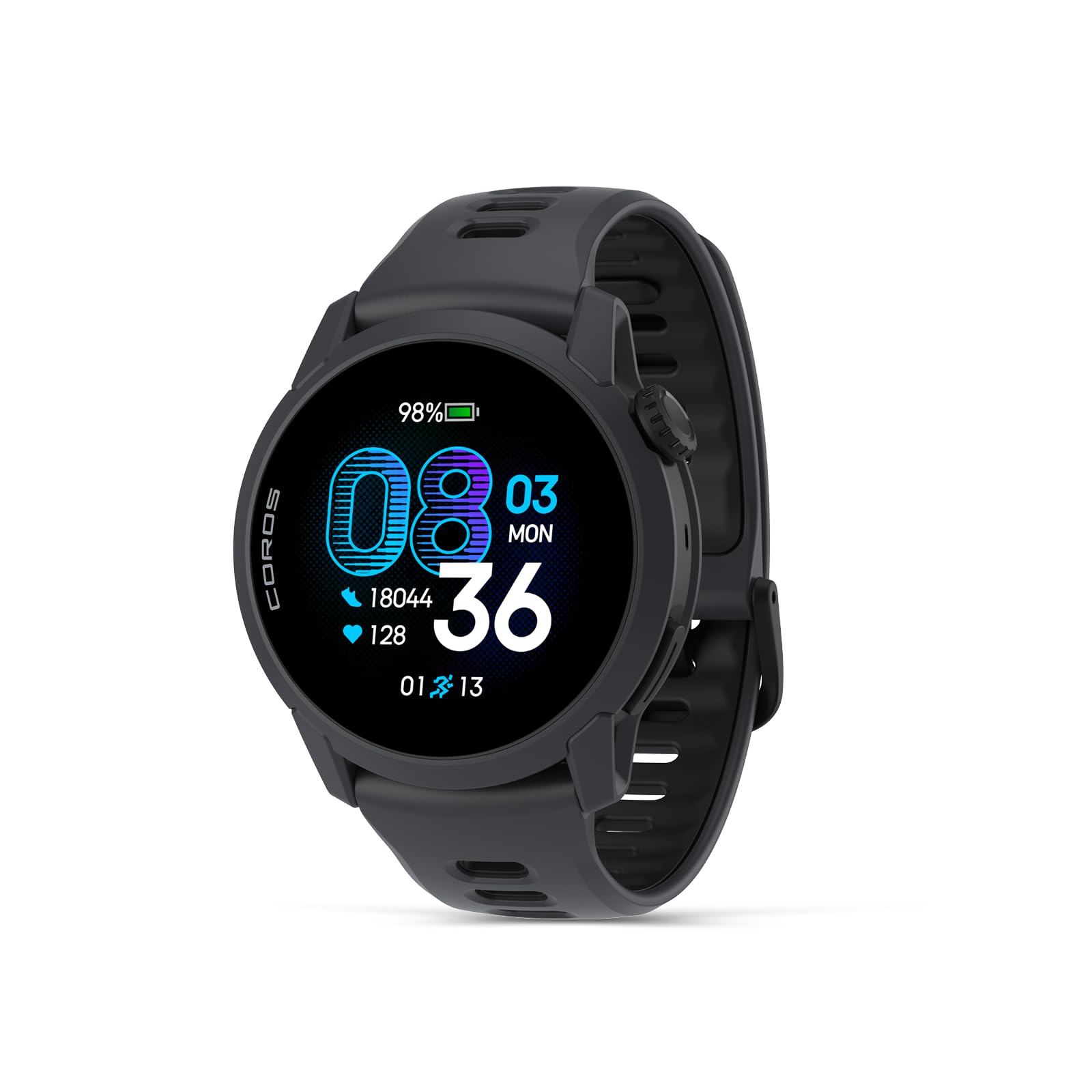
Thirty-two grams on the wrist, nineteen days off the charger.
Weight disappears here in a way that only makes sense once you have worn it. The PACE 4 comes in at just 32g with the nylon band and 11.8 mm thin, which is light enough for round-the-clock wear and barely noticeable mid-run. Battery matches that ambition: up to 19 days of daily use and 41 hours of continuous GPS — against the 570’s 10 days and 18 GPS hours, that gap is hard to ignore if you train outdoors often.
The display is a 1.2-inch touchscreen AMOLED with auto-adjusting brightness, and COROS reports its resolution is 164% higher than the PACE 3 it replaces. Control is handled through a tactile digital crown, two buttons and the touchscreen, with a customizable Action Button for one-tap access to media controls, breadcrumb navigation or voice pins. Those voice pins are a neat touch: record where you were, what you saw and how you felt, and the watch captures a training log at the end of the activity.
Functionality is what buyers call out most, with battery life right behind it, and accurate GPS performance plus a display that stays readable in direct sunlight get steady credit. The COROS app handles recovery time, sleep stages, HRV and menstrual cycle tracking in one place. It is a serious training tool for people who track effort, not a step-count fashion piece — worth keeping in mind if you want a simple daily number.
Why runners like it
- 32g weight and 11.8 mm thickness for wear that stays out of the way
- Up to 19 days of daily battery and 41 hours of GPS recording
- Auto-adjusting AMOLED display that stays readable in direct sun
- Voice pins and an Action Button for one-tap controls mid-workout
The case against
- The training-focused menus ask more of you than a straightforward step counter
- Comes with the watch only in the box — no extra band or cable extras included
- Not aimed at the casual wearer who wants a stylish daily piece
Reach for it if: you log serious mileage and want the lightest, longest-running training watch here.
Look elsewhere if: you want a simple daily step display rather than a tool built around workouts and recovery.
8. Garmin Instinct® 3 Solar, Rugged GPS Smartwatch, 45mm, Black

A step counter built like a field tool, not a dress watch.
Nothing else on this list takes a hit like the Instinct 3. It uses a 45 mm fiber-reinforced polymer case with a metal-reinforced bezel, is 10 ATM water-rated, and is designed to MIL-STD-810 for thermal and shock resistance. That combination means you can swim in it, bang it against rock and keep going. The 0.9-inch display pairs with a solar charging lens that Garmin says can deliver unlimited battery life with solar charging, assuming all-day wear with 3 hours per day outside in 50,000 lux conditions.
On plain battery, the watch runs 28 days — the longest between charges on this list — and the solar layer adds headroom if you spend real time outdoors. Navigation is covered by a 3-axis compass, a barometric altimeter and multi-band GPS with SatIQ technology, which Garmin says improves positioning while managing battery. A built-in LED flashlight with variable intensities and strobe modes is a genuinely practical addition for early starts and late finishes.
Health tracking covers wrist-based heart rate, advanced sleep monitoring and Pulse Ox, and Garmin is upfront that the watch is not a medical device and that readings are close estimates. Garmin Pay works with a supported bank for contactless payments. If your idea of a step counter includes standing on a trailhead at dawn, this is the one that survives the trip. Just expect a larger 45 mm case and a dimmer, tougher screen than the fashion-forward picks.
The rugged truth: 10 ATM water rating and MIL-STD-810 thermal and shock resistance are the specs to check first — they are what separates a trail watch from a desk watch.
Do not overlook: the 0.9-inch display is smaller than the AMOLED screens on the COROS and Amazfit picks, so if a big, bright screen matters, look there.
For the buyer who: wants the longest plain battery on the list and a watch that takes a knock without complaint.
Reach for it if: your steps happen on trails, in water, and in weather — this is the toughest watch here.
Think twice if: you want a large, bright AMOLED screen for reading stats at a glance.
9. Samsung Galaxy Watch9, Graphite, 40mm Bluetooth Smartwatch
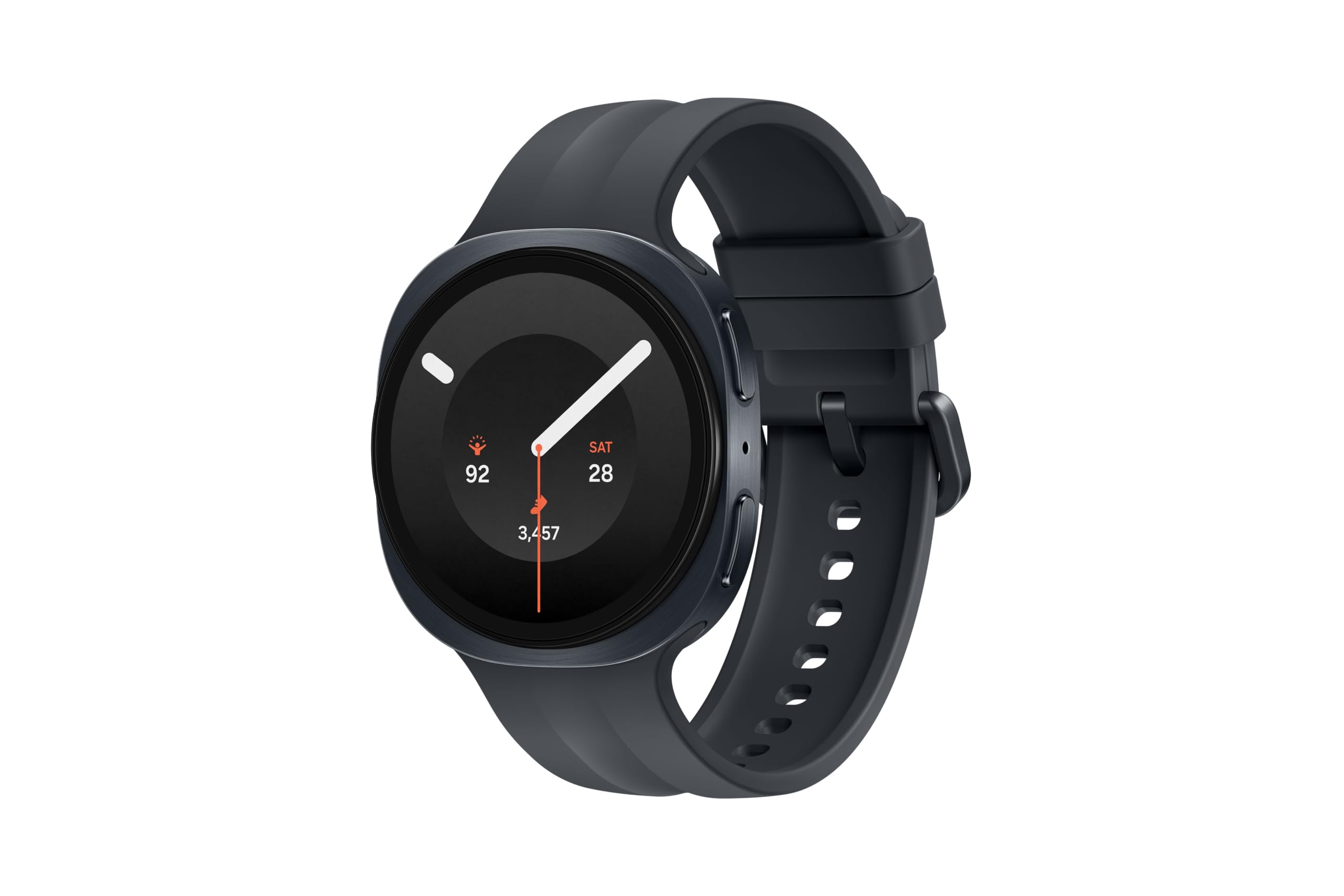
The 40 mm Android-centered watch that tracks health while you sleep.
This is the pick for someone already living in the Android world, because Samsung watches pair more smoothly with Android phones. It works with Samsung phones and other Android phones through the Galaxy Wearable and Samsung Health apps. The Vitals feature tracks health metrics while you sleep, watches for shifts from your usual patterns and delivers tailored guidance based on what it finds. Fitness Index builds on that with coaching aimed at your endurance or strength goals.
Comfort on the wrist gets real attention here. The sports band uses a breathable air pocket design and soft material, so it stays wearable through workouts and sleep — the point of a 40 mm case and a band meant for all-day wear. Appearance is the standout among owners: the graphite finish and overall look earn the most praise by a wide margin. Health tracking follows as a strong second, with buyers noting it can monitor blood pressure and heart rate during work.
The honest question is fit and battery. The wrist band runs small for some wearers while the screen size is just right for others, and battery life splits buyer opinion across the board. A few find the price steep for what they use. The 40 mm case is deliberately sized for smaller wrists, and it is meant for Android. Pair it with your phone, lean on the Vitals sleep tracking, and the styling and health detail are the reason to pick it over a training-first watch.
Why it looks the part: the graphite finish and comfortable sports band with air pocket design push it to the front of the aesthetics race — this is the one most likely to be mistaken for a jewel.
The band caveat: the wrist band is too small for some wearers, so know your wrist size before you commit.
Best for: Android users who want a stylish 40 mm watch with sleep-based health tracking and a comfortable sports band.
Consider another pick if: you have a larger wrist, need multi-day battery certainty, or use an iPhone.
Know the Specs
Battery life in smartwatch vs GPS mode
Every fitness watch here quotes two battery figures, and they are far apart. Smartwatch mode is the number when the watch is just sitting on your wrist counting steps and showing notifications. GPS mode is the number with location recording on, and it drains far faster — the Forerunner 570’s up to 10 days becomes up to 18 hours with GPS active. Read the second number as the honest figure if you run or hike with tracking switched on.
AMOLED vs LCD displays
An AMOLED screen lights each pixel individually, so colours look vivid and blacks stay dark. An LCD screen — like the one on the HOMOGO — lights from behind the whole panel, which keeps costs down and can stay bright outdoors. Both read fine in daylight; the difference is how rich the colours look and how much the display eats into battery. A sapphire or scratch-resistant glass layer over either type saves the face from daily wear.
Water-resistance ratings
IP68 means the watch survives dust and being submerged in fresh water for short periods, so rain, sweat and hand washing are fine. A 10 ATM rating means it is designed to handle much greater pressure, which is why the Instinct 3 lists it alongside MIL-STD-810 shock and thermal testing. Neither rating means you should take the watch into hot water or seawater — the HOMOGO listing notes the same limit.
The accelerometer and step accuracy
Steps are counted by an accelerometer — a small motion sensor that detects the swing of your arm. Accuracy depends on how well the watch tells a real step from a hand wave, which is why cheaper trackers sometimes overcount and why owners compare results across devices. Auto-detection features, like the ones on the HOMOGO and Amazfit Active 3, use that same sensor to notice when you have started walking or running without asking you to press a button.
Common Questions
Do I need my phone nearby for a step counter to work?
How accurate are step counts on a wrist watch?
Can I swim with a watch that counts steps?
Is an AMOLED screen better than an LCD screen on a fitness watch?
How long does a step counter watch last between charges?
Does the solar charging on the Instinct 3 Solar replace plugging it in?
Will a small 40mm or 42mm case fit a smaller wrist better?
Do step counter watches need a subscription?
Can a fitness watch track my sleep and my steps at the same time?
What is the difference between a step counter and a fitness tracker?
The Bottom Line
For most people, the wrist watch step counter winner is the Garmin Forerunner 570 (42mm). It counts steps all day, tracks sleep all night, and holds up to 10 days in smartwatch mode, so charging never becomes a chore. If you refuse to compromise on battery life, the Amazfit Active 3 stretches to 12 days of typical use behind sapphire glass. And if you want a step count with no app and no phone in the loop, reach for the Stiive Pedometer Watch — just accept the 7-day local storage limit.
Step counting itself is not hard, so the watch you pick should be chosen on the thing that will actually annoy you: charging frequency, app dependence, wrist comfort, or the depth of features you will never open. Buy for the version of yourself that wears it on a Tuesday, not the one that swears it will start running next month. The four watch makers here — Garmin, Amazfit, COROS and Samsung — all put reliable step tracking in their entry picks, so the real decision is how much extra you want layered on top.
How we choose
We do not accept paid placement. Every pick is matched to a real buyer and a real use-case; we do not hands-on test units.
Sources
Specifications: manufacturer listings and product documentation. Review insights: verified customer reviews, as of November 2026. Pricing: not shown on this page (it changes often); check the current price via the retailer link.
As an Amazon Associate, Tactical Gear Guy earns from qualifying purchases. This does not affect which products we feature.