Specs are compiled from manufacturer listings and verified buyer reviews and can change over time — please confirm the key details on the product page before buying.
If you want the short answer: the Guide Gear Side Zip Insulated Leather Duck Boot is the safest pick for most men, and the Merrell Coldpack 3 Thermo Tall Zip is the one to buy if you want the toughest grip underfoot and don’t mind paying for it. Everything below sorts the rest by how warm they run, how the zipper holds up, and how they fit a real winter foot. A side zipper is supposed to mean you step in and step out without unlacing anything in the cold. That only works if the zip itself survives slush, grit, and a season of daily stomping — which is exactly where these boots separate from each other.
This guide is built by comparing the manufacturers’ published specifications and the patterns across verified customer reviews, so you get each pick’s real strengths and trade-offs instead of marketing spin.
You’ll see how insulation, sole grip, and zipper build stack up so you can grab the right pair on the first try. Below is a full breakdown of the zip up snow boots for men worth your money.
Top Picks


How To Choose The Best Zip Up Snow Boots for Men
A zip-up snow boot lives or dies on two things: how warm the insulation keeps you when you’re standing still, and whether the zipper still works after a hundred trips in and out of a wet driveway. Get those two right and everything else is preference. Get them wrong and you have a boot that leaks or a zip that jams with the pull tab in your gloved hand.
Read the insulation in grams, not adjectives
Insulation is measured in grams, and that number tells you how much warmth is packed in. A 400 gram fill like the Guide Gear duck boots handles a cold commute and snow shoveling with room to spare. A 200 gram boot like the XPETI SnowRider or Merrell Coldpack 3 leans lighter and more athletic. Higher grams mean more bulk, so there is a real trade between toastiness and how the boot moves with you.
Decide where the zip sits
A side zipper runs down the outer ankle so you open the boot wide and step straight in. A front zipper runs up the instep under the laces. Both let you get in without untying, but a side zip keeps the lacing system intact for a locked-in fit while still giving you the quick exit. Look for a lock tab or auto-lock pull so the zip stays shut when you’re walking.
Waterproof shell versus water-resistant leather
A 100% waterproof rubber shell seals the lower boot completely, so slush and puddles never soak through to the sock. Water-resistant leather with a seam-sealed membrane sheds rain and light snow but isn’t built to stand in a puddle. Match the shell to your winter — city slush favors the rubber shell, dry cold favors the leather.
Size up if you wear thick socks
Winter boots are worn with wool socks, and a tight boot cuts circulation and makes feet colder. Several of these run large or small by design, so read the fit notes on each before you pick a size. The safest move is to order your normal size, then bump up a half size only if you plan on heavy socks every day.
Side-by-Side Comparison
| Model | Best For | Insulation | Closure | Waterproofing | Amazon |
|---|---|---|---|---|---|
| Guide Gear Side Zip Insulated Leather Duck Boots★ Best Overall | Everyday winter all-rounder | 400 g Thinsulate | Side zipper | 100% waterproof rubber shell | Amazon |
| XPETI Men’s SnowRider Insulated Waterproof Winter Snow BootsTrail Ready | Cold-weather hiking | 200 g, rated to -13°F | Front auto-lock zipper | Waterproof leather shell | Amazon |
| MUCK Men’s Apex Mid Zip Ankle BootWet-Ground Pick | Wet, mucky ground | 5mm neoprene liner | Lock-down waterproof zipper | 100% waterproof | Amazon |
| Merrell Men’s Coldpack 3 Thermo Tall Zip | Icy traction and tall coverage | 200 g, fleece lining | Tall side zipper | Waterproof construction | Amazon |
| Guide Gear Silvercliff II Waterproof Boots | Work and snowy driveways | 400 g Thinsulate Ultra | Easy-glide zipper | 100% waterproof | Amazon |
| bravo! Men Waterproof Winter Boot MARK | Dressy cold-weather wear | 600 g faux fur lining | Double side zipper | Seam-sealed waterproof membrane | Amazon |
| Eagsouni Barefoot Winter Snow Boots Wide Toe Box | Wide feet, short walks | Fur lining | Zipper | Waterproof | Amazon |
| Kricely Men’s Snow Boots | Budget warmth | 3M 400g Thinsulate | Hook-and-loop and zipper | Waterproof | Amazon |
Detailed Reviews
1. Guide Gear Men’s Side Zip Insulated Leather Duck Boots
Our pick — 4.5+★ from 750+ verified ratings; the strongest balance of quality and price.
The duck boot that made the side zip worth caring about.
This is the boot for the man who wants one pair to do the whole winter — the commute, the driveway, the walk to the mailbox in slush. The lower half is a 100% waterproof rubber shell, so puddles and road salt never soak through to the sock. The upper is a durable water-resistant leather, which keeps the boot looking like a boot instead of a rubber galosh.
Warmth comes from 400 gram Thinsulate insulation, and that number is the reason this pair wins the overall slot. Put it next to the Guide Gear Silvercliff II below — a 400 g fill there too — and the two sit in a different weight class from the 200 g boots farther down this list. The 400 g fill shrugs off a long, still, freezing wait at the bus stop, not just a quick dash to the car.
Getting in and out is the other half of the story. There’s a side zipper plus stretchy twin side gore panels, so the boot opens up and pulls on without you touching the laces. The Ortholite open-cell foam insole is rated 95% to 100% breathable and wicks moisture, so a sweaty foot doesn’t turn into a cold one. What wins people over most is plain build quality — the boot feels solid, and the looks hold up through a whole season. The one honest catch is the fit: this pair swings large for some buyers, so if you’re between sizes, size down or plan on heavy socks.
Why this one leads the list
- 400 gram Thinsulate keeps feet warm through a real cold snap, not just a light frost
- 100% waterproof rubber shell handles slush and standing water without leaking through
- Side zip plus twin stretch gore panels means gloved, no-lace entry every time
- Ortholite insole resists compression, so the fit stays the same after months of wear
- Steel shank adds support and stability under the arch
What to weigh before you buy
- Fit runs large for plenty of buyers — sizing down is the smart move for many
- Rubber bottoms have cracked on some pairs, so treat the sole as the wear part
- More bulk than a 200 g boot, which you’ll feel on long fast walks
Pick this if: you want one waterproof, genuinely warm pair to cover commuting, shoveling, and errands all winter.
Look elsewhere if: you’re a true half size and want zero guesswork on fit — order carefully or lean toward the Merrell.
2. XPETI Men’s SnowRider Insulated Waterproof Winter Snow Boots
Built to move on snow, not just stand in it.
If your winter involves a trail, a hill, or a long walk to work through fresh snow, this is the boot that moves with you. The SnowRider packs 200 grams of insulation and is rated down to -13°F/-25°C — lighter fill than the Guide Gear duck boot above, but a boot you can stride in without feeling like you’re wearing two blocks. The waterproof leather shell and distressed suede handle wet ground, and the YKK auto-lock front zipper (a zip that locks itself in place so it can’t creep open) makes for fast on and off.
The aggressive X-Grip outsole and the X-Fit removable reflective thermal insole are where this pair earns its keep on slick ground. Build quality is what the reviews keep coming back to, and warmth is a close second — this is a boot people trust in snow and ice. The front-zip layout is the main difference from the side-zip boots here: it suits a laced, locked-in hiking fit rather than a wide step-in opening.
The fair warning is fit and comfort running mixed — some feet settle in fast, others find the boot stiff at first. Treat it as a break-in boot, and give it a few short walks before a long one. Bottom line: the choice for cold-weather hiking when you want grip and a lighter feel over maximum bulk.
Where it earns its place: a -13°F cold rating and an aggressive grip outsole make it a genuine snow-walking boot, and the auto-lock zip keeps everything sealed mid-stride.
The trade: stiffness early on and a fit that varies, so plan on breaking it in rather than wearing it straight from the start.
Reach for this if: your winters mean actual walking on snow and ice and you want a lighter, athletic boot.
Think twice if: you need a soft, broken-in feel from day one.
3. MUCK Men’s Apex Mid Zip Ankle Boot
The one that treats a cold, wet yard like a walk in the park.
Muck built this for hunters and anyone who works ground that’s cold, wet, and loose underfoot. The 100% waterproof build pairs with a 5mm CR Flex-Foam neoprene liner — a stretchy, insulating layer that molds to your foot and holds warmth even when wet. That liner is the reason this boot feels different from a leather snow boot: it flexes, absorbs shock, and hugs the foot rather than holding a rigid shape.
Comfort is what people praise most here, and it shows in the build. There’s a dual-density footbed with memory foam, an EVA midsole for cushioning, and a bioDEWIX antimicrobial insert topcover to manage odor and moisture. The lock-down waterproof zipper is what the brand calls its most durable technical construction, and the Velcro stretch collar dials in a custom fit at the ankle. At 2.65 lbs for a size 9, it stays light enough for a full day of walking.
Where it gives ground is cold range and long-term durability. The comfort range runs from sub-freezing to 65°F, so it’s an active-cold boot rather than a deep-freeze standby. Durability is mixed, with some pairs lasting over a year and others showing wear sooner. Read: pair it with the warmth of the Guide Gear when the mercury really drops, and reach for this one for slush, muck, and active days.
The standout: a 100% waterproof neoprene-liner build that flexes with your foot and stays comfortable through a long, wet day outside.
The honest limit: the sub-freezing-to-65°F comfort range and hit-or-miss long-term durability mean it’s a workhorse, not a deep-winter fortress.
Made for: hunters, workers, and anyone on cold, wet, soft ground who wants a flexible, cushioned boot.
Not the first choice if: you need proven warmth well below freezing on a stationary winter commute.
4. Merrell Men’s Coldpack 3 Thermo Tall Zip Waterproof Snow Boots

Tall coverage and a sole built for ice, not just snow.
This is the premium pick, and the reason is the sole. Merrell puts Vibram Arctic Grip underfoot — a rubber compound made to hold on wet ice and packed snow — paired with a waterproof construction and a fleece lining for warmth. With 200 grams of insulation, it’s on the lighter side of warm, so it suits an active day in the cold more than sitting still in deep freeze. The taller build adds coverage up the leg, and the side zip makes it easy to pull on and kick off.
Grip is the whole argument for this boot. If your winter means icy sidewalks, a slick driveway, or a snowy trail where footing matters, the Vibram outsole is a step beyond the plain lugged soles on most boots here. Fit and comfort are both strong points, and the boots stay stable and warm on snow.
The catch is the zipper — some pairs have had the side zip keep popping open, so check that it’s fully seated every time you put them on. And at 200 g of insulation, it’s not the warmest boot on this list; that title goes to the bravo! MARK’s 600 g fill. The upshot: a premium boot you buy for grip and coverage first, warmth second.
Why it costs more
- Vibram Arctic Grip outsole for traction on wet ice and packed snow
- Taller build gives more coverage up the leg than a short ankle boot
- Fleece lining and a waterproof construction keep feet dry and warm
- Fit and comfort land well, with easy on and off through the side zip
The honest trade-offs
- 200 g insulation is mid-tier warmth, not deep-freeze warmth
- The side zipper has kept open on some pairs, so seat it fully every time
- Premium-tier build means it’s the highest-cost boot in this lineup
Buy it for: the icy-sidewalk grip and tall coverage when footing is the thing you worry about.
Pass if: you need maximum insulation for long, still cold exposure rather than active winter grip.
5. Guide Gear Silvercliff II Waterproof Boots for Men

A 400 g work boot you can pull off without touching the laces.
For the guy who’s on his feet in the cold — shoveling, working the driveway, standing in slush — this boot pairs the warmth of 400 gram Thinsulate Ultra insulation with a 100% waterproof build. That’s the same 400 g warmth figure as the top Guide Gear pick, in a taller, suede-and-nylon hiking-style shell with a rugged TPR outsole for grip. The easy-glide zipper plus pull loops mean you get in and out fast, and the anti-slide tab locks the zip sealed so it doesn’t work open mid-job.
Comfort and warmth are the two things this boot is best at, and the removable cushion insole with a padded tongue and collar backs that up. It’s built for quick removal in the cold — no gloves-off lacing at the door.
Be honest about the zipper and the sizing before you commit. This is the boot on the list where the zip is the most-discussed weak point, with durability concerns showing up across a season, and the fit runs narrow and small for a fair number of buyers. If you size up and treat the zip gently, you get a genuinely warm work boot. Weigh it: great warmth for the tier, but check the sizing chart twice and go up if you’re on a half size.
Best at: cold-weather work and shoveling, where 400 g of warmth and a quick-off zip save you a cold minute at the door.
Watch out for: the zipper and the small, narrow fit — size up and baby the zip and it holds up better.
The right call for: cold-day yardwork and driveway duty when you want real warmth and fast removal.
skip it if: you want the most proven zipper in the list — the Muck and Merrell builds are sturdier closure choices.
6. bravo! Men Waterproof Winter Boot MARK Fur Boot
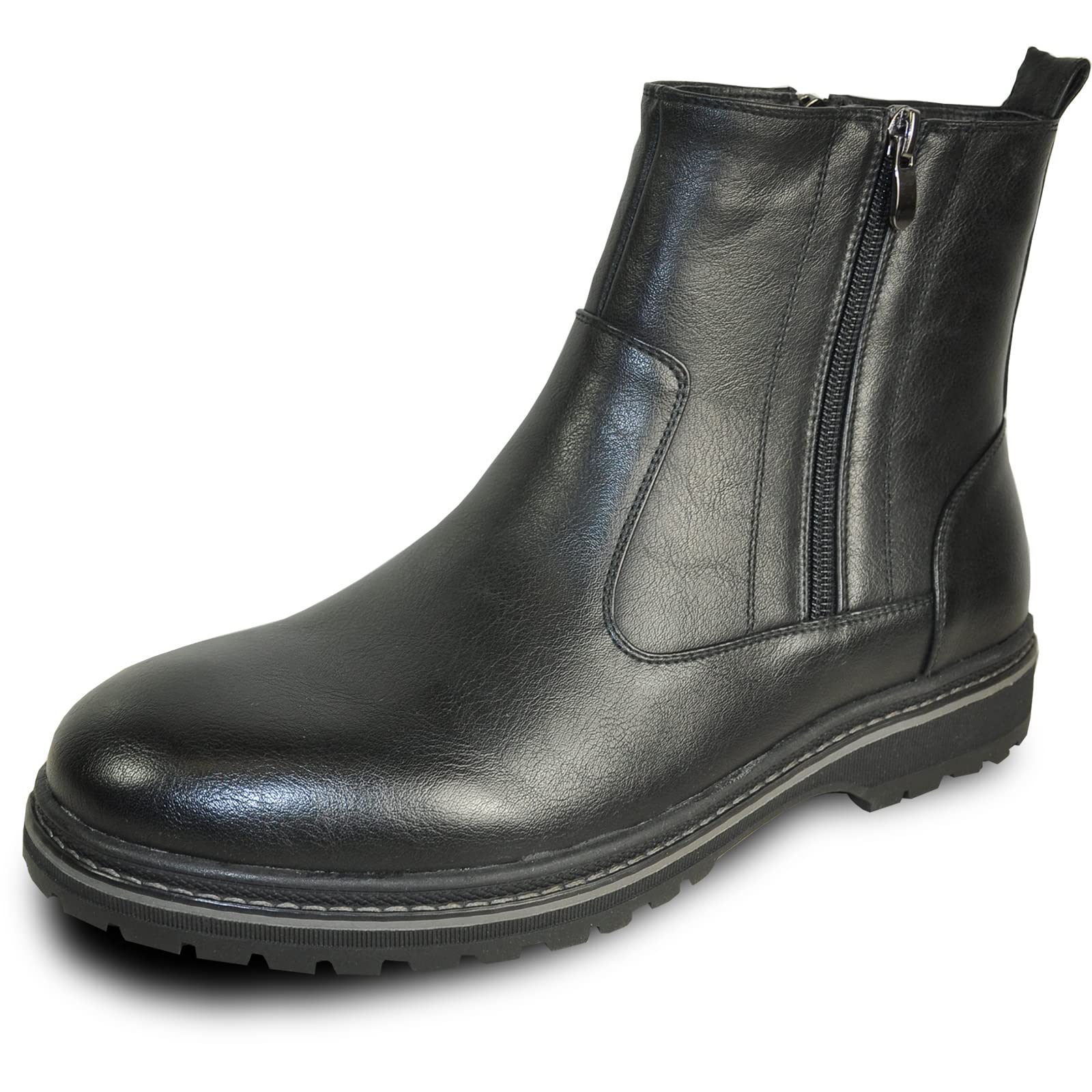
The dressy short boot with the heaviest fur fill here.
Most snow boots look like snow boots. This one doesn’t. The bravo! MARK is an ankle-height boot with a plain round toe, tonal stitching, and a clean silhouette — the kind you can wear to the office and still trust on a slushy walk in. And it carries the most insulation in this lineup at 600 grams of faux fur lining, with a fur-covered insole underneath. The brand rates the 600 g fill for cold down to -24°C / -11°F.
Compare that fill to a 400 g boot and you can see why this is the warmest option here. Water protection comes from a seam-sealed waterproof membrane under premium vegan leather, and the lugged rubber outsole is built for slip resistance. You can pick the entry you like: a double side zipper, dual stretch panels, or an adjustable hook-and-loop strap up front — all meant to get the boot on and off in a hurry.
The thing to know before you buy is sizing. This boot runs small for a good share of buyers, and some say it’s almost two sizes off. Measure your foot and lean toward the larger size with a thick sock in mind. Get the size right and you have a warm, dressy short boot that handles a wet winter. Verdict: the pick for style and maximum fur warmth, if you nail the size.
The draw: 600 g of faux fur warmth and a dressy ankle silhouette you can wear out in public, with three ways to get it on.
The catch: the sizing runs small — some buyers report it’s almost two sizes off, so measure rather than guess.
Wear it for: a warm, good-looking short boot you can pair with nicer winter outfits.
Order carefully if: you’re buying your usual size without checking the fit — this one leans small.
7. Eagsouni Barefoot Winter Snow Boots Wide Toe Box

For feet that feel squeezed in a normal snow boot.
If every winter boot pinches across the toes, start here. The Eagsouni is built on a wide toe box and a zero-drop sole — the “barefoot” shape means your toes can spread out and the heel sits level with the toe instead of raised. It’s a short ankle boot with fur lining, a waterproof build, and a zipper for entry, and it’s offered as a unisex fit across men’s and women’s sizing.
What makes people happy with this boot is how it looks and how it feels — a warm, good-looking short boot that fits true to size with room up front. It’s easy to get on and gives decent traction for short walks in the snow. For casual winter errands and around-town wear, it does the job without the heft of a heavier work boot.
The zipper is the honest weak spot — it can be tough to work, so go slow and don’t force it. And a short, casual boot like this isn’t built for deep drifts or long backcountry walks; the strap-free design leans toward easy on-off rather than locked-in support. Call it: the comfort pick for wide feet and light winter days.
The reason to pick it: a genuinely wide toe box and zero-drop sole give cramped feet room to breathe in winter.
The honest limit: a zipper that can be tough to work and a short, casual build that suits town wear, not deep snow travel.
Best for: wide-footed men who want a warm, good-looking short boot for errands and short walks.
Not built for: deep snow or long days — go with the tall Merrell or the 400 g Guide Gear for that.
8. Kricely Men’s Snow Boots Waterproof Non-Slip Fur Boot
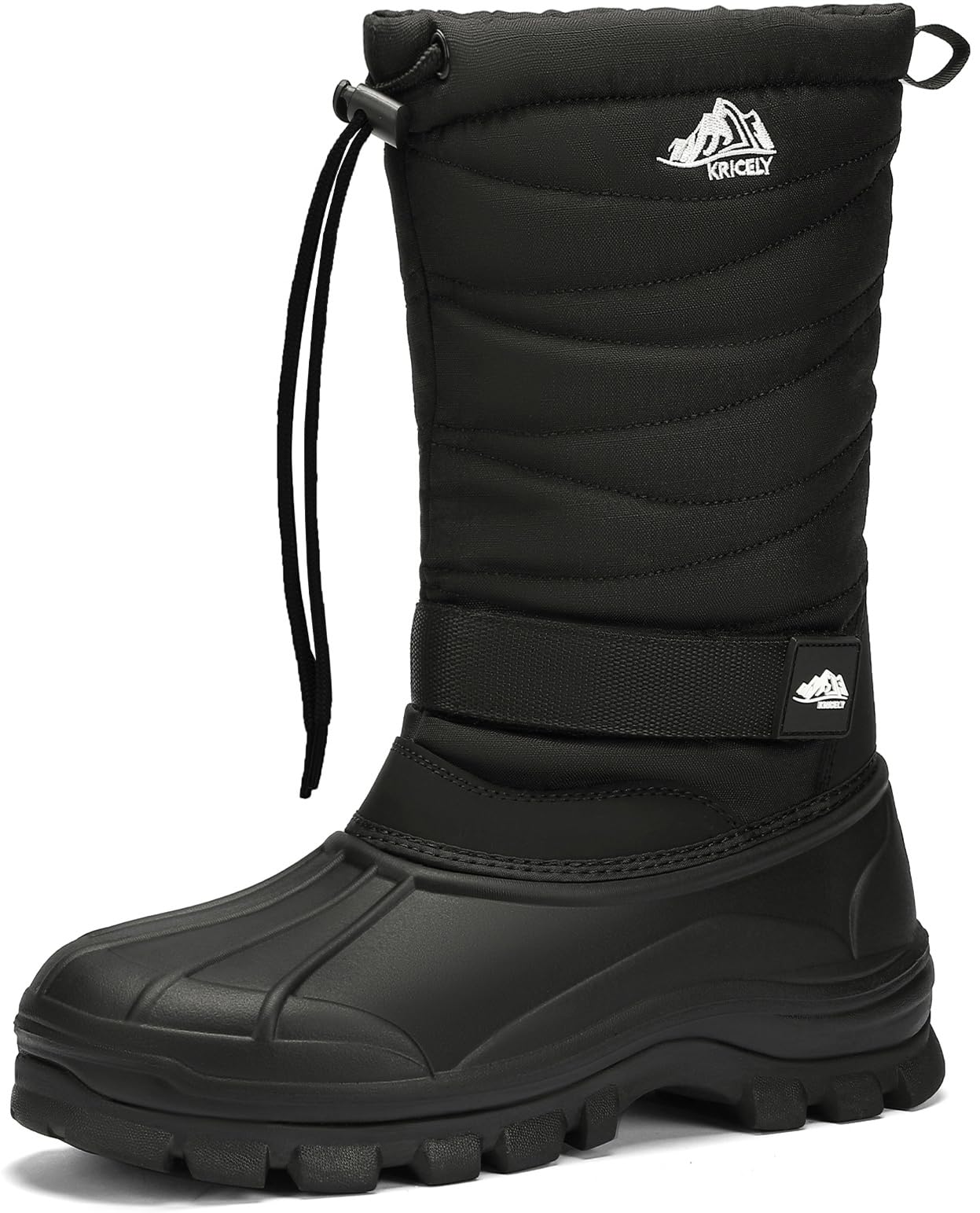
A budget boot that still brings 400 g of fill and a -40°F rating.
This is the entry-level buy, and on paper it holds its own. The Kricely packs 3M 400 gram Thinsulate insulation — the same fill figure as the 400 g boots higher up — with a -40°C / -40°F temperature rating and a fur lining inside. It’s waterproof and non-slip, with a hook-and-loop closure plus a zipper so you can get in and out fast. Whether you’re heading out for snow, casual wear, or a cold hike, it’s positioned as a do-everything cold-weather boot.
For the tier, quality and warmth are what people notice most, and the soft inner material and easy on-off make it comfortable for everyday winter wear. If you want a warm boot without spending much, this covers the basics and then some.
Set expectations on the zipper, though. Zipper quality is this boot’s most-discussed weak point, and some pairs have straps that don’t work right. It’s also the least-proven build in the lineup, so think of it as a solid budget extra pair or a first winter boot rather than a buy-it-for-years investment. Fair read: good warmth for the tier, with the closure as the part to handle carefully.
Standout spec: a -40°F rating and 400 g of 3M Thinsulate put serious warmth on a budget-tier boot.
The trade: the zipper and strap build is the weakest link here — treat the closure gently and it serves you better.
Reach for this if: you want maximum warmth on a tight budget and can manage a fussier closure.
Choose higher if: you need a closure you can trust without thinking about it every wear.
Know the Specs
Insulation in grams
That number after the word “insulation” (400 gram, 600 gram) tells you how much fill is packed in to hold heat. More grams mean warmer in a still, cold wait; fewer grams mean a lighter boot that moves better. Treat it as a guide to warmth, not a guarantee — a still wait in deep cold needs more fill than an active walk.
Waterproof shell versus membrane
A rubber shell blocks water completely across the lower boot, ideal for puddles and slush. A seam-sealed membrane under leather sheds rain and snow but is not built for standing water. Match the protection to your wet conditions.
Side zip versus front zip
A side zip opens the ankle for a straight step-in and keeps laces intact. A front zip runs up the instep and suits a laced, locked-in fit. Look for a lock tab or auto-lock pull so the zip stays sealed while you walk.
Outsole and grip
The outsole is the rubber bottom that meets the ground. A lugged pattern gives traction on packed snow and loose ground; a grip-specific compound like Vibram Arctic Grip is made for wet ice. A grip-specific compound like Vibram Arctic Grip is made for wet ice, where a standard lug pattern slides.
Common Questions
Are zip up snow boots as warm as lace-up boots?
How do I size zip up snow boots with thick socks?
Will a side zipper stay closed while I walk?
Is 400 g insulation warmer than 200 g?
Can I wear zip up snow boots in deep snow?
What is a zero-drop sole on a snow boot?
How long do the zippers on these boots last?
Are waterproof rubber-shell boots better than leather for slush?
Can I wear these snow boots for hiking?
The Bottom Line
For most men, the zip up snow boots for men winner is the Guide Gear Side Zip Insulated Leather Duck Boots — 400 g of Thinsulate warmth, a 100% waterproof rubber shell, and a side zip that means no laces in the cold. If you want the toughest grip underfoot for icy sidewalks, step up to the Merrell Coldpack 3. And for cold, wet, mucky ground where flexibility matters, the Muck Apex Mid Zip is the one to reach for. The Guide Gear duck boot backs that up with 4.5+ stars across 750+ owners.
How we choose
We do not accept paid placement. Every pick is matched to a real buyer and a real use-case; we do not hands-on test units.
Sources
Specifications: manufacturer listings and product documentation. Review insights: verified customer reviews, as of November 2026. Pricing: not shown on this page (it changes often); check the current price via the retailer link.
As an Amazon Associate, Tactical Gear Guy earns from qualifying purchases. This does not affect which products we feature.