Specs are compiled from manufacturer listings and verified buyer reviews and can change over time — please confirm the key details on the product page before buying.
If you are shopping for ZR rated tires, the short answer is this: buy by the numbers stamped on your own sidewall first, then choose your tire. A ZR rating (Z means the tire is built for speeds above 149 mph) is a construction promise, not a brand promise. Get the size and load index wrong and even the best tire in this article will ruin your week. This guide walks through ten tires that all carry a ZR sidewall mark, sorted by what each one is actually good at.
This guide is built by comparing the manufacturers’ published specifications and the patterns across verified customer reviews, so you get each pick’s real strengths and trade-offs instead of marketing spin.
Every tire below is a genuine ZR-rated fit, from budget-friendly pairs to premium performance rubber, so you can match your wheel size without gambling. Read on for the picks that make zr rated tires worth shortlisting for your car.
Top Picks

How To Choose The Best ZR Rated Tires
Buying a ZR rated tire is a fitment job before it is a shopping job. The letters and numbers on your current sidewall tell you exactly what will and will not bolt onto your wheels safely. Get that settled and the rest of the decision gets much shorter.
Start with the size on your own sidewall
Your existing tire’s code breaks into three parts — width in millimeters, aspect ratio as a percentage, and rim diameter in inches. A 245/45ZR20, for example, is 245 mm wide, has a sidewall height equal to 45 percent of that width, and fits a 20-inch wheel. A 215/45ZR17 goes on a 17-inch wheel and sits at 24.6 inches overall. Never order a different rim size than the one you drive on. The ZR in the middle confirms the tire carries a speed rating engineered for above 149 mph — a structural spec, not marketing.
Match the load index to what the car actually weighs
The load index is a number that maps to a maximum carry weight per tire. A 103 index supports up to 1929 lbs per tire, while a 91 index supports 1356 lbs. Heavier SUVs and trucks need the higher number. XL (extra load) tires are built for this — the Fullway HP108 245/45ZR20 is XL-rated, and so is the 215/45ZR17. If your door jamb sticker shows a load index, that number is your floor. Going lower risks overheating the tire, not just voiding a warranty.
Summer compound or all-season compound?
The tread compound decides when you can drive the tire. A summer tire like the Kenda Vezda UHP or the Michelin Pilot Sport 4S is not designed to run below 45 degrees Fahrenheit, so it becomes a liability in cold weather. All-season tires like the Fullway HP108 pair, the Laufenn S Fit AS, and the Mastertrack M-TRAC GT stay usable across a wider temperature range. There is no cheat code here — pick summer if you drive a warm-climate performance car, all-season if you need one tire for the whole year.
Side-by-Side Comparison
| Model | Best For | Size | Load Index | Weight | Amazon |
|---|---|---|---|---|---|
| Fullway HP108 245/45ZR20 103W XL★ Best Overall | Big-wheel SUV and truck drivers | 245/45ZR20 | 103 | 58 lbs | Amazon |
| Kenda Vezda UHP Summer KR20ASummer Performer | Warm-weather performance cars | 245/40ZR18 | 97 | 30 lbs | Amazon |
| Fullway HP108 215/45ZR17 91W XLBest Value Pair | Passenger cars on 17-inch wheels | 215/45ZR17 | 91 | 40 lbs | Amazon |
| Laufenn S Fit AS 245/40ZR19 XL 98Y | Year-round sport sedan driving | 245/40ZR19 | 98 | 26 lbs | Amazon |
| General Tire GMAX RS 205/50ZR17 93W | Wet-road braking confidence | 205/50ZR17 | 93 | 21 lbs | Amazon |
| Mastertrack M-TRAC GT 235/40ZR19 96W XL | Matched pair for sports cars | 235/40ZR19 | 96 | — | Amazon |
| Hankook Ventus V12 evo 2 285/30R19 Y | Wide rear tires with real grip | 285/30ZR19 | 98 | 29 lbs | Amazon |
| Michelin Pilot Sport 4S ZP 245/40ZR19 94Y | Racetrack-derived handling on the road | 245/40ZR19 | 94 | 26.7 lbs | Amazon |
| Continental ContiSportContact 5 295/40ZR21 111Y | Heavy SUVs on 21-inch wheels | 295/40ZR21 | 111 | 36.7 lbs | Amazon |
| Pirelli P Zero (PZ4-Sport) 295/30ZR20 101Y | Supercar-size wheels | 295/30ZR20 | 101 | 28.9 lbs | Amazon |
Detailed Reviews
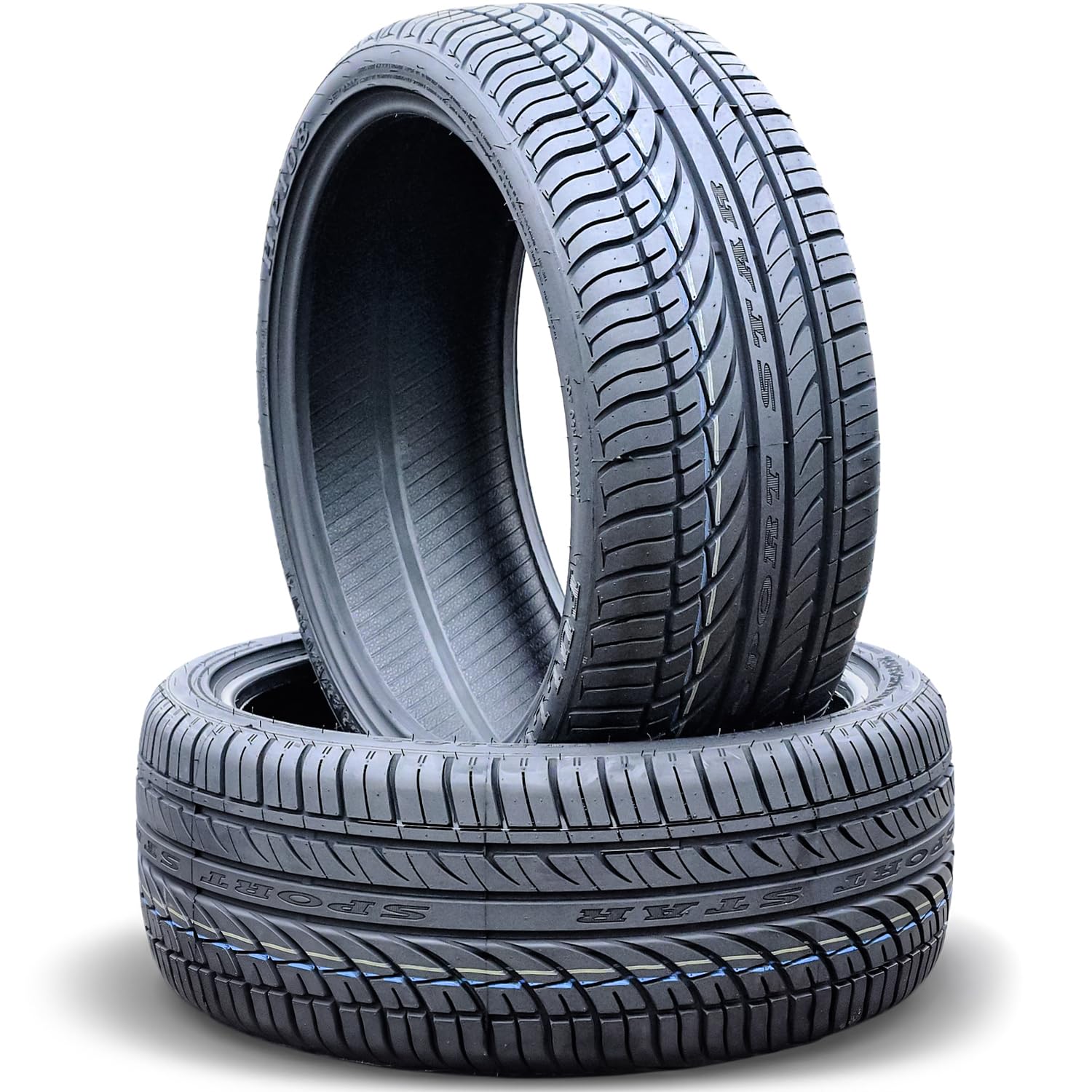
1. Fullway HP108 245/45ZR20 Two Tires
Our pick — 4.5+★ from 900+ verified ratings; the strongest balance of quality and price.
The big-wheel all-season pick that carries the load without drama.
If you drive a truck or an SUV wearing 20-inch wheels, this is the tire that most buyers in this group end up with. Its load index of 103 supports up to 1929 lbs per tire, so a heavy vehicle stays well within limits even when you load it up. That is 42% more load capacity than the same family’s 215/45ZR17 91W, which handles 1356 lbs — the gap between a full-size SUV tire and a passenger-car tire. The 103 load index itself sits 13% above that tire’s 91 index, which is why it suits a heavier vehicle.
Two tires come in the box, which is why the value story is as strong as it is. Owners praise the sidewall and casing for holding up to daily driving, and the ride stays smooth over rough pavement. It also runs quiet for an all-season performance tire, and the black sidewall looks the part on a lowered truck or a family SUV. Weather grip is a plus in wet and mixed conditions. The rating sits at 4.5+ stars across 900+ owners, a consistent verdict across a large sample.
The honest caveat is durability. Some drivers see the tread run dry well inside their expected window, particularly on heavier vehicles or aggressive driving. Treat the 49 psi maximum pressure as a hard ceiling and rotate on schedule. A 28.7-inch overall diameter and 58-pound shipping weight also mean this tire is genuinely bigger than most — which is exactly why the load rating works in its favor on a truck.
Why this pair earns the top spot
- Load index 103, good for up to 1929 lbs per tire
- All-season traction with a 380AA UTQG rating
- Two tires included, which spreads the cost across an axle
- Smooth, quiet ride on 20-inch wheels
What you should keep in mind
- Tread life feedback is split — some drivers see early wear
- 58 pounds shipping weight and a 28.7-inch diameter make it a heavy, large tire to handle
- 49 psi maximum pressure means you have to watch inflation closely
Reach for it if: you drive a truck or SUV on 20-inch wheels and want one all-season tire that carries the load while staying affordable.
Look elsewhere if: you want the longest tread life on a heavy tow vehicle — the durability reports are too split to promise you that.
2. Kenda Vezda UHP KR20A P245/40ZR18 Tire
A warm-weather specialist built for grip first and comfort second.
The Kenda Vezda UHP is engineered for performance cars in warm climates, and it makes no apology for that. It is rated not to be used when temperatures sit consistently below 45 degrees Fahrenheit — that is a real seasonal limit, not a suggestion. If you live somewhere with a true winter, plan to run a second set. If your car lives in a warm-weather state, this tire is built to reward you with consistent grip on the front or rear axle alike.
Kenda states the specialized tread pattern is designed for solid grip and consistent performance while staying tune for good wear. That is a different priority order than the Fullway HP108 pair, which leans hard on all-season usability and load capacity. Where the Fullway is built for a loaded SUV, the Vezda is built for a sport sedan that gets driven with intent. The 97 load index and XL rating keep it usable on a heavier performance car without giving up the low-slung 25.7-inch diameter look.
Here is what buyers should know: this listing has not yet accumulated the review history of the bigger names on this list. That means you are leaning more on the manufacturer’s own description than on owner consensus. The tire is not a compromise, it is just earlier in its public track record. If you want a well-worn path, the Kenda is not that — but if you want a warm-weather summer tire at the lower end of the performance spectrum, it is worth a hard look.
What you get: a purpose-built summer tire in 245/40ZR18, an XL sidewall, a 97 load index, and a tread pattern engineered for grip consistency rather than all-season compromise.
What you trade away: the ability to drive it through cold weather. Below 45 degrees Fahrenheit this is not the tire you should be on the road with.
The fit: a driver in a mild-climate state with a performance car that wants grip in every dry corner.
The mismatch: anyone who needs one tire to handle a real winter — the 45-degree floor rules it out.
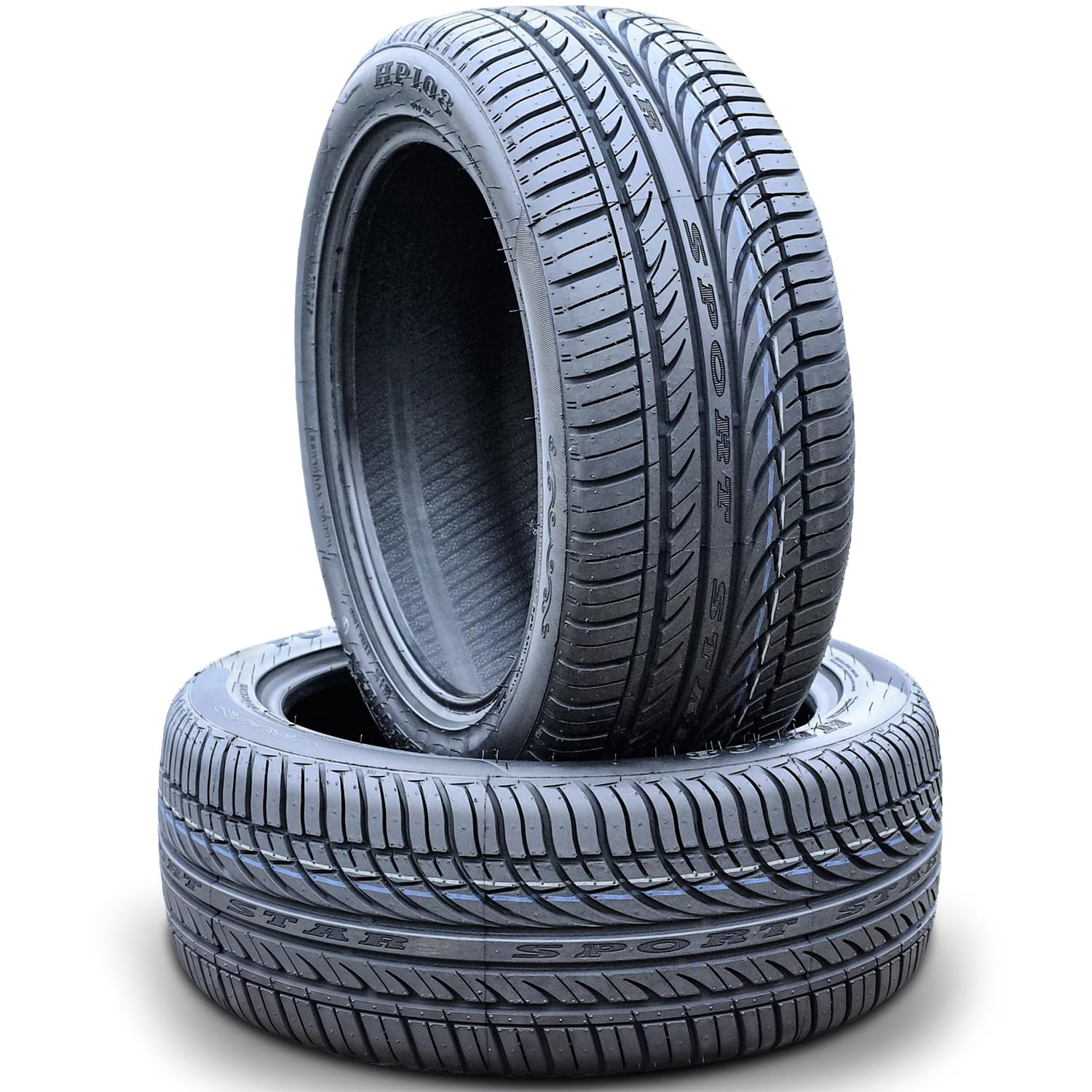
3. Fullway HP108 215/45ZR17 Two Tires
The 17-inch all-season that quietly earns more owner approval than any other tire here.
Two numbers anchor this tire: a 91 load index that carries up to 1356 lbs per tire, and a 24.6-inch overall diameter. That combination suits a compact or mid-size passenger car sitting on 17-inch wheels. Compared with the 245/45ZR20 Fullway above, this one is 17% smaller in diameter and holds 42% less load by design, because it is built for a sedan rather than an SUV. Put differently, the 103 versus 91 load index spread is exactly what separates a truck-and-SUV tire from a passenger-car one.
Owners are vocal about two things: the ride and the quiet. The 380AA UTQG all-season tread keeps mixed-weather grip predictable, and the tire tracks straight enough that it earns credit for fitment and appearance too. Body roll and road noise are rarely the complaint here — the sidewall does its job without turning the cabin into a drum. The 49 psi max pressure is the same ceiling as its bigger sibling, so inflation discipline matters either way.
The same caution applies as with the larger HP108: durability is the split one. Some drivers get many miles; others see the tread go sooner than expected. Owner feedback does not rush to a single verdict there, so plan on rotating on schedule and checking pressure monthly. The rest of the package is a compelling one for a sedan that sees mixed-weather driving year-round and does not want to swap wheels every season.
The owner consensus: quiet cabin, smooth ride, and trustworthy fitment — this is the tire sedan drivers describe as simply working.
The honest split: tread life draws mixed reports. Budget a rotation and alignment routine from day one and you give the tire its best chance.
Right for: a 17-inch passenger car that needs a full all-season set without paying premium-tier prices.
Wrong for: a heavy SUV or a tow vehicle, where a 91 load index and a 1356-lb ceiling will not be enough.
4. Laufenn S Fit AS 245/40ZR19 XL 98Y

A 26-pound all-season that punches above its weight on a 19-inch wheel.
At 26 pounds, the Laufenn S Fit AS is one of the lighter tires in this lineup, and that matters once you are lifting a wheel onto a hub. Its 26.6-inch diameter and 245/40ZR19 size suit a sport sedan or a crossover on 19-inch wheels. The 98 load index and XL rating support up to 1653 lbs per tire, which is plenty of headroom for a mid-size car with passengers and luggage aboard. The Y speed rating confirms the ZR-class construction underneath.
The tire is built in South Korea and tuned for all-season use, so it does not force you into the summer-tire-only schedule the Kenda and Michelin require. That is the real practical win here — you can drive it across the seasons without a second set. Lighter rotating mass also tends to help steering feel and riding comfort, though the spec sheet does not quantify that; treat it as a structural consequence of the 26-pound weight rather than a promise.
The clear trade-off is that this listing carries a smaller review footprint than the heavyweights on this list. The tire speaks through specs more than through a wave of owner reviews. If you want a tire backed by a mountain of owner experience, the Michelin or Hankook below are stronger on that front. If you want a light, all-season, XL-rated 19-inch tire and you are comfortable trusting the specification sheet, the Laufenn earns its slot.
The value read: a 1653-lb load ceiling, all-season construction, and a light 26-pound build, all in one tire for a 19-inch wheel.
The catch: a thinner public review trail than the household names, so buyer patience for owner-reported durability is the price of admission.
Bring it home if: you want all-season flexibility and lighter wheel weight in a 245/40ZR19 fitment.
Pass it over if: a long owner-verified track record matters more to you than the spec sheet does.
5. General Tire GMAX RS Performance Radial Tire-205/50ZR17 93W

The lightweight summer tire that was built with wet braking in mind.
Wet-road braking is the headline here — General says the GMAX RS is engineered to deliver superb stopping on wet pavement, and it pairs that with strong dry handling. At 21 pounds, it is 37 pounds lighter than the 58-pound Fullway HP108 245/45ZR20 pair, which makes it the easier tire to lift onto a hub during a swap. The trade-off on load is real: the 93 load index supports 1433 lbs per tire, well below the 1929 lbs of the bigger Fullway. On a 205/50ZR17 fitment, that headroom is fine for a compact sport sedan.
A 45-day trial comes tied to the purchase, so you are not locked in blind. General also lists this as the preferred tire of Petty’s Garage, and the summer compound is designed for long treadwear relative to typical performance tires in its class. Buyers report solid grip, confident rain handling, and a smooth quiet ride, which lines up with what a 25.1-inch diameter summer tire on a light car should feel like. The 205 width is narrow, so expect the responsive steering feel a compact chassis rewards.
A few owners mention that this tire is not the most aggressive-looking option for a show-car look, and the 93 load index means you should not push it on a heavy vehicle. Neither point is a fault in the tire — it is sized for a compact or mid-size car, not a full-size SUV. Used inside that envelope, it earns its place on the shortlist for anyone who values stopping power in the rain.
Strengths that stand out
- Engineered for superb wet braking
- 21 pounds — the lightest tire in this article
- 45-day trial gives you a real decision window
- Long-lasting treadwear is a stated design goal
- Compact 205/50ZR17 fitment for nimble cars
Limits to weigh in
- 93 load index and 1433-lb ceiling rules out heavy SUVs
- Summer compound, so cold-weather driving is off the table
- 93W speed rating sits below the ZR-range extremes
The right match: a compact performance car that sees rain and wants a tire it can stop with in a downpour.
The wrong match: a heavy vehicle or anyone needing cold-weather traction — the load index and summer compound both say no.
6. Mastertrack M-TRAC GT 235/40ZR19 Set of 2
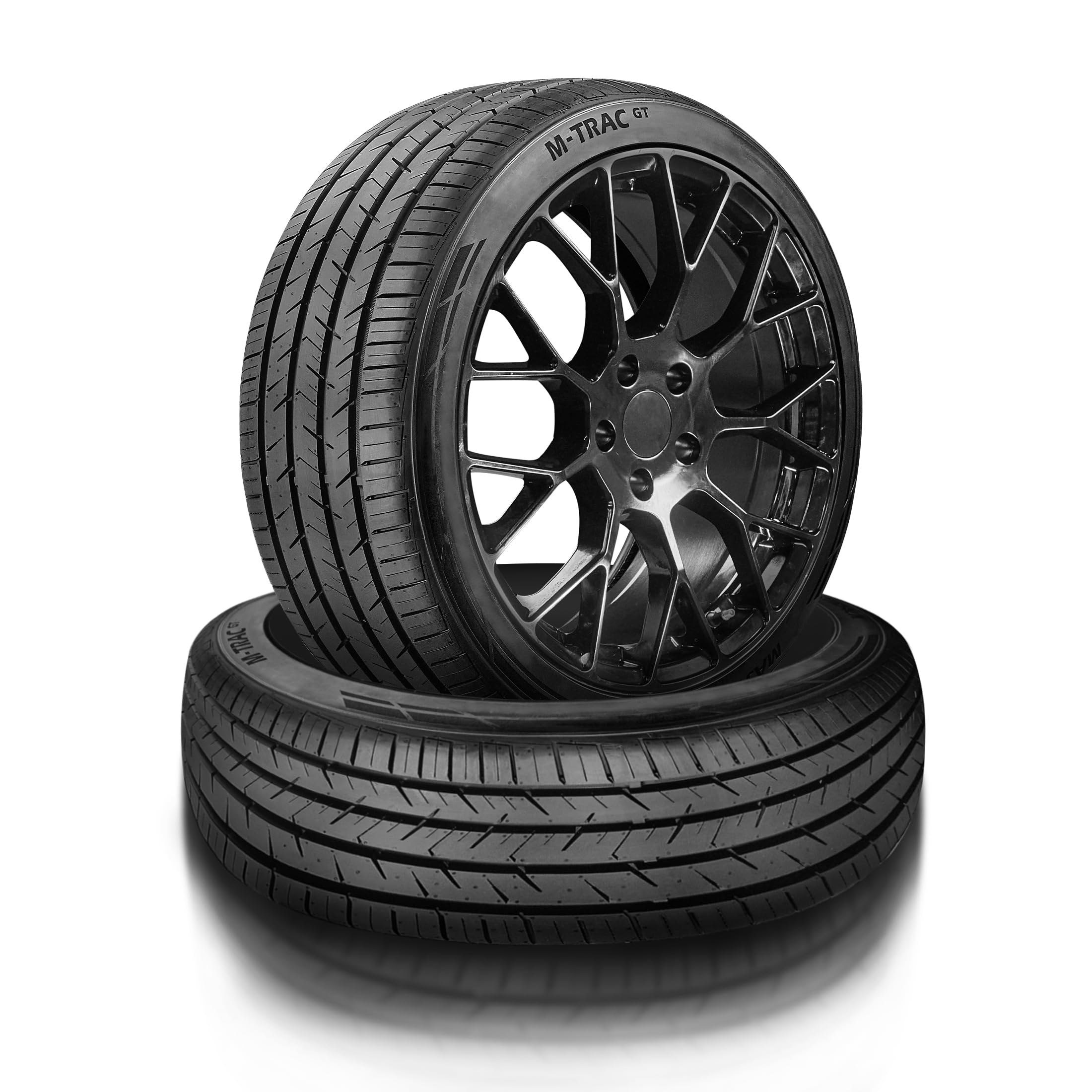
The only tire here that ships as a matched pair with its own road-hazard cover.
Two tires arrive as a matched set, which is the practical reason this pair makes sense — you get a matched wear pattern across an axle from day one. The 235/40ZR19 size and 96 load index support up to 1565 lbs per tire, enough for a sports sedan or a performance crossover. A 51 psi maximum pressure ceiling is the highest in this group, slightly above the 49 psi ceiling on both Fullway HP108 tires. The 460AA UTQG rating points toward longer treadwear than the 380AA Fullway rating, which matters if you want to stretch replacement intervals.
Mastertrack puts real weight behind the warranty side: five years of manufacturer coverage plus three years of road-hazard protection that covers punctures and impact damage. That is unusual in this category, and for a driver who has had a tire ruined by a nail, it changes the calculus. A dual tread technology runs a 4-groove and 5-groove configuration depending on wheel width, and the maker states the wider spacing reduces hydroplaning by 22%. Treat that specific percentage as the manufacturer’s claim rather than an independent test result.
The one honest caution is durability — a small number of owners mention early tread wear, and that sits alongside the strong warranty as your safety net. This is not a tire the whole owner base praises for longevity, so factor the road-hazard cover into the value. For a driver who wants an all-season pair with backing behind the warranty, it is the most covered option on this list.
The warranty story: five years of manufacturer coverage plus three years of road-hazard protection make this the most backed tire in the article.
The tread-life question: a minority of drivers report early wear, so the warranty coverage is doing real work, not just decoration.
Your tire if: you want a matched pair plus meaningful warranty backing for a sports car or performance crossover on 19-inch wheels.
Not your tire if: you need maximum tread longevity and cannot tolerate reports of early wear — even with warranty cover.
7. Hankook Ventus V12 evo 2 Summer Radial Tire – 285/30R19 Y

The wide summer tire that has one of the deepest owner track records here.
At 285 mm wide, this is one of the broadest tires in this article — matched to a 30-series sidewall on a 19-inch wheel, so it is a rear-tire fitment on a high-powered car. The 98 load index supports 1653 lbs per tire, matching the Laufenn’s load capacity exactly, and the Y speed rating confirms ZR-class construction. Its 25.7-inch overall diameter is also shared with the Kenda Vezda, though the wider tread and lower aspect ratio make it a very different driving proposition. This is the tire you pick when you want contact patch more than ride cushion.
Owners speak plainly about what works: grip is the second-most mentioned strength, and rain traction, quiet operation, and smooth ride all show up positively too. Hankook built this as an all-season-defying summer tire and drivers who know summer tires tend to reward the consistency. The compound and tread are engineered for dry and wet performance, not for winter, so it stays a warm-weather tool. The mix of high grip and low noise is not the norm here — most wide performance tires give up one to get the other.
The honest downside is tread life. Hankook’s durability feedback is mixed, so a heavy-footed driver should expect the tread to go quicker than on an all-season. There is no escaping that physics trade-off at this grip level. But with 4.5+ stars across 2,000+ owners, this is a tire most buyers would purchase again.
What wins people over: the grip — dry and wet — is the quality owners return to, and the smooth, quiet ride is a genuine bonus at this width.
The honest limit: it is a summer tire with mixed treadwear reports, so budget for replacement cycles rather than counting on marathon life.
An easy yes for: rear-wheel-drive performance cars that need a wide 285/30ZR19 summer tire and want grip that is still quiet on the highway.
A harder sell for: anyone who wants one tire to see them through all four seasons.
8. Michelin Pilot Sport 4S ZP 245/40ZR19

The racing-derived summer tire that supplies Ferraris and Porsches from the factory.
Michelin builds the Pilot Sport 4S directly from its Pilot Super Sport heritage, and the tire ships as original equipment on cars from Mercedes-AMG, Ferrari, and Porsche. That means you are buying the same construction those marques trust with their performance flagships. The 94 load index supports 1477 lbs per tire, and the 245/40ZR19 fitment sits on a 26.7-inch diameter. It is a standard load (SL) tire, not XL, which tells you it is engineered for a lighter, more balanced chassis rather than a heavy SUV.
The performance story runs on dry grip and wet braking, both of which owners describe as dependable in rain and in summer conditions alike. Road noise stays low for a max-performance summer tire, which is the kind of detail Michelin has spent decades refining. The included coverage package is as comprehensive as anything here: 3-year flat tire changing assistance, 6 years of standard defect warranty, a 60-day satisfaction guarantee, and the Michelin Promise Plan. This is the tire you buy when the car deserves the same tire it came with.
A small number of drivers flag the cost side, and that is fair — a premium tire asks for a premium commitment. The 94 load index and SL rating rule out using these on a heavy SUV, so this is a targeted fit. For a performance sedan or sports car that sees warm weather driving and occasionally a track day, the Pilot Sport 4S is the benchmark the other tires on this list get measured against.
Why it costs what it does: factory fitment on Mercedes-AMG, Ferrari, and Porsche cars, plus 60-day satisfaction coverage and a 6-year defect warranty.
Who should not buy it: a heavy vehicle or an all-season driver — a 94 SL load index and a summer compound narrow the fit fast.
The strong match: a performance car owner who wants factory-grade dry grip and Porsche-bred summer construction.
The mismatch: a heavy vehicle or a driver who needs one tire for a cold-climate winter.
9. Continental ContiSportContact 5 295/40 ZR 21

A 21-inch heavyweight tire built for SUV-sized loads and high-speed calm.
A 111 load index is the top number in this article — this Continental carries up to 2403 lbs per tire. That is a genuine SUV and luxury performance fitment, not a sport-sedan compromise. The 295/40ZR21 size and 30.3-inch diameter make it the largest-diameter tire on the shortlist, sized specifically for big 21-inch wheels. The Black Chili compound is Continental’s own name for the tread rubber designed to deliver grip in every direction, and the tire is tuned for high-speed stability in the same vein as its original-equipment work.
Because of the weight it handles, the ContiSportContact 5 fills a niche the lighter tires here cannot. If your car is a full-size performance SUV, this is one of the few tires in the lineup that will not be over-stressed by the load. The 36.7-pound weight reflects the amount of rubber and construction required, and that mass is a big part of why the load rating works. A 60-day trial backs the purchase, which is useful given the size of the commitment.
The fit narrows fast, though. A 21-inch wheel and a 295-mm tread width mean you need a vehicle that was built for both — most cars cannot take this tire. It is also a summer-focused compound tuned for warm-weather performance. If you are a luxury SUV driver who wants a big, high-speed-stable tire, this is the one. If you are on a lighter vehicle, this tire will be heavier and more expensive than you need.
What it solves: 2403 lbs of per-tire load capacity and high-speed stability for full-size performance SUVs on 21-inch wheels.
The tight fit: 21-inch wheels and a 295-mm width rule out most vehicles — make sure this size is right before you order.
The right owner: a luxury-performance SUV driver who needs real load capacity and high-speed composure on 21-inch wheels.
The wrong owner: a compact or mid-size car owner — this tire is oversized and overbuilt for that chassis.
10. Pirelli P Zero (PZ4-Sport) 295/30ZR20 101Y Passenger Tire

The supercar-standard summer tire in a low-profile 295/30ZR20 fitment.
Pirelli’s P Zero is the tire that most performance-car makers reach for first, and the PZ4-Sport here carries that name into a 295/30ZR20 size. A 101 load index supports up to 1819 lbs per tire, and the 27-inch diameter suits a wide 20-inch wheel. At 28.9 pounds it is only about 2 pounds heavier than the Michelin Pilot Sport 4S’s 26.7 pounds, which is remarkable for the extra tread width. The Y speed rating and ZR construction are both present, as expected on a tire in this price class.
This is a low-profile, high-performance summer tire through and through — a 30-series sidewall leaves very little room between the wheel and the road, so ride comfort will be firmer than the all-season tires here. That is the deal you accept in exchange for the responsive steering and grip a 295-wide summer tire delivers. It is the widest, lowest-profile pairing in this article along with the Continental, and the size alone tells you this is a vehicle with serious power.
The P Zero has a small review base on this listing, which means you are buying more on Pirelli’s reputation than on a long owner record here. That is a real consideration for a tire at this price. Buyers who want the badge and the sizing should find it satisfying; buyers who want a decade of verified owner data behind their choice should look to the Michelin Pilot Sport 4S instead.
The case for it: Pirelli’s flagship performance name in a supercar-fitment 295/30ZR20 with 1819 lbs per-tire load capacity and a low 28.9-pound weight.
The case against: a shallow public review pool and a very firm 30-series sidewall, so this is not the tire for comfort-first driving.
Worth a look if: you drive a high-power supercar or performance car on 20-inch wheels and want the Pirelli name in a wide low-profile fitment.
Not your pick if: you need soft ride compliance or a large owner track record to feel confident in your choice.
Know the Specs
Reading the sidewall code
Every tire code breaks down into width in mm, aspect ratio as a percentage, construction (R for radial), rim diameter in inches, and load and speed ratings. A 245/45ZR20 is 245 mm wide, sidewall height is 45 percent of the width, and it fits a 20-inch wheel. The Z in ZR means the tire is engineered for speeds above 149 mph. Never guess on rim diameter — a 20-inch tire will not fit a 19-inch wheel.
Load index and load range
The load index is a numeric code for the maximum weight one tire can carry. A 91 index means a 1356-lb ceiling; 103 means up to 1929 lbs per tire; 111 means 2403 lbs. Load range tells you the construction type — XL (extra load) means the sidewall is reinforced to handle more weight than a standard load (SL) tire. Match the tire’s load capacity to your vehicle’s weight with margin to spare.
Summer vs all-season compound
A summer tire like the Kenda Vezda, Hankook Ventus, Michelin Pilot Sport, or Pirelli P Zero is built to grip in warm weather and is not designed for use when temperatures sit consistently below 45 degrees Fahrenheit. An all-season tire like the Fullway HP108, Laufenn S Fit AS, or Mastertrack M-TRAC GT trades a little peak dry grip for year-round usability. Choose by climate and driving style.
UTQG treadwear grade
UTQG is a three-part industry rating that covers treadwear, traction, and temperature resistance. A 380AA rating means a treadwear grade of 380 with the top A rating on both traction and temperature. A 460AA rating means a higher treadwear number, which generally points to longer tread life. The number is not a warranty figure, but it lets you compare tires on the same shelf fairly.
Common Questions
What does ZR mean on a tire sidewall?
Can I put a 20-inch ZR tire on a wheel that came with 19-inch tires?
What is the difference between ZR and a Y speed rating?
Is a ZR rated tire safe to use year-round?
How do I read the load index on a ZR tire?
Do I need to replace all four tires when only one is worn?
What does the 245 in 245/45ZR20 actually measure?
How often should I check tire pressure on a ZR tire?
What is UTQG and does a higher treadwear number mean a better tire?
Should I buy run-flat or standard ZR tires?
Can I mix summer and all-season tires on the same car?
How do I know a tire’s load range is XL rather than standard?
The Bottom Line
For most drivers, the zr rated tires winner is the Fullway HP108 245/45ZR20 103W because it pairs a 1929-lb load ceiling per tire with all-season usability and a two-tire set. If you want a wider, grippier summer tire with a long owner track record, grab the Hankook Ventus V12 evo 2. And for prestige handling from a tire that ships on Ferraris and Porsches, the Michelin Pilot Sport 4S ZP is the one to reach for. A last honest note: rating counts vary a lot across this lineup, so if you want an all-season pick with the deepest owner backing, the 17-inch Fullway HP108 carries the strongest record here — plenty of drivers have already put it through its paces.
How we choose
We do not accept paid placement. Every pick is matched to a real buyer and a real use-case; we do not hands-on test units.
Sources
Specifications: manufacturer listings and product documentation. Review insights: verified customer reviews, as of November 2026. Pricing: not shown on this page (it changes often); check the current price via the retailer link.
As an Amazon Associate, Tactical Gear Guy earns from qualifying purchases. This does not affect which products we feature.