Specs are compiled from manufacturer listings and verified buyer reviews and can change over time — please confirm the key details on the product page before buying.
If one room in your house swings hot while another stays cold, a zone board is the part that tells each damper when to open and close so every room gets the air it needs. The tricky part is that these boards look almost identical in a listing photo, yet they differ hugely in how many zones they run, what equipment they accept, and how readable their wiring is at 11 p.m. with a flashlight in your mouth. This guide sorts the real differences in zone count, equipment compatibility, and terminal layout so you buy the right board once.
This guide is built by comparing the manufacturers’ published specifications and the patterns across verified customer reviews, so you get each pick’s real strengths and trade-offs instead of marketing spin.
You will see which panel suits a two-zone ranch, which one handles four zones plus fresh-air control, and where the wiring terminals trip people up. The board that fits your ductwork and thermostat is the one worth installing, and this breakdown of the zone board hvac market makes that choice clear.
Top Picks

How To Choose The Best Zone Board HVAC
A zone board (sometimes called a zoning panel) sits between your thermostats and your motorized dampers, taking each thermostat’s call for heat or cool and opening only the dampers that serve those rooms. Get the zone count and equipment compatibility right and the system runs quietly for years. Get them wrong and you are chasing a no-heat call in January.
Count your zones before anything else
Every board has a fixed number of zone terminals, and you cannot stretch a two-zone panel to run three areas. A two-zone board suits a split-level or a house with one problem wing. Three- and four-zone boards cover larger homes, and some four-zone controllers can be expanded further for bigger layouts. Count the dampers you already have, add any room you plan to zone later, and buy for that number.
Match the board to your equipment type
Single-stage equipment is the simplest case: the furnace or air handler is either on or off. Multi-stage and variable-speed systems send staged calls, and dual-fuel setups pair a heat pump with a gas furnace. Boards that list heat pump, dual fuel, gas, electric, and oil compatibility save you the guesswork. If your home runs a heat pump, confirm the board handles it explicitly rather than assuming.
Read the install-day details
Push terminals (spring-loaded slots that grip a stripped wire) speed up wiring compared with screw terminals, though they take a firm, straight push to seat properly. Onboard LEDs that light per terminal tell you at a glance which zone is calling and whether the damper moved — genuinely useful during setup and later troubleshooting. A supply air temperature sensor helps the board stage equipment safely, and a digital display that spells out setup steps in plain language shortens the job.
Side-by-Side Comparison
| Model | Best For | Zones | Weight | Display | Amazon |
|---|---|---|---|---|---|
| Honeywell HZ311 TrueZONE Panel★ Best Overall | Straightforward three-zone homes | 3 | 1.3 pounds | Panel | Amazon |
| SmartZone-2 Controller KitBest for Small Homes | Two zones on a budget | 2 | 0.51 kg | LED | Amazon |
| Honeywell HZ322 TrueZONE PanelEasiest Setup | Guided three-zone setup | 3 | — | Digital | Amazon |
| SmartZone-3X 3 Zone Controller Kit | Variable-speed and multi-stage systems | 3 | 1.1 pounds | LED + digital | Amazon |
| SmartZone-4X Control 4 Zone Kit | Four-zone homes with fresh-air control | 4 (expandable) | 1.3 pounds | LED | Amazon |
| Honeywell Zone Control Kit, 4 Zone | Dual-fuel four-zone systems | 4 | 3 pounds | Digital | Amazon |
Detailed Reviews
1. Honeywell HZ311 TrueZONE Panel
Our pick — 4.5+★ from 600+ verified ratings; the strongest balance of quality and price.
The three-zone workhorse that turns a stubborn house into rooms you can actually control.
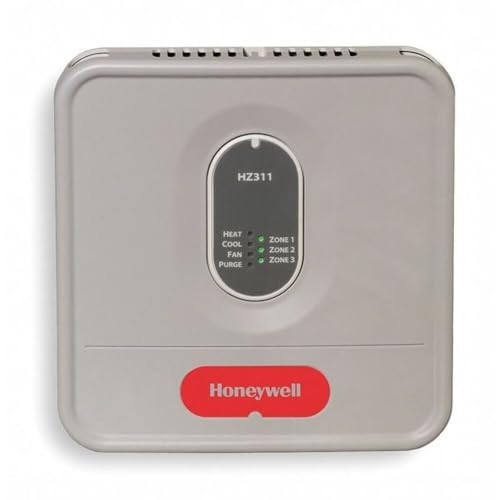
The HZ311 runs three zones and does it with variable-speed fan control, which means the board can signal your blower to ramp gently instead of roaring between calls. It measures 9″L x 10″W x 3″H and weighs 1.3 pounds, so it tucks onto a utility-room wall without needing a shelf. Push terminals let you seat a stripped wire with a firm press rather than hunting for a screwdriver at an awkward angle.
What wins people over is plain functionality — the board simply does its job with multi-zone central heating systems, and setup commonly takes about an hour for a confident DIYer. Onboard LEDs report status per zone, and a professional-looking termination job is easy to achieve because each wire lands in its own labeled spot. It is also a familiar replacement for older Honeywell panels, which shortens the swap considerably.
The catch is the push connectors. Some installers find them easy to swap wires into, others find them fiddly with thicker gauge — so if your wiring is stiff and aged, give yourself slack and patience. Beyond that, this is the panel most homes with three zones should start with. As buyers report, it “works well with multi-zone central heating systems and is easy to install.”
What earns its keep
- Three zones with variable-speed fan control for gentler staging
- Push terminals and labeled LEDs speed up wiring and troubleshooting
- 1.3-pound, 9″ x 10″ x 3″ plastic housing mounts almost anywhere
- Proven drop-in replacement path for older Honeywell panels
Where it asks for care
- Push connectors split opinion — stiff wire needs a firm, straight push
- Fixed at three zones, so no room to expand later
- No supply air temperature sensor in the box
The right board if: you have three zones, conventional equipment, and want a panel that just works.
Worth a second look if: your ductwork is already set up for four zones or more.
2. Honeywell HZ221 True Zone Control Panel
A two-zone kit that ships with the sensor most budget boards leave out.
Here is the detail that separates this ECOJAY kit from the Honeywell two-zone panel: it arrives with a supply air temperature sensor in the box. That sensor lets the board watch the air leaving the equipment and stage accordingly, which matters most on heat pumps and dual-fuel setups. It is listed as compatible with heat pump, dual fuel, gas, electric, and oil — a broader list than many boards at this level.
It handles single-stage cool and two-stage heat equipment. The housing runs 11″L x 5″W x 2″H and weighs 0.51 kg, a slim profile that slides into tight mechanical closets. Instructions are described as clear and easy to follow, and the unit is rated for 20 °C operating temperature. Customers note it “works perfectly from the moment it’s installed,” with setup landing around an hour.
It is built as a replacement for Honeywell, EWC, and ZoneFirst panels, so check your existing damper wiring before ordering — universal replacements occasionally need a wire-by-wire translation rather than a straight plug-in. If your system is multi-stage beyond two heat stages, step up to the three-zone SmartZone-3X instead.
Why installers like it: the included supply air sensor and wide equipment compatibility make it a safer universal swap than a bare panel.
One thing to verify first: the single-stage cool ceiling — homes with multi-stage cooling need a different board.
Best match: a two-zone heat pump or dual-fuel home that wants staging protection without paying for a bigger controller.
Not the one for: multi-stage cooling systems or anyone planning a third zone.
3. Honeywell HZ322 TrueZONE Panel
The panel that walks you through setup in plain English instead of a cryptic code list.
You get a digital display that walks the installer through four steps in plain language, so you are not decoding a chart to set it up. That matters if you do this once and do not want to guess. The HZ322 runs three zones and carries the same sturdy push terminals and common-sense LEDs as the HZ311.
Honeywell built this one for clean, professional terminations, and the guided setup covers the standard checkout procedure so you can confirm each damper and thermostat responds before you button the closet back up. It takes one AAA battery. Quality of build is the thing buyers talk about most with this panel, and it holds up as a modern replacement for older zoning hardware.
The trade-off is that guided setup still assumes you understand what a damper and a staging call are. If you have never wired a zoning panel, the plain-language prompts help but do not replace a basic multimeter and a wiring diagram. For a confident DIYer or a tech who wants fewer callbacks, it is a straight upgrade over a bare panel.
Where it pulls ahead
- Four-step guided digital setup in plain language
- Push terminals and LEDs keep terminations tidy and traceable
- Built for the standard checkout procedure so nothing is missed
- Runs three zones with a modern control layout
What to plan around
- Still assumes basic HVAC wiring knowledge
- Needs a AAA battery the board does not ship with
- Three-zone ceiling with no expansion terminals
Pick it when: the guided display matters to you and you are running three zones on conventional equipment.
Skip the upgrade if: you already know your wiring cold and want the simpler HZ311.
4. Honeywell HZ311K TrueZONE Panel Kit

Three zones, a temp sensor in the box, and an LED on every single terminal.
It fits a shallow closet with room to spare, thanks to a slim 11″L x 5″W x 1.5″H body. The Honeywell HZ311K, by contrast, is 5.3 times taller in its housing and 3.3 times heavier at 3.6 pounds versus this board’s 1.1 pounds. It runs on 24 volts and includes a supply air temperature sensor (a probe that reads the air leaving your equipment) for staging and equipment protection. The manufacturer backs it with a five-year warranty.
The defining detail is the LED per terminal plus a digital display showing full status, which means you can trace a call for air and a damper response without touching a meter. It is listed as compatible with single-stage, multi-stage, and variable-speed systems and built as a replacement for Honeywell HZ322, EWC, ZoneFirst, ZoneX, and DuroZone panels. Tech support quality gets called out as a reason people recommend it, and the LEDs showing furnace and damper activity in real time are the feature most often praised.
What stands out: a status LED on each terminal plus an included supply air sensor — rare at this level.
The install reality: universal compatibility means translating wires from your old panel, not cloning a terminal layout.
For you if: you want three zones on a multi-stage or variable-speed system and value per-terminal diagnostics.
Not ideal if: you prefer a brand-matched direct swap with no wire mapping.
5. SmartZone-4X Control — 4 Zone Controller KIT w/ Temp Sensor

Four zones that scale to twenty, with fresh-air and economizer control built in.
This is the board for a house that keeps growing. It starts at four zones and the listing says it handles up to 20 — expansion the Honeywell panels here do not offer. It runs on 24 volts and weighs 1.3 pounds, roughly the same mass as the HZ311 despite running more zone terminals. A supply temperature sensor arrives in the box.
Beyond zone count, the built-in controls save you buying separate modules: fresh air control, an economizer (a damper that pulls in outside air to cool your home), ECO mode, and humidity control. If you are balancing a tightly sealed home or want outside air on a mild day, those controls do the job. It works with any thermostats, including Nest, ecobee, Honeywell, Amazon, and Sensi. It handles gas, electric, and heat pump equipment.
Installation and wiring are called out as the strength — the LEDs show which zone is calling for air, and instructions are described as clear. The trade-off is complexity: with four zones plus fresh-air and humidity settings, setup takes longer than a plain three-zone panel, and you are mapping wires from whatever board you are replacing.
Where it earns the premium
- Four zones expandable up to 20 for larger or future layouts
- Built-in fresh air, economizer, ECO mode, and humidity control
- Works with any thermostat, from Nest to Sensi
- Per-zone LEDs and included supply temperature sensor
Where it asks more of you
- More features mean a longer setup than a basic panel
- Wire mapping required when replacing another brand
- Overkill for a simple two- or three-zone house
Ideal when: you are running four or more zones and want fresh-air and humidity control on the same board.
Overkill if: your home only needs two or three damper zones.
6. Honeywell Zone Control Kit, 4 Zone, Output Amps 10VA

The four-zone kit for homes that pair a heat pump with a gas furnace.
Dual-fuel operation is the headliner here. If your home runs a heat pump and a gas furnace as backup, this board manages the switch between them, and the discharge air temperature staging watches the air leaving the equipment to protect it during that handoff. It also carries variable-speed fan control. The model is the HZ432K.
Four zones live on this panel, and it weighs 3 pounds — the heavier build you would expect from a Honeywell kit with a full enclosure. A digital display walks the installer through four easy steps using real language rather than codes. It is compatible with heat pump, air conditioner, and furnace equipment in residential systems, and a user manual is included.
What holds people back is the connector quality — some find the terminals fussier than the push terminals on the three-zone panels. Sizing that honestly: most reviewers point out the kit works flawlessly, particularly with Trane Z-Wave thermostats, and appreciate the ease of installation. Just do not rush the terminations.
The reason to choose it: dual-fuel handling plus discharge air staging in a genuine four-zone Honeywell panel.
What to watch: terminal connectors that take extra care — and no per-terminal LED layout as simple as the three-zone boards.
For the dual-fuel house: four zones on a heat-pump-plus-furnace setup with staging protection.
Look at the HZ322 instead if: you only have three zones and conventional equipment.
Know the Specs
Zone Count and Damper Outputs
Zone count is simply how many damper areas the board can control at once. A two-zone board runs two areas and cannot be stretched to three. Some four-zone controllers on this list expand well beyond four for larger homes. Match this number to your actual duct dampers, not to the number of rooms you wish were zoned.
Equipment Compatibility and Staging
Single-stage equipment is on or off. Multi-stage and variable-speed systems send staged calls, and dual-fuel setups pair a heat pump with a furnace. A board that lists heat pump, dual fuel, gas, electric, and oil compatibility covers most homes. A supply air temperature sensor lets the board stage safely by watching the air leaving the equipment.
Terminals and Onboard Diagnostics
Push terminals grip a stripped wire with a firm press and speed up wiring, though they need a straight, solid push to seat. LEDs that light per terminal show which zone is calling and whether the damper responded — the fastest way to trace a no-heat call. A digital display that uses real words instead of codes shortens setup considerably.
Thermostat and Wireless Compatibility
Some boards work with any thermostat, from Nest to ecobee to Sensi, which gives you freedom to change thermostats later. Others pair with a proprietary wireless protocol like RedLINK, useful when pulling new wire through finished walls is impractical. Check this before you buy, because it dictates which thermostats and sensors you can use.
Common Questions
Can I use a three-zone board on a house that only has two dampers?
Will a zone board work with a Nest or ecobee thermostat?
Do I need a supply air temperature sensor for a heat pump?
How long does it take to install a zone board?
What is the difference between push terminals and screw terminals on a zone board?
Can I expand a four-zone board to more zones later?
Is a universal replacement board better than a brand-matched one?
Do zone boards work with heat pump and dual-fuel systems?
What do the LEDs on a zone board actually tell me?
Can I install a zone board myself or should I hire a technician?
The Bottom Line
For most homes running three zones on conventional equipment, the Honeywell HZ311 TrueZONE Panel is the straightforward pick. It gives you proven multi-zone central heating, a 1.3-pound plastic housing that mounts anywhere, and push terminals that keep the wiring tidy. If you want per-terminal diagnostics and an included supply air sensor on a multi-stage or variable-speed system, the SmartZone-3X earns the step up. And for four or more zones with fresh-air and humidity control, the SmartZone-4X is the one to reach for.
Match the zone count to your dampers first, confirm heat pump or dual-fuel compatibility second, and the terminal wiring follows from those two numbers.
How we choose
We do not accept paid placement. Every pick is matched to a real buyer and a real use-case; we do not hands-on test units.
Sources
Specifications: manufacturer listings and product documentation. Review insights: verified customer reviews, as of November 2026. Pricing: not shown on this page (it changes often); check the current price via the retailer link.
As an Amazon Associate, Tactical Gear Guy earns from qualifying purchases. This does not affect which products we feature.