Specs are compiled from manufacturer listings and verified buyer reviews and can change over time — please confirm the key details on the product page before buying.
If your toes feel pinched by the afternoon and your heel keeps getting lifted higher than your forefoot, the fix is a shoe with a flat platform and a toe box that lets your toes spread. Zero drop means the heel and the ball of your foot sit at the same height off the ground — no ramp, no tilt. That level platform is the one spec every pick below shares. The eight shoes here all run 0mm heel-to-toe, but they land in very different places on cushioning, toe-box width, and what you will actually use them for.
This guide is built by comparing the manufacturers’ published specifications and the patterns across verified customer reviews, so you get each pick’s real strengths and trade-offs instead of marketing spin.
Some are built for trail grit, some for all-day standing, and one is a cross-training shoe that holds up under lateral work. Below you get the flat facts on each, sorted by who each shoe actually suits, so you can narrow eight down to the one pair that fits your foot and your week. The right pair of zero drop women’s shoes should feel level underfoot from the first step, not after a break-in month.
Top Picks
How To Choose The Best Zero Drop Women’s Shoes
The pitch for zero drop is simple: your heel and your forefoot sit level, so your foot lands the way it would barefoot. What buyers get wrong is assuming every flat shoe is the same. A 0mm trail shoe with deep lugs and a 0mm road shoe with plush foam feel nothing alike underfoot, and neither one is right for a nurse standing twelve hours. Start with where you will wear them, then work backward to stack height and toe box.
Match the stack height to your day
Stack height is the foam between your foot and the ground. A lower stack gives you more ground feel and a more direct connection; a higher stack soaks up impact on long road miles. A trail shoe at 25mm sits in the middle and keeps you connected to the dirt. A road shoe at 28mm or 30mm cushions more for pavement. If you stand all day on hard floors, cushioning tends to matter more than ground feel.
Check the toe box before anything else
The toe box is the front compartment of the shoe. A wide one lets your toes splay instead of stacking, which is the whole point of natural movement footwear. If you have bunions, wide feet, or swelling by evening, this is the spec that decides whether a shoe works. Look for language like “wide toe box” or “FootShape” in the listing, and size up half a size only when the maker tells you the shoe runs small.
Look at the outsole for your surface
Outsole is the bottom rubber and the lug pattern cut into it. Trail shoes use aggressive, canted lugs for grip on loose dirt; road shoes use flatter rubber for smooth pavement; gym shoes need a stable, grippy base for lateral cuts. Buying a trail shoe for the treadmill wastes the lugs. Buying a road shoe for muddy singletrack leaves you sliding.
Decide on a removable insole
A removable insole lets you swap in your own orthotic or arch insert without fighting glued-down foam. It also makes cleaning easier, since you can pull the insole out and air it. If you already wear a custom insert, check that the shoe lists a removable insole before you buy.
Side-by-Side Comparison
| Model | Best For | Drop | Stack Height | Weight | Amazon |
|---|---|---|---|---|---|
| ALTRA Lone Peak 8★ Best Overall | Trail running and hiking | 0 mm | 25 mm | 10.7 oz / 303 g | Amazon |
| Wide Toe Box Slip-On SneakerBest All-Day Standing | All-day standing and easy on/off | 0 mm | — | — | Amazon |
| ALTRA Torin 7Best Daily Trainer | Daily road training | 0 mm | 28 mm | 8.3 oz | Amazon |
| WHITIN Wide Toe Box S880 | Budget everyday walking | 0 mm | — | — | Amazon |
| HIKE Footwear Flame | Barefoot-style walking | 0 mm | — | — | Amazon |
| Topo Athletic Pursuit 2 | Technical trail running | 0 mm | — | 8.6 oz (W7) | Amazon |
| Flux Footwear Adapt Graphene XT | Cross training and lifting | 0 mm | — | 10.2 oz | Amazon |
Detailed Reviews
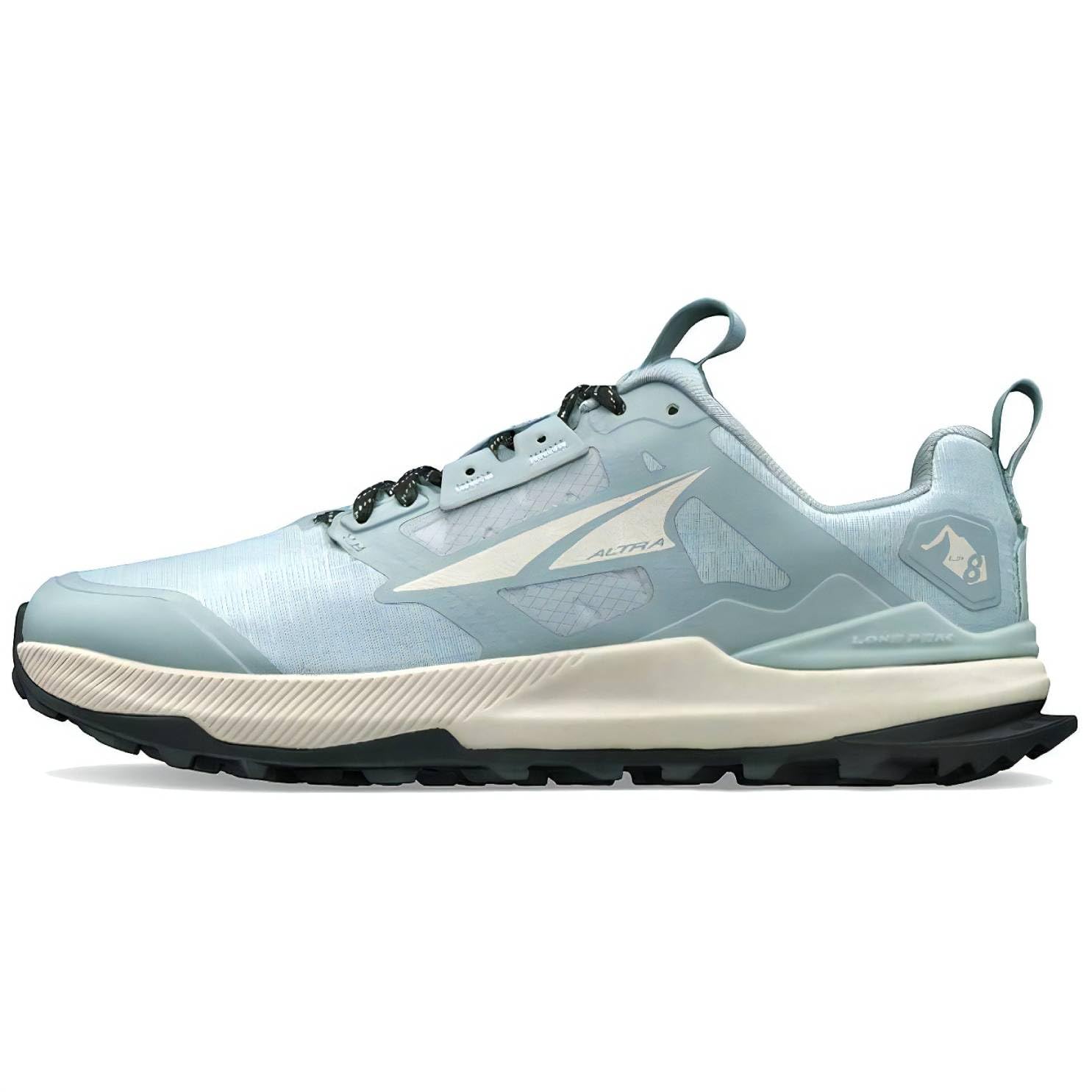
1. ALTRA Women’s Lone Peak 8 Trail Running Shoe
Our pick — 4.5+★ from 850+ verified ratings; the strongest balance of quality and price.
The trail shoe that keeps your heel level and your toes spread on loose dirt.
You feel the trail under you instead of floating above it, because the Lone Peak 8 holds a 0mm drop — your heel and the ball of your foot sit at the same height off the ground — with a 25mm stack height (the foam thickness under your foot). The MaxTrac outsole is built for sticky grip, and the canted lugs (angled tread blocks) sit under your metatarsals (the long bones just behind your toes) to dig in on climbs. If your Saturday is a rocky, rooty hiking trail rather than a treadmill, this is the shape that makes sense.
Your toes get room to spread and move through the midfoot, because the upper is a refined ripstop mesh — a woven fabric with a grid of reinforcement threads that resists snags — wrapped around Altra’s roomiest toe box. Build quality is the most-praised trait in reviews of this shoe, with comfort close behind. Buyers report feet that never hurt and no toe pinching, again and again. Trail runners who put on big miles also note there is essentially no break-in period.
The one honest trade-off is cushioning. It is the aspect buyers are most split on — this is a mid-cushion trail shoe, not a plush pillow, so if you want a soft, forgiving ride on pavement, the Paradigm 8 below cushions more at a 30mm stack height. For dirt and rock, though, the ground feel is the point. At 10.7 oz / 303 g it is not the lightest shoe here, but it carries that weight with grip and stability where it counts. skip it if you mostly run on concrete and want a soft landing.
What earns its place
- 0mm drop with a 25mm stack height keeps heel and forefoot level on uneven ground
- MaxTrac outsole and canted TrailClaw lugs grab loose dirt and rock
- Altra’s roomiest FootShape toe box gives wide feet real room
- Ripstop mesh upper resists snags on brush and scree
Where it holds back
- Cushioning draws the most mixed feedback — this is a mid-cushion shoe, not a plush road ride
- At 10.7 oz / 303 g it is heavier than the road-focused Torin 7 at 8.3 oz
Top of the pile: Buy this if your miles happen on trail, gravel, or hike-and-scramble days and you want a level platform with real grip.
Pass on it for: Long pavement runs, where the mid cushioning and trail lugs will feel like more shoe than you need.
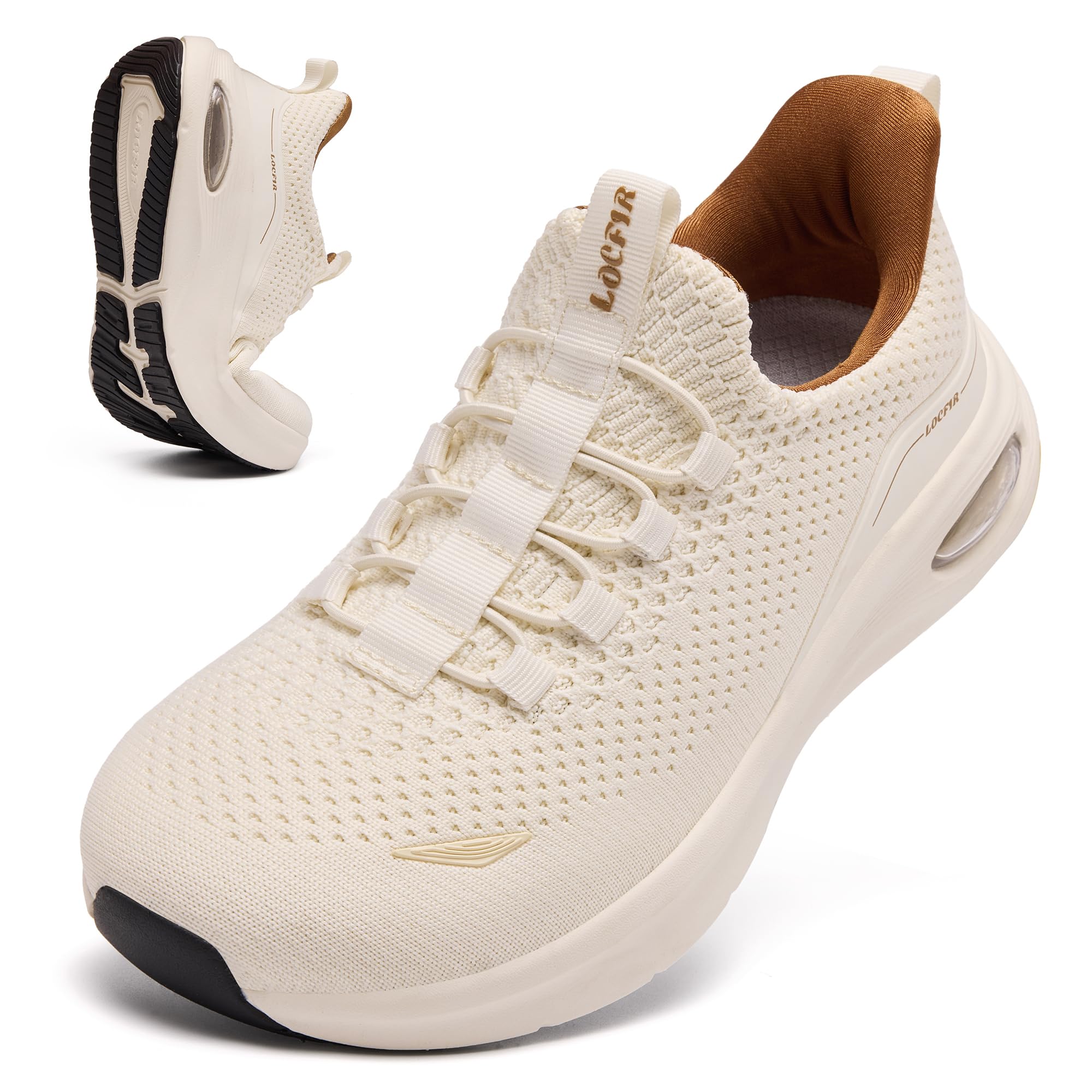
2. Wide Toe Box Shoes Women Slip on Sneakers with Arch Support
A slip-on with arch support and a wide toe box for twelve-hour shifts on hard floors.
The defining spec here is the slip-on build paired with arch support and a Phylon midsole — Phylon is a lightweight foam that gives you a little bounce with durability. It is a 0mm platform with a wide toe box, which means your toes are not squeezed by hour nine. For nurses, teachers, and anyone on their feet all shift long, the easy on-and-off matters as much as the cushioning.
Comfort is the most-mentioned trait in buyer reviews of this slip-on, with fit a close second. The wide toe box keeps toes from getting pinched, and the slip-on entry means you are not fighting laces when your hands are full. Lightweight construction keeps the shoe from dragging by the end of a long day. If you want to skip laces entirely, the slip-on entry is the reason to pick this pair.
The catch is sizing. Opinions split there, with some buyers finding them too small, and the maker itself notes this style runs slightly large with a wide toe box and suggests ordering your regular size unless you want a looser fit. If you have a high instep, the listing recommends going up half a size. Read the size guidance carefully before you commit — the comfort is real, but the fit is the variable.
The stand-out: A slip-on with arch support and a wide toe box is a rare combination, and it is exactly what standing-heavy days call for.
The size question: This style runs slightly large, so order your regular size unless you want a looser fit or have a high instep.
Reach for these: If your day is twelve hours on hard floors and you want an easy-on shoe with arch support and toe room.
Look elsewhere: If you need a dialed-in racing fit — the slip-on shape is built for comfort and easy entry, not a locked-down run.
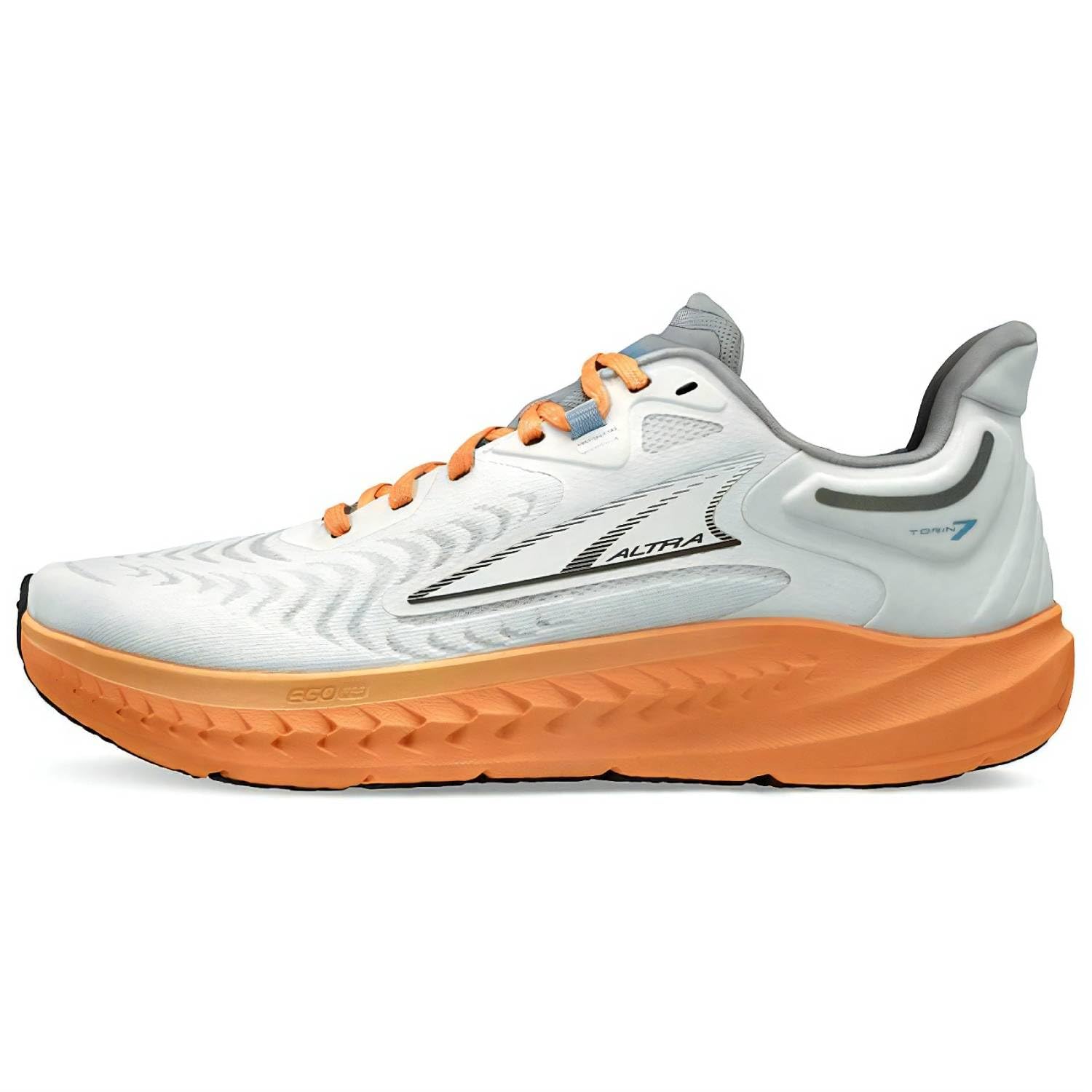
3. ALTRA Women’s Torin 7 Road Running Shoe
The lighter road option that still gives you a plush, level ride.
At 8.3 oz, the Torin 7 is the lightest road shoe in this group, and it does that with a 28mm stack height and 0mm drop. The EGO MAX midsole gives you soft cushioning without the bulk, and the FootPod outsole — a pattern designed to flex with your foot’s natural movement — keeps the ride smooth. If you want one shoe for daily training and long runs, this is the shape that covers both.
Quality is what buyers talk about most, with cushioning second. The cushioning gets described in glowing terms, and the engineered mesh upper keeps things breathable. Versatility shows up too: it works for all-day wear and a range of activities, not just the run itself. Color options draw praise as well, particularly the grey with blue highlights.
The honest caveat is fit and durability. Fit draws mixed feedback, and some owners mention durability concerns over time. Comfort opinions also split a little. This is not a flaw so much as a fit issue — the Torin 7 rewards trying your true size with your running socks. For a lighter daily trainer with a level platform, it is a strong pick.
The case for the Torin
- 8.3 oz is the lightest road weight here
- 28mm stack height with 0mm drop for cushioned, level miles
- EGO MAX midsole balances softness and responsiveness
- Engineered mesh upper breathes on warm runs
What to watch
- Fit and durability both draw mixed feedback — try true to size first
- Cushioning is soft, which some runners find too plush for fast work
Pick it if: You want one lightweight road shoe for daily miles and long runs with a level platform.
Think twice if: You need maximum durability or a firm ride — both draw split feedback here.
4. WHITIN Women’s Wide Toe Box Running Shoes S880

An entry-level flat shoe with an insole you can swap out.
If you want to test zero drop without committing to a big spend, the WHITIN S880 is the entry point. It runs 0mm with a wide toe box and a breathable mesh upper that keeps air moving. The EVA midsole — a lightweight foam — gives a little bounce and durability, and the removable insole lets you drop in your own insert or pull it out for cleaning. That removable piece alone makes it friendlier than most budget shoes.
Comfort is what buyers praise most, with the toe box second. Wide flat feet get real room here, and the shoe fits without causing discomfort across everyday wear. It shows up in running-errands and everyday-walking scenarios as much as on the run, which tells you it is a lifestyle shoe first. Appearance draws compliments too.
Arch support is the mixed area, along with some purchase concerns. If you need strong built-in arch support, this is not the shoe for that — the removable insole is your lever. The lightweight build and rubber outsole give grip and traction on varied terrain. At this price, the trade-off is fair: you get the flat platform and wide toe box without the premium foam.
The value play: A 0mm platform with a wide toe box and removable insole at an entry-level tier is the easiest way to try zero drop without overcommitting.
The arch caveat: Built-in arch support draws mixed feedback, so plan to use your own insert if you need it.
Good match: For anyone curious about zero drop who wants a low-cost everyday walker with real toe room.
Skip if: You need strong factory arch support or serious trail grip — this is a light, everyday shoe.
5. HIKE Footwear Flame Women’s Barefoot Walking Shoes

A flexible, minimalist walker built around ground feel.
The Flame is the most minimal shoe here: a zero-drop sole that keeps your foot level, a wide toe box for natural toe splay, and a flexible sole that lets you feel the ground. That is the whole design philosophy — less shoe, more connection. If you are transitioning from thick, cushioned soles and want to feel the difference, this is the shape that teaches you to walk differently.
Comfort is what owners talk about most, with arch support second. The shoe is light and looks good, and the brown heel detail draws a mention. It suits barefoot-style walkers who want to wear a shoe all day without the bulk of a traditional trainer. The wide toe box and minimal build are the core reasons people pick it.
The honest limits are slip-on usability and value. Slip-on functionality draws mixed feedback, and value is debated. Because the sole is flexible and thin, this is not a shoe for long pavement runs or heavy trail days — it is a walking shoe. If you want plush cushioning, look to the Paradigm 8 above. If you want ground feel over cushioning, the Flame’s thin, flexible sole is the pick.
What it does well: A flexible sole and wide toe box make this the most barefoot-feeling shoe in the group.
The honest limit: Thin, flexible soles are not built for long pavement runs or rocky trails — this is a walking shoe.
Right for you: Barefoot-style walkers who want ground feel and a wide toe box for everyday wear.
Not for you: Runners who need cushioning or trail protection — the thin sole trades protection for feel.
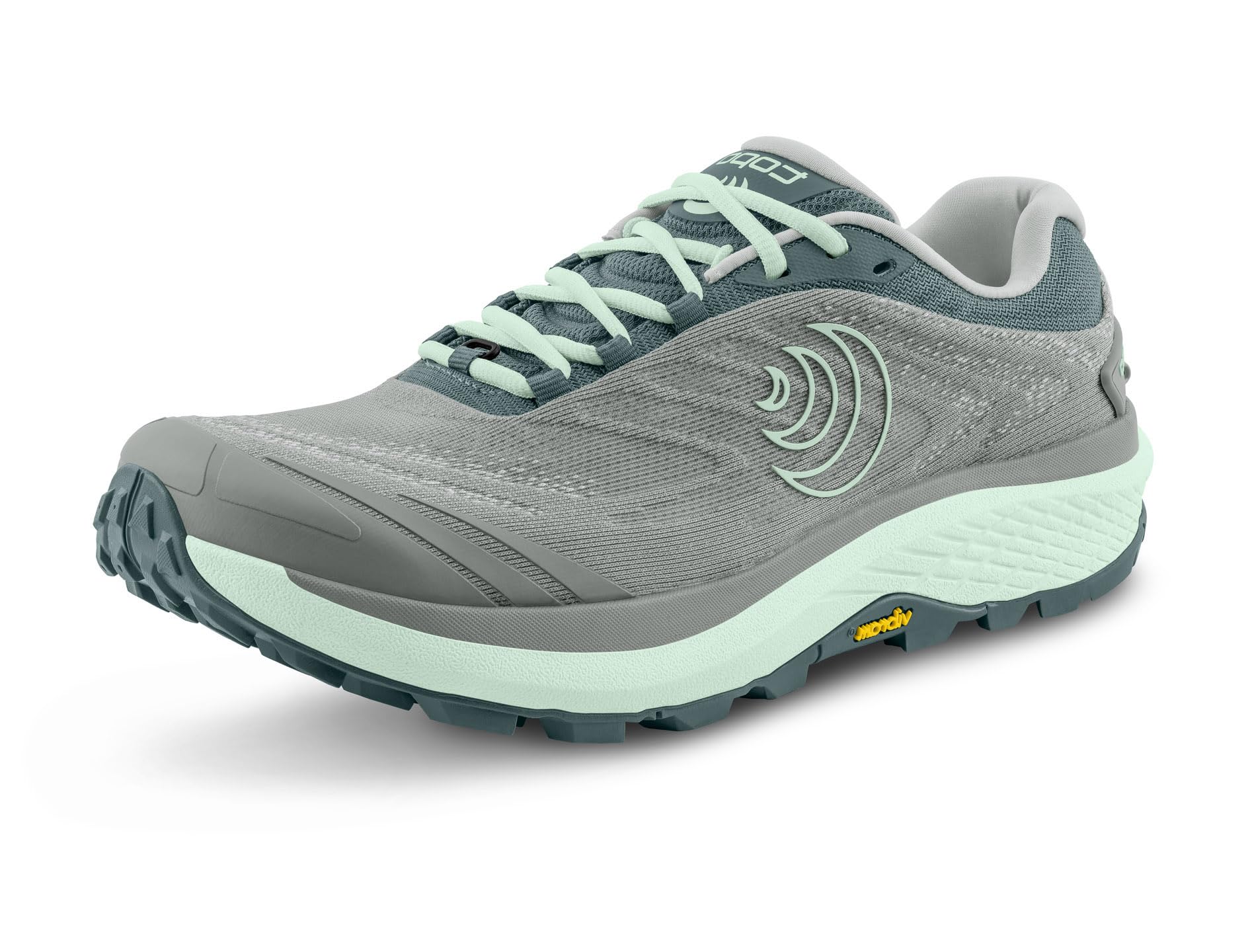
6. Topo Athletic Women’s Pursuit 2 Trail Running Shoe
The trail runner with a Vibram sole and a drainage-ready insole.
What sets the Pursuit 2 apart is the Vibram Megagrip outsole — Vibram is a rubber compound known for grip, and Megagrip is its wet-and-dry trail version. Add the updated ZipFoam midsole for a softer, more responsive ride, and you get a 0mm drop shoe that holds on slick rock. The FKT Insole is designed for quick drainage in wet conditions, and the recycled mesh upper is tightly woven for durability. At 8.6 oz (W7), it stays light for the trail.
Quality is what buyers praise most, with the toe box second. The roomy toe box lets toes spread, and runners find the shoe keeps feet comfortable and pain-free on the trail. Appearance draws positive notes. The gaiter compatibility (sold separately) is a nice detail if you run in debris-heavy conditions.
The mixed areas are cushioning, durability, and arch support. Some customers note the shoe lace loop ripping off, which is a durability concern worth noting. Cushioning and arch support opinions split. This is not a plush trail cruiser — it is a technical shoe that rewards you with grip and light weight. If you want maximum cushioning on trail, the Lone Peak 8 above is the softer call.
Why trail runners like it
- Vibram Megagrip rubber holds on wet and dry rock
- FKT Insole drains quickly in wet conditions
- Roomy toe box lets toes spread on descents
- 8.6 oz (W7) keeps the trail miles light
Where it may fall short
- Some reviewers point out a lace loop tearing — watch that seam
- Cushioning and arch support draw mixed feedback
- Premium trail price puts it above the Lone Peak 8
Go with this: Technical trail runners who want Vibram grip, quick drainage, and a light 8.6 oz build.
Pass if: You want a plush, cushioned trail ride — this leans firm and light instead.
7. Flux Footwear Adapt Graphene XT Cross Training Shoes
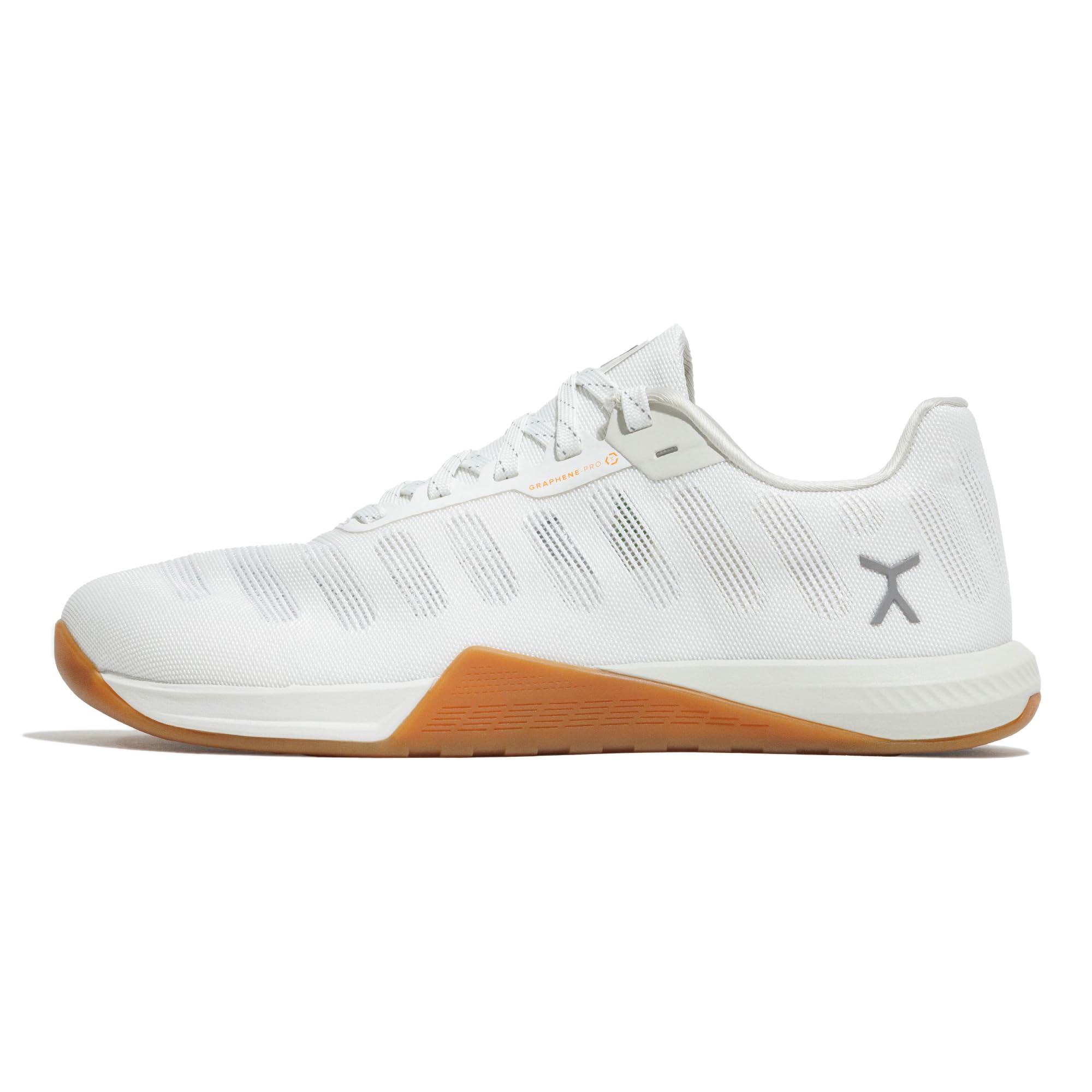
A zero drop gym shoe built to stay put during lifts and lateral work.
Graphene is the headline here — the maker claims it is 200x stronger than steel while remaining thin and flexible, though that is the maker’s claim, not a lab result. That claim is the maker’s, not a lab result. What matters in the gym is that the upper holds its shape and the 0mm platform keeps you flat and stable for lifting. At 10.2 oz, it has enough substance for cross-training.
Comfort leads the conversation, with versatility second. Buyer feedback places it across CrossFit, powerlifting, and weightlifting, along with quick sprints, jumps, and lateral movements. Foot support and grip show up as strengths too, and the wide toe box keeps toes spread when you are under load. This is a shoe built for the mixed session, not the long run.
The sizing is the thing to get right. The maker states the Adapt Graphene XT fits small for most people and recommends sizing up a half size, and fit draws mixed feedback in reviews. Value is also debated. Clean it by spot-cleaning only — no bleach, no machine wash. If you are between sizes, take the half up.
The gym case: A 0mm platform with a wide toe box and a graphene-reinforced upper is a useful combination for lifting and lateral work.
The sizing trap: The maker says this model fits small and suggests a half size up — believe it before you lift in them.
Made for: Cross-training, lifting, and gym sessions where a flat, stable base and wide toe box matter.
Not the pick if: You want a running shoe — the 10.2 oz build and gym-focused design suit the floor, not the road.
Know the Specs
Drop (Heel-to-Toe Offset)
Drop is the height difference between your heel and your forefoot. Zero drop means both sit at the same distance from the ground, so your foot lands flat instead of tipped forward. Every shoe on this list is 0mm. The adjustment is real: your calf and Achilles do more work, so build up your mileage gradually rather than switching cold on a long run.
Stack Height
Stack height is how much foam sits under your foot. Lower stack (around 25mm) gives more ground feel and connection; higher stack (28mm to 30mm) soaks up more impact on pavement. It is measured the same at heel and forefoot on a zero drop shoe. For trail, lower stack keeps you connected; for road, higher stack cushions the miles.
Toe Box Width
The toe box is the front compartment where your toes live. A wide toe box lets toes splay naturally instead of stacking, which is the core of natural movement footwear. It is the spec that matters most if you have bunions, wide feet, or evening swelling. Look for “wide toe box” or “FootShape” in the listing.
Outsole and Lug Pattern
The outsole is the bottom rubber, and lugs are the raised shapes cut into it. Aggressive lugs grip loose trail; flatter rubber rolls smooth on pavement; a stable, grippy base suits gym floors. Match the outsole to your surface — a trail lug on a treadmill is wasted, and a road sole on mud slides.
Common Questions
Is zero drop better for wide feet and bunions?
How long does it take to adjust to zero drop shoes?
Can I run in zero drop shoes on pavement?
Do zero drop shoes have arch support?
Should I size up in zero drop shoes?
What is the difference between the Lone Peak 8 and the Torin 7?
Are zero drop shoes good for standing all day?
Can I use zero drop cross trainers for running?
How do I clean zero drop shoes?
Which zero drop shoe is best for trail versus road?
The Bottom Line
For the widest range of women, the zero drop women’s shoes winner is the ALTRA Lone Peak 8 because it pairs a 0mm drop and 25mm stack height with a MaxTrac outsole that grips real trail — and its build quality is the thing buyers talk about most. If pavement is your surface, grab the Torin 7 at 8.3 oz for lighter road miles. And for twelve-hour standing shifts, the Wide Toe Box Slip-On is the one to reach for, with arch support and an easy entry. Start with where you wear them most — trail, pavement, or hard floors — then let stack height and toe room decide.
How we choose
We do not accept paid placement. Every pick is matched to a real buyer and a real use-case; we do not hands-on test units.
Sources
Specifications: manufacturer listings and product documentation. Review insights: verified customer reviews, as of November 2026. Pricing: not shown on this page (it changes often); check the current price via the retailer link.
As an Amazon Associate, Tactical Gear Guy earns from qualifying purchases. This does not affect which products we feature.