Specs are compiled from manufacturer listings and verified buyer reviews and can change over time — please confirm the key details on the product page before buying.
Your heel and toes sit at the same height in a true zero drop boot, so your whole stride feels different on snow, trail, and pavement. This guide narrows the field to six women’s pairs that actually keep the heel level — no hidden ramp, no lifted heel dressed up as “support.” You’ll see which ones run warm and waterproof, which have room for wide toes, and which ones trade a little flex for rugged leather.
This guide is built by comparing the manufacturers’ published specifications and the patterns across verified customer reviews, so you get each pick’s real strengths and trade-offs instead of marketing spin.
Some boots here are built for deep snow, some for wet trails, and some for everyday winter commutes, so the right pick depends on where you actually walk. Below you’ll find the fit notes, insulation, and sole details that matter most when shopping for zero drop boots for women.
Top Picks
How To Choose The Best Zero Drop Boots for Women
The first thing to check on any listing is whether the heel and toe actually sit level. Plenty of winter boots advertise a “natural” feel and still hide a raised heel under the insole. Look for a stated drop of 0 mm, or a level platform, before you read anything else.
Read the drop number first
Drop means the height difference between your heel and the ball of your foot, measured in millimeters. A 0 mm drop is a true zero drop boot; anything higher puts your heel up on a ramp. If a listing never states the drop, treat it as unknown rather than assuming it’s flat.
Toe box width decides comfort
A flat sole lets your toes spread on push-off, but only if the boot gives them room. A wide toe box (extra space across the front of the foot) is what keeps a zero drop boot from pinching when you walk downhill. Narrow-fitting flat boots defeat the purpose for a lot of women.
Match insulation to your coldest day
Insulation is measured in grams, and more grams means more warmth trapped around your foot. A 200g insulated boot handles cold winter walks; an uninsulated leather boot is better for milder wet days. Pair that with a waterproof membrane if you’ll be in slush or wet snow.
Decide on flex versus protection
Barefoot-style boots are meant to bend and let your foot feel the ground. Rugged leather and thick lugs (the deep tread blocks on the sole) add protection but often stiffen the sole. Think about if you want maximum ground feel or maximum toughness underfoot before you pick.
Side-by-Side Comparison
| Model | Best For | Drop | Insulation / Upper | Weight | Amazon |
|---|---|---|---|---|---|
| Xero Shoes Women’s Mika Boots★ Best Overall | Deep snow and cold-weather walks | 0 mm heel drop | Cold-weather waterproof build | — | Amazon |
| Hike Footwear HF Winter Barefoot BootsLightest Feel | Lightweight winter wear and commuting | Zero drop | Winter-ready barefoot build | — | Amazon |
| HIKE Footwear Caspar Pro Winter Barefoot Boots | Long cold walks on a budget | Zero drop (minimalist) | Non-slip winter build | — | Amazon |
| Xero Shoes Women’s Alpine Barefoot Pull-On Snow Boots | Easy on/off winter warmth | 0 mm heel drop | 200g insulation, heat reflective insole, XeroTex waterproof membrane | — | Amazon |
| ALTRA Women’s Lone Peak 9 Waterproof Mid Hiking Shoe | Wet trails with ankle coverage | 0 mm (25 mm/25 mm stack) | Hydroguard waterproof membrane, recycled polyester mesh upper | 13.45 oz | Amazon |
| Vivobarefoot Women’s Tracker FG L Leather Walking Shoe | Rugged rocky terrain | Zero drop (minimalist) | Hydrogard lining, thermal insole, outlast heat regulator | 15.4 oz | Amazon |
Detailed Reviews
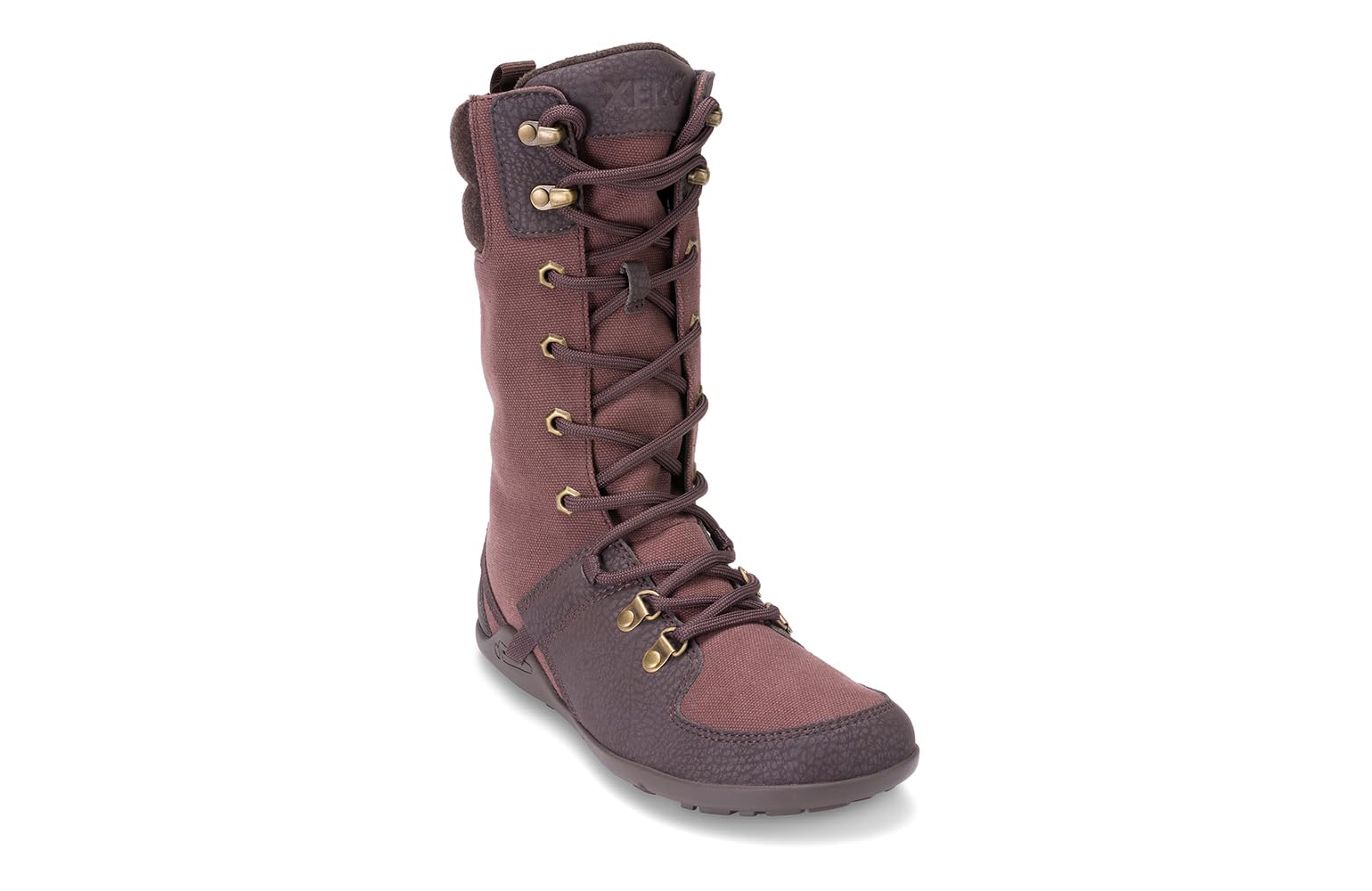
1. Xero Shoes Women’s Mika Boots
Our pick — 4.0+★ from 150+ verified ratings; the strongest balance of quality and price.
A flat-soled snow boot that walks through a foot of snow without pitching you forward.
The Mika is the pair that balances a genuine zero drop heel with cold-weather waterproofing, which is exactly the combination most women struggle to find. Your heel sits level with your toes, so you stay upright and stable when the ground is slick and uneven. It’s the crowd favorite here at 4.0+ stars across 180+ ratings, a broad enough sample to trust across a range of foot shapes.
What wins people over is the fit — it’s the thing that comes up most in the feedback, followed closely by comfort and warmth. The barefoot feel comes through on snow, and the cold-weather build keeps your feet from going numb on a long walk.
The honest caveat sits around water and grip. Some wearers find the Mika sheds slush cleanly and holds traction, while others end up with wet outer leather or a slip on ice. Sizing also runs a bit fussy for some, and the zipper needs a gentle touch. None of that sinks the boot — it’s simply a reminder to check the size chart and treat the closure with care.
Where the Mika Delivers
- True zero drop heel keeps you level on snow and slanting ground
- Cold-weather waterproof build suited to deep winter walks
- Fit is the standout strength, with comfort and warmth close behind
- Barefoot feel that stays natural even in a lined winter boot
What to Watch
- Water resistance earns mixed feedback — some get wet outer leather
- Grip on ice is hit or miss depending on conditions
- Sizing runs inconsistent for some wearers
- Zipper needs gentle handling
Reach for this if: you want one flat-soled boot for snowy sidewalks and cold-weather errands.
Think twice if: you need surefooted traction on pure ice — grip here is the weakest link.
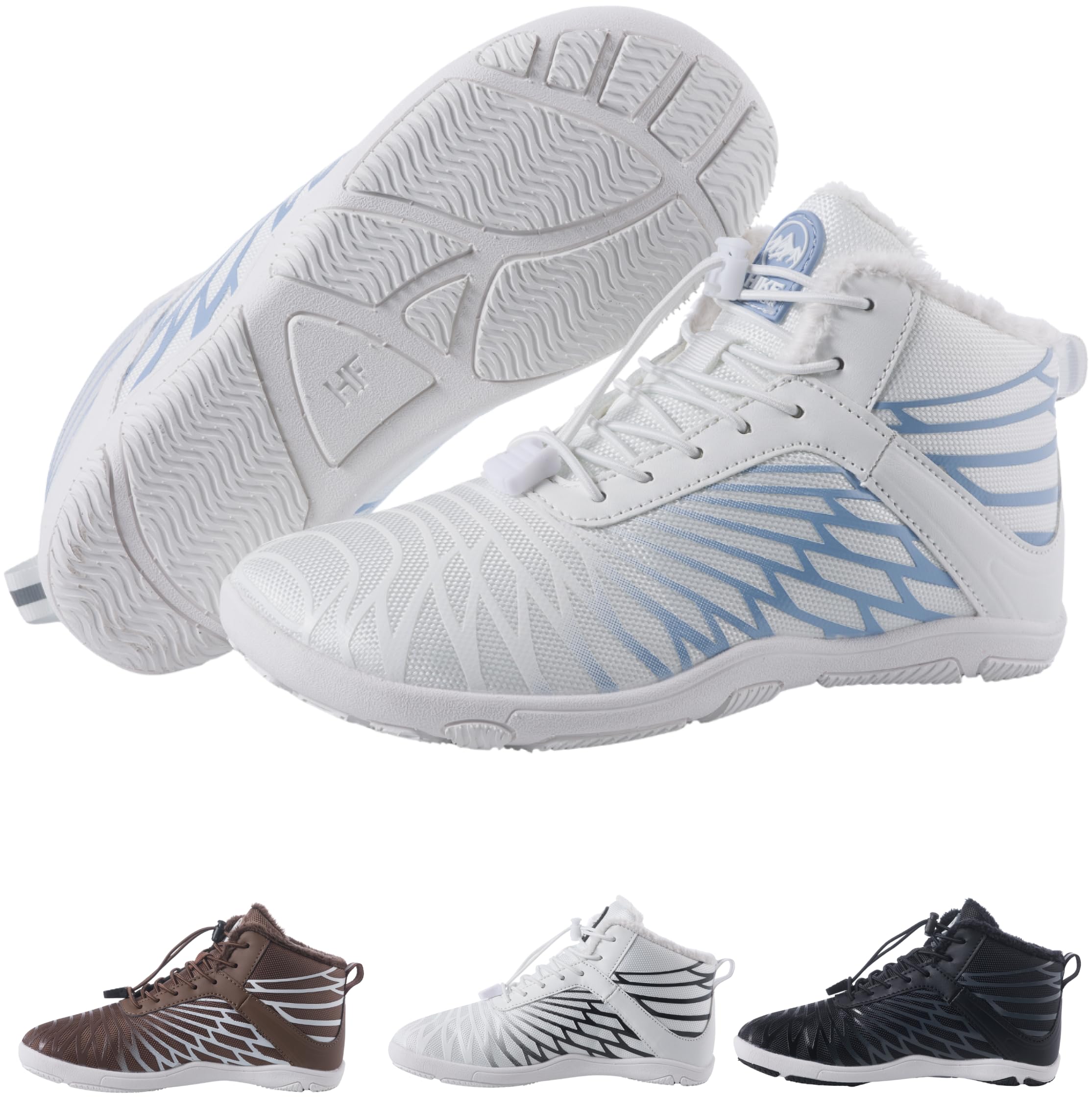
2. Hike Footwear HF Winter Barefoot Boots
A winter barefoot boot built light enough to feel like nothing on your foot.
The HF Winter takes Hike Footwear’s best-selling barefoot shoe and adds the cold-weather pieces — warmth, protection, and a wide toe box — while keeping that barefoot feel. It’s a zero drop boot with room across the toes, so your foot can spread naturally instead of being squeezed into a narrow winter profile. It’s the newest arrival in this lineup, brought to market in 2025, and it’s already earning a 4.5+ star rating.
Comfort and fit are what the feedback raves about, with warmth, foot support, and the lightweight build all getting attention too. Buyers describe it as feeling like walking barefoot, which is the whole point of a zero drop boot. The wide toe box is what lets you walk and hike without the squeeze you’d get in a conventional winter boot.
Built for natural stride: a zero drop, wide toe box winter boot designed around cold-weather hiking, commuting, and winter walks.
Top of the list for: women who want a lightweight, roomy boot for winter commutes and casual walks.
Worth noting: this is a newer model, so it has less of a long-term track record than the established picks here.
3. HIKE Footwear Caspar Pro Winter Barefoot Boots
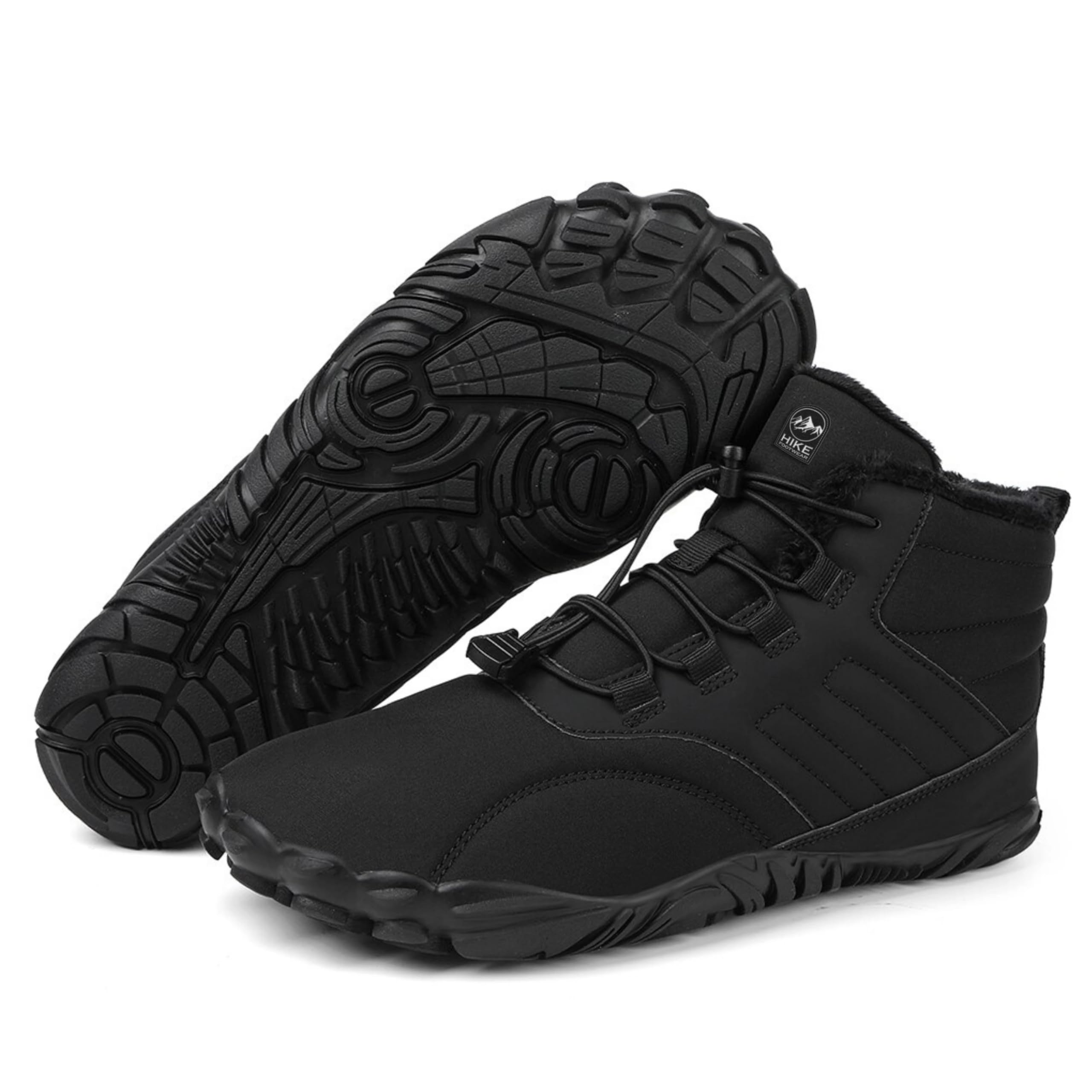
The minimalist winter boot with the deepest feedback pool in this whole lineup.
The Caspar Pro is the value pick — a minimalist winter barefoot boot with a level footbed and warmth baked in. It dresses up as a no-frills pair and delivers the core promise: warm, comfortable, and natural underfoot. Where the others are newer, this one carries 400+ ratings at 4.0+ stars, the deepest review pool in the lineup.
What buyers describe is a boot that feels like walking barefoot but handles cold weather with real warmth. It’s lightweight and easy to walk in, and the non-slip outsole is built for grip on frozen ground. A reviewer walking long distances in very cold weather is a good picture of what this boot is aimed at — a functional winter companion, not a lifestyle piece.
Strengths
- Minimalist zero drop build with a barefoot feel
- Warm enough for long walks in very cold weather
- Lightweight and easy to walk in
- Non-slip outsole for frozen ground
Where It Falls Short
- A minimalist build gives less structure than a stiff leather boot
- Design is plain compared to the higher-end picks
Pick this one: if you want the warmest, most-reviewed minimalist value boot in the group.
It won’t suit: anyone who wants a stiff, heavily structured mountaineering boot.
4. Xero Shoes Women’s Alpine Barefoot Pull-On Snow Boots

The pull-on winter boot that skips the laces and keeps the level sole.
The Alpine Pull-On packs three warmth features into one flat boot: 200g of insulation, a heat-reflective insole, and a waterproof membrane called XeroTex. Together they’re built to keep feet warm and dry on winter trails and errands. It’s a pull-on design with a draw cord at the top and another at the ankle for a snug fit, so there’s no lacing before you head out the door.
Quality is the trait the reviews keep coming back to, followed by comfort and value. That puffy nylon upper with a draw-cord closure makes it a boot you can step into fast and cinch down tight. The zero drop heel stays level, so you keep the flat-stride feel even in a fully insulated snow boot. The insulation here is a named 200g, not a vague “warm.”
Fit runs a little both ways: some women love the roomy toe box while others find the boot narrow overall, so a wide-fitting foot should check the size guide.
The slide-in trade-off: the slip-on design and snow resistance split opinion, and pull-on boots in general give you less lockdown than laced hiking boots.
Best fit for: quick winter errands where you want insulation and waterproofing without lacing up.
Second-guess it if: you have a wide foot — the fit runs narrow for some.
5. ALTRA Women’s Lone Peak 9 Waterproof Mid Hiking Shoe

A zero drop trail boot that adds ankle coverage without the ramp.
The Lone Peak 9 Waterproof Mid is the trail specialist in this group, and it measures up to 25 mm of stack (the cushioning height under your foot) front and back — the same number heel and toe, which is what a true 0 mm drop looks like in practice. That level platform keeps your foot flat while the waterproof upper, a molded heel collar, and a grippy outsole handle wet, rocky trails. At 13.45 oz it’s the lighter of the two weighty boots here.
Comfort leads the feedback, with hiking performance and fit right behind it. The roomy toe box gets described as fitting like a glove, and ankle stability is a recurring point on the trail. The EGO midsole foam and MaxTrac outsole are the hardware underneath that comfort, and the Stoneguard insert shields your sole from rocks and debris. It’s a hiking boot that wears like a sneaker on your foot.
Two things split opinion: water resistance and cushioning. The waterproof membrane is solid for most wet days, but a few wish for more breathability in milder weather. Cushioning feels right for some and a touch firm for others on long descents. Compared with the Vivobarefoot Tracker below, the Lone Peak 9 is the lighter and more flexible trail option — 13.45 oz versus 15.4 oz.
Made for: wet, rooty trails where you want ankle coverage and a level platform.
Not your trail boot if: you only walk pavement — a hiking-specific mid is more boot than a city commute needs.
6. Vivobarefoot Women’s Tracker FG L Leather Walking Shoe
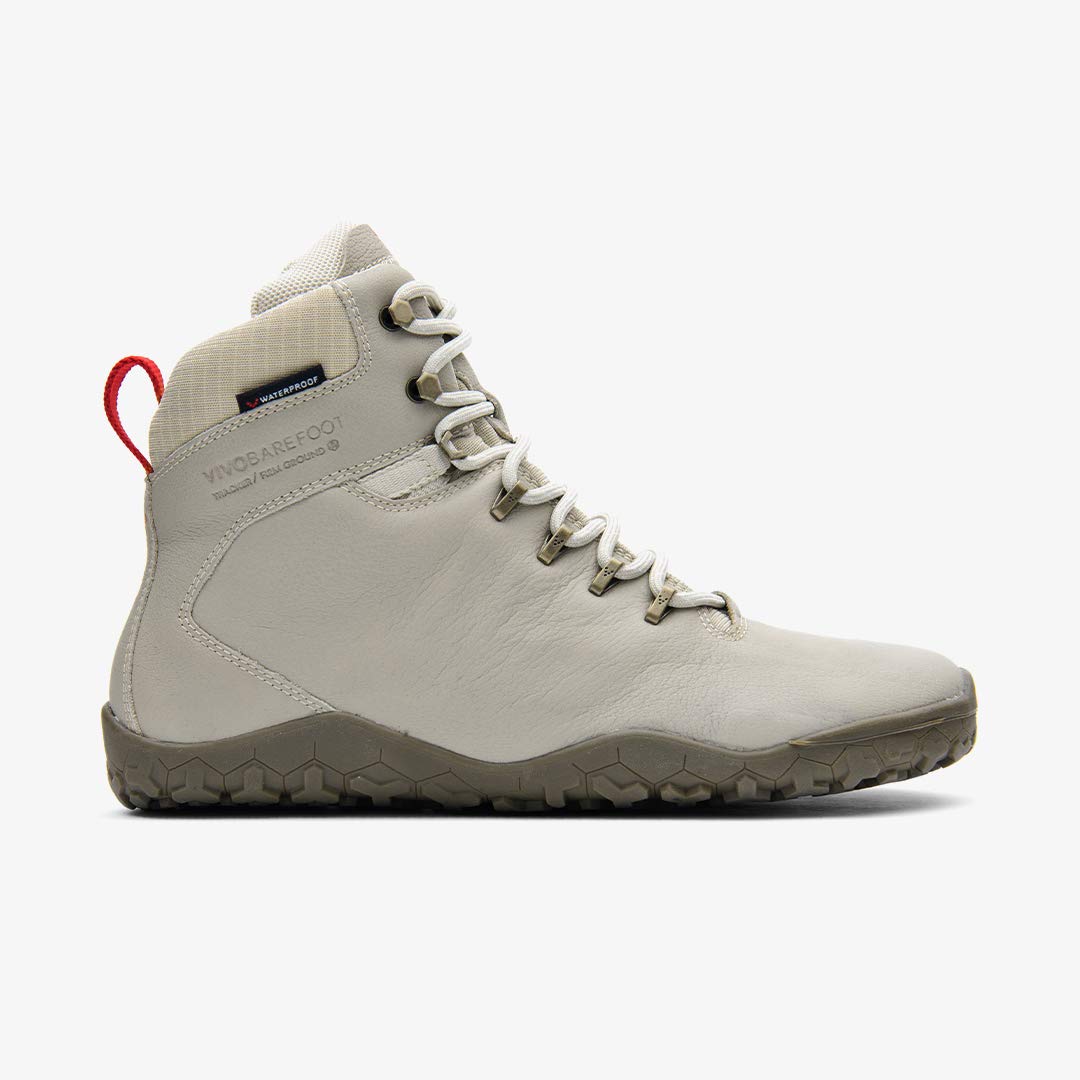
Tough leather and firm-ground lugs for rocky trails — at a real weight cost.
The Tracker FG L is the most rugged and the heaviest boot in this lineup, tipping the scale at 15.4 oz. Its firm-ground, off-road lugs and tough leather are built for rocky, uneven terrain, and a Hydrogard lining with a thermal insole and Outlast heat regulator is aimed at keeping feet dry and warm. It’s the oldest design here, on the market since 2016, and it carries a 4.0+ star rating.
Quality is what the feedback praises most, with comfort and the balance it gives your stride close behind. Buyers describe a minimalist boot that’s great for hiking and feels balanced underfoot. The leather is durable, and the Outlast heat regulator is a functional layer, not a marketing note. Weighing in at 15.4 oz against the Lone Peak 9’s 13.45 oz, it asks a little more of your legs but hands back a stiffer, more protective platform.
Stiff leather, considered fit: some find the Tracker flexible while others note the leather arrives quite stiff and needs breaking in — and the fit is a mixed bag across foot shapes.
Worth knowing on value: opinion splits on whether the premium build is worth the spend, so this is a boot for someone who wants rugged leather over the lighter mesh alternatives.
Ideal for: rocky, off-road terrain where you want tough leather and off-road lugs underfoot.
Skip if: you want an out-of-the-box soft boot — break-in time comes with this leather.
Know the Specs
Drop (the Heel-To-Toe Offset)
Drop is the difference in height between your heel and the ball of your foot, measured in millimeters. A 0 mm drop means the two sit level — that’s a true zero drop boot. A positive drop lifts the heel on a ramp, which is what most conventional boots do. Check this number first, because a flat-feeling boot with a hidden heel isn’t actually zero drop.
Stack Height
Stack height is how much material sits under your foot, front and back. When both numbers match — like the 25 mm/25 mm on the Altra Lone Peak 9 — the boot is level. More stack means more cushion and protection from rocks. Less stack means more ground feel and a lighter, more flexible boot.
Insulation in Grams
Insulation is measured in grams, and a higher number traps more warmth. The Xero Alpine Pull-On uses 200g of insulation plus a heat-reflective insole — a real, named figure for cold-weather performance. More insulation is better for deep cold but can feel warm indoors, so match it to your climate.
Waterproof Membrane
A waterproof membrane is a barrier layer inside the boot that blocks water while letting moisture vapor escape. XeroTex and Hydroguard are two named examples here. A membrane keeps slush and wet snow out, but it trades some breathability, so a fully waterproof boot can feel warmer on mild days.
Wide Toe Box
A wide toe box gives your toes extra room across the front of the foot. In a zero drop boot, that room matters more — your toes spread naturally on push-off. A narrow toe box makes a flat sole feel tight and cramped, which is why wide-foot buyers should check this before buying.
Outsole and Lugs
The outsole is the bottom of the boot, and lugs are the raised tread blocks on it. Deeper, firmer-ground lugs like on the Vivobarefoot Tracker grab rocky terrain; a general non-slip outsole handles icy pavement. Match the tread to where you’ll actually walk.
Common Questions
What does zero drop actually mean in a winter boot?
Are zero drop boots good for cold and snowy weather?
How wide is the toe box on these zero drop boots?
How much insulation do I need for winter walking?
What is the difference between a waterproof boot and a water-resistant one?
Will a zero drop boot cause heel or ankle pain at first?
How do I pick the right size in a barefoot winter boot?
Is the Vivobarefoot Tracker heavier than the Altra Lone Peak 9?
Can I wear these zero drop boots for actual hiking?
Do leather zero drop boots need breaking in?
The Bottom Line
For most women who want one flat-soled boot for winter walks and errands, the Xero Shoes Women’s Mika Boots is the pick — it pairs a true zero drop heel with cold-weather waterproofing. If lightness and a roomy toe box matter more to you, the Hike Footwear HF Winter Barefoot Boots feel almost like walking barefoot. And for wet, rocky trails where you want ankle coverage, the ALTRA Women’s Lone Peak 9 Waterproof Mid is the trail boot to reach for.
Start with the drop number, then match insulation and membrane to your coldest, wettest days. That narrows these six down to the one that fits your winter.
How we choose
We do not accept paid placement. Every pick is matched to a real buyer and a real use-case; we do not hands-on test units.
Sources
Specifications: manufacturer listings and product documentation. Review insights: verified customer reviews, as of November 2026. Pricing: not shown on this page (it changes often); check the current price via the retailer link.
As an Amazon Associate, Tactical Gear Guy earns from qualifying purchases. This does not affect which products we feature.