Specs are compiled from manufacturer listings and verified buyer reviews and can change over time — please confirm the key details on the product page before buying.
Your knees start complaining after mile three when your shoe’s cushioning and fit don’t match how you actually run. Match them and the run stays comfortable. Mismatch them and you are stuck with a stiff, narrow shoe that fights your foot every step. Below are nine real options, sorted by what each one does best, so you can pick in a few minutes instead of a few weeks.
This guide is built by comparing the manufacturers’ published specifications and the patterns across verified customer reviews, so you get each pick’s real strengths and trade-offs instead of marketing spin.
Cushioning depth, heel-to-toe offset and upper width decide most of what a running shoe feels like on your foot. This breakdown covers those exact numbers and who each shoe suits, giving you a clear path to the right pair of zapatos para correr hombre.
Top Picks

How To Choose The Best Zapatos Para Correr Hombre
A running shoe is a piece of equipment, not a fashion item. The right pair for you depends on how far you run, how much shock your legs can take, and how wide your foot sits inside a standard medium. Three specs do most of the deciding: cushioning depth, heel-to-toe offset, and upper width.
Cushioning: how much foam your legs want
Cushioning is the foam stacked under your foot. A max-cushioning shoe like the Saucony Hurricane 24 puts a deep layer between you and the road, which keeps long, slow miles gentle on your joints. A firmer, thinner setup feels quicker and more connected to the ground. There is no single right answer — a 10-mile runner usually wants more foam than a 5K runner.
Heel-to-toe offset: the drop that changes your stride
Offset (also called drop) is the height difference between the heel and the toe, measured in millimeters. A 6mm offset like the Saucony Hurricane 24 sits lower at the heel, which tends to encourage a flatter, more forward landing. Heel-strikers often prefer a higher drop; forefoot runners often prefer a lower one. This one number shapes how the shoe feels more than most buyers expect.
Upper and width: where the fit gets won or lost
The upper is the fabric shell over your foot. An engineered mesh upper lets air move through, which keeps your foot cooler and drier on warm runs. Width matters just as much — a shoe that is sized for a 2E foot gives wide-footed runners room, while a narrower cut works against a broad forefoot. Check the width label before you commit.
Weight in ounces: what it tells you
Lighter shoes take less effort to lift, mile after mile. A 9.7 oz shoe like the New Balance Fresh Foam 680 V9 feels noticeably easier on a long run than a 10.6 oz shoe like the Saucony Hurricane 24. Weight is not everything, but it is a fair guide to how fresh your legs feel at the end of a session.
Side-by-Side Comparison
All three spec columns use the same measure on every row, so you can scan the trade-offs at a glance.
| Model | Best For | Weight | Cushioning Setup | Notable Spec | Amazon |
|---|---|---|---|---|---|
| ASICS Gel-Cumulus 27★ Best Overall | All-round daily training | — | FF BLAST PLUS foam + PureGEL | FluidRide outsole | Amazon |
| adidas Runfalcon 6Best Value | Budget daily miles and gym wear | — | — | Style KH5567 | Amazon |
| New Balance Fresh Foam 680 V9Best for Wide Feet | Wide feet, everyday road running | 9.7 oz | Fresh Foam midsole | Engineered mesh upper | Amazon |
| ASICS Versablast 4 | Runners who mix gym and road work | — | Responsive rebound midsole foam | Blast Beyond Series inspired | Amazon |
| Nike Journey Run | Long days on your feet | — | Extra heel cushioning | Engineered mesh upper | Amazon |
| Saucony Hurricane 24 | Max cushioning for long road runs | 10.6 oz | PWRRUN PB + PWRRUN foam frame | 6mm offset (38/32mm) | Amazon |
| New Balance Fresh Foam X 880 V15 | Wider widths plus arch support | — | Fresh Foam X midsole | Structured engineered mesh upper | Amazon |
| adidas Ultraboost 5x | Endurance running with energy return | — | Lightest BOOST foam | Continental™ Rubber outsole | Amazon |
| On Cloudmonster 2 | Big cushioning and bold style | — | CloudTec® cushioning | Biggest-ever CloudTec pods | Amazon |
Detailed Reviews
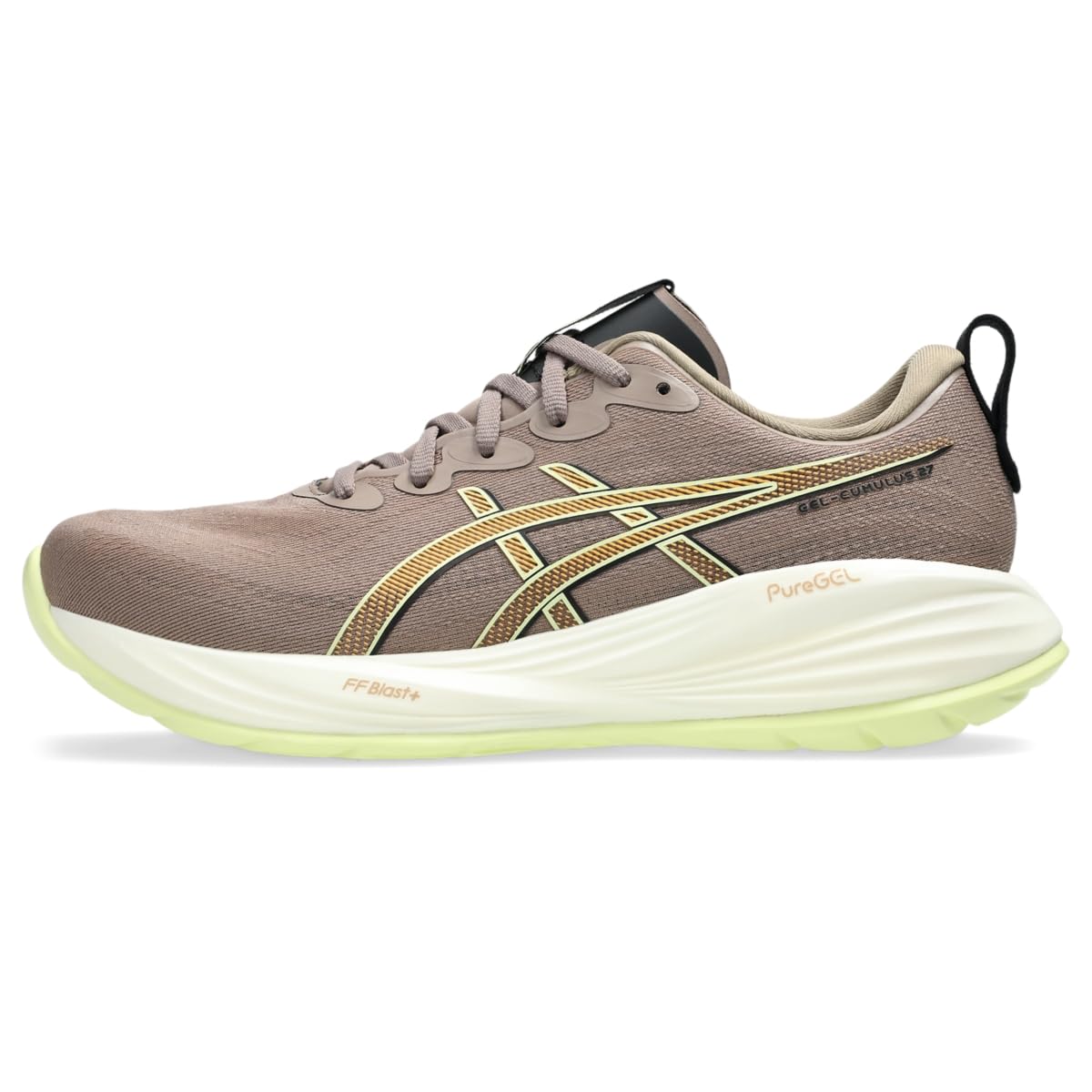
1. ASICS Men’s Gel-Cumulus 27 Running Shoes
Our pick — 4.5+★ from 950+ verified ratings; the strongest balance of quality and price.
The all-round trainer that makes daily miles feel quieter and calmer underfoot.
The Gel-Cumulus 27 is the crowd favorite here. It pairs PureGEL — a soft gel insert that soaks up impact — with FF BLAST PLUS foam in the midsole, the layer of cushioning under your foot. That combination is why it lands so confidently for both walking and jogging. The comfort holds up when you put distance into it, so you are not nursing sore feet the next morning. It carries a 4.5+ star rating across 900+ reviews, and the PureGEL and FF BLAST PLUS midsole is why it takes the top spot.
What wins people over is build quality: the upper, heel counter and outsole hold together mile after mile. The fit runs true to size with a little extra room at the toe, which saves your toes from banging against the front on steep downhills. The heel stays put, thanks to a sturdy heel counter, and the shoe’s weight stays modest enough that it disappears on your foot by the second mile.
One honest catch: durability is the mixed note. Some owners see a long life out of the Cumulus, and a few have to retire theirs before they expected to. That makes it a better match for a runner doing a steady 20-30 miles a week than for a high-mileage grinder who expects a year out of every shoe.
Where the Cumulus wins
- PureGEL and FF BLAST PLUS foam together take the sting out of pavement
- True-to-size fit with extra toe room keeps your toes clear on downhills
- Heel lock feels secure without pinching the ankle
- Handles both walking and jogging without feeling like a compromise
What to weigh first
- Durability is the one divided note — some shoes give out sooner than owners hope
- The FluidRide outsole grips well, but wet, slick pavement is not its home turf
Right for you if: you want one shoe that covers easy jogs, long walks and everything in between, in a stable heel.
Think again if: you log very high weekly mileage and expect a shoe to survive a year of it.
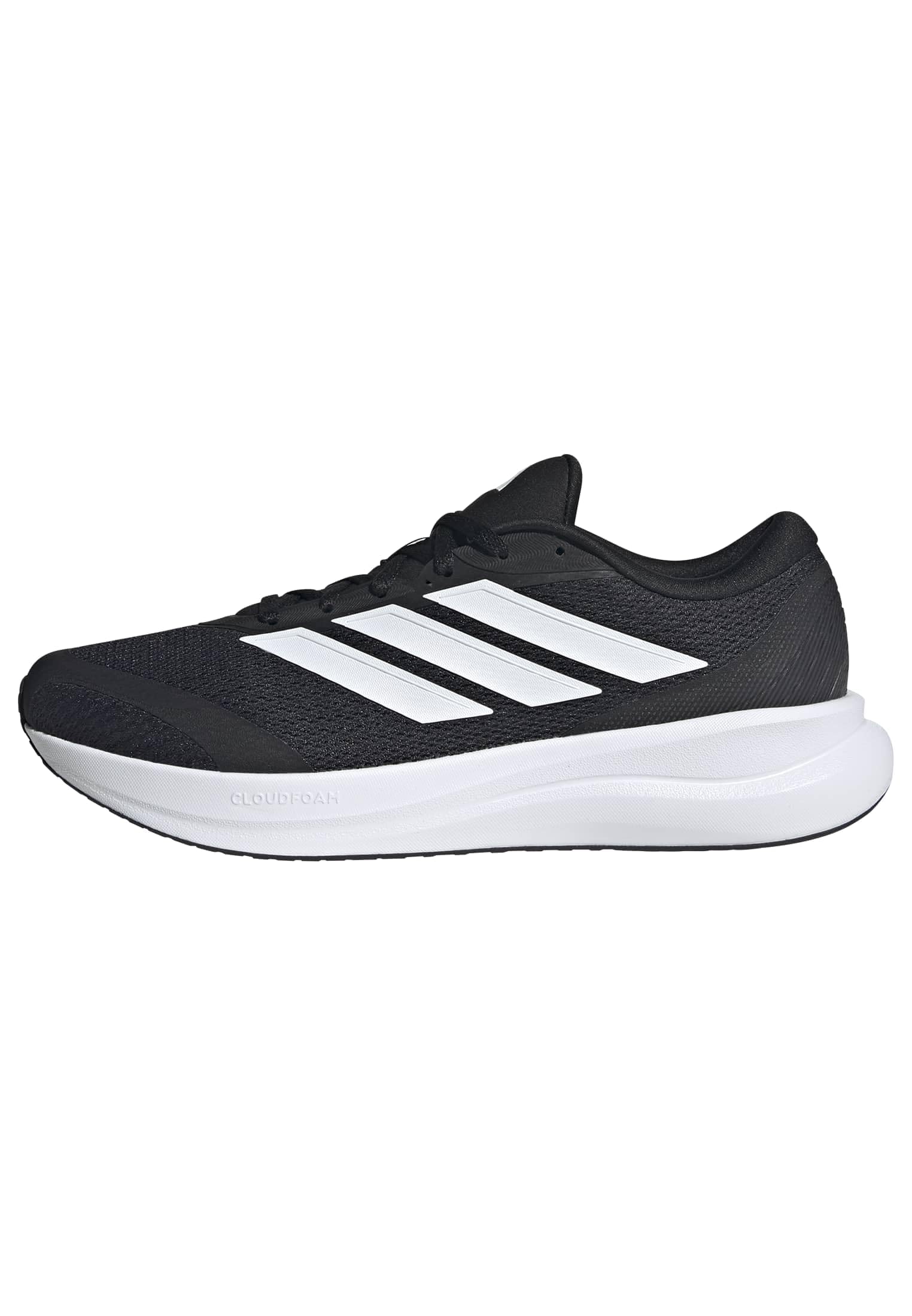
2. adidas Men’s Runfalcon 6
The plain-spoken budget pick that starts no arguments and finishes its miles.
The Runfalcon 6 earns its place as the value pick because it does the basics properly. It is a lightweight shoe, so your foot feels unburdened from the first stride, and the fit is spot-on true to the size on the box. That is no small thing when half the shoes in this category run short or wide. Owners wear it to work, to walk the dog, and to the gym without it feeling out of place anywhere.
Build quality is what carries this shoe: the lightweight upper and true-to-size fit hold up run after run. It is not a specialist racer, and it does not pretend to be. It is a daily shoe that stays comfortable enough to wear for hours — the comfort and easy looks are what people keep coming back to. The style helps too: it can look a little dressier than a pure running shoe, which means you can wear it in town without feeling like you stepped off a track.
Where it falls short of the Gel-Cumulus above is in depth of cushioning. The Runfalcon is a leaner ride, so a heavy runner pushing long distances will feel the road more than they would in a max-cushioning shoe. For a 5K, a treadmill session or a gym day, it is entirely enough.
The value read: you get a genuine lightweight trainer that fits true and looks tidy — for buyers who want a low-commitment first running shoe or a second pair to save their good shoes for race day.
The honest limit: this is a slim cushioning setup, not a max-stack shoe, and it is built for shorter daily sessions rather than long-distance training.
Grab it for: short runs, gym workouts, and days when you want one shoe to do everything.
Pass on it if: you are chasing big weekly mileage and need deep, forgiving foam under every step.
3. New Balance Men’s Fresh Foam 680 V9 Running Sneakers
A 9.7 oz trainer with a 2E width option that finally respects a broad forefoot.
If your standard-size running shoe always pinches across the toes, the Fresh Foam 680 V9 is the one to look at first. It offers a 2E width — a wider cut than the standard medium — and the length runs true to size. That combination means you can size up in width without guessing at length. Owners settle into it fast, and the shoe stays comfortable from the first run rather than needing a break-in period.
At 9.7 oz, it is noticeably lighter than the Saucony Hurricane 24 at 10.6 oz — a real difference on a long run when every ounce counts. The Fresh Foam midsole uses approximately 3% bio-based content and returns a bit of energy with each stride. The engineered mesh upper moves air through, so your foot stays cooler on a summer run, and the integrated rubber outsole grips on roads, sidewalks and gym floors.
The one place the 680 V9 leaves room is durability. It is a well-made shoe that holds up over time, but a small share of buyers have found the cushioning flattening sooner than they would like. Keep it for daily training and gym work and it does the job without drama.
Why wide-footed runners pick it: the 2E width option plus true-to-size length removes the painful guesswork that wide-footed buyers face in a category built around medium-width lasts.
Where the cushioning sits: Fresh Foam gives a plush, resilient ride, but it is not a max-cushioning shoe like the Hurricane 24 — realistic training comfort, not a cloud.
Best for: wide-footed runners who have given up on standard-width shoes pinching across the forefoot.
Skip the 2E if: your foot sits comfortably in a standard medium — the extra width would leave your foot sliding.
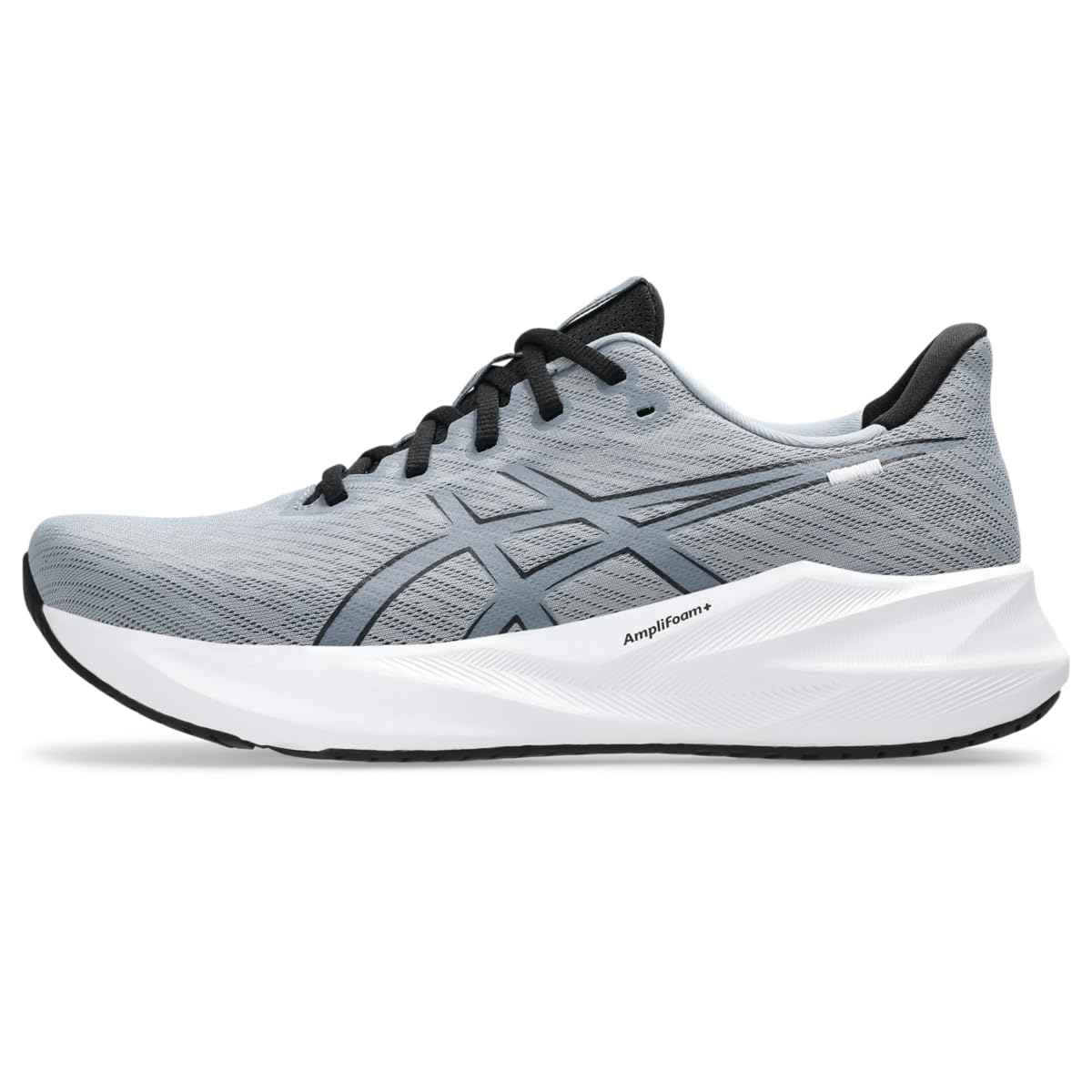
4. ASICS Men’s VERSABLAST 4 Running Shoes
The crossover trainer that rebounds fast enough to feel light through a mixed workout.
ASICS built the Versablast 4 as a partner for mixed training, and the spec sheet backs that up. The midsole foam is tuned for energy return — a bouncy rebound that pushes you forward — so a tempo run feels quicker than it should. That response is also why it holds up well in the gym. Owners use it for running and walking alike, and it tends to keep the foot flatter through both, which is a comfortable change from heavily built shoes that roll your ankle around.
The lighter, softer build is the main draw. It is a soft shoe, not a firm one, which suits runners who want rebound without a thick stack of foam. The look gets warm feedback too, and the arch support gives an extra touch of structure for people who need a little lift under the midfoot.
The catch here is fit, and it is worth reading before you buy. Sizing is the divided point: some owners find it true to size, others find it narrower than a standard running shoe and running small. If your foot runs wide, size up or pick the New Balance 680 V9 instead.
The rebound story: responsive midsole foam makes this a snappy choice for short, fast efforts and gym sessions where a stiff, heavy shoe feels dead underfoot.
The fit caveat: sizing and width run narrow for some buyers, so try on or size up if your forefoot is broad.
Pick it when: you want one shoe that transitions from a treadmill run to a weight-room session.
Look elsewhere if: you cannot try a shoe on and need reliable true-to-size fit from the start.
5. Nike Men’s Journey Run Road Running Shoes

The one that looks as good standing still as it feels twelve hours in.
Look is the first thing buyers notice about the Journey Run, and it holds up under longer scrutiny. The engineered mesh upper — a breathable mesh shell built to stay secure over the foot — locks the shoe in place without strangling the arch. Under that, extra cushioning sits in the heel, and the soft tongue and collar feel plush right from the start.
The comfort is the second story. Buyers report wearing them for 12-hour shifts, which matters if you stand at work all day. A rubber outsole provides grippy traction for all your miles, and the heel cushioning makes the shoe feel like it is catching you on landing.
The sizing is the one split note. Some owners find the Journey Run true to size; others find it runs small and want a half-size up. If you are between sizes, size up to be safe.
The case for the Journey Run
- Extra heel cushioning absorbs the sting of a hard landing
- Soft tongue and collar make break-in effectively a non-event
- Engineered mesh keeps the foot secure while letting heat escape
- Comfortable enough to wear for a full workday, not just a run
The trade you accept
- Sizing is uneven — a meaningful number of buyers need a half-size up
- Rubber outsole grips well on roads but the shoe is not built for trail running
It suits you if: you want a running shoe handsome enough to wear all day and cushioned enough to stand for hours.
Consider sizing up: if your normal size tends to run snug on you, take the extra half-step.
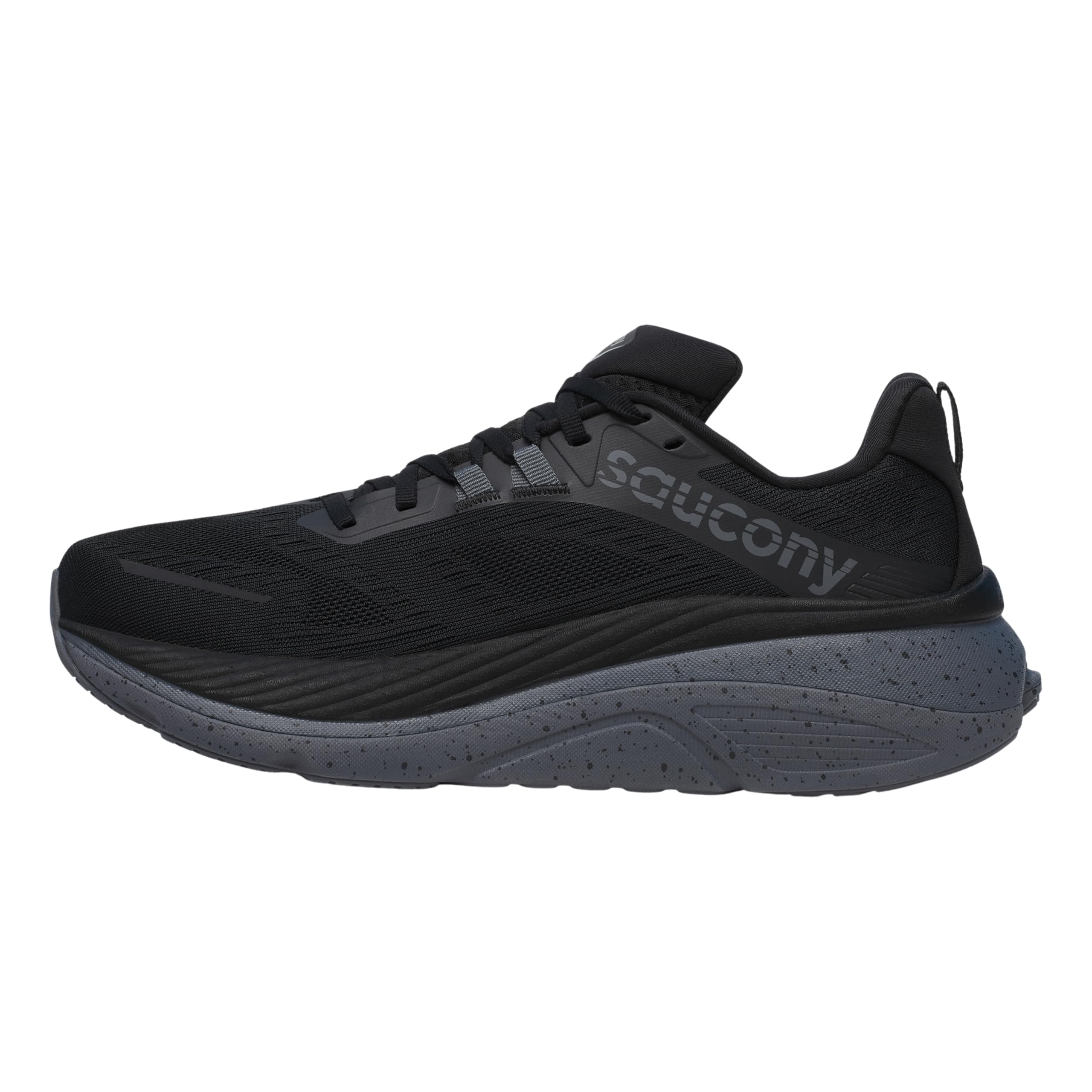
6. Saucony Men’s Hurricane 24 Sneaker
Two layers of foam, one deeply padded ride built for long, slow road miles.
The Hurricane 24 runs a dual-cushioning setup: a plush, energy-returning PWRRUN PB foam layered over a supportive PWRRUN foam frame. In plain terms, one layer takes the hit and the other keeps the shoe from collapsing. The 6mm offset (38/32mm — heel height 38, toe height 32) sits lower than many trainers, which nudges your landing flatter and more forward. At 10.6 oz it is the heaviest shoe on this list, so it trades raw speed for a ride that feels like a padded floor.
CenterPath Technology is the geometry piece — a broader base with more ground contact and higher sidewalls. The practical effect is a shoe that keeps your foot planted through a stride instead of rolling inward. Owners rate the dual PWRRUN PB and PWRRUN cushioning on par with Saucony’s Triumph line, and one buyer reports walking a mile daily without pain. The engineered mesh upper breathes and the heel stays locked in place for all-day comfort.
The two honest trade-offs are weight and fit. At 10.6 oz it will feel slower than the 9.7 oz New Balance 680 V9 on quick intervals. And fit splits buyers: some find it roomy, others feel it runs snug. If you are chasing long, gentle miles, the weight is a fair price for the padding. If you want to race fast, look elsewhere.
What the Hurricane does best
- Dual PWRRUN PB and PWRRUN foam soaks up long-distance impact
- CenterPath Technology widens the base for stable, planted landings
- 6mm offset encourages a smooth, forward-leaning stride
- Cushioning often compared to Saucony’s own Triumph model
What you give up
- At 10.6 oz, it is the heaviest shoe here — a real cost on fast days
- Fit is a divided point, so try it on if your foot runs narrow or wide
Best for: runners who put in long, steady road miles and want their legs to feel fresh afterward.
Not the pick for: speed work or race day where every ounce counts.
7. New Balance Men’s Fresh Foam X 880 V15
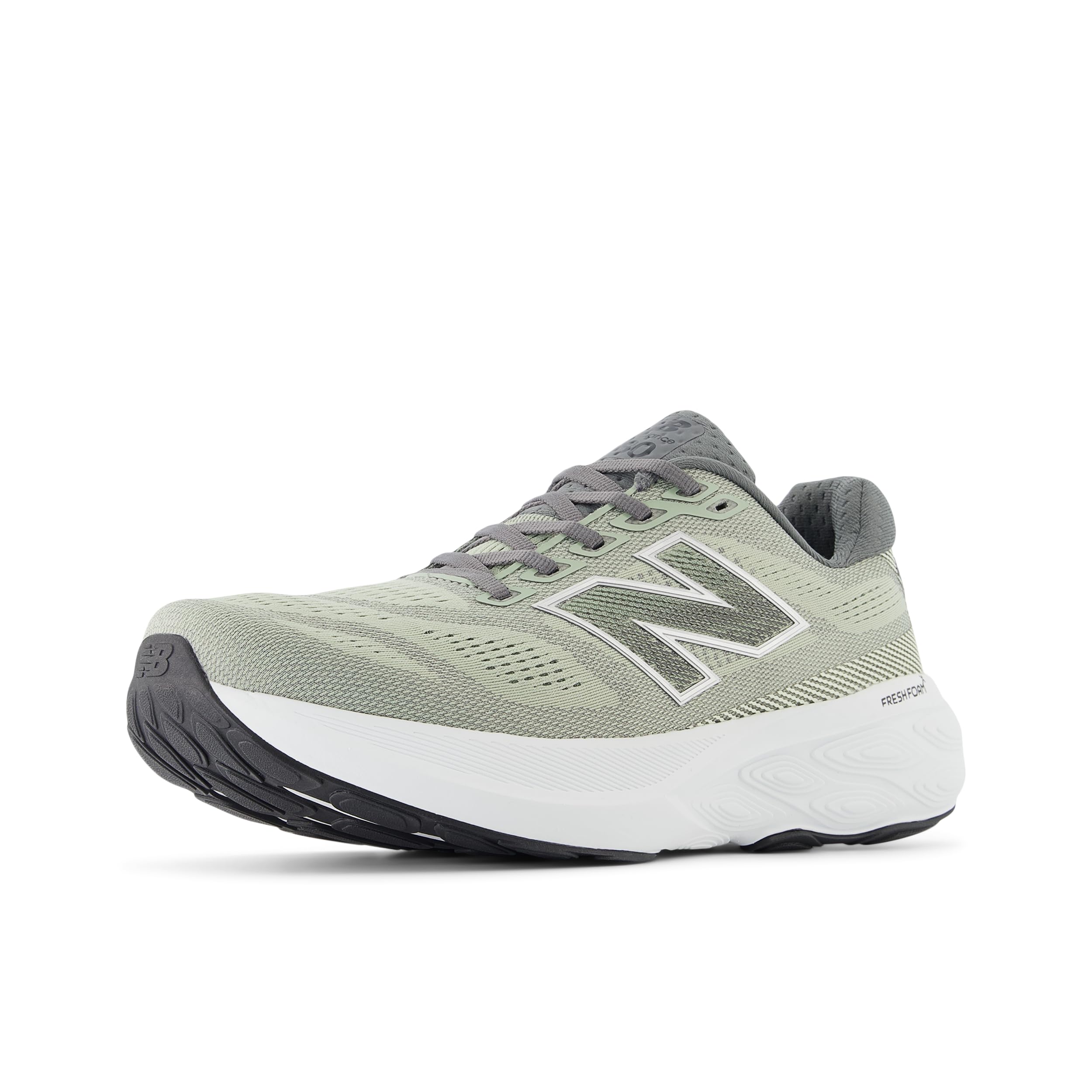
An everyday road runner with a wider cut and a structured upper that holds the foot steady.
The 880 V15 is the answer for a runner with a broader foot who also wants a little structure. The upper is a structured engineered mesh — a breathable shell with reinforcement around it to keep the foot from shifting — so your midfoot does not slide around inside the shoe. Fresh Foam X fills the midsole, giving a cushioned ride that owners describe as soft without feeling unstable. That means you get plushness without the mushy wobble some shoes fall into.
The width and arch support are the standout pieces. Owners with different foot types settle into it, and the arch support gives a comfortable lift for runners who need some structure under the midfoot. It works as a walker and a jogger, so one pair covers a lot of ground.
The trade-off here is durability. The 880 V15 holds up well for many owners over all-day use, but some have found the foam breaking down earlier than expected. Comfort is also divided for a handful of buyers — it works for most, but it is not a universal fit. Give those two points a thought before you commit.
Where it shines: a structured upper plus a wider cut means the shoe holds a broad foot steady without pinching, and Fresh Foam X gives softness without instability.
What to keep in mind: durability and comfort are the split points — a sturdy daily shoe, but not one everyone finds immediately comfortable.
Reach for this if: your foot is wide, you want arch support and a structured upper that does not twist underfoot.
Think twice if: you need a shoe proven to last through a full season of heavy mileage.
8. adidas Men’s Ultraboost 5x Running Shoes
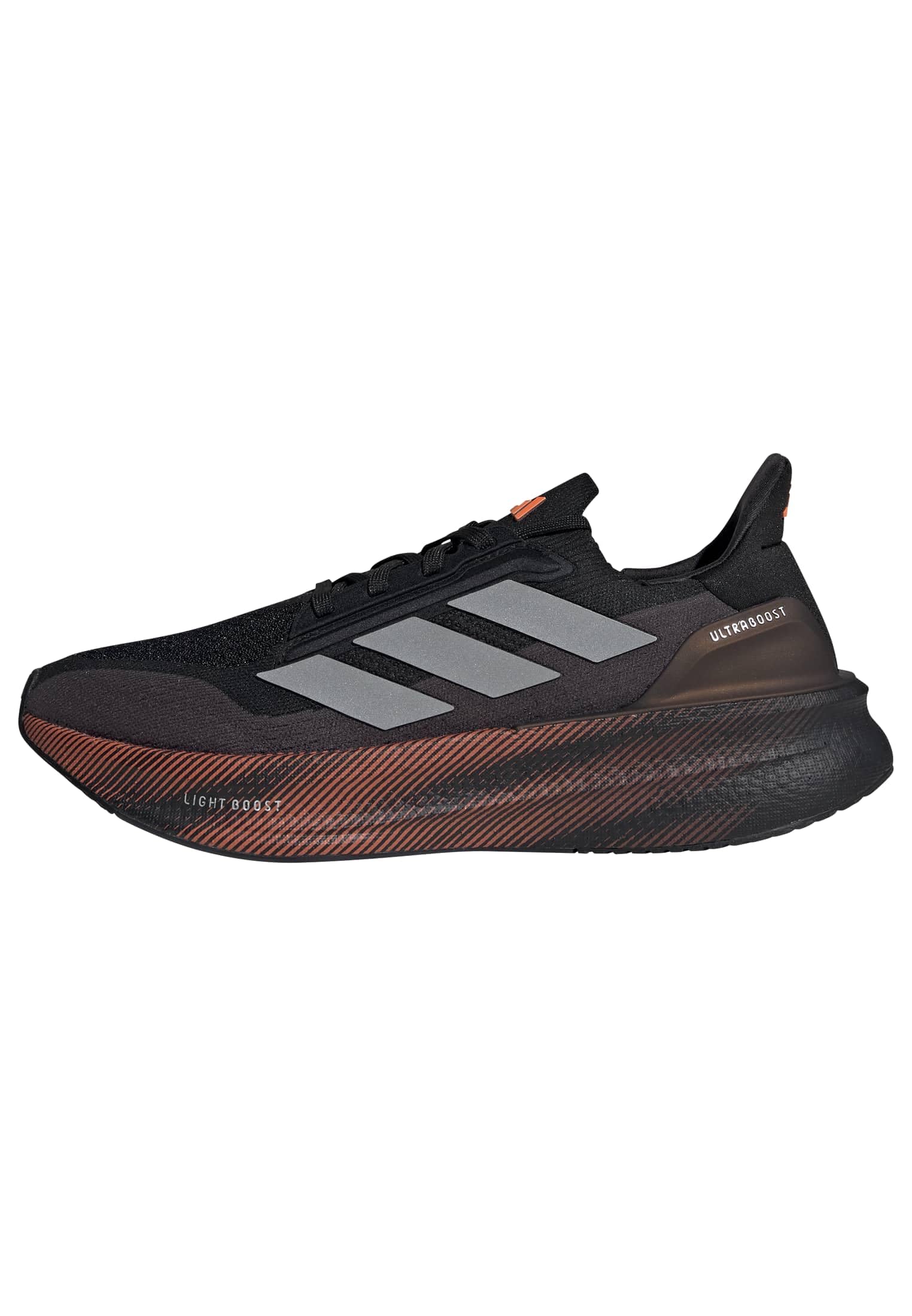
Bouncy foam that pushes back, plus a Torsion System to keep your stride steady on long miles.
The Ultraboost 5x is built around energy return. adidas calls the midsole its lightest BOOST foam yet, tuned to give back energy with every stride, so you feel fresher deeper into a run. A Torsion System — a stiff bridge between heel and forefoot — keeps the shoe from twisting as you stride through the midfoot. Under that, a Continental™ Rubber outsole grips in wet and dry weather, which matters when you run on mixed surfaces.
The fit gets solid marks, and it works well for wide feet, which is more than some premium trainers can say. Comfort and cushioning hold up for endurance runs, making it a reasonable choice for anything from a short 5K to a long weekend effort. By adidas’s own measure, the shoe uses at least 20% recycled materials.
The obvious catch for anyone paying attention is the lack of hard specs on weight, offset or stack height. The 5x is a good shoe, but it is not the place to chase geometry numbers. If you are someone who needs a 6mm offset calculated before you commit, the Hurricane 24 gives you that detail; the Ultraboost does not.
The performance case: a responsive BOOST midsole plus a Torsion System makes this a lively option for endurance runners who want energy back on each stride.
The gap to know: weight and offset are not published, so buyers who plan their training around those numbers should look elsewhere.
Made for you if: you want a bouncy premium trainer with traction that holds in the rain.
skip it if: you need exact offset or weight figures before you buy.
9. On Mens Cloudmonster 2
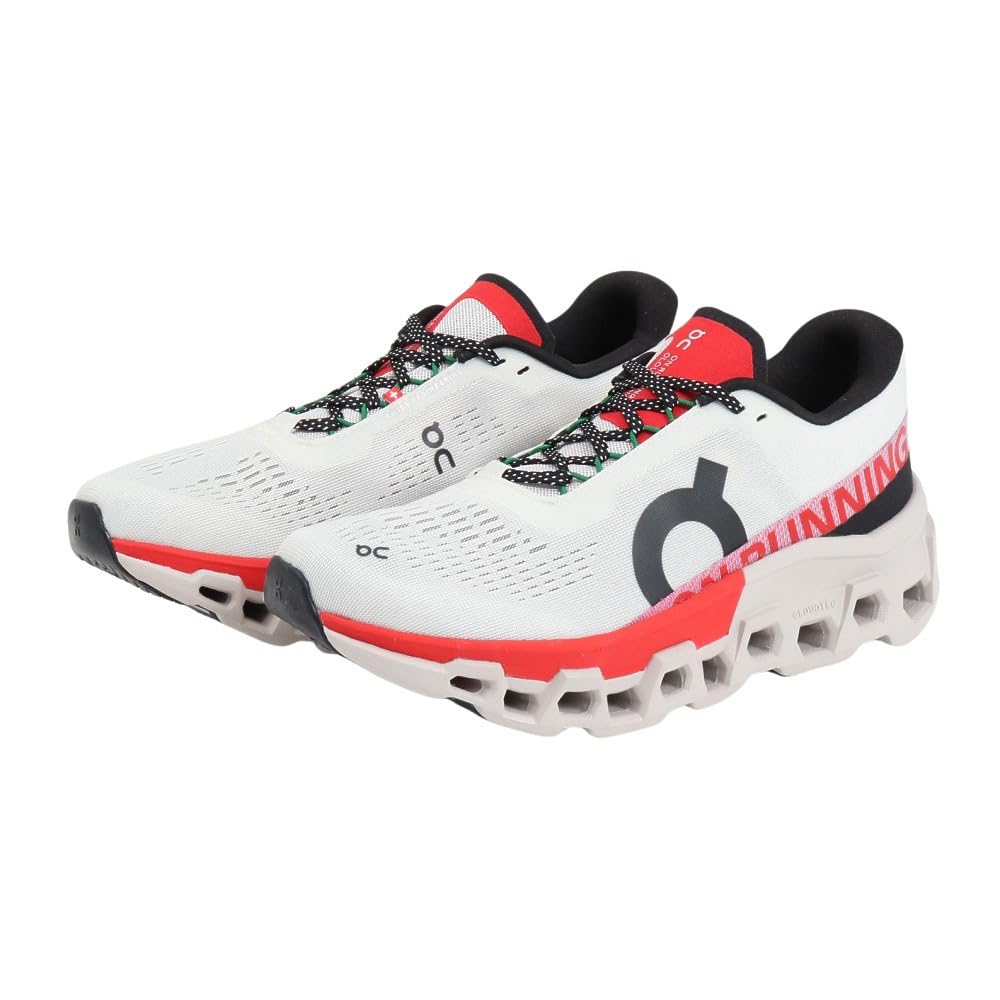
A big, confident shoe with oversized CloudTec pods built to soak up the road.
The Cloudmonster 2 gobbles up ground. It runs on On’s biggest-ever CloudTec setup — hollow pods under the foot that compress on landing and push back on lift-off — paired with a max energy return made for road running. It is a big shoe on purpose. You feel the cushioning underfoot from the moment you lace up, and it takes the harshness out of long asphalt miles.
Owners rate the quality, comfort and style highly. The support is solid enough for real exercise, and owners use it for running first and workouts second. It looks distinctive too, so it stands out in a rack of plain black trainers.
The friction is in two places. Fit is mixed — some runners find it beautifully snug, others feel tightness in the front of the foot. Value is split as well: some buyers feel it is worth the premium, others think it asks too much. If your forefoot runs wide, try before you buy.
Why it stands out
- CloudTec pods deliver max cushioning that eats up pavement miles
- Distinctive styling that looks confident on and off the road
- Support holds up for real running, not just a walk around the block
The honest friction
- Front-of-foot tightness for some runners, so wide-footed buyers should try in person
- Value opinions split sharply among owners — a premium shoe that must justify itself
Wear it if: you love a big, cushioned shoe and want something that stands out from every other black trainer.
Try before you commit if: your forefoot runs wide or you have struggled with tight toe boxes before.
Know the Specs
Cushioning and Foam Type
Cushioning is the foam stacked under your foot. The midsole foam is the layer that takes impact and bounces back. A max-cushioning setup like the Saucony Hurricane 24’s dual PWRRUN PB and PWRRUN combination puts a deep layer between you and the road — gentler on joints on long runs. A firmer, thinner setup feels quicker and more connected. Match foam depth to how far you run and how much shock your legs tolerate.
Heel-to-Toe Offset (Drop)
Offset is the height difference between heel and toe, measured in millimeters. The Saucony Hurricane 24 runs a 6mm offset (38/32mm), which sits the shoe lower at the heel and nudges a flatter, more forward landing. Heel-strikers tend to prefer a higher drop; forefoot runners tend to prefer lower. If a listing doesn’t state offset, that is information you won’t have — note if you have a habit you want to support or change.
Weight in Ounces
Weight tells you how much shoe you are lifting with every step. An 8-9 oz shoe feels light and quick; a 10-11 oz shoe feels more substantial underfoot. The New Balance 680 V9 at 9.7 oz is noticeably lighter than the Hurricane 24 at 10.6 oz — a difference you feel when a run stretches past ten miles. Lighter is not automatically better: a heavier shoe often carries more cushioning and stability.
Upper Material and Width
The upper is the fabric shell over your foot. Engineered mesh — a breathable, patterned weave — lets air move through so your foot stays cooler on a warm run. Width matters just as much. A 2E width like the New Balance 680 V9 is a wider cut for a broad forefoot; a standard medium pinches on wide feet. Check both the upper type and the width label before deciding, since width is where many buyers get caught out.
Common Questions
How do I know if a running shoe is wide enough for my foot?
What does heel-to-toe offset mean and does it matter?
Should I size up in running shoes for men?
How many miles can I expect a running shoe to last?
Is a max-cushioning shoe like the Hurricane 24 too heavy for fast runs?
What is the difference between the Fresh Foam 680 V9 and the Fresh Foam X 880 V15?
Do I need a special shoe for running and the gym, or can one shoe do both?
Will a lightweight running shoe feel less supportive than a heavier one?
How does the On Cloudmonster 2 compare with the Saucony Hurricane 24 for cushioning?
The Bottom Line
The winner for most men is the ASICS Gel-Cumulus 27 — PureGEL and FF BLAST PLUS foam together make easy miles feel calm, and it holds up for walking and jogging alike. If you want more cushioning for long road runs, the Saucony Hurricane 24 gives you dual foam and a 6mm offset. And for a runner with a broad forefoot, the New Balance 680 V9 in 2E width removes the squeeze that makes standard shoes feel like a compromise. The Cumulus 27 holds a 4.5+ star rating across 900+ ratings, backed by a true-to-size fit and PureGEL-plus-FF BLAST PLUS cushioning.
How we choose
We do not accept paid placement. Every pick is matched to a real buyer and a real use-case; we do not hands-on test units.
Sources
Specifications: manufacturer listings and product documentation. Review insights: verified customer reviews, as of November 2026. Pricing: not shown on this page (it changes often); check the current price via the retailer link.
As an Amazon Associate, Tactical Gear Guy earns from qualifying purchases. This does not affect which products we feature.