Specs are compiled from manufacturer listings and verified buyer reviews and can change over time — please confirm the key details on the product page before buying.
If you spend ten hours a day on concrete, the wrong pair of safety shoes will tell you about it by lunchtime. The real question is if you want a boot that shrugs off a dropped wrench, a sneaker you can wear from the job site to the store, or a rubber pull-on for wet ground. This guide sorts nine pairs by the job they actually suit, starting with the value pick that has the strongest buyer consensus of the bunch — 4.5+ stars across 500+ ratings.
This guide is built by comparing the manufacturers’ published specifications and the patterns across verified customer reviews, so you get each pick’s real strengths and trade-offs instead of marketing spin.
You will see which pairs carry a steel toe versus a composite one, which add a puncture-resistant plate underfoot, and where each pair falls short. The shortlist below covers every price tier without a dud in it, which is a rare thing for the best zapatos de seguridad.
Top Picks


How To Choose The Best Zapatos De Seguridad
Start with the ground you stand on, not the brand on the box. A warehouse floor and a muddy excavation site demand different soles, different uppers, and different toe caps.
Steel toe or composite toe
Both caps protect your toes from a falling or rolling load, which is the core job. A steel cap is metal and can set off a walk-through metal detector. A composite cap uses non-metal material, so it clears security checkpoints and stays cooler on hot days. If you walk through a screener at a plant or an airport every morning, lean composite.
Underfoot protection: shanks and puncture plates
A steel shank is a stiff bar between the insole and the outsole that spreads your weight and stiffens the arch. A puncture-resistant plate is a thin shield under your foot that stops a nail from pushing through. Both are secondary protection you hope never to test, but both change how the shoe feels underfoot through a long shift.
Waterproofing and the wet-ground problem
A rubber boot with a waterproof membrane keeps your socks dry through puddles and hosing-down. An athletic work sneaker relies on mesh and wicking lining, which breathes far better but will soak through in standing water. Choose based on whether your shift involves wet ground or just sweat.
Outsole grip and electrical hazard rating
A slip-resistant outsole uses a rubber compound and tread pattern built to hold on oily concrete and steel plate. An EH (electrical hazard) rating means the sole is built to reduce the risk of a circuit forming through your body when you touch a live wire. If your site has live electrical work, that rating belongs on your must-have list.
Side-by-Side Comparison
| Model | Best For | Toe Type | Weight | Key Defense | Amazon |
|---|---|---|---|---|---|
| NINGO Steel Toe Work Boots★ Best Overall | Best all-round value | Steel toe | — | Puncture resistant | Amazon |
| TIDEWE Rubber Work BootsBest for Wet Ground | Wet and muddy ground | Steel toe | — | Steel shank, waterproof rubber | Amazon |
| Cat Footwear Striver Steel ToeBest Comfort | Long shifts on your feet | Steel toe | — | Slip-resistant outsole | Amazon |
| CAT Men’s Invader Hi Steel Toe | Hiker-style toughness | Steel toe | 4.2 pounds | Chunky hiker silhouette | Amazon |
| Timberland PRO Intercept Mid | Light athletic work sneaker | Steel safety toe | 2.71 pounds | Puncture-resistant steel plate, EH | Amazon |
| New Balance Cremorne Composite Toe | All-day cushioning | Composite toe | 3.48 pounds | Slip-resistant, EH, heat resistant | Amazon |
| New Balance Quikshift Composite Toe | Wide feet, up to size 18 | Composite toe | — | EH, slip-resistant, REVlite midsole | Amazon |
| KEEN Utility Kenton Mid | Light-duty warehouse work | Composite toe | 18.3 oz per shoe | Wider form, removable insole | Amazon |
| Timberland PRO Tempe Alloy Toe | Wet, unpredictable job sites | Alloy safety toe | 4.21 pounds | Waterproof leather, EH, non-metallic shank | Amazon |
Detailed Reviews
1. NINGO Steel Toe Boots for Men, Non Slip Work Boots
Our pick — 4.5+★ from 550+ verified ratings; the strongest balance of quality and price.
A no-nonsense steel-toe work boot that punches well above its entry-level standing.
What makes this the pick for most people is simple: a steel toe cap plus puncture-resistant construction, in a boot that is built like a tool rather than a fashion item. The steel toe is the metal cap that shields your toes from a falling or rolling load. The puncture-resistant build means a nail underfoot meets a barrier before it meets your sole.
The thing that wins people over is build quality — it is the single most praised trait of this boot by a wide margin, with durability close behind. Owners describe it as reliable for heavy-duty tasks and report the looks hold up well. The NINGO has the strongest rating of the whole group at 4.5+ stars across 500+ ratings, which is why it takes the top spot despite being one of the cheaper pairs on this list.
The honest catch is comfort, which splits the room. Some wearers say the boots feel great on their feet. Others report trouble around the heel, so give yourself a break-in window before a long shift. Weight and sizing also draw mixed comments, and a few buyers report the fit runs off their normal size. Measure your foot and size against the chart rather than guessing.
Where this boot earns its keep
- Steel toe cap plus a puncture-resistant build, so a dropped or rolling object and a stray nail are both covered
- Build quality is the trait people single out far more than any other — it feels like a tool, not a shoe
- Durability backs that up, with owners calling it reliable for heavy-duty work
- Looks hold up well over time, so it does not look beat after a few weeks of site work
What to go in knowing
- Comfort feedback is split — some love it, others hit heel trouble early
- Weight and sizing draw mixed remarks, so check the chart before you order
- No waterproof claim in the specs, so do not count on it for standing water
Reach for this if: you want a steel-toe boot that shrugs off site abuse without a premium price — this is the value-and-toughness balance of the list.
Think twice if: you have a known heel-sensitive foot or a wide width, since the fit draws mixed reports.
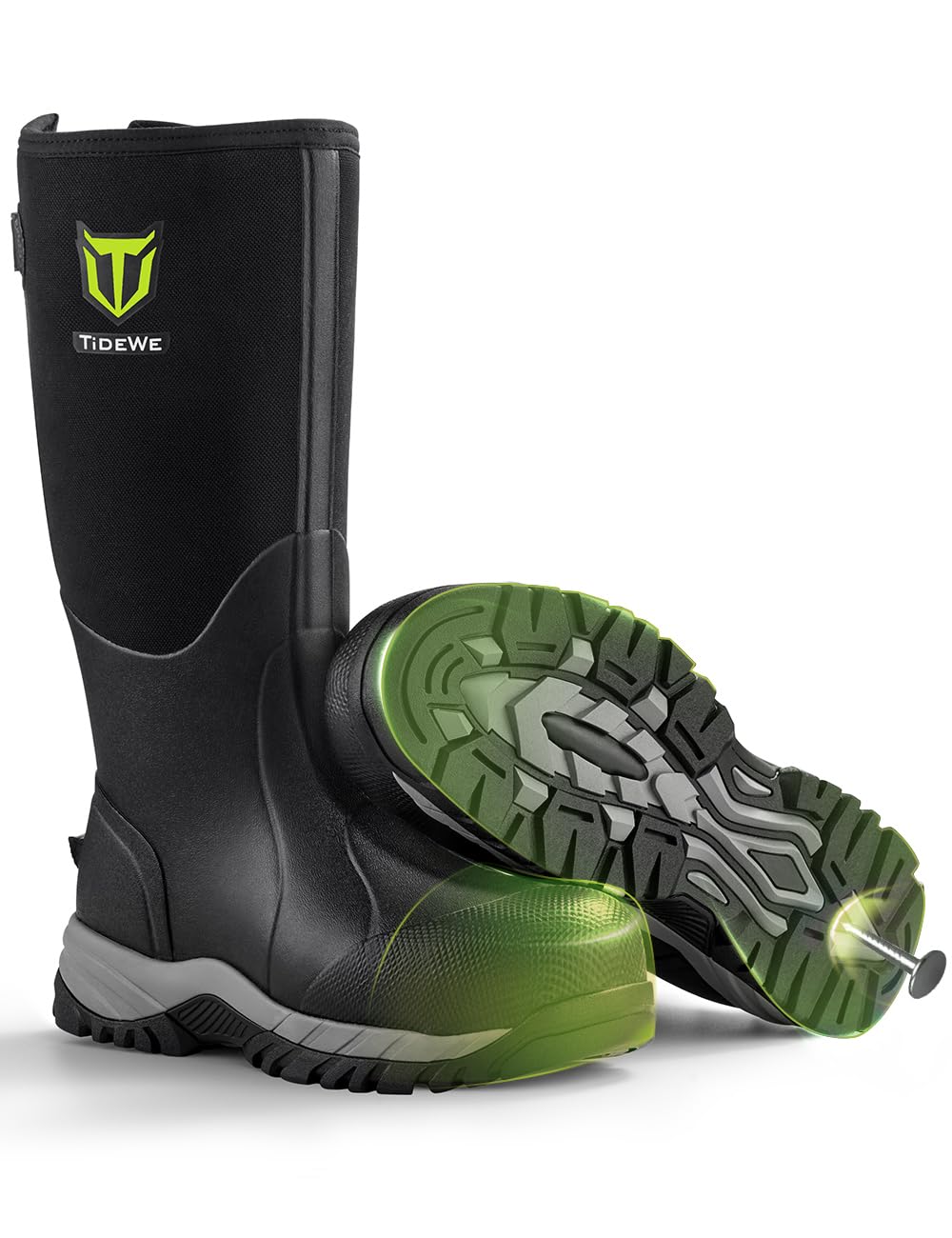
2. TIDEWE Rubber Work Boots
The pull-on rubber boot for the guy whose shift means puddles, mud, and hosing down at the end.
Where the NINGO above is a lace-up site boot, this one is built for standing water. The upper is 100% waterproof rubber and neoprene, and a steel shank sits between the insole and the outsole to protect your foot and spread your weight through the workday. A steel toe takes the impact from falling or rolling objects, and the deep-tread rubber sole is made for uneven ground.
Warmth and room are the big selling points here. There is 6mm of neoprene in the boot for comfort when the temperature drops, and a breathable inner lining keeps air moving when it is warm — a rare combination in a rubber boot. The pull-on plus kick tab means you are out the door fast, and a 10-inch shaft circumference sits at ankle-high on the leg.
The catch is water resistance in the strict sense. Some owners stay bone dry, while others report their feet get wet quickly, so treat the waterproofing as solid for splashes and shallow puddles rather than all-day submersion. TIDEWE asks you to size about 0.16 inches above your measured foot length for the best fit, which is worth doing because a rubber boot does not stretch to forgive an error.
What they are built around: puncture-proof underfoot protection and a steel shank, so a nail or a rough site ground cannot push through the sole — secondary protection you hope never to test.
Fits the job: farms, gardens, fisheries, construction and manufacturing are all named uses, which tells you the design target is wet and rough ground rather than a clean warehouse floor.
The right call for: anyone working in mud, wet grass, or on a wash-down site who wants to step out of the boot in one motion.
Not the pick if: you need all-day waterproof certainty in deep water — that is where the reports split.
3. Cat Footwear Mens Striver Steel Toe
The Cat boot that gets the fit and the feel right, then lets the steel toe do its quiet work.
Quality is the headline here, and it is not a close call — build quality is the most praised trait of this boot by a wide margin, with comfort a solid second. Owners describe it as among the best work boots they have used, dependable on their feet, and true to size. A steel toe handles the impact protection, and the outsole is slip-resistant.
Comfort gets real weight here, more than most boots in this group. Wearers talk about their feet feeling better in them, which is the kind of thing you notice after a shift rather than a minute. The fit runs true, so most people can order their normal size without crossing fingers.
There is one split worth flagging. Some wearers call the Striver lightweight. Others find it very heavy. Both reports point at the same boot, so how it feels depends on what you wore before. If you are coming from a lightweight sneaker, expect an adjustment period. If you are coming from a heavy logger boot, this will feel like a step lighter.
Why it holds third: it is a steel-toe boot with a slip-resistant sole and a fit that runs true, which covers the basics most site workers need without a specialty feature.
The real question: if you want a boot that simply works and fits right out of the gate, this delivers. If a very wide toe box is your need, check the sizing chart — a true-to-size fit is not the same as a roomy forefoot.
Pick this one for: a straightforward steel-toe boot where fit and comfort are the deciding factors, and the brand name is a bonus over the main event.
Look elsewhere when: weight matters above all — the reports on how heavy it feels genuinely disagree.
4. CAT Men’s Invader Hi Steel Toe

A chunky, hiker-styled steel-toe boot for the worker who wants their gear to look like gear.
At 4.2 pounds, this boot is the heavyweight of the group, and it makes no apology for it. Compare that to the Timberland PRO Intercept Mid down the list at 2.71 pounds and the gap is real — this is a boot you feel on your foot. The payoff is a chunky, hiker-style silhouette with a steel toe and solid support. If the look-and-feel of a proper work boot matters to you, this is the one carrying that banner.
Quality and appearance are where it shines. Owners say the boot feels sturdy and supportive, with grip that holds. The looks get called out too, with the finish still reading like new even after extended use. Traction and sturdiness both earn notice. It is a Cat boot on sale since 2015, so the design is proven rather than experimental.
The honest trade-off is weight, with some owners finding it heavy through a long shift. Durability draws mixed feedback as well, and value for money is split. Those are not deal-breakers for most, but if you are on your feet for ten hours and counting every ounce, the Timberland sneaker or the KEEN below will feel lighter to you.
What stands out on the job
- Chunky hiker silhouette with a steel toe — it reads as a proper work boot, not a shoe with a cap stuck in
- The finish holds up, staying presentable after extended use
- Sturdy and supportive underfoot, with grip owners speak well of
- Quality is the most-praised trait of the boot, with appearance a clear second
Where it asks for patience
- At 4.2 pounds it is a heavy boot, and some wearers feel that late in a shift
- Durability draws mixed feedback, so check the sole and stitching as you go
- Value for money splits opinion — it is not the cheapest way into a steel toe
Suits you if: the look of a hiker boot matters and you want a steel toe wrapped in a rugged silhouette.
Skip the weight: if you clock long shifts on hard floors and every ounce counts, the lighter pairs below will treat your legs better.
5. Timberland PRO Men’s Intercept Mid Steel Safety Toe Shoes

Safety-shoe protection in a package that feels more like a work sneaker than a boot.
At 2.71 pounds, the Intercept Mid is the lighter end of this group, and that is not the whole story. It packs an asymmetrical steel safety toe, electrical hazard protection, electric shock-resistant soles, and steel puncture-resistant plates into a low-profile sneaker. The puncture plate is the thin shield under your foot that stops a nail from pushing through. The EH rating matters on any site with live electrical work. The uppers are ripstop nylon, abrasion-resistant and mutilation-free.
Comfort is where this one earns its spot. Owners mention their feet feeling great and describe the shoe helping with fatigue through long stretches of standing. The Timberland PRO 24/7 Comfort Suspension System supports your arch and cushions every step, which is where that feeling comes from. Breathable, moisture-wicking mesh keeps the inside dry, and the lining uses ReBOTL fabric made with at least 50% recycled PET plastic. The middle number is the flex outsole, which has anatomically positioned grooves so the shoe moves with your foot rather than fighting it.
If you want a heavy boot look, this is not it. The package dimensions tell the story — 14.72 x 9.72 x 5.47 inches, tighter than the padded, bulkier New Balance Cremorne at 15.51 x 11.93 x 5.75 inches. That compactness lets your foot move more naturally. The trade-off of an athletic profile is that it will not feel as locked-in on rough ground as a high, stiff work boot.
The full safety kit: steel toe, steel puncture plate, and electrical hazard protection — that combination covers a lot of site hazards in a shoe you can wear all day.
Weight where it counts: 2.71 pounds is a genuine advantage if your legs are the thing that gives out by hour eight.
Fits the worker who: wants sneaker weight and sneaker cushioning but still needs a steel toe and a puncture plate on the job.
Pass if: you spend your shift on uneven ground where a lower-cut sneaker will not give you the ankle support of a full boot.
6. New Balance Cremorne Composite Toe Work Shoes
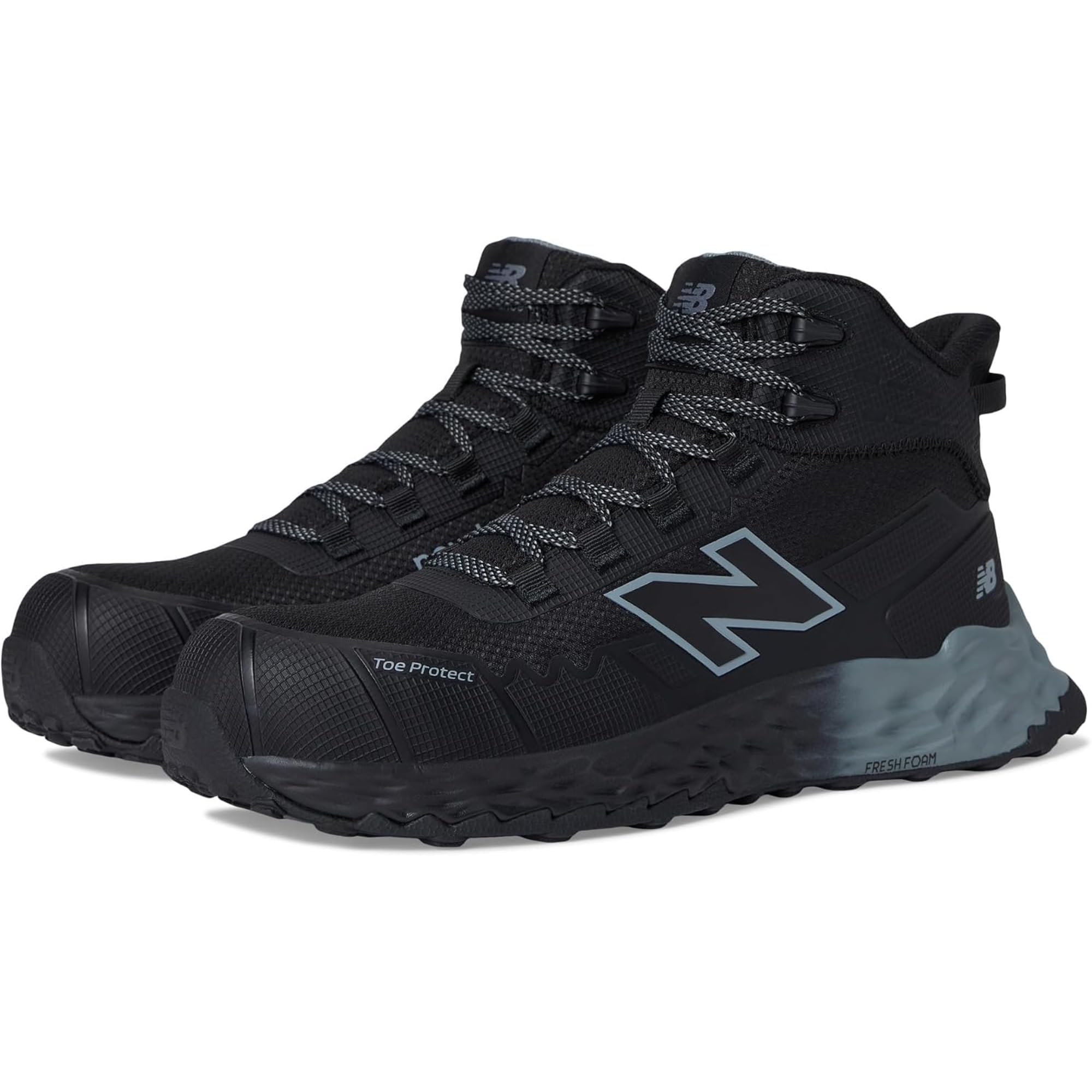
A composite-toe work shoe that treats all-day comfort as the main feature, not an afterthought.
Comfort is what this shoe is built around, and it shows. Fresh Foam cushioning is the soft, springy midsole material behind it, and Toe Protect adds a composite toe cap for impact protection. The composite cap is non-metal, so it clears a metal detector. The package dimensions come in at 15.51 x 11.93 x 5.75 inches, roomier underfoot than the more compact Timberland Intercept at 14.72 x 9.72 x 5.47 inches. At 3.48 pounds, it sits in the middle of the pack.
What the crowd returns for is exactly what the spec promises. Comfort is the most praised trait of this shoe, by a good distance, with quality right behind. Owners call it lightweight and say the protection holds up like a boot, not a sneaker. The ankle support draws notice too. Slip-resistant outsoles handle greasy floors, electrical hazard resistance covers live wiring, and heat resistance rounds out the safety side for demanding conditions.
Fit is the one that splits the room, and it is worth reading before you order. Traction also draws mixed comments. If you have a standard foot, this lands well. If you have an odd size or a narrow width, check the fit notes before committing, because the cushioning that makes the shoe great is only useful if the shoe stays on your foot comfortably.
What makes it a workhorse: Fresh Foam cushioning underfoot means the shoe softens every step through a long day, which is the point of comfort being its top trait by a wide margin.
Where it gets honest: the slip-resistant outsole and EH protection are real safety features, but fit draws mixed feedback — measure against the chart before clicking buy.
Buy it for: a shift of standing and walking where cushioning is what keeps you going, and you want a composite toe that clears a security scanner.
Check the fit first if: your foot runs narrow or off the standard width.
7. Men’s New Balance Quikshift Composite Toe Work Shoes
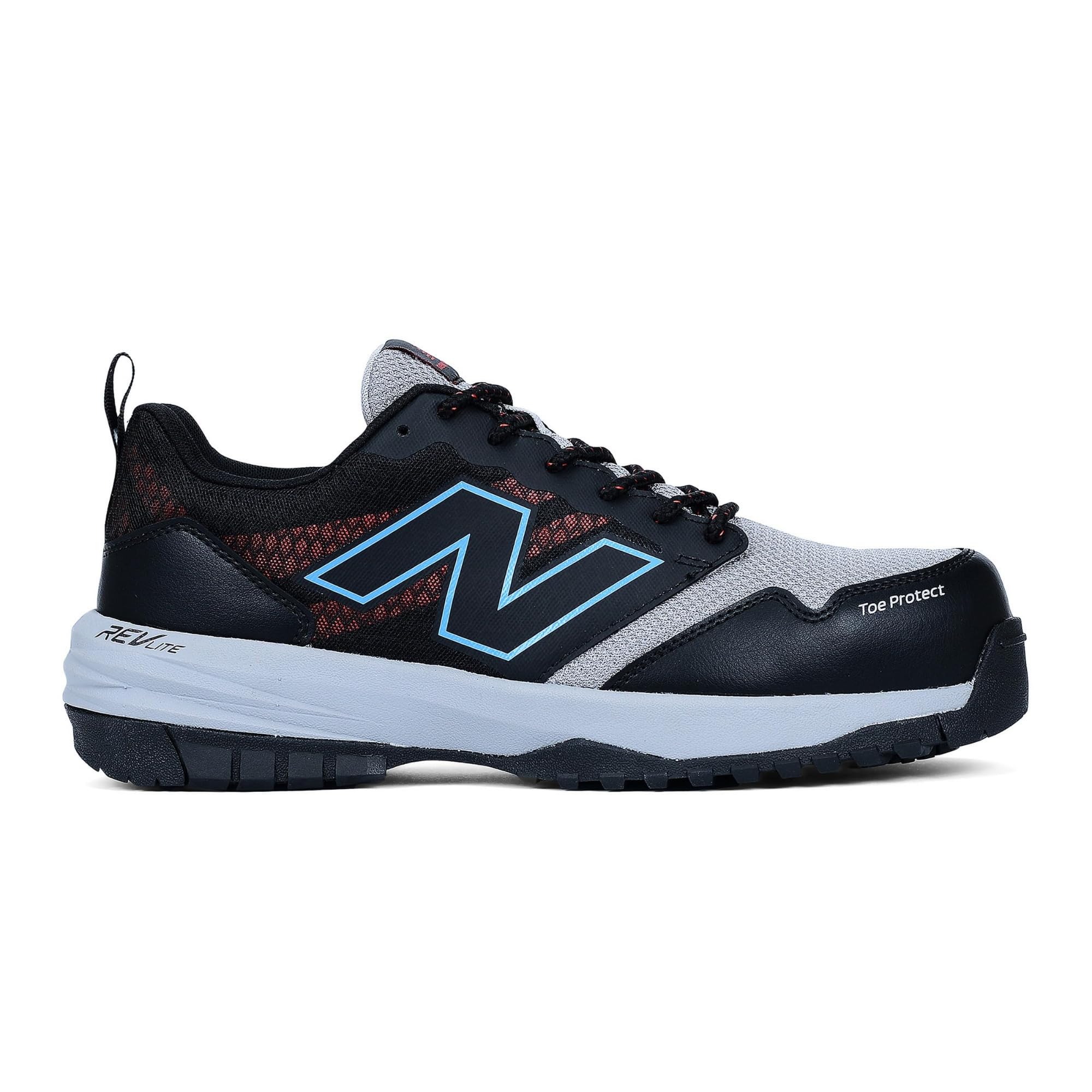
Three widths and sizes up to 18 — the pair that admits not every foot is average.
Most safety-shoe buyers fight the width, not the toe cap. This shoe sidesteps that fight by coming in 3 widths and going up to size 18. The composite toe cap is non-metal for detector-friendly days. The REVlite midsole and EVA insert keep it light and cushiony without giving up underfoot stability, and a heel counter adds support as you walk. Pull tabs on the heel and tongue get the shoe on and off fast. It meets ASTM F2413-18 EH safety standards for electrical hazards, and the slip-resistant outsole is built for greasy shop floors.
Comfort is what carries it, and it is the most praised trait by a clear margin, with quality next and fit right behind — a fit category that matters when you can order a specific width. Owners find them comfortable for long hours, and the wide fit gets mentioned for good reason. It does the shoe-sneaker crossover job: protection on the job side, a casual look on the street side.
Durability is the honest split. Some pairs last about 2 years, while others fall apart after 6 months. That spread is wide enough to matter, so if you are hard on your shoes, check the stitching at the toe cap as you go. Traction and cushioning also draw mixed comments, with grip reported as grippy by some and slippery by others, and the cushioning noted as thin by some.
Why the wide-foot buyer should look here
- 3 widths and sizes up to 18, so a wider foot is finally an option rather than an afterthought
- REVlite midsole and EVA insert keep the weight low without giving up underfoot support
- Composite toe cap clears metal detectors on security-screened job sites
- Meets ASTM F2413-18 EH standards for electrical hazards
Where you want to keep an eye on it
- Durability reporting is wide — some pairs run about 2 years, others wear out at 6 months
- Traction splits — fine on some shop floors, slippery on others
- Cushioning draws both praise and complaints of thinness
Best when: a narrow or average-width shoe has never fit your foot, and you need a composite toe that clears security.
Be ready for: the sole and stitch durability to vary — this is a light-duty tool rather than a forever boot.
8. KEEN Utility Men’s Kenton Mid Composite Toe Work Sneakers

Built on a wider form than most work sneakers, with a composite toe for light-duty shifts.
The number that shapes everything here is 18.3 oz per shoe — light enough to feel like a sneaker. It is built on KEEN’s traditional wider footwear form, which matters if other brands pinch your toes. A composite toe cap handles light-duty protection for the job. The shoes are removable-insole ready, so you can swap in your own orthotic if you have one. Leather comes from tanneries certified by the Leather Working Group, and the target here is light-duty work in assembly, maintenance, manufacturing, warehousing, and distribution.
Quality and comfort are almost neck and neck as the most praised traits, with lightweight a clear third. Owners describe a skate-shoe look and feel, and say it suits retail or light warehouse work well. Comfort shows up as much as quality in the reports, which tells you the shoe feels good as well as holding up.
Durability is the honest caveat, and it is a wide spread. Some pairs are built to last, while others report the uppers splitting after two months. For a light-duty shoe, that is the trade-off of softness and flexibility. If your shifts are hard on footwear — heavy lifting, rough surfaces, tight conditions — this is not the pick. For an assembly line or a warehouse floor, it earns its place.
The wider-form advantage: 18.3 oz per shoe and a genuinely wider fit mean a lighter shoe that still leaves your toes room to spread.
Where it draws the line: upper durability is the recurring gripe, and the job list is explicitly light-duty — this is a sneaker built for a clean floor, not a demolition site.
Go here if: you work a light-duty job, want a skate-style work sneaker, and a wider fit is a hard requirement.
Don’t reach for it on: a heavy, rough-surface site — the uppers are not built for that abuse.
9. Timberland PRO Tempe Alloy Safety Toe Work Boot
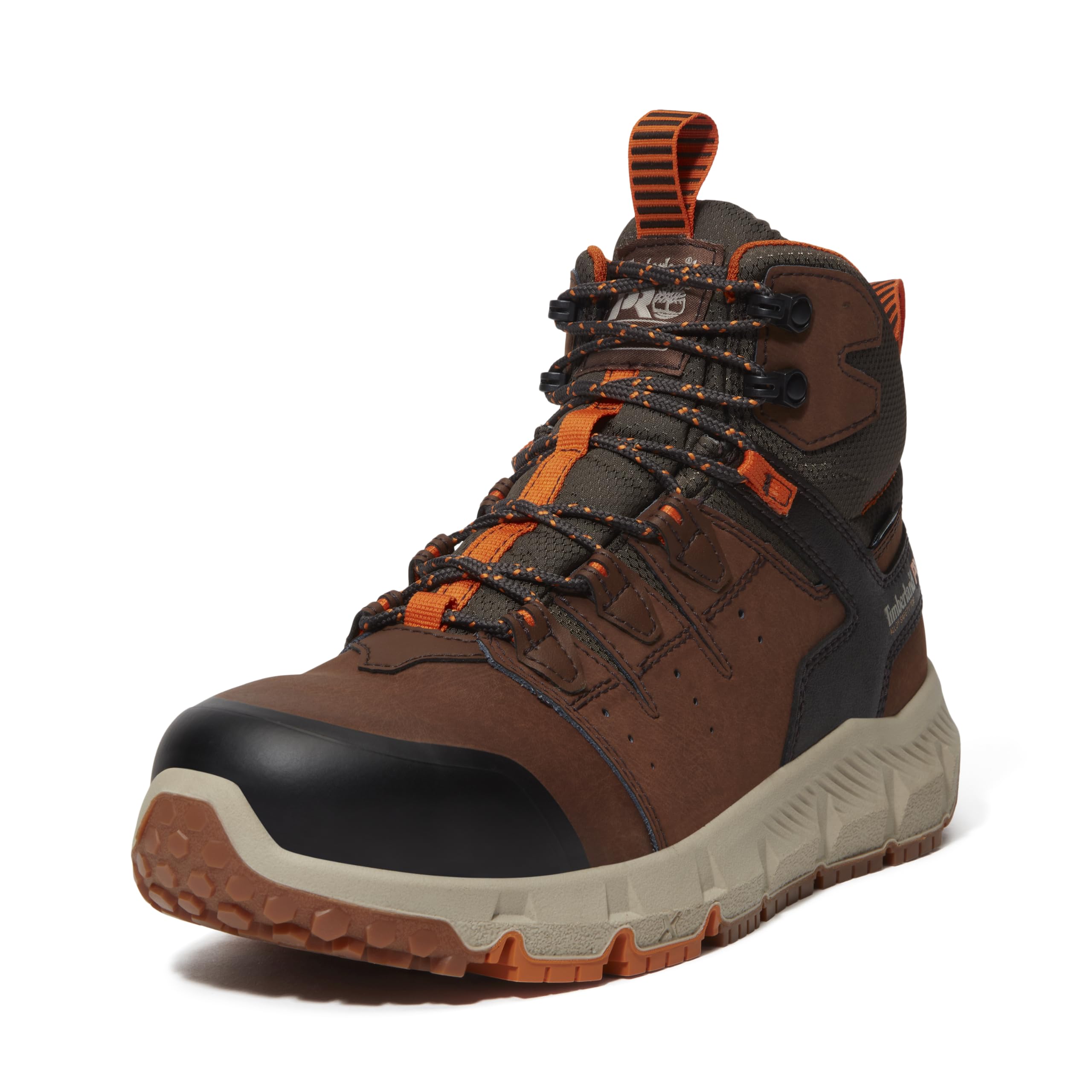
A waterproof leather boot with an alloy toe and a non-metallic shank, built for weather and wear.
This boot starts with waterproof premium leather and abrasion-resistant overlays. An internal waterproof membrane guards against water intrusion. The toe is an alloy safety toe — non-metal, so it clears detectors — and the shank is non-metallic, which gives structural support without adding bulk. The outsole has anatomically positioned flex grooves, so you get the full range of motion without resistance. Electrical hazard protection is part of the kit. At 4.21 pounds, it sits among the heavier pairs, about the same as the CAT Invader up the list.
Comfort and durability do the heavy lifting here. Customers note all-day comfort and say the boot holds up to 5 miles of daily walking. Comfort is the most-praised trait, and durability comes second, which lines up with a boot built for unpredictable conditions. A Hover Spring foam midsole adds underfoot cushion, and the 24/7 Comfort Suspension System supports your arch. The lining is ReBOTL fabric made with at least 50% recycled PET plastic. Owners also say the looks land well.
Sizing is the honest catch. Some find it true to size, others say it runs a bit big. Given the price tier of a premium boot, get the measurement right before you order, because a loose fit in a waterproof boot becomes a rub after a long walk. The weight is also real — if you want the lightest possible pair, look up at the Timberland Intercept or the KEEN instead.
Where it earns the premium label: waterproof membrane plus abrasion-resistant overlays and an alloy safety toe — it covers wet weather and impact protection in one boot, with electrical hazard protection on top.
The fit caution: a bit of a size split means a loose fit is possible, and in a waterproof leather boot that becomes uncomfortable fast.
It’s for you if: your site is wet and unpredictable and you want a waterproof boot with a metal-free safety toe that clears a scanner.
Look up the list instead if: you want the lightest possible pair or need a guaranteed true-to-size fit from the start.
Know the Specs
Steel toe vs composite toe vs alloy toe
All three are safety toe caps that protect the toes from impact and compression. A steel cap is metal, so it can set off a walk-through metal detector. A composite cap uses non-metal material and clears detectors. An alloy cap is also non-metal, giving support without bulk. Choose the cap that matches your security routine and your climate, not the marketing name on the box.
Puncture-resistant plate and steel shank
A puncture-resistant plate sits under your foot to stop a nail from pushing through the sole. A steel or non-metallic shank is a stiff bar that spreads your weight and adds structural support. Both change how the shoe feels underfoot through a long shift, and both are the secondary protection you hope never to use but are glad to have.
Electrical hazard (EH) protection
An EH rating means the sole is built to reduce the risk of a circuit forming through your body when you contact a live wire. It does not make you immune to electricity. If your site has live electrical work, look for the ASTM F2413-18 EH standard on the shoe and treat it as a baseline requirement rather than a bonus.
Weight per shoe and shift fatigue
Every pair in this guide is weighed differently. The lightest sit around 18.3 oz per shoe (about 519 g) or 2.71 pounds per pair. The heaviest hit 4.2 pounds per pair or more. A heavier boot brings more support and more fatigue. A lighter sneaker reduces leg tiredness but gives up some ankle stability. Match the weight to your shift length and surface, not to a marketing line.
Common Questions
Will a composite toe set off a metal detector at work?
Is a steel toe or a composite toe better for cold weather?
How much does shoe weight matter on a long shift?
What does puncture resistant actually protect against in a work shoe?
Does electrical hazard protection mean I can work on live wiring safely?
Can I replace the insole in these safety shoes?
Are rubber work boots like the TIDEWE good for hot weather too?
How do I get the right size in a slip-on rubber boot?
What is the difference between a work boot and a work sneaker for site safety?
How long should a pair of safety shoes last?
The Bottom Line
For most workers, the pair worth buying is the NINGO Steel Toe Work Boots. A steel toe plus puncture-resistant construction covers the two most common site hazards. Build quality and durability are the traits people single out, and it has the strongest buyer consensus of the group at 4.5+ stars across 500+ ratings. If wet ground is your daily reality, the TIDEWE Rubber Work Boots are built around a waterproof upper and a steel shank. And if you want sneaker weight with real safety features, the Timberland PRO Intercept Mid packs a steel toe, a puncture plate, and an EH rating into 2.71 pounds. Take the time to measure your foot against each brand’s chart before you order — it is the single most useful thing you can do for a comfortable shift.
How we choose
We do not accept paid placement. Every pick is matched to a real buyer and a real use-case; we do not hands-on test units.
Sources
Specifications: manufacturer listings and product documentation. Review insights: verified customer reviews. Pricing: not shown on this page (it changes often); check the current price via the retailer link.
As an Amazon Associate, Tactical Gear Guy earns from qualifying purchases. This does not affect which products we feature.