Specs are compiled from manufacturer listings and verified buyer reviews and can change over time — please confirm the key details on the product page before buying.
Your feet take the beating every shift, so the right pair has to do two jobs at once: stop a dropped crate from breaking your toes and still feel bearable after ten hours on concrete. The quick answer is that a lightweight athletic safety shoe with a protective toe cap beats a heavy traditional boot for most warehouse, assembly and light-industrial work. Below you get nine real options sorted by what they actually do well, plus the one trade-off each one carries.
This guide is built by comparing the manufacturers’ published specifications and the patterns across verified customer reviews, so you get each pick’s real strengths and trade-offs instead of marketing spin.
Toe protection is only half the story — the midsole, the outsole grip and the fit width decide whether you can actually finish a shift in them. Here is how to weigh the zapatos de seguridad para hombre that fit your job and your feet.
Top Picks


How To Choose The Best Zapatos De Seguridad Para Hombre
The mistake most first-time buyers make is treating toe protection as the whole decision. It is the entry ticket, not the finish line. A protective toe cap stops impact, but the shoe you keep wearing is the one whose midsole cushions the concrete, whose outsole grips the floor and whose width matches your foot.
Start with the toe cap material
Your toes stay protected either way, so the real question is weight. An alloy toe cap is a metal cap that shields the toes while cutting weight compared with a traditional steel cap. A composite toe cap does the same job with a non-metal material, which is why many light-industrial workers pick it for long shifts. Both can meet a recognized protective-toe standard, so the choice usually depends on weight and feel rather than raw protection.
Check the electrical-hazard rating if your floor is charged
EH stands for electrical hazard — a rating that means the shoe is built to reduce the risk of completing a circuit through your body. You will see ASTM F2413 named on several of these shoes. If your job puts you near live circuits, read that line first; if you work a dry warehouse floor, it matters less.
Match the outsole to your actual floor
Slip resistance is not one thing. Rubber outsoles with a defined tread pattern tend to hold grip on oil, water and shop-floor spillage, while softer foam midsoles favor cushioning over bite. Polyurethane and rubber both appear here — pick rubber if traction is your worry, and foam-forward shoes if standing all day is the bigger pain.
Sort out width and removable insoles early
Several of these shoes run wide or give you a removable insole, which matters if you wear an orthotic or have a wide forefoot. Sizing varies by brand, so treat the listed width options as a feature to check, not a footnote.
Side-by-Side Comparison
| Model | Best For | Toe Type | Safety Rating | Weight | Amazon |
|---|---|---|---|---|---|
| Timberland PRO Powertrain Alloy Toe Hiker★ Best Overall | All-day standing and hiking-style support | Alloy | Electrical hazard protection | — | Amazon |
| Steel Toe Shoes for Men, Lightweight Safety Work ShoesBudget Champion | Budget warehouse and logistics work | Steel | — | — | Amazon |
| Reebok Work Sublite Cushion Alloy ToeLightest Alloy | Flexibility and low weight on the move | Alloy (XTR brand cap) | ASTM F2413, electrical hazard | 4.21 lb | Amazon |
| KEEN Utility Kenton Low Composite Toe | Wide feet and roomy toe box | Composite | — | 17.5 oz per shoe | Amazon |
| Puma Men’s Iconic Suede Low ASTM Sd | Style-forward suede that still protects | Composite | ASTM SD | 1.5 lb | Amazon |
| New Balance Quikshift Composite Toe | Wide sizing up to size 18 | Composite | ASTM F2413-18 EH | — | Amazon |
| New Balance Cremorne Composite Toe Fresh Foam | Cushioned comfort with boot-level protection | Composite | Electrical hazard and heat resistant | — | Amazon |
| New Balance Elite Lite Work Shoes | Light-industrial shifts with EH protection | Composite | ASTM 2413-18 I/C and EH | — | Amazon |
| New Balance Logic Composite Toe | Running-shoe feel in a work shoe | Composite | — | — | Amazon |
Detailed Reviews
1. Timberland PRO Men’s Powertrain Alloy Toe Hiker Shoes
Our pick — 4.0+★ from 750+ verified ratings; the strongest balance of quality and price.
An athletic hiker with a metal toe cap that takes the impact so your toes do not.
If you want one pair to cover a long shift and still feel like a sneaker, start here. The Powertrain pairs an alloy safety toe cap (a metal shield over the toes that adds protection without the heft of a full steel toe) with electrical hazard protection, so you get impact defense and circuit resistance together. The mid-height cut also gives you some ankle containment without the locked-in feel of a full boot.
Traction is the part you notice on slick floors. The outsole is a non-marking polyurethane compound rated heat-, oil-, slip- and abrasion-resistant, which means it is built to hold grip on greasy and wet concrete without scuffing the floor underneath. The mesh lining is ReBOTL fabric made with at least 50% recycled plastic — a nice build detail that also keeps the shoe breathable over a long day.
The alloy toe saves weight compared with a full steel cap, so you are not dragging a heavy boot around all shift. The trade-off to know: the toe overlay is TPU and the upper is ripstop nylon, so keep an eye on how the toe area wears if your job is tough on the front of the shoe. The TPU toe overlay and abrasion-resistant screen prints are there to help that front edge last, and a durable ripstop upper holds up to scrapes that would fray a soft mesh. It is the strongest all-round pick here because the alloy toe, EH rating and heat-, oil-, slip- and abrasion-resistant outsole cover the most floor conditions at once.
Why the crew keeps them on
- Alloy toe keeps protective weight down versus steel.
- Outsole resists heat, oil, slip and abrasion at once.
- Mid-height cut adds ankle support without stiffness.
- Electrical hazard protection included.
Where it asks for care
- Toe and upper need watching if your job scuffs the front of the shoe.
- Mid-height cut is taller than a low sneaker, so it sits higher on the ankle.
Best for: Warehouse, assembly and light-industrial workers who want a sneaker feel with alloy toe protection and hazard resistance.
If you need a low-profile sneaker with a suede look: the Puma Iconic is the lighter, dressier alternative.
2. Steel Toe Shoes for Men, Lightweight Safety Work Shoes
The entry-level pair that does the basic safety job without asking for much.
This is the option for a warehouse, logistics or jobsite gig where you need a steel toe and want to spend lightly. It is built for those three environments, so think of it as an honest workhorse for a service floor. The steel toe gives you the standard protective cap without the premium price of an athletic safety shoe, and it lands at the most budget-friendly point in this lineup.
What you give up is consistency over time. Buyers report the inside sole can wear through after about six months, and some find the fit runs tight. The steel toe is heavier than an alloy or composite cap, so long shifts feel different from an athletic pair. Treat it as a first pair or a spare set rather than a decade-long investment.
The honest read: it covers the safety basics — steel toe and a jobsite-ready build — at the entry price, which is why it is worth buying if the alternative is going unprotected.
Who should skip it: anyone logging long hours on concrete should spend up the range to an athletic pair with a real cushioning midsole, because the sole life here is short.
Take it if: you need a protective steel toe right now at the lowest spend.
Step up if: comfort over a full shift matters more than the entry price.
3. Reebok Work Sublite Cushion Alloy Toe
A 4.21-pound work shoe with deep flex grooves that actually let your foot bend.
Flexibility is the headline here, and it shows in the spec. Weighing in at 4.21 pounds and fitted with full-foot flex grooves, this is not a shoe that fights your stride — it weighs about the same as a mid-tier hiking boot but moves like something far plainer. The Sublite foam midsole is designed to cut weight while letting your foot roll through each step, which matters if your job has you walking the warehouse rather than standing at one bench.
The alloy toe, XTR brand cap, meets or exceeds ASTM F2413 and brings electrical hazard protection along with it. A MemoryTech Massage footbed adapts to the shape of your foot for instant cushioning, and it is removable if you wear an orthotic. Rubber pads at the heel and forefoot add grip where you strike and push off, keeping the sole light without making it slippery.
One honest note: this shoe runs big, and the cushioning is on the softer side. If you want a firm, locked-in feel, look elsewhere. But for a job that is about motion and low weight, it is a solid pick, and the deep flex grooves make the case for a shoe that moves with your foot rather than against it.
What it does well
- Deep flex grooves keep the shoe moving with your stride.
- Alloy toe meets ASTM F2413 for impact protection.
- Removable MemoryTech footbed takes an orthotic.
The parts to weigh
- Runs big, so sizing down may be needed.
- Cushioning feels soft rather than firm.
Pick it for: moving jobs where flex and low weight beat a stiffer safety shoe.
Try another if: you want a firm platform or a snug, true-to-size fit.
4. KEEN Utility Kenton Low Composite Toe

Built on a wider form, this is the shoe to consider if standard widths pinch your toes.
A composite toe cap (a non-metal protective cap that shields the toes without the weight or chill of steel) sits inside a low sneaker frame here, and the whole package weighs 17.5 ounces per shoe. The Kenton is built off KEEN’s traditional wider footwear form, and the toe box has real room, which makes it a natural fit for workers whose feet hate a narrow last. The removable insole is also a plus if you swap in your own support.
The dimensions are worth checking: 12 x 8 x 4.5 inches keeps the shoe low enough to feel like a sneaker rather than a boot, and it stays portable across a workday. Materials come from Leather Working Group-certified tanneries, which is a build detail about how the leather is sourced. It is aimed at light-duty assembly, maintenance, manufacturing and warehousing work, so match it to a lighter duty role.
The honest limit is durability. The shoes hold up for lighter duty, but some report they do not last past a year of heavier use. The wide toe box fixes a pinched-toe problem, but that same roominess means some workers should size down. Bonus detail: the inclusive width helps wide-footed workers avoid the tight squeeze that sends them looking for a bigger size.
Where it wins: a genuinely wide fit and removable insoles, plus a low sneaker profile that goes from work to off-shift without looking like a boot.
The catch: for heavier rough work the toe and sole may wear faster than a boot built for abuse, so keep it to light-duty duty.
Best fit for: wide-footed workers and anyone who needs to drop in a custom insole.
Not the pick if: your job throws real abuse at the toe area day after day.
5. Puma Men’s Iconic Suede Low ASTM Sd
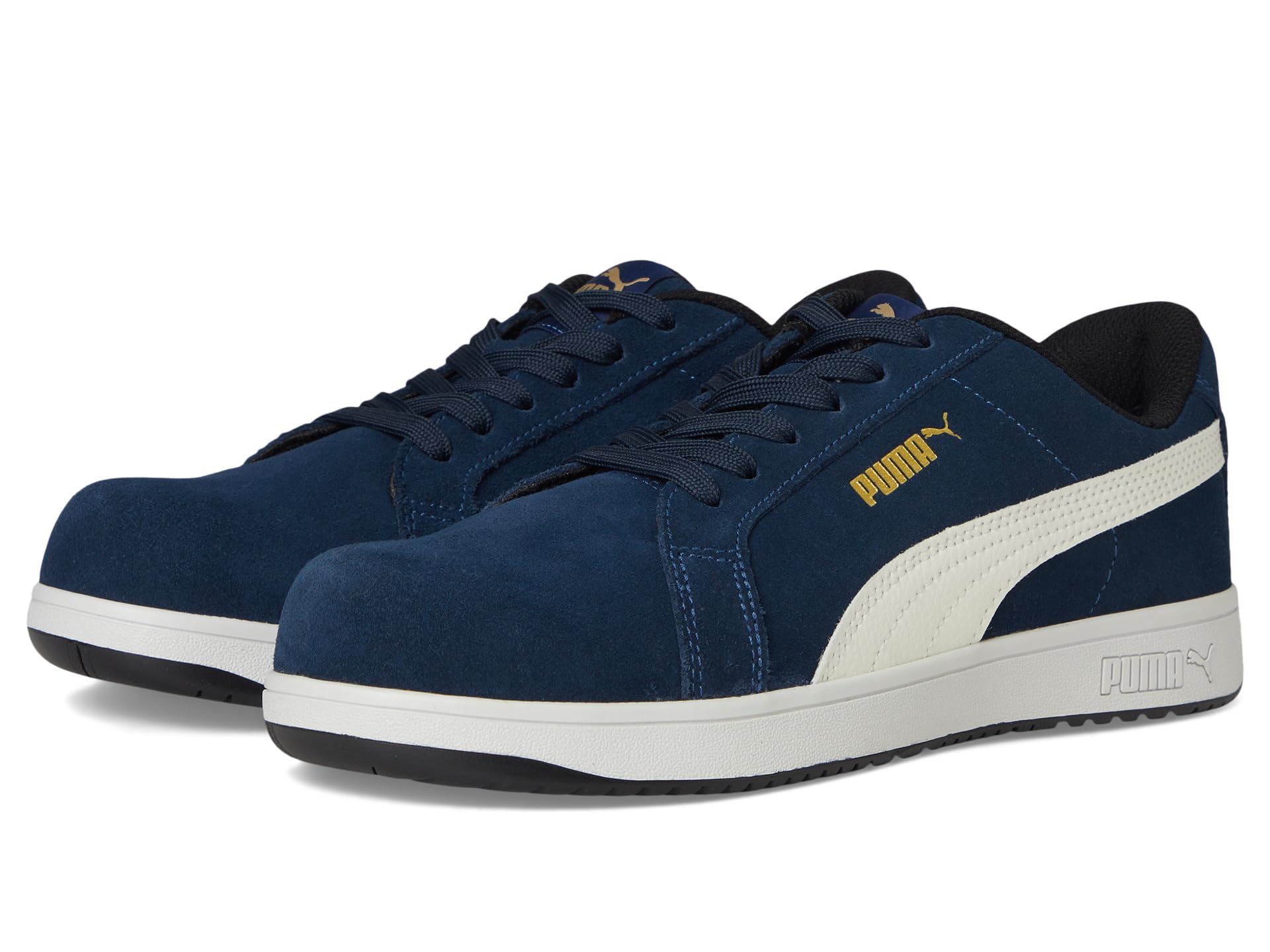
A suede safety shoe that looks like a street sneaker and takes no break-in.
Style is usually the first thing to go when a work shoe gets a protective toe. Not here. The suede upper is the star, and it takes no break-in, so the shoe feels broken in from the first wear. A composite safety toe sits inside the classic low profile, and the whole shoe is protected to the ASTM SD standard — SD meaning it also resists static build-up, which matters on some electronics and assembly floors.
The numbers back the low weight. At 1.5 pounds, this is the lightest shoe in the whole lineup — the Reebok Work Sublite comes in at 4.21 pounds, which makes the Puma the obvious pick if every ounce counts. The rubber outsole is built for slip, oil and abrasion resistance, and the forefoot and heel carry a lightweight EVA cushion that absorbs shock on hard concrete. The EVERCUSHION RELIEF footbed adds a comfort layer on top of that.
The trade-off is durability under real abuse. The composite toe and suede can show wear if your job throws heavy impact at the front of the shoe, and the suede will scuff on rough surfaces. If your work is desk-adjacent or light-duty and you want to look decent doing it, this is a strong fit. At 1.5 pounds with a suede upper that needs no break-in, it sells itself on weight and first-wear comfort.
Where it shines
- 1.5 pounds — the lightest shoe on this list by a clear margin.
- Suede upper that needs no break-in.
- ASTM SD rating for static dispersal plus slip, oil and abrasion resistance.
The trade you make
- Suede scuffs and shows wear on rough surfaces.
- Composite toe and upper need care in heavy-impact jobs.
Reach for it if: you want a lightweight suede shoe that looks sharp and still carries a composite safety toe.
Look elsewhere if: your day involves heavy impacts that would beat up a suede upper.
6. New Balance Quikshift Composite Toe
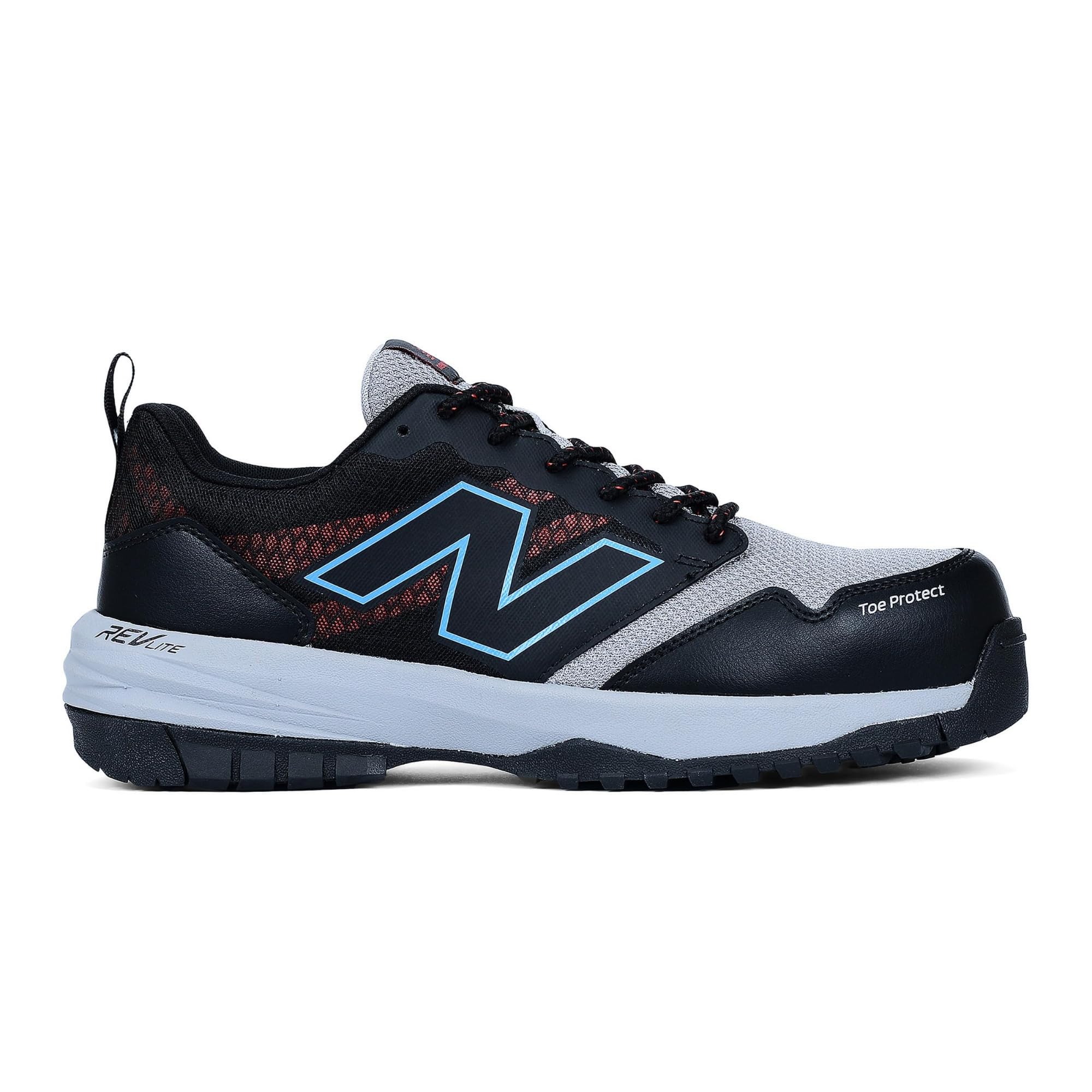
Three widths and sizes up to 18 — made for feet the standard mold forgets.
Most safety shoes come in one narrow spread of sizes. This one comes in 3 widths and goes up to size 18, so if you have been squeezing into a size that never quite fit, that alone is the reason to look here. Three widths up to size 18 is the widest range in this lineup, so hard-to-fit feet get a real option. Electrical hazard protection meets ASTM F2413-18 EH standards, so it covers you near live circuits too.
Comfort underfoot comes from an EVA insert and a REVlite midsole, which delivers lightweight cushioning without cutting the stability of the shoe. A heel counter adds support at the back, and pull tabs on the heel and tongue make it quick to pull on and off. A slip-resistant outsole, plus the shell’s street-ready look, means it goes from the job to the pavement without looking out of place.
The honest downside: durability is mixed, with accounts ranging from about two years down to six months depending on the work. The grip also splits opinions — fine on some shop floors, slick on others. This is a shoe to buy for the fit and wide sizing, then treat the sole as normal wear.
The defining spec: 3 widths and sizing up to 18 — the widest range here — makes it the pick for a hard-to-fit foot.
The honest limit: reported sole life varies widely, so do not count on a fixed lifespan from the box.
Made for: wide or large-footed workers who need real sizing options and EH protection.
Question mark: long-term sole durability — plan on replacing sooner than a heavy boot.
7. New Balance Cremorne Composite Toe
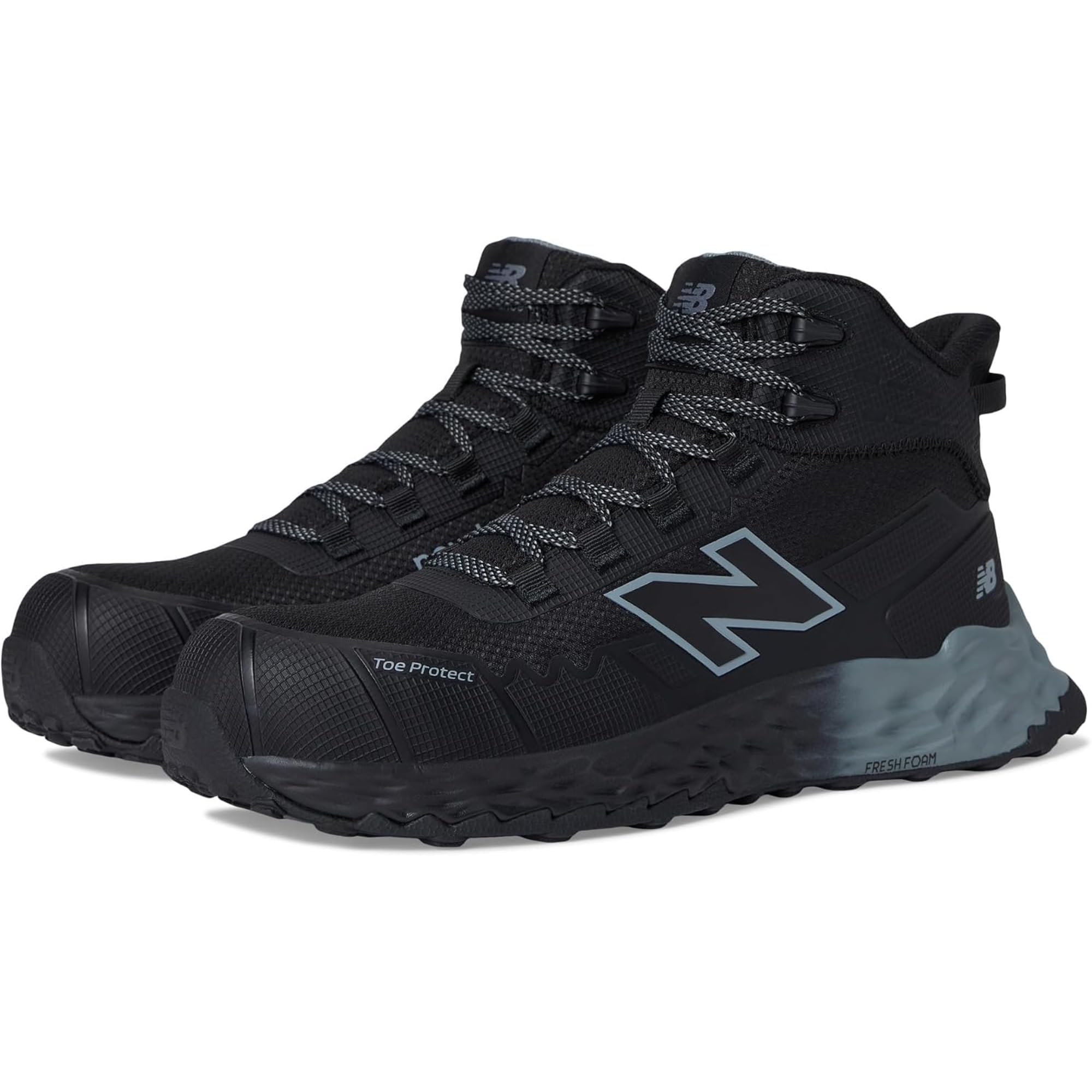
Fresh Foam cushioning under a composite toe — a work shoe that feels athletic first.
If long hours on hard floors are the whole problem, the cushioning is the case for this one. Fresh Foam technology sits underfoot for all-day support, and the composite safety toe with Toe Protect technology guards the front of the shoe against workplace hazards. The outsole is slip-resistant, and the shoe also carries electrical hazard and heat resistance, so it is built for demanding conditions rather than a clean office floor.
The details around the edge are thoughtful. Debris-free construction keeps grit out, and a wicking mesh lining keeps your feet dry through a shift. A vibrant, athletic-inspired look means it does not scream “work shoe,” and the ankle area gives a bit of stability. It weighs in at a workable 3.48 pounds for the package, so it is a sensible all-rounder rather than an ultralight.
Fit is the honest caveat here. The shoes run on the snug side for some people, and a slip-on design means there is no lacing to dial in. Pick it if comfort is your top priority and you want a composite toe that feels athletic; size carefully if you are between sizes.
Why long-shift workers like it
- Fresh Foam delivers athletic-level cushioning.
- Slip-resistant outsole plus EH and heat resistance.
- Toe Protect technology and debris-free build.
What to watch
- Runs snug for some feet, so size up if between sizes.
- The slip-on design gives no lace adjustment.
Suits you if: standing tall on hard floors all day is the biggest thing you want solved.
Look past it if: you need lots of adjustability and a precise fit from laces.
8. New Balance Men’s Elite Lite Work Shoes
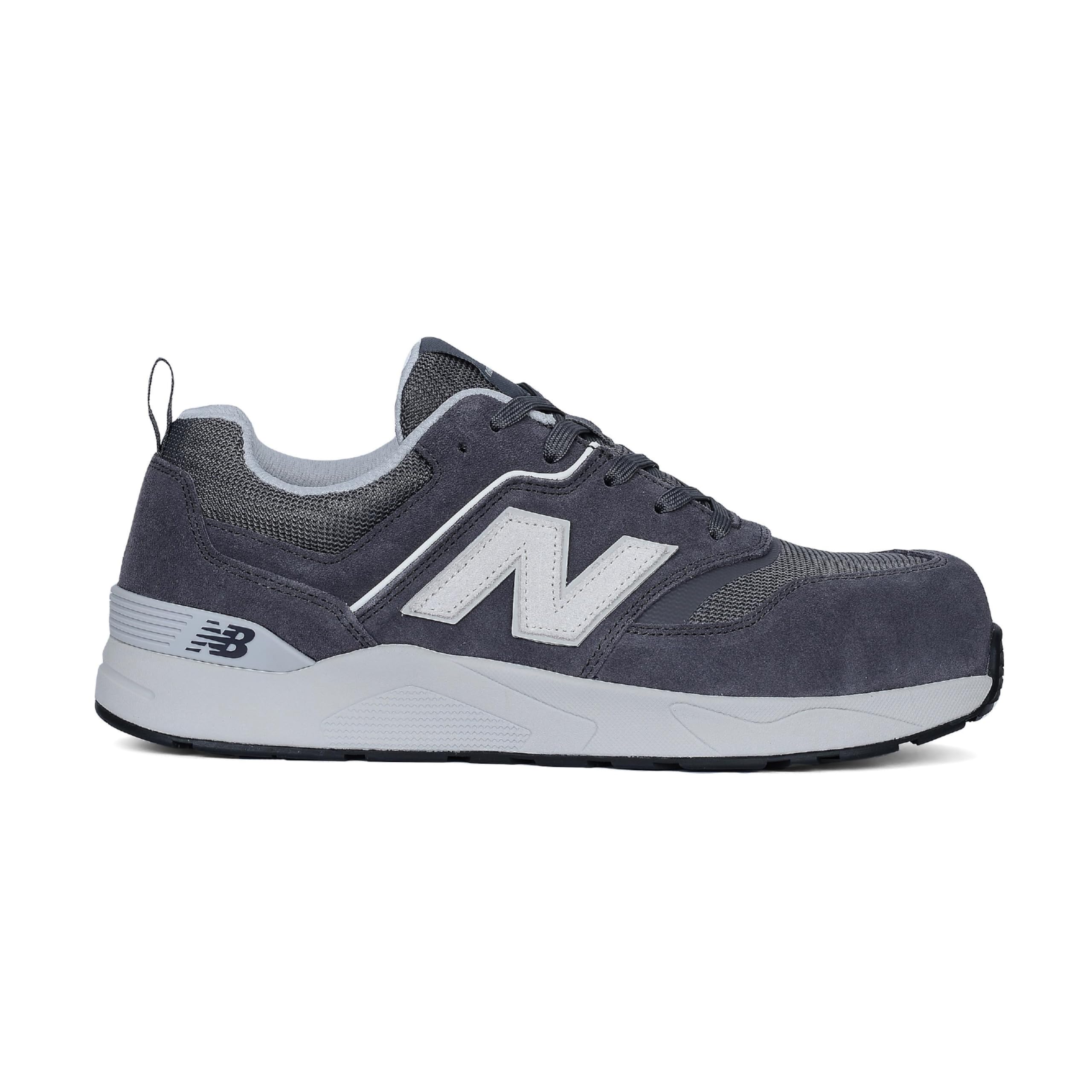
A leather upper, an ACTEVA midsole and a composite toe — light-industrial comfort in one package.
Light industrial is exactly where this shoe belongs. The composite safety toe meets or exceeds ASTM 2413-18 I/C and EH standards, so impact protection and electrical hazard resistance come standard. The ACTEVA performance midsole blends support, cushioning and flexibility, and the flexible leather upper balances durability with breathability — you get a shoe that does not feel sealed up after a long day.
The outsole is where the real-world grip comes from. The slip- and heat-resistant rubber outsole meets or exceeds the ASTM F3445-21 Pass rating, which tells you it has been measured against a slip standard rather than just described as grippy. A cushioned insole, padded collar and tongue, and heel pull tabs round out the comfort side; debris-free construction helps keep grit out.
Fit is the one to watch. The shoes run a bit large for some people, so consider trying a half size down if you are on the borderline. Construction is cement outsole, and the non-metallic, textile lining keeps the shoe light. For a ten-hour light-industrial shift on concrete, the ACTEVA midsole and flexible leather upper keep the shoe from feeling rigid by hour ten.
What it does for you: composite toe protection and a measured ASTM F3445-21 slip rating in a shoe that flexes with your foot.
Where it can let you down: a slightly large fit and a cement outsole that may not suit the hardest wear.
Choose this: for light-industrial work where you want a comfortable, flexible leather shoe.
Size up your caution: if a precise fit matters, since these tend to run large.
9. New Balance Men’s Logic Composite Toe Work Shoes

A hybrid that borrows a running shoe’s feel and adds a composite toe on top.
This is the pick for someone who wants a sneaker at work but needs a safety toe. The Logic pairs a composite toe with an ACTEVA midsole and an NB Comfort Insole, which together deliver support, cushioning and flexibility. A lightweight rubber outsole rounds out the build, and the advanced midsole is the reason it succeeds at the hybrid brief — it feels athletic, not industrial.
The look is a selling point too: this is the shoe you can wear on the job and off it without it looking like a work boot. It also carries ESD compatibility in the spec mix, so it can fit environments that care about static control, though some buyers flag that point as a question to check. For an all-purpose, low-profile work sneaker, it covers a lot of ground.
The fit and cushioning are the caveats. Around the toes it can feel tight for some, and the sole has been reported to separate over time. If you have a wide forefoot or agonize over precise fit, try the Quikshift instead, because the Logic is best for narrow to standard feet that want sneaker comfort.
Why it earns a spot
- ACTEVA midsole and NB Comfort insole for a running-shoe feel.
- Composite toe adds protection without turning it into a boot.
- Lightweight rubber outsole keeps it flexible.
What to check first
- Toe box can feel tight for a wider forefoot.
- Sole separation is a reported wear point.
Go with it if: you want a sneaker feel with a safety toe for general work.
Pass it by if: you need a wide toe box or a stiffer, more structured work shoe.
Know the Specs
Toe Cap Material: Alloy, Steel or Composite
The toe cap is the protective shield over your toes. Steel is the traditional cap and usually the heaviest. Alloy and composite caps do the same protective job in lighter materials, which is why many athletic safety shoes use them. Lighter caps tend to suit workers who are on their feet for a long shift and care about weight.
What ASTM F2413 and EH Ratings Mean
ASTM F2413 is the standard a shoe’s protective toe is measured against, so a shoe that meets it has been tested for impact and compression protection. EH stands for electrical hazard, meaning the shoe is built to reduce the risk of completing an electrical circuit through your body. Look for both if your job involves live circuits or charged equipment.
Midsole Cushioning and Outsole Traction
The midsole is the shock-absorbing layer under your foot, and the outsole is the bottom tread that touches the floor. Foam midsoles (EVA, Fresh Foam, ACTEVA) favor cushioning for long shifts. Rubber outsoles with a defined tread pattern favor grip on oil, water and shop-floor spillage — the floor decides which one matters more.
Weight and Fit Matter as Much as the Toe
A lighter shoe is easier to walk in for a full shift, and the weight difference across this lineup is large — from about 1.5 pounds up to 4.21 pounds. Fit is just as important: width options and removable insoles let you dial in comfort, and a shoe that is too tight will wear you out faster than a heavier one.
Common Questions
Is a composite toe as protective as a steel toe?
What does EH mean on a work shoe?
Do these safety shoes fit true to size?
Can I use my own insoles in these work shoes?
Which shoe is best for standing all day on concrete?
Are these shoes slip resistant on oily floors?
How long do safety shoes last?
Are Puma Iconic safety shoes good for warehouse work?
Do steel toe and alloy toe shoes set off metal detectors?
What is the difference between an athletic safety shoe and a work boot?
The Bottom Line
For most people working a warehouse, assembly line or light-industrial floor, the Timberland PRO Powertrain is the safest all-round bet. It combines an alloy toe with electrical hazard protection and an outsole rated for heat, oil, slip and abrasion, so it covers the floor conditions you actually face. With 4.0+ stars across 700+ ratings, it has the review record to back the top slot.
If low weight or a dressier suede look is the goal, the Puma Iconic at 1.5 pounds is the shoe to reach for. If your hard-to-fit foot is the real issue, the New Balance Quikshift’s 3 widths and sizing up to 18 make it the practical choice. And if you are buying on the tightest budget to get protected today, the Steel Toe Shoes for Men get you a steel toe at the lowest spend in the lineup.
Match the shoe to your floor, your feet and your shift length, not the label.
How we choose
We do not accept paid placement. Every pick is matched to a real buyer and a real use-case; we do not hands-on test units.
Sources
Specifications: manufacturer listings and product documentation. Review insights: verified customer reviews, as of November 2026. Pricing: not shown on this page (it changes often); check the current price via the retailer link.
As an Amazon Associate, Tactical Gear Guy earns from qualifying purchases. This does not affect which products we feature.