Specs are compiled from manufacturer listings and verified buyer reviews and can change over time — please confirm the key details on the product page before buying.
You bought a Z body and the kit zoom, and now you keep hitting its limits — the frame goes soft wide open, the light dies and the ISO climbs, and the reach stops well short of the stage. The lens you add next decides most of what you can actually shoot. This guide covers the Z-mount zooms that fix those three problems, from compact all-in-ones to constant-aperture glass that stays sharp at the widest setting.
This guide is built by comparing the manufacturers’ published specifications and the patterns across verified customer reviews, so you get each pick’s real strengths and trade-offs instead of marketing spin.
Every pick below is native Z mount, so it talks to your camera’s autofocus without an adapter in between. I weighed focal range against aperture against weight, because those three decide whether a lens stays on your camera or sits in the bag — the shortlist covers z-mount zoom lenses from everyday standard zooms to super-telephoto reach.
Top Picks


How To Choose The Best Z-Mount Zoom Lenses
Start with the light you shoot in, not the zoom range on the box. A lens that opens to f/2.8 gathers far more light than one that starts at f/4, and that difference decides whether you can shoot a reception or a dusk sideline without pushing your ISO into grain.
Constant aperture versus variable aperture
A constant aperture lens holds the same f-number from the wide end to the long end. That means your exposure and your background blur stay consistent as you zoom — you set it once and shoot. A variable-aperture zoom (say f/4-8) is smaller and lighter, but it lets in less light the further you zoom, so the long end is the dim end.
Focal length on full-frame versus DX bodies
Nikon publishes two reach figures for some telephoto zooms because a DX-format Z camera crops the frame. The NIKKOR Z 100-400mm, for example, covers 100mm-400mm on an FX body but behaves like 150mm – 600mm on a DX body. If you shoot a Z 50 or Z fc, that crop is free extra reach — worth knowing before you pay for a longer lens.
Stabilization and hand-holding
Optical Vibration Reduction (VR — a moving lens element that cancels out hand shake) is what lets you shoot a long lens without a tripod. Nikon rates the 100-400mm at up to 5.5 stops of compensation and the 28-400mm at a 5.0-stop equivalent, which is the difference between a sharp frame and a blurry one in dim rooms.
Weight you will actually carry
A zoom only earns its place if it leaves the house. The superzooms here run from roughly a pound and a half up past four pounds, and the long telephotos are the heavy end. Decide up front whether this lens lives on a strap all day or comes out for specific shoots.
Side-by-Side Comparison
Detailed Reviews
1. Nikon NIKKOR Z 24-70mm f/2.8 S
Our pick — 4.5+★ from 550+ verified ratings; the strongest balance of quality and price.
One zoom that holds f/2.8 from the group shot to the head-and-shoulders frame.
This is the lens you mount when you cannot predict what the next hour looks like — a wide group shot, then a head-and-shoulders portrait forty feet back. The 24-70mm focal range covers both ends of that walk, and the f/2.8 constant maximum aperture means the exposure does not shift as you zoom from 24mm out to 70mm. You set the shutter and aperture once, and every frame in between matches.
Autofocus is handled by Nikon’s Multi-Focusing System — two AF drive units precisely synchronized — paired with a Stepping Motor (STM) that moves glass quietly and smoothly. For stills that reads as fast lock-on. For video it reads as near-silent focus pulls you do not have to fix in the edit. The lens is also extensively sealed to keep dust and moisture out, especially around all the moving parts of the barrel, which is the sort of build detail you only appreciate after a season outdoors.
Owners treat this as the reference standard mid-range zoom — the praise centers on sharpness across the entire image range and a focus motor that keeps up. It covers wedding receptions, portraits and corporate events in the same session. The honest catch is reach: 70mm is not a portrait-from-the-back-of-the-room focal length, so if you shoot stages from distance you will want a 70-200mm instead. Cost is the second consideration, because this sits in the premium band.
What holds up under pressure
- f/2.8 across the full 24-70mm range keeps exposure and blur consistent as you zoom
- Two synchronized AF drive units plus a Stepping Motor give fast, quiet focus for stills and video
- Sealed barrel resists dust and moisture around the moving parts
- Sharpness holds across the frame in real event conditions
Where it stops short
- 70mm is not enough reach for distant stages or sidelines
- The premium tier makes it the biggest single spend on this list
Buy this one: if you shoot people in rooms where the light keeps changing and you need one lens to carry the whole job.
Think again: if your work lives at 150mm and beyond — go up the list to the 70-200mm.
2. Tamron 28-75mm F/2.8 Di III VXD G2 for Nikon Z
A constant f/2.8 standard zoom at 1.2 pounds — light enough to carry all day.
Nineteen-point-four ounces and 4.7 inches long — that is the whole spec that sells this lens. A constant f/2.8 zoom at that weight turns a mirrorless body into something you carry all day without planning around it. The VXD linear motor (a focus motor that drives the glass directly, with no gear train in the way) is built for high-speed, high-precision autofocus, and it does it quietly enough for video.
The close-focus figure is the surprise. Minimum object distance is 7.1 inches at the wide end, with a maximum magnification ratio of 1:2.7 — so you can get right up on detail without swapping to a macro. Moisture-resistant construction and a fluorine coating on the front element handle a wet afternoon, and TAMRON Lens Utility lets you reassign what the lens controls do.
What wins people over is the lens quality itself, followed closely by how it focuses — this is a zoom that punches well past what its price tier suggests. Sharp images hold across most of the zoom range, and owners lean on it as a go-to everyday lens with lovely color rendering. The trade-off is at the wide end: 28mm is narrower than the 24mm on the Nikon above, so tight interiors will feel tighter.
The weight calculation: 1.2 pounds is the reason this lens rides in the bag every single day rather than on special occasions.
Wide-end check: 28mm versus the 24-70mm’s 24mm is a real difference for interiors — measure the gap before you commit.
Reach for this if: you want constant f/2.8 light-gathering without the premium-tier outlay, and you shoot people more than rooms.
Look elsewhere if: your work starts at 24mm or wider — the 14-30mm or the 24-70mm covers that ground.
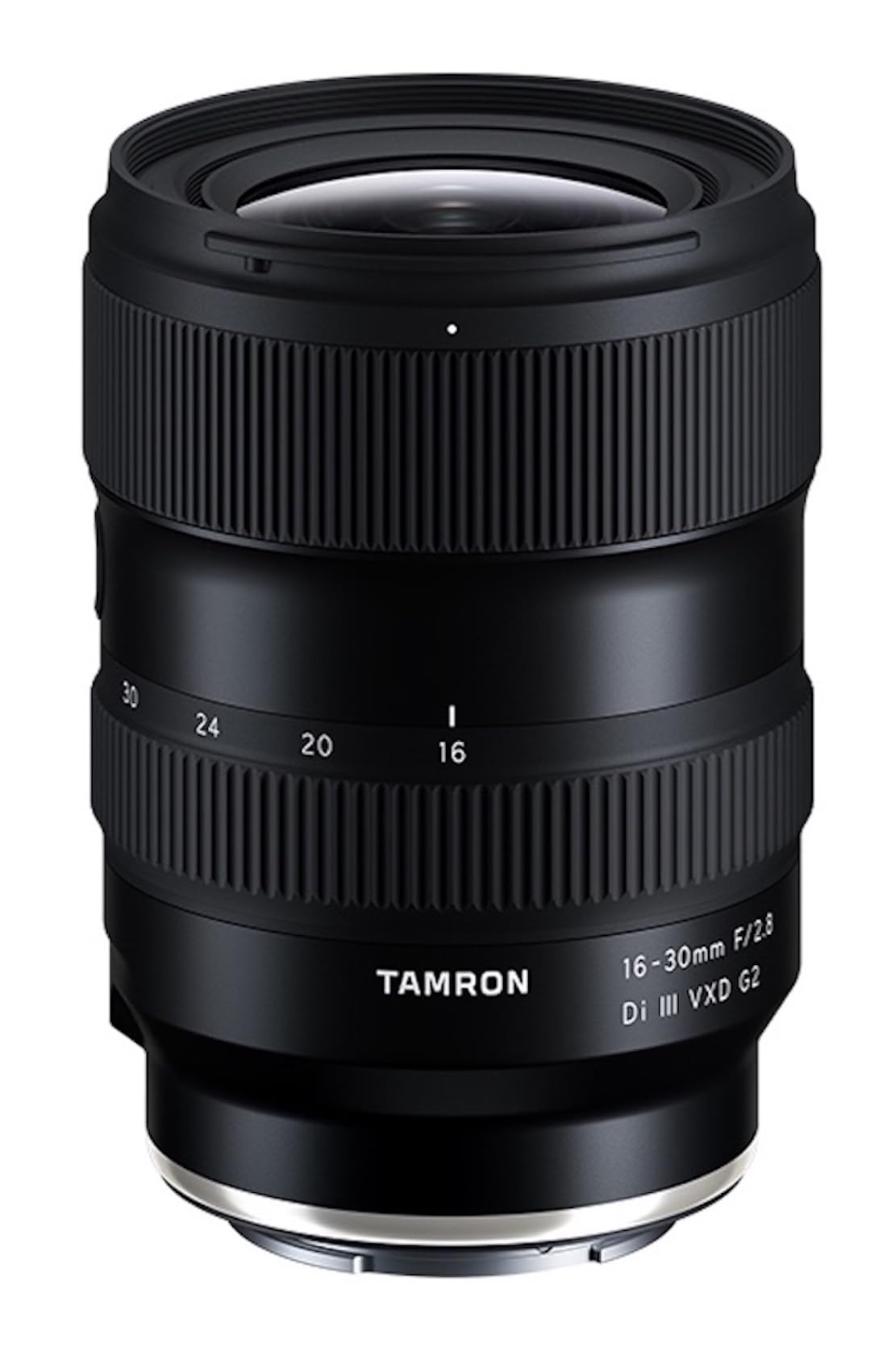
3. Tamron 16-30mm F/2.8 Di III VXD G2 for Nikon Z
Sixteen millimeters of ultra-wide that fits in a jacket pocket at 15.9 ounces.
Tight rooms are where wide lenses earn their keep, and this one opens at 16mm and holds f/2.8 all the way to 30mm. That constant aperture matters indoors — you keep the same exposure while you reframe from a full room to a detail, without the dimming you would get from a variable zoom. It is built for travel and everyday video, and the weight figure of 15.9 ounces backs that up.
Optical performance is pitched at high resolution, which is what you want from a wide lens chasing the fine detail in architecture and landscape. Bokeh renders beautifully in the near range, helped by the wide aperture. There is no optical stabilization here, so for low-light interiors you lean on the camera body’s stabilization instead.
The image quality is the part that wins people over most — sharp enough that the wide view still reads clean. Sharpness is the one point of disagreement, because ultra-wides are demanding on technique and some shooters expect corner perfection the moment they mount one. Get your framing level and this lens rewards you. Owners also flag a six-year limited USA warranty when bought from a Tamron authorized USA dealer.
Who it is built for: landscape, architecture and travel shooters who want a fastn a tripod or your body’s VR indoors.
Worth it for: interiors, architecture and landscapes where a 14mm view is the shot you are after.
Not your lens if: you need speed in the dark — the constant f/2.8 zooms on this list carry that load.
4. Tamron 150-500mm F/5-6.7 Di III VC VXD

A full-frame 500mm that measures 8.4 inches before you even extend it.
Reaching 500mm is usually the point where lenses stop being carryable. This one stays at just 8.4 inches and extends to only 11.3 inches, which is a compact full-frame 500mm by any measure. Optical stabilange. For a wedding or a dark room, 35mm to 150mm covers the room and the faces inside it without a lens change.
The 9-blade circular aperture produces smooth-edged bokeh, which is what makes the wide aperture worth having beyond the light. VXD linear motor autofocus is fast, quiet and precise. Optical performance holds throughout the range, and Tamron Lens Utility expands what you can do for stills and video.
Quality is what owners praise most — sharp images and great bokeh at the aperture that matters. Versatility follows close behind, because this replaces a pair of primes in a working bag. The cost is weight at 2.6 pounds, which is the price of that fast front element. If your work happens indoors and after dark, that is a trade you make willingly.
The event shooter’s answer: wedding and reception coverage where f/2 changes what is possible.
The catch to know: 2.6 pounds of glass is a working weight — budget your wrist accordingly.
5. Nikon NIKKOR Z 100-400mm VR S
Aperture and the f-number
The f-number is the size of the opening that lets light in — a smaller number is a wider opening. A constant f/2.8 zoom holds that opening from the wide end to the long end, so exposure and background blur stay steady as you zoom. A variable zoom like f/4-8 lets in less light toward the long end, which is why the far end is the dim end.
Vibration Reduction (VR)
VR is a moving lens element that cancels out hand shake, and it is measured in stops — each stop roughly halves the shutter speed you can hand-hold. Nikon rates the 28-400mm at a 5.0-stop equivalent and the 100-400mm at up to 5.5 stops. In plain terms, a longer shutter speed you can hold means sharper frames in dim rooms without a tripod.
Teleconverters and reach
A teleconverter is a small magnifier that sits between lens and camera. The NIKKOR Z 100-400mm takes the 1.4x and 2x Z series converters, taking reach to 560mm or 800mm with no loss of focus points. Not every lens accepts one, so check compatibility before you buy if growing your reach later matters to you.
Common Questions
Will a Z-mount zoom work on my Nikon Z 50 or Z fc?
Is a constant f/2.8 zoom worth it over an f/4 zoom?
Do I need a lens with image stabilization?
Can I use a teleconverter on a Z-mount zoom?
Will a full-frame Z lens fit a DX-format Z camera?
How heavy is a super-telephoto zoom to carry all day?
Is the Tamron 35-150mm F/2-2.8 sharp enough for professional event work?
What is the difference between a 24-70mm and a 24-120mm zoom?
Does the NIKKOR Z 14-30mm accept standard screw-on filters?
Which Z-mount zoom is best for wildlife photography?
The Bottom Line
For most shooters the answer is the Nikon NIKKOR Z 24-70mm f/2.8 S: constant f/2.8 from 24mm to 70mm covers a reception, a portrait and the walk between them without a lens change, and it holds the highest score on this list. On a tighter budget, the Tamron 28-75mm F/2.8 Di III VXD G2 holds constant f/2.8 at 1.2 pounds, trading 4mm of wide end for a much lighter bag. Want one lens for a whole trip? The Nikon NIKKOR Z 24-120mm f/4 S stretches to 120mm. For distant subjects, the Nikon NIKKOR Z 100-400mm VR S reaches 800mm with a teleconverter and matches the 24-70mm’s 4.5+ star score, though far fewer owners have shot it.
How we choose
We do not accept paid placement. Every pick is matched to a real buyer and a real use-case; we do not hands-on test units.
Sources
Specifications: manufacturer listings and product documentation. Review insights: verified customer reviews, as of November 2026. Pricing: not shown on this page (it changes often); check the current price via the retailer link.
As an Amazon Associate, Tactical Gear Guy earns from qualifying purchases. This does not affect which products we feature.