Specs are compiled from manufacturer listings and verified buyer reviews and can change over time — please confirm the key details on the product page before buying.
If you are buying goggles for a kid who plays hard, the short answer is this: buy the pair matched to the sport, not the cheapest pair on the shelf. A swim goggle that seals against a pool is not built to shrug off a dirt roost, and a ski lens with a spongy foam face pad is not built for a diving block. The nine picks below cover baseball, motocross, swimming, snow, basketball and classroom science, and every one of them is sized for children rather than adults.
This guide is built by comparing the manufacturers’ published specifications and the patterns across verified customer reviews, so you get each pick’s real strengths and trade-offs instead of marketing spin.
You will see exactly where each pair flexes, seals, vents and slips, so the first try-on is not a guessing game. The real work in choosing the youth sports goggles is matching the lens and strap to the sport your child actually plays.
Top Picks


How To Choose The Best Youth Sports Goggles
Start with the sport, because the sport decides the lens, the seal and the strap. Chlorine water needs a watertight seal against the eye socket. A motocross track needs a lens that shrugs off grit and a face foam that stops mud. A basketball court needs an impact-rated shatter guard that sits over the brow rather than on it. Buying one pair to serve all three usually means a compromise on every one of them.
Match the lens coating to the light you are actually in
A polarized lens cuts glare bouncing off water, sand and wet asphalt, which is why it shows up on baseball and fishing picks. A mirrored lens knocks down the harsh white light of snow and open water. A clear lens is for indoor courts and lab benches where you need to see detail, not block sun. A UV400 label means the lens filters the full UV band; it says nothing about impact strength, so do not treat it as a safety rating.
Check the strap before you check the colour
A child in motion loses goggles for one reason: the strap slips. An adjustable buckle, a bungee strap or a silicone-backed band holds far better than a plain elastic one. Look for whether the strap is attached to the frame at a fixed point or can be repositioned, because a repositionable strap sits flatter against a smaller head. If your child wears prescription glasses under the goggles, confirm the goggle has an OTG (over-the-glasses) cavity and measure the glasses before you buy.
Know what impact protection actually means
For court sports, an ANSI Z87.1 rating is the marker that the lens and frame have been tested for impact resistance. A soft TPU (thermoplastic polyurethane — a flexible rubbery plastic) frame protects against a bruise during a fall, while a hard polycarbonate frame across the eye itself is what stops a ball on a fast break. Neither one is a substitute for the other, so think about what your child is actually at risk of: a body check or a ball to the face.
Side-by-Side Comparison
| Model | Best For | Age Range | Lens Type | Strap Type | Amazon |
|---|---|---|---|---|---|
| 3 Pack Kids Polarized Sunglasses★ Best Overall | Multi-sport day bag | 3–12 years | TAC polarized, UVA/UVB blocking | Included frame strap | Amazon |
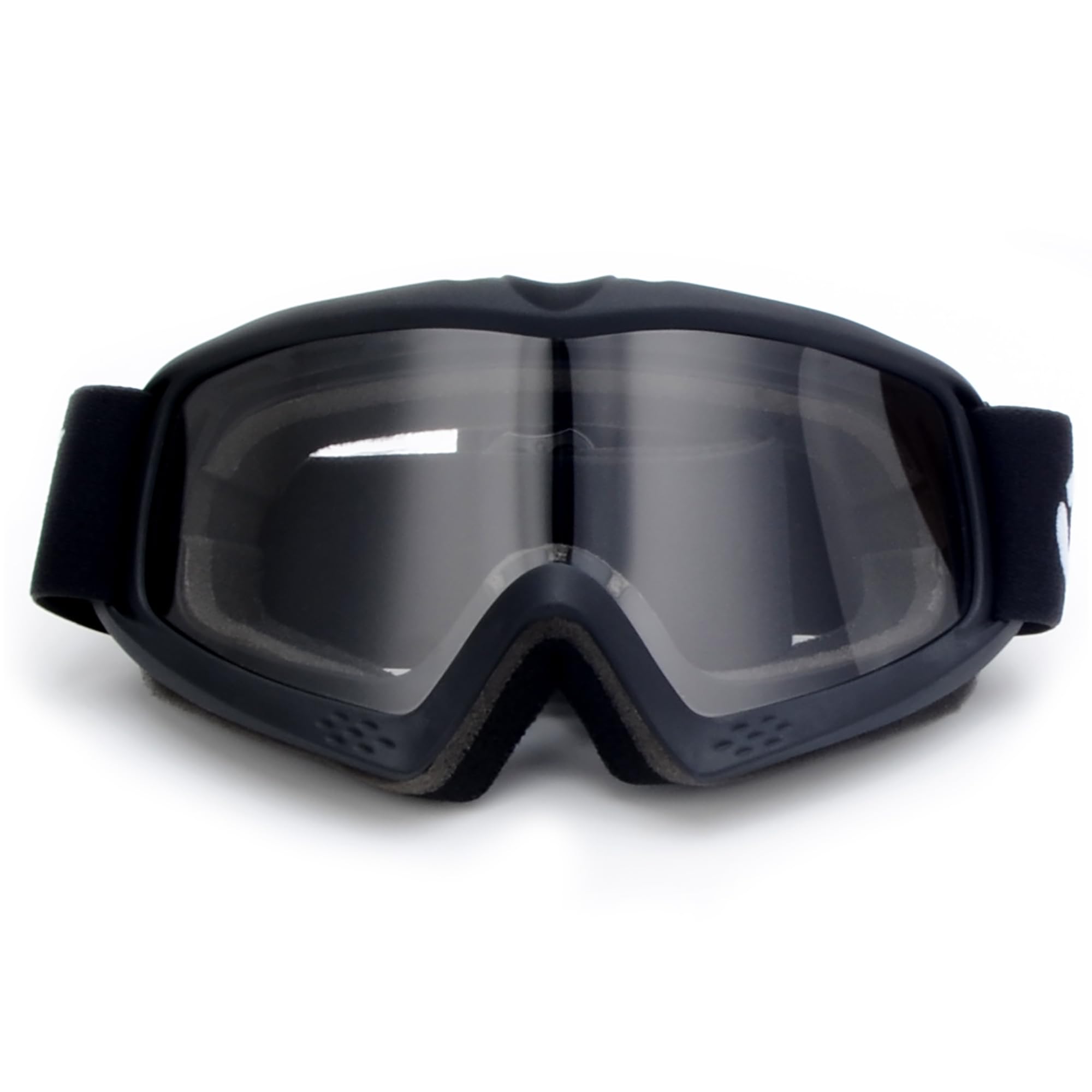
| Kids Teens Child Youth ATV GogglesBest for Dirt | Dirt, mud and trail riding | 3–12 years | UV400 PC lens | Elastic strap, adjustable | Amazon |
| Speedo Jr Sunny G SeasiderBest for the Pool | Pool and beach swim | 6–14 years | Mirrored, UV protection | Comfee bungee strap | Amazon |
| LOEO YH689 Kids Ski Goggles | Snow and helmet pairing | 5–14 years | 100% anti-UV tinted | Adjustable buckle | Amazon |
| EasYoung Kids Ski Goggles | First-timer snow days | 5–14 years | Anti-fog, scratch-resistant | Adjustable head strap | Amazon |
| TYR Black Ops 140 EV Mirrored | Competitive swim practice | Youth | Mirrored, anti-fog, UV protection | Racing seal | Amazon |
| BLUE CUT Safety Basketball Goggles | Court sports, prescription-ready | Unisex child | Anti-fog, prescription-replaceable | Thick elastic, adjustable | Amazon |
| SooGree Kids Sports Protection Goggles | Field hockey and pickleball | Unisex kids | PC anti-fog lens | Detachable nylon, adjustable | Amazon |
| ELSISM 24 Pack Kids Safety Glasses | Classroom, party and team packs | 3–13 years | Clear, UV coating, ANSI Z87.1 | Elastic temples | Amazon |
Detailed Reviews
1. 3 Pack Kids Polarized Sunglasses
Our pick — 4.5+★ from 750+ verified ratings; the strongest balance of quality and price.
Three pairs of polarized shades that weigh barely more than a granola bar.
The number that decides this one is 20 grams. That is the frame weight, and it is the reason a seven-year-old leaves them on through nine innings instead of pushing them up onto the cap every ten minutes. At 20 grams, there is nothing heavy pulling them down a small nose.
What wins people over is the lens. The TAC polarized lens blocks UVA and UVB rays and cuts the glare that bounces off sand, wet turf and a car hood in the parking lot. A wrap-around shape adds a second layer of defence by shielding the eyes from dust and wind, which is exactly what you want during a windy tournament weekend. The set also ships with a frame strap, so a sprint to first base does not end with a pair of sunglasses in the dirt.
The one honest catch sits in the fit. The frames run small for some older kids near the top of that 3–12 range, and the size is the one attribute buyers flag as a negative more than any other. If your child is nine or ten with a broader face, size up your expectations rather than the product — this is a better match for younger heads and narrower faces.
Why Parents Keep This Set in the Car
- Three pairs means one in the bag, one in the car and one that is currently lost
- The 20-gram frame weight keeps them on a small face without constant adjusting
- Polarized TAC lens knocks down glare off water, sand and wet turf
- Wrap-around shape blocks wind and dust on a gusty field
Where It Falls Short
- Runs small for older kids at the top of the age range
- Not a seal-based goggle, so no splash or mud protection
Buy it for: a baseball, tennis or hiking kid who needs sun relief and a spare pair that lives in the glovebox.
Think twice: if your child is at the upper end of the size range — the fit leans small and narrow.
2. Kids Teens ATV goggles
The one built to eat roost, mud and trail grit without fogging into a whiteout.
Dust protection is the thing that carries this pair, and it is the reason it tops a shortlist for anyone with a kid on a quad or a dirt bike. The sealed frame plus the 100% UV400 PC lens (polycarbonate, a hard shatter-resistant plastic) means a face full of trail grit stops at the lens instead of the eyeball. The soft TPU frame is the second half of the story: on a low-speed tip-over it bends instead of digging into a cheekbone.
Fit flexibility is where it quietly beats a lot of rivals. The adjustable elastic strap spans a minimum head circumference of 21 inches up to a maximum of 29 inches, so one pair can hand down between a small sibling and an older one. The inner cavity measures 4.7 × 1.77 × 0.79 inches, which makes it an OTG goggle — over the glasses — for a kid who needs prescription eyewear on the trail. The lens is technically interchangeable, but the manufacturer is direct that lenses scratch easily without a skilled hand, so treat that as a feature you ignore rather than use.
Weighing 93 grams, it is heavier than the sunglasses-style picks on this list, and the anti-fog performance is openly less capable than a purpose-built snow goggle. On a cold morning with heavy breathing behind the lens, expect to clear it. At this price, a sealed dust barrier and a flexible TPU frame are worth clearing the lens on a cold morning.
The trail verdict: for motocross, ATV and downhill riding, the combination of a sealed dust barrier, a flexible TPU frame and a 21-to-29-inch strap range is exactly the spec sheet a riding parent wants. The kids in the review pages skew young enough that four-year-olds are wearing it comfortably.
The caveat worth knowing: it is not a snow goggle. The maker itself notes the anti-fog is not on par with professional winter lenses, so do not buy it primarily for a ski trip.
Reach for this if: your child rides dirt, mud or gravel and you need one goggle that survives the crash and the clean-up.
Look elsewhere if: snow is the main event — the anti-fog won’t hold up to hard breathing in the cold.
3. Speedo Unisex-Child Swim Goggles Sunny G Ages 6-14 Junior
A bungee strap and a mirrored lens: the pool-day combination that never gets lost mid-dive.
The Comfee bungee strap is the star here. It slides over the back of the head in one motion, which means a child can put it on without help and without the wrestling match that comes with a split-strap goggle. On a crowded pool deck, that means no parent crouching down to untangle a strap.
The mirrored lens earns its place on bright outdoor days, cutting the glare that comes off open water and pale pool tile so the eyes relax into the swim. UV protection covers the sun side, and the sealed eye cups hold out water during an extended play session rather than just a lap and a stop. Because the strap is bungee and not tangled in hair, the daily put-on-and-take-off cycle is far less painful for a kid with long hair.
Sized for ages 6 to 14, this is squarely a junior goggle rather than a toddler one — a five-year-old will likely find it too large. That is the one practical limit. Within the swim lane, though, the seal, the strap and the non-fogging lens make it the most water-ready pick on this page.
The pool-deck read: the strap design is the quiet reason this one holds its place above the general-purpose picks — it goes on in one pull, stays put, and does not rip hair on the way off.
Size reality check: the 6-to-14 range means the youngest swimmers in a lesson group may need a different pair, so measure against your child’s age before committing.
Best matched to: a swimmer between six and fourteen whose main sport is in the water, whether that is lessons, summer league or open-water play.
Not the pick for: a five-year-old or a preschooler — the junior sizing will sit too wide on a smaller face.
4. Kids Ski Goggles Ages 5-14

For the kid who is going down the mountain whether or not the weather agrees.
Two features put this ski goggle ahead of its snow-going company. The first is the TPU frame — a soft, flexible thermoplastic that bends on impact instead of cracking into a cheekbone when a child goes down. The second is the two-sided ventilation system, with air ports at the top and bottom of the frame to pull in fresh air and exhaust warm, damp breath before it settles on the inside of the lens.
The lens itself is a tinted 100% anti-UV design across every colour option, which cuts the glare of sun on snow and deepens the contrast so bumps and ice patches read before your child hits them. An elastic sponge pad across the back of the frame moulds to the face, and the fully adjustable buckle strap lets the goggle sit over a helmet rather than fighting it. Families pairing this with a ski helmet report it works as intended.
Anti-fog is the mixed part of the story. Some kids come off the lift with a clear lens; others fog up quickly, especially on a cold, humid day or after a hard snowplow. It is the one attribute that cuts both ways, and it is the reason a serious racer may want to look at a higher-tier snow lens. For weekend runs with a helmet, it holds up well.
Why It Earns a Snow Slot
- Soft TPU frame absorbs a fall rather than transferring it to the face
- Top-and-bottom vents push warm air out and fresh air in
- 100% anti-UV tinted lens deepens contrast on bright snow
- Adjustable buckle strap sits cleanly over a helmet
What to Know Before the Lift
- Anti-fog performance is inconsistent — some lenses fog on cold, damp days
- Not a race-tier lens for a competitive downhill skier
The right call for: a helmet-wearing kid on weekend snow days who needs a soft frame and honest UV protection more than a race lens.
The honest limit: fogging is a real risk in cold, wet weather — pack a lens cloth and expect to use it.
5. EasYoung Kids Ski Goggles
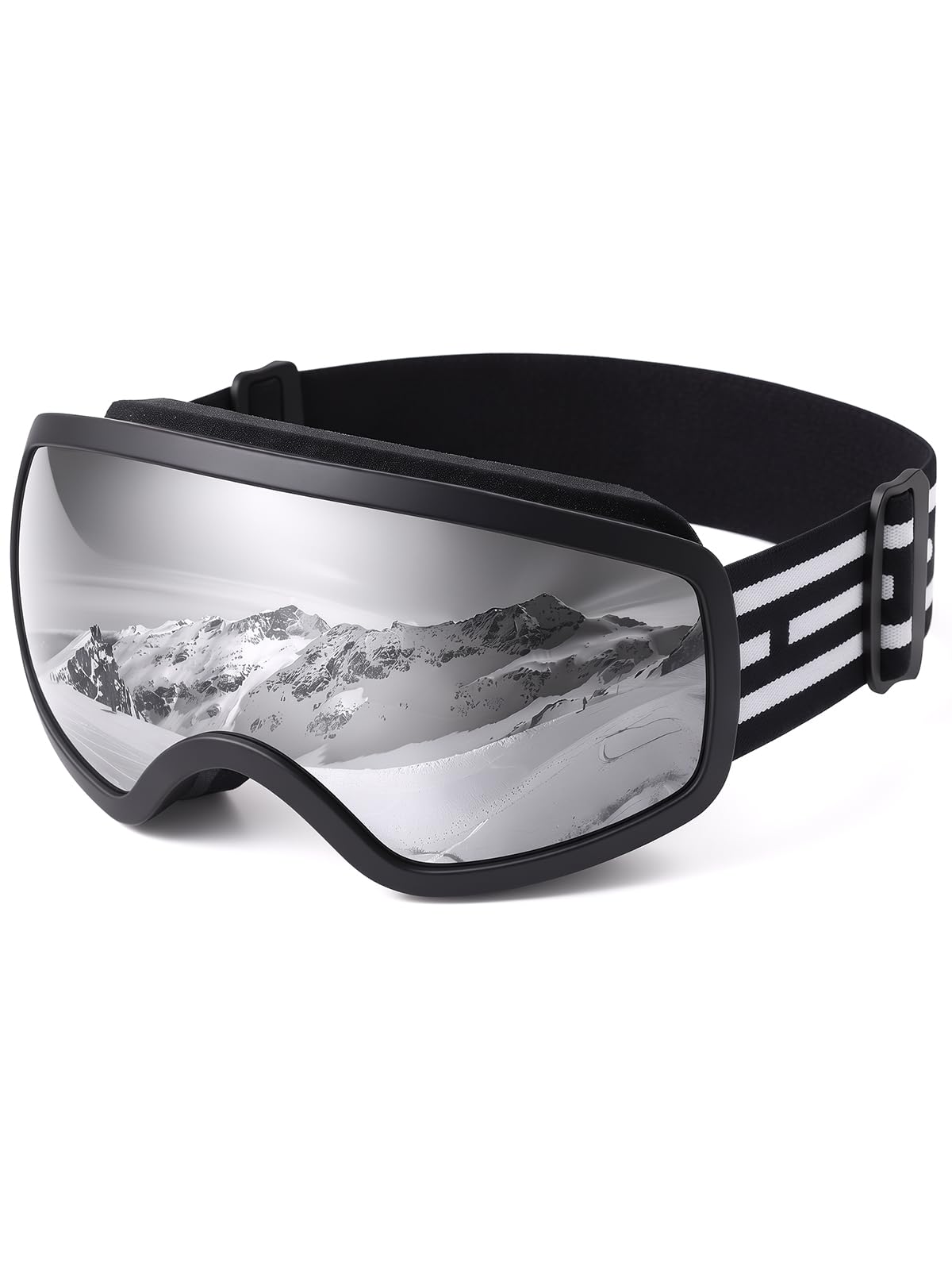
The pair you hand a first-timer who is more excited about the hot chocolate than the slope.
A kid who likes how the goggles look keeps them on, and a kid who keeps them on is a kid who is protected. The colour and lens styling is the single most-discussed attribute across the review pages, and it is doing real work here.
Underneath the looks, the spec sheet is honest about first-timer duty. The lens is anti-fog and scratch-resistant, the head strap adjusts for a secure fit, and the frame is built to take the knocks of a beginner snowplowing into the lift line. Worth noting: this is not a sealed ski goggle — it keeps dust out of eyes on dry snow, and it holds visibility well during normal use, but it is a recreational lens rather than a race one.
The goggle suits ages five to fourteen, which spans a wide slice of the youth group. It is a good buy for a sledding hill, a first ski lesson or a snowboarding beginner’s weekend, and a modest one for a child who is already charging black runs and needs a mirrored contrast lens. That is a sizing limit, not a defect.
The beginner-snow read: for a first or second season on the hill, the adjustable strap, scratch-resistant lens and soft frame cover everything a child actually needs. It gets a kid through lessons without a fight over the goggles.
The honest ceiling: it is a recreational snow lens. A child who is already skiing hard and fast will want more contrast and a tighter seal.
The best fit for: a first-season skier or snowboarder who needs a comfortable, good-looking goggle that survives a lift line.
Look up-tier if: your child already skis fast and needs the contrast of a mirrored lens on bluebird days.
6. TYR Youth Black Ops 140 EV Mirrored Racing Goggles
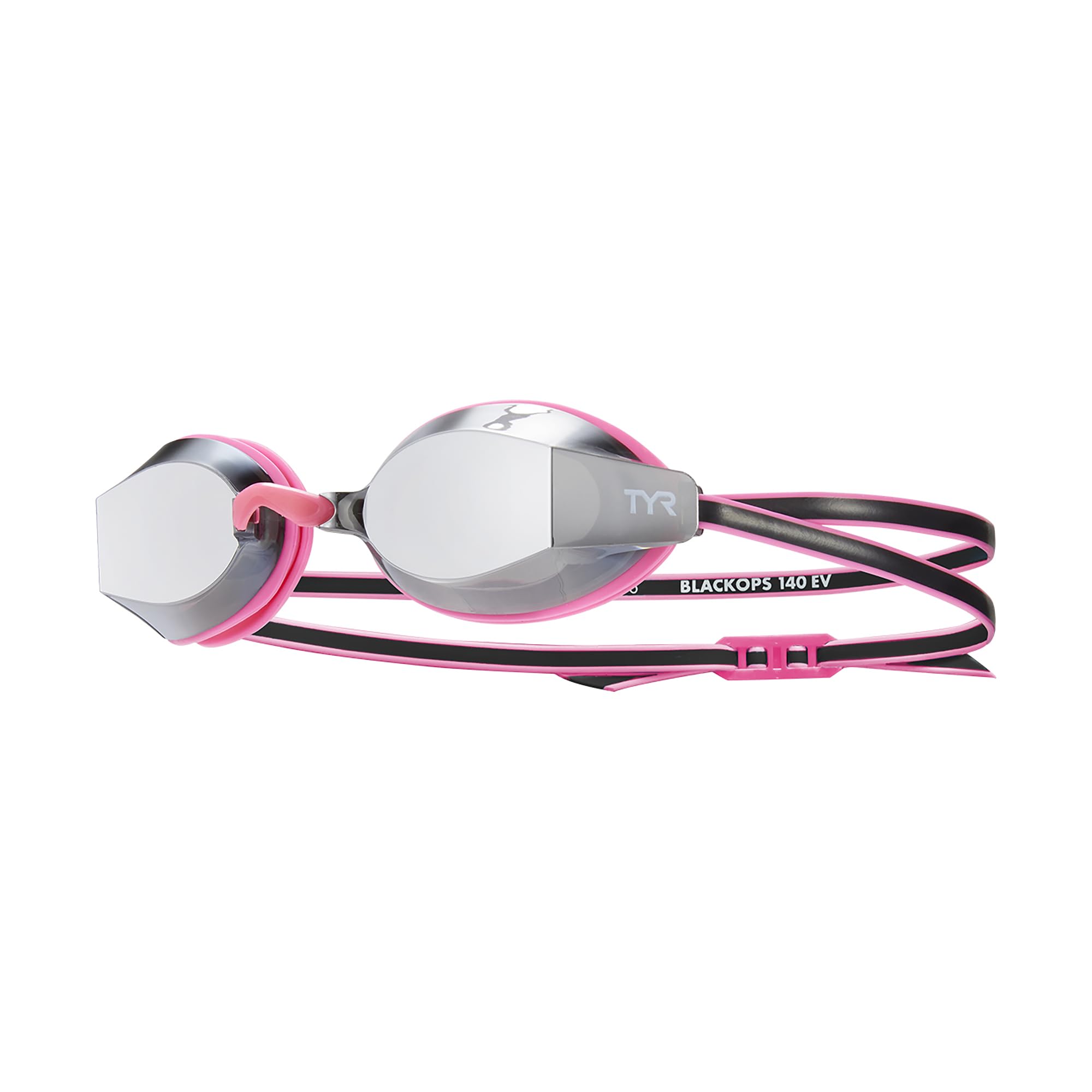
A race-day goggle with a wide mirrored lens and a seal that holds through a hard set.
The wide vision is the main event. In the water, peripheral sight is the difference between tracking a lane line and swimming into one, and this goggle opens up the field of view with a mirrored lens that cuts the sun glare off a bright outdoor pool. The anti-fog coating keeps the lens clear through a long practice and the UV protection covers the eyes on outdoor sets.
The seal is the second reason to pick it. This is a leak-proof design, and the eye cup holds a tight fit even during flip turns and hard kicking — a real step above the looser recreational swim picks when your child is training for time. The mirrored lens also reflects light back rather than absorbing it, so a bright morning practice is easier on the eyes.
The durability is the honest weak spot. Some of these racing goggles come apart at the nose piece after a handful of sessions, and the nose bridge is the one point to handle gently when your child puts the goggle on and takes it off. Handle the nose bridge gently when putting it on and taking it off, and store it in a case between sessions.
The race-lane read: wide vision, a leak-proof seal and a mirrored anti-fog lens add up to a goggle that keeps up with a swimmer training for a time rather than splashing in the shallow end. It is a clear step up from the beginner swim pair.
The one thing to watch: the nose piece is the stress point. Treat it as the fragile part of the goggle and store it in a case between sessions.
Built for: a youth swimmer in a competitive lane who needs wide vision, a tight seal and a mirrored lens for outdoor meets.
Worth weighing: the nose piece is the part that fails first — store it carefully and inspect it now and then.
7. BLUE CUT Safety Basketball Goggles For Kids

For the glasses-wearing kid who would rather play court sports than take a seat.
The feature that makes this goggle unusual is the replaceable lens. It can be swapped for a prescription lens, which lets a child who wears glasses play basketball, football or baseball without a contact lens or a stack of two frames. The swap is done through a local retailer who customises the lens to your child’s eye prescription — not something you can do at home.
The build is round, soft and comfy at the touch points. Soft silicone covers the nose pad and the side temples, so there is no hard plastic pressing into the face during a full game. The wide field of view means no blind spot in peripheral vision, which matters when a pass is coming from the side. The thick, repositionable high-elastic band holds the goggle tight to the head, and it adjusts for both boys and girls across the age range.
What to know before you buy is about rigidity. The frame is sturdier than some soft frames, and a few kids find it takes a couple of outings to get used to the feel — comfort and fit are the areas where feedback splits. On court, though, the impact protection and the prescription option are what earn this pair its slot.
The court-safety case: the replaceable lens and the silicone touch points are the two things that make this a genuinely useful pick for a glasses-wearing child. It is built for basketball, football, baseball and volleyball.
The adaptation period: expect a shortened break-in. The frame is rigid enough to take a hit, which also means it fits differently from a soft sunglass frame at first.
Ideal for: a child who wears glasses and needs a court-safe goggle that can take a custom prescription lens.
The catch: fitting the prescription lens is a separate retailer job and a rigid frame takes a few sessions to feel natural.
8. Kids Sports Protection Goggles
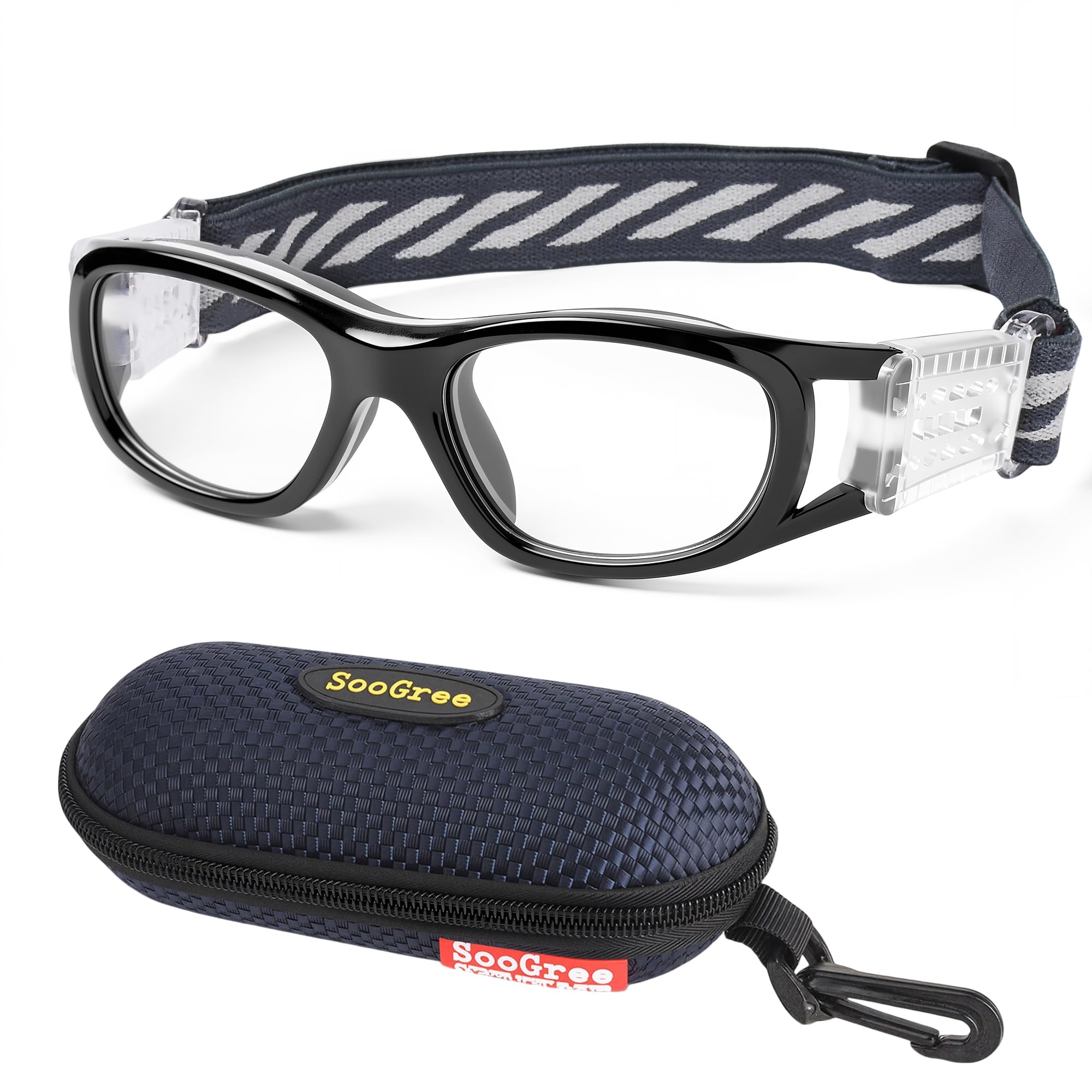
One goggle for three court sports, with a lens that shrugs off splash and fog.
The PC lens is the hard-working part. Polycarbonate is the same family of plastic used in impact-rated eyewear, and this lens is built to take a hit while keeping the field of view clear. Combined with a wrap-around design and a full-protection fit, it covers the eye from the front and both sides during a fast break.
The anti-fog side of the story is about water vapour rather than cold air. The lens is designed not to fog when exposed to steam or splash, so even a full day of wearing it keeps a clear view. That matters for a kid who plays pickleball or field hockey in humidity, where a fogged lens usually ends the game. The strap is detachable and nylon, adjustable to the head circumference so the frame closes in against the skull and does not slide forward mid-play.
Fit is where this pair asks a little of the buyer. It does adjust to a range of head sizes, but the feedback on fit splits, with some kids taking to it easily and others needing a few adjustments to settle in. Have your child wear it through a front-room scrimmage before the first real game. The field-hockey and soccer use-cases in the reviews show it holding up across sport types rather than just basketball.
Where This Goggle Works
- Hard PC lens takes an impact and keeps a clear view
- Anti-fog design holds up to splash and humidity
- Detachable nylon strap adjusts to head circumference
- Works across basketball, soccer, field hockey and pickleball
Where It Needs a Break-In
- Fit adjusts, but some kids need a few sessions to settle it in
- Strap is not a bungee-style stretch strap, so it takes an adjustment each time
Worth it for: a multi-sport kid in field hockey, soccer or pickleball who needs one goggle that carries across the season.
Give it a test run: let your child wear it at home first — the strap takes a few adjustments to sit flat.
9. 24 Pack Kids Safety Glasses

One box, twenty-four pairs, and a classroom party where nobody ends up in the emergency room.
The spec that actually matters here is ANSI Z87.1 — a standard for impact-resistant protective eyewear that the maker states these lenses exceed. That plus an impact and ballistic-resistant rating is why these are the right pick when the risk is a flying piece of a model rocket rather than a fastball. The lens is a clear polycarbonate with an anti-scratch coating and 99.9% protection against UV-A, B and C rays.
At 0.8 ounces, the frame is light enough for a young child to wear for a full class period. The wrap-around lens and elastic temples close against the face and press less on the head, which is why kids forget they have them on. The six colour frames split easily across a group of kids, and each pair is individually wrapped, so handing them out is the work of a minute.
Sized for children aged three to thirteen, this is a classroom and hobby goggle rather than a sports goggle — there is no seal, so a splash goes around it. That makes it the wrong buy for a pool or a mud track, and the right buy for science labs, yard work, blaster games or painting. The 90-day warranty gives some backstop if a pair arrives damaged.
The bulk-buy case: one box of 24, six colours and an ANSI Z87.1 rating is a practical fit for a teacher, a scout leader or a parent hosting a party where a dozen kids are going to be doing something messy.
The scope limit: no seal and no face foam — it filters splash and spark but not a stream of water or a roost of mud.
Made for: a classroom, scout troop or party pack where the risk is a small fast object, not a pool or track splash.
Skip for: swim or motocross duty — a sealed goggle is what you need there.
Know the Specs
Lens Coatings: Polarized, Mirrored, Anti-Fog
A polarized lens filters reflected light off flat, wet or bright surfaces — sand, water, a car hood — which is why it is worth having for baseball and fishing. A mirrored lens reflects the light back rather than absorbing it, useful on open water and snow. Anti-fog is a coating that stops condensation forming when warm breath hits a cold lens. A UV400 rating covers UV filtering only; it does not measure impact safety.
Fit, Strap Type and Age Range
Age range is the first filter, and it is a size estimate rather than a rule. A goggle sized for ages six to fourteen will sit wide on a five-year-old. Strap type decides whether the goggle stays on during motion: an adjustable buckle or elastic strap holds tighter than a plain band. A bungee strap like the one on a swim goggle slides on in one motion. For a child who wears glasses under the goggles, look for an OTG cavity and measure the glasses before you buy.
Frame Material and Impact Protection
A TPU frame is a flexible, rubbery plastic that bends on a fall rather than cracking into the face — it is the softer, safer option for snow and trail sports. A PC (polycarbonate) frame or lens is harder and more impact-resistant, which is what you want across the eye during a fast-moving court game. An ANSI Z87.1 rating means the eyewear has been tested for impact resistance, so it is a useful marker for a safety goggle rather than a sun goggle.
Weight and All-Day Wear
Weight is the number that decides whether a child keeps the goggles on past the first ten minutes. A 20-gram sunglass frame stays on a nose without constant pushing. A 93-gram goggle with a full seal and foam is heavier but is doing more work — it holds out grit, mud and splash. Match the weight to the session: a 20-gram sunglass frame for a full game in the sun, a 93-gram sealed goggle for mud and grit.
Common Questions
Can my child wear prescription glasses underneath sports goggles?
How do I know which age range fits my child?
Are polarized lenses better than mirrored lenses?
Will ski goggles fog up on a cold day?
What does an ANSI Z87.1 rating mean for my child’s safety goggles?
Can one set of goggles cover both swimming and snow?
Is a soft rubber frame or a hard plastic frame safer?
How many pairs do I need for a family with two kids?
Can I swap the lens on kids sports goggles myself?
How should I clean youth sports goggles without damaging the lens?
The Bottom Line
The best all-round pick among these youth sports goggles is the 3 Pack Kids Polarized Sunglasses, because its 20-gram frame, polarized TAC lens and included frame strap cover the multi-sport week — and the three-pair set means a lost pair is not a lost season. If your child rides dirt or mud, the Kids Youth ATV Dirt Bike Goggles brings a sealed UV400 PC lens and a 21-to-29-inch strap range that fits a range of head sizes. For the pool, the Speedo Sunny G gives you a mirrored lens and a bungee strap that goes on in one pull. And when a whole classroom needs eye protection, the 24 Pack Kids Safety Glasses is the one order that covers everybody with an ANSI Z87.1 rating behind it.
How we choose
We do not accept paid placement. Every pick is matched to a real buyer and a real use-case; we do not hands-on test units.
Sources
Specifications: manufacturer listings and product documentation. Review insights: verified customer reviews, as of November 2026. Pricing: not shown on this page (it changes often); check the current price via the retailer link.
As an Amazon Associate, Tactical Gear Guy earns from qualifying purchases. This does not affect which products we feature.