Specs are compiled from manufacturer listings and verified buyer reviews and can change over time — please confirm the key details on the product page before buying.
Your kid squints into the sun, misses the fly ball, and the sunglasses you grabbed at the checkout counter end up in the dirt two minutes later. The fix is a frame sized to a child’s face, light enough to forget, with a lens that cuts glare without going too dark. Below are nine youth sports glasses, sorted by fit, lens quality, and how well they survive a real game.
This guide is built by comparing the manufacturers’ published specifications and the patterns across verified customer reviews, so you get each pick’s real strengths and trade-offs instead of marketing spin.
Sizing is where most youth purchases go wrong, so every pick below names its age window and frame material. If you want the short version, the DUCO DK310 is the safest first pair for most kids — the strongest balance of fit, glare control, and price in this set of youth sports glasses.
Top Picks
How To Choose The Best Youth Sports Glasses
Fit, not lens specs, decides whether a pair of youth sports glasses gets worn or lost. A child’s head is narrower than an adult’s, so an adult-frame sunglass slides down the nose on every sprint. Look for a stated age window that matches your kid, plus a stated frame material that flexes.
The age window and nose fit
Age ranges in this category run roughly from age 6 to 16 across the picks here, and each listing states its own range. That range matters because a glasses frame sized for a 7-year-old’s nose bridge will pinch a teenager. If your child sits on the line between two ranges, measure the face width and check the product’s own fit notes.
Polarized lenses and UV400 protection
A polarized lens is a lens made to cut reflected glare — the flat brightness bouncing off a field, a road, or water. UV400 means the lens blocks light rays up to 400 nanometers, which covers the UVA and UVB range. For a sport played in full sun, glare control is what keeps a kid tracking a ball in the air instead of shielding their eyes.
Frame flex and how it survives a slide
TR90 is a flexible plastic frame material used in sport glasses; it bends under pressure and springs back. Impact-modified nylon does a similar job with a bit more stiffness. Either beats a hard plastic frame for a kid who dives, slides, and drops their glasses on the bench.
Strap, rubber tips, or goggles
Three retention systems show up here: an added sport strap, rubber temple tips and nose pads, and a full goggles design with a wide headband. A strap is the safest for a sliding sport; rubber tips suit a kid who hates straps; goggles make sense where a ball can hit the eye directly, like basketball or soccer.
Side-by-Side Comparison
| Model | Best For | Stated Age Range | Lens / Protection | Frame Material | Amazon |
|---|---|---|---|---|---|
| DUCO DK310★ Best Overall | Best Overall | 6–16 | TAC polarized / UV400 | TR90 | Amazon |
| X-TIGER Polarized KidsBest for Softball | Best for Softball | — | Polarized multilayer lens | — | Amazon |
| suoso Kids Sports PolarizedBest Value | Best Value | 6–12 | Polarized / UV400 | TR90 | Amazon |
| BLUE CUT Safety Goggles | Best Impact Protection | All ages (adjustable strap) | Anti-fog lens | Soft silicone pads | Amazon |
| Rawlings Pitch Perfect | Best for Baseball | Boys (youth) | Smoke mirror, UVA/UVB | Plastic shield frame | Amazon |
| ER00 Youth Baseball Polarized | Best Adjustable Fit | 8–13 (and small adult faces) | HD TAC polarized / UV400 | Impact-Modified Nylon | Amazon |
| SooGree Kids Sports Goggles | Best for Field Hockey | Unisex kids | Anti-fog PC lens | Nylon adjustable strap | Amazon |
| FEISEDY B0048 | Best Wrap-Around Coverage | 8–16 | UV400 / shatter-resistant | PC frame, silicone temples | Amazon |
| BLUE CUT Photochromic Goggles | Best for Changing Light | Kids, small or narrow faces | Photochromic / anti-fog spray | Impact-resistant | Amazon |
Detailed Reviews
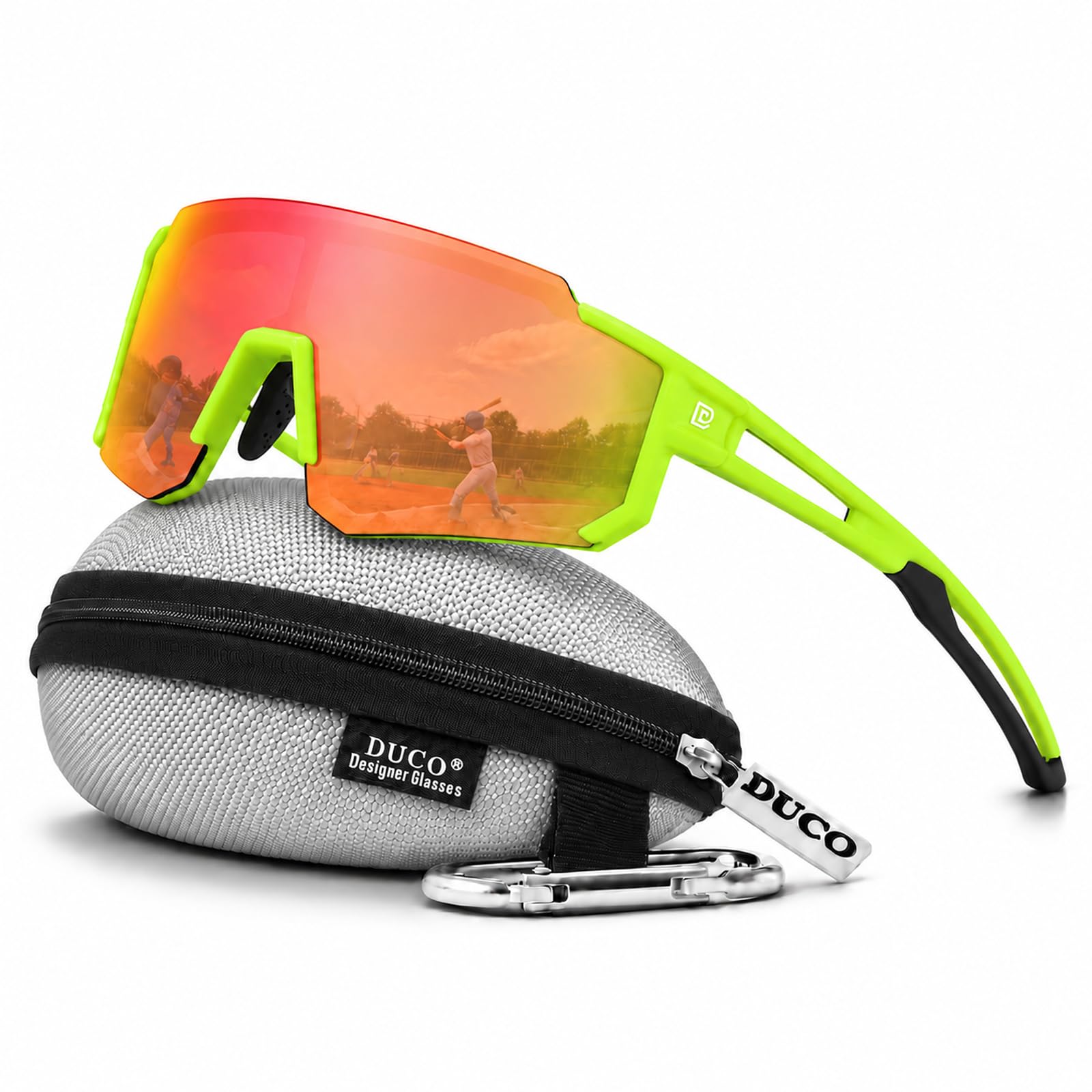
1. DUCO DK310 Kids Baseball Sunglasses
Our pick — 4.5+★ from 300+ verified ratings; the strongest balance of quality and price.
The pair that answers the whole category in one shot: 22 grams of flex, a polarized lens, and a strap in the box.
At 22 grams, the DK310 sits light enough that a kid stops noticing it partway through practice. The frame is TR90 — a flexible sport plastic that bends rather than snaps when a child shoves them into a bag. A roomy wraparound shape covers the sides of the eye, which matters on a bright field where glare comes at you from every angle.
The lens is TAC polarized. In plain terms, that means the lens is built to kill reflected glare off a sunny field, a road, or water, so the ball stays visible against a washed-out sky. UV400 in the same lens blocks the UVA and UVB rays that reach the eye. A sport strap and a carrying case both ship in the box, which is the difference between sunglasses that survive a season and sunglasses that vanish.
Fit is what wins people over here, especially the match for growing kids and teens in that 6–16 window. The look earns its share of attention too — this pair reads sporty rather than like an afterthought from a drugstore rack. The honest catch: fit varies by face shape, and DUCO itself tells you to check the measurements against your child’s current glasses before ordering. A narrow face may find the wraparound generous.
What earns it the top slot
- 22g frame — light enough that kids leave it on through nine innings
- TAC polarized lens with UV400 to cut field glare and block UVA/UVB
- Sport strap and carrying case both included, no extra buy
- Covers ages 6–16, so it can last a growth spurt or two
Where it needs a check
- Fit varies by face shape — measure before you order
- Wraparound coverage can feel roomy on a narrow face
Go here first if: you want one pair that handles baseball, cycling, and hiking without a second purchase.
Measure first if: your child has a slim face — the wraparound runs generous.
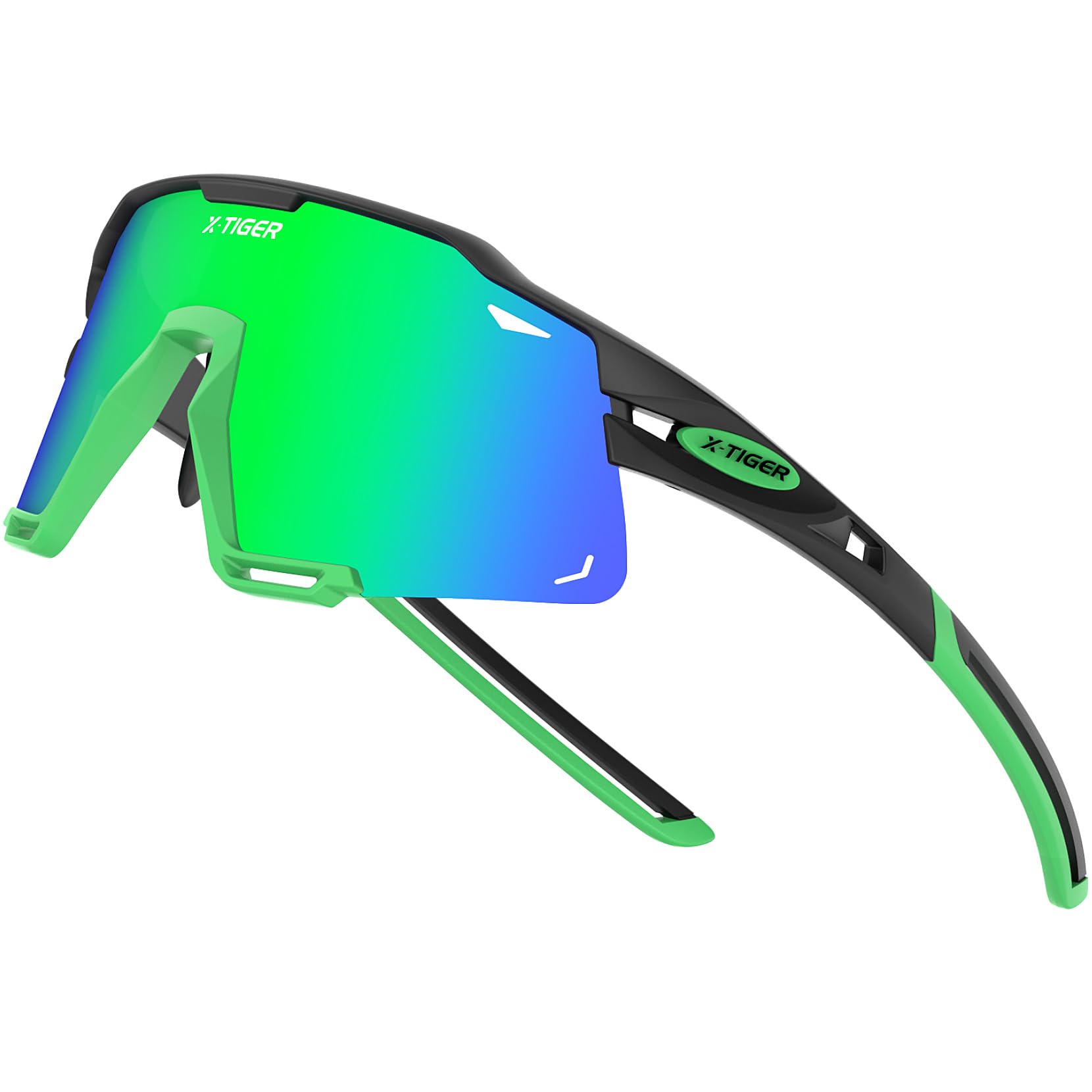
2. X-TIGER Polarized Kids Sunglasses
The flag-print pair that makes a kid feel like a big leaguer on the field.
Lens quality is the reputation this one carries into the dugout. The build stacks a polarized layer, a multi-layer lens, and a lens test into the same piece, and the result is a clear, glare-managed view for a kid tracking a ball through the sun. The X-TIGER also leans on an ergonomic shape with adjustable nose pads, so the frame sits where you place it instead of creeping down the bridge.
These glasses stay on during softball, cycling, and scooter rides thanks to an ear hook and a head band (a strap that wraps around the back of the head). The American flag print looks like a pro player’s shades, not a generic sport frame, and kids actually ask for that look. Buyers also report good value for the money.
The one thing to plan around is sizing. Fit is split down the middle here — plenty of players find it spot-on, while others find it runs a bit big for a smaller kid. If your child is on the younger end of the youth range, expect the band and nose pads to do more of the work than the frame itself.
Why it earns a spot: The lens stack is the star of this pair, and the flag styling gives it a real dugout personality. For softball and cycling, that combination is exactly what a kid wants to wear.
What to watch: The band and adjustable nose pads carry a fit that runs large for younger players.
Worth grabbing if: you have an older kid or teen who wants a pro-player look and will actually wear the head band.
Think twice if: your player is small — the frame runs big and needs the strap to stay put.
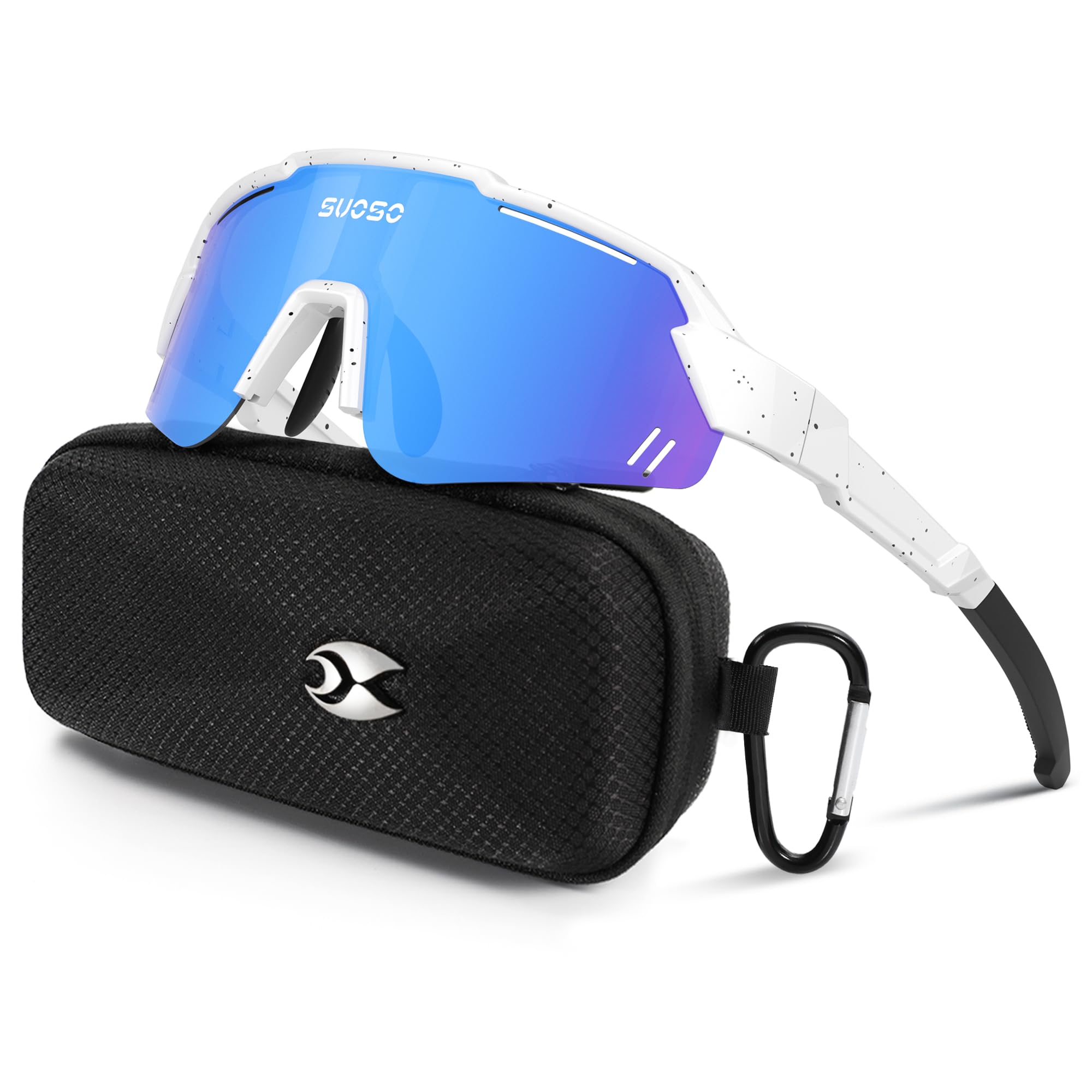
3. suoso Kids Sports Polarized Sunglasses
The starter pair that ships with more gear in the box than most adult sunglasses do.
What a parent actually gets here is a full kit: a zippered hard case, a pouch, a cleaning cloth, and a strap, all in one box. That is the setup that survives a season in a backpack. The frame is TR90, described by suoso as light enough that you “can hardly feel them on your face,” and it uses a flexible spring hinge so the arms give instead of fighting a child’s head.
The polarized lens blocks 99.9% of UVA and UVB rays, per suoso’s spec. The full-frame design also keeps the lower vision field clear, which is the part that matters for a kid looking down at a ground ball. Suoso calls the lenses shatterproof and the frames unbreakable, and the edges are smoothed and polished so nothing digs into the cheekbones.
Build quality is the thing owners talk about most with this one, and it is a fair reputation for the money. Two honest notes: some kids find it runs slightly big, and durability reports are split — most hold up fine, but a few pairs failed early. Treat the hard case as the reason this one lasts, not the frame alone.
The case for it
- Zippered hard case, pouch, cloth, and strap all included
- Polarized lens blocking 99.9% of UVA and UVB rays
- Flexible spring hinge and smoothed frame edges
- Covers ages 6–12 with a full-frame lower sight line
The honest trade-off
- Runs slightly big for some younger kids
- Durability is uneven — a few pairs failed within the first few wears
Reach for these if: you want the accessory kit and light TR90 frame without stretching the budget.
Heads up: store them in the included hard case — the early-failure reports come from pairs that took a beating.
4. BLUE CUT Safety Basketball Goggles For Kids

Built for the sports where a finger or an elbow can find the eye — basketball, football, and field hockey.
This is a different animal from a pair of sunglasses. Soft silicone covers the nose pad and side temples so nothing digs in during contact play, and a thicker, repositionable, high-elastic band holds the frame against the head. The adjustable strap works for both boys and girls, and the maker lists it as fitting all ages. Field of vision stays open with no blind spots, which is the whole point when a kid is tracking a ball while running.
This is the only pair in the list with lens replacement: you can swap in prescription lenses (custom lenses for your child’s eyesight). The maker notes you would need to visit a local retailer to have them cut for a specific eye degree. That makes this the pick for a child who needs vision correction but plays a sport where regular glasses are a risk.
Functionality is where this one earns its keep — it is designed for basketball, football, baseball, volleyball, tennis, badminton, and field hockey. The comfort and fit are the honest catch. Some kids wear them fine all game; others fight discomfort and difficulty getting them seated right. The frame also reads stiff to some wearers, and a few goggles have failed early. A first fitting session matters more here than on any other pick.
The real draw: This is the only pick here that can be converted to a prescription lens, which turns it into an option for a kid who normally has to choose between seeing and playing safe.
The catch: Stiffness and a stiff break-in are the recurring notes — plan one practice to get the band and nose pad dialed in before a real game.
Pick this if: your child plays basketball, soccer, or football and needs a sealed, strap-secured goggle — or wears prescription lenses.
Look elsewhere if: your kid will not tolerate a full goggle frame and wants a plain sunglass look.
5. Rawlings Boys Pitch Perfect Youth Sunglasses

The dugout standard: a shield frame with rubber grips that holds through a slide into second.
For a baseball kid, the retention detail is the sell. Black rubber tips on the temples and steel grey rubber nose pads work together to hold the frame in place while rounding the bases. The shield-style design covers more of the eye area than a small frame does, so a player tracking a fly ball through a bright sky gets a wider view without the frame edge cutting in.
Protection here is stated plainly: 100% UVA and UVB coverage in a shiny white plastic frame. The smoke grey lens carries a sky blue mirror on top, and the maker lists it as scratch- and impact-resistant. A hydrophobic coating repels water so a sweaty inning or a light rain does not turn the lens into a smudge.
Fit and finish are what built this pair’s following — buyers report the frame stays put even under a baseball hat, and the look passes the kid test because it resembles official major league shades. Value lands well too. The shorter side of the story is long-term durability, which splits: the frame handles a season for most players, but it is not indestructible for a kid who treats gear rough.
Why baseball families pick it
- Rubber temple tips and nose pads keep it on through a slide
- 100% UVA/UVB protection in a full shield-style frame
- Hydrophobic coating repels water and sweat
- Scratch- and impact-resistant smoke lens with a blue mirror
Where it can wear thin
- Durability over multiple seasons is mixed
- Shield shape is a bold look — some kids want a smaller frame
Best fit for: the baseball or softball player who wants big-league styling and a frame that stays on under a cap.
Only caveat: a rough-and-tumble kid may need a replacement sooner than you would like.
6. ER00 Youth Baseball Polarized Kids Sunglasses

The one that dials in — adjustable nose pads and temple ends that actually custom-fit a growing face.
Where most youth frames give you one size, this one gives you three adjustment points. Nose pads and temple ends both move, so the fit can be tuned as a child grows. The frame is impact-modified nylon, a material chosen for durability and shape retention, which means the frame returns to form after a knock instead of staying bent.
The lens does something the cheaper picks do not: a multilayer smoke coating with a white-blue finish that reflects more blue and yellow light from the sun. In practice, that means truer color on the field and less eye strain over a long tournament day. The polarized HD TAC lens is matched with UV400 coverage up to 400 nm, blocking UVA and UVB.
Suited for ages 8–13 and adults with smaller face shapes, this pair stretches a youth frame across more than one stage of growing. Retention holds through running and jumping, which is the specific claim owners make about it. Expect a slightly more refined build than the budget picks, and expect to spend a minute adjusting it the first time.
Standout feature: Three-way adjustability is the reason to choose this pair — the nose pads and temple ends let the same frame keep fitting through a growth spurt.
Minor snag: A listed age window of 8–13 means a smaller child will be swimming in it, so check the size chart image before ordering.
Choose it for: a tween or teen, or a small-faced adult who wants a sport frame that can actually be tuned.
Skip the tweaking if: you need a frame for a 6-year-old — this one starts at 8.
7. SooGree Kids Sports Protection Goggles
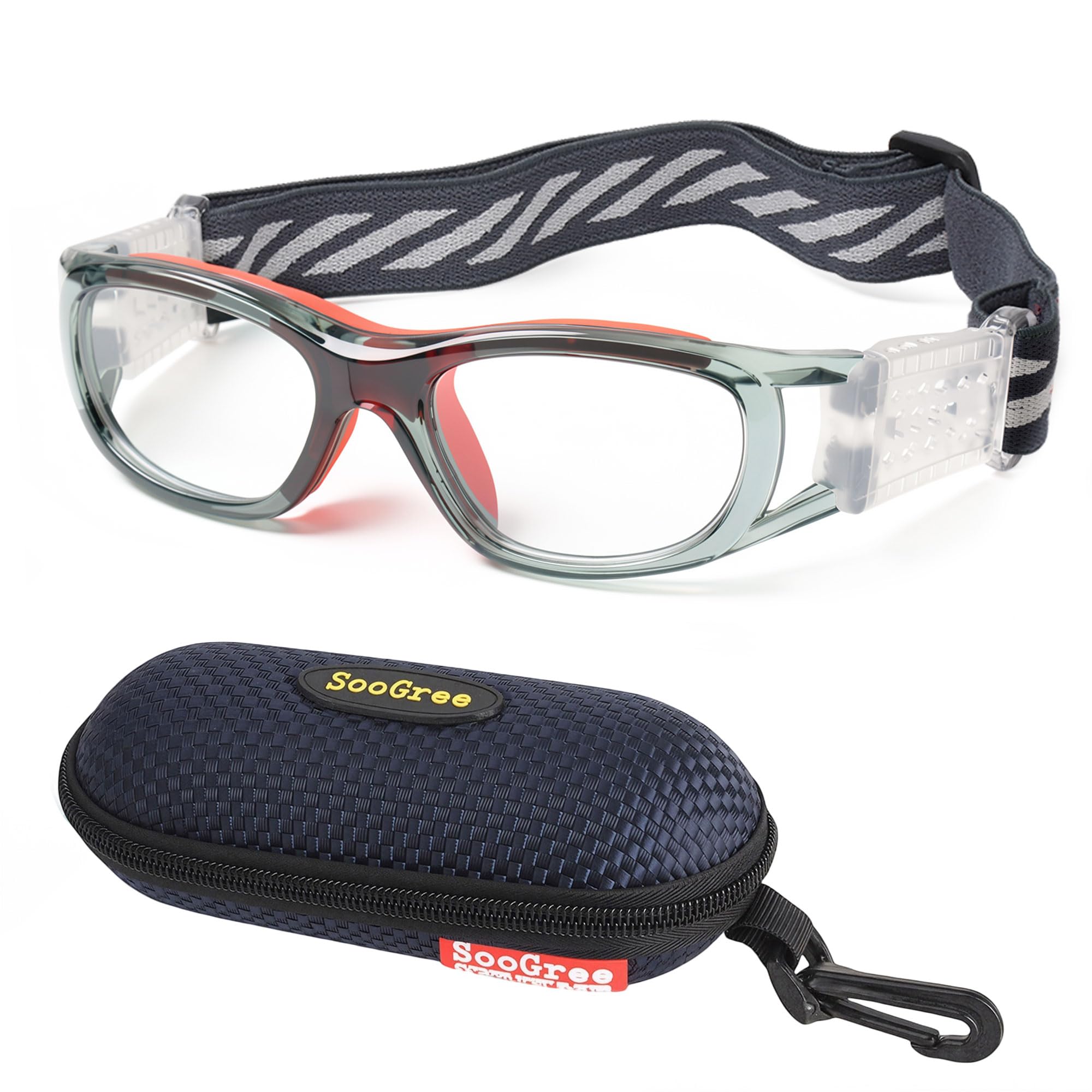
A sealed goggle for the sports where an eye injury is the real risk, with a fog-resistant lens built for full sweat.
The lens here is the story. It is PC, meaning polycarbonate — the impact plastic used where eye protection has to hold up. SooGree describes it as strong, durable, clear, and high-impact, and the anti-fog treatment keeps it clear when water vapor hits it. In a hot gym or a rainy field, that is the difference between a goggle a kid keeps on and one that comes off after five minutes.
The adjustable, detachable strap is high-quality nylon and can be set to head circumference, which is what keeps this goggle sealed to the face. A full kit ships with it — goggle, case, cloth, and a protective bag. The design is aimed at basketball, soccer, pickleball, and field hockey, and it works equally for boys and girls.
The fit is the one place you may need to adjust your expectations. Some kids settle in comfortably; others find it does not sit right, which could just be a head-shape mismatch. It also takes a firm strap tension to seal properly, and a kid may resist that. Given the impact protection on offer, though, it is a fair trade for a contact sport.
What makes the case
- Polycarbonate lens with anti-fog treatment for a sweaty game
- Adjustable nylon strap sets to head circumference
- Ships with case, cloth, and protective bag
- Built for high-impact sports like field hockey and basketball
What to know first
- Fit is uneven — a head-shape mismatch is possible
- Needs firm strap tension to seal, which some kids dislike
The right call if: your child plays field hockey, basketball, or soccer and you want a sealed, fog-resistant shield over the eye.
The downside to accept: you will spend a practice dialing in strap tension — this is not a grab-and-go sunglass.
8. FEISEDY B0048 Kids Sports Sunglasses
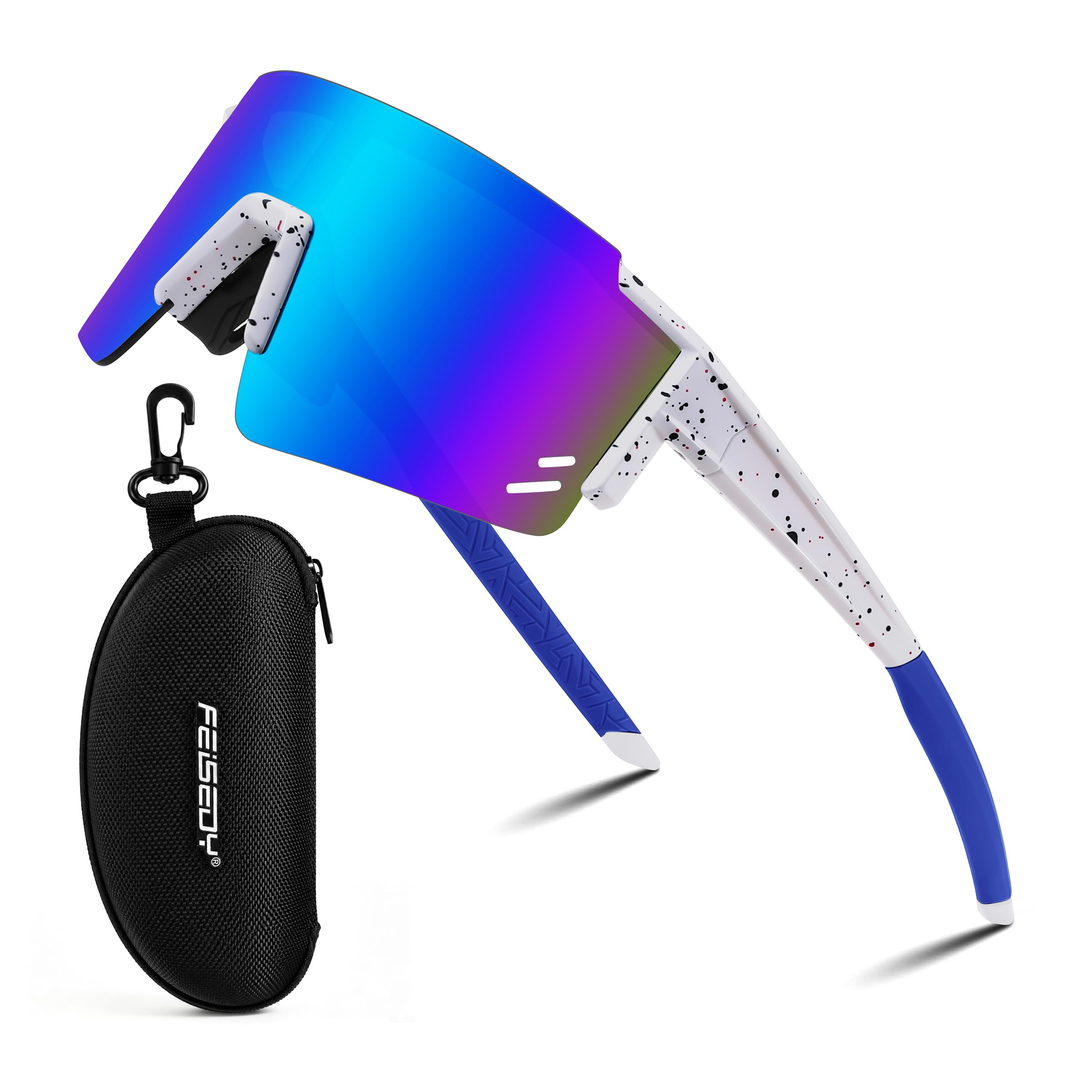
The wide shield that blocks sun and flying debris at the same time.
This pair stands out for coverage: the wrap-around shield (a curved lens that wraps around the eyes) fits ages 8 to 16 and closes the gap between frame and face. That gives a kid a wider field of view and a barrier against dust, wind, and flying debris on a field or trail. The UV400 lens, rated to block 99.99% of UVA and UVB rays, also cuts reflected glare so colors stay true on grass and water.
The frame is a lightweight PC, polycarbonate, and the temples are silicone-filled. That silicone is the bit that matters — it flexes to fit growing faces and gives a soft, grippy contact point against the head, so the glasses stay put while running, cycling, or climbing. Pressure off the nose and ears means a kid can wear them through a full game or ride without asking to take them off.
The lenses are shatter-resistant for baseball and softball impact and everyday wear. Care is simple — a soft dry cloth, and store them away from a hot car dashboard. On sizing, some kids find the frame perfect while others find it too small, so the age range is a guide rather than a guarantee. Durability reports are also mixed, which is worth knowing for a rough-and-tumble player.
Why it stands out: The wraparound shield plus silicone-filled temples is a strong combination — one part blocks sun and debris, the other keeps the frame planted through a sprint.
Fit reality check: The size is genuinely mixed, so treat 8–16 as a starting point and check the frame width against your child’s current glasses.
Reach for this if: you want maximum eye coverage for baseball, softball, cycling, or trail rides.
Try another size if: your child has a small face — a segment of wearers finds this frame runs tight.
9. BLUE CUT Kids Sports Protection Goggles
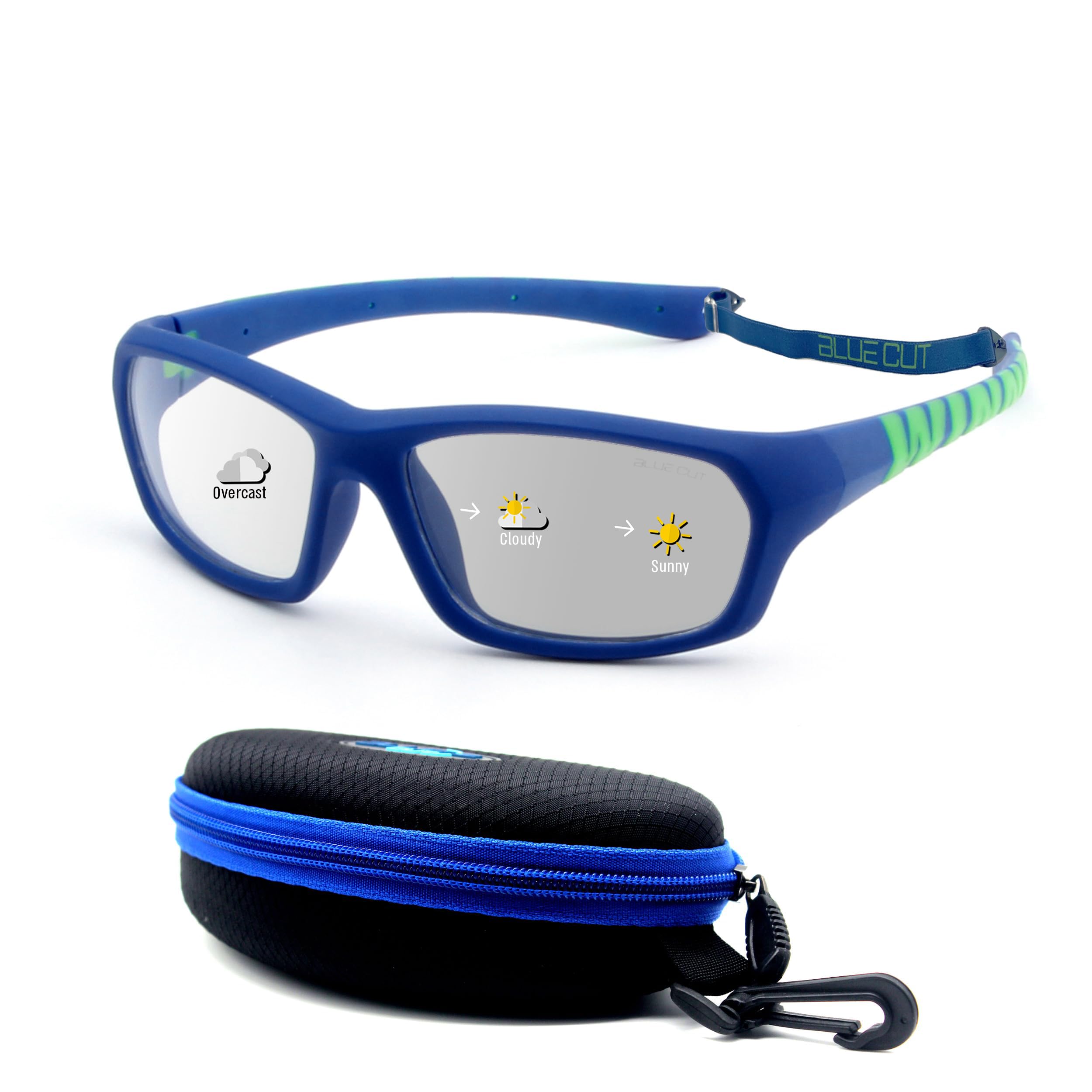
The goggles that adapt when a game runs from afternoon sun into dusk.
Photochromic means the lens darkens and lightens as the light changes, which is the exact problem a late-afternoon practice creates. Your kid starts under a hard sun and ends under a dimming sky, and a single fixed lens cannot serve both. The frame measures 130 mm total width and is best suited to head sizes between 115 and 125 mm, so it is meant for kids or small-faced adults with a narrow head.
Protection is built on impact-resistant materials that meet advanced standards designed to reduce eye and facial injuries during sports. BLUE CUT is clear in its own note that no eyewear supports full protection, which is a fair framing for a contact sport. The adjustable strap keeps the frame planted during high-motion play, and an anti-fog spray keeps the view clear when a kid is sweating or moving between cool and warm air.
Fit is the strength here — it is the thing that works. The sun-blocking side is less consistent, though, with reports that the lens does not fully cut the sun in bright conditions. Longevity also comes up: the goggles are a replaceable item for some families rather than a buy-once pair. Pair it with the anti-fog spray and treat the lens as a maintenance part.
Where it earns its spot
- Photochromic lens adjusts as light changes from sun to dusk
- Adjustable strap holds through high-motion play
- Anti-fog spray support for sweaty, changeable conditions
- 130 mm frame sized for narrow, small faces
Set expectations here
- Sun-blocking performance is inconsistent in bright light
- Some families replace them about every six months
Good pick for: a narrow-faced kid whose games cross from bright daylight into evening, and who needs a strap-secured shield.
Consider the BLUE CUT basketball goggle instead if: blocking hard sun is your top priority.
Know the Specs
Polarized vs. plain tinted lenses
A polarized lens is built to cancel reflected glare, the flat shine that bounces off a field, a road, or water. A plain tinted lens only darkens everything, glare included, so a ball against a bright sky can still wash out. For a sport played in full sun, polarization is the spec that keeps the ball readable. Every pick in this list that leads with glare control is polarized.
What UV400 actually means
UV400 is a lens rating that means the lens blocks light rays up to 400 nanometers, which spans the UVA and UVB range. You will see it on most of the picks here, sometimes paired with a stated percentage of blocked rays. A pair without any UV rating is only shading the eye, not protecting it, so this is one label worth checking on the box.
Frame materials: TR90, polycarbonate, and impact-modified nylon
These three names all describe sport-plastic frames. TR90 is the flexible one that bends and springs back. Polycarbonate, often shortened to PC, is the impact plastic used in the goggle lenses. Impact-modified nylon is chosen for shape retention so a knocked frame returns to form. Any of them outlasts a hard, brittle frame in a kid’s hands.
Retention: strap, rubber tips, or goggle band
Different sports need different hold. A sport strap suits sliding and sprinting. Rubber temple tips and nose pads grip without an added strap. A full goggle band with an adjustable nylon strap is the option when the eye itself needs shielding. None of these is better across the board — match the hold to the sport.
Common Questions
Will these youth sports glasses actually stay on during a sprint or a slide?
What age range should I pick for a 7-year-old?
Is UV400 the same as full UVA and UVB protection?
Can a kid wear prescription lenses inside sports goggles?
Do anti-fog lenses really matter for indoor basketball?
Are polarized sunglasses safe for kids playing baseball?
What is the difference between a sport sunglass and a safety goggle for kids?
How long should a pair of kids sports glasses last?
Should I size up or stick to the stated age range for a growing kid?
The Bottom Line
For most families, the winner in this set of best youth sports glasses is the DUCO DK310, because the 22g TR90 frame, polarized lens, and included strap cover baseball, cycling, and hiking without a second purchase. If your child needs eye protection for a contact sport, grab the BLUE CUT Safety Basketball Goggles — it is the only pick here that can be converted to a prescription. And for a baseball player who wants big-league styling with rubber tips that hold through a slide, the Rawlings Pitch Perfect is the one to reach for.
A last thought on making the decision: the DUCO holds 300+ ratings at 4.5+ stars, but the Rawlings has more reviews on the board at 681 with a 4.5+ — more experience behind it, a slightly lower score. Both are worth a look, and both come down to which fit your child’s face and sport best.
How we choose
We do not accept paid placement. Every pick is matched to a real buyer and a real use-case; we do not hands-on test units.
Sources
Specifications: manufacturer listings and product documentation. Review insights: verified customer reviews, as of November 2026. Pricing: not shown on this page (it changes often); check the current price via the retailer link.
As an Amazon Associate, Tactical Gear Guy earns from qualifying purchases. This does not affect which products we feature.