Specs are compiled from manufacturer listings and verified buyer reviews and can change over time — please confirm the key details on the product page before buying.
Filming a kid’s game is nothing like filming a vacation. The action never stops moving, the light is often terrible, and you are usually stuck behind a fence or on the far sideline. The right camera here is one that keeps a small, fast-moving player in frame without you babysitting it. Below you will find the nine picks that genuinely handle youth sports, sorted by what they are actually good at — auto-tracking rigs, rugged action cams, and full mirrorless bodies for parents who want real photos too.
This guide is built by comparing the manufacturers’ published specifications and the patterns across verified customer reviews, so you get each pick’s real strengths and trade-offs instead of marketing spin.
Youth sports footage punishes gear that looks fine on paper: a stabilization mode that works on a bike can fall apart on a sprinting midfielder. The guide below separates cameras that track the play from cameras that just record it, so you can pick the right tool for your kid’s sport.
Top Picks

How To Choose The Best Youth Sports Camera
Start with the sport, not the spec sheet. A basketball court is compact and well lit, so a fixed wide lens works. A soccer field is long and uneven, so you need either a tracking mount or a real zoom lens. Get this wrong and you end up with footage you cannot use.
Tracking versus aiming
Auto-tracking cameras physically rotate to keep the play in frame, so you can put the phone down and watch your kid with your own eyes. A traditional action camera stays pointed wherever you aimed it. If your player covers a large field, tracking saves the entire recording.
Frame rate beats resolution
Frames per second (fps) is how many still images the camera captures each second. High fps lets you slow footage down later and still get smooth motion. A 60fps clip of a jump shot slowed to half speed still looks clean, while a 30fps clip turns choppy. Higher resolution like 4K or 5.3K gives you cropping room in editing.
Stabilization, mounts and weather
Electronic stabilization (often shortened to EIS) smooths out hand shake in software, while in-body stabilization moves the sensor itself. Either one helps when you are hand-holding behind a fence. Check what mount system the camera uses too, because a tripod thread and a magnetic quick-release are not interchangeable. Finally, look at weather ratings if your season runs through rain or your player also swims.
Side-by-Side Comparison
| Model | Best For | Top Video | Still Resolution | Form Factor | Amazon |
|---|---|---|---|---|---|
| DJI Osmo Action 4 Essential Combo★ Best Overall | All-round sideline work | 4K at 120fps | 10 mp | Action camera | Amazon |
| AKASO EK7000Budget Champion | Budget first camera | 4K at 30fps | 20 mp | Action camera | Amazon |
| Uytya 5K Video Camera CamcorderMost Versatile | Vlogging and highlight reels | 5K at 20fps / 4K at 60fps | 64 mp | Handheld camcorder | Amazon |
| AKASO Brave 7 LE Bundle | Rain and pool days | 4K at 30fps | 20 mp | Action camera | Amazon |
| XbotGo Chameleon | Hands-free team sports | 4K at 60fps | — | AI tracking mount | Amazon |
| GoPro Hero12 Black | Rugged POV and travel teams | 5.3K at 60fps | 27 mp | Action camera | Amazon |
| Insta360 X3 | Reframe after the fact | 5.7K 360 / 4K at 30fps | 16 mp | 360 action camera | Amazon |
| Canon EOS R100 Lens Kit | Real photos plus video | 4K at 24fps | 24.1 mp | Mirrorless + 18-45mm lens | Amazon |
| Canon EOS R7 Body | Serious action and reach | 4K | 32.5 mp | Mirrorless body only | Amazon |
Detailed Reviews
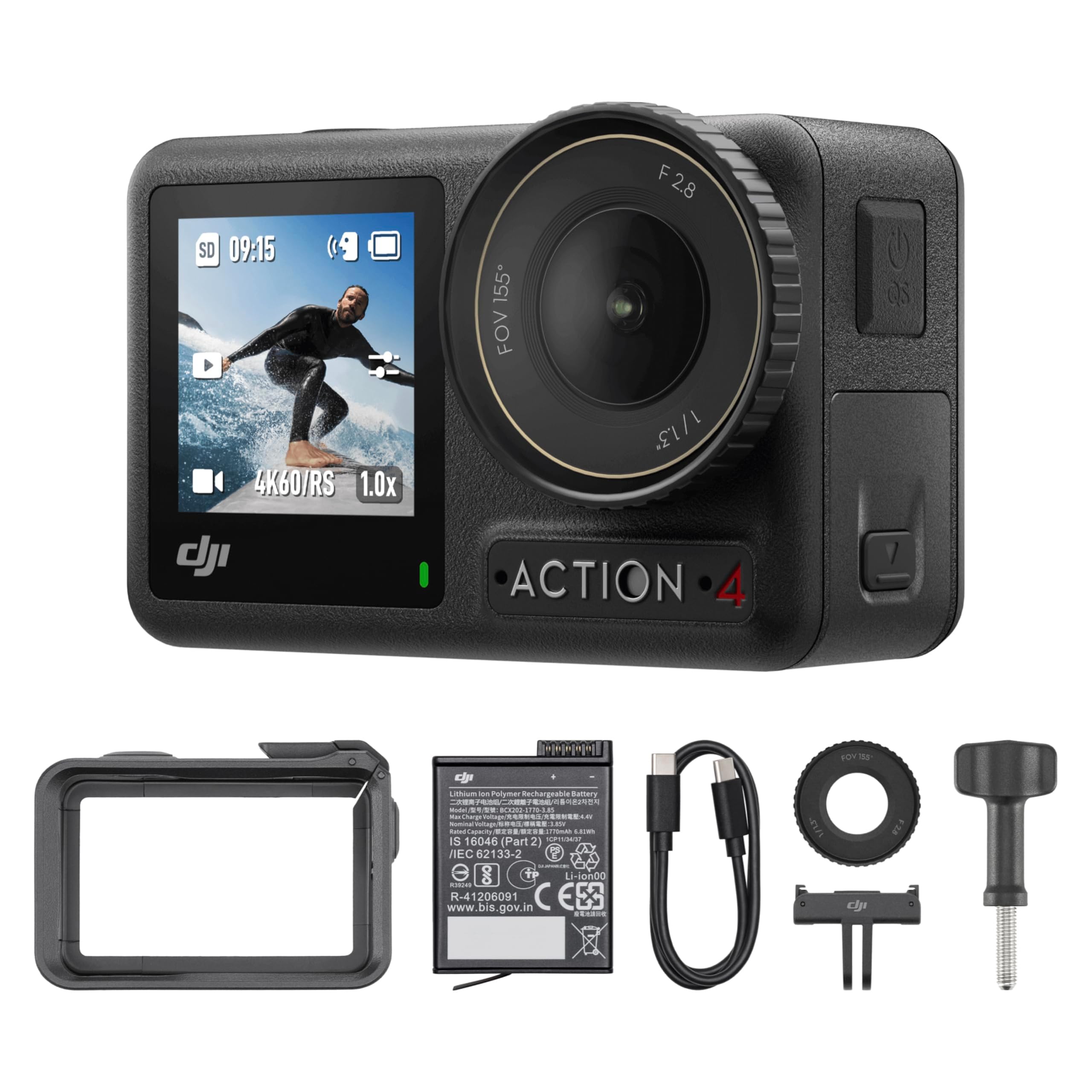
1. DJI Osmo Action 4 Essential Combo
Our pick — 4.5+★ from 2,500+ verified ratings; the strongest balance of quality and price.
The low-light shooter that keeps a night game from turning to grain.
The reason this one wins the top spot is the sensor. A 1/1.3-inch sensor with 2.4μm pixel size (each light-catching dot on the chip is physically larger) pulls in more light, so a Friday-night football game under dull floodlights stays usable instead of noisy. That is where most compact cameras fall apart, and it is why this one is the crowd favorite — 4.5+ stars across 2,600+ owners. Build quality is what wins people over, followed closely by video quality.
Frame rates cover the fast stuff. You get 4K at 120fps with a 155° ultra-wide field of view, meaning you can slow a sprint or a diving save to half speed and still keep it smooth. Three stabilization modes keep the shot level when you are hand-holding behind a fence. The magnetic quick-release mount flips the camera from horizontal to vertical in seconds, which matters if you post clips to a phone-first social feed.
Battery is rated up to 150 minutes from a 1770mAh pack, though the spec sheet also lists 160 minutes average life, so plan on a couple of hours of mixed shooting and carry a spare for doubleheaders. It is waterproof to 18m without a case, and it works down to -20°C for winter seasons. The catch is the app side: activation and iPhone pairing have drawn friction, so budget a few minutes of setup at home before you rely on it at the field.
What earns it the crown
- Oversized 1/1.3-inch sensor with 2.4μm pixels keeps night games clean
- 4K at 120fps gives you slow-motion room for fast plays
- 18m waterproof body with no housing needed
- Magnetic mount switches to vertical in seconds
Where it asks patience
- App activation and iPhone pairing can be fiddly at first
- Essential Combo skips the curved adhesive base the Standard Combo includes
- One battery will not cover a full tournament day
Best for: the parent shooting evening and indoor games who wants smooth slow-motion without carrying a tripod and gimbal.
Look elsewhere if: you need the camera to follow the play on its own — nothing here rotates to track a player.
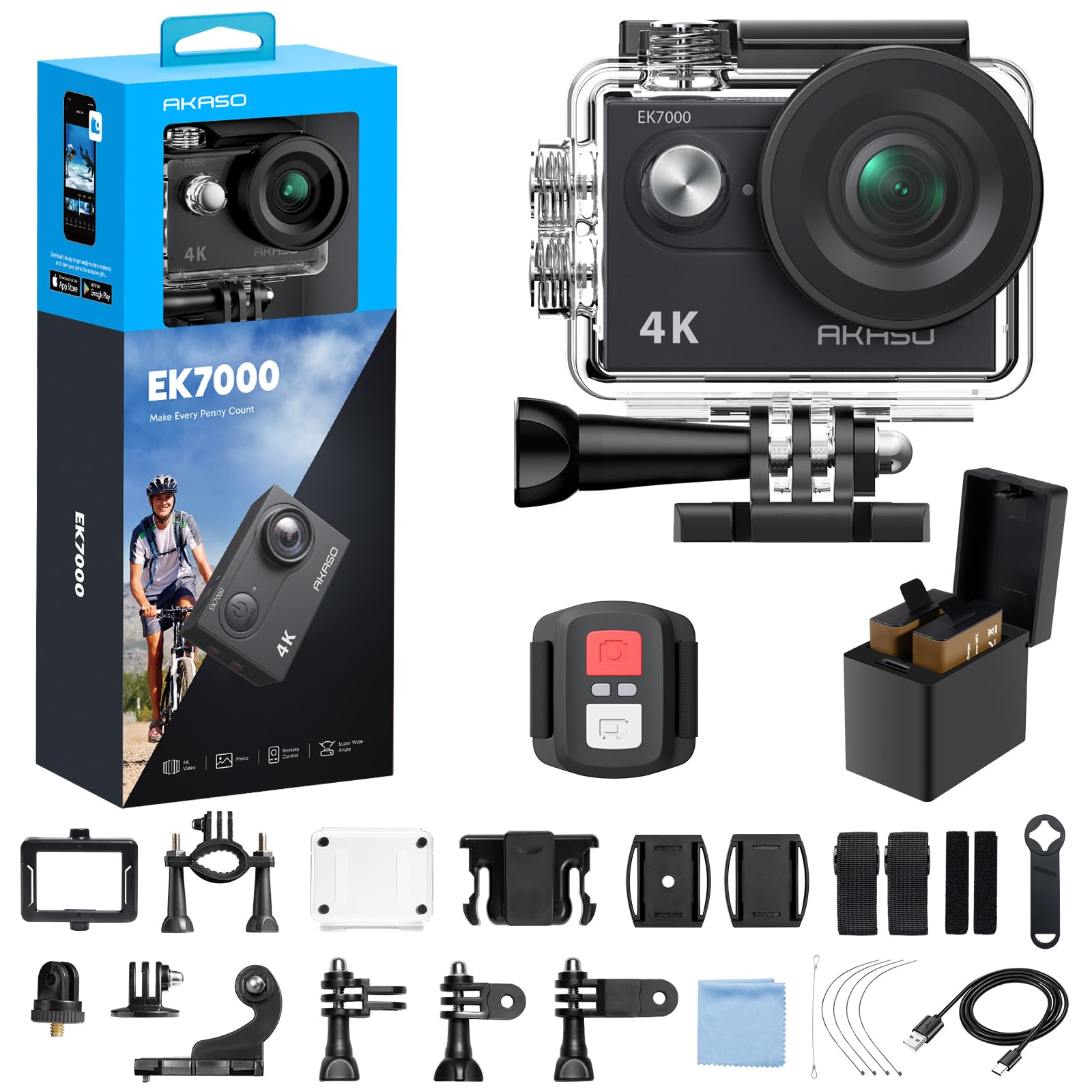
2. AKASO EK7000 4K30fps Action Camera
The entry-level action cam that records two full games on one battery.
For a first camera, this is the lowest-risk entry point. It shoots 4K at 30fps and 2.7K at 30fps video with 20MP stills, and buyers report it can record two games in 4K with just one battery. That endurance is the whole pitch for a rec-league parent — you charge it Friday, you shoot Saturday, and you are not swapping cells mid-match.
The 131ft waterproof case (about 40 metres) means it survives a rainy pitch or a pool party, and the accessories kit covers enough mounting angles that you are not buying extra parts on day one. Editing runs through the AKASO GO app over Wi-Fi, which reaches up to 10 meters — enough to review clips from the bleachers without walking down to the camera.
What it will not do is rescue bad light or shaky hands. There is no in-body stabilization here, so handheld footage of a sprinting player will wobble, and the small sensor struggles after sunset. The wrist remote lets you start and stop recording from the sideline, but note it is not waterproof, so keep it out of the rain. For daylight games on a tight budget, the value is hard to argue with.
The honest trade-off: this camera rewards a steady hand and a sunny afternoon. Mount it on a fence or a small tripod and the footage is genuinely good for the money.
Who it suits: a family buying their first action cam for one sport, one season, and one kid.
Reach for this if: daylight games and a waterproof case are the priority and you would rather spend the savings on a second memory card.
Step up if: your games run under lights or you want the camera to smooth out your own hand shake.
3. Uytya 5K Video Camera Camcorder
A camcorder bundle built for the highlight reel, not the wide shot.
Resolution is the headline and it is a big one. This records 5K at 20fps and 4K at 60fps video, with 64MP photos — and that still number is the widest gap in this whole lineup against the DJI Osmo Action 4’s 10 mp. If you crop into a frame to isolate your kid in a crowd, those extra pixels are the difference between a usable print and a blurry one. The 4K at 60fps mode is the one to shoot sports with, since it keeps fast motion smooth.
The bundle is unusually complete for a beginner: a 32GB memory card, two 1800mAh batteries, a tripod, an external microphone with noise reduction, a remote, and a lens hood. That microphone matters at a noisy gym, where built-in audio usually picks up the crowd instead of the whistle. The 3.0-inch 270° rotatable touchscreen flips forward for selfies and low-angle shots, and IR night vision lets it record in near-darkness.
Two caveats belong in the buying decision. It uses manual focus — you need to keep more than 0.6m from your subject for sharp results — and it is listed as Mac incompatible, which can affect file recognition and playback. Audio quality is the most divided point in the feedback, so treat the external mic as essential rather than optional. For a parent who also wants to film team intros and post-game interviews, the kit covers all of it.
Why the bundle pulls its weight
- 5K at 20fps and 4K at 60fps video with 64MP photos
- Dual 1800mAh batteries plus a 32GB card in the box
- External noise-reduction mic for loud gyms
- 270° flip touchscreen for selfie and low-angle shots
Things to plan around
- Manual focus needs you to stay more than 0.6m back
- Mac compatibility is flagged as a problem for file playback
- Audio quality divides opinion without the external mic
Suits: the parent-creator who wants one kit that films the game, the team huddle, and the post-match interview.
Consider a different path if: you shoot on a Mac and want files to just open without conversion work.
4. AKASO Brave 7 LE 4K30fps Action Camera Bundle
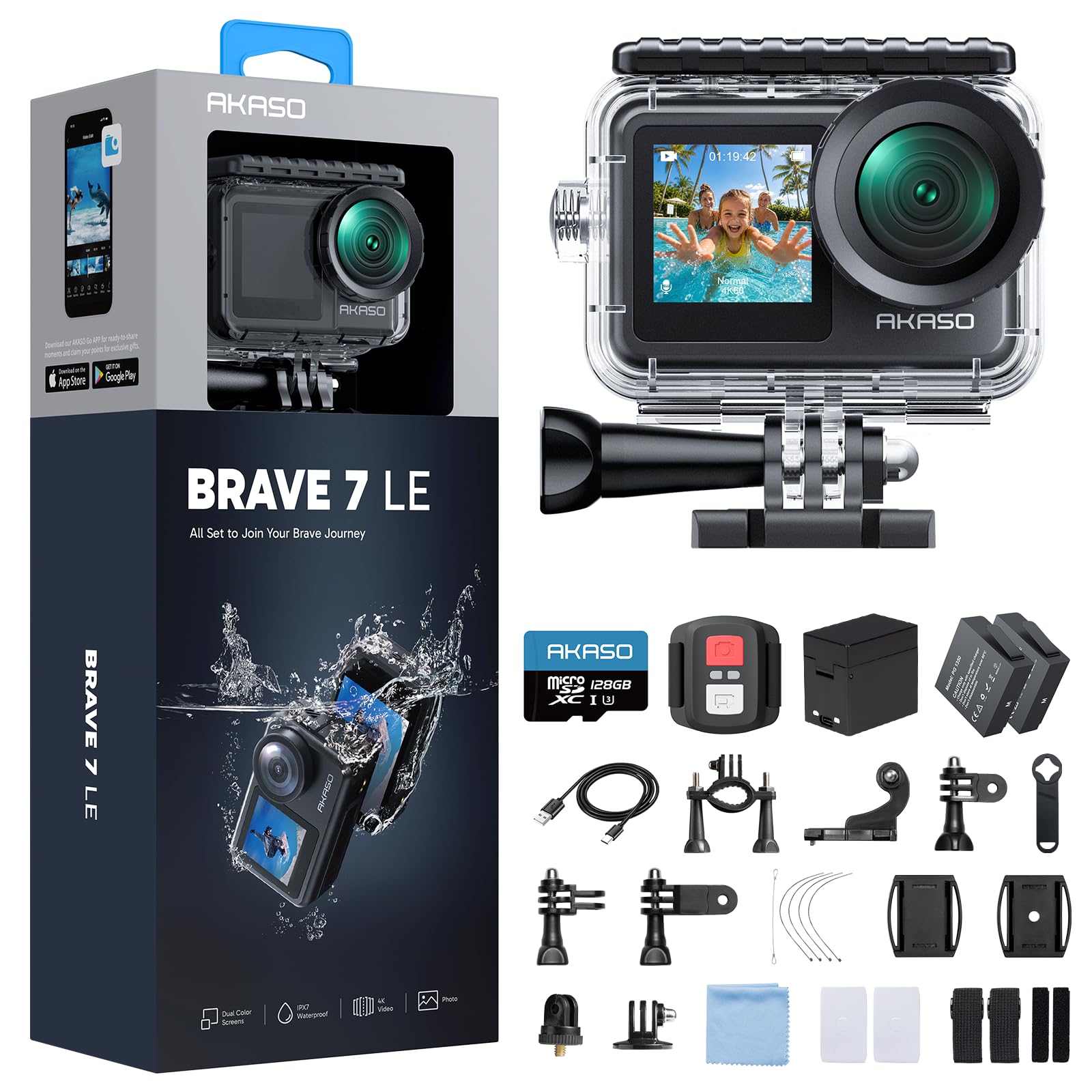
Dual screens, six-axis smoothing, and a memory card already in the box.
The 128GB card is the quiet hero here. It ships installed, so a full season of 4K at 30fps games fits without a separate purchase or a formatting headache on the drive to the field. Combine that with the 20MP stills and you have a camera that is ready the moment it arrives.
Stabilization is the technical step up over the cheaper AKASO. It runs 6-axis EIS 2.0 — electronic image stabilization that corrects tilt and rotation in software — which noticeably reduces the bob in handheld footage of a running player. The body itself is IPX7 water-resistant, so rain, snow, and splashes are fine, and the included housing takes it down to 131ft/40M for swim meets. The dual-screen design lets you flip between a 2-inch back touchscreen and a front screen for selfies by holding the Mode button.
Battery life lands at roughly 1.5 hours per pack, and you get two rechargeable batteries in the kit, so a doubleheader is covered. Audio is the flattest note in the reviews, so keep expectations modest for capturing sideline chatter. Mounts, remote, and housing are all included, which is why this works as a set-and-go option for families with more than one sport on the calendar.
Standout spec: 6-axis EIS 2.0 stabilization in a weatherproof body is the combination that makes this the practical pick for outdoor seasons in wet climates.
Fair warning: treat the audio as background ambience and add a separate recorder if you want clean commentary.
Go with this when: your season runs through rain or your kid swims, and you want stabilization plus storage sorted on day one.
Skip the upgrade if: your games are all indoors under good light — the cheaper AKASO covers that.
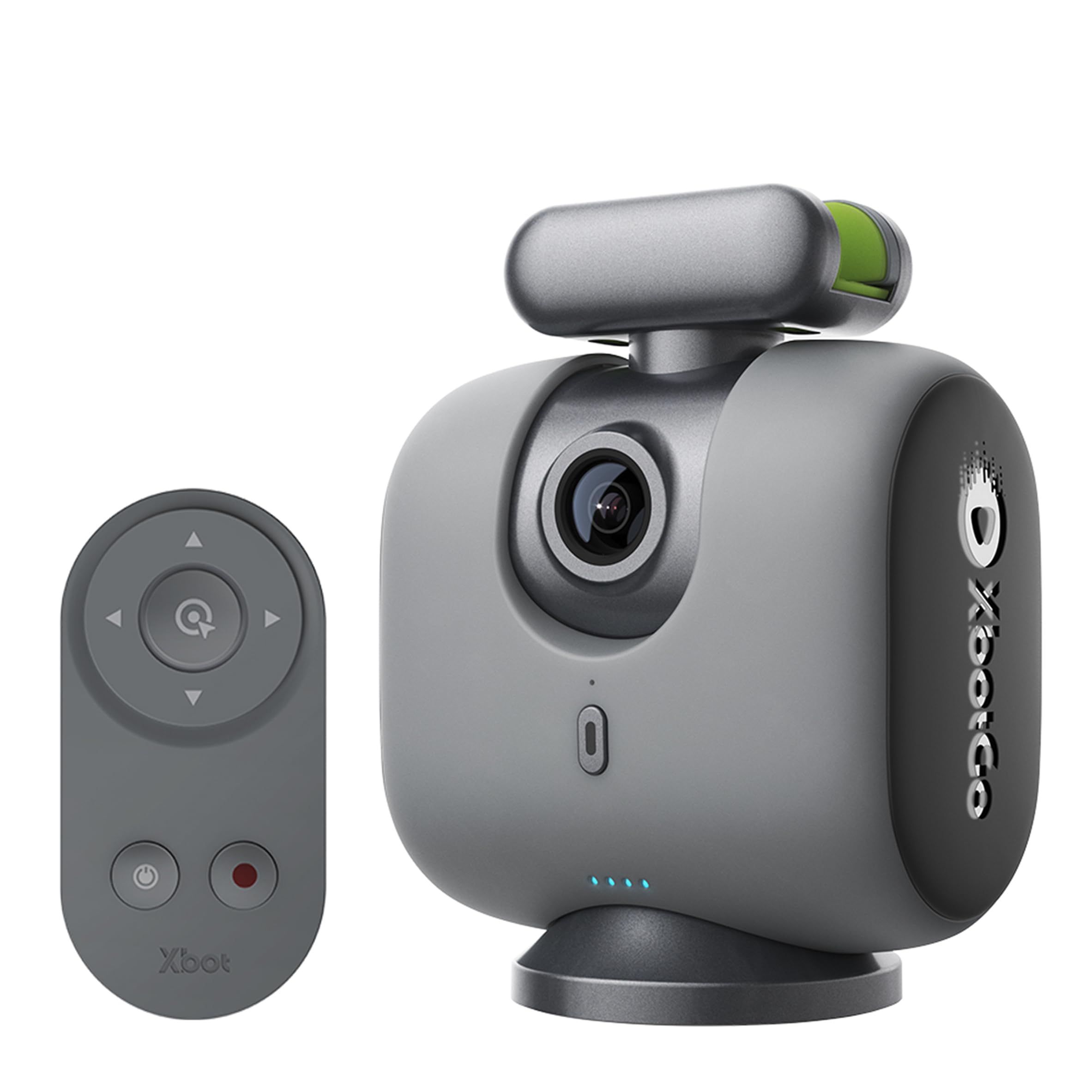
5. XbotGo Chameleon AI Auto Sports Camera
The one that watches the game so you can actually watch your kid.
Every other camera on this list needs a human pointing it. This one does not. You mount your phone on the Chameleon, and its auto-tracking follows players and the ball around the field automatically while your phone records. A 360° rotating base with ±15° vertical tilt covers the whole pitch, and the 8-hour battery outlasts any tournament day you will throw at it.
It is purpose-built for team sports — soccer, basketball, training sessions, and matches — rather than general filming. The XbotGo app adds live streaming with real-time score overlays, instant highlight editing, and 20GB of cloud storage, all without a subscription. Coaches get a second set of eyes for film review; parents get a full game recorded while they cheer on the sideline. Image quality comes in for consistent praise, with footage described as crisp for this use case.
Be clear about what it is. This is a tracking mount and app system that works with your phone, not a standalone camera with its own lens and sensor. That means your footage quality depends on the phone you own, and the setup calls for the app plus a Bluetooth connection before kickoff. At 4K at 60fps, the recording itself is competent. The value is in the automation, and for a two-kid household with overlapping game times, that alone can justify it.
The automation payoff
- AI tracking keeps players and the ball in frame with no operator
- 8-hour battery covers a full tournament day
- 360° rotation plus ±15° tilt sweeps the whole field
- Live streaming, score overlays, and highlight editing with no subscription
Set-up realities
- You supply the phone, so recording quality is only as good as your handset
- Needs the app and a Bluetooth pairing session before game time
- Tuned for team sports rather than solo training footage
Made for: coaches and parents on a team sport who want every match recorded without holding a camera for two hours.
Not the tool for: anyone who wants a self-contained camera with its own lens — this one records through your phone.
6. GoPro Hero12 Black E-Commerce Package

5.3K footage with a horizon that refuses to tip, even mid-tackle.
The resolution claim is the one to weigh. GoPro states 5.3K is 91% more resolution than 4K and 665% more than 1080p, which means you can crop hard into a frame and still have a usable image of your striker’s finish. You also get 27MP photos and 24.7MP grabs pulled straight from video through the Quik app, so a great play does not have to be lost to video-only shooting.
Where it pulls ahead of the Osmo Action 4 is stabilization. HyperSmooth 6.0 carries an Emmy award for in-camera sensor and software stabilization, and 360° Horizon Lock keeps the frame level even if the camera rotates a full 360° without a gimbal. For a camera zip-tied to a fence post behind the net, that is exactly the behavior you want. It is waterproof to 33ft (10m) with no housing required.
The battery is the weak point for long games. The 1720mAh Enduro pack is rated for up to 70 minutes of continuous 5.3K60 recording, and battery life is the most consistent complaint in the feedback. Two games on one charge is not realistic at that quality — carry spares. Value and reliability also draw divided opinions, so buy it for the footage quality and plan around the runtime.
what separates it: A bumped fence mount still gives you watchable footage instead of a tilted mess, thanks to 360° Horizon Lock (it keeps the frame level even when the camera tilts) plus HyperSmooth 6.0 (the brand’s video stabilization).
The honest limit: 5.3K60 eats battery fast, so a full match day needs a spare or two in the bag.
Pick this for: rugged sideline and travel-team use where 5.3K cropping and bulletproof stabilization matter more than runtime.
Think twice if: you want to film two full back-to-back games without swapping batteries at 5.3K60.
7. Insta360 X3 360 Action Camera
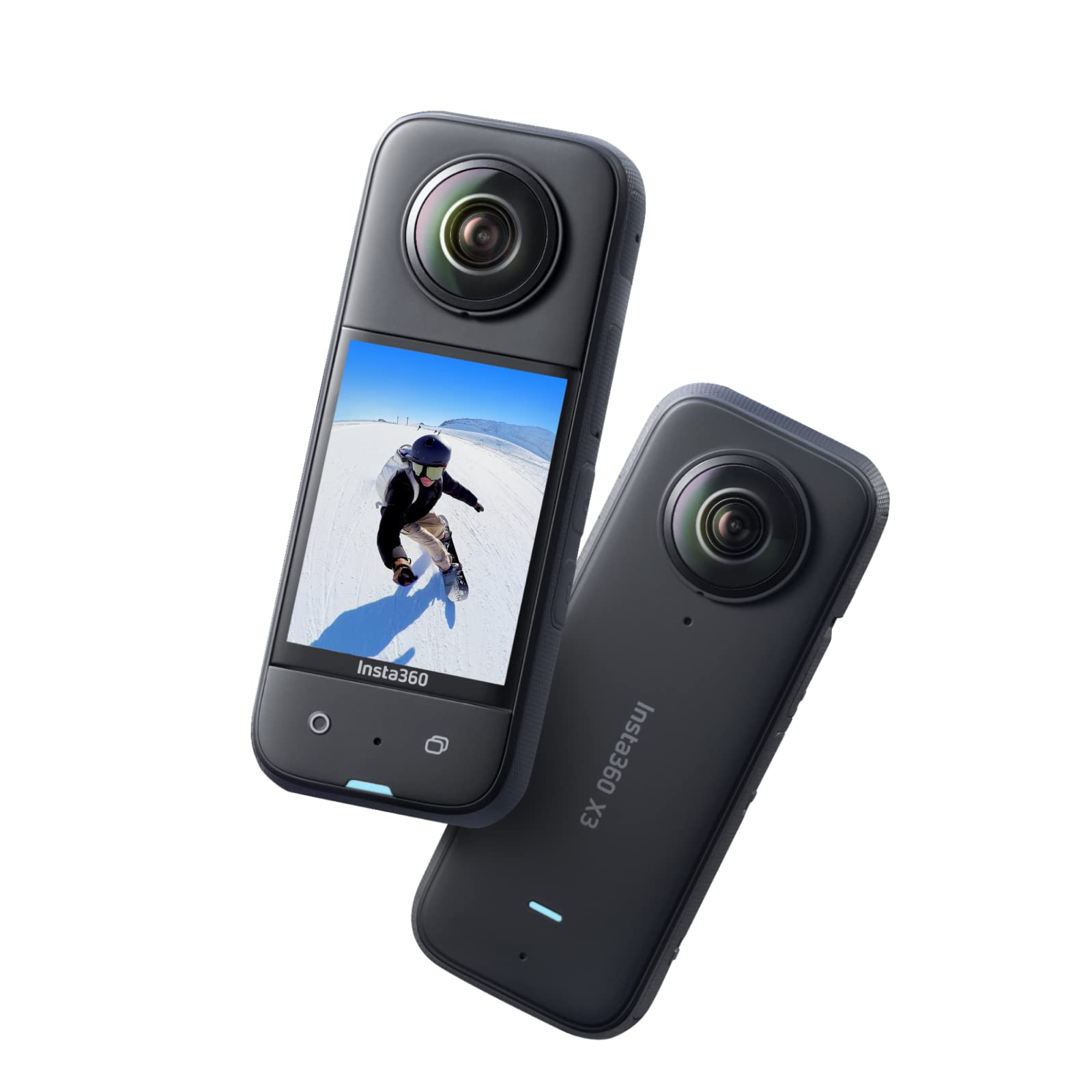
Shoot the whole field once, then choose your angles afterward.
The idea here is different from every other camera on the list: instead of aiming, you record everything. The X3 captures 5.7K 360 video with Active HDR, then you pick the angle you want later by reframing inside the Insta360 app. For a parent pushed to the corner of a field, that means you never miss a play because you were pointed the wrong way. You can also shoot standard 4K at 30fps or 2.7K at 60fps in MaxView with a 170° field of view.
FlowState Stabilization and Horizon Lock work together to keep footage smooth and level, and the 2.29-inch touchscreen lets you monitor and adjust without reaching for a phone. The AI editing tools in the app take the pain out of 360 footage, which is otherwise a slog to cut manually. Setup is described as intuitive, and for travel teams, filmmaking, and multi-angle highlight packages this is a genuinely different tool.
The divided question is straight-up video quality outside the 360 mode. The consensus is enthusiastic about the format and the software, but the image alone draws mixed reactions versus a dedicated action cam. If your only goal is the cleanest possible 4K of a single player, a conventional action camera is the simpler choice. If you want coverage and options, nothing else here works this way.
Why reframing changes the game
- 5.7K 360 capture means you never aim the wrong way
- FlowState plus Horizon Lock keeps footage steady and level
- AI reframing and editing inside the app saves hours
- 4K at 30fps and 2.7K at 60fps MaxView cover standard shots too
Trade you accept
- 360 video is heavier to manage than a flat clip
- Straight image quality draws divided opinions versus a normal action cam
- Reframing adds an editing step before sharing
Worth it for: filming from a single fixed spot and pulling multiple camera angles out of one take.
Probably overkill if: you only ever want one clean wide shot of one player.
8. Canon EOS R100 Mirrorless Camera Lens Kit

A real camera with a real lens, for parents who want prints not clips.
A 24.1MP APS-C sensor (a chip larger than the one in any phone or action cam here) captures natural background blur, which separates your player from a crowded sideline. The DIGIC 8 image processor handles the color and detail, and it is the smallest and lightest body in the EOS R series.
The bundled 18-45mm lens reaches into useful territory with optical image stabilization rated at up to 4 stops of shake correction — 4 stops is the number of shutter-speed steps of hand shake the stabilizer can offset. Dual Pixel CMOS AF covers up to 143 zones with human face and eye detection, so the camera locks onto a running player’s face. Video tops out at 4K at 24fps, Full HD at 60fps, and HD at 120fps for slow motion.
Two things to weigh. The autofocus is excellent for stills, but 4K at 24fps is not a high-frame-rate sports video mode, so treat video as a bonus rather than the primary job. Functionality also divides opinion, with reliability concerns surfacing in the feedback. For stills and entry-level flexibility, the lens mount is the long-term win — you can add glass as your kid moves up the ladder.
The long game: an interchangeable RF mount means this camera grows with your skills instead of being a dead end after one season.
Reality check: 18-45mm will feel short from the far sideline — plan on cropping, or budget for a longer lens later.
Right choice if: the goal is crisp stills with blurred backgrounds and a system you can add lenses to.
Wrong choice if: smooth slow-motion video of every play is the priority — grab an action cam instead.
9. Canon EOS R7 Mirrorless Camera (Body Only)

Thirty frames a second of the exact moment your kid goes up for the header.
The shooting speed is the reason this camera exists for sports. A 15 fps mechanical shutter and 30 fps electronic shutter with RAW Burst Mode includes 1/2-second pre-shooting, meaning the camera was already recording when you pressed the button and you still get the frames before your reaction. For a header, a diving save, or a sprinter’s lean at the line, that pre-shooting is the difference between “almost” and the shot.
Reach and tracking come from the 32.5MP APS-C sensor, which is designed for powerful telephoto reach — helpful when you are shooting from the far touchline. Dual Pixel CMOS AF with up to 651 AF zones covers approximately 100% of the frame width and height, and subject detection and tracking hold focus on a moving player. A 5-Axis In-body Image Stabilization system with auto-level keeps handheld video steady, even in low light.
Two things to plan for. Autofocus is the most debated point in the feedback, with low-light focus called out as a stumbling block — indoors in a dim gym, give it a moment to lock. And this is body-only, so the lens is an extra purchase on top. Compared with the R100 above, the R7 adds the frame rate, the sensor resolution, and five-axis stabilization, which is exactly why it sits at the top of the premium tier.
The spec that decides it: 30 fps electronic shutter with 1/2-second pre-shooting is a professional-grade capture rate, and no action cam on this list offers a burst mode like it.
Budget the lens: body-only means the glass is a separate line item, so factor that in before you commit.
The upgrade path: for a parent or coach shooting at a distance who wants the single decisive frame of every play.
Only if you own glass: with no lens in the box, this makes the most sense if you are already inside the Canon RF system.
Know the Specs
Frame rate and resolution
Frames per second (fps) is how many still images are captured each second. A 120fps mode lets you play a sprint back at half speed and keep it smooth, while 30fps is fine for a wide shot of the whole field. Resolution like 4K, 5.3K, or 5.7K 360 describes pixel count — higher means you can crop into the frame during editing and still have a clean image. For youth sports, 60fps or higher usually matters more than raw resolution.
Stabilization and auto-tracking
Electronic image stabilization (EIS) reduces shake in software after the sensor reads the picture; six-axis versions also correct rotation and tilt. In-body image stabilization moves the sensor itself. Auto-tracking is different again — it physically rotates the mount to follow players and the ball, so you can record a full game while standing still. If your player covers a big field and you cannot hold a camera for ninety minutes, tracking is worth more than any other spec here.
Common Questions
Will an action camera record a full soccer match on one battery?
Can an auto-tracking camera follow a basketball or soccer game by itself?
Do I need a waterproof case for a rainy game?
Is 60fps or 30fps better for filming youth sports?
Will a mirrorless camera like the Canon EOS R100 work for video too?
What does the Canon EOS R7’s pre-shooting actually do?
How much video can a 32GB or 128GB card hold?
Can I use an action camera for swimming or underwater footage?
Which camera is easiest for a first-time parent to set up?
Do I need to edit 360 footage from the Insta360 X3 before sharing it?
The Bottom Line
For most parents, the youth sports camera winner is the DJI Osmo Action 4 Essential Combo. Its oversized 1/1.3-inch sensor (the light-gathering chip inside) keeps night games clean, so faces and jerseys stay clear under floodlights. It also shoots 4K at 120fps (frames per second, for smooth slow motion) and its 18m waterproof body means no housing to forget. If your kid plays a team sport across a whole field and you would rather watch than film, the XbotGo Chameleon tracks the play automatically and runs on an 8-hour battery. And if the framed photo of the winning goal is the real goal, the Canon EOS R100 gives you a 24.1MP sensor (megapixels, which set how much detail a photo holds) and a lens mount that grows with your kid. One last nudge: the AKASO Brave 7 LE already includes a 128GB card and two batteries, which is the least prep work you will do before a season opener.
How we choose
We do not accept paid placement. Every pick is matched to a real buyer and a real use-case; we do not hands-on test units.
Sources
Specifications: manufacturer listings and product documentation. Review insights: verified customer reviews, as of November 2026. Pricing: not shown on this page (it changes often); check the current price via the retailer link.
As an Amazon Associate, Tactical Gear Guy earns from qualifying purchases. This does not affect which products we feature.