Specs are compiled from manufacturer listings and verified buyer reviews and can change over time — please confirm the key details on the product page before buying.
You want boots your kid will actually keep on, that stay dry through a full recess of snow wrestling, and that you can pull on in under ten seconds on a school morning. That’s the whole test: dry feet, warm toes, and a boot they can pull on themselves. Everything else — brand names, colourways, fancy liners — matters only if it serves those three things. Below you’ll find the picks worth your money and, just as useful, the one flaw on each you’d otherwise discover in February.
This guide is built by comparing the manufacturers’ published specifications and the patterns across verified customer reviews, so you get each pick’s real strengths and trade-offs instead of marketing spin.
A good pair keeps small feet dry and warm through a full snow day, so the afternoon ends in hot chocolate rather than a meltdown in the car park. Here’s what separates a genuinely warm, genuinely waterproof youth snow boot from one that only looks the part.
Top Picks

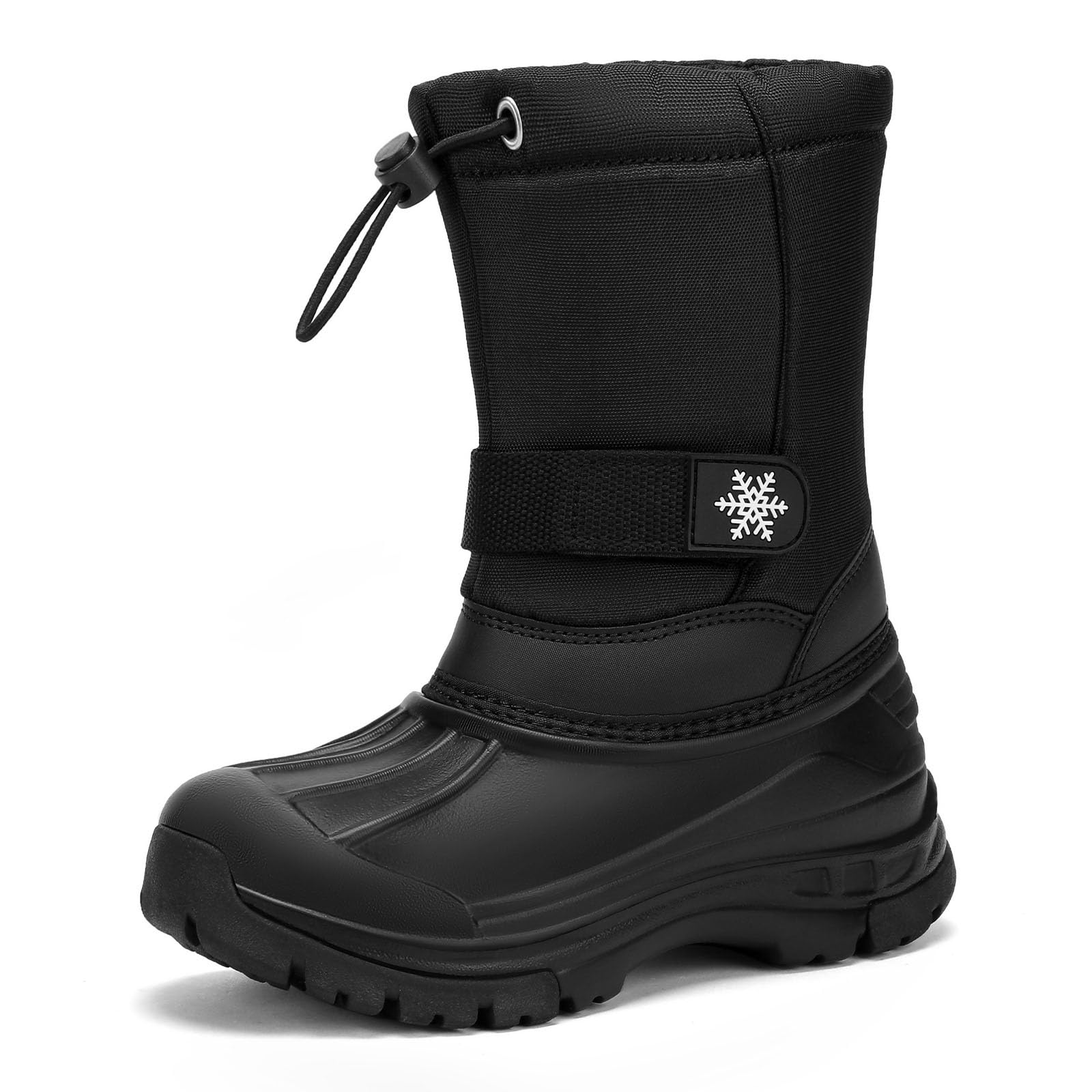
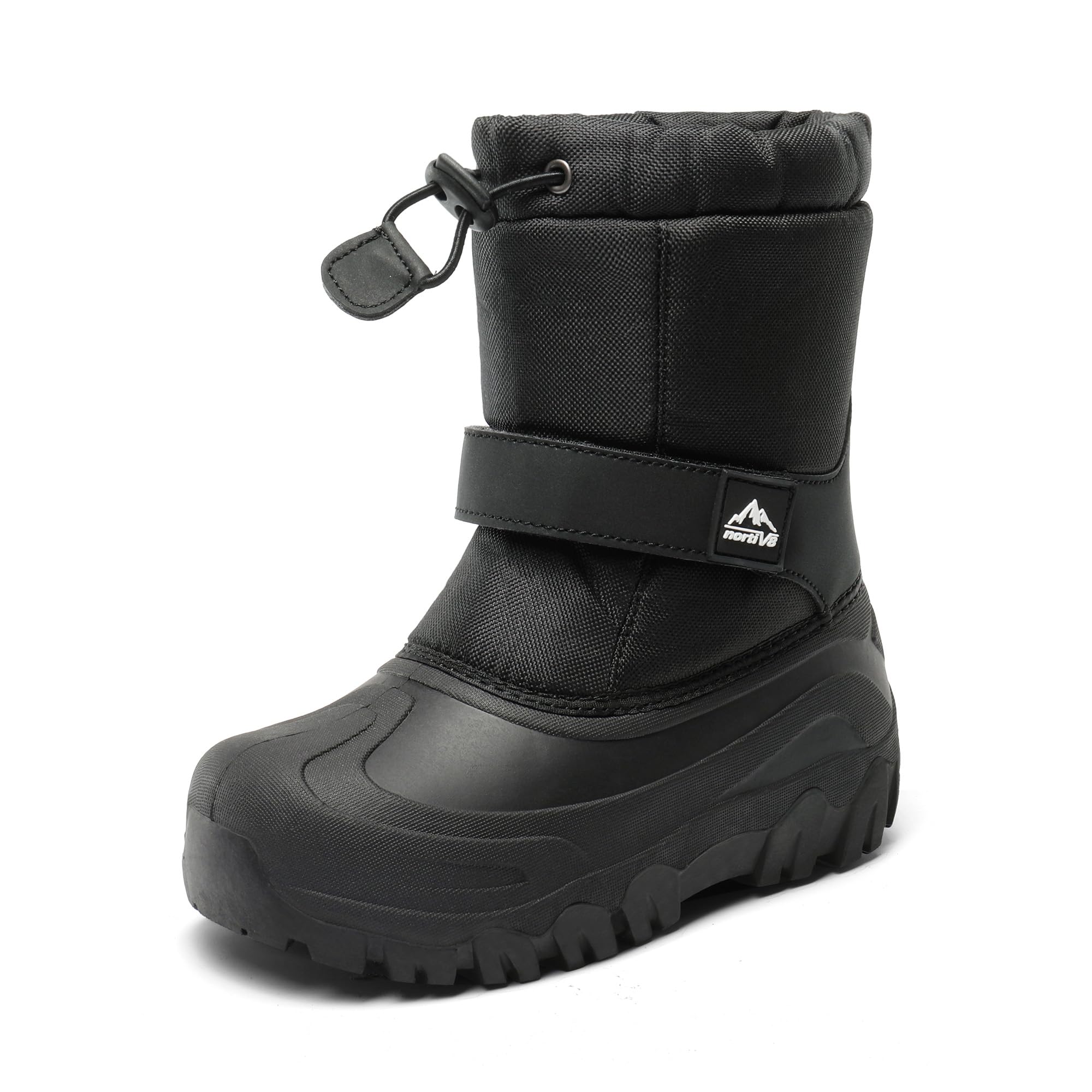
How To Choose The Best Youth Snow Boots
The mistake almost every parent makes is sizing snow boots like sneakers. Snow boots are worn over a thick sock, sometimes a second pair, and they need room for the toe to sit before the boot presses on it when your kid walks downhill. Get the fit wrong and you’ve bought a warm boot your kid refuses to wear.
Waterproof means a sealed shell, not a sprayed coating
A waterproof boot has a shell that keeps water out on its own — a rubber foot, a seam-sealed upper, or a treated nylon build. Water-resistant means it will shrug off a light dusting of snow but can soak through in a deep puddle. If your kid walks through the slush channel at the end of the driveway, you want the first kind. Several of the picks here name a rubber shell or a seam-sealed construction in their own spec list, and that’s the detail to hunt for.
Insulation and what the numbers actually say
Insulation in kids’ snow boots is described in layers or in temperature ratings. One pick here carries a “Tundra Rated” mark and a stated range from -10°C to -30°C (that’s 14°F to -22°F), plus 7 layers of insulation. Most of the other boots just say “faux fur lining” or “insulated” with no number attached. Neither is a lie — they’re just different levels of detail, and the plain “insulated” boots are fine for a standard cold winter day rather than an arctic school run.
Faster on-off closures save real morning minutes
Three closures show up here: a bungee cord with a toggle, a hook-and-loop side opening, and a pull-on slip-on. The bungee and the hook-and-loop are the quickest — a kid can do both alone. The slip-on style is fastest for a toddler but the least forgiving to slide a foot into. If your child insists on doing it themselves, pick a closure they can manage without you.
Side-by-Side Comparison
| Model | Best For | Waterproofing | Insulation / Warmth | Closure | Amazon |
|---|---|---|---|---|---|
| Columbia Youth Bugaboot Celsius★ Best Overall | All-round winter school boot | Waterproof | Insulated | Slip-on | Amazon |
| Boys Girls Slip Resistant Snow BootsBest Value | Budget-friendly everyday pair | Waterproof design | Faux fur lining | Hook & loop | Amazon |
| NORTIV 8 Kids Snow BootsBest for Snow Play | Snow and ice play | Snow and ice protection | Insulated | Pull-on | Amazon |
| Insulated Fur Lined Kids Snow Boots | Snow-day style | Water-repellent toe cap | Plush faux fur lining | Bungee cord | Amazon |
| HOBIBEAR Kids Mid Calf Snow Boots | Cold days, light snow | Water-resistant upper | Faux fur lining | Bungee lace | Amazon |
| Mishansha Insulated Winter Boots | Active outdoor play | Waterproof shell | Insulated faux-fur lining | Bungee + toggle | Amazon |
| Columbia Kids Powderbug Snowlite | All-day lightweight wear | Waterproof | Felt liner, insulated | Toggle | Amazon |
| SOREL Yoot Pac Nylon WP | Deep snow and slick terrain | Seam-sealed, waterproof | Sherpa cuff | Pull-on | Amazon |
| Baffin Junior Mustang | Deep-cold, serious snow | B-TEK Dry Waterproof Base | 7 layers, Tundra Rated | Velcro strap | Amazon |
Detailed Reviews
1. Columbia Youth Bugaboot Celsius
Our pick — 4.5+★ from 450+ verified ratings; the strongest balance of quality and price.
The boot the whole playground test agrees on — warm, dry, and nobody fights to get it on.
For a boot that has to do everything — the walk to school, the sledding hill, the puddle at the bus stop — this is the one that keeps coming out on top. It’s the crowd favourite at 4.5+ stars across 400+ owners, and the thing that wins people over is build quality: it’s the single most-praised trait in its review pages, well ahead of warmth. Parents describe these holding up through a full winter of farm mud and snow, which is a harder life than most boots get.
What owners keep returning to is the warmth-and-dryness pairing. The boot is waterproof, so slush and rain stay outside the shell, and the insulation keeps the cold from creeping in on a long walk. One theme running through the feedback is how rarely these need the “come inside, your feet are soaked” intervention. That’s the whole job of a snow boot, and it does it without a mid-morning sock change.
Then there’s the morning routine. The slip-on build with an easy on-off design means your kid isn’t wrestling a zip or a lace at 7:40am. Sizing runs true, which removes the guesswork that ruins most boot purchases. There’s no temperature rating printed on this one, so if you’re shopping for genuine deep-cold use, the Baffin further down the list is the more explicit choice — for a normal cold-weather winter, this is plenty.
What earns the top spot
- Build quality is the most-praised trait in its reviews, clearly ahead of warmth
- Waterproof shell keeps snow, rain, slush, and wind on the outside
- Slip-on design your kid can handle alone on a school morning
- Sizing runs true, so you’re not guessing on the chart
What to weigh first
- No printed temperature rating, so it’s a general winter boot rather than an extreme-cold one
- Premium-tier spending for a boot your kid may outgrow in a season
- Only listed in boys’ department sizing
Go for it if: you want one boot to cover school, snow play, and the slushy walk home without a second thought.
Pass if: you need a stated temperature limit for true deep-cold conditions.
2. Boys Girls Snow Boots
The pair that gets a wriggling kid into boots without a wrestling match.
Your kid gets in and out alone, because the side opening uses hook-and-loop (a strap flap that peels open, then presses shut). That’s it. No laces, no toggle to fight. For a four-year-old who insists on dressing themselves, this closure is the difference between leaving on time and leaving late. Buyers report quality as their top reason to buy again, with warmth second, and the boot backs it with a waterproof design and a soft faux fur lining to hold heat around the foot.
Where it asks something of you is the size chart. The fit feedback splits: some parents find the size perfect, others report the chart is off. That’s not a fault in the boot, it’s a fault in the chart — so measure your kid’s foot in centimetres and match the actual foot length rather than trusting the age or shoe-size number. The sole is a non-slip design, which matters more than parents expect on a wet supermarket floor.
It’s a budget-friendly boot that reads more expensive than it is, and the value-for-money theme runs through the feedback. If your kid is mid-growth-spurt and you’d rather not sink premium money into a boot that gets outgrown by spring, this is the sensible call. Just double-check the size before you commit.
The strap does the work: a hook-and-loop side opening plus a waterproof design and faux fur lining makes this the fastest self-dressing boot here for the money.
The honest catch: the size chart is the weak link — measure the foot, not the age.
Reach for this if: you want an easy-on pair for a kid who dresses themselves, without premium-tier spending.
Look elsewhere if: you need a boot that runs predictably true to the labelled size.
3. NORTIV 8 Kids Snow Boots Boy’s Girl’s
Built for the yard, the sled hill, and the walk back with wet mittens.
Warmth is what carries this boot. It’s the most-praised strength by a clear margin, and it’s followed by fit and value for money. That combination — warm, fits, doesn’t cost the earth — explains why it’s been a steady pick since it launched. The boot is built for three things in its own words: winter activities, the walk to school, and playing in snow. It handles all three without drama.
Here’s the thing nobody puts on the box: it runs small, and a few owners find it on the heavy side. Small means size up, and size up early rather than hoping it stretches. The weight matters less on a school walk and more when your kid wants to run — a bigger boot for a smaller child will drag. The grip does earn consistent praise, with parents noting it doesn’t slide easily on icy patches, which is the safety detail that matters on a schoolyard in January.
One comparison worth knowing: this boot and the budget strap pair sit in the same price tier, but the NORTIV 8 brings the insulated build and unambiguous snow-and-ice protection. The trade-off you accept for that is the smaller sizing. Measure carefully and this is an easy win.
Warmth first, always: insulation is the standout here, with fit and price close behind.
The size-up rule: it runs small, so order ahead of the growth curve rather than at it.
Pick these for: cold, snowy days where warmth and grip on ice matter most and you don’t mind sizing up.
Think twice if: your kid is a runner — the heavier build can slow a small child down.
4. Kids Snow Boots Waterproof Insulated Fur Lined
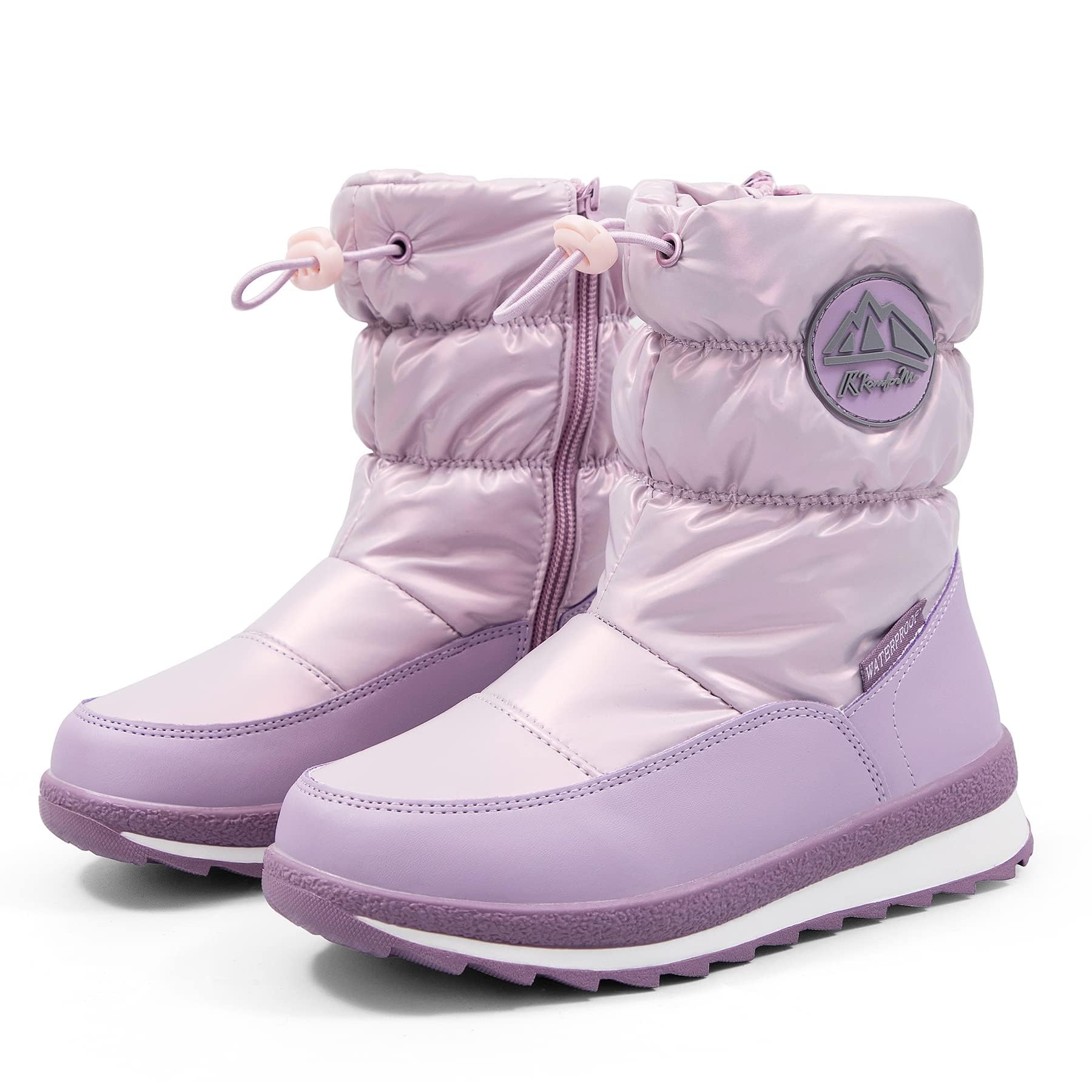
The one your kid actually wants to wear — then maybe wears out a little fast.
Nobody buys a boot for a kid who refuses to put it on, and that’s where this pair shines. How it looks is the second most-praised thing about it, right behind build quality, and the fit and value hold up too. It’s a waterproof-insulated design with a bungee cord at the topline that cinches shut to seal cold air out, a plush faux fur lining around the ankle, and a non-slip rubber sole. It’s built for snow days and it looks the part doing it.
The honest problem is durability on the elastic. The cord that cinches the boot is the piece that gives up first, and that’s the single most-discussed weakness in its feedback. Water resistance is also a split picture — some feet stay dry, some socks come back damp. So: this is a lovely boot for a kid who plays in dry snow on a cold day, and a risky one for a kid who wades through wet slush every morning. The toe cap and upper carry a water-repellent treatment, which helps in light wet, not in a puddle.
It holds a 4.5+ rating and is among the most-reviewed boots on this list, so most owners are clearly getting on fine. Just be realistic: treat the bungee (the stretchy cord that tightens the boot) as the wear point, and don’t expect it to be the boot you hand down to a younger sibling.
Why parents keep coming back
- Appearance is its second-biggest strength — kids want to wear them
- Bungee cord at the topline cinches to seal out cold air
- Plush faux fur lining around the ankle for warmth
- Non-slip rubber sole for steadier footing
The wear points to plan for
- The elastic is the most-discussed weak spot and tends to give out first
- Water resistance splits — dry feet for some, damp socks for others
- Not the boot for daily wet-slush wading
Best match for: a style-conscious kid who plays in cold dry snow and needs a boot they’ll happily pull on.
Skip if: your mornings involve standing water and you need the shell to hold up season after season.
5. HOBIBEAR Kids Snow Boots Boys Girls Mid Calf
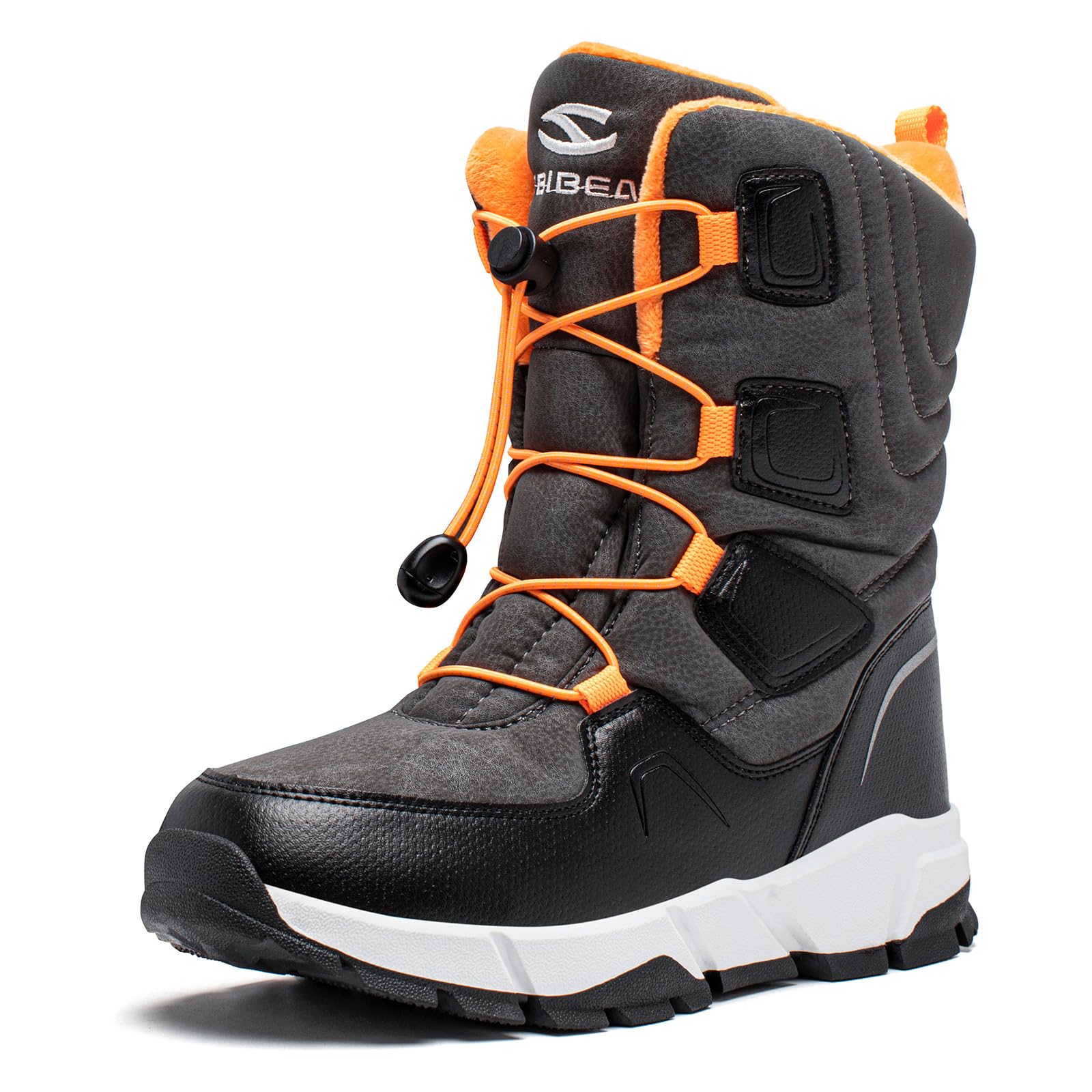
A mid-calf cut that keeps the cold off the ankle on a light-snow morning.
The taller mid-calf shape is the practical reason to pick this one — it covers more of the leg, so the cold doesn’t creep in at the gap above the boot. Warmth is the lead strength, with comfort right behind it. The lining is soft faux fur, which is what makes them cosy the moment they go on, and the bungee lace adjusts for a snug fit that a kid can tighten without help.
Be clear on the weather promise, though. The upper is water-resistant, not waterproof, so it repels moisture and handles light snow and wet sidewalks but isn’t the boot for a foot-deep snowdrift or a long soak. Feedback on water resistance is genuinely split, which lines up with that design. The sole has enhanced traction for grip on snowy or icy ground, so footing is not the worry — it’s the depth of wet you’re asking it to handle.
For a kid in a mild-winter town where “snow” means an inch and a school closure rumour, this is a comfortable, good-looking boot at a fair tier of spending. For a proper snowbelt winter, go for one of the waterproof shells further down.
Comfort you notice immediately: soft faux fur lining and an adjustable bungee lace give a snug, cosy fit right from the start.
The weather reality: water-resistant, not waterproof — treat this as a light-snow and wet-sidewalk boot.
Worth it for: mild-winter towns and light snow, where the mid-calf coverage and cosy lining do exactly what’s needed.
Not the one for: deep drifts or all-day wet conditions where you need the shell itself to stay sealed.
6. Mishansha Boys Girls Snow Boots
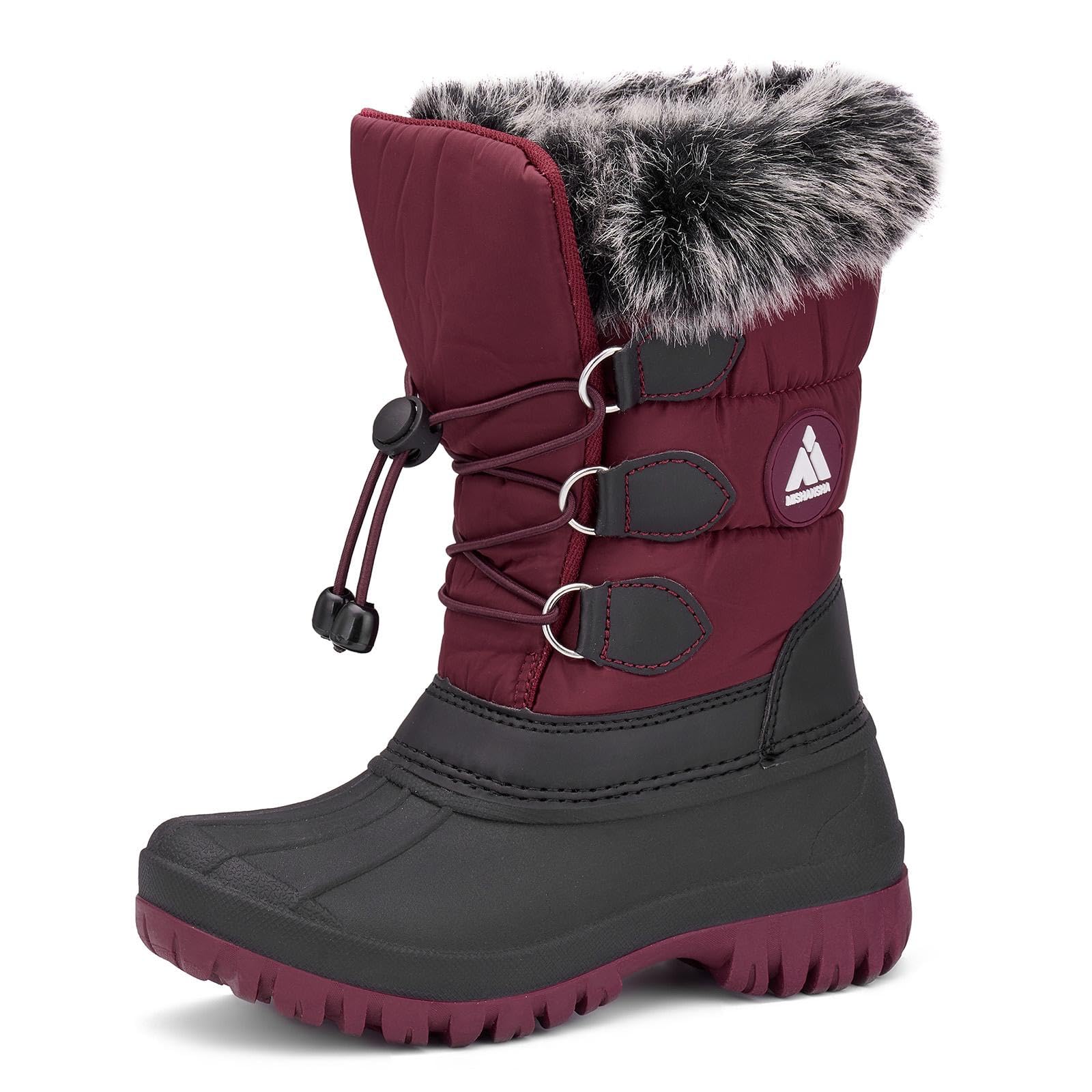
The trail-ready pair for a kid who treats the snow like a hiking trail.
Most kids’ snow boots stop at the sidewalk. This one keeps going — it has a reinforced toe and a rugged outsole with deep lugs, which are the raised blocks on the bottom that bite into snow for grip. Build quality is its strongest suit and warmth sits just behind, so it’s a durable boot that also happens to be warm. The waterproof upper and rubber foot shell are built to keep snow, slush, rain, and splashes out on a wet winter walk.
Where it differs from most of the list is how much ground it covers. It’s designed for school, snow play, winter walks, camping, light hiking, and playground time, and the mid-calf design adds coverage for all of it. The insulated faux-fur lining and plush collar keep things cosy around the foot. The closure is a bungee with a toggle, which tightens a growing foot fast and lets a kid manage it alone on a school morning.
On size, be aware that fit feedback is split, so measure before you order rather than taking the label at face value. And while the deep-lug outsole adds steady, slip-resistant traction on sidewalks and trails, the maker’s own wording still recommends extra care on ice — no lug pattern makes ice safe. If your kid hikes the backyard and camps in the cold, this boot earns its place.
Where it pulls ahead
- Reinforced toe and rugged deep-lug outsole for trail and playground traction
- Waterproof upper and rubber foot shell keep slush and splashes out
- Mid-calf coverage for active outdoor wear
- Bungee-and-toggle closure tightens fast and adjusts as feet grow
Where it asks patience
- Fit feedback splits, so measure the foot before ordering
- Deep lugs help but don’t make ice safe — the maker says take extra care
- Sits at the top of the mid-range tier
The right buy for: outdoorsy kids who hike, camp, and play hard in the snow and need a boot that keeps up.
Look past it if: you want a simple school-run boot and don’t need trail grip or a reinforced toe.
7. Columbia Kids’ Powderbug Snowlite Snow Boots
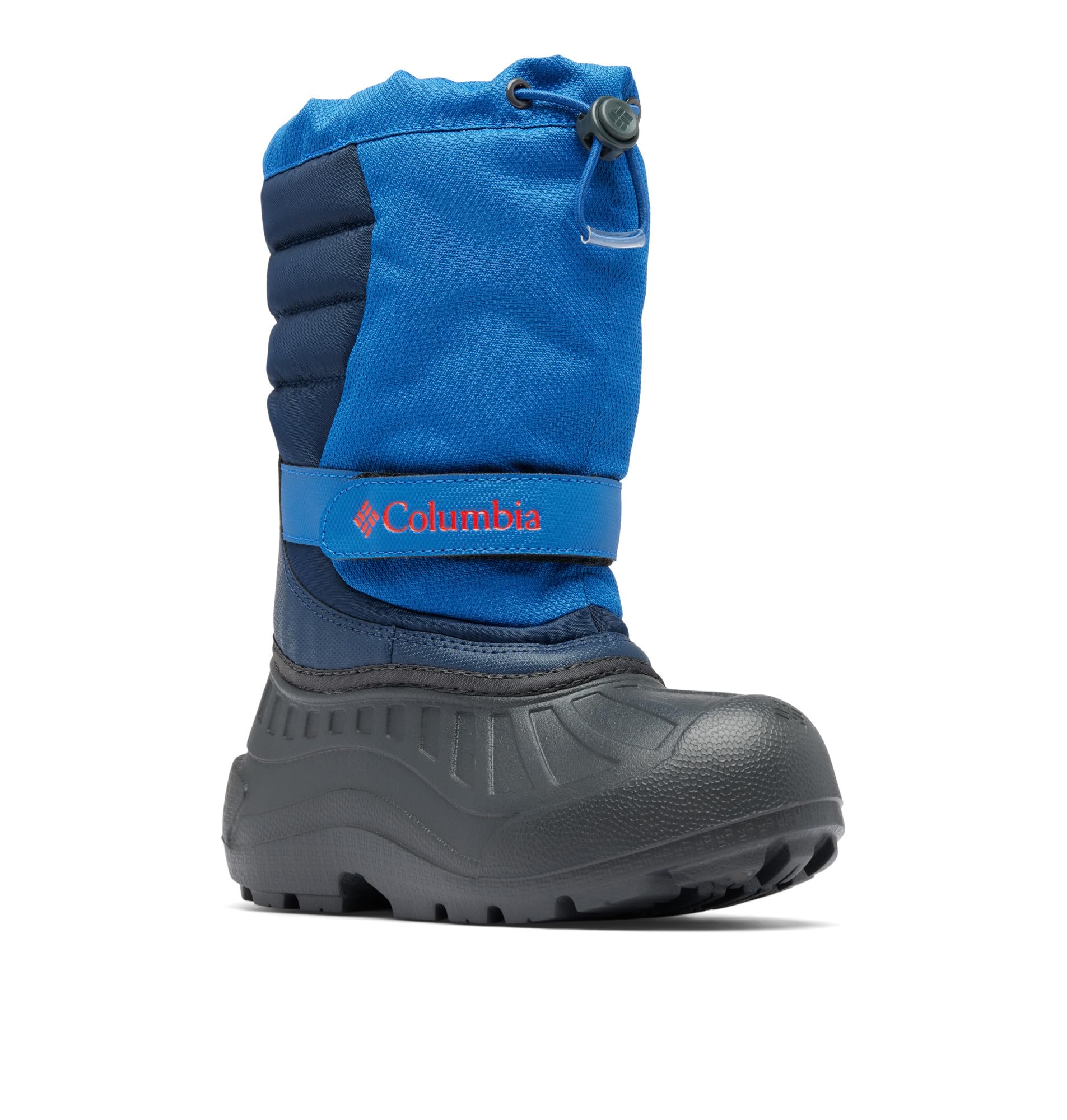
The ultralight pair for a kid who wants to run, not clomp, through the snow.
Weight is the headline here — Columbia bills these as ultralight, and a whole cluster of feedback confirms they feel light on the foot. Build quality is still the top strength, with warmth behind it, so shedding weight didn’t cost them the things that matter. The boot is insulated and waterproof, built to keep feet dry and warm in snow, and the cosy felt liner holds heat close without bulk. It’s a slip-on with a toggle closure that seals out the cold.
The interesting wrinkle is that feedback on ease of use is split — some owners find the pull-on-and-toggle routine simple, others find it takes more effort than expected. Sizing feedback is also split, so measure before you commit rather than guessing.
Where it beats the heavier boots on this list is all-day play — a light boot means less dragging and fewer “my feet are tired” complaints by mid-afternoon. If your kid is the one running laps of the sled hill while the others rest, this is the shape of boot that suits them.
Less weight, more play: an ultralight build with a cosy felt liner and toggle closure keeps feet warm and dry without the clomp.
The wrinkle: ease-of-use and sizing feedback both split — a slip-on cut fits some heels better than others.
Suits: active kids who are in and out of boots all day and notice every extra ounce on their feet.
May not suit: a child whose heel needs a firmer, more adjustable hold to get the boot on smoothly.
8. SOREL Kids Childrens Yoot Pac Nylon WP (Toddler/Little Kid)

A seam-sealed shell and extra-grip sole for the kid who braves the drifts.
When the snow is deep and the ground underneath is slick, this is the boot that holds up. It’s waterproof with a seam-sealed construction — meaning the seams are sealed on the inside so water can’t sneak through the stitching — plus a vulcanized rubber shell and an extra-grip sole for traction on the slickest terrain. A Sherpa cuff around the top keeps the foot cosy. Owners describe these holding up through whole Montana winters, which is a strong sign of durability behind the warmth and build quality that lead its feedback.
The catch is getting into them. Feedback on fit and ease of use both split — some say true to size and easy to pull on, others find them too small and hard to get over the heel. That’s the pull-on trade-off: a sealed shell that keeps water out is also less forgiving to slide a foot into. So measure carefully and expect to size up if your kid is between sizes. The payoff is a dry, warm foot in weather that soaks most boots through.
It’s a premium-tier boot, and it earns that in construction rather than cosmetics. If your winters mean real snow and real slush, this is the one to trust over a water-resistant lightweight build — the sealed shell is doing work the spray-on coatings can’t.
Built for the drifts
- Seam-sealed waterproof construction keeps water out at the stitching
- Vulcanized rubber shell and extra-grip sole for steadiest footing
- Sherpa cuff adds warmth around the ankle
- Holds up through a full winter of hard use
The pull-on trade-off
- Fit and ease-of-use feedback splits — some find them tight and hard to get on
- A sealed shell is less forgiving to slide a foot into than a strap boot
- Premium-tier spending
Made for: deep-snow climates and slick terrain where a sealed waterproof shell is non-negotiable.
Reconsider if: your kid struggles to pull boots on — the sealed shell is snug and less forgiving.
9. Baffin Junior Mustang
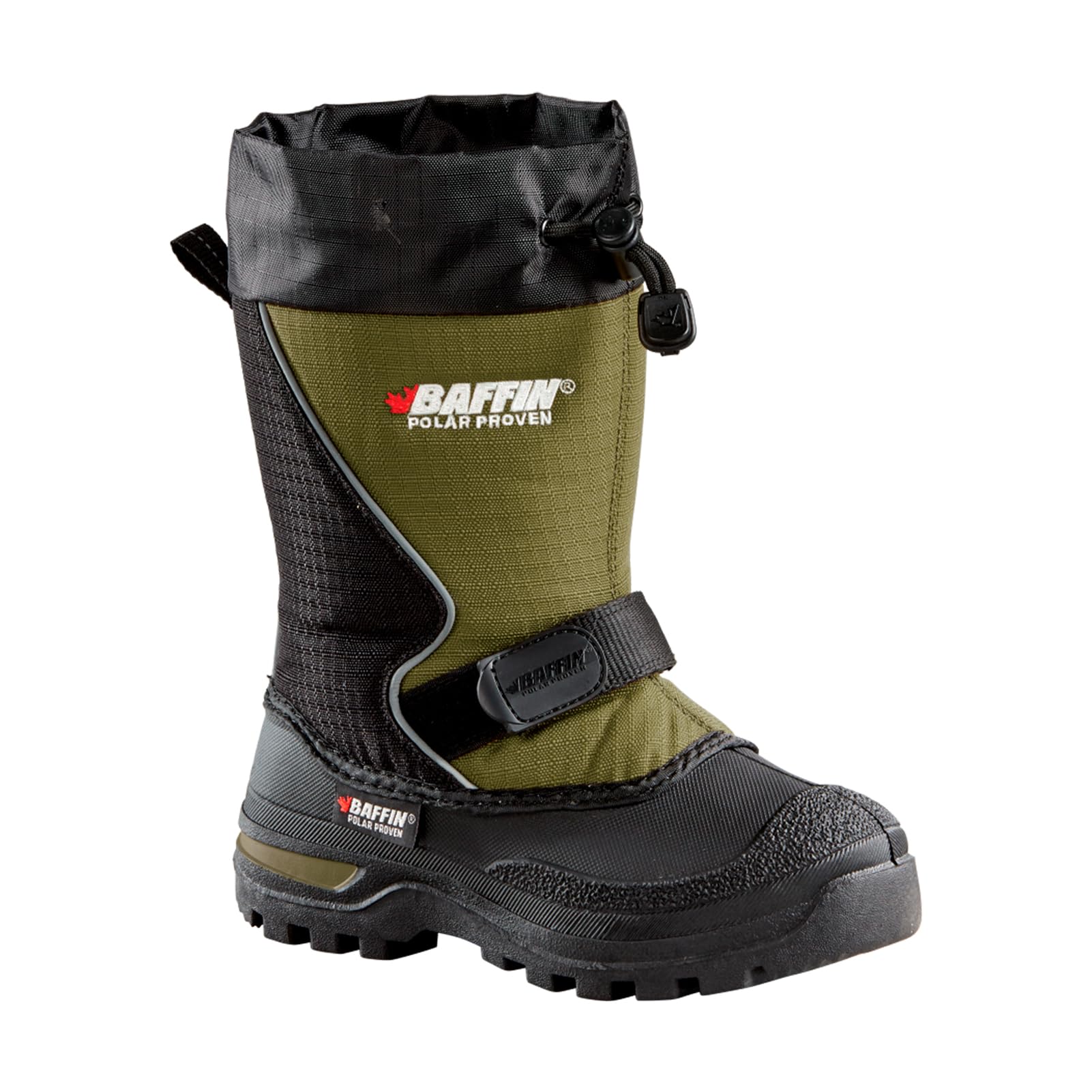
The only boot here with a stated cold rating — built for genuinely brutal winters.
You get a stated cold limit, which no other boot on this list gives you. Baffin rates it Tundra Rated for -10°C to -30°C (14°F to -22°F), so you know the range before you buy. It pairs that with 7 layers of insulation, a B-TEK Dry Waterproof base (a waterproof layer under the foot), an Arctic rubber base, and a removable liner you can pull out and dry. If your winters hit hard, that specificity is worth paying premium-tier money for.
Owners describe excellent insulation that keeps feet and ankles warm and dry, plus a build that lasts and slips on and off easily for a tall boot. The removable liner is the practical detail that wins converts — pull it out at the end of a snowy day and it dries fast, so the boot isn’t sitting damp overnight. Fit runs well according to most feedback, with durability right behind.
The honest trade-off is weight. Feedback splits — some find these light for the insulation, others find them heavy. A tall, 7-layer, rubber-based boot is a serious piece of footwear, so a small child will feel it on a long walk. That’s the price of the cold rating. For deep-cold climates it’s a fair trade; for a mild-winter town, it’s more boot than you need.
The cold number that matters: -10°C to -30°C Tundra Rated with 7 insulation layers gives you a stated limit no other boot here offers.
The honest weight: feedback splits on bulk — the tall build is heavy on a smaller child’s feet.
Trust this one if: you live in genuine deep cold and want a stated temperature rating plus a removable liner that dries fast.
Leave it for someone else if: your winters are mild and your kid needs a light, low boot for quick play.
Know the Specs
Waterproof vs water-resistant
Waterproof means the boot’s shell keeps water out by design — a rubber foot, a seam-sealed upper, or a treated nylon build that doesn’t rely on a surface coating. Water-resistant means the material shrugs off light snow and splashes but can wet through in deep slush. If your kid walks through standing water, look for the waterproof wording in the spec. If they just play in dry snow, water-resistant is enough.
Insulation layers and temperature ratings
Insulation is either described plainly (“faux fur lining”, “insulated”) or with hard numbers — a layer count and a temperature range. A stated range like -10°C to -30°C (14°F to -22°F) tells you the boot is built for real cold, not a mild winter morning. A boot that only says “insulated” with no number is fine for a normal cold day. Match the number to how cold your winters actually get, not to how cold you fear they might.
Closures that decide your mornings
Pick the closure your kid can actually work. A bungee cord with a toggle (a stretchy cord with a sliding stopper) cinches fast and lets a kid tighten it alone. A hook-and-loop side opening peels open for a quick step-in. A pull-on slip-on is the fastest to get on but the least forgiving to slide a foot into. If your child dresses themselves, pick a closure they can manage. If they need help, the easier the closure, the shorter your morning.
Why sizing charts run off
Kids’ snow boots are worn over thicker socks, and brands build in different amounts of room. That’s why fit feedback splits on so many boots here. The fix is simple: measure the foot in centimetres, add room for a thick sock, and match the actual foot length rather than trusting the labelled age or shoe size. When in doubt on a boot that runs small, size up.
Common Questions
Are youth snow boots the same as kids’ snow boots?
Do I need waterproof boots or are water-resistant ones enough?
Should I size up in kids’ snow boots?
What does a Tundra Rating actually mean on a snow boot?
How do I get a kid to put snow boots on themselves?
How long should a pair of kids’ snow boots last?
Are snow boots safe for my kid on ice?
Can kids wear snow boots for school all day?
Do snow boots need special care to keep them waterproof?
Is a heavier snow boot warmer than a light one?
The Bottom Line
For most families, the youth snow boots winner is the Columbia Youth Bugaboot Celsius — it earns the top spot on the most-praised build quality and true-to-size fit on this list, plus waterproofing and warmth that hold up through a full winter of snow, slush, and school runs. If you want a kid who dresses themselves out the door fast, grab the Boys Girls hook-and-loop pair. And for genuine deep-cold winters where you need a stated temperature limit, the Baffin Junior Mustang is the one to reach for — Tundra Rated, 7 insulation layers, and a removable liner that dries fast. Whichever you pick, measure the foot before you order and size up where the feedback says it runs small.
How we choose
We do not accept paid placement. Every pick is matched to a real buyer and a real use-case; we do not hands-on test units.
Sources
Specifications: manufacturer listings and product documentation. Review insights: verified customer reviews, as of November 2026. Pricing: not shown on this page (it changes often); check the current price via the retailer link.
As an Amazon Associate, Tactical Gear Guy earns from qualifying purchases. This does not affect which products we feature.