Specs are compiled from manufacturer listings and verified buyer reviews and can change over time — please confirm the key details on the product page before buying.
Buying a youth racket is a sizing decision first and a brand decision second. Pick a frame that matches your child’s height and grip, and they will swing it cleanly from the first session. Pick one that is too long or too heavy, and they will drag it, mistime the ball, and lose interest fast. This guide breaks down nine junior frames — from 21-inch starter sticks for five-year-olds up to a 26-inch step-up frame — and explains in plain terms which child each one actually suits.
This guide is built by comparing the manufacturers’ published specifications and the patterns across verified customer reviews, so you get each pick’s real strengths and trade-offs instead of marketing spin.
Here is the honest shortlist for the best youth size tennis racket.
Top Picks

How To Choose The Best Youth Size Tennis Racket
Most parents start with the child’s age printed on the box. That is the second-best guide. The better guide is your child’s height, because racket length has to match reach before it matches anything else.
Match racket length to your child’s height
The standard rule is simple. A child roughly 35 to 42 inches tall fits a 16-inch frame, and about 42 to 48 inches fits a 21-inch frame. Around 48 to 54 inches calls for a 23-inch racket, and 54 to 60 inches lines up with a 25-inch frame. Anything near 26 inches is a step-up frame for a taller junior ready to move closer to an adult-length stick.
Get the grip size right for small hands
Grip size is the circumference of the handle, measured in inches. A handle that is too thick stops small fingers from wrapping around it, which costs them wrist snap and control. Junior frames here run from about 3 1/4 inches up to 4 1/4 inches, so check the number rather than assuming one size fits all.
Understand strung weight versus unstrung weight
Some listings quote unstrung weight, which is the bare frame before strings are added. Strings add real heft, so a frame listed at roughly 210 grams unstrung will feel heavier in your child’s hand. Lighter is easier to swing for a beginner, but it can also feel flimsy against a hard-hit ball. You want the lightest frame your child can swing comfortably for a full session.
Check whether it arrives strung and gripped
Many junior rackets ship pre-strung, so they are ready for the court the day the box arrives. A few ship unstrung, or with a bare handle that needs an overgrip wrapped before first use. Read that line carefully if you are buying for a birthday or a first lesson.
Side-by-Side Comparison
| Model | Best For | Length | Weight | Head Size | Amazon |
|---|---|---|---|---|---|
| Wilson Profile 25★ Best Overall | Ages 9-10 moving up | 25 in | 0.1 kg | — | Amazon |
| HEAD Radical Jr. 26Top Performer | Taller juniors stepping up | 26 in | 245 g unstrung | 105 in² | Amazon |
| bo’weiqi 17″-25″ Kids RacketBest Gift Pick | Young beginners, gift-ready | 25 in | 0.39 kg | Approx. 105 in² | Amazon |
| Wilson Pro Staff Precision Junior 21 | Ages 5-6 | 21 in | 6.88 oz | — | Amazon |
| Teloon Kids Tennis Racket | Ages 3-10 on a tight budget | 25 in | — | Big head size | Amazon |
| LUNNADE Kids Junior Racket | Beginners 3-12 | 25 in | 240 g | — | Amazon |
| Senston Kids Junior Racquet | Beginners 7-10 | 23 in | 210 g unstrung | 92 sq in | Amazon |
| AboveGenius Kids Racket Set | Siblings and driveway play | 23 in | 8.2 oz per racket | 90 sq.in. | Amazon |
| OPPUM 2-Pack Kids Set | Two kids, one bag | 23 in (size options 16-25 in) | — | — | Amazon |
Detailed Reviews
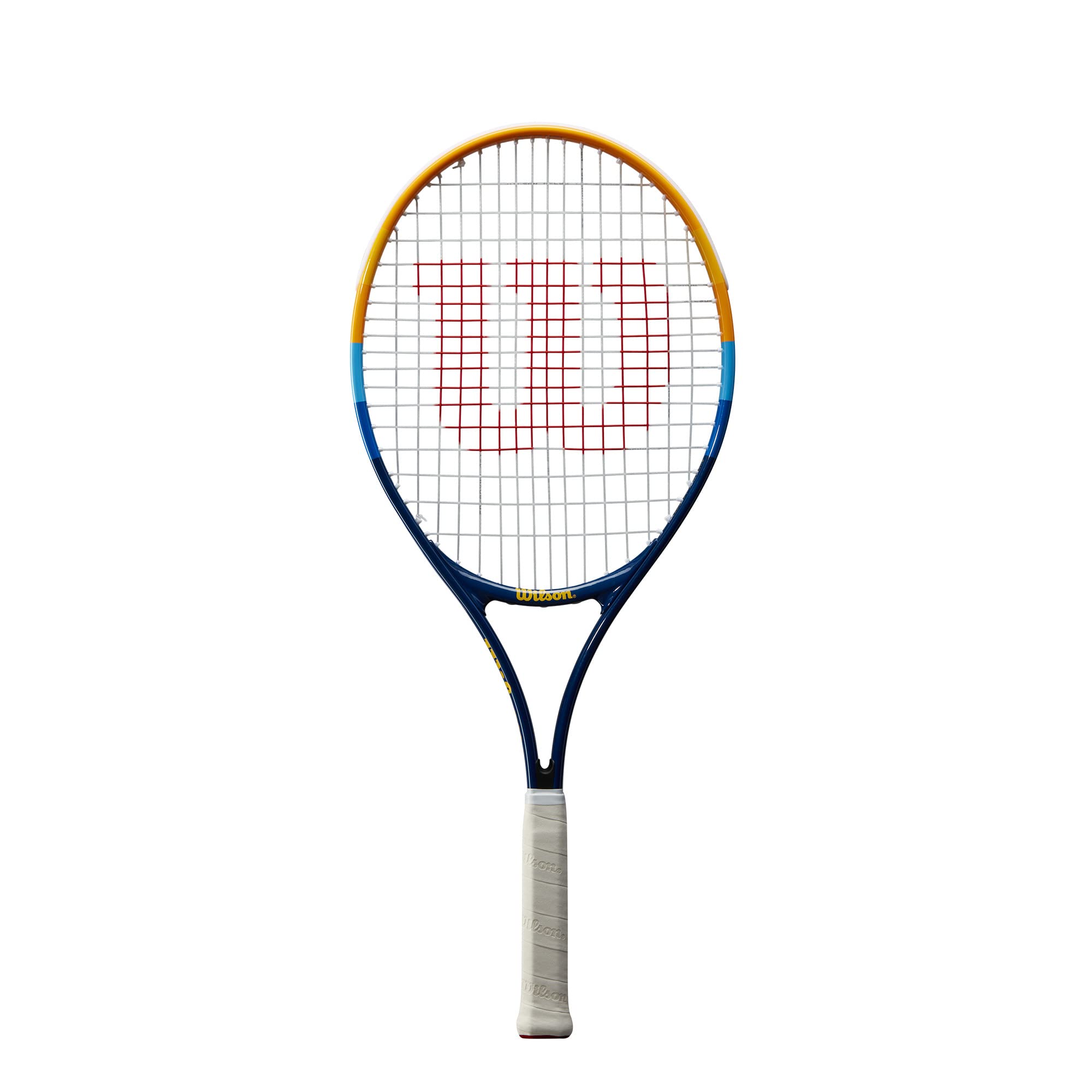
1. Wilson Profile 25 Junior/Youth Recreational Tennis Racket
Our pick — 4.5+★ from 350+ verified ratings; the strongest balance of quality and price.
A 25-inch frame built for the nine and ten-year-old who is done with toddler gear.
Wilson sizes this one at 25 inches, which lands squarely with the 54 to 60-inch-tall junior who is ready to hit real rallies. Wilson recommends it for ages 9-10. The AirLite Alloy construction keeps the frame light so your child can generate racket-head speed without muscling the swing.
Weight is where this pick splits opinion, and it is worth knowing before you buy. At 0.1 kg the frame is among the lightest here — compare that to the bo’weiqi at 0.39 kg and you are looking at a very different feel in the hand. A light frame is forgiving for a beginner still learning timing. The trade-off is that a stronger junior may want more mass behind the ball, which is exactly the mixed verdict the review pages carry.
QuadriForm Technology adds stability through the swing, and the bumper guard at the frame edge takes the scrapes that come with a kid learning to scoop low balls. It ships pre-strung, so it goes straight into a bag and onto a court. Reviewers single out the solid build and the way the frame holds up through weekly sessions.
Where it earns its keep
- 25-inch length matches the 9-10 age bracket Wilson lists
- AirLite Alloy frame keeps swing effort low for smaller arms
- Bumper guard shields the frame from court scrapes
- Arrives pre-strung and ready to play
What to weigh first
- At 0.1 kg some juniors will want more heft behind the ball
- Grip size is fixed at 3 7/8 inches
Reach for this if: your child is around nine or ten, comfortable swinging on their own, and you want a stable frame that will not wobble on contact.
Think twice if: your junior is already a powerful hitter — the very light 0.1 kg frame may feel thin against a hard ball.
2. HEAD Radical Jr. 26
The tallest junior frame on this list — a genuine step toward adult length.
At 26 inches, the Radical Jr. 26 is the one pick that sits a rung above the rest of this list. Every other frame in the group tops out at 25 inches or below. So if your child has outgrown a 25-inch racket but is not ready to handle a full adult frame, this is the natural next step.
The numbers behind it are worth understanding. It weighs 245 grams unstrung, so strings will add more on top — noticeably heftier than the LUNNADE at 240 g and the Senston at 210 grams unstrung. It pairs that weight with a 105 in² head, which is a generous hitting surface for the size. The 16/19 string pattern is an open layout that helps a junior get bite on the ball.
HEAD lists a 315 mm balance, which sits the frame slightly head-light so it comes through contact smoothly. What stands out in owner experience is the fit and feel for young beginners stepping up, alongside sturdy construction. Keep in mind this is the longest racket here, so it fits a taller junior rather than a small first-timer.
The height math: a 26-inch frame suits a child pushing toward adult height, so measure before you commit — a shorter kid will drag the head through contact.
The control case: the 105 in² head and open 16/19 pattern give a growing player room to miss the centre and still get the ball back.
Your best step-up: a taller junior who has outgrown a 25-inch frame but is not yet ready for a full adult racket.
Wrong fit for: a small first-timer — at 26 inches this frame asks for reach a young child simply does not have.
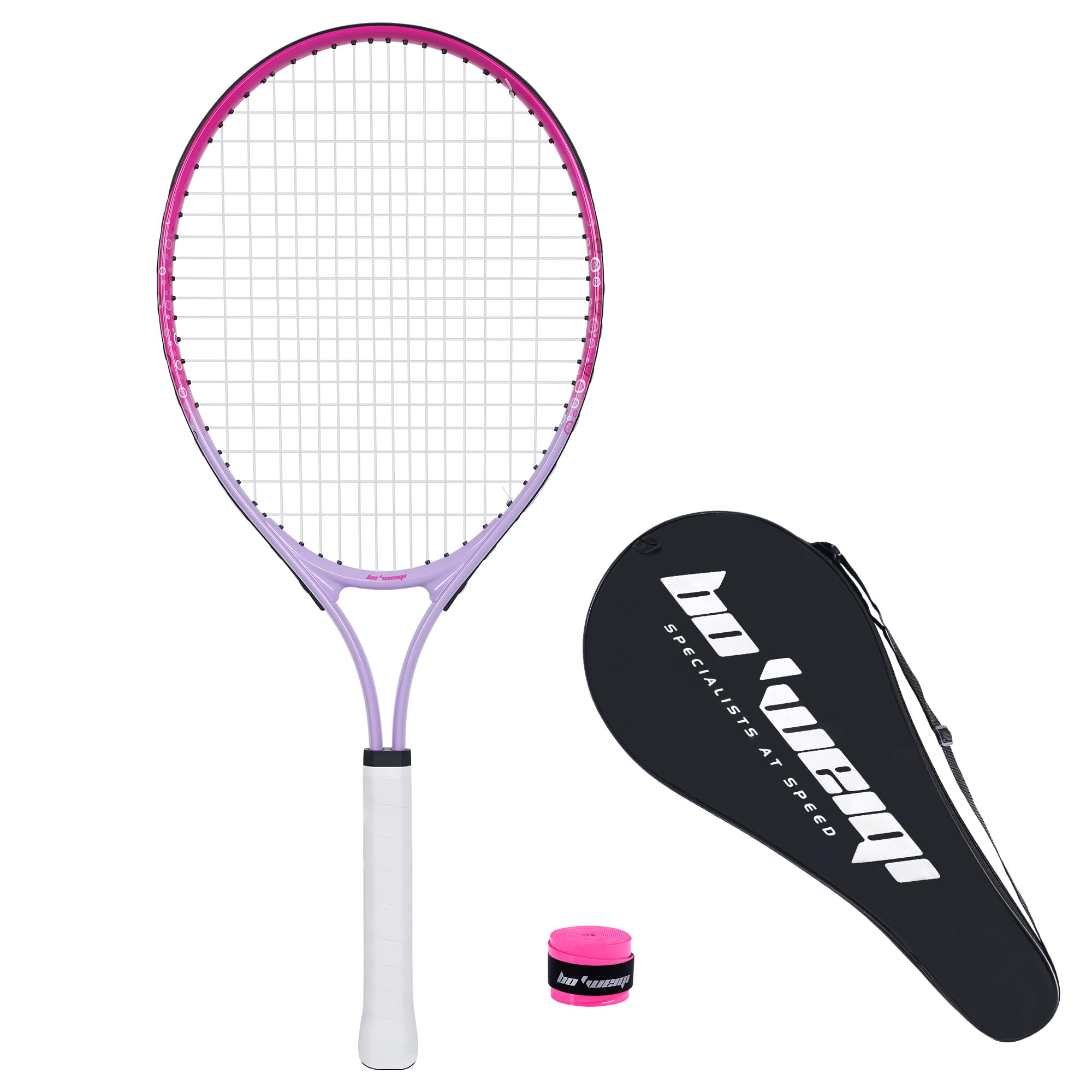
3. bo’weiqi 17″-25″ Kids Tennis Racket for Aged 2-12
A beginner-friendly frame with a generous sweet area and a bag ready for the park.
Here is the pick that thinks about the whole package. The bo’weiqi comes with a non-slip grip and a shoulder-strap bag, so a first-time player has somewhere to carry the racket and a handle that is easy to hold. The aluminum alloy frame keeps the weight at 0.39 kg, which is comfortable in smaller hands without feeling too light.
The sweet area is roughly 105 square inches, a large hitting surface that makes it easier to find the ball and build confidence. Reviewers consistently call it a reliable first frame for kids picking up a racket. One thing to check before first use: the listing notes the frame ships unstrung, so plan for getting it strung before your child heads out.
The soft border design protects against the minor bumps that come with beginner play. The grip is sized at 4 inches, which is a useful reference if you know your child’s hand span. Its aluminum build and ~105 in² sweet area suit a child’s first season of lessons.
The beginner advantage: that ~105 in² sweet area does a lot of the work for a child still learning to meet the ball cleanly.
The setup catch: it arrives unstrung, so budget a trip to have it strung before the first session.
Made for: a family buying a complete first racket for a child aged 10-12+ or younger, bag included.
Skip if: you need something playable straight from the box — this one needs strings fitted first.
4. WILSON Pro Staff Precision Junior Tennis Racket
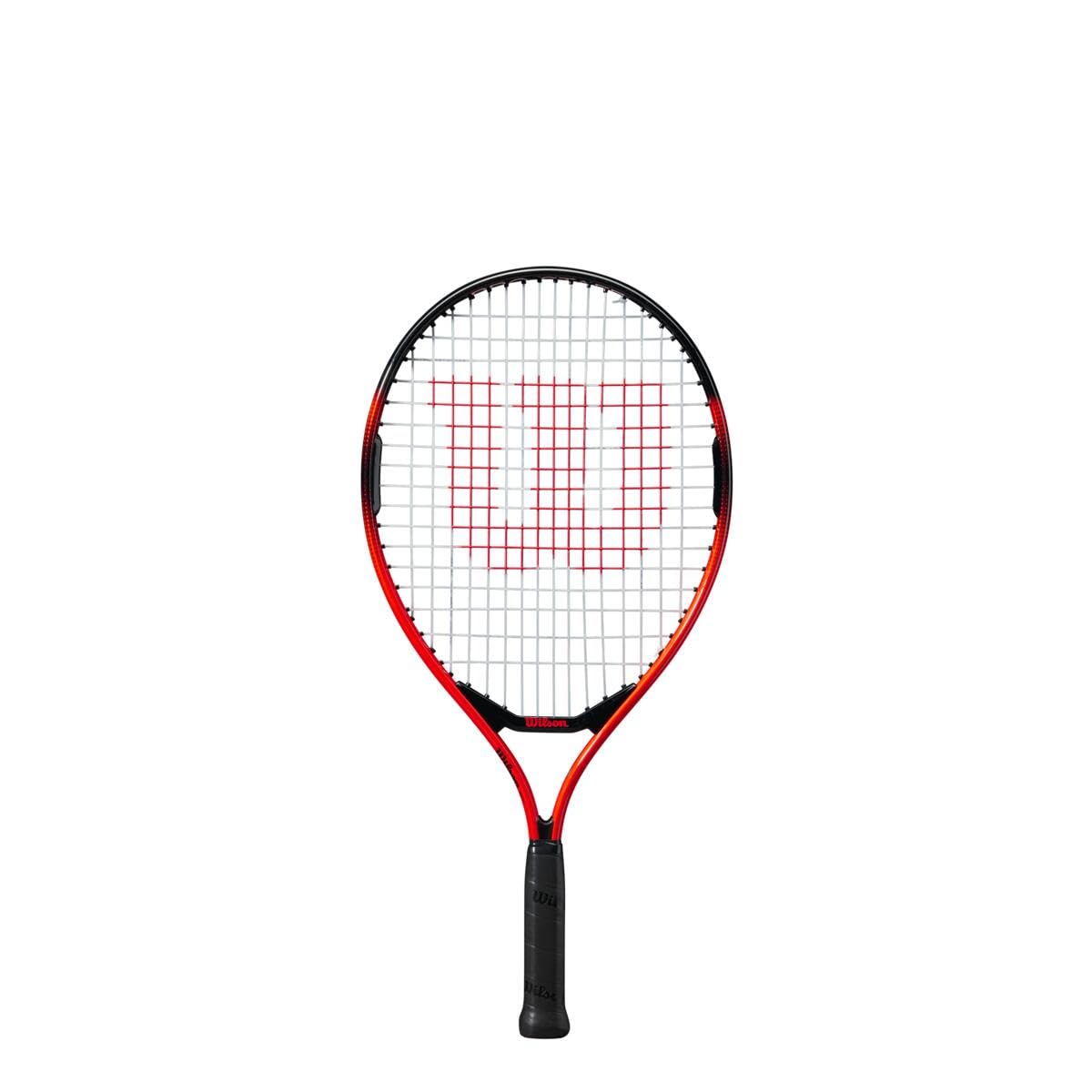
A 21-inch junior frame pitched at the kindergarten-aged beginner.
Wilson points this one at ages 5-6, and the 21-inch length keeps it there. The number to remember is 21 in / 53.3 cm — noticeably shorter than the 25-inch Teloon and 26-inch HEAD above, which is exactly the point. A five or six-year-old cannot control a full-length frame, so the short shaft lets them learn from a body they can actually manage.
Wilson builds it from AirLite Alloy for lightweight strength, with a Perimeter Weighting System that adds volume at the 3 and 9 positions for more balance through the swing. C Beam Technology shapes the beam for stability and power. Strung weight is 6.88 ounces, light enough for small arms to swing without tiring.
Reviewers rate it highly as a starter frame, and the 21-inch length gets a five or six-year-old rallying sooner. It arrives pre-strung and ready. What people mention most is how well-suited it is as a first racket for a young child, with light weight and dependable durability noted too.
The strengths that matter for a 5-6 year old
- 21-inch length is sized right for a shorter, younger beginner
- 6.88 oz strung weight swings easily for a small arm
- Perimeter Weighting adds balance through the swing
- Ships pre-strung, ready for the first lesson
Before you click
- Ages 5-6 is the target — it is short for older or taller kids
- Grip is fixed at a 4-inch size
The right call for: a kindergartener or first-grader getting their very first racket and a real start in tennis.
Not the one for: a child already near eight, who will outgrow the 21-inch length quickly.
5. Teloon Kids Tennis Racket, 19″-25″ Youth Racquet with Cover

A low-cost starter whose large balance (the forgiving middle of the strings) helps small beginners connect with the ball.
This Teloon comes in several sizes, and the 25-inch version leads the lineup. The aluminum alloy frame (a light metal that keeps the racket affordable) gives it a head-light balance, meaning the weight sits toward the handle. That cuts the vibration that shakes a small arm on mis-hits, so a shanked ball stings less. Beginners also get a large head size and a generous balance, so the ball is easier to find early on.
One practical detail to plan for: the handle is wood with a grip on the outside, and Teloon includes a roll of overgrip you wrap yourself before use. If you want it court-ready the moment it arrives, that is a small bit of homework first.
The frame targets beginners aged roughly 3-10, so it covers the broadest beginner window of the whole group. At its price, the Teloon undercuts every other frame here while still covering ages 3-10.
The beginner draw: a large head and a head-light balance mean less jarring on mis-hits for a young arm still finding the centre.
Setup to expect: the overgrip has to be wrapped before first play, so add a few minutes of prep.
A good fit for: a family testing the waters — a beginner age 3-10 and a budget that stretches to a basic first frame.
Worth a pass if: you want zero setup and a strung-when-opened handle, since this one needs the overgrip wrapped on.
6. LUNNADE Tennis Racket for Kids Junior, 19/21/23/25 Inch

A colors-forward junior frame that keeps the grip sized for small hands.
The 25-inch LUNNADE is built around the beginner’s first swings, with a lightweight frame that is easy to move through contact. Its grip is marked SMALL and shaped for young hands, so the racket stays under control as kids learn to generate their own power. At 240 grams it is comparatively heavier than the lighter budget frames and the Senston at 210 grams unstrung — but that heft can help a child learn a steady swing.
It ships pre-strung, which is a real convenience for a busy family. The colors and playful look are chosen to appeal to children, so a kid is more likely to actually pick it up. On the durability side, the aluminum construction is built to withstand the bumps and drops of regular play.
LUNNADE backs the frame with a satisfaction guarantee and a defect promise, so a faulty handle or cracked frame is covered. It arrives strung, so you can head to the court the day it lands. This suits a beginner aged 3-12 who needs a bright, low-cost first frame. skip it if your player is already swinging with control and wants a lighter, more advanced frame.
Why beginners like it: a small, purpose-designed grip and a 240 g frame give a young player a controlled, steady feel from day one.
Lively look, honest heft: the playful design draws kids in, but the weight means weaker arms may tire sooner than on a very light frame.
Your pick if: a first racket for a beginner age 3-12 with a small grip and a look that gets a child reaching for it.
Look again if: you need the lightest frame possible — this one carries more weight than the featherweight options.
7. Senston 19″ 23″ 25″ Kids Junior Tennis Racquet

Light at 210 grams unstrung, packed as a complete training set.
Senston’s junior racquet is aimed at kids and juniors roughly 7 to 10, and the 23-inch version here is built to swing light. At about 210 grams unstrung it is among the lightest frames in this group, so small learners get a racket they can move quickly. The head size is 92 sq in, which is compact next to the 105 in² heads elsewhere on this list, and the grip comes in at 4 1/4 inch.
The package is complete: a racket, a clear cover, an overgrip and a vibration damper, all included. A vibration damper is a small insert that reduces the sting that travels down the frame on contact, which helps a first-timer who is still hitting off-centre. The one-piece molded aluminum build is meant to handle countless hours of practice.
Durability is the honest caveat here in a way it is not on the pricier frames. Some frames have been reported with the handle breaking early, so it is worth inspecting the grip and treating the racket gently rather than relying on it as a long-term investment. The light 210 g frame and included damper still make it a sensible first training racket.
Where the value is clear
- 210 g unstrung — light enough for a 7-10 year-old to swing quickly
- Complete set: racket, cover, overgrip and vibration damper
- 92 sq in head keeps the frame compact and manoeuvrable
- One-piece molded aluminum build for training sessions
The durability watch
- Some reports of the handle failing early — inspect on arrival
- 92 sq in head is smaller than the generous 105 in² faces
Best used as: a light training racket for a 7-10 year-old who wants to swing fast and needs a full kit from the start.
Use with care: the handle is the part to watch — a gentler player will get more seasons out of it.
8. AboveGenius Kids Tennis Racket Set, 23 inch, 2 Racquets
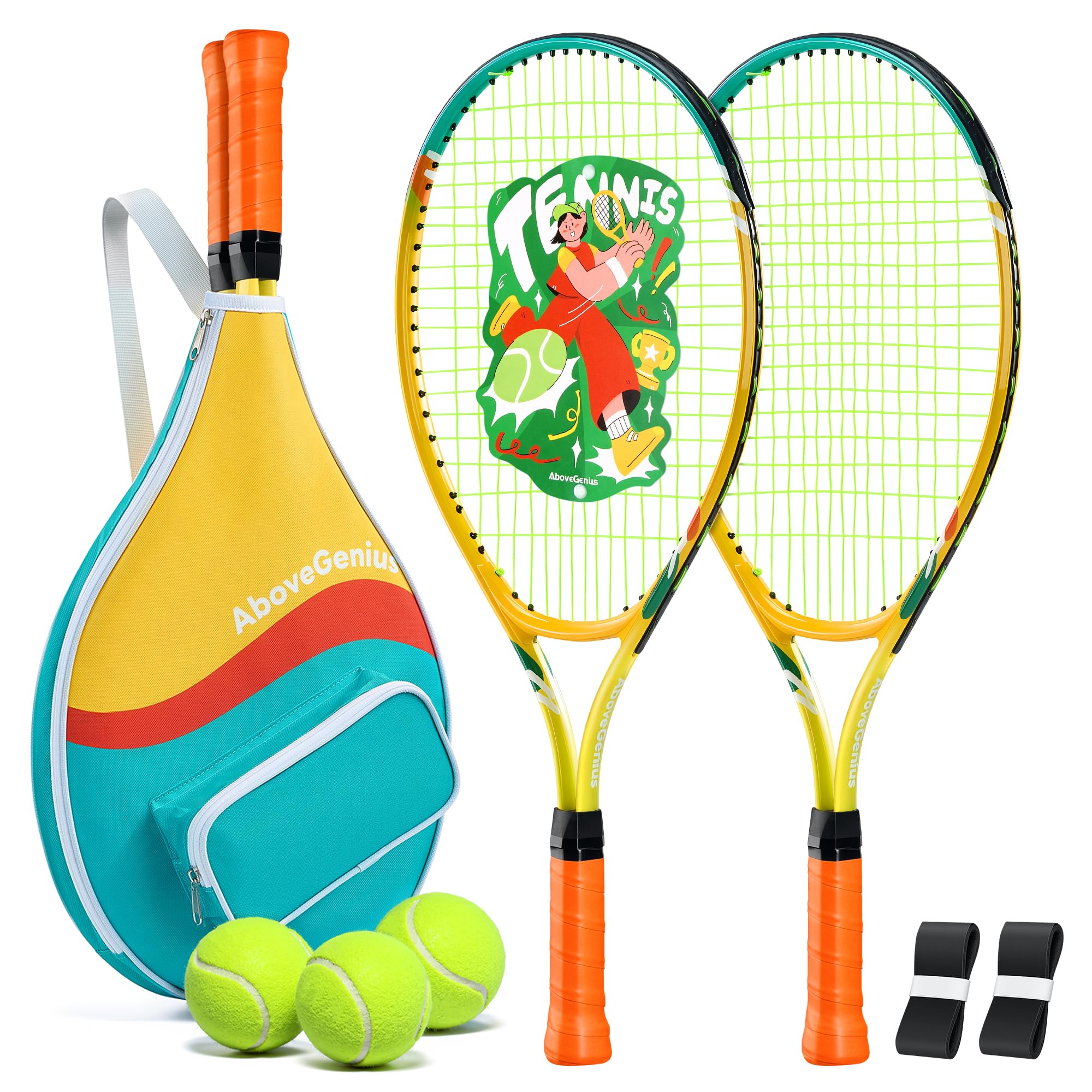
Two 23-inch sticks, three balls and a bag — a full driveway kit in one box.
AboveGenius packages this as a set for siblings or parent-and-child play, not a single racket. You get two 23-inch junior rackets, 3 tennis balls and a carry bag. That makes it the pick for a family that wants two kids swinging at once, or a parent rallying with a child without needing a second purchase.
Each racket is molded from aluminum alloy and weighs just 8.2 oz, light enough for a young beginner to swing without tiring. The 90 sq.in. face pairs with high-elastic nylon strings for a soft, lively hit, and a vibration-dampening triangle frame soaks up harsh impact. The slim, cushioned overgrip is sculpted for small hands.
The bag is itself a small highlight — a half-length design with separate pockets so rackets and balls stay apart, plus kid-safe zippers that open easily. Portability and size are what make owners happy, and the size is genuinely suited to young children. A compact 90 sq.in. head is the trade-off: less forgiving than the bigger faces, but fine for a first-timer.
What the set solves: two 8.2 oz rackets and three balls in one box, so two young players can start the same afternoon.
The head-size trade: a 90 sq.in. face rewards a child who meets the ball near the centre, so pair it with pre-rally practice.
The obvious buy for: a household with two young beginners, or a parent who wants to hit with their child right away.
Hold off if: you only need one racket — a single-frame pick spends your money on a bigger, more forgiving head.
9. OPPUM 2-Pack Kids Tennis Racket Set with Bag and Balls
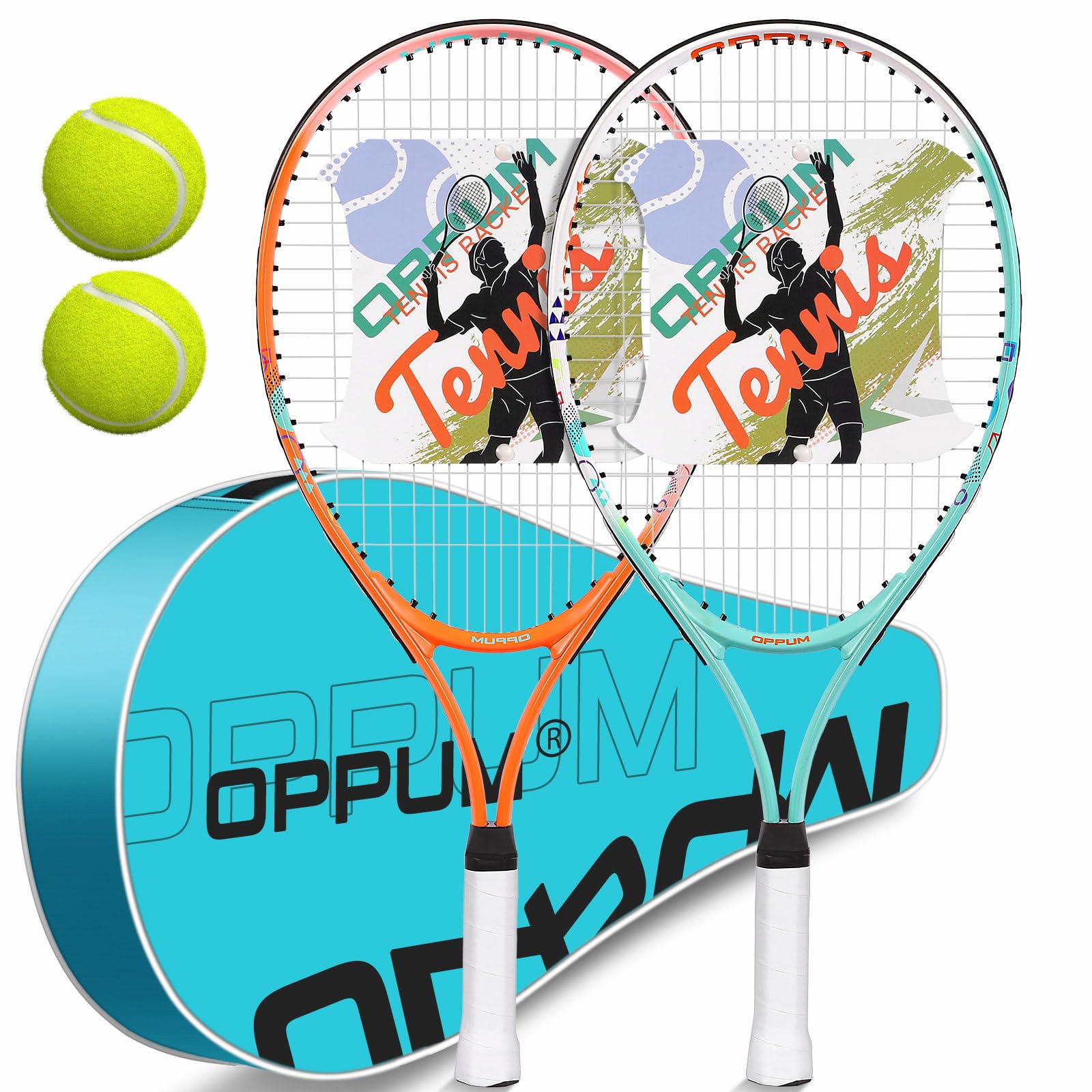
A height-based starter set that tells you which size to buy — no guessing.
OPPUM’s 2-pack is the trainer set that actually explains sizing rather than leaving it to chance. The 23-inch frame is one option in a range that starts at 16 inches for 35-42 inch kids, and steps through 21, 23 and 25 inches as the child grows. You pick by height first, which is the smartest way to buy a junior racket in the first place.
What is in the box: two pre-strung junior racquets, 2 training balls and a shoulder bag. That makes it a two-kid starter set or a parent-and-child set for beginner practice at home, school, parks or courts. The aluminum alloy frames and child-sized grips are designed for learning basic swings and contact.
The set is built for children’s use and tested to applicable ASTM F963 and CPSIA requirements, and it is recommended for ages 3 and up. Owners praise the quality and suitability as a starter kit, along with the light weight and useful carry bag. Two pre-strung 23-inch frames, two balls and a bag for roughly the cost of one adult racket.
The sizing edge: the height chart takes the guesswork out — pick 23 inches for a child roughly 48-54 inches tall and you are set.
The buy-two catch: this is a two-racket set, so a single-child household ends up storing a spare frame.
Perfect for: two kids starting tennis together, or a parent and child who want a ready-to-play practice kit with proper sizing guidance.
Not ideal if: you only need one frame and would rather put the spend into a single larger-headed racket.
Know the Specs
Racket length and who it fits
A junior racket’s length in inches maps directly to a child’s height, and the two move together as they grow. A shorter frame around 19-21 inches suits an entry-level young child, a 23-inch stick fits roughly a 48-54 inch child, a 25-inch frame fits around 54-60 inches, and a 26-inch stick is a step-up for a taller junior. Getting this right lets your child swing on their own rather than dragging the head through contact.
Grip size and handling
Grip size is the handle circumference in inches, and it has to fit the hand, not the age on the box. The junior frames here run from about 3 1/4 inches up to 4 1/4 inches. Too large a grip stops small fingers wrapping around it, which costs wrist snap and control. Too small and the racket twists in the hand on contact.
Weight: strung versus unstrung
Frames get listed two ways — unstrung (bare frame) and strung (frame plus strings). Strings add real heft, so a frame listed at roughly 210 grams unstrung will feel heavier once strung. Lighter frames are easier for a beginner to swing for a full session, but a very light frame can feel flimsy against a hard ball. You want the lightest frame your child can swing comfortably without it costing control.
Head size and string pattern
Head size in square inches tells you how big the hitting surface is, and a bigger face is more forgiving for a beginner still finding the centre. A 105 in² head is generous; a 90 sq.in. face rewards a more accurate swing. A 16/19 string pattern is an open layout that helps a young player generate spin and bite on the ball.
Common Questions
How do I know what length youth racket my child needs?
Is a 25-inch racket right for a 10-year-old?
What grip size should a young beginner use?
Does a lighter racket always mean better for a beginner?
Should I buy a pre-strung youth racket or have it strung?
What is a vibration damper and do kids need one?
Is a bigger head size better for a child learning tennis?
How long should a youth racket last before my child outgrows it?
Can a two-racket set work for one child?
Do I need a full adult racket as my child grows?
The Bottom Line
For most families, the youth size tennis racket that gets the size, stability and durability balance right is the Wilson Profile 25. It fits the 9-10 age bracket Wilson lists, ships pre-strung and guards its frame with a bumper. If your child has outgrown a 25-inch frame, the HEAD Radical Jr. 26 is the step up, with its 26-inch length and 105 in² head. And for a first racket on a tighter budget, the OPPUM 2-Pack stretches your spend across two kids with a height chart that takes the guesswork out of sizing.
How we choose
We do not accept paid placement. Every pick is matched to a real buyer and a real use-case; we do not hands-on test units.
Sources
Specifications: manufacturer listings and product documentation. Review insights: verified customer reviews, as of November 2026. Pricing: not shown on this page (it changes often); check the current price via the retailer link.
As an Amazon Associate, Tactical Gear Guy earns from qualifying purchases. This does not affect which products we feature.