Specs are compiled from manufacturer listings and verified buyer reviews and can change over time — please confirm the key details on the product page before buying.
Getting a helmet onto a rider aged 8-14 is half the battle, and getting one they will keep wearing is the other half. The right youth bike helmet for that age band has to fit a growing head: a shell that stays put at speed, enough vents to keep a hot head cool, and a weight a kid will tolerate for a full afternoon loop. This guide sorts through the real difference between the options: which ones fit properly, which ones are light enough to forget about, and which ones are certified for the riding your kid actually does.
This guide is built by comparing the manufacturers’ published specifications and the patterns across verified customer reviews, so you get each pick’s real strengths and trade-offs instead of marketing spin.
You will see head-circumference ranges, weight figures, and vent counts side by side, so the fit question gets answered before you order — the whole point of choosing a youth bike helmet 8-14.
Top Picks


How To Choose The Best Youth Bike Helmet 8-14
Ages 8 to 14 covers a wide stretch of head sizes, which is exactly why you should ignore the age label and read the measurement instead. Wrap a soft tape around the widest part of your child’s head, just above the eyebrows and around the back. That number, in centimeters, is your starting point — not the number printed on the product photo.
Match the centimeter range before anything else
Every helmet in this roundup lists a head-circumference range in centimeters. A shell that tops out at 54 cm will sit tight or high on a bigger kid, and one that starts at 54 cm will swallow a small one. Buy from the range that brackets your measurement with room on either side, because the rear dial only tightens a fit — it cannot widen a shell that is fundamentally too small.
The adjustable dial and the chin strap do different jobs
The dial at the back of the helmet shrinks the ring around your child’s head so the shell stays put when they turn to look over a shoulder. The chin strap keeps the helmet seated from below. You want both snug enough that a firm forward tilt does not shift the front edge, and loose enough that the strap does not press into the throat. A helmet that rocks when they shake their head will not be sitting where it needs to be in a fall.
Weight and vents change how often they keep it on
A lighter shell is easier on a smaller neck during a long ride, and the weight figures here run from about 240 g to 380 g. Vents matter just as much in warm weather — the models here carry between 11 and 23. More vents means cooler airflow on a hot afternoon, which is often the difference between a helmet that comes off at the halfway point and one that stays on.
Think about which sports the helmet will actually see
Most of these are multi-sport certified designs, which means the same shell covers biking, scootering, skateboarding, and inline skating. Look at whether a removable visor is included — it shades the eyes and keeps sun out of the face — and whether padding comes out for washing, since a helmet worn daily against a sweating head gets grimy fast.
Side-by-Side Comparison
| Model | Best For | Head Circumference | Weight | Vents | Amazon |
|---|---|---|---|---|---|
| OnBros Kids Bike Helmet (Rainbow)★ Best Overall | Everyday rides and paved trails | 50–57 cm | 240 g | 15 | Amazon |
| Flybar Kids Bike HelmetMulti-Sport Value | Multi-sport use across several sports | S / M / L (18.9–23.6 in) | 10.24 oz | — | Amazon |
| Bienbee Kids Bike HelmetLongest Growing Fit | Growing kids over several years | 3 sizes (M for 8–14) | 13.2 oz | — | Amazon |
| LOKJIJI Adjustable Kids Helmet | Style-minded riders who want visibility | 51–54 cm (S) / 55–58 cm (M) | 380 g / 410 g | 11 | Amazon |
| ZLEIOUY Color Gradient Helmet | Parents who want easy-clean padding | 48–54 cm (S) / 54–58 cm (M) | 11.2 oz | 11 | Amazon |
| ZLEIOUY Helmet with Pads Set | Skateboard and scooter learners | 48–54 cm (S) / 54–58 cm (M) | — | 11 | Amazon |
| Bilaki Youth Adult Helmet | Teens growing into adult sizing | 54–58 cm (M) / 58–61 cm (L) | 280 g | 23 | Amazon |
| BATFOX Mountain Bike Helmet | Trail riding and bigger heads | 54–58 cm (M) / 58–61 cm (L) / 61–63 cm (XL) | 380 g | 18 | Amazon |
Detailed Reviews
1. OnBros Kids Bike Helmet 50-57CM
Our pick — 4.5+★ from 850+ verified ratings; the strongest balance of quality and price.
The lightest shell here, at 240 g, and the one that fits the widest band of young heads
The thing that wins people over is the fit — it is the most-discussed strength of this helmet by a wide margin, and for good reason. The rear adjuster dials the shell between 50 cm and 57 cm of head circumference, which brackets the whole 8-14 range comfortably. The shell itself combines a PC (polycarbonate) outer layer with shock-absorbing EPS (expanded polystyrene) foam inside, and the back edge is extended for coverage lower on the skull. It meets both CPSC and CE safety standards.
At 240 g this is the lightest of the group, and the difference is real against the LOKJIJI at 380 g — 140 g less sitting on a neck during a long afternoon out. The 15 vents are also the most of the two directly comparable shells, five up on the 11-vents LOKJIJI. Both numbers matter because a lighter, airier helmet is one a kid stops noticing mid-ride.
The catch to plan around is the visor. Buyers report durability issues, with the visor breaking off after 5 uses — the visor is detachable, so treat it as an add-on for sunny commutes rather than a part that will survive every scooter session. The shell itself holds up, and the removable soft lining washes clean.
Where it earns the top spot
- 240 g shell — the lightest weight here
- Dial-fit from 50 to 57 cm covers most 8-14 heads
- 15 vents, the most of the closely comparable shells
- Meets CPSC and CE standards, with an extended rear edge
What to keep in mind
- The detachable visor is the weak point — worth removing for rough play
- The 50-57 cm range means big 14-year-olds are near the top of it
Buy this if: you want the lightest fit-first helmet for a kid riding daily around the neighborhood or on paved trails.
Look elsewhere if: your child is a rough-and-tumble scooter kid who will snap the visor off — the shell is fine, the visor is not the star.
2. Flybar Kids Bike Helmet
One shell that covers the bike, the scooter, and the skateboard without spending top-tier money
The Flybar is the multi-sport workhorse of the group. The outer shell is ABS (a tough rigid plastic) bonded to an EPS foam liner, and the whole thing is sold in three fit sizes: Small at 18.9-20.5 inches, Medium at 20.5-22 inches, and Large at 22-23.6 inches. Medium covers the 7-11 slice of the age range and Large takes 12-14, so you pick the shell closest to your measurement rather than relying on one size to stretch.
What wins people over is the build quality — it is the most-discussed strength of this helmet by a clear margin, alongside the rear dial that tightens the fit. The interior pads are thick, removable, and washable, so a helmet worn against a sweating head through a whole school term can be cleaned properly. It weighs 10.24 oz, which is easy to forget about during a longer skate session.
The honest trade-off is that the fit and durability feedback is genuinely split. The dial does a good job of snugging, but some buyers find the shell does not sit well, and a few report the clip or strap coming loose. Measure the head before ordering here — land cleanly inside one of the three size ranges and the dial does the rest.
What to know before ordering: this is the pick for a kid who rotates between a bike, a scooter, and a skateboard. The ABS-and-foam build plus the washable pads handle the daily grind, and the three-size lineup means you are not asking one shell to cover every head from small to teen.
Pick it for: a young rider who changes sport by the season and needs one certified shell to cover all of them.
Skip it for: a child whose head sits between two sizes — the split fit feedback means you want to land cleanly inside one range.
3. Bienbee Kids Bike Helmet
Three sizes, one twist dial, and a shell meant to follow a kid through a growth spurt
It comes in three sizes — extra-small for toddlers, small for the 3-5-8 years crowd, and medium aimed at 8-14 year olds. The medium is the one to look at here, and the twist tightening dial lets you snug the fit as a head grows into the shell. The build pairs an ABS outer with thickened EPS foam for the multi-layer protection, and the padding is breathable around the head.
What stands out most is the overall build quality — it is the most-praised part of this helmet by a wide margin, well ahead of anything else buyers talk about. The rainbow colorway gets consistent love too, which matters when a kid gets to pick something they actually want to wear. The helmet weighs in at 13.2 oz, so it is not the featherweight of the group but sits comfortably in the middle.
The fair caveat is sizing. The fit feedback is genuinely mixed, with some finding the shell runs large for a younger child, so the medium is best treated as a true 8-14 shell rather than something that will also serve a small seven-year-old. Durability is the other split note. Neither rules it out — measure the head first and buy the size that matches it.
The growth math: a twist dial plus a generous medium range is what makes this worth considering for a kid with several riding years ahead. The multi-sport design covers skateboarding, biking, scooter, and ice skating, so it stays useful as their interests shift.
A sound pick for: parents buying once and hoping the shell lasts through a couple of growth spurts.
Think twice if: your child is on the small end of the age band — this is a shell that rewards buying the correct size, not squeezing into a bigger one.
4. LOKJIJI Adjustable Kids Bike Helmet, Color Gradient

A gradient shell that turns heads and gets spotted by drivers — but it carries real weight
The gradient finish is the headline here, and it does double duty. A bright, shifting color scheme is easier for a driver to spot at a distance, and it is a design a kid will actually want to wear. The shell pairs an impact-resistant ABS outer with EPS foam inside, and it uses a two-size structure: Small at 51-54 cm and Medium at 55-58 cm. Take a head measurement first, because this one has a clear split between its two shells.
What wins people over is the fit — it is the most-praised aspect of this helmet, closely followed by build quality. The adjustable strap at the back is easy for a child to work themselves, which cuts down on the daily argument before a ride. It is rated for 5-14 year olds, and the 11 top and side vents keep air moving on warm days.
Here is the honest part: this shell weighs 380 g, or 410 g in the larger of the model’s two size figures. Against the OnBros at 240 g that is a noticeably heavier helmet on a smaller neck. It is still a certified multi-sport shell with good coverage, but if your child complains about weight, the lighter options higher up this list are the better bet.
The visibility angle: the eye-catching gradient is more than styling. A shell that stands out in traffic plus a rear strap a kid can tighten themselves is a practical combination for a rider heading out on their own.
Made for: the rider who cares what the helmet looks like and wants to be seen — the gradient does both jobs at once.
The one trade-off: at 380 g it sits at the heavier end of this group, so a slim, small-framed child may feel the difference on a long ride.
5. ZLEIOUY Color Gradient Bike Helmet

The only pick here that hands you the helmet and the pads in one bag
If your child is learning to skateboard or scooter, the fall risk is not just the head. This ZLEIOUY set ships as a 7-piece kit: one helmet, two knee pads, two elbow pads, and two wrist guards, all in a storage bag. The helmet itself pairs an ABS outer shell with high-density EPS foam, adds soft internal padding that is removable for cleaning, and runs 11 vents for airflow. Sizes are Small at 48-54 cm and Medium at 54-58 cm, both tightened by a twist dial and an adjustable chin strap.
The vibrant gradient colors are what buyers talk about most, and the look stands out as much as the pad set does. The build is reported as sturdy, and the wrist guards are a genuinely useful addition for a beginner still finding their balance on a board. The rear dial is easy to turn, so a kid can snug the helmet down without help.
The honest note is durability. Feedback splits between buyers who find it sturdy and a few who say the padding ripped after one use, so treat the soft interior as the wear item and keep it clean. The comfort feedback is also mixed — a firm foam fit works well for some heads and less well for others.
What makes it different: a helmet alone protects one body part. This set covers the head, knees, elbows, and wrists, so a child learning to skateboard or ride a scooter gets the full kit in a single order. The multi-sport design suits biking, skating, and balance biking alike.
Choose it for: a beginner skateboarder or scooter rider who needs the pads as much as the helmet.
Weigh this: the soft padding is the part to keep an eye on — clean it and store it in the included bag, and expect the comfort fit to depend on matching the right size.
6. ZLEIOUY Color Gradient Bike Helmet 3-14

Certified to CPSC, CPSIA, and ASTM, with 11 vents and washable padding
This is the version of the ZLEIOUY that comes certified and ready to wear. The shell meets CPSC, CPSIA, and ASTM standards, and it pairs a strong ABS outer with shock-absorbing EPS foam inside. Two sizes cover the range: Small at 48-54 cm and Medium at 54-58 cm, both adjusted by a crank dial and a chin strap. The 11 vents help cut sweating on a hot day.
What wins people over is the overall quality, followed closely by how well it fits. The gradient colorway and the cute look earn repeated praise, and the effective protection against falls comes up too. Weighing 11.2 oz, it stays light on the head, and the soft padding inside is removable and washable — a practical detail for a helmet worn against a sweaty head through a whole summer.
The catch is durability, which splits between buyers who find it sturdy and a few who report the padding ripping after one use. A 60-day window also runs on the buyer’s side, which takes some of the sting out of ordering to try the fit. If your kid needs something that will hold its shape through heavy daily abuse, look at the heavier-shell options instead.
Where the value sits: a triple-certified multi-sport helmet that covers toddlers through teens, with a color gradient and a gift-friendly angle that makes it an easy pick for a birthday or holiday.
Worth choosing if: you want a certified multi-sport shell with washable padding and a gift-ready look.
The catch: the soft interior splits opinion on longevity — this is a helmet to clean and store carefully, not a shell built to take years of hard abuse.
7. Bilaki Youth Adult Bike Helmet
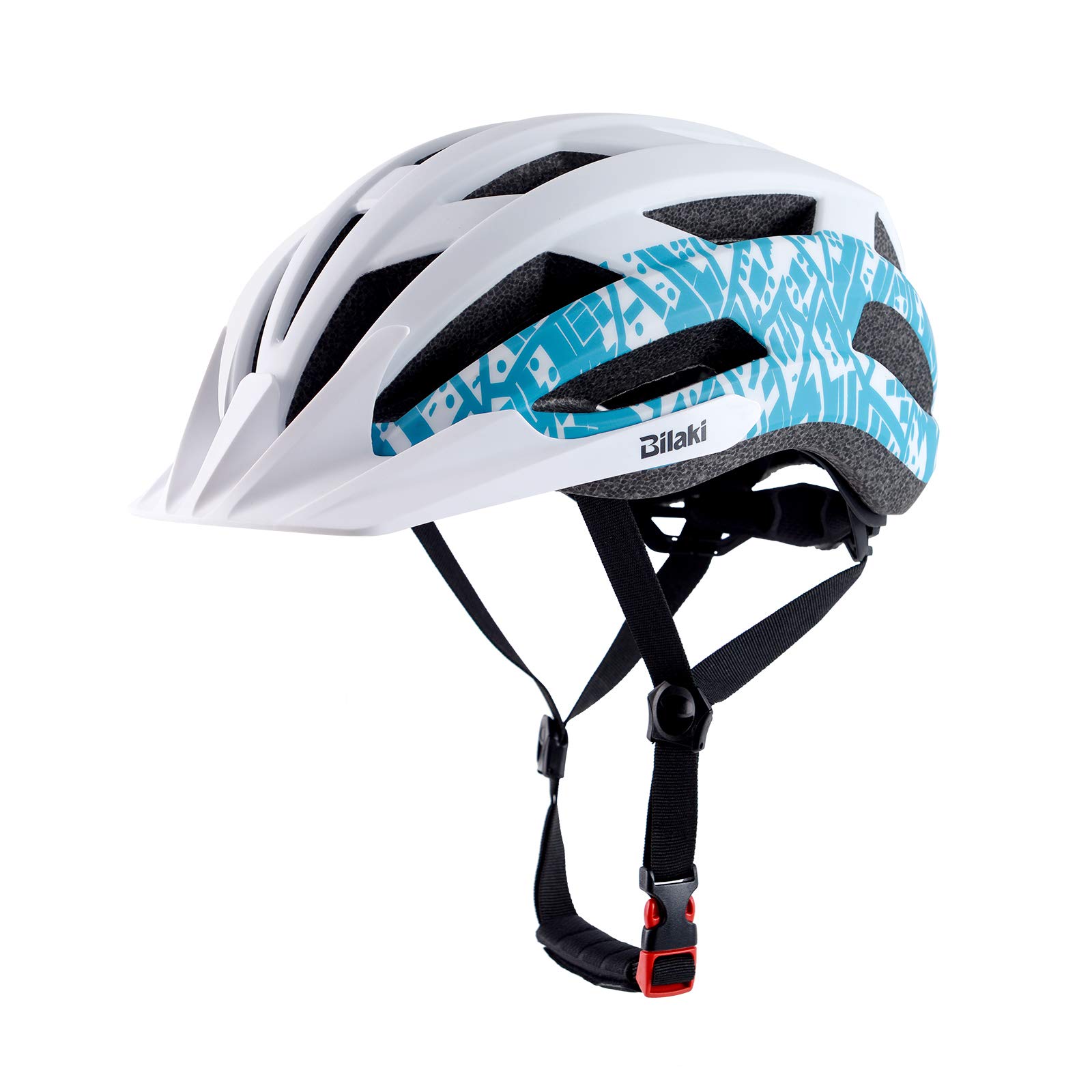
The most vents here at 23, aimed at the top end of the age band
When a kid turns 12, the youth shell stops fitting and the adult shell is the answer. The Bilaki comes in Medium at 54-58 cm for ages 12 and up and Large at 58-61 cm for teens and adults. It meets the U.S. Consumer Product Safety Commission standard for bicycle helmets for riders 5 and older, and it pairs a PC shell with high-density EPS foam. At 280 g it is near the lightest of the heavier shells here.
What wins people over is the fit — the most-praised aspect of this helmet — followed closely by build quality. It ships with two easily attachable visors, which give a rider shade options without needing sunglasses. The 23 flow vents with internal air channels are the highest count in this entire roundup, beating the Atphfety’s 20 and the OnBros’s 15, which makes it the coolest head on a summer ride.
The honest limit is that the smallest size here starts at 54 cm, so it will not serve a small 8-10 child — this is a teen-and-up shell, not a whole-range one. For a 12-year-old outgrowing their first proper helmet, though, the sizing and the airflow both land right where they should.
The teen transition pick: the same safety certification as the youth shells, with the larger sizing and the airflow that a rider logging real miles on a mountain or road bike will notice.
Reach for it if: your 12-14 year old has outgrown a youth shell and needs the next size up.
skip it if: your child still sits at the small end of the age band — the 54 cm start rules out a smaller head.
8. BATFOX Bike Helmet

Three sizes up to 63 cm, so it covers a big teen head where the youth shells run out
This is the helmet for a 14-year-old who has genuinely left youth sizing behind. It comes in three sizes — Medium at 54-58 cm, Large at 58-61 cm, and Extra-Large at 61-63 cm — and the adjustable dial lets you fine-tune the fit on whichever one you buy. The shell is a tough polycarbonate outer fused to an impact-absorbing EPS liner, and it meets CPSC, ASTM F1447, and E.U. CE standards for bicycle helmets.
The 18 wind tunnel vents with internal channeling keep air moving mile after mile, and the weight is 380 g — heavier than the youth shells here, but with the shell coverage to match. Washable, removable padding and a chin pad make it serviceable across a full riding season, and the big visor handles sun and other trail elements. What wins people over is the overall quality, with fit right behind it.
The honest note is that this is an adult-tier shell, not a youth-first one. As a trail helmet for a growing teen, though, it is the most capable build in this roundup.
The trail case: a full-coverage polycarbonate shell with a big visor and 18 vents is built for fire-road and single-track riding, and the three-size range lets a head that keeps growing follow the sizing up.
The right call for: a teen riding real mountain trails who has moved past youth sizing and needs real coverage.
The limit to expect: at 54 cm minimum and 380 g, this will not suit a smaller rider — the youth shells higher up this list are the better match for those heads.
Know the Specs
Head circumference in centimeters
This is the single most important number on any helmet listing. Measure around the widest part of your child’s head, just above the eyebrows. Then compare that figure to the range printed on the shell. A range like 54-58 cm means the helmet will adjust to fit heads in that band. The 8-14 age label is a rough guide only — a big 9-year-old and a small 14-year-old can measure the same. If your child’s number sits comfortably inside a range, the rear dial has room to work. If it sits at the very top or bottom, you are buying a shell with no adjustment room left.
The dial, the strap, and the pads
The dial at the back of the helmet narrows the fit ring around the head, while the chin strap keeps the shell seated from below. Together they are what stops the helmet from sliding. The interior padding — whether removable and washable or fixed — matters just as much for daily use, since a helmet worn against a sweating head day after day needs to be cleaned. Washable pads keep a daily-worn helmet fresher through a full summer, and a rear dial a child can tighten alone means fewer last-minute adjustments before they roll out the door.
Common Questions
How do I measure my child’s head for the right helmet size?
Is a youth helmet the same as an adult helmet?
Does more vents really make a helmet cooler?
Should my child wear a helmet for scooters and skateboards, not just bikes?
What do the CPSC, CPSIA, and ASTM standards mean on a helmet label?
How tight should the chin strap be on a youth bike helmet?
Can a helmet protect a child in a serious fall?
When should I replace a youth bike helmet?
Why do some of these helmets include knee and elbow pads?
What is the difference between a detachable visor and a fixed one?
The Bottom Line
For most kids in the 8-14 band, the youth bike helmet 8-14 that gets the job done is the OnBros Kids Bike Helmet — it is the lightest shell in this roundup at 240 g, fits the whole 50-57 cm range with a rear dial, and meets both CPSC and CE standards. The one caveat is the removable visor, which you should take off before any rough scooter session. If your child rotates between biking, scootering, and skating, grab the Flybar Kids Bike Helmet for its ABS-and-foam build and washable pads across three fit sizes. And for a 12-14 year old who has simply outgrown youth sizing, the BATFOX Mountain Bike Helmet takes you up to 63 cm with full trail-ready coverage and 18 vents.
How we choose
We do not accept paid placement. Every pick is matched to a real buyer and a real use-case; we do not hands-on test units.
Sources
Specifications: manufacturer listings and product documentation. Review insights: verified customer reviews, as of November 2026. Pricing: not shown on this page (it changes often); check the current price via the retailer link.
As an Amazon Associate, Tactical Gear Guy earns from qualifying purchases. This does not affect which products we feature.