Specs are compiled from manufacturer listings and verified buyer reviews and can change over time — please confirm the key details on the product page before buying.
Slush soaks through sneakers in minutes, and ice turns a normal walk to class into a balancing act. You want one pair of winter boots that keeps your feet warm and dry, without spending a weekend reading spec sheets. The short answer: the Columbia Expeditionist Shield is the strongest all-round pick here. But the right boot depends on your day — walking to class, shoveling a driveway, or standing in a hunting blind at daybreak. This guide compares nine real pairs on what matters in the snow: insulation (the lining that traps body heat), waterproofing (how well the boot blocks melted snow), tread (the grip pattern on the sole), and how easy they are to pull on with cold, stiff fingers.
This guide is built by comparing the manufacturers’ published specifications and the patterns across verified customer reviews, so you get each pick’s real strengths and trade-offs instead of marketing spin.
Below you will find boots sorted by how they handle cold mornings, deep slush, and long walks, with the exact insulation and waterproofing details spelled out. Whether you are braving a campus winter or a frozen job site, these are the young men’s snow boots that hold up when the weather turns genuinely nasty.
Top Picks

How To Choose The Best Young Men’s Snow Boots
Snow boots fail in three predictable places: the sole cracks, water creeps through a seam, or the lining packs down until your toes go numb. Every pick below was checked against those three failure points using the maker’s own specs and what long-term wearers report.
Insulation weight tells you the temperature range
Insulation is measured in grams — think of it as how much warm filler sits between your foot and the cold. A 200-gram boot suits active winter walking where your feet heat up as you move. A 400-gram boot handles standing around in genuine cold. A 1,200-gram boot is built for sitting still in serious cold, like a hunting blind or a frozen work site. Heavier insulation means a warmer foot but a bulkier, less nimble boot.
Waterproof shell versus water-resistant upper
A waterproof rubber shell blocks slush entirely, including the puddle you step in by accident. A water-resistant leather or suede upper sheds light snow but can soak through in a deep drift or a long slushy walk. Look for the words “waterproof” and “seam-sealed” in the listing if you plan to walk through standing water rather than just over snow.
Closure systems you can work with cold hands
Hook-and-loop straps, side zippers, and lace hooks all let you get the boot on and off without untying and retying thin laces. If you wear thick socks daily, a side zip or quick-lace hooks save time at the door. Traditional laces hold a tighter, more adjustable fit, which matters on longer hikes.
Side-by-Side Comparison
| Model | Best For | Insulation | Waterproofing | Closure | Amazon |
|---|---|---|---|---|---|
| Columbia Expeditionist Shield★ Best Overall | All-round winter wear | Thermal-reflective lining | Waterproof-breathable | Lace-up | Amazon |
| SUEDI Insulated Duck BootsBest Value | Wide feet, budget warmth | Faux shearling lining | Sealed TPR shell | Quick-lace hooks | Amazon |
| Lands’ End Expedition QuiltedEasiest On | Slip-on daily use | Insulated (seam-sealed build) | Waterproof, seam-sealed | Hook & loop | Amazon |
| FREE SOLDIER Fleece Winter | Active winter sports | Fleece-lined interior | Waterproof suede upper | Lace-up hooks | Amazon |
| Guide Gear Side Zip Duck Boots | Easy on/off in the cold | 400-gram Thinsulate | 100% waterproof rubber shell | Side zip | Amazon |
| HOBIBEAR Fur Lined Snow Boots | Look-and-warmth combo | Plush faux fur lining | Waterproof shell | Lace-up | Amazon |
| ROCKY Blizzard Stalker 1200G | Deep cold, outdoor treks | 1,200-gram Thinsulate Ultra | Rocky Waterproof | Lace-up | Amazon |
| The North Face Chilkat V | Winter trail performance | 200-gram premium insulation | Waterproof, non-PFC DWR | Lace-up | Amazon |
| SOREL 1964 Pac Nylon | Classic cold-weather style | Insulated, Sherpa cuff | Seam-sealed construction | Lace-up | Amazon |
Detailed Reviews
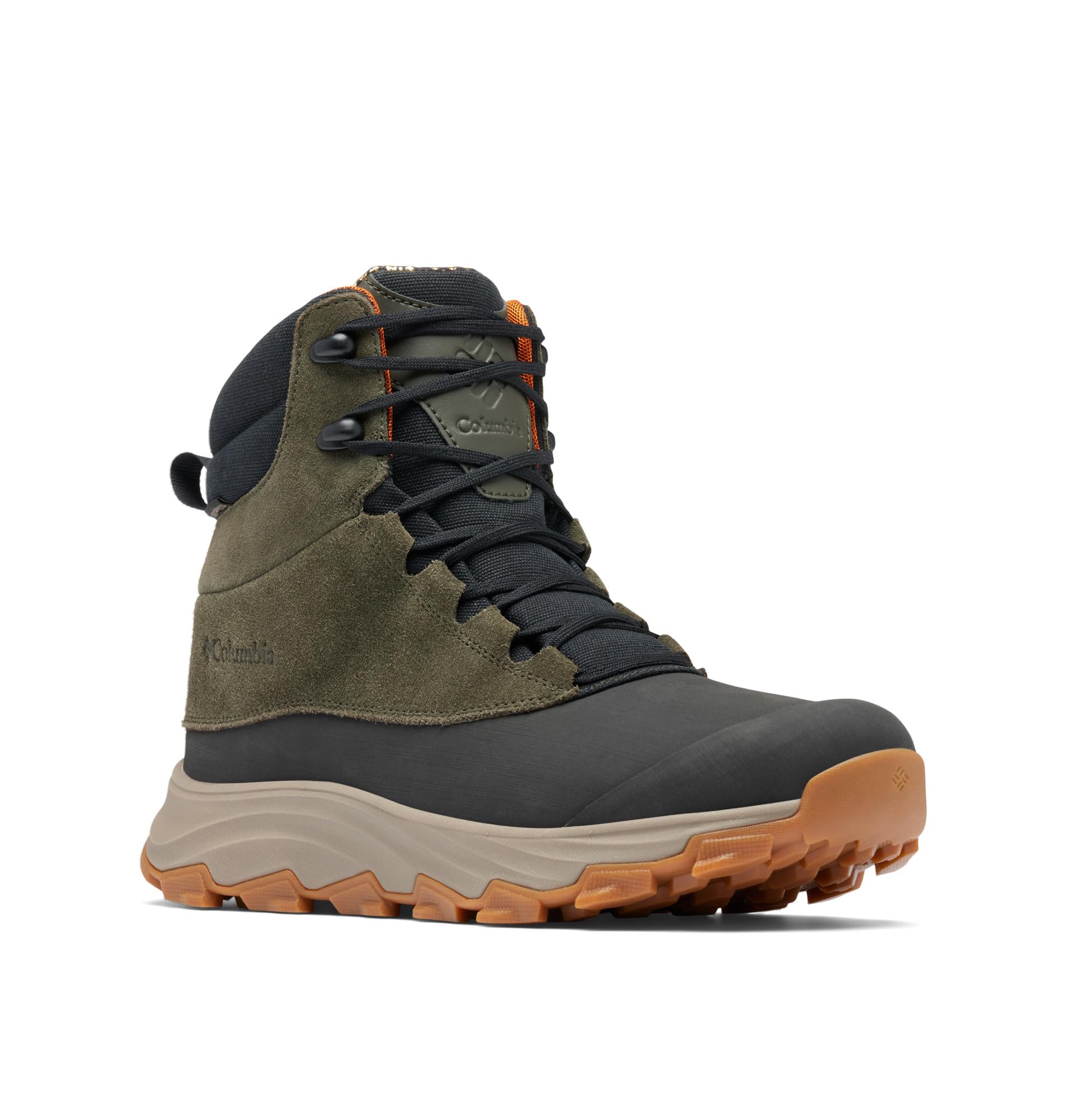
1. Columbia Men’s Expeditionist Shield
Our pick — 4.5+★ from 600+ verified ratings; the strongest balance of quality and price.
Warmth that bounces your own body heat back at your toes, on a boot built for slush.
The headline here is Columbia’s thermal-reflective lining — a foil-like inner layer that reflects your own body heat back into the boot instead of letting it leak out into the snow. Pair that with the manufacturer’s ample insulation and you get a boot that feels noticeably warmer than its bulk suggests. The waterproof-breathable build is the other half of the story: moisture from outside stays out, while sweat vapour from your foot can escape, so your socks do not turn clammy on a long walk.
What wins people over is the overall build. The cold-tune traction is named specifically for ice and snow, and owners treat these as go-anywhere winter boots — the kind you wear to work outside in January and then keep on for the walk home. It is the most complete package on this list for someone who wants one pair to do everything.
The catch is the sizing. A recurring theme in the feedback is that these run small, so a good chunk of buyers end up wishing they had gone up a half size, especially when they plan to wear thick winter socks. Durability and style also draw a genuinely split reaction — some love the look, some find the build less rugged than expected. Order a half size up and wear them in before you trust them on a long trek.
What makes it the winner
- Thermal-reflective lining reflects body heat back at your feet
- Waterproof-breathable build keeps slush out and sweat vapour moving
- Cold-tune traction aimed specifically at ice and snow
- Versatile enough for work outside and everyday winter wear
Where it asks you to adjust
- Sizing runs small — plan to go up a half size
- Durability and style draw a genuinely split reaction
The verdict: The pick for a young man who wants one boot to handle campus, the commute, and a January job site without a second pair.
Size up: Order a half size larger than your usual, particularly if thick socks are part of the plan.
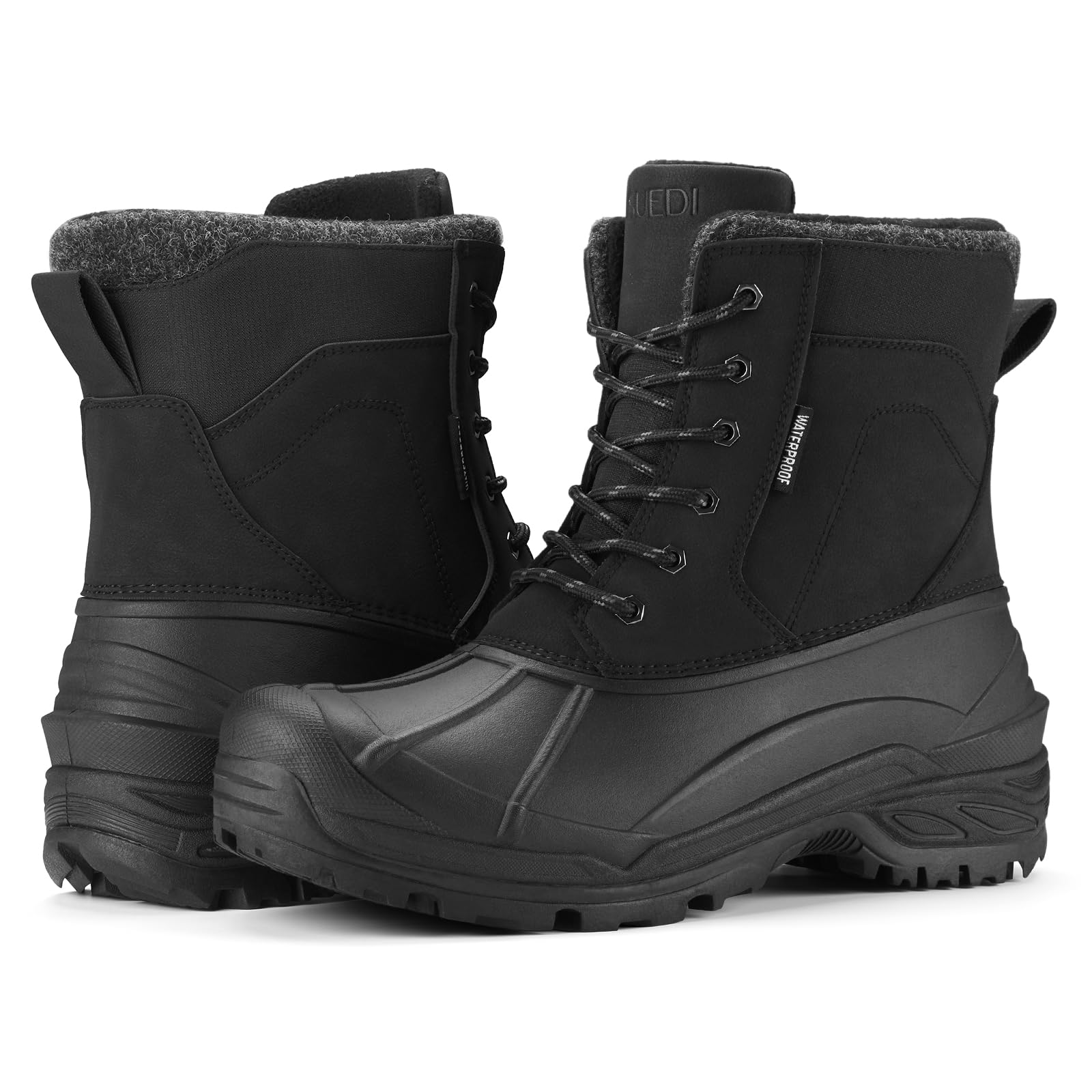
2. Men’s Snow Boots, Insulated Waterproof Winter Duck Boots
The roomy-fitting duck boot that turns a tight budget into a warm, dry winter.
The SUEDI duck boot starts with the shell: a sealed TPR (thermoplastic rubber) outer that blocks snow, rain, and slush in one solid piece. Inside sits a full faux shearling lining and a thick lambswool insole — the two layers that actually trap your body heat and hold it around your foot. For anyone who has worn a thin-soled boot through a February commute, the difference is immediate.
Grip comes from a cold-resistant rubber outsole with deep multidirectional treads — angled lugs that bite in more than one direction, so you are not skating when you turn a corner on packed snow. The rustproof quick-lace system with reinforced metal hooks means you can cinch them tight without fumbling. And the fit is the part that keeps surprising buyers: these are roomy, so wide feet finally get breathing room instead of a squeeze.
Two honest notes. Durability and water resistance get a genuinely mixed response — some report a long life and dry feet, others the opposite, so treat them as a solid everyday boot rather than a backcountry one. And because they run large, a narrow foot will want to size down. The build quality is the most-praised part of the whole package, so the value story holds up for the price tier.
Room where you need it: The wide, accommodating fit is the standout feature — great for anyone whose normal boots pinch across the toes or who wears thick socks all season.
Know the limit: These are a fair-weather-firm everyday boot; if you need something to survive years of hard mountain abuse, look higher up this list.
Reach for these if: You have wide feet or wear thick socks and want the most warmth per dollar in this lineup.
Look elsewhere if: You have narrow feet — these run large and will need sizing down to fit snugly.
3. Lands’ End Expedition Quilted Slip On
Slip in, strap down, walk out — the winter boot for people who hate lacing up cold.
The defining feature of the Lands’ End Expedition is the hook-and-loop closure. Instead of threading laces with numb fingers, you pull one strap tight and you are done. That single decision makes these the fastest boot on this list to get on and off, and it is the feature buyers mention most after the build quality. The seam-sealed construction is the other reason they work: stitched seams get sealed against water, so slush does not wick in where the panels meet.
Your feet stay warm thanks to the insulation, and the quilted upper (the stitched fabric shell) gives a cleaner, less clunky look than a rubber duck boot. They come in Black, Brown, Green, and Grey, in sizes 8 through 13, in both medium and wide widths — a real advantage if your foot refuses to match a single standard width. For quick errands, school runs, and short winter walks, that mix of easy entry and reliable waterproofing is tough to top.
The fit is the honest trade-off: a good share of wearers find they run larger than advertised, so try true to size or a half down. The hook-and-loop closure itself also draws a mixed reaction — some straps have trouble closing fully and holding, so check the strap is seated firmly every time you put them on.
Why you would pick these
- Hook-and-loop strap means no laces to tie with cold hands
- Seam-sealed construction keeps water out at the stitches
- Available in medium and wide widths, sizes 8 to 13
- Quilted upper looks tidier than a rubber duck boot
What to watch
- Run larger than advertised — try true to size or a half down
- The strap closure has a mixed record on staying fully closed
Made for: Anyone who values speed over lacing, wears wide widths, and wants a clean-looking boot for quick winter trips.
One caution: Check the strap seats properly each time — a loose closure undermines the whole point of the design.
4. FREE SOLDIER Men’s Waterproof Fleece Winter Snow Boots

A fleece sock wrapped in waterproof suede, built for snowshoeing and ski-adjacent days.
For the active side of winter, the FREE SOLDIER gets a lot right. Inside, fleece is lined all the way around like a thick warm sock. Outside, a suede upper is treated to be waterproof, and a sturdy rubber shell covers the high-wear lower section so slushy puddles and hard rock do not chew through the boot. Gusseted tongues close off the last path for wind, snow, or water to sneak in.
The details suit movement. The outsole has nonslip bumps in several patterns, giving grip on frozen ground. The rubber sole is built sturdy but not stiff, so it flexes under your foot instead of clomping. And the lacing system uses shoelace hooks at the top, which lets you loosen and tighten without untying — genuinely useful when your fingers are cold and your socks are thick. At an 8.3-inch shaft height, the ankle coverage is substantial.
Quality and warmth are what buyers praise most, and most say the fit is true to size. The honest caveat is the sole: durability lands as a mixed picture, with the rubber below described as cracking over time by a share of wearers. Water resistance, too, is not universal — some find it holds, others report seepage. These are an excellent choice for winter recreation, not a work boot you expect to survive years of abuse.
The active-winter case: Fleece all around plus a rubber shell equals a warm, moving boot that handles snow, slush, and a wet hike without complaint.
The honest limit: The sole is the weak spot over time, and water can find its way in for some wearers, so keep these to recreation rather than heavy daily work.
Suits you when: The plan is snowshoeing, light hiking, or snow-day play and you want warmth that moves with you.
Skip the abuse: Do not expect these to outlast a hard-work boot — the sole has a shorter lifespan than the upper.
5. Guide Gear Men’s Side Zip Insulated Leather Duck Boots

A 400-gram Thinsulate boot with a full rubber shell and a side zip for fast entry.
The insulation here is spelled out plainly: 400 grams of Thinsulate. That thickness is aimed at the genuinely cold days, where you want a real thermal barrier between your foot and the ice. Over it sits a 100% waterproof rubber shell that covers the lower boot completely, plus durable water-resistant leather uppers above — so slush on the ground has no route in. Add the Ortholite open-cell foam insole and a steel shank for support, and this is a boot built to stand up in winter weather, not just style itself after it.
The side zipper is the practical victory. You loosen the zip, step in, and you are done — no lacing ritual when you are already late and cold. Twin side gore panels keep the fit snug around the ankle. Owners consistently describe these as comfortable from the first wear, warm enough to keep feet dry all day, and looking smart enough to wear out with normal clothes.
The one true weak spot is durability at the bottom. The rubber is the part most likely to fail over time, with the appearance holding up better than the sole does. Fit is described as comfortable and true, so this is not a sizing gamble — it is a “treat the sole as the wear item” boot.
The strong points
- 400-gram Thinsulate for real cold-weather warmth
- 100% waterproof rubber shell blocks slush completely
- Side zip makes it the quickest boot here to put on
- Ortholite foam insole with a steel shank for support
The trade-off
- Rubber sole is the part that wears out first over time
Pick it for: Standing cold, quick exits, and anyone who wants full waterproof coverage plus a side zip in the same boot.
Keep an eye on: The rubber sole is the wear point — pair these with normal daily use and they serve you well.
6. HOBIBEAR Men’s Insulated Waterproof Fur Lined Snow Boots

Looks sharp, feels warm, and asks you to mind the narrow fit before you buy.
The HOBIBEAR leads with its looks. This is the best-looking boot in the group for everyday wear, and appearance is what buyers rave about most. Underneath the finish sits a soft plush faux fur lining that holds warmth around the foot, and a waterproof shell that fends off snow and slush while also protecting the toe from bumps. A non-slip rubber sole is built for mud and broken ground, so you get sure footing on icy pavement.
Warmth is the other pillar — the boots keep feet warm and dry in genuine cold, including a cold snap well below freezing. The internal fur layer makes them feel cosy from the first step, without the boot being a heavy workhorse. For someone who wants a winter boot that looks good enough to wear with normal clothes while still handling a snowy walk, these fit that brief neatly.
Two things to know. The fit is narrow, so a wider foot should size up or look elsewhere. And durability is a mixed picture — some wearers find them tough, a few report early tearing. Neither is the majority experience, but both are worth factoring in if you are hard on your footwear.
Winning on looks: The appearance takes first place among wearers, and the plush fur lining backs it up with warmth you feel right away.
Fit warning: This boot runs narrow — larger feet should size up or choose a wider model.
For you if: You want the best-looking winter boot that still keeps your feet warm through a cold commute.
Not for you if: You have wide feet — the narrow fit will feel like a squeeze from the first step.
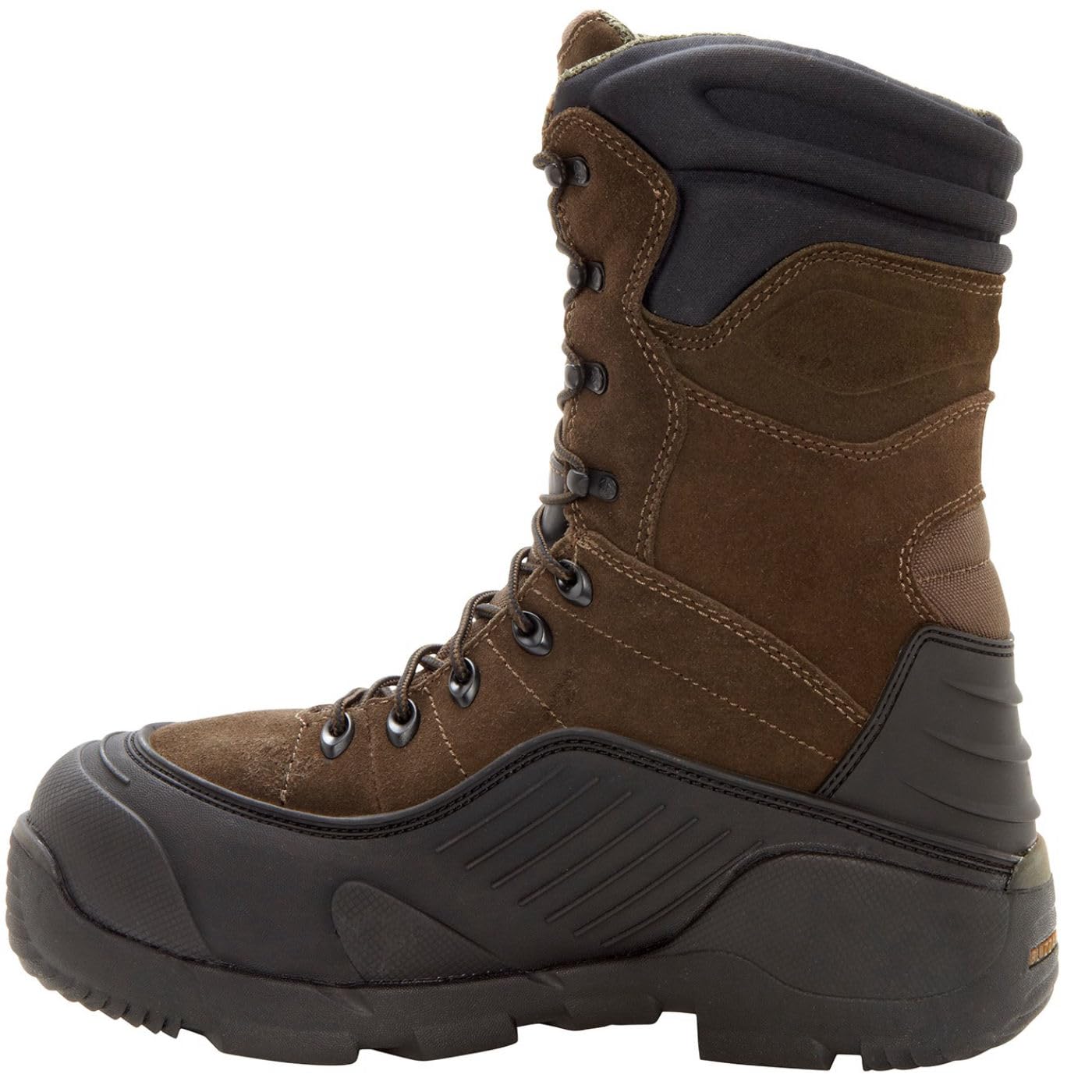
7. ROCKY Blizzard Stalker Waterproof 1200G Insulated Boot
The warmest boot on this list, with 1,200 grams of insulation for standing still in real cold.
If you want the highest insulation in this comparison, this is it: 1,200 grams of Thinsulate Ultra. That weight of insulation is built for a specific job — being outside in genuine cold for long stretches, like a hunt, a blind, or a work site where you are not moving much to generate heat. The split suede and 900-denier high-abrasion textile upper gives it a durable skin, and Rocky’s own waterproof construction claims to hold a high level of protection while still letting the boot breathe.
Grip comes from the multi-directional Blizzard outsole, designed for uneven snow and ice. Inside, a removable mesh PU footbed lets air flow, and a TPU heel stabilizer keeps your heel locked in place so the boot does not shift with each step. A molded foam padded collar and a rubber vamp add comfort around the ankle. The 8-inch height covers the ankle solidly. At 5.4 pounds per pair in a size 10, it is a substantial boot — that weight buys you warmth.
What buyers praise most is warmth, followed by comfort and waterproofing. Fit is a genuinely split verdict though — some find the size right, others say they run large. And durability has its own mixed record, with stitching coming apart reported by a share of wearers. This is a boot for the deeply cold, not a featherlight commuter.
The warmth case
- 1,200-gram Thinsulate Ultra — the most insulation on this list
- Multi-directional Blizzard outsole grips snow and ice
- TPU heel stabilizer keeps the heel locked in place
- Padded collar and rubber vamp add comfort
The honest caveats
- Runs large for some wearers — check sizing
- Stitching has drawn mixed reports over time
- Heavy at 5.4 pounds per pair
Best when: You are out in deep cold for long stretches — hunts, blinds, or a frozen job site — and want the warmest boot here.
Not for: Light city wear — the 5.4-pound weight and heavy insulation are more boot than a commute needs.
8. THE NORTH FACE Men’s Chilkat V Lace-up Waterproof Snow Boot

A 200-gram, trail-ready boot that stays nimble instead of clumping around the ankle.
The Chilkat V carries 200 grams of premium insulation — the lighter end of this lineup, aimed at someone who is moving rather than standing still. That lower insulation weight is deliberate: it cuts bulk so the boot stays easy to walk in and packable for the car. A water-resistant, non-PFC DWR (durable water repellent) treatment — a fluorine-free coating that makes water bead and roll off — sits over a fully waterproof design, so snow, rain, and wind stay outside.
Where it shines is versatility. Owners put it to work on dirt, mud, creeks, and light snow, and describe the boot as genuinely quiet and light on all-day wear. It weighs in the same light range as the FREE SOLDIER, while offering a more premium build and a more articulated, trail-friendly sole. That combination makes it the go-to for someone who wants one boot that handles winter commuting and a backcountry walk without feeling like a rubber brick.
The trade-off is fit. Some wearers find the Chilkat V a bit snug or narrow, so it pays to try it against a thicker sock before committing. Comfort and quality are the two things people praise most, and the boot does hold up over a full winter of daily use. It is the right boot for the active winter wearer, not the one who wants maximum insulation weight.
The trail read: 200 grams of insulation and a truly light build make this the boot that moves with you rather than anchoring your stride.
What to watch: The fit can run snug for some — size for your thickest winter socks, not your thinnest.
Grab it if: You cover distance in winter — trails, creeks, muddy paths — and want a light waterproof boot with premium materials.
Think twice if: You need maximum warmth for standing still in the cold — 200 grams is aimed at movement.
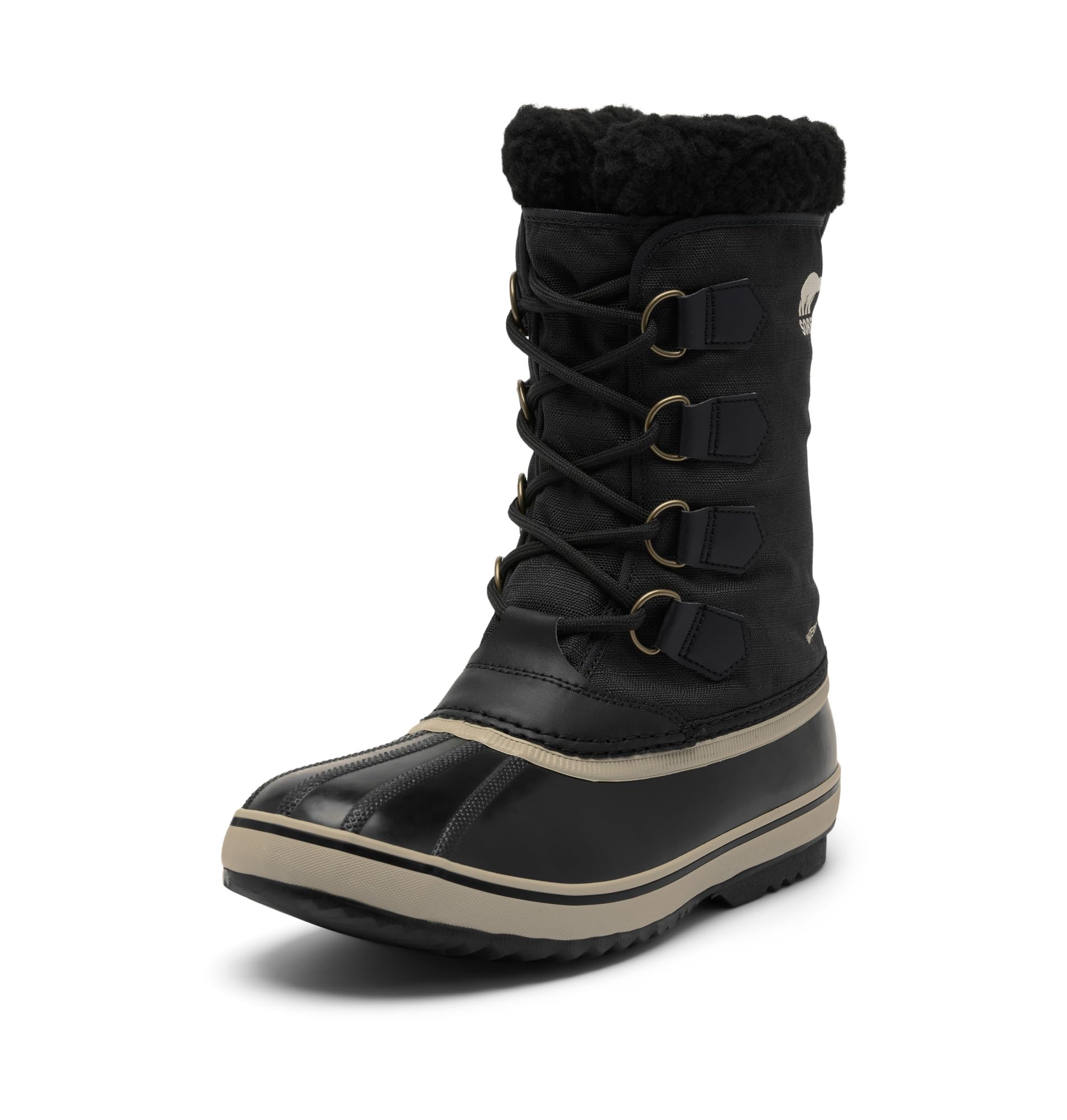
9. SOREL Men’s 1964 Pac Nylon Waterproof Boot
Classic SOREL shape with a seam-sealed shell and a Sherpa cuff to keep cold off your ankle.
The 1964 Pac is the heritage entry in this group. A seam-sealed construction — every stitched seam treated so water cannot seep through — pairs with a vulcanized rubber shell (rubber heated and bonded into one tough piece) for weather protection you can trust on the slickest ground. An extra-grip sole is designed specifically for wet, slippery terrain, so a frozen path and a slushy crossing are both manageable.
The Sherpa cuff at the top of the boot is a small touch with a real job: it softens the edge against your ankle and keeps the cold off the top of the sock. It also gives the boot its classic winter look, which many wearers choose it for. Comfort inside is described as good for a full day, and the fit is the most-praised single quality of the whole boot.
Build quality is the one split issue. Most report the construction is high-quality and dependable, while a few find it less solid than expected. That is the minority view, and it does not undercut the fact that the fit and warmth are the strengths here. For a young man who wants a recognizable winter boot that looks as good as it performs, this is the style-forward finalist.
Why it earns a spot
- Seam-sealed construction keeps water out at the stitches
- Vulcanized rubber shell with an extra-grip sole for slick ground
- Sherpa cuff softens the ankle and blocks cold
- Fit is the most-praised quality of the boot
The honest note
- Build quality reads mixed — most rate it high, a few find it less solid
Choose it when: You want a classic-looking winter boot with dependable seam-sealed protection and a great fit.
Just know: The build quality leaves a few wearers wanting more — most are happy, but inspect your pair on arrival.
Know the Specs
Insulation Weight in Grams
The gram number in a boot listing measures insulation thickness — how much warm filler sits between your foot and the cold. A 200-gram boot is for active winter wear where your feet warm up as you move. A 400-gram boot handles standing cold. A 1,200-gram boot is built for long stretches of serious cold. Heavier insulation means a warmer but bulkier, heavier boot, so match the number to how much you move.
Waterproof Shell versus DWR
A waterproof rubber shell blocks water entirely, including puddles and slush. A water-resistant leather or suede upper sheds light snow but can soak through in standing water. DWR, or durable water repellent, is a coating that makes water bead on the surface rather than absorb — good for snow, but it wears off and needs re-treating. Look for “waterproof” and “seam-sealed” if you walk through wet, not just over snow.
Closure Systems
Hook-and-loop straps, side zips, and lace hooks all let you get the boot on and off without tying thin laces. A side zip or lace hooks save time at the door with cold hands and thick socks. Traditional laces hold a tighter, more adjustable fit, which matters on a longer walk.
Traction and Sole
Traction comes from the outsole — the bottom layer that touches the ground. A multi-directional lug pattern bites in more than one direction, giving grip on packed snow and ice. A cold-resistant rubber compound stays flexible in freezing temps; a stiff sole can crack. For icy sidewalks, a multi-directional lug pattern bites better than a flat sole.
Common Questions
How warm are 400-gram snow boots compared with 200-gram boots?
Are these snow boots actually waterproof or just water-resistant?
Do these boots run true to size, or should I size up?
Can I wear snow boots indoors or in school all day?
How long should a pair of winter snow boots last?
What is the difference between a duck boot and a hiking snow boot?
Do I need a side zip or hook-and-loop closure on snow boots?
Are snow boots with heavy insulation too warm for city use?
How do I keep snow boots from slipping on ice?
The Bottom Line
For most young men, the young men’s snow boots winner is the Columbia Expeditionist Shield. Its thermal-reflective lining (a layer that bounces body heat back to your feet) and waterproof-breathable build handle the widest range of winter days — just size up a half. If you want the most warmth for standing in genuine cold, get the ROCKY Blizzard Stalker 1,200G, which packs 1,200 grams of insulation. And if you want the quickest boot to pull on with cold hands, reach for the side zip on the Guide Gear Side Zip Duck Boots. Whichever you choose, check the sizing note on that pick — the Columbia runs small, the SUEDI and Lands’ End run large.
How we choose
We do not accept paid placement. Every pick is matched to a real buyer and a real use-case; we do not hands-on test units.
Sources
Specifications: manufacturer listings and product documentation. Review insights: verified customer reviews, as of November 2026. Pricing: not shown on this page (it changes often); check the current price via the retailer link.
As an Amazon Associate, Tactical Gear Guy earns from qualifying purchases. This does not affect which products we feature.