Specs are compiled from manufacturer listings and verified buyer reviews and can change over time — please confirm the key details on the product page before buying.
A foam roller is a simple cylinder of dense foam, and the one you buy decides whether rolling feels like relief or like lying on a rock. The mistake almost every first-time buyer makes is grabbing the firmest, cheapest cylinder on the shelf and then abandoning it after two painful sessions. The right pick depends on foam density, roller length, and whether the surface is smooth or textured. Below are nine rollers that earn their place, with the trade-offs spelled out in plain English.
This guide is built by comparing the manufacturers’ published specifications and the patterns across verified customer reviews, so you get each pick’s real strengths and trade-offs instead of marketing spin.
You will see which surface texture suits tender spots and which one digs into stubborn knots. You will see why a 36-inch roller suits some recovery routines while a compact 13-inch barrel suits others. You will also see how foam density quietly decides whether you stick with rolling at all. Below is everything worth knowing about choosing a yoga foam roller that you will still be using next year.
Top Picks


How To Choose The Best Yoga Foam Roller
Rolling works on one simple principle: your own body weight presses a muscle against a hard cylinder, and the pressure helps tight tissue let go. That means the roller supplies the resistance and your body weight supplies the pressure. So the two things worth thinking about before you buy are how hard the foam pushes back and how easily you can position it on the spots that hurt.
Density decides whether you will actually keep rolling
Density is how much the foam resists your weight. A high-density roller barely dents under you, so the pressure lands deep and firm. That suits someone with a training background or a specific knot to work out. A medium-density roller gives a little under load, which feels less aggressive on the spine, ribs, and hip bones. If rolling is new to you, a firm roller on day one is the fastest route to quitting — start with medium density and work up.
Length decides which body parts you can reach alone
A long roller in the 36-inch range lets you lie across it and cover both sides of your back in one pass without repositioning. A compact roller around 12 to 18 inches is better for isolating a single quad, calf, or glute, and it fits in a gym bag. Most people end up owning one of each eventually, but if you can only own one, an 18-inch roller covers the most ground.
Smooth versus textured surface
A smooth foam cylinder spreads pressure evenly across a broad area. A textured or knobbly roller concentrates that pressure into ridges, bumps, or raised zones that mimic fingers and thumbs. Textured surfaces feel more targeted on tight spots but can be genuinely sharp on bony areas or bare skin. If you bruise easily, prefer a smooth or gently textured roller.
Side-by-Side Comparison
| Model | Best For | Length | Firmness | Material | Amazon |
|---|---|---|---|---|---|
| TriggerPoint Grid 1.0★ Best Overall | All-round deep tissue recovery | 13 in | Firm (multi-density) | EVA foam over hollow core | Amazon |
| TONE Fitness Firm High-DensityBudget Contender | Budget-friendly firm rolling | 23.43 in | Firm | EPP foam | Amazon |
| Amazon Basics High-Density 36″Best Full-Back Coverage | Full-back coverage on a budget | 36 in | Firm | Polypropylene | Amazon |
| 321 STRONG 3-Zone Massage Roller | Targeted knot work | 12.5 in | Medium | EVA foam over EPP core | Amazon |
| Yes4All Extra Firm PE Roller | Firm pressure on a narrow budget | 24 in | Medium firm | Polyethylene | Amazon |
| Gaiam Restore Textured 18″ | Isolating smaller muscle groups | 18 in | Medium | EVA foam | Amazon |
| Maximo Fitness Foam Roller | Long-reach full-body rolling | 36 in | Firm | EVA foam | Amazon |
| Black Mountain Products Extra Firm | Very firm, made-in-USA build | 36 in | Extra firm | Foam | Amazon |
| Rollga Ergonomic Roller | Spine-friendly back work | 18 in | Medium | Foam with contoured channels | Amazon |
Detailed Reviews
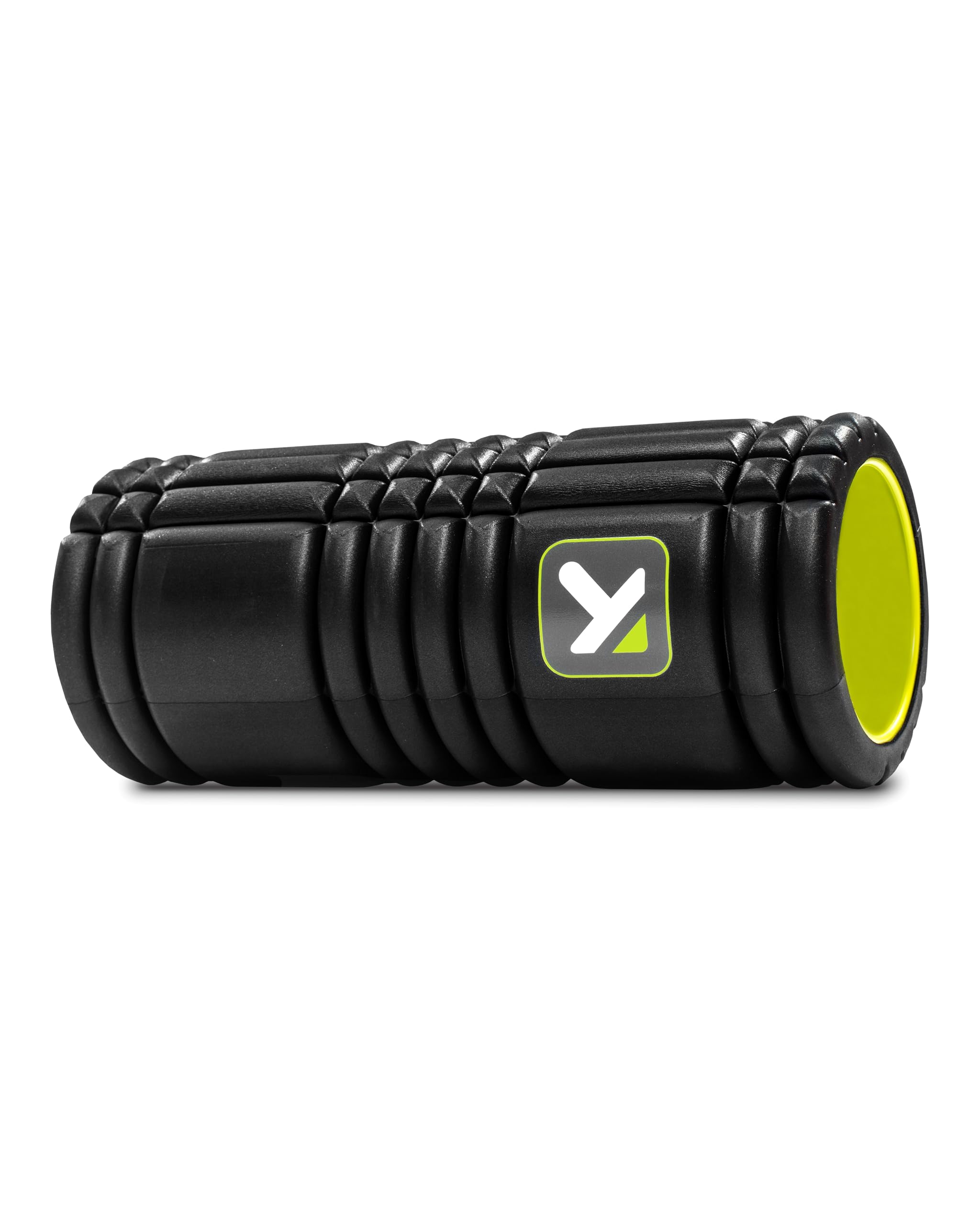
1. TriggerPoint Grid 1.0 Foam Roller, 13″
Our pick — 4.5+★ from 23,500+ verified ratings; the strongest balance of quality and price.
The short, grooved barrel that turns a vague ache into a spot you can actually reach.
The Grid 1.0 is the one you keep coming back to because it treats rolling as a two-way conversation. Its surface is a three-dimensional GRID — a pattern of raised ridges and flat zones rather than one smooth tube — so the pressure changes as you shift. Roll onto a knotted section of quad or glute and you feel a firmer bite. Slide sideways onto a softer zone and the pressure eases off. That variation is what lets one 13-inch roller work on tender spots without forcing you to swap tools mid-session.
Underneath that texture is a hollow core wrapped in EVA foam. That construction matters in daily use: it holds its shape under your body weight instead of pancaking over months of use. It is firm — noticeably firmer than a plain foam cylinder — so the compression lands deep on kinks in a way a soft roller cannot. The brand’s own Distrodensity zones language essentially describes this: different areas of the surface deliver different pressure, so you choose how hard it hits by where you place your weight.
The honest catch is the size. At 13 inches it is a targeted tool, not a whole-back roller — you work one section at a time rather than lying across it for a full-length pass. And the firmness that makes it effective is the same firmness that feels like a lot on first contact. Ease into it. Still, this is the crowd favorite for a reason — 4.5+ stars across 23,000+ owners — and the price sits at the mid-range end for a tool built to survive repeated use.
What earns it first place
- The GRID surface gives you varying pressure zones in one roller, so you can dial intensity by moving your body rather than choosing a different tool.
- The EVA foam wrapped over a hollow core stays firm and keeps its shape through repeated sessions.
- 13 inches makes it genuinely portable — drop it in a gym bag and it takes up less room than a long cylinder.
- Depth of pressure reaches knots that a soft, smooth roller simply glides over.
What to weigh first
- Compact coverage means you cannot roll both sides of your back in a single pass like a 36-inch roller allows.
- The firmness is real — beginners often need to build up to it slowly.
Best if you want one roller that does everything: the Grid 1.0 handles targeted knot work and post-workout recovery without needing a second tool.
Think twice if: you want a long barrel to lie across for full-spine passes — this one is built for precision, not wide coverage.
2. TONE Fitness Firm High-Density Foam Roller
A mid-length, firm-textured roller that asks you to respect its density or feel it later.
The TONE Fitness roller makes a clear promise: firm pressure for advanced users. That pitch is accurate, and it is the reason the brand’s own description suggests you control intensity by supporting more of your body weight on your arms or legs. When it works — and it does for people with a training base — it works well. The firm EPP foam (expanded polypropylene, a stiff, springy foam that resists squashing) presses deep into the IT band, quads, and glutes. It stays firm under load, which is exactly what you want when you are chasing a stubborn knot.
The size is the quiet advantage. At 23.43 inches long it covers more ground than the 13-inch Grid, so you can work a full leg or a run of back muscles without repositioning constantly. It also weighs 9.92 ounces — light enough to toss in a bag without noticing it. For reference, the 321 STRONG roller weighs 8.64 ounces, and on your back both feel nearly identical; you will never sense the difference in use.
Where this roller splits opinion is density versus comfort. Plenty of people love how firm it is; others find it extremely hard, especially on the lower back where the spine sits directly under your weight. That is not a defect — it is a fit question. If you are new to rolling, this is the wrong first roller. If you have a solid base and want firm pressure without paying premium prices, it delivers exactly that. 4.0+ stars is a fair reflection of a tool rewarding the right owner and punishing the wrong one.
Where it earns its place: the size-to-firmness ratio is the win here. A 23.43-inch rollout at a budget-tier position, in a stiff EPP foam that will not go soft on you.
The detail worth knowing: firmness is the whole story. This is not a gentle roller, and the lower back especially will feel unforgiving. Support your weight with your arms before you commit your full body.
Reach for this if: you are experienced with rolling and want firm, budget-friendly pressure across a long run of leg muscle.
Look elsewhere if: your back is the main target and you need under the load to give a little.
3. Amazon Basics High-Density Foam Roller, 36 Inches
A long smooth cylinder that lets you lie back, roll both sides at once, and stop thinking about it.
The 36-inch Amazon Basics roller earns its spot by covering both sides of your back in one pass, so you can relax and cover ground without repositioning. That length is its biggest difference from the compact 13-inch Grid: the Grid asks you to target areas one at a time, while this one lets you lie across it and roll the whole spine. The smooth polypropylene surface (a hard plastic foam) spreads pressure evenly rather than concentrating it on ridges. The result is less pinpoint intensity and more gentle, broad compression over the whole spine.
Polypropylene is a firm plastic foam that holds its shape and resists flattening. The brand’s molded edges — the slightly rounded ends rather than a sharp cut — are a small detail that matters when you drag it across your kitchen floor or move it during a workout. It is light enough to carry to a class without effort, and the smooth surface wipes clean with a quick pass of a cloth. That easy-clean surface is surprisingly relevant if you roll on bare skin after a sweaty session.
The disagreement among people who use it depends on firmness. Some find the polypropylene too hard, particularly on the bony points of the spine or the hip. That is the trade-off for a foam that never goes soft. If you want a consistent, even surface and care about durability over a tailored feel, this is the one to beat. The 36-inch Amazon Basics and the 36-inch Maximo are the two long rollers here. This one is smooth and evenly firm; the Maximo is textured and also firm. So the choice between them depends on if you want texture or a clean surface.
Why the length wins: 36 inches is the point at which rolling your back stops being a careful act of positioning. You lie down and roll.
The honest caveat: the smooth, firm surface offers no zones and no variation. If even pressure feels too aggressive on a given day, there is nothing to switch to.
Best matched to: anyone who wants a long, simple, low-effort roller for post-workout back and leg work.
Pass on it if: you want textured targeted pressure — a grooved or knobbly roller will reach knots this smooth one skims over.
4. 321 STRONG Patented 3-Zone Massage Roller
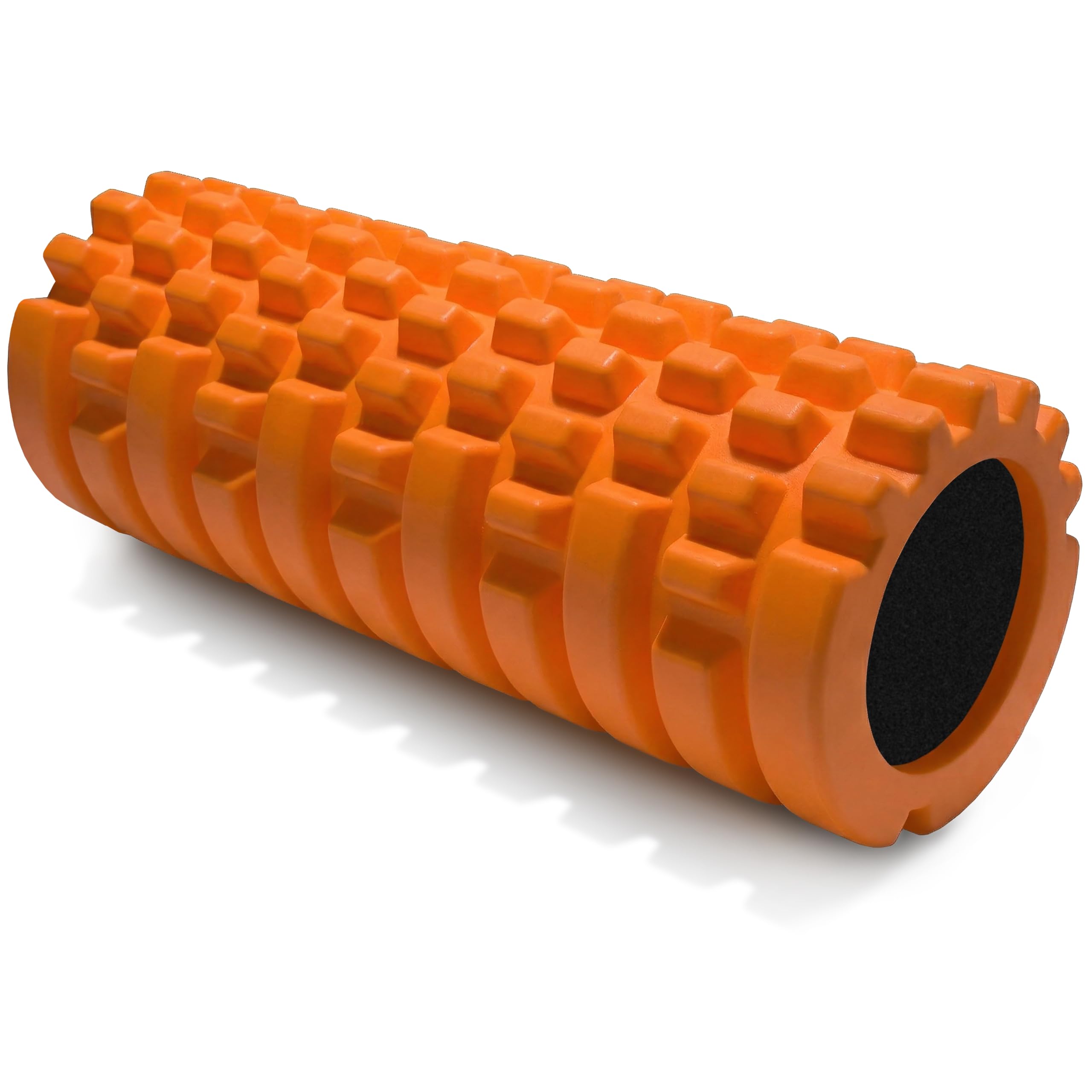
Three sizes of raised bump, one on each zone, so you pick how hard the roller presses.
The 321 STRONG roller stands apart from every smooth cylinder here because it does not just sit under your weight — it reaches into it. Its surface carries patented projections in three zone sizes: the smallest mimic fingertips, the larger ones thumb-like, the largest the base of a palm. Roll across the smallest and you get a gentle, almost ticklish pressure. Shift to the largest and it digs into soft tissue in a way a flat roller cannot. The entire surface is closed-cell EVA foam (a dense, water-resistant foam that does not absorb sweat), and it sits on a lightweight EPP core.
At 8.64 ounces it is lighter than the TONE Fitness roller’s 9.92 ounces, so it disappears into a gym bag. The diameter of 5.25 inches is also noticeably smaller: the Yes4All Extra Firm roller measures 6 inches in diameter, so the 321 STRONG is the more compact pick to grip and control. That smaller girth does mean less surface to cover per pass, but for targeted work that is the point. The projections are concentrated, so you can feel exactly where the pressure lands.
The line that divides buyers is hardness and size. Some love how deep it goes; others find it too hard for daily use or note it barely spans their whole back and shoulders in one position. Both reactions are honest. The 4.5+ rating is earned by the people it suits; the firmness is not a flaw but the whole point.
The case for the 3-Zone surface
- Three projection sizes in one roller let you vary intensity without buying a second tool.
- Closed-cell EVA over an EPP core keeps it light at 8.64 ounces and firm enough not to flex under weight.
- BPA-free, formamide-free, lead-free, PVC-free, and phthalate-free material build.
- The projections reach soft tissue and fascia in a way smooth foam cannot.
What might not suit you
- The firmness is real, and some find it hard going for long sessions.
- 12.5 inches of length will not cover an entire back in one pass — it is a targeted tool.
Best for: anyone chasing a specific knot who wants more than a smooth tube can give.
Not your roller if: you want a soft, broad, whole-back roll — the projections here are pointed on purpose.
5. Yes4All Extra Firm PE Foam Roller, 24 Inch

The barrel that prioritizes getting a firm, long roll done without frills or fancy.
Yes4All makes a practical point of the 24-inch length. It is long enough to work a run of leg muscle or a stretch of back without the constant shuffle, and slim enough at 6 inches across to grip for balance work. The polyethylene foam is described as 30% heavier than standard rollers, and that extra material is what gives it the dense, solid feel under your weight. It is rated to support up to 250 LB, which tells you it is built for real, repeated pressure, not light casual use.
Where this roller asks something of you is durability. The brand lists medium firm, yet people who use it report it is firmer than expected — some find it too firm on the spine. And durability is the one area where the feedback is consistently cautious: the foam does not hold up as well as the thickest, most reinforced rollers over the long run. That is a fair caveat to size correctly. If you roll often and hard, you will likely replace this before you would replace a hollow-core or EVA-wrapped roller. If you want a firm roller for a modest spend and moderate use, it does the job.
Pair it with the size variety the brand offers and you have a serviceable first roller. It is not the one to buy if you want a tool to last years, but it is the one to buy if you want to try rolling firm without committing to premium foam. 4.0+ stars reflects a roller that works and asks you not to overuse it.
The core strength: 24 inches of firm polyethylene at 250 LB capacity gives you a long, solid barrel for a budget-tier position.
What to know before you buy: the foam is the weak link over time — treat it as a starter roller, not a lifetime tool.
Suits you if: you want firm, long-reach rolling on a modest spend and are fine replacing it down the line.
skip it if: you want one roller to last for years of hard use — the denser, wrapped builds last better under constant pressure.
6. Gaiam Restore Textured Foam Roller, 18″

A mid-length textured roller that gives you enough grip to control where the pressure lands.
The Gaiam Restore roller makes a case for texture that is gentler than the knobbly 321 STRONG. Its surface is a tread pattern — raised lines rather than sharp bumps — so it concentrates pressure a little without turning rolling into an ordeal. That tread also adds grip and leverage, which is code for control: the roller stays where you put it instead of sliding out from under a sweaty leg. It works on bare skin or through clothing, which is more useful than it sounds if you roll at the gym or in a class.
At 18 inches, this roller hits a middle ground between the compact 13-inch Grid and the long 36-inch Amazon Basics roll. That length is the balance for isolating quads, glutes, arms, and smaller back groups, while still allowing a full-body pass. The medium density means it gives slightly under your weight. It is noticeably less aggressive than the extra-firm Black Mountain and more forgiving than the firm Yes4All. People who use it note that it keeps its shape without deforming, which is the durability point that matters most for foam.
Because it sits at medium density, it is also a fair first roller for someone easing into rolling. The trade-off is that medium density will feel mild to anyone chasing deep compression — if you already know you want a firm bite, the extra-firm rollers above suit you better. For a textured, controllable, portable roller that handles most of the body, this 4.5+ rated pick is a quietly strong choice.
The texture advantage: the tread pattern concentrates pressure just enough to target a tight quad or glute, while the medium density keeps it comfortable on a full session.
What you are trading away: in the medium range you give up the deep compression that extra-firm rollers deliver — fine for daily use, short of the max for knot-busting.
Made for: someone who wants textured, controllable rolling on smaller muscle groups and is not chasing maximum firmness.
Consider the extra-firm options if: your rolling routine is built around hard, deep compression.
7. Maximo Fitness Foam Roller, 36″

A full-length foam roller that stretches the same length as the Amazon Basics, but with texture.
Maximo Fitness makes a big deal of the length, and it has a point. The 36-inch barrel is described as significantly longer than standard rollers, and the whole point is that you can lie across it and cover a full run of back in one go rather than working section by section. The textured surface adds a little grip and sensation of contact over the length of the roll. That is the key difference from the smooth 36-inch Amazon Basics: same generous length, more tactile surface.
The EVA foam (a firm, lightweight foam) is firm, and at 358 g it is light enough to carry around easily. The brand throws in a workout guide, which is worth a glance if you do not yet have a routine. For anyone new to the concept, a long foam roller plus a couple of exercise ideas is a very low-friction way to start rolling back and legs. The list of body areas it can reach — back, legs, glutes, hips — is a reminder that length is the access feature. The longer the roller, the more of the body you can position over it without shifting.
Where the fan base splits is firmness and comfort. The firm, textured surface feels great to some and too firm to others. That is the recurring theme with firm rollers, and the honest guidance is the same: if you have sensitive bony points or you are new to rolling, a medium-density smooth roller is a friendlier first step. For a full-length, firm, textured roll, this is one of the better options in its price neighborhood. The 4.5+ rating across a large set of owners suggests most people are getting what they expected.
Where the long roll pays off
- 36 inches of length lets you cover a full back or leg run without constant repositioning.
- Textured EVA surface adds grip and a more tactile feel than a smooth cylinder.
- At 358 g it is light enough to take to the gym and stow easily at home.
- Comes with a bonus workout guide to help you structure sessions.
What could be a mismatch
- Firm, textured foam is a lot on bony spots; some owners find it uncomfortable.
- Long length means it needs more floor space to store and use.
A good fit for: those who want a long, firm, textured roller for full-body coverage and do not mind a bit of grip.
Weigh the smooth roller instead if: you prefer an even, clean surface without texture under your back.
8. Black Mountain Products High Density Extra Firm Foam Roller

The no-nonsense extra-firm roller for people who already know they want maximum resistance.
The Black Mountain Products roller wears its intent in the name: extra firm. The 36-inch barrel is the longest, firmest combination in this lineup, giving you a full-length roll with almost no give under your body weight. The brand claims it provides superior support for an effective stretch. That support is what the extra firmness buys: the roller does not compress away from you, so the pressure stays consistent along the whole run. It is made in the USA, which matters to some buyers as a signal of the build.
Where it differs most from the smooth Amazon Basics at the same 36-inch length is density, not size. Both give you that long, lie-across-it coverage, but the Black Mountain is pitched a step firmer. That combination is best for people who already roll regularly and want a tool that will not soften under them. If you have sensitive ribs or a delicate lower back, the extra firmness is the reason to think carefully — the pressure does not let up.
That said, an extra-firm roller is not a defect, it is a very specific tool. People who own it describe it as hitting a good balance between softness and firmness, which suggests it is firm without being brutal. The phthalate-free foam and the two size options (36 and 24 inches) show it is built as a serious piece of recovery gear rather than a cheap throwaway. The 4.5+ rating places it firmly in the worth-owning bracket for people seeking maximum firmness.
What it is built for: maximum-resistance full-length rolling. The extra-firm density and 36-inch reach combine to give a very consistent, very firm roll.
Who should look elsewhere: anyone new to rolling or with sensitive bony areas — the extra firmness does not ease off, and there is no softer side to turn to.
For the firm-believer: you roll regularly, you want the most resistance going, and you like the made-in-USA detail.
Not a first roller: if you have never rolled before, start with a medium-density option and work up to this one.
9. Rollga Medium Density Ergonomic Foam Roller

The roller with a contoured channel that lets you roll your back without hurting your spine.
The Rollga solves a specific problem that every flat cylinder creates: when you roll your back on a smooth or flat roller, the roller presses on your spine as hard as it presses on the muscles beside it. The Rollga’s patented contour is shaped to support the spine and shoulder blades while the raised areas target the muscles alongside them. That means you can roll your upper and lower back directly without that unpleasant contact right on the vertebrae. It is a different idea from the extra-firm Black Mountain, which relies on pure density rather than shaping.
The medium density is the second part of the design. Soft enough to use on the neck and feet, firm enough to press into the glutes and legs. The grooves and ridges on the surface are shaped to help muscles glide, giving a more fluid roll rather than a stapled-to-the-spot press. That matters for flow — rolling is easier to stick with when the motion feels smooth. At 18 inches it is short enough to isolate small groups and long enough to handle a full back pass.
The price side is where the trade-off sits. It is the higher-priced roller in this set, and that reflects the patented shaping and heavier engineering rather than extra foam. People who use it tend to be buying it precisely for that back contour. If your main issue is spine-sensitive back work, the extra spend is buying you a shape you cannot get from a plain cylinder. If you just want a generic foam tube, it is more than you need. At 4.6 with a smaller but loyal base, it is the specialist’s pick.
The design edge: the contoured channels protect the spine while the raised zones dig into the muscles beside it. That is a real difference from every flat roller here.
The one caveat: the shaping and engineering push it to premium-tier territory, so you pay for the contour. If your main work is legs and glutes rather than the back, a cheaper cylinder will do.
Best suited to: back-focused rollers who find flat cylinders too painful on the spine and want a shaped tool that targets muscles directly.
Look at the long smooth roller if: your priority is full-body rolling rather than spine-sensitive back work.
Know the Specs
Density And Firmness
Density is how much the foam resists your body weight. A high-density roller barely dents, so pressure lands deep and firm — good for a training background or a stubborn knot. Medium density gives slightly under load, which is gentler on the spine, ribs, and hip bones. Extra-firm is for people who roll regularly and want no give at all. None of these densities is inherently better; pick the one you will actually use several times a week.
Roller Length In Inches
Length decides which body parts you can reach alone. A 36-inch roller lets you lie across it and cover both sides of the back in one pass. An 18-inch roller is a middle ground for isolating quads, glutes, and arms. A 12-to-13-inch roller is a targeted tool for a single muscle group and travels easily. If you can only own one, an 18-inch roller covers the most ground.
Surface Texture
A smooth surface spreads pressure evenly across a broad area. A textured or knobbly surface concentrates pressure into ridges or raised zones that mimic fingers and thumbs, giving more targeted intensity but potentially more discomfort on bony spots or bare skin. Textured rollers also add grip, keeping the tool from sliding during a sweaty session.
Foam Material
EVA foam is dense and water-resistant, and it keeps its shape well under repeated pressure. Polypropylene and polyethylene are firmer, harder foams that resist flattening but feel unforgiving on bony points. EPP is a stiff, springy foam that holds firmness under load. Closed-cell foams do not absorb moisture, which is why they are easier to wipe clean than open-cell alternatives.
Common Questions
How do I know if a foam roller will be too hard for me?
Can I use a foam roller on my lower back safely?
What length foam roller is best for a full body roll?
What is the difference between a smooth and a textured foam roller?
How long should a foam roller last before it needs replacing?
Should a beginner buy a firm or a medium foam roller?
Can I use a foam roller before a workout as well as after?
What is the difference between EVA, EPP, and polyethylene foam in a foam roller?
Will a textured foam roller slide around during use?
The Bottom Line
For most people, the yoga foam roller winner is the TriggerPoint Grid 1.0 because its multi-density surface gives you targeted pressure without needing a second tool, and it holds its shape through repeated use. If you want full-back coverage on a budget, grab the Amazon Basics High-Density 36-Inch. And for spine-sensitive back work, the Rollga Ergonomic is the one to reach for. If you are new to rolling, start with a medium-density roller and move up to extra-firm once the pressure feels easy.
How we choose
We do not accept paid placement. Every pick is matched to a real buyer and a real use-case; we do not hands-on test units.
Sources
Specifications: manufacturer listings and product documentation. Review insights: verified customer reviews, as of November 2026. Pricing: not shown on this page (it changes often); check the current price via the retailer link.
As an Amazon Associate, Tactical Gear Guy earns from qualifying purchases. This does not affect which products we feature.