Specs are compiled from manufacturer listings and verified buyer reviews and can change over time — please confirm the key details on the product page before buying.
Your mat slides, your toes cramp, and your usual running shoes roll your weight forward onto your toes in Warrior II. A yoga shoe fixes that only if it lets your foot sit flat and lets your toes spread out. Everything below is built around those two things.
This guide is built by comparing the manufacturers’ published specifications and the patterns across verified customer reviews, so you get each pick’s real strengths and trade-offs instead of marketing spin.
Some picks here are barefoot-style trainers with a wide toe box, some are flat water shoes you can wear straight onto the mat, and one is a five-toe design for a true barefoot feel. Weighing grip, fit and ground feel is the whole job of finding the best yoga exercise shoes.
Top Picks

How To Choose Yoga Exercise Shoes
You are not shopping for cushioning. You are shopping for a shoe that lets your foot behave like a foot. That means a flat sole, room across the toes, and enough grip that your standing foot does not slide while the other leg does the work.
Zero drop is the first thing to check
Zero drop means the heel sits at the same height as the toe, so there is no ramp tilting you forward. In a standing pose that keeps your weight centered over your whole foot instead of pushing you toward your toes. Every pick below except the water shoe is built this way.
Toe box width decides whether you can spread your toes
A wide toe box gives your toes room to splay out, which is what gives you a stable base in balance poses. Too much room and your foot slides around inside. Read the fit feedback closely, because this is where barefoot shoes split opinions.
Thin beats soft for mat work
A thin, flexible sole lets you feel the floor and adjust your balance in small amounts. Thick cushioning hides the ground and makes your ankle work harder to stay steady. For studio and mat work, go thin.
Side-by-Side Comparison
| Model | Best For | Sole Type | Toe Box | Upper | Amazon |
|---|---|---|---|---|---|
| WateLves Water Shoes★ Best Overall | Mat and pool days | — | — | Striped knit | Amazon |
| WHITIN Women’s Barefoot W872Best Value | Everyday barefoot wear | Zero drop | Wide, foot-shaped | Open engineered knit | Amazon |
| Women’s Gym Barefoot Zero DropTop Performer | Gym and weights | Zero drop | Wide | Breathable mesh | Amazon |
| HOBIBEAR Barefoot Minimalist | Quick slip-on wear | Zero drop | Wide toe cap | — | Amazon |
| WHITIN Men’s W63 | Universal everyday pick | Zero drop | — | — | Amazon |
| Joomra Trail Running Barefoot | Trail and studio mix | Zero drop | Wide | — | Amazon |
| HIKE Footwear Flame | All-day walking | Zero drop | Wide | — | Amazon |
| New Balance Minimus Tr V2 | Explosive gym training | — | — | — | Amazon |
| Vibram FiveFingers EL-X | True toe-by-toe barefoot | 3 mm XS Trek outsole | Five separated toes | 80/20 polyester/spandex knit | Amazon |
Detailed Reviews
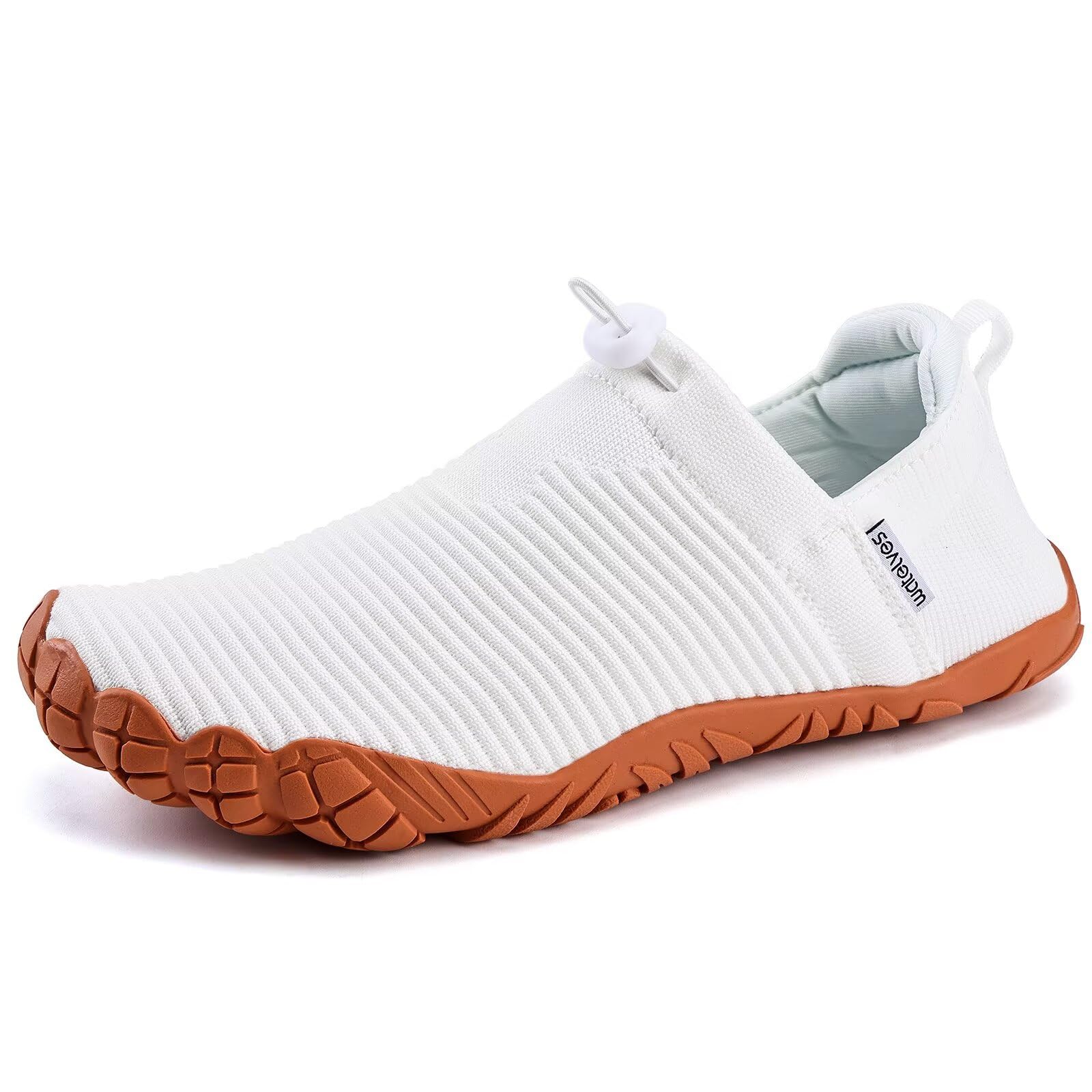
1. WateLves Water Shoes
Our pick — 4.5+★ from 500+ verified ratings; the strongest balance of quality and price.
The one pair here that goes from a wet pool deck straight onto the mat without a change of shoes.
The WateLves is the pick that earns its keep by being useful in more than one place. The maker lists it for walking, yoga, cycling and hiking, which tells you the sole is thin and flexible enough to roll up in a bag and still feel planted on a mat. It is 4.5+ stars across 500+ ratings, and comfortable wear is what buyers bring up far more than anything else.
Traction is the reason it takes the top spot. The soles are described by the brand as a water shoe outsole, and the recurring theme in owner feedback is that they simply do not slip — no chance of sliding mid-pose, whether the mat is damp or you are walking a wet pool deck. Comfort and fit both land as positives in the feedback, and the striped pattern draws compliments, which is a nice bonus for something you will wear outside the studio too.
Here is the honest part: drying time splits owners right down the middle. Some say they dry quickly, others say they hold water a while. If you plan to swim in them and then wear them for a forty-minute class, pack a towel and expect to wait a little. Sizing also draws mixed feedback, so measure your foot rather than trusting your usual number.
What works in your favor
- Comfort is the runaway winner in owner feedback, well ahead of every other trait.
- Traction that holds on wet decks and mat surfaces without sliding.
- Lightweight enough to fold into a gym bag and use for swimming, pool work and cycling as well as yoga.
Where it asks a little patience
- Drying time is genuinely mixed — some pairs shed water fast, others hold it.
- Sizing is inconsistent enough that checking the size chart first is worth the minute.
Reach for this if: you want one pair for the pool, the mat and the walk between them, and you value a sole that grips over a sole that cushions.
Look elsewhere if: you need a shoe that is bone dry by the next class — the drying feedback is too divided to promise that.
2. WHITIN Barefoot Shoes W872
A foot-shaped toe box that lets your toes actually spread out on the mat.
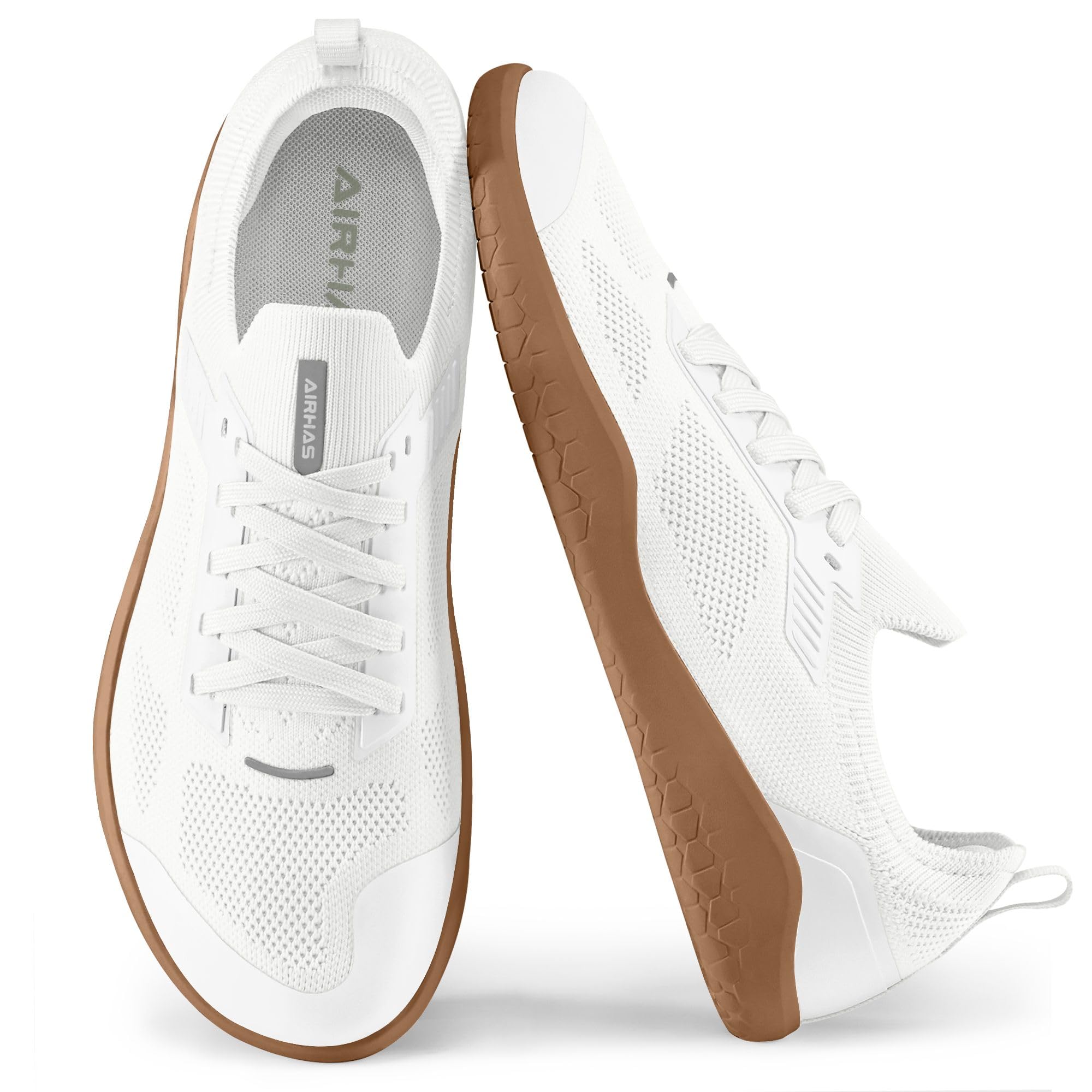
The W872 is the closest thing here to a pure practice shoe on a budget. The toe box is cut in the shape of a foot rather than tapering to a point, and the removable sockliner lets you choose between a little padding and a near-barefoot feel. A zero-drop sole keeps your heel level with your toe, so your weight sits over the middle of your foot in standing poses.
What carries this shoe is fit. It is the largest single positive in the feedback by a wide margin, with comfort sitting comfortably behind it. The open engineered knit upper breathes, and the non-slip rubber outsole is described as abrasion resistant, which matters when you are pivoting on a textured mat. If your toes have been pinched by narrow trainers for years, this is the shape you have been missing.
The catch sits in the arch. Support there divides owners, and durability is another split — some report the shoes hold up well, others say they break down sooner than expected. Length also draws some negative feedback, so if you are between sizes, size up rather than down.
Where it shines: the foot-shaped cut and removable insole give you a genuine choice about how much shoe you feel, which is rare at this level.
The trade-off worth knowing: this is a shoe for mat work, light gym sessions and walking. It is not built to take the pounding of long pavement runs.
Best match: a yogi with wide or previously-squeezed toes who wants a flat sole and a breathable upper without spending much.
Think twice if: you rely on firm arch support inside your shoe — feedback on that is genuinely split.
3. Womens Gym Barefoot Shoes Zero Drop Workout Sneakers
The white zero-drop pair that stays stable under a barbell and still sits flat on the mat.
Buyers single out build quality more than anything else on this one, and it shows in how the shoe is put together: a lightweight breathable upper, a zero-drop sole, and plenty of toe space. The white colourway draws compliments, which is not something you can say about most gym shoes after a month of use.
The zero-drop design is the part that matters for yoga. Keeping your heel and toe level lets your foot load evenly, which is exactly what you want in a standing balance pose. The shoe is also reported as stable under weights, so it works as a single pair for a class followed by a lifting session.
Toe box width divides owners — some love the room, others find it too generous and feel their foot swim. Cushioning draws mixed notes too, so if you want a soft landing underfoot this is not that shoe. If you want to feel the floor, it is.
The read on quality: owners rate build quality above appearance, fit and value, which is the right order for a shoe you will sweat in.
Fit note: the toe box is roomy enough that some find it oversized, so try your true size before going up.
Choose it for: a gym-and-yoga crossover shoe in a clean colourway that stays stable under load.
Pass if: you want noticeable cushioning underfoot — feedback on padding leans mixed.
4. HOBIBEAR Barefoot Minimalist Shoe

Laceless slip-on barefoot shoes you can step out of at the studio door with your mat in both hands.
HOBIBEAR builds this around a zero-drop sole, a wide toe cap and a soft insole the brand describes as shock absorbing. It is a unisex cut with an anti-slip, wear-resistant outsole, and the maker lists it for all occasions rather than one narrow use.
The everyday win here is getting them on and off. Easy on-and-off and colour choice are the two things buyers bring up as positives, along with value — several plan to buy another pair. If you are carrying a mat, a bag and a water bottle into a class, a shoe that slips on without laces is a small but real relief.
Fit is the most-discussed topic on this shoe, and it is mixed, so treat sizing as the one thing to get right before you commit. Comfort, durability, arch support and traction all sit in the mixed column as well. That does not make it a bad shoe — it makes it a shoe you should buy in your measured size and expect to use for lighter work.
Why it earns a place
- Slip-on entry makes it the quickest of the bunch to get on and off around a class.
- Zero-drop sole with a wide toe cap and a soft, shock-absorbing insole.
- Colour options and value both come through strongly in what buyers report.
Set your expectations here
- Fit is the biggest talking point and it is genuinely divided — order your measured size.
- Traction and durability draw mixed notes, so treat it as a light-use shoe.
Worth it when: convenience is your priority and you want a wide, flat shoe you can step into in seconds.
Not the one for: heavy training days or anyone who needs predictable arch support.
5. WHITIN Men’s Barefoot Shoes Minimalist Cross-Trainer W63

A barefoot feel owners describe as walking without shoes at all.
With 10,000+ ratings behind it, this is one of the most-reviewed pairs here. Comfort is the trait buyers return to most, followed closely by build quality, and the brand positions it for gym, trail and street use with a lightweight, quick-drying build.
What sells it is the barefoot feel. Wearers describe it as walking without shoes on at all, and the grip gets repeated mention as a strength. A high-top structure with a padded ankle collar and tongue wraps the foot for a snug fit, and the padded collar is there to cut down on rubbing through a long session. At 4.0+ stars it is not the highest-scoring shoe in this list, but the volume of feedback makes it the safest read on what you are actually getting.
Toe box size is the loudest complaint, and fit overall is mixed, so get the width right. Durability draws mixed notes too. This one is best treated as a studio and light-gym shoe rather than something to hammer on rough ground.
What keeps owners coming back
- Comfort and quality are the two traits mentioned most, by a very wide margin over the rest.
- A genuinely barefoot feel with grip that gets singled out repeatedly.
- Quick-drying and lightweight, with a padded collar to reduce rubbing.
Where to be careful
- Toe box size is the most common negative — the fit is not generous for every foot.
- Durability is mixed, so it suits studio and gym work better than rough ground.
Pick it if: you want the most proven barefoot-feel trainer here and you are comfortable checking the width before ordering.
skip it if: you have wide toes and have been burned by tight toe boxes before.
6. Joomra Barefoot Shoes

Built with lateral grip for side-to-side weight shifts on the studio floor and on the trail.
The Joomra shoe is shaped to the outline of a foot, like a glove for your foot, and it weighs 10.58 ounces by the maker’s listed package weight. The sole is designed to hold during lateral movement and climbing, which is the kind of grip that matters when you shift weight side to side in a standing sequence.
Comfort is what this shoe is known for, and it sits well ahead of appearance and fit in the feedback. Owners wear them without socks, and the toe box is repeatedly described as wide enough for genuinely wide feet. Versatility is the other headline: trail running, everyday walking and studio work all show up in how people use them. The shoe also comes in a range of colors that draw steady praise, which is why appearance is the second most-discussed trait.
Sizing is the sticking point. Some find them perfectly sized, others say they run small, and arch support splits too. With 26,000+ ratings behind it and 4.0+ stars, the odds are good, but read the size chart before you buy rather than assuming.
The case for it: wide-toe comfort and lateral grip in a shoe light enough to pack, with the largest pool of owner experience of any pick here.
The counterpoint: if your feet are wider than “wide,” arch support and sizing are the two things to test early.
Made for: someone who wants one shoe for the trail and the mat, with a toe box built for wide feet.
Second-guess it if: you go between sizes — the run-small feedback makes ordering a coin flip.
7. HIKE Footwear Flame Barefoot Walking Shoes

A zero-drop sole and a wide forefoot for women who stand all day and want the same pair for the walk home.
The HF Flame makes its pitch directly at people tired of thick-soled shoes throwing off their stance. The build is a zero-drop sole to keep the foot level, a wide toe box for natural toe spread, and a flexible sole for ground feel — the three things that separate a barefoot shoe from a normal trainer.
Comfort is the trait this shoe is praised for most, with arch support a clear second and toe width and light weight following behind. The shoe is reported as comfortable enough to wear all day, and the colorways, including a brown heel detail, draw positive notes.
The one thing to weigh is grip and value. Slip-on entry and value for money both land in the mixed column, so if you want a firm grip for fast transitions across a studio floor, do not assume it. For slow, grounded practice and full-day wear, it holds up well.
Why women keep it on: a level foot platform plus a wide forefoot, in a shoe built for all-day standing rather than a single class.
What to know first: grip and value both split opinions, so it is a comfort-first choice rather than a grip-first one.
It fits you if: you want a grounded, flat platform for a whole day on your feet, not just the hour on the mat.
Look at another pick if: fast lateral grip is what you need most during a session.
8. New Balance Men’s Minimus Tr V2

The gym trainer built for quick footwork, jumps and lifting with a near-barefoot footbed.
New Balance makes this one for explosiveness in the gym, with a sole designed to feel close to barefoot while an almost-barefoot feel is what owners mention. The package weight is listed at 1.28 pounds, so it is not a featherweight, and it is a men’s cut from a brand with a long track record in training footwear.
Stability is the trait that makes it useful here. Buyers describe it as stable and good for HIIT workouts, which is a different job from slow balance work — think quick footwork, jumps and lifting rather than a long hold. Appearance also gets positive mention, and it is rated well for value relative to what you get.
Fit is where the shoe splits. Some find it excellent, others say the wide size still feels narrow, and that is the one thing to test on a mat before a session. It is 4.0+ stars, so the ceiling on this pick is lower than a few others here, but for a gym-first shoe it does its job.
The gym-first strengths
- Stability and an almost-barefoot feel, which buyers call out for HIIT work.
- Comfort and value both land on the positive side of the feedback.
- A men’s training build from a well-established footwear maker.
The honest gaps
- Fit divides owners, and the wide option does not read wide to everyone.
- At 1.28 pounds it is not the lightest barefoot-style shoe on this list.
The right call for: fast gym sessions where you want stability and a near-barefoot footbed in one shoe.
Hold off if: your feet run wide or you want a featherweight feel underfoot.
9. Vibram FiveFingers EL-X

Five separated toes over a 3 mm XS Trek outsole, the closest thing here to standing on the floor itself.
The EL-X is the extreme end of this category, and it is the only shoe here that gives each toe its own space. The 3 mm XS Trek rubber outsole is described by Vibram for a balance of traction and durability on varied terrain, with flexibility and wet traction as its stated strengths. The upper is an 80/20 polyester/spandex knit, and a 2 mm EVA insole sits inside to take the edge off impact underfoot while keeping the sole thin.
Appearance is what owners love most, followed by comfort, and the shoe comes up specifically for workouts, DDPY and yoga. That last part is why it belongs in a yoga list: it lets you separate and plant each toe against the mat, which is a different level of ground contact from a wide toe box alone. The company also makes its own outsoles, which is the reason the sole is the spec worth paying attention to here.
The trade-off is the entry barrier. Fit, durability, ease of use and value all sit in the mixed column — five-toe shoes take time to get on, and they are a real adjustment if you have never worn a separated-toe design. The package weight is listed as 4 ounces, so there is nothing heavy about them once they are on.
Who this is really for: the yogi who wants each toe on the mat and is willing to spend a few sessions learning how to put them on quickly.
The honest hurdle: getting your toes into the right slots and the break-in period are the parts that split feedback, not the sole itself.
Best fit for: a committed barefoot fan chasing maximum ground feel with a proper rubber outsole underneath.
Not for you if: you want a shoe you can pull on in two seconds on the way out the door.
Know the Specs
Zero Drop
A zero-drop sole means the heel is at the same height as the toe, so there is no ramp pushing you forward. For yoga, that keeps your weight over the middle of your foot in a standing pose instead of tipping it toward your toes. It is the single most useful spec to check before buying a practice shoe.
Ground Feel
Ground feel means how much of the floor you can sense under your foot. A thin, flexible sole gives you more of it, and more of it usually means better balance because your foot can adjust in small amounts. The flip side is less cushioning, which is fine on a mat and uncomfortable on hard pavement.
Toe Box Width
The toe box is the front section of the shoe. A wide box lets your toes spread out, which gives you a broader, steadier base. Too wide and your foot shifts around inside, so width is a fit question more than a performance badge — read owner feedback on sizing before you commit.
Outsole
The outsole is the bottom layer that touches the floor. Thickness and rubber type decide how much grip you get and how long it lasts. A 3 mm outsole gives feedback and flexibility; a thicker one gives durability and more separation from the mat, which cuts down on grip.
Common Questions
Do I really need shoes for yoga, or are bare feet better?
What does zero drop actually change in a yoga pose?
Should I size up or down in a barefoot shoe?
Are five-toe shoes like the Vibram FiveFingers good for yoga?
Can I wear yoga shoes outside and on the trail?
How thin should the sole be for a yoga practice?
Are the water shoes like the WateLves suitable for a full yoga class?
Do barefoot shoes need a break-in period?
Will a wide toe box make my foot slide around inside the shoe?
What is the difference between a trail runner and a yoga shoe in this list?
The Bottom Line
For most people, the yoga exercise shoes that gets the job done is the WateLves Water Shoes — a thin sole that grips wet or dry, and comfort that owners bring up far more than any other trait. If you want a pure practice shoe with a foot-shaped toe box, the WHITIN W872 gives you that shape with a removable insole. And if you want the maximum ground feel, the Vibram FiveFingers EL-X puts each toe on the mat with a 3 mm outsole underneath.
Whichever you pick, check the width and order your measured size — that single step prevents most of the complaints in this category.
How we choose
We do not accept paid placement. Every pick is matched to a real buyer and a real use-case; we do not hands-on test units.
Sources
Specifications: manufacturer listings and product documentation. Review insights: verified customer reviews. Pricing: not shown on this page (it changes often); check the current price via the retailer link.
As an Amazon Associate, Tactical Gear Guy earns from qualifying purchases. This does not affect which products we feature.