Specs are compiled from manufacturer listings and verified buyer reviews and can change over time — please confirm the key details on the product page before buying.
Most people buy a balance board expecting a wobble and end up with a plank that is far too easy after two weeks. The fix is matching the board’s motion to your goal: a roller-and-deck trainer for surf and skate training, a rocker for standing-desk micro-movement, or a 360-degree wobble base for ankle and core work. This guide walks through nine boards that are all worth owning — the difference is which one fits your floor, your feet, and your goal.
This guide is built by comparing the manufacturers’ published specifications and the patterns across verified customer reviews, so you get each pick’s real strengths and trade-offs instead of marketing spin.
You will see deck materials, tilt range, weight limits, and how each board behaves underfoot, so you can choose with confidence. Every pick below earns its place on this list of the best yoga balance board options for home practice and daily standing work.
Top Picks

How To Choose The Best Yoga Balance Board
With a balance board, a harder setting is not automatically better. Your right pick depends on how you want to move: stand still and stay subtly engaged, or actively train for a board sport. Get the motion type wrong and the board ends up in the closet.
Roller trainer or wobble base
A roller board sits on a cylinder and tips front-to-back, which is how surfers and skaters simulate carving. A wobble base tilts in every direction at once, which loads your ankles and core more aggressively. Rocker boards are gentler and tend to be the pick for standing desks.
Deck length and width
Longer decks give your feet more landing room and let you shift stance like you would on a real board. Shorter decks are easier to store and force a tighter stance, which fires up smaller stabilizer muscles faster. Measure the floor space where you plan to use it before you buy.
Weight limit and deck material
Every board here lists a maximum weight recommendation, and it pays to leave headroom for dynamic movement and impact. Wood decks like maple and birch tend to feel firmer underfoot; foam-topped decks feel softer and grip better in socks.
Side-by-Side Comparison
| Model | Best For | Max Weight | Deck Material | Motion Type | Amazon |
|---|---|---|---|---|---|
| The Original Indo Board★ Best Overall | Board-sport training | 350 pounds | Maple Wood | Roller trainer | Amazon |
| StrongTek Wooden Balance BoardBest Value | Stepping up from a rocker | 350 pounds | Lauan hardwood plywood | 360° wobble (cross base) | Amazon |
| PROIRON Upgraded Wobble BoardBest for Travel | Portable home workouts | 150 kg | PP TPE | 360° wobble (spherical base) | Amazon |
| Fitlaya Fitness Balance Board Trainer | Surf and skate drills | 350 pounds | Canadian Maple wood | Roller trainer | Amazon |
| Gaiam Evolve Balance Board | Standing desk movement | 250 pounds | PU, PVC, and TPR | Rocker (single-plane) | Amazon |
| Flycoop Balance Board | Adjustable difficulty | 150 kg | Wood | Roller + 3 modes | Amazon |
| Mobo Board | Foot-specific training | 300 pounds | Bamboo | Ankle/foot balance | Amazon |
| Fitterfirst Professional Rocker Board | Single-plane rehab work | 350 pounds | Baltic birch plywood | Rocker (single-plane tilt) | Amazon |
| Blue Planet Balance Surfer | Adjustable board-sport simulation | 500 pounds | Bamboo/plywood | 360° wobble (3 modules) | Amazon |
Detailed Reviews
1. Original Indo Board
Our pick — 4.5+★ from 850+ verified ratings; the strongest balance of quality and price.
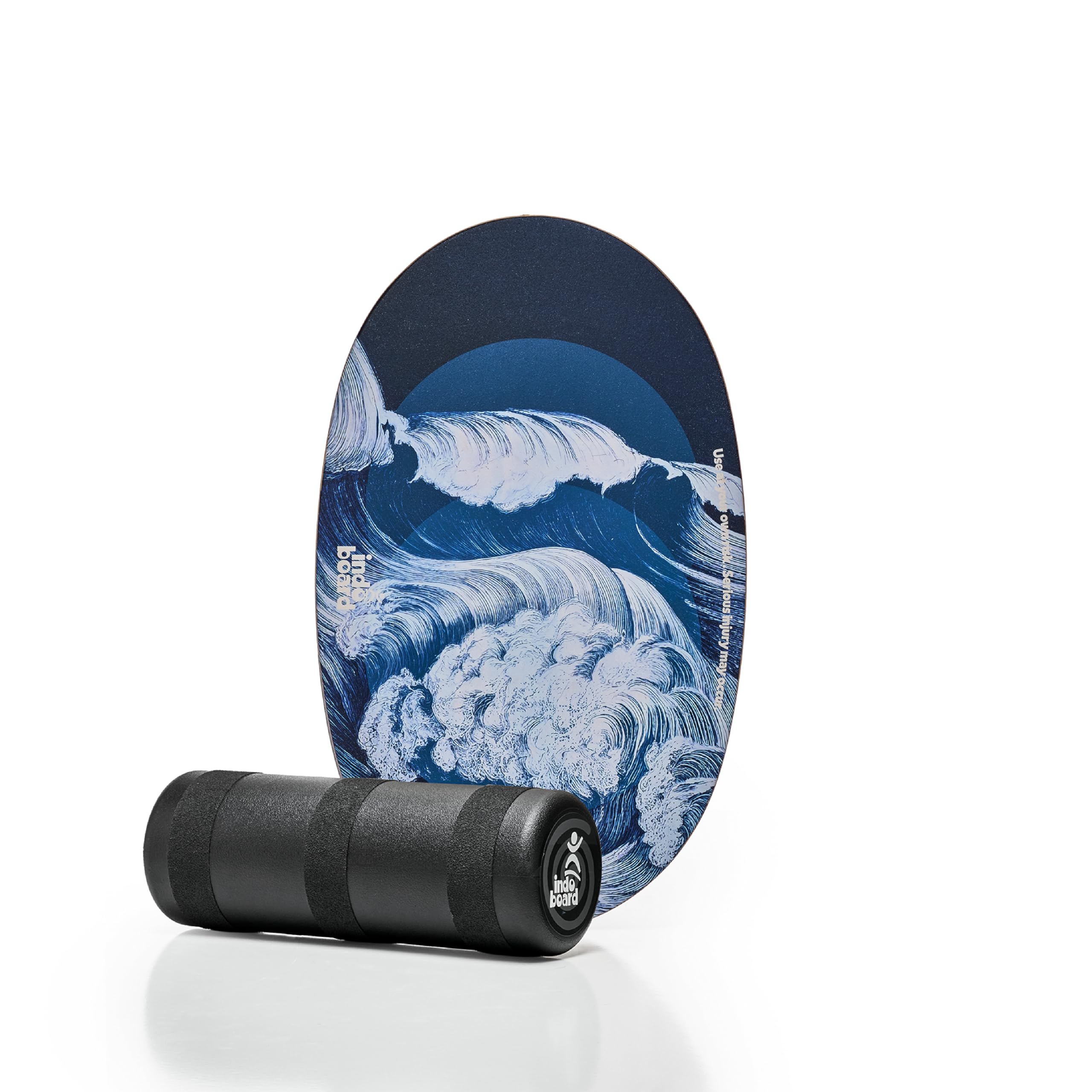
A maple deck and a roller that make your living room feel like a wave.
This is the board that turns a spare ten minutes into a real training session. You get a maple wood deck with a roller underneath, so your feet chase a moving surface instead of just tipping on a hinge. That is the motion surfers, skaters, and snowboarders actually recognize, which is why owners describe it as especially effective for surfing and wakeboarding practice. The whole family tends to end up on it, and the consensus is that it holds up as a long-term piece of gear rather than a novelty.
The deck is listed at 350 pounds of maximum weight recommendation, and the set includes both board and roller as two separate items. That weight headroom matters as soon as you start shifting your whole stance, because a rolling deck loads one edge hard at a time. It is a firmer, more athletic feel than a plastic wobble board — you are training reaction speed, not just standing there.
The honest catch: a roller deck is genuinely hard for the first session. There is no stopper to save you, and the surface moves freely. If you want something you can safely use at a standing desk while typing, this is the wrong tool — the board wants your attention.
What earns the top spot
- Maple wood deck paired with a roller for authentic carve-and-balance motion
- 350 pounds of maximum weight recommendation leaves room for full-stance shifts
- Families use it together — it genuinely gets pulled out again and again
- Trains the balance that board sports demand, not just ankle tilting
Where it stops fitting
- No stoppers, so beginners will feel the roller run away at first
- Not a subtle desk board — this one wants your full focus
Go for this: surfers, skaters, snowboarders, or anyone who wants a real core workout that doubles as fun.
Think twice: if you pictured yourself standing on it through video calls — a roller deck rarely tolerates a split attention span.
2. StrongTek Wooden Balance Board
The board that bridges the gap between a friendly rocker and a full round-base wobble.
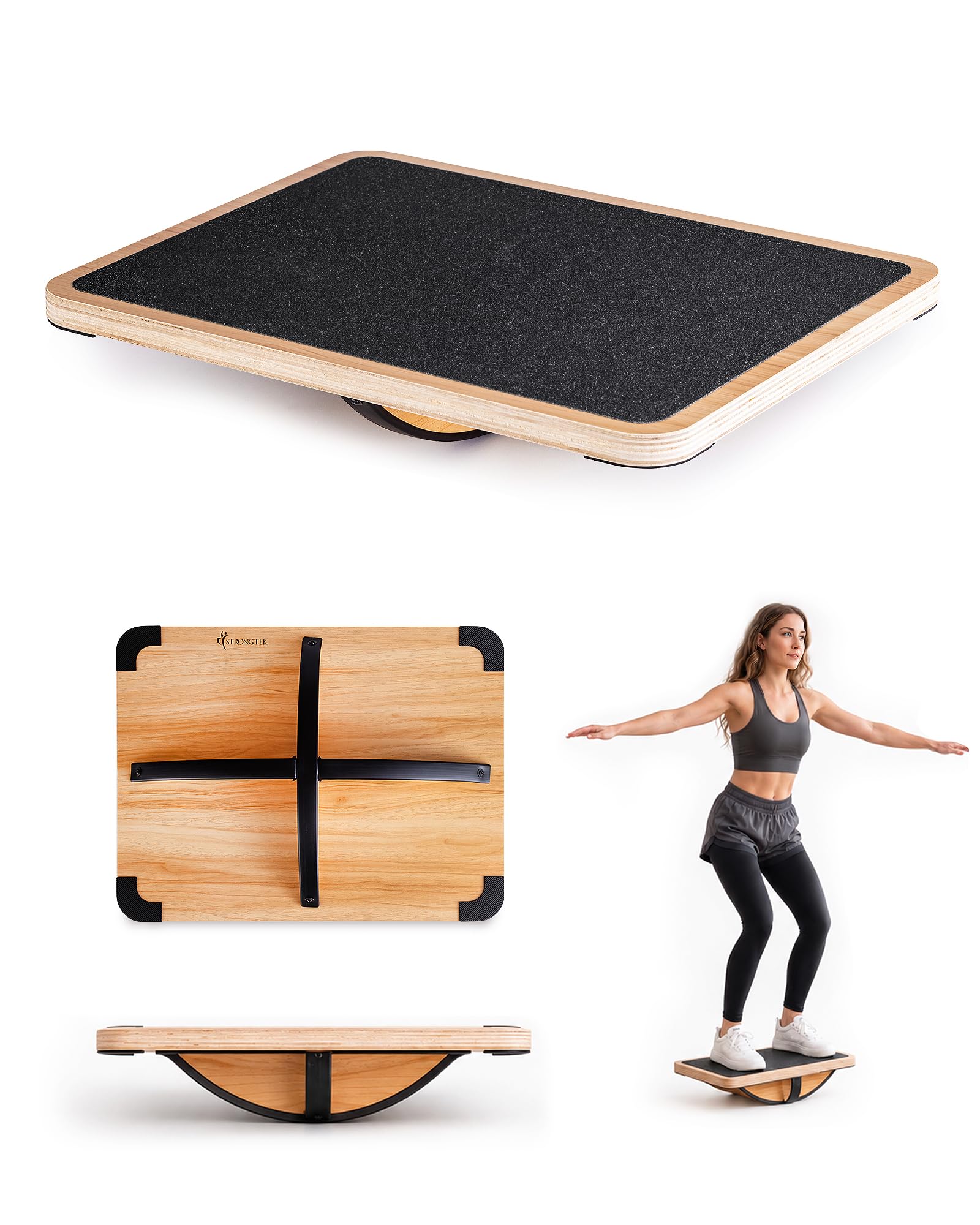
Where a round-base wobble board can feel like standing on a ball, this one uses a cross-style base. The shape follows the same all-direction movement concept but presses more of itself against the floor, which makes the whole thing more approachable. It is a smarter middle step: harder than a front-to-back rocker, gentler than a pure sphere.
Build quality is what carries this pick. The lauan hardwood plywood deck (a strong layered wood) holds up to 350 pounds of maximum weight recommendation, so heavier users can stand on it with confidence. The whole board weighs 2.23 kg — compare that with the PROIRON wobble board at 1.56 kg and you can feel where the extra mass goes. Sized at 17.5″L x 13.5″W x 3″H, it slides under low furniture; owners note the low, 3-inch profile slips under a bed without fuss. Unlike the roller trainer above, this is a board you can step onto and leave your feet there.
The fair caveat is upkeep. The rubberized bumpers underneath can peel off over time, so treat the base gently and avoid dragging it across rough floors. The surface texture is also a matter of taste — some find it grippy, others want more bite for socks.
The real draw: a hardwood deck that supports 350 pounds and moves in 360 degrees without demanding a spotter.
Know before you buy: the under-base bumpers need care, and the non-slip texture divides opinion.
Reach for this if: you have outgrown a basic rocker and want multi-directional ankle work without jumping to a sphere.
Look elsewhere if: you will be dragging it across concrete — those bumpers are the wear point.
3. PROIRON Upgraded Wobble Balance Board
A carry-handle wobble board that goes from floor work to grip exercises without swapping gear.
Two things make this one stand apart: the spherical base rotates a full 360 degrees with a tilt angle between 0 and 22 degrees, and it weighs just 1.56 kg. That low weight makes it the easiest board on this list to sling into a gym bag or move between rooms. The 16.34-inch footprint is compact enough for a small apartment floor.
The top surface is built from PP and TPE with a bump texture that is meant to stop slipping and give your soles a massage at the same time. The TPE base grips and shields floors from scratches, so hardwood stays intact. Twelve screws tie the deck to the base — the design deliberately avoids fragile clip-on connections — and the whole unit is rated to 150 kg of maximum weight recommendation.
Then there are the dual handles. They are not decoration: they open up grip-based work like push-ups and Russian twists, so the board doubles as an upper-body tool. One buyer’s family found it particularly helpful for a special needs child, which is a good sign of how approachable the shallow tilt feels at the low end.
Set expectations on the base, though. Because it is TPE rather than wood, the platform has a softer, springier character than a hardwood deck — the trade-off for the lighter carry weight.
Fits best: apartment dwellers and gym-bag carriers who want floor protection and a handle for transport.
Not the one: if you crave the firm, dead-flat feedback of a solid wood deck underfoot.
4. Fitlaya Fitness Balance Board Trainer

A wide maple deck with a skateboard-style top that keeps your feet planted while the roller moves.
Owners consistently call out the grip here — the top surface has the texture of skateboard deck tape, which is exactly what you want when you are shifting weight over a rolling cylinder. It is the most reassuring surface on this list for bare feet and socks alike, and that grip matters more than any spec sheet number when you are mid-wobble.
The deck itself is handcrafted Canadian Maple, and the listed maximum weight recommendation is 350 pounds. At 29.1″L x 11″W x 4.5″H with a 17.8″ x 4.5″ roller, this is a long board — the longest deck in this lineup. Compare it with the StrongTek’s 17.5-inch length and you get a much wider stance zone for carving drills. Long means more room for a surf-style stance, but it also means it takes up real floor space.
Portability is real, though the roller and board are separate pieces, so you carry two items to the beach or gym. The materials and build hold up, and the value reads well against the deck size — this is a lot of board for a mid-range spend.
It is a roller trainer, so the same beginner wobble applies: there is nothing holding the cylinder in place, and first sessions will be humbling.
The standout: skateboard-like grip over a 29.1-inch Canadian Maple deck rated to 350 pounds.
The trade: long footprint requires floor space, and the roller still rolls freely.
Suits you if: you want maximum deck real estate for surf and skate stance work with grip you can trust.
Skip the fit: if your training spot is a narrow hallway or a shared living room.
5. Gaiam Evolve Balance Board Standing Desk
The desk companion that keeps you micro-moving while your hands stay on the keyboard.
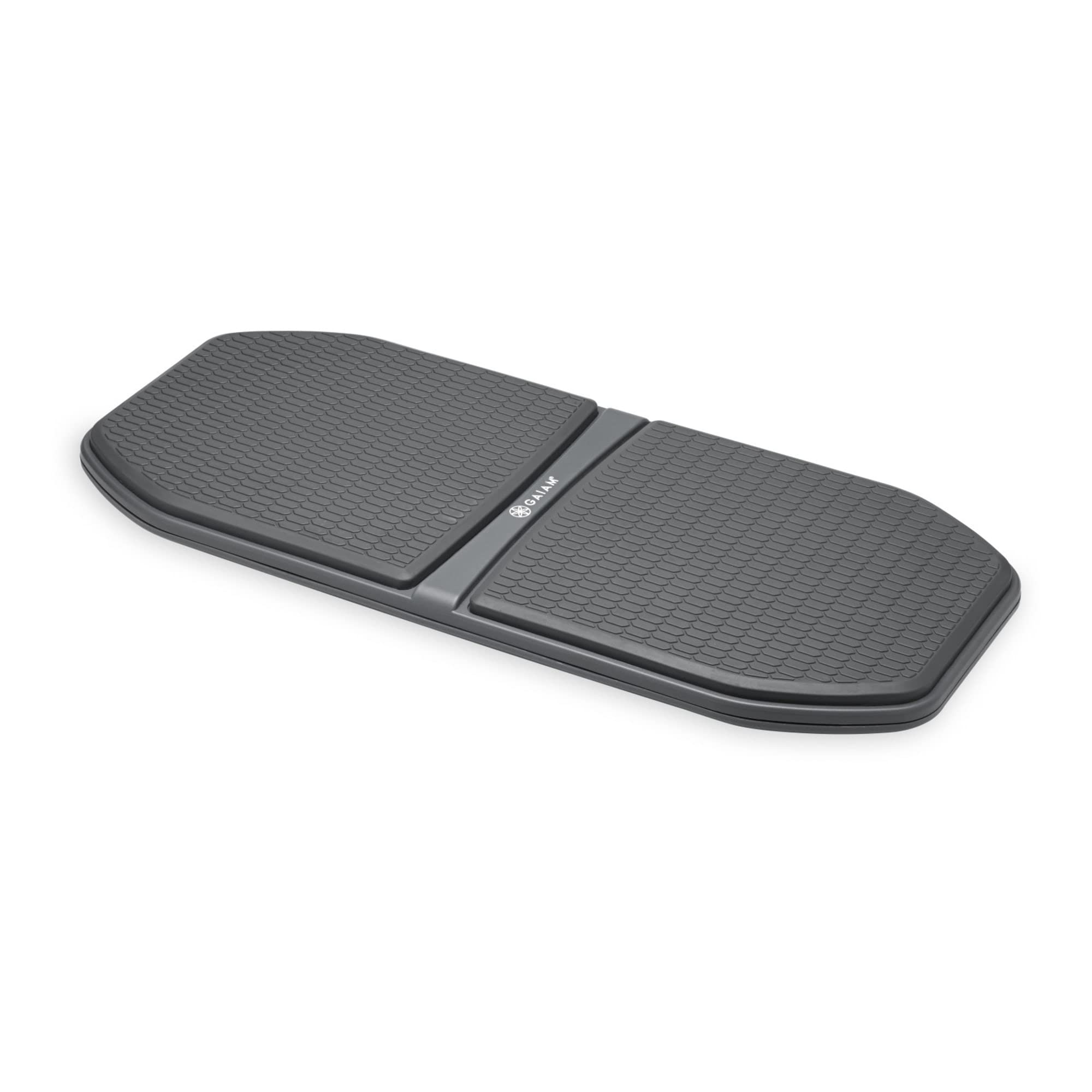
Standing still all day is its own kind of soreness. This board answers that with a fluid rocking motion — small enough to keep working, big enough to engage your back, core, legs, and ankles while you type. The rocking character is the thing buyers respond to most; the stability and balance it adds is the second draw, and it is the board most people describe as genuinely enjoyable to use through a workday.
The surface is a honeycomb non-slip texture that holds on both hard floors and carpet, and the platform is made from PU, PVC, and TPR. At 27″L x 12″W x 3.65″H, it sits under a standard desk without crowding your feet. The maximum weight recommendation is 250 pounds — noticeably lower than the 350-pound rating on the roller boards above, so heavier users should look at a hardwood deck instead.
Comfort is where this pick shines: the ergonomic curve promotes a neutral ankle position, so standing on it does not stress knees or ankles the way a hard flat wobble sphere can.
Two honest notes. The board’s top layer can separate over time — adhesive wear is a recurring gripe — and its forgiving, single-plane rock is not a hardcore strength challenge. This is a movement tool, not a training machine.
Pick it for: a desk job you want to break up with subtle motion instead of a full balance workout.
Go bigger if: you are over 250 pounds or chasing serious core load — the deck rating and the gentle rock both cap you.
6. Flycoop Balance Board for Adults
Adjustable stoppers that let you dial the difficulty instead of buying a new board as you improve.
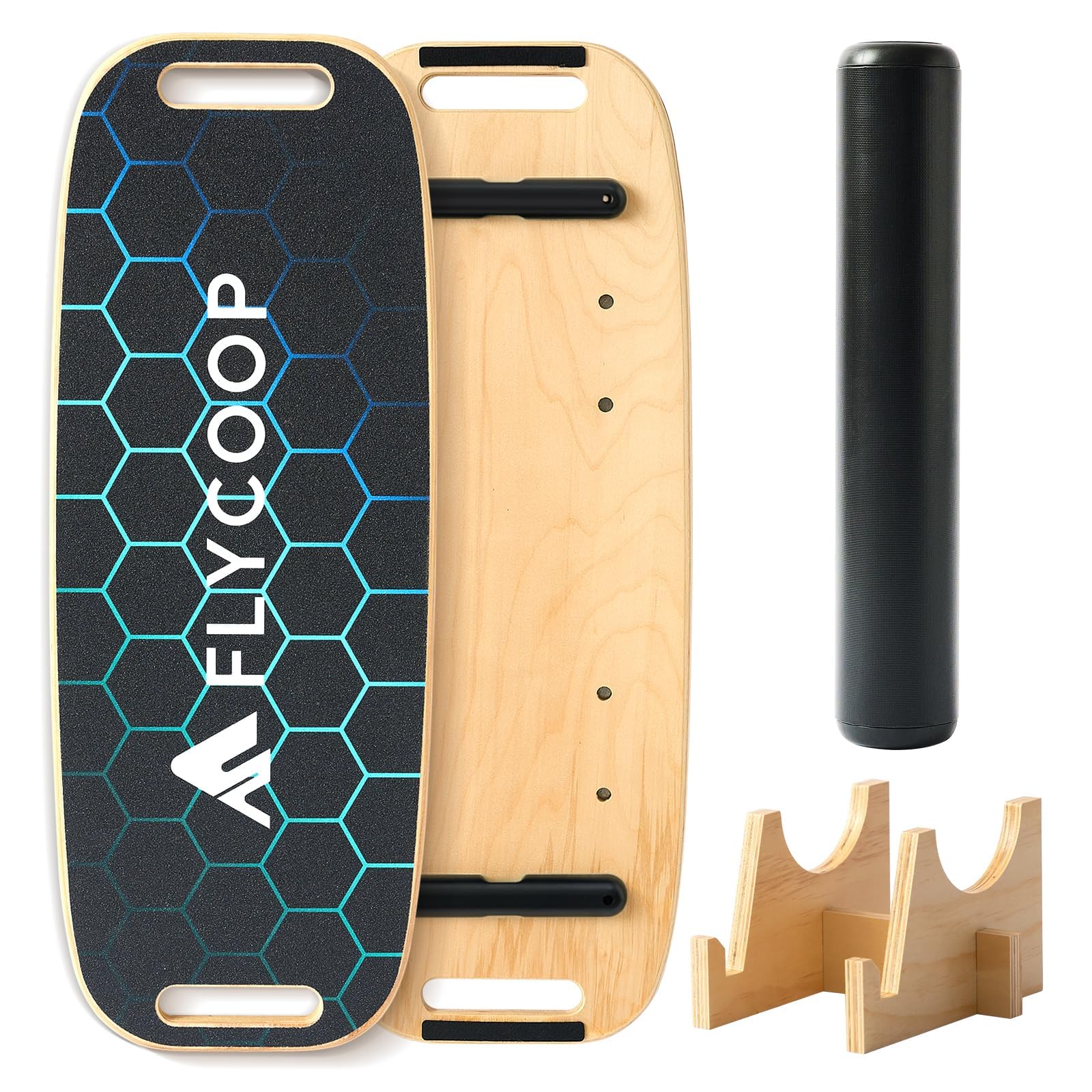
Most roller boards are one difficulty forever. This one adds stoppers underneath so you can set three distinct training modes, widening or narrowing how far the board can move. That is the fix for the classic complaint that a balance board gets too easy. You raise the challenge as you improve instead of shopping again.
The deck is built from multiple layers of pressed wood and carries a maximum weight recommendation of 150 kg, so a wide range of users can ride it. A full-coverage non-slip surface keeps your feet placed through wobble and stability work. The base 29 × 11-inch board ships with a roller; a version with a storage stand exists for tidy parking, and the Complete Set grows to a 30.5 × 11.8-inch board with a half ball, stand, and exercise mat. Quality is the praise that comes up most from owners, and kids and adults alike end up using it — the adjustability is what turns it into a family board.
One practical detail: at 5.2 kg it is a hefty piece, so decide where it lives before you unbox it. It is not the board you tuck into a bag.
Why people like it: three adjustable training modes mean the challenge grows with you, on a 150 kg-rated pressed-wood deck.
The catch: 5.2 kg of board and roller is a stay-put item, not a carry-around one.
Good match for: a household that wants one board several people can use at their own level.
Avoid if: portability is near the top of your list — this pick lives where you put it.
7. Mobo Board

A board that starts the whole chain at your arches instead of your ankles.
The premise here is different from every other pick on the list. Rather than tipping you in a direction, the Mobo targets the feet themselves, building a stable arch and better foot control so the hip and core above it can follow. It uses what the maker calls Toe Box Technology and an Anatomical Axis to work with the shape of your foot. If your sport is running, court play, snow, surf, or cycling, the pitch is that your connection to the ground begins at the sole.
Construction is natural bamboo, and the deck is a compact 14.72″L x 13.9″W x 1.22″H — a low, square platform rather than a long trainer. The maximum weight recommendation sits at 300 pounds. Bamboo keeps it light and rigid, and the shape invites a narrower, more deliberate stance than a roller deck does.
Where this board splits from the pack: it is not an entertainment wobble board, and it is not built for a standing desk. It is a foot-strength and proprioception tool, and that focus is exactly what some athletes want. If you came here for a roller-carve trainer, the Indo Board or Fitlaya will suit you better.
Right for you when: you want to train the foot arch and ankle-to-hip chain, in a compact bamboo footprint.
Keep looking if: you want the big, sweeping carve motion of a roller deck instead.
8. Fitterfirst Professional Rocker Board – 20”

A 20-inch birch platform with three set tilt angles that grow with your range.
The mechanism here is deliberately simple: a single plane of tilt that pitches the board back and forth, with two adjustable spheres you can reposition to set the difficulty. It ships with three tilt stops — 10, 12, and 15 degrees — so you can start shallow and step up as your ankle range improves. That measured progression is why the 10-degree stop is the one to start on before stepping up to 12 or 15 degrees.
The board is built from durable Baltic birch plywood and measures a 20-inch-wide stance footprint, 20″L x 20″W x 4″H, at 7.5 pounds. The 20-inch width gives you landing room on both sides, and the maximum weight recommendation is 350 pounds. Balance is the metric this board gets praised for above all else — the single-plane rocking keeps you grounded while still working the knee, ankle, and leg muscles.
Reviewers frequently mention physical therapists recommending this board, and its three tilt stops are a recurring talking point. The honest note is that it is premium-priced for what looks like a simple rocker, and the single-plane motion will feel too tame for anyone chasing 360-degree wobble. A few find the surface texture unsophisticated next to a foam-topped deck.
What it brings to the floor
- Adjustable 10, 12, and 15-degree tilt stops for measured progression
- 20-inch-wide Baltic birch deck rated to 350 pounds with real stance room
- Single-plane rocking keeps the knees and ankles in a controlled line
What to weigh in
- Single-plane motion only — no 360-degree challenge
- The premium tier price stands out next to simpler rockers
Best for: structured, step-by-step ankle and knee work where you want a set tilt you can trust.
Better to look on: if multi-directional wobble is what you are actually after.
9. Blue Planet Balance Surfer | Bamboo Balance Board

Seven balance settings and a 500-pound ceiling make this the board you will not outgrow.
The design brief here was to solve the “too easy after a month” problem outright. You get three 3D balance modules, each with two curvature directions, plus a toolless adjustment system that yields seven configurations in total. That spans wobble, rocker, and levels in between without swapping decks. The 360-degree balance radius and the wide 25-inch curved deck with a soft, non-slip grip keep the feel controlled even at the hardest setting.
Three modules are included in the box, and the whole set weighs 6 pounds across a 25″L x 12.25″W x 6″H footprint. The 500-pound maximum weight recommendation is the highest on this list — compare it with the Gaiam’s 250 pounds, and it is clear this board is built to be shared and stood on hard. Bamboo and plywood form the deck, and the interchangeable pieces are what people like most about it.
Owners describe it as fun and sturdy, and the adjustable difficulty range from easy to hard is the point: a beginner and an advanced boarder can use the same plank. It is relevant for surfing and other board sports, which is the natural home for that 360-degree motion.
The honest note: it carries a premium-tier price and includes more hardware than a casual user needs. Value is the one point buyers waver on — if you only plan on one difficulty setting, simpler boards cost far less and do one job well.
The selling point: seven toolless balance configurations from one included set, rated to a 500-pound maximum weight recommendation.
The trade-off: the extra modules and premium-tier price are overkill if you only ever want one setting.
Consider it if: you want one board that serves beginners through advanced riders and can carry heavy standing weight.
Weigh it against: your appetite for swapping modules — a single-setting board is simpler if you never plan to adjust.
Know the Specs
Tilt angle and training modes
Tilt angle is how far the board can lean before it stops — measured in degrees. A shallow tilt is easier to control and better for standing-desk use; a bigger tilt, like the 0-22 degree range on a spherical wobble base, loads the ankles harder. Adjustable stops or modes let you dial the range down now and up later, so you don’t buy a replacement as soon as you improve.
Maximum weight recommendation
This is the heaviest standing load the maker lists for the board, usually in pounds or kilograms. It matters most when you shift your whole weight to one edge during wobble — a 250-pound rating leaves less headroom than a 350-pound one for dynamic movement and heavier users. Pick a board with margin above your own weight, especially if a second person will share it.
Deck material and grip
Wood decks like maple, birch, and bamboo feel firm and flat underfoot; foam-and-plastic decks like PU and TPE feel softer and springier. The top surface finish decides grip: a honeycomb texture or skateboard-style tape holds bare feet well, while a smooth wooden deck can feel slick in socks. Match the surface to whether you train barefoot or shoed.
Roller or stationary base
A roller board sits on a free cylinder and tips front-to-back — the closest feel to carving on a surfboard or skateboard. A stationary wobble base tilts in all directions without rolling away. Rollers give a bigger, more athletic motion but are harder to start on; stationary bases are safer for a quiet corner and easier to step off. Consider your floor space and confidence before choosing.
Common Questions
What is the difference between a rocker board and a wobble board?
Will a balance board work with bare feet or do I need shoes?
How much weight can these balance boards hold?
Can I use a balance board at a standing desk while I work?
How do I know which tilt angle to start at?
Why do some balance boards come with a roller and others do not?
Will these boards scratch my hardwood floor?
How long does it take to feel a difference using one?
Can kids use a yoga balance board?
Is a roller board or a stationary board better for surfing training?
The Bottom Line
For most people, the yoga balance board winner is the Original Indo Board because its maple deck and roller deliver the most authentic balance and core training in one kit. If you want a 360-degree wobble that bridges beginner and advanced work, grab the StrongTek Wooden Balance Board. And for standing-desk movement you can use through a workday, the Gaiam Evolve Balance Board is the one to reach for. The split between roller, wobble, and rocker options here means there is a correct board for your floor and your goal.
How we choose
We do not accept paid placement. Every pick is matched to a real buyer and a real use-case; we do not hands-on test units.
Sources
Specifications: manufacturer listings and product documentation. Review insights: verified customer reviews, as of November 2026. Pricing: not shown on this page (it changes often); check the current price via the retailer link.
As an Amazon Associate, Tactical Gear Guy earns from qualifying purchases. This does not affect which products we feature.