Specs are compiled from manufacturer listings and verified buyer reviews and can change over time — please confirm the key details on the product page before buying.
Buying yellow soccer cleats is mostly a fit problem wearing a color. The bright upper is what catches your eye, but the thing that decides whether you actually enjoy playing in them is how the shoe wraps your foot and how the studs bite into the pitch. Get the size wrong and the loudest colorway in the bag turns into the pair you leave at home.
This guide is built by comparing the manufacturers’ published specifications and the patterns across verified customer reviews, so you get each pick’s real strengths and trade-offs instead of marketing spin.
Below you will find picks sorted by playing surface, cut and fit, so you can match a pair to your feet and your pitch instead of guessing from a photo. The right pair of yellow soccer cleats matches your stud plate to your pitch and your size to your measured foot length.
Top Picks
How To Choose The Best Yellow Soccer Cleats
Picking yellow is the easy part. What decides whether a pair stays in your bag depends on three things: the stud plate (the molded sole with the little spikes) matches your pitch, the upper (the top part of the boot that touches the ball) suits how you control it, and the size fits your foot. Get those three right and the yellow is just the bonus.
Match the Stud Plate to Your Pitch
A firm-ground (FG) plate is built for dry natural grass, with studs shaped to dig into soil without tearing it up. A multi-ground (MG) or artificial-ground (AG) plate spreads the load across more, shorter studs so you get grip on synthetic turf without the studs catching and twisting your knee. If you split your week between a grass training pitch and a turf game field, a multi-ground pair saves you carrying two bags.
Low Cut or Mid Cut
A low-cut collar sits below the ankle, so your ankle moves freely when you cut and sprint. A mid-cut knit collar wraps higher up the ankle for a sock-like connection and a bit more support, which suits players who want to feel locked in during sharp changes of direction. Neither is better — a low cut favors mobility, a mid cut favors a snug, contained feel.
Read the Size Chart, Not the Label
Cleats are the one piece of kit where the number on the box frequently lies. Many yellow cleats are built on a narrow last and run small, so a player who wears a certain size in trainers often needs to go up. Check the inner-shoe length in inches or centimeters against your own foot before ordering, and buy from a listing that gives you that measurement.
Side-by-Side Comparison
| Model | Best For | Plate / Surface | Cut | Listed Weight | Amazon |
|---|---|---|---|---|---|
| adidas F50 League FG/MG | All-round firm ground play | Firm Ground / Multi Ground | Low cut | 2.43 lb | Amazon |
| Indoor/Turf AG TF Training Boots | Turf and indoor training | AG / TF (artificial ground, turf) | Low cut | — | Amazon |
| Puma Ultra Play FG/AG | Sprinters wanting a speed plate | Firm Ground / Artificial Ground | Low cut | 2.43 lb | Amazon |
| adidas Club Predator FG/MG | Touch and control on a budget | Firm Ground / Multi Ground | Low cut | 2.13 lb | Amazon |
| Puma Future Play FG/AG | Playmakers who change direction | Firm Ground / Artificial Ground | Mid cut | 2.13 lb | Amazon |
Detailed Reviews
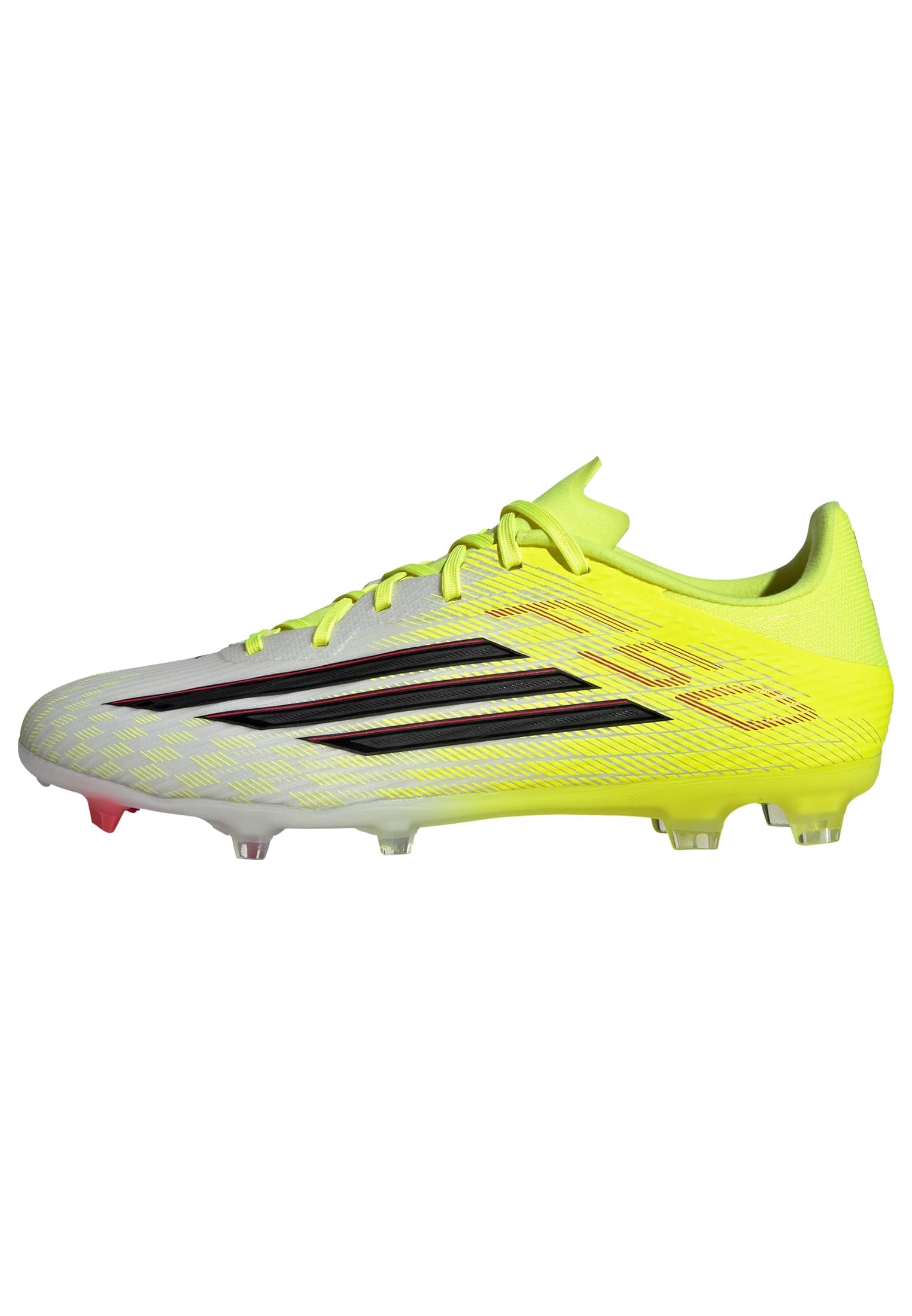
1. Adidas Unisex-Adult F50 League Firm Ground/Multi Ground
The pair that does both jobs — grass on Saturday, turf on Tuesday, one bag.
What you get here is a firm-ground and multi-ground soleplate in one shoe, which means the studs are shaped to work on dry natural grass and on artificial surfaces without you swapping footwear between training and game day. For a weekend player who trains midweek on turf and plays on grass, that single plate removes a real annoyance. The unisex build covers men’s and women’s feet on the same listing.
Comfort is what this cleat is praised most for, and the break-in is short enough that you are not limping through the first two sessions. The upper looks the part in yellow and the construction holds up over a season of regular use.
The catch is sizing. Fit draws more discussion than anything else on this shoe, and the recurring experience is that it runs small — so measure your foot and size up if you are between sizes. At 2.43 lb it carries a little more heft than the Club Predator below at 2.13 lb, though that gap is small enough that most players will not feel it once the boot is laced.
What earns it the top spot
- One soleplate handles firm ground and multi ground, so no second pair for turf days
- Short break-in — comfortable from the early sessions rather than after weeks
- Yellow upper that holds its look and construction through a full season
What to plan around
- Runs small — order a half size up if you are between sizes
- 2.43 lb listed weight is on the heavier side versus the 2.13 lb Club Predator
Reach for these if: you want one yellow cleat for both grass and artificial surfaces and you are willing to check the size chart first.
Think twice if: you play only on dry natural grass — a dedicated firm-ground plate will feel more planted.
2. Soccer Cleats Indoor Turf
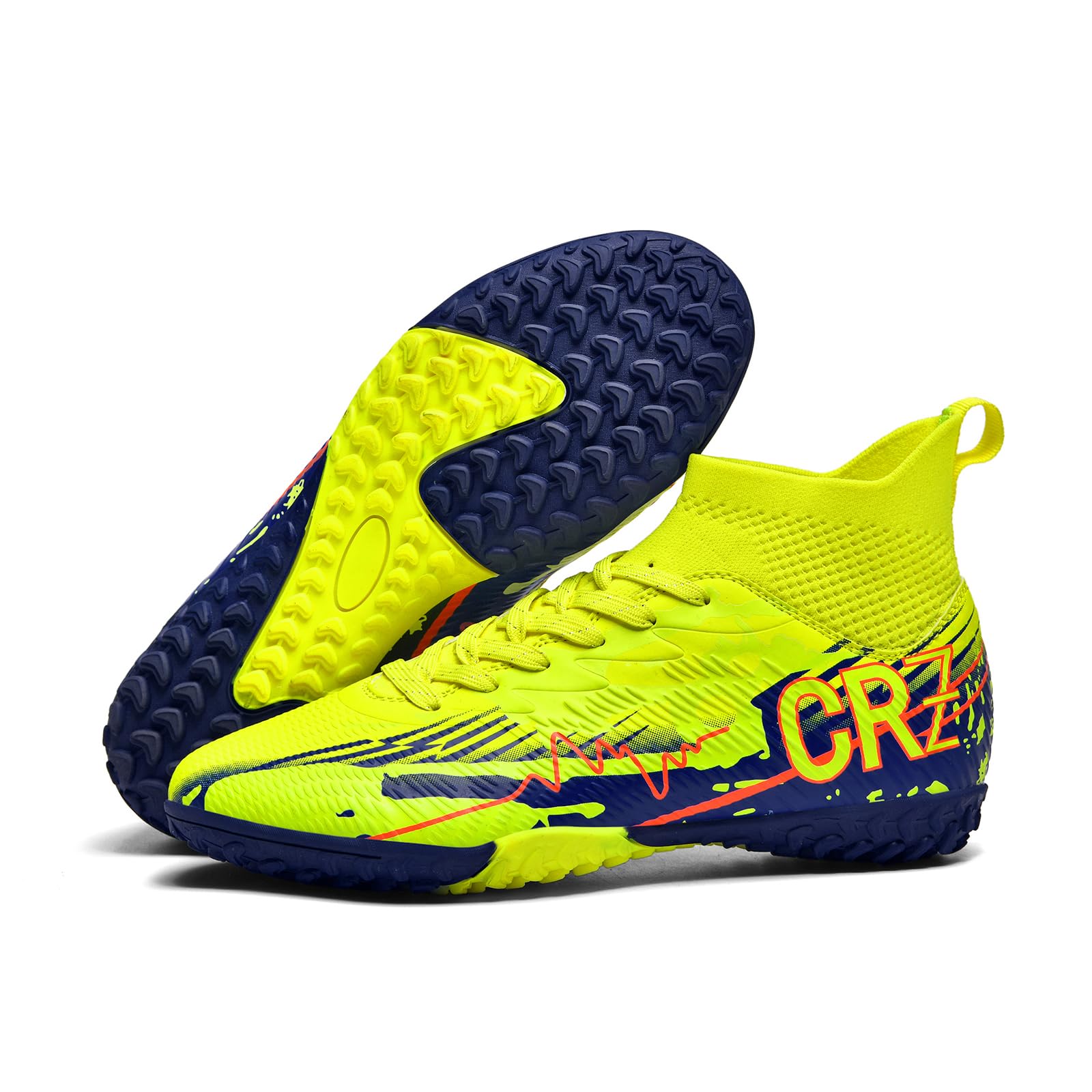
Built for the small-sided game on turf and indoors, where a grass stud would be the wrong tool.
This is an AG/TF training boot — artificial ground and turf — rather than a grass cleat. The studs are configured for synthetic surfaces and indoor courts, so you get grip on the short-pile stuff without the long grass studs that catch and slide on turf. If your week is futsal, indoor league and turf training, this is the plate that matches.
Build quality is what buyers mention most here — sturdy enough for the tier that the same shoe covers practices and games. Comfort and the yellow colorway round out the praise, with the look drawing compliments on the field.
Here is the practical detail that makes ordering easy: the listing publishes inner-shoe length in both centimeters and inches across every size, from 23.5 cm at the small end up to 28.0 cm. Measure your foot against that chart rather than trusting the label, because a turf shoe that pinches is useless on a small court where every touch matters.
Best for the small-sided game: indoor courts and turf pitches where a firm-ground stud plate would slide or catch — the AG/TF configuration is the whole point of this pick.
Ordering with confidence: published inner-shoe lengths in centimeters and inches mean you can size this one from a tape measure instead of guesswork.
Pick this for turf and indoor only: it is the specialist here, not the all-rounder — match it to synthetic surfaces.
Not your shoe if: your matches are on dry natural grass, where a firm-ground plate grips better.
3. Puma Mens Ultra Play Firm, Artificial Ground Soccer Cleats
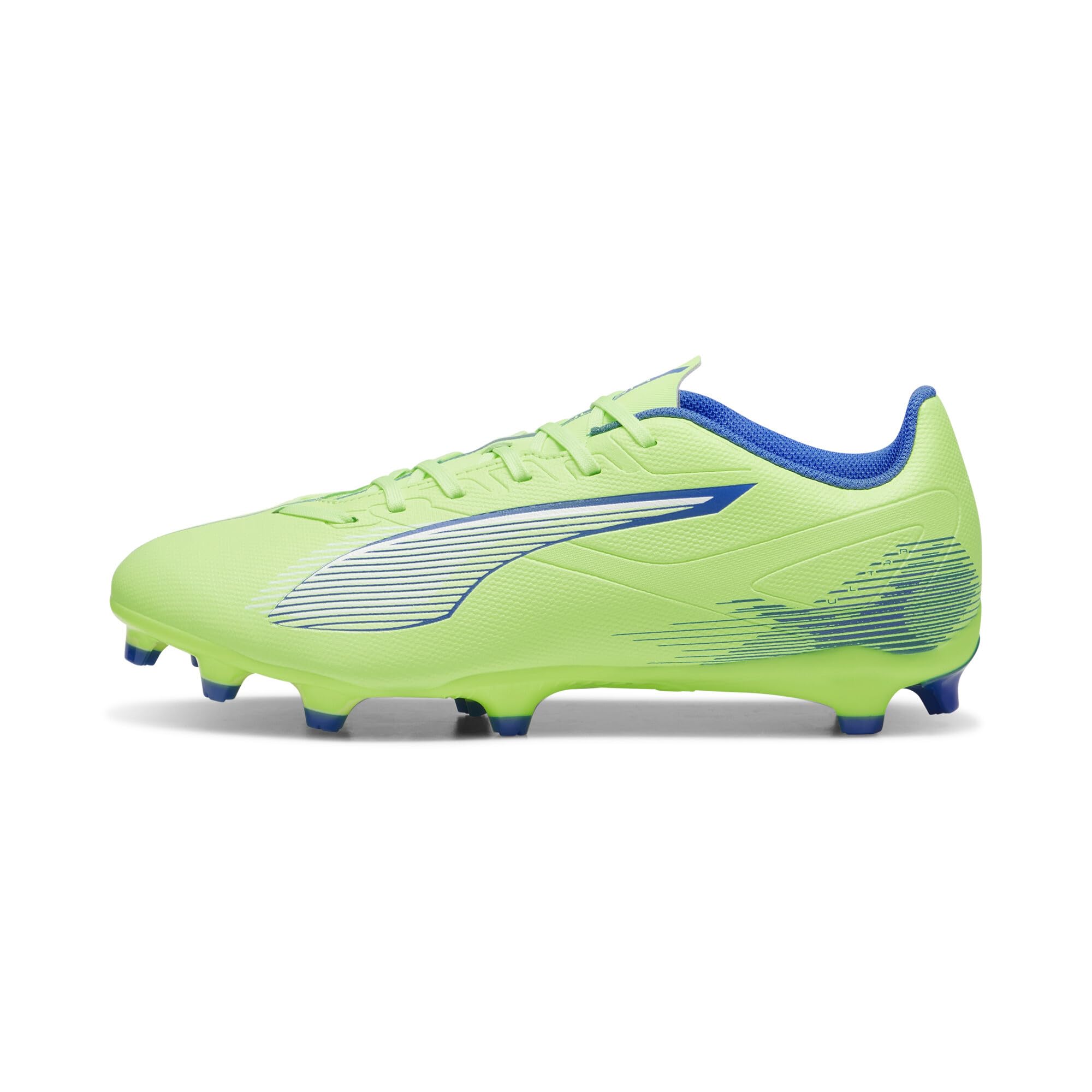
A sprint-first cleat built around a TPU speed plate, for the player whose game is straight-line acceleration.
The outsole is the story: a TPU SPEEDPLATE — a stiff plastic plate under the foot — paired with a lightweight synthetic upper that carries deboss and print detailing. The intent is propulsion, so the plate pushes you forward on that first explosive step. It is firm ground and artificial ground, which covers most amateur pitches.
Owners get a full season out of it with no issues, which is the durability note that comes up again and again on this boot. Build quality is the most-praised trait, followed by durability and looks. It also does well outside pure soccer — the sprinting and agility work on a lacrosse field gets a mention, so if you play more than one running sport, this plate translates.
The honest trade-off is sizing and comfort. Fit draws the most mixed feedback of anything on this shoe, and sizing specifically is the area where buyers come away unhappy — the recurring experience is that this Puma last runs narrow and short. Try it against your measured foot length before committing, and do not assume your trainer size.
The sprint case: that TPU SPEEDPLATE is the reason to buy it — a stiff, propulsive soleplate under a light synthetic upper, aimed squarely at players who win races rather than wrestle.
The sizing caution: this is the one cleat on the list where the fit conversation outweighs the praise — order with a tape measure and be ready to size up.
Made for: wingers and fullbacks whose game is built on acceleration, on firm ground or artificial grass.
Look elsewhere if: you have a wide foot or want a shoe that fits true from the start — this last runs narrow.
4. adidas Club Predator Cleats
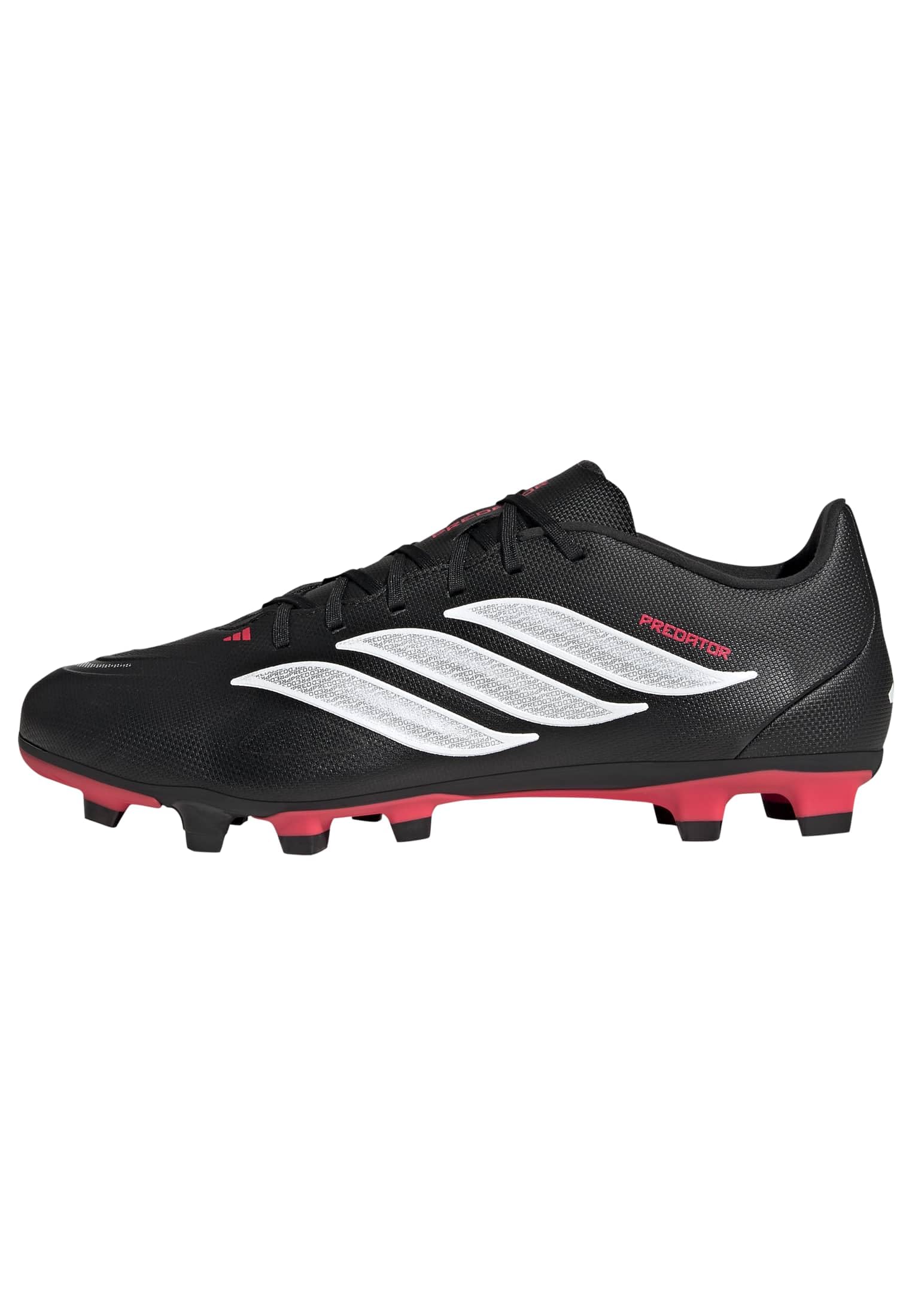
The lightest of the adidas trio here, built for control rather than pure speed.
At 2.13 lb this is the lightest cleat on the list, so your legs feel fresher late in a match. It is noticeably lighter than the F50 Club Mid at 2.43 lb — a difference you feel when you are chasing a through ball in the last ten minutes. The synthetic upper is designed for a smooth touch and control when the ball arrives at your feet, which is the Predator lineage doing its job.
The plate is firm ground and multi ground, so it handles dry grass and artificial surfaces. Build quality is what this boot is praised for most, with value right behind it — buyers feel they are getting a proper control cleat without flagship prices. Comfort gets a positive nod too.
The size question is the one thing to settle before you order. Fit feedback splits: some find it true to size, others find it runs small and narrow. The safest read is that if you are between sizes or have a wider foot, go up. This is a unisex build, and the yellow upper gives you the colorway without giving up the touch-first design.
Reasons this earns a spot
- Lightest listed weight on the list at 2.13 lb — less shoe to drag late in a match
- Control-focused synthetic upper for a clean first touch
- Firm ground and multi ground plate covers grass and turf
Where it asks you to check
- Fit splits between true-to-size and running small and narrow
- Not the pick if you want a stiff speed plate underfoot
Go for this if: your game is built on touch and control and you want the lightest boot here.
Skip if: you need a propulsive speed plate — that is the Puma Ultra Play’s job, not this one’s.
5. Puma Mens Future Play Firm, Artificial Ground Soccer Cleats
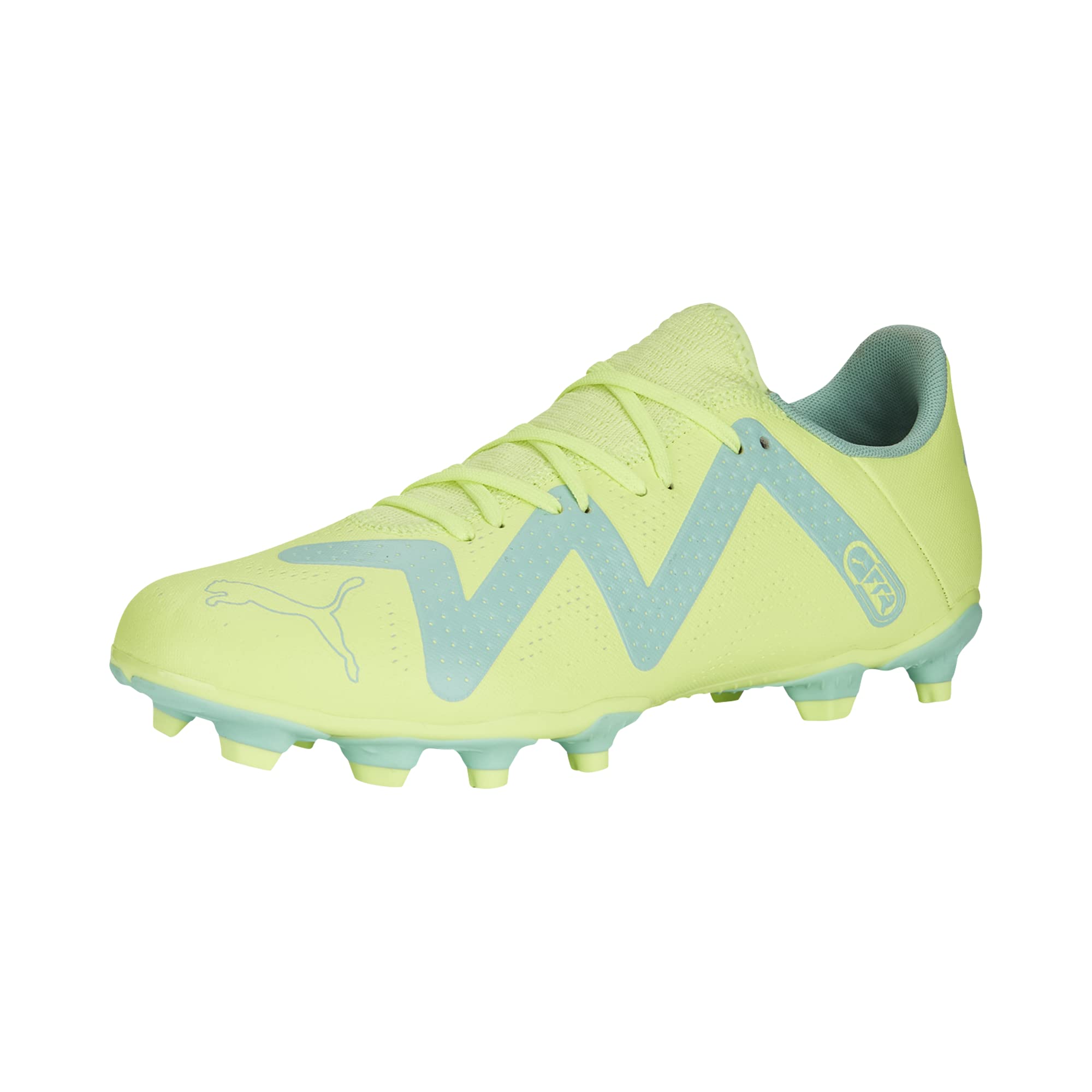
Mid-cut and built to twist — a cleat for the player who lives on changes of direction.
The reengineered mid-cut construction is the defining piece here: a higher collar that wraps the ankle and combines fit with agility. The second-generation Dynamic Motion System outsole is stable at the heel and flexible at the forefoot, which is exactly the split you want for cutting sharply while keeping your heel planted. It is firm ground and artificial ground.
The soft upper gives an adaptive, supportive fit, and the design leans on Neymar Jr.’s playing style — creative, back-heel, no-look stuff. Build quality is what it gets praised for most, and comfort earns a positive mention, with buyers describing it as a boot you can play a full game in.
The honest limit is durability. Breakage comes up as the concern on this model, so treat it as a cleat for game day and skill work rather than a beater for muddy training every night. Sizing is also mixed — some find it perfect, others find it runs larger than their normal shoes, so it is worth sizing down if you are between sizes.
The agility argument: heel stable, forefoot flexible — that is the whole case for the Dynamic Motion System outsole, and it suits players who cut more than they sprint.
The durability reality: this is the one pick where breakage is the recurring note, so rotate it rather than wearing it for everything.
Suits you if: your game is built on stepovers and sharp changes of direction and you want the ankle wrap of a mid-cut collar.
Pass if: you need one pair to survive heavy daily training — durability is the weak point here.
6. adidas Predator 24 League Low Cleats
Cut: Low vs Mid Collar
The cut is how high the shoe rises around your ankle. A low-cut collar sits below the ankle for free mobility when you cut and sprint. A mid-cut knit collar wraps higher for a sock-like connection and more support, with padding around the heel to reduce irritation. Neither is better — it is a feel preference, and it changes how locked-in you are when you change direction.
Upper Material
The upper is the top of the shoe — the part that touches the ball and wraps your foot. Synthetic uppers (like the ones here) are light, durable and give a clean, consistent touch. Fiberskin balances support with a light build. A 3D-textured upper adds grip and tactile function so the ball has something to bite against. The material drives how the shoe feels on the ball and how it holds up over a season.
Weight and Listed Sizing
A lighter boot takes less out of your legs late in a match, so check the listed weight in pounds before you buy. Sizing is the number buyers get wrong most: many yellow cleats run small or narrow, so use the inner-shoe length in centimeters or inches when a listing publishes it. Size up if you are between sizes or have a wider foot.
Common Questions
Will yellow soccer cleats work on artificial turf?
Do these yellow cleats run small or true to size?
What is the difference between firm ground and multi ground cleats?
Is a mid-cut collar better than a low-cut collar?
How long should a pair of soccer cleats last?
Can I wear yellow soccer cleats for indoor futsal?
What does the upper material change about how the cleat plays?
Should I replace my cleats if the studs wear down?
Do I need a different cleat for grass and turf in the same week?
The Bottom Line
For most players, the yellow soccer cleats winner is the adidas F50 League Firm Ground/Multi Ground because one plate covers dry grass and turf, it breaks in fast, and it holds up across a season — the crowd favorite of the group with 4.5+ stars. If you play mainly on artificial surfaces, grab the Indoor/Turf AG TF Training boot — it is the turf specialist and publishes a clear size chart. And if touch and control are your game, the lightest boot here, the adidas Club Predator, is the one to reach for.
How we choose
We do not accept paid placement. Every pick is matched to a real buyer and a real use-case; we do not hands-on test units.
Sources
Specifications: manufacturer listings and product documentation. Review insights: verified customer reviews, as of November 2026. Pricing: not shown on this page (it changes often); check the current price via the retailer link.
As an Amazon Associate, Tactical Gear Guy earns from qualifying purchases. This does not affect which products we feature.