Specs are compiled from manufacturer listings and verified buyer reviews and can change over time — please confirm the key details on the product page before buying.
Bright yellow running shoes are everywhere right now, and the honest truth is that most of them are ordinary trainers wearing a loud paint job. A few are genuinely good shoes in a high-visibility colourway. The Skechers Aero Burst is the one that holds up best — the brand’s thickest daily cushioning setup in a properly bright upper, built for people who put in steady miles and want their feet to feel it less afterwards. Below you get seven real yellow options, sorted by what each one actually does well, so you can match the shoe to your stride instead of your mood board.
This guide is built by comparing the manufacturers’ published specifications and the patterns across verified customer reviews, so you get each pick’s real strengths and trade-offs instead of marketing spin.
Yellow narrows your choices fast, so the attention belongs on the midsole and the fit. I break down cushioning, toe box shape, and how each pair holds up over real distance, then tell you which pairs suit which runners among the yellow running shoes on the market.
Top Picks

How To Choose The Best Yellow Running Shoes
Start with your weekly distance and your foot shape, not the colour swatch. Yellow is a limited palette — most models only offer it in one or two of their colourways — so the shoe that fits your stride and your arch is the one worth hunting down in hi-vis. Get the foam and the fit right, and the colour comes free.
The midsole is the whole shoe
Everything between your foot and the road is the midsole, and it decides how your knees feel at the end of a run. Thicker, softer foam eats more impact on long steady miles. Firmer, thinner foam feels quicker and more direct. On the Skechers Aero Burst the midsole is amplified HYPER BURST ICE cushioning — a soft, springy foam stack — paired with HYPER ARC geometry that rolls your foot forward through the stride. That combination is aimed squarely at daily distance, not sprint sessions.
Plates and energy return, in plain words
A plate is a stiff insert buried inside the foam. The Aero Burst carries a carbon-infused H-plate, a carbon-blended plate shaped like an H that firms up the ride and pushes your foot back off the ground. It is not a magic speed switch. What it does is keep the soft foam from feeling mushy under a heavier runner, so the shoe stays lively past the first few kilometres.
Fit, toe box, and stability
A wide toe box means the front of the shoe gives your toes room to spread, which cuts pressure on long runs. That matters most if you have wide feet, bunions, or simply hate a pinched forefoot. Stability, by contrast, is about the heel and arch: shoes built for overpronation — where your foot rolls inward and strikes the outer heel first — add support there to steady the stride. If you do not overpronate, you rarely need it.
Side-by-Side Comparison
| Model | Best For | Listed Weight | Midsole Setup | Fit Note | Amazon |
|---|---|---|---|---|---|
| Skechers Mens Aero Burst★ Best Overall | Daily mileage in comfort | — | HYPER BURST ICE with carbon-infused H-plate | Removable Arch Fit insole | Amazon |
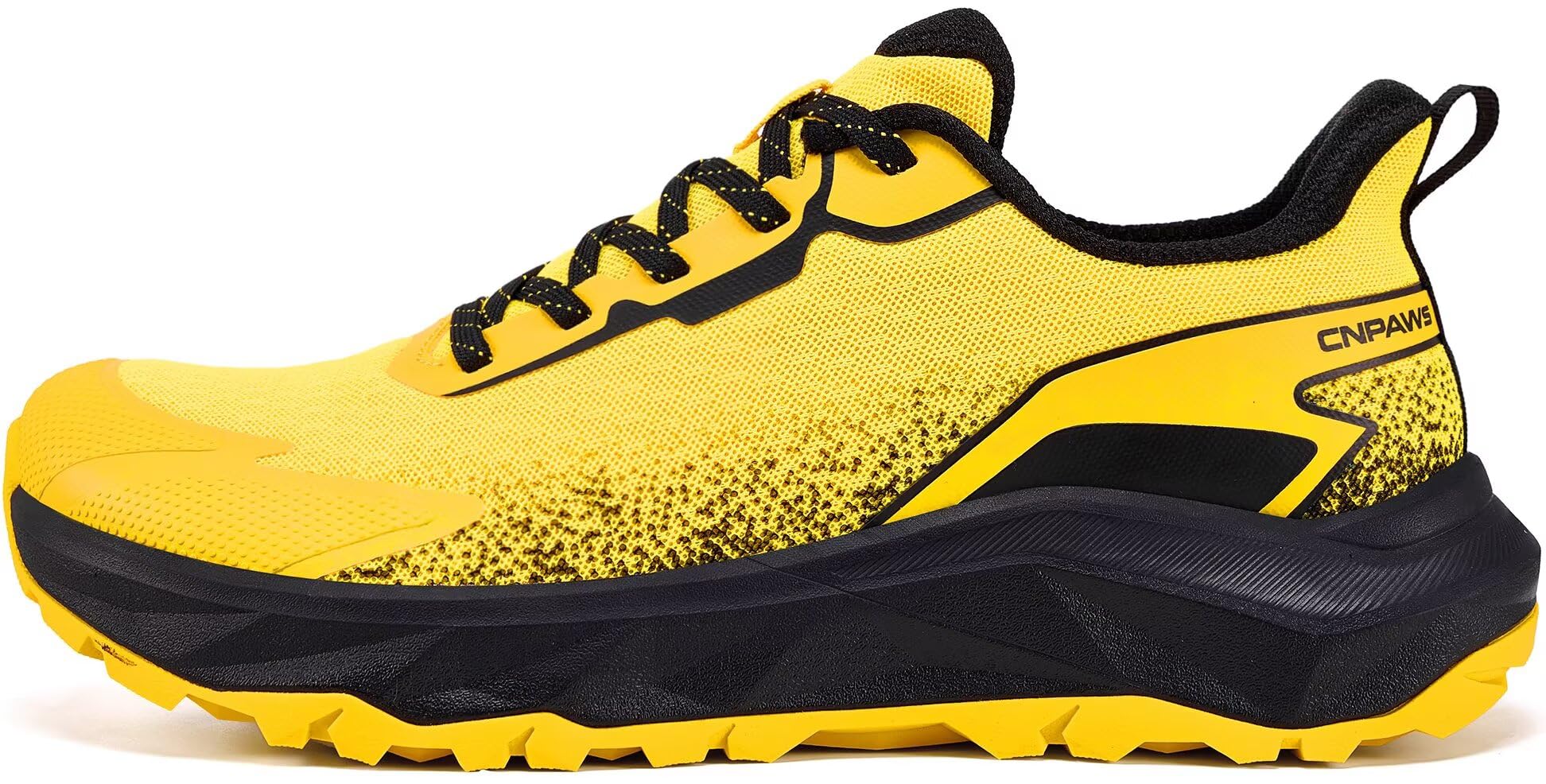
| Wide Toe Box Trail Running ShoesRoomiest Toe Box | Roomy forefoot on mixed ground | — | Removable arch-support insole, rubber outsole | Wide toe box | Amazon |
| ASICS Gel-Contend 10 | Everyday walking and jogging | 1.44 pounds | GEL plus AMPLIFOAM PLUS | Runs narrow for some | Amazon |
| Saucony Mens S20647-10 | Trail miles on rough ground | 3 pounds | Endorphin Trail build | Mixed durability reports | Amazon |
| Skechers Womens Aero Spark Slip-ins | Easy on, easy off daily runs | — | HYPER BURST ICE with carbon-infused H-plate | Heel Pillow slip-in entry | Amazon |
| ASICS Gel-Kayano 33 | Runners who overpronate | 1.44 pounds | GEL-KAYANO stability platform | Confirmed support for flat feet | Amazon |
Detailed Reviews
1. Skechers Mens Aero Burst Running Shoe
Our pick — 4.5+★ from 550+ verified ratings; the strongest balance of quality and price.
The loud yellow daily trainer that keeps your feet fresh deep into the run.
If you run four or five times a week and want one shoe that handles all of it, this is the pair to start with. The Skechers Aero Burst carries amplified HYPER BURST ICE midsole cushioning — a thick, springy foam layer that soaks up road impact — and sits on a Goodyear Performance Outsole, a rubber compound built for wear. It carries the APMA Seal of Acceptance, a recognition given to footwear built for everyday walking comfort.
Three details do the heavy lifting. The carbon-infused H-plate is a stiff, carbon-blended insert shaped like an H, and it keeps the soft foam from folding under you, so the ride stays lively instead of sinking. HYPER ARC technology is the rocker shape of the sole, which rolls you from heel strike to toe-off with less effort. And the removable Arch Fit insole is a shaped footbed you can pull out and swap, which means orthotics users are not locked out.
Quality is what wins people over here — it is the most-praised trait in the feedback, ahead of the cushioning comfort itself. Runners describe the underfoot feel as walking on a soft cloud, and the sizing lands true for most feet. The engineered mesh upper breathes well enough for warm-weather miles and looks sharp enough to wear straight from the run to a coffee stop.
What earns it the top spot
- Amplified HYPER BURST ICE foam pairs soft landings with a springy toe-off
- Carbon-infused H-plate keeps the cushioning from feeling vague underfoot
- Removable Arch Fit insole keeps the door open for custom orthotics
- Goodyear Performance Outsole is specified for wear resistance on the road
Who it does not suit
- All that foam makes it a distance shoe, not a fast tempo trainer
- The soft ride is not the pick for runners chasing ground feel
Reach for this if: you want one bright yellow pair that covers daily runs, long walks, and standing around afterwards.
Think twice if: you want a firm, minimal shoe for short fast sessions — this one is built soft.
2. Men’s Wide Toe Box Trail Running Shoes Fashion Sneakers
A roomy forefoot first, a fashion sneaker second — with grip for loose ground.
Squashed toes are the reason a lot of yellow running shoes get returned. This pair attacks that head-on with a wide toe box — a forefoot cut generously enough that your toes spread out as you land instead of stacking on top of each other. The payoff is less toe pressure over long distances, and wide-footed runners feel the difference in the first mile.
The upper is a highly breathable mesh, so air moves through with every stride and your feet stay cooler on hot pavement. Underneath, an abrasion-resistant rubber sole is specified for grip across mixed terrain, not just smooth tarmac. The insole is detachable and shaped for arch support, which means you can pull it and drop in your own. That combination makes it as usable on a gravel path as on a city block.
Style runs as a genuine selling point here, not an afterthought — owners get compliments on the yellow, and the shoe reads more like a lifestyle sneaker than a race-day weapon. The one thing to plan around is sizing. Length splits opinion, so if you sit between sizes, lean toward measuring your foot before you commit.
Value read: the build quality and fit are the two most-praised things about this shoe, and the arch support gets its own nod. For a bright yellow trainer that doubles as an everyday sneaker, it holds up on both counts.
The catch: sizing is mixed, so a size-and-a-half jump is not guaranteed to help. Check the size chart against a shoe you already own rather than guessing.
Best fit: wide-footed runners who want toe room and a grippy sole in one bright package.
Look elsewhere if: you need a race-day shoe — the cushioning here is aimed at comfort and gravel, not speed.
3. ASICS Men’s Gel-Contend 10 Running Shoes

Soft GEL under the heel and a featherweight build for the everyday jogger.
The weight number here is the one that tells you what kind of shoe this is. At 1.44 pounds, the Gel-Contend 10 is light enough to disappear on your foot during a jog around the park or an all-afternoon walk. Compare it to the Saucony trail shoe at 3 pounds and you feel the gap the moment you pick both up — this ASICS is a genuinely day-to-day trainer.
Underneath, GEL technology sits in the midsole alongside AMPLIFOAM PLUS cushioning, which this version carries more of than the model before it. In plain terms, the GEL is a gel insert that absorbs landing shock while the foam keeps the step soft, so the ride feels plush rather than hard. An OrthoLite sockliner adds a cushioned, moisture-wicking layer right under your foot, which keeps the inside drier on warm runs. The vamp section of the upper is engineered mesh for airflow without extra overlays.
Build quality is the trait people talk about most, followed by how much shoe you get for the money. Buyers divided on fit, though: some with wide feet found a home here, while others found it cut narrow through the midfoot. If you have wide feet, try to confirm the width before you order. In exchange you get a shoe that looks exactly like the picture and works for both walking and jogging without complaint.
Honest limit: the fit split is the real decision point. This is not a shoe to order blind if your foot runs wide.
What it does well: at 1.44 pounds with GEL and AMPLIFOAM PLUS stacked together, it is a light daily shoe that keeps the underfoot soft over long walks.
Pick it for: moderate-footed walkers and casual joggers who want light weight and soft landings from a name-brand shoe.
Pass on it if: you have wide feet and cannot confirm the width first.
4. Saucony Mens S20647-10
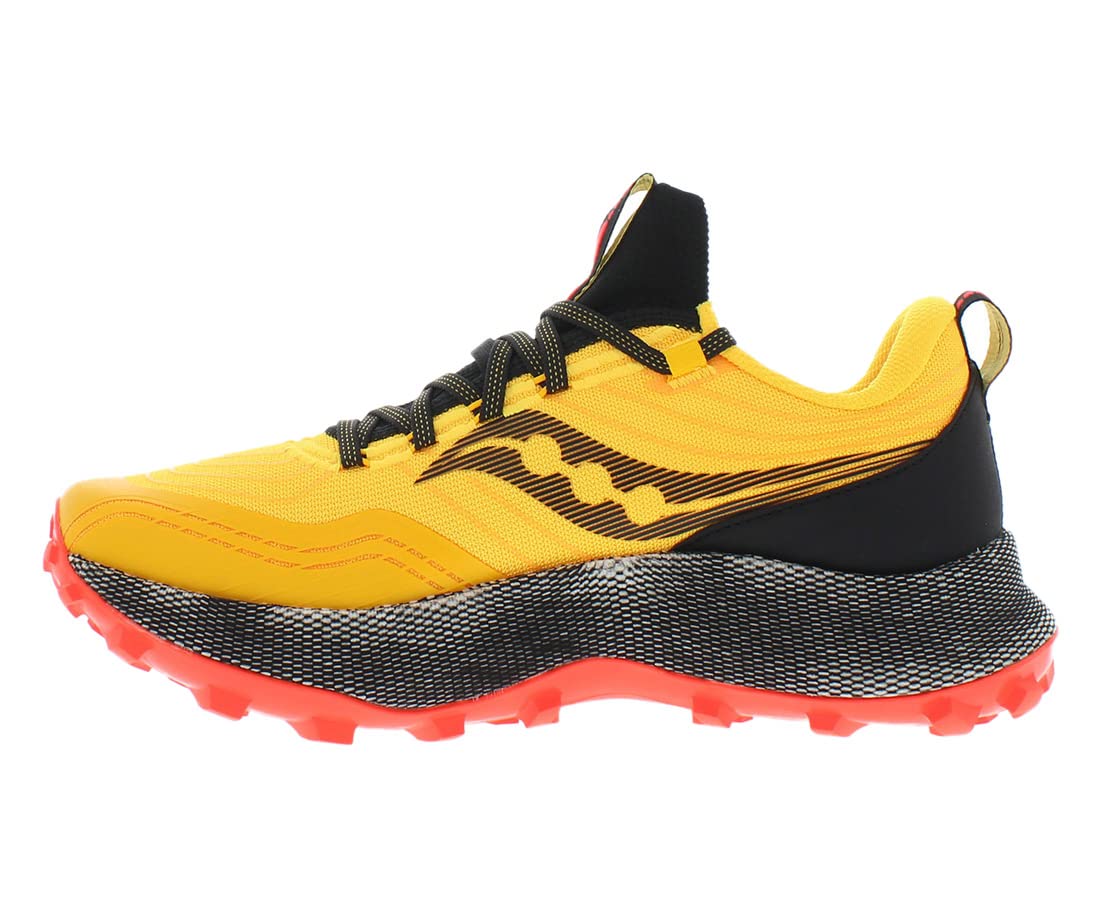
A trail shoe that brings horsepower — and a real weight penalty to match.
Saucony’s Endorphin Trail is built for off-road miles, and the first thing you notice is the mass. The listed weight is 3 pounds, roughly double the 1.44 pounds of the ASICS Gel-Contend 10 above. That is a lot of shoe to swing on a road run. Take it onto dirt, loose gravel, or uneven singletrack and the extra structure starts earning its keep.
Fit is where this one shines. Owners consistently find it sized well, and the quality reads high in the hand. For hiking and mixed-surface walks, that combination is a sensible match — a sturdier shoe with a firmer stance underfoot.
The elephant in the room is durability. Some pairs hold up fine over time, while others saw the midsole break down completely. That is a mixed report, not a blanket verdict, and it is worth knowing before you take it onto technical terrain. Ordering it for a flat commute or a treadmill session is probably a waste of what it does best.
Where it holds its own
- Consistent, true sizing for most feet
- High build quality in the hand and underfoot
- Built for trail terrain rather than the road
Worth knowing before you buy
- 3 pounds is a heavy shoe for pure road running
- Midsole durability reports are split — some pairs survive, some do not
It earns its place when: the plan is trail miles, loose gravel, and uneven ground, where the sturdier build makes sense.
Not the one for: road racing or daily tarmac training, where the 3-pound build simply drags.
5. Skechers Womens Aero Spark Hands Free Slip-ins
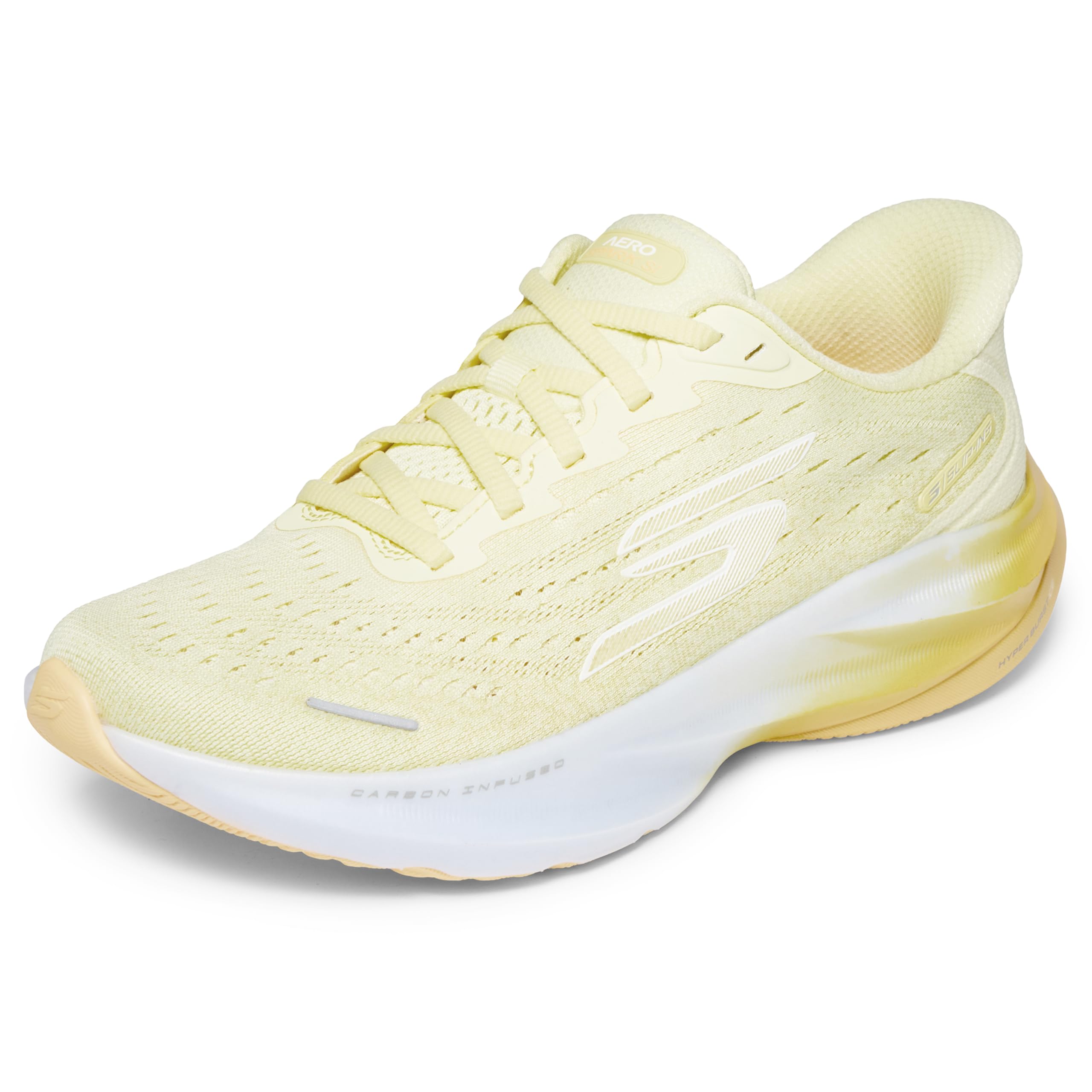
Step in without bending down — and get the same springy Skechers foam underneath.
The a neat extra is the entry. A Heel Pillow sits at the back of the collar and lets your foot slide straight in without you touching a lace or reaching down. For anyone with a bad back, a tight schedule, or hands full of dog lead, that is the feature that decides the purchase. It carries the APMA Seal of Acceptance, the same recognition given to the Aero Burst above.
The running hardware has not been cut to fit the gimmick. You get HYPER BURST ICE cushioning with HYPER ARC technology, a carbon-infused H-plate for energy return, and a Goodyear Performance Outsole — the same running platform as the Aero Burst above, in a women’s slip-in format. The removable Arch Fit insole adds shaped arch support, and the engineered mesh upper keeps airflow moving with adjustable laces if you want a tighter lock.
Appearance is what this shoe is loved for, and colour comes right behind it — which makes sense, since buying a yellow running shoe is partly a visual decision. The yellow yellowed-up version draws compliments, sizing runs true for most owners, and the padding is generous enough to feel cushioned without being bulky. The only honest caveat is that a slip-in design trades a dialled-in lace lockdown for convenience, so hard sprint work is not its job.
Why the colour crowd loves it: appearance and colourway are the two most-praised traits, and the slip-on entry lands third. That tells you this shoe is bought for how it looks and how easily it goes on.
One trade-off: if you demand a race-tight midfoot hold, the hands-free design is looser than a traditional laced runner.
Suits you if: you want bright daily runners you can step into without a fight, especially on the way out the door in a hurry.
skip it if: your runs are fast interval work where a firm laced lockdown matters most.
6. ASICS Men’s Gel-Kayano 33 Running Shoes
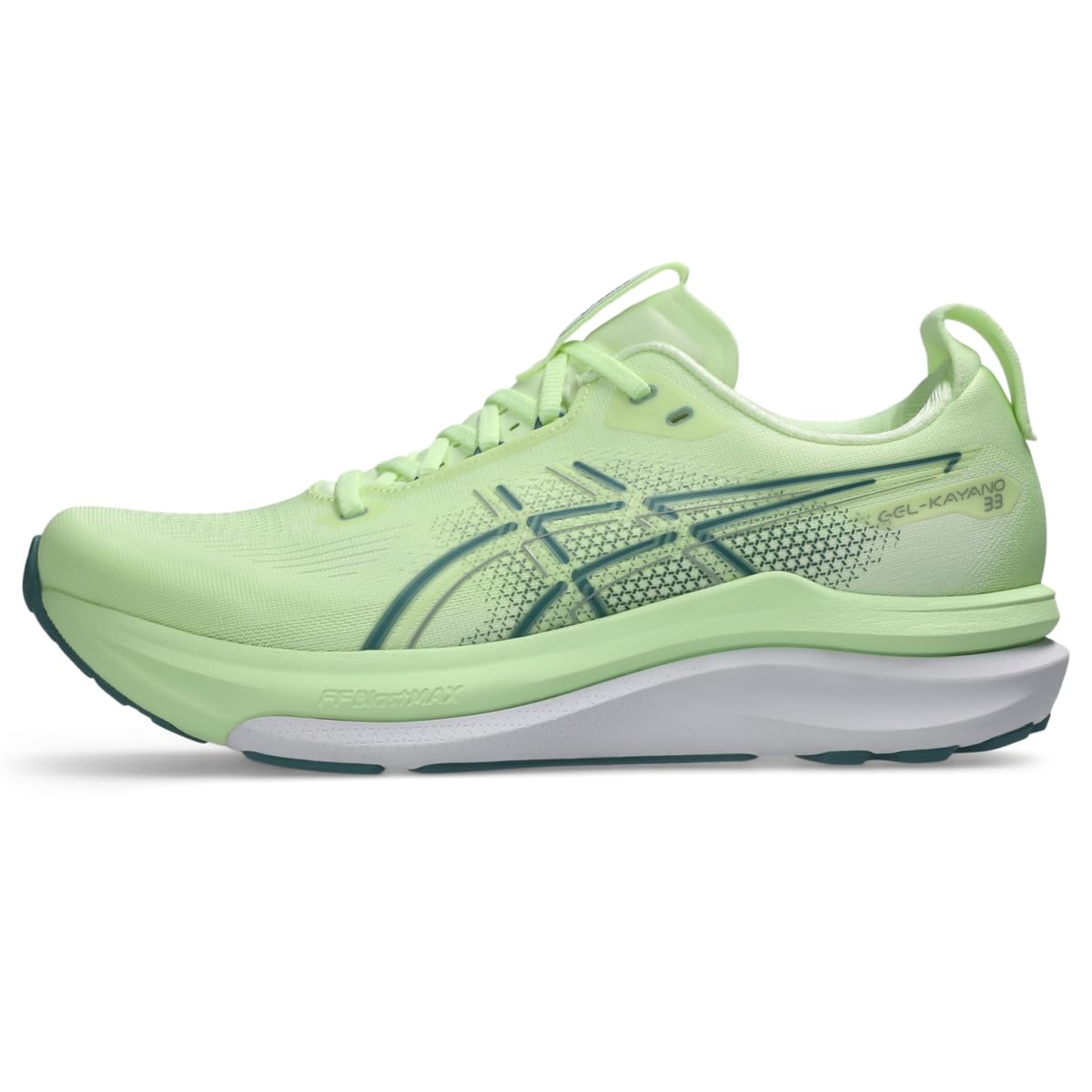
Built for the runner whose foot rolls inward — and steady enough to go the distance.
Stability shoes are a narrower category than most buyers realise. The Gel-Kayano 33 is specifically designed to support overpronation — the pattern where your foot strikes the outer heel first and then rolls inward, which calls for extra shock absorption and a steadier platform. If that describes your stride, this is the shoe in this list built for you. If it does not, you are paying for structure you will not use.
It is also flexible enough for flat feet, which is the fit note that keeps coming up in the feedback. Quality is the standout trait, with comfort close behind — the cushioning is soft underfoot and the fit holds up for long hours on your feet. At 1.44 pounds it matches the Gel-Contend 10 above on the scale, so the extra support does not arrive as extra weight.
The honest part is the price-to-value equation. Durability and value both split opinion here, which is normal for a premium stability shoe — a few runners feel the outsole wears faster than they expected, and some question the asking price. Against that, the support and cushioning combination is hard to match if you genuinely overpronate.
Who it is engineered for: overpronators and flat-footed runners who want support that lasts through long days on their feet.
The awkward bit: value splits opinion, so go in knowing you are paying for stability hardware, not for a bargain.
The right call if: your foot rolls inward and you want a bright yellow daily shoe that steadies the stride.
Wrong tool for: neutral runners who do not overpronate — the support is wasted on you.
Know the Specs
Midsole cushioning and stack
The midsole is the foam layer between your foot and the ground, and its thickness and softness set how much impact your legs absorb. A soft, thick foam like the HYPER BURST ICE in the Skechers Aero Burst suits long steady runs where comfort beats speed. A firmer, thinner midsole feels quicker but sends more shock up the leg. Read the foam name on a listing as a hint at stiffness — names tied to softness and springiness are built for distance, while names tied to speed are firmer.
Plates and energy return
A plate is a stiff insert inside the midsole. The carbon-infused H-plate in the Aero Burst and Aero Spark is a carbon-blended insert shaped like an H, and its job is to stop very soft foam from squashing flat underfoot, so the ride stays lively. It also helps roll your foot forward through toe-off. On a heavy runner, a plate keeps a thick foam shoe from feeling vague. On a light runner, it can feel stiff at first. It is not a speed guarantee — just a way to manage a soft midsole.
Toe box and toe splay
Toe splay is your toes spreading apart naturally as you land. A wide toe box gives them the room to do it, which is why the Wide Toe Box Trail shoe is aimed at runners who feel pinched in standard widths. A narrow forefoot stacks your toes together and adds pressure over distance. If your current shoes leave red marks on the outside toes, step up to a wider cut. If your foot is medium or narrow, a wide box can feel loose and sloppy instead.
Overpronation and stability shoes
Overpronation is when your foot rolls inward after landing, and the heel strikes on the outside first. Stability shoes like the Gel-Kayano 33 add support and shock absorption around the heel and arch to steady that roll. They are a sensible choice for flat feet and for runners who feel their ankles collapse inward. Neutral runners who do not overpronate rarely benefit from the added structure — it can feel stiff and heavy for no gain.
Common Questions
Are yellow running shoes harder to keep clean than dark ones?
Do I need a stability shoe like the Gel-Kayano 33 or is it overkill?
What does a wide toe box actually do for my feet on a long run?
Is the carbon-infused H-plate in the Skechers Aero Burst a speed feature?
How do I pick between the ASICS Gel-Contend 10 and the Gel-Kayano 33?
Are the Skechers Aero Spark slip-ins good for actual running or just walking?
How much does shoe weight matter for a daily running shoe?
Should I buy yellow running shoes for trail running or road running?
Why do some of these shoes get mixed sizing feedback?
Will the foam in a cushioned shoe like the Aero Burst wear out?
The Bottom Line
For most runners, the yellow running shoes winner is the Skechers Aero Burst. It puts every piece of a modern daily trainer into one bright upper: amplified HYPER BURST ICE cushioning, a carbon-infused H-plate for control, a removable Arch Fit insole, and a Goodyear Performance Outsole — and its quality and comfort feedback is the strongest in this group. If your forefoot feels cramped in normal shoes, grab the Wide Toe Box Trail sneakers for the roomiest fit here. And for trail days with real dirt underfoot, the Saucony S20647-10 is the sturdy option to reach for. One nudge if you have been waiting: the Aero Burst is the crowd favourite, and a daily trainer this complete in a proper yellow finish does not turn up often, so it is worth grabbing while the colourway is in stock.
How we choose
We do not accept paid placement. Every pick is matched to a real buyer and a real use-case; we do not hands-on test units.
Sources
Specifications: manufacturer listings and product documentation. Review insights: verified customer reviews, as of November 2026. Pricing: not shown on this page (it changes often); check the current price via the retailer link.
As an Amazon Associate, Tactical Gear Guy earns from qualifying purchases. This does not affect which products we feature.