Specs are compiled from manufacturer listings and verified buyer reviews and can change over time — please confirm the key details on the product page before buying.
You want a loaf that rises properly and a crust that does not come out pale and gummy, and the machine has to handle yeast dough without you babysitting it. That is the whole job of a yeast bread maker, and the seven picks below cover the realistic range: a compact counter unit, a beginner-friendly programmable box, and a couple of premium machines with convection fans and dual heaters. The one that fits most kitchens is the Zojirushi Virtuoso Plus, whose two kneading blades and base-and-lid heaters brown the top as well as the bottom.
This guide is built by comparing the manufacturers’ published specifications and the patterns across verified customer reviews, so you get each pick’s real strengths and trade-offs instead of marketing spin.
Below you will find what actually matters when you are buying a machine to bake yeast dough: the kneading setup, the heater layout, the loaf sizes each pan can take, and how long the delay timer runs so you can wake up to a finished loaf. Every pick here is measured against those points, which is why this is the shortlist I would hand to a friend shopping for the best yeast bread maker.
Top Picks

How To Choose The Best Yeast Bread Maker
Yeast dough is not batter. It has to be kneaded long enough for gluten to form, then rested and risen at the right temperature before it bakes. A bread maker does that on a fixed schedule, so the machine you pick is really a set of decisions about how much control you want over that schedule.
Kneading setup comes before everything else
One kneeling paddle is standard; two paddles knead a heavier dough more thoroughly and are the setup on the Zojirushi Virtuoso Plus. If you plan on whole wheat, rye or a stiff sourdough, that second paddle does visible work. For basic white and sweet loaves, a single paddle is fine on most machines.
Heater placement decides your crust
A single heater under the pan bakes the bottom of the loaf well and leaves the top to the ambient heat. A second heater in the lid, or a convection fan that moves hot air around the pan, browns the top more evenly. The Neretva uses heaters at the bottom and top of the loaf pan; the Cuisinart CBK-210NAS uses a fan instead.
Match the loaf size to your household
A 1 lb loaf is right for one or two people and finishes faster. A 2 lb loaf feeds a family and gives you sandwich slices. Most machines here bake 1 lb, 1.5 lb and 2 lb loaves, so check that the pan setting actually matches the recipe you plan to follow.
Side-by-Side Comparison
| Model | Best For | Programs | Max Loaf | Weight | Amazon |
|---|---|---|---|---|---|
| Zojirushi Virtuoso Plus★ Best Overall | Whole-wheat and gluten-free bakers | 7 | 2 pounds | 24 pounds | Amazon |
| KITCHENARM 19-in-1Best for Beginners | First-time bakers on a budget | 19 | 2 pounds | 8.6 pounds | Amazon |
| Hamilton Beach Digital | Quick express loaves | 14 | 2 pounds | 9.3 pounds | Amazon |
| Neretva 2.2LB | Big families and nut breads | 15 | 2.2 pounds | 15.8 pounds | Amazon |
| Cuisinart Convection CBK-210NAS | Artisan crusts and mix-ins | 16 | 2 pounds | 10.8 pounds | Amazon |
Detailed Reviews
1. Zojirushi Bb PDC20BA Virtuoso Plus 2 Lb Breadmaker
Our pick — 4.5+★ from 4,500+ verified ratings; the strongest balance of quality and price.
Two kneading blades and a heated lid turn out even, brown-topped loaves on a set schedule.
The thing that earns this machine the top spot is the bake itself. It runs two kneading blades that work the dough from both sides of the pan, and it heats from the bottom and the lid at once — a dual-heater layout that browns the top of the loaf instead of leaving it pale. Whole wheat, gluten free, multigrain and vegan programs sit among the settings, so a household that bakes around a dietary restriction is not stuck with white bread only.
Rapid courses put a white or whole wheat loaf in the pan in 2 hours 25 minutes, which is the difference between deciding at lunchtime and actually eating bread for dinner. The 2 lb capacity is the largest loaf size in the Zojirushi lineup here, and the LCD display uses a key code printed on the lid so you are not scrolling a menu blind. Need it faster? The rapid setting gets your loaf ready to eat in under two and a half hours.
Here is the honest catch, and it is a big one: the size. This is the heaviest machine on the list by a wide margin. The KITCHENARM weighs 8.6 pounds and this Zojirushi weighs 24 pounds — sit it on a shelf you can reach without lifting it. What wins people over is consistency: loaf after loaf comes out right, earning it 4.5+ stars across thousands of owners.
What makes the bake dependable
- Two kneading blades work stiff whole-wheat and gluten-free dough thoroughly
- Heaters in the base and the lid brown the top as well as the bottom
- 2 lb loaves, plus dedicated Salt Free, Sugar Free and Vegan programs
- Rapid courses finish a white or whole wheat loaf in 2 hours 25 minutes
What to weigh before you buy
- At 24 pounds it is a permanent counter resident, not a cupboard appliance
- Only 7 programs against 19 on the KITCHENARM — fewer menu shortcuts
- Value is the one thing the review pages push back on most
- The 39-inch cord still needs a wall outlet within reach
Buy it if: you bake whole wheat or gluten free regularly and want the same result every time.
Measure your shelf first: at 24 pounds this machine stays put once it lands.
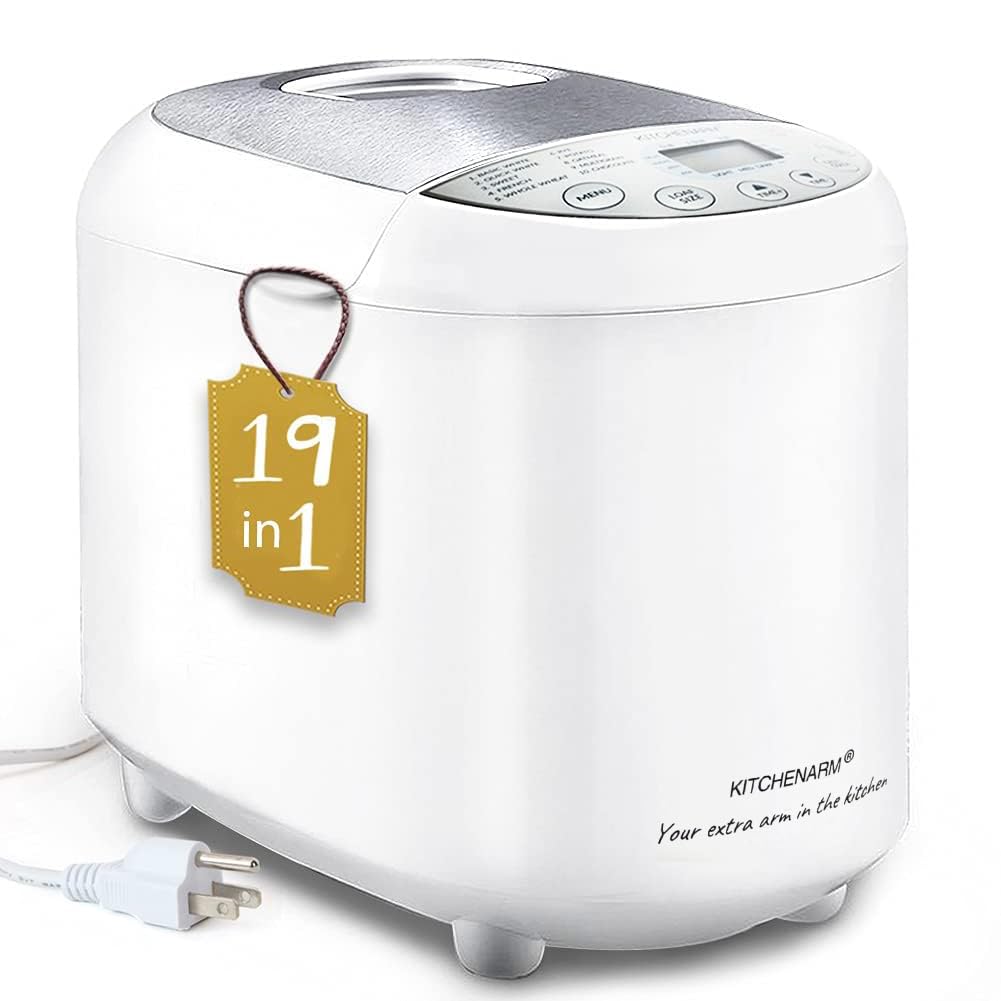
2. KITCHENARM 19-in-1 HANDY Bread Machine
Nineteen menus, 57 recipes and a two-year warranty for someone who has never proofed yeast.
If your last attempt at bread ended in a brick, this is the machine built around that failure. You pick a recipe from the included book, load the ingredients, press a few buttons, and the preset does the rest. Eleven of the 19 menus are bread cycles — Basic White, Sweet, French, Whole Wheat, Gluten Free, Multigrain, Sourdough and others — and seven more cover the non-bread jobs like cake, jam, yogurt and dough.
The menu count is where this machine separates itself from the top pick. It carries 19 programs against 7 on the Zojirushi Virtuoso Plus, and it does so in a body that weighs 8.6 pounds — light enough to lift out of a cupboard onto the counter and back again. All your settings are remembered between bakes, so the second time you make the same recipe it becomes a one-press job. A 15-hour delay timer and a nut-removal alarm are both there as well.
Two practical notes worth knowing before you order. It supports all-purpose flour as well as bread flour, which lowers the cost of experimenting while you learn what your dough should feel like. And the build is ETL certified for US and Canada with a 3-prong grounding plug, backed by a 2-year warranty and lifetime customer service. What wins people over is results relative to effort — performance draws the most praise in reviews, with the recipe book close behind.
The learning curve story: a beginner gets a real loaf without understanding gluten development, because the preset handles timing, rest and rise on your behalf.
The one thing to plan around: that 15-hour timer means overnight bakes work, but the machine’s exterior is polypropylene and a stainless lid — treat the lid as a lid, not a work surface.
Reach for this if: you want the widest menu selection and a recipe book to follow while you build confidence.
Look elsewhere if: you want a machine whose controls you program cycle by cycle from day one.
3. Hamilton Beach Digital Bread Maker Machine With Delay Start

Three express cycles — one for each loaf size — let you skip the long rise when time is short.
Express bread is the feature to focus on here. Hamilton Beach gives you a dedicated 1 lb Express, 1.5 lb Express and 2 lb Express cycle, so a loaf can be underway on a short timeline without you changing the recipe. The other 11 settings cover Basic, French, Gluten-Free, Whole Grain, Sweet, Dough, Cake, Jam Bake, Artisan Dough and a Package Bread cycle for pre-mixed flour.
Loaf flexibility is real: 1 lb, 1.5 lb or 2 lb, with three crust shades from light to dark. The pan and the kneading paddle both lift out for washing, which keeps cleanup short after a bake. Delay start is there if you would rather load ingredients at night and find hot bread when you come down in the morning — a useful thing for breakfast and for guests.
Two things a buyer should hear plainly. The display is small and several owners find it hard to read, especially at an angle, so factor that in if your eyes fight small screens. The power function is the recurring gripe — most machines run fine, but a few front panels have stopped responding, so buy from a seller with a clear return path. Bread quality is by far the most-praised thing about it, and at 9.3 pounds it is light for a 2 lb baker.
Where it earns its place: the three express settings are the difference between a fresh loaf tonight and no loaf at all when your afternoon is gone.
The honest caveat: this is the pick to buy with a receipt filed away — the front panel is the one part that has left a few bakers stranded.
Fits best: a household that wants express cycles at each loaf size and a small appliance footprint.
Think twice if: you need a bright, glance-readable display or you want zero electronics risk.
4. Neretva 2.2LB 15-in-1 Bread Machine
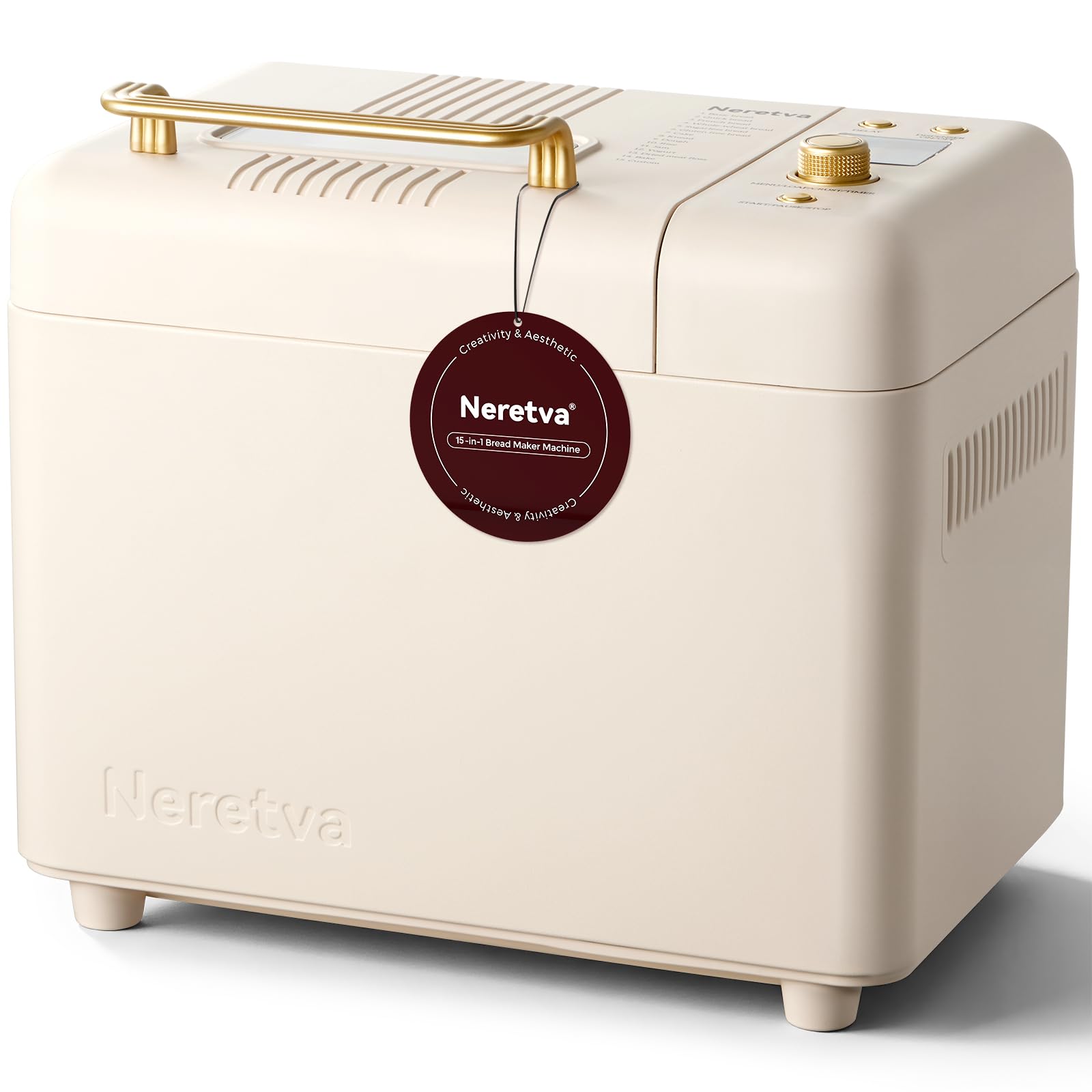
A 2.2 lb pan built to feed six or seven, with a dispenser that drops the nuts in at the right moment.
Capacity is the reason to look at this one. Fifteen programs cover basic, quick, French, sweet, whole wheat, gluten free, sugarless, cake, knead, dough, jam, yogurt, defrost and a homemade slot.
The bake runs dual heaters at the bottom and the top of the pan for 360-degree heat around the loaf, and the 600W motor turns at under 40 dB so the knead does not fill the kitchen with noise. The detachable fruit-and-nut dispenser opens at the right time, which means your raisins and walnuts land in the dough instead of being crushed into it during the first knead. A viewing window in the lid lets you check the rise without opening anything.
Two honest notes. The pan is ceramic-coated and nonstick, which makes washing easy, but durability is the aspect that draws the most negative comment among owners — treat the coating kindly and skip metal tools. And the recipe book is where opinions split; most find the instructions easy to follow, but the recipes themselves are the weakest part of the package. The look of the machine, meanwhile, draws the most praise.
Why the big loaf works
- 2.2 lb maximum loaf feeds six to seven people
- Heaters at the bottom and top of the pan for even browning
- Auto nut dispenser releases add-ins at the right time
- Motor runs under 40 dB, quiet enough for an open kitchen
Where owners push back
- Ceramic coating durability is the most-repeated complaint
- The included recipe book is the mixed piece of the package
- At 15.8 pounds it is a hefty lift for a cupboard
- The 1.56 lb setting is the smaller of only two loaf sizes
Best when: you are baking for a full table and want a nut bread the machine can handle alone.
Skip the metal utensils: that ceramic pan rewards a soft sponge and a short soak.
5. Cuisinart Compact 2 Lb. Bread Maker CBK-110NAS

A compact vertical pan that lives on the counter or in the cupboard without an argument.
Counter space is the deciding factor for a lot of kitchens, and this is the Cuisinart built for exactly that. The compact size is not a footnote — it is the most-repeated compliment on the machine, and the vertical metal nonstick pan stands tall rather than wide. Twelve one-button programs cover white, French, whole wheat, sweet, artisan dough, jam, cake and a dedicated gluten-free cycle. The dough and artisan dough cycles prepare dough for a separate bake, which is how you get pizza and rolls out of the same machine.
Load it at night and the 13-hour delay start with a 60-minute keep-warm function puts fresh bread in front of you in the morning. The viewing window and interior light let you watch the cycle without lifting the lid. An audible alert tells you when to pull the kneading paddle before the final rise — that is the step that saves you a hole in the bottom of the loaf.
It handles 1 lb, 1.5 lb or 2 lb loaves with three crust shades from light to dark. Performance draws the most praise on this machine, with ease of use right behind it — the programming readout is genuinely simple to follow. What you should expect to manage: durability is the one thing that draws negative comment, and the review pages are mixed on value relative to the rest of the Cuisinart line.
One-sentence verdict: the Cuisinart Compact gives you twelve programs and a 13-hour delay in the tightest body on this list, and it fits in a cupboard.
Ask yourself first: if you bake more than three loaves a week, the smaller footprint may cost you capacity and durability over time.
Chosen by: counter-limited kitchens that still want gluten-free and artisan dough cycles.
Not for: heavy weekly bakers who would rather trade size for a longer-lived pan.
6. Cuisinart Convection 2 Lb. Bread Maker CBK-210NAS
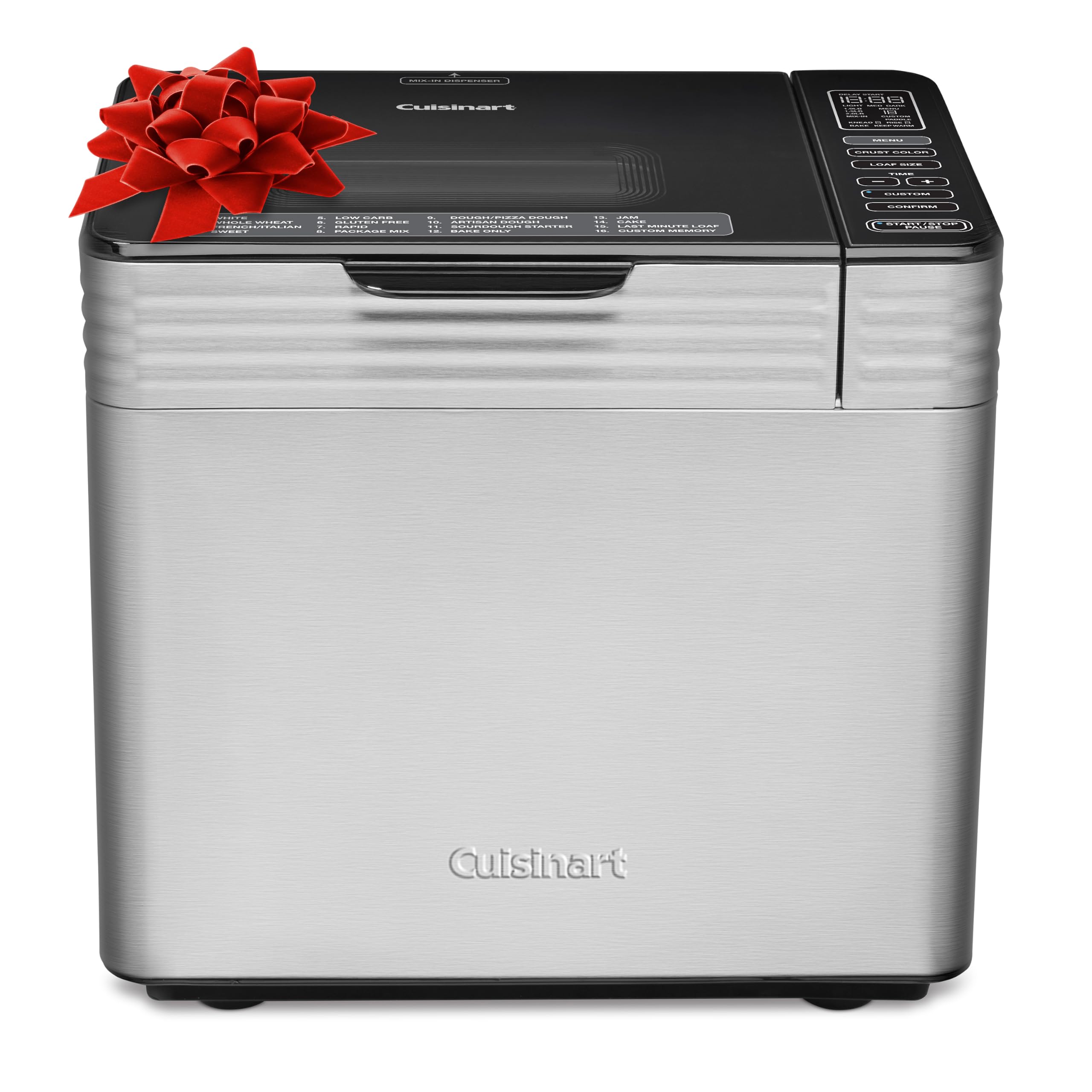
A fan moves hot air around the loaf, so the crust colors evenly instead of scorching one side.
Most bread makers heat from a single element and let the top of the loaf catch whatever heat drifts up. This Cuisinart adds a convection fan that circulates air through the chamber during the bake, and it is adjustable across three crust shades. That combination is what earns it a spot near the top of the premium group — the crust color and texture come out consistent rather than patchy.
The mix-in dispenser holds up to three-quarters of a cup and drops fruit and nuts in at the second knead, so a loaded cranberry-walnut loaf is a load-and-leave job. Sixteen programs go from everyday loaves through Gluten Free and Low Carb to a Sourdough Starter cycle, and the Custom Memory slot saves the settings for your house recipe. Loaves run 1 lb, 1.5 lb or 2 lb, and the kneading paddle comes out before the final rise with the included hook.
Two trade-offs to hold in mind. The pan is on the smaller side for a 2 lb loaf — the machine rates for 2 lb, but owners notice the pan fills close to the top and the size is a mixed point. Paddle removal also splits opinion, with some finding it fussy to get out. On the positive side, performance draws the most praise by a wide margin, and an edge-to-edge glass top plus a 13-hour delay timer round out the daily workflow.
Where the fan pays off
- Convection circulation gives even crust color across three shades
- Automatic dispenser holds up to three-quarters of a cup of add-ins
- 16 programs including Gluten Free, Low Carb and Sourdough Starter
- Custom Memory saves your house recipe’s settings
What to accept up front
- The pan runs tight for a full 2 lb bake
- Paddle removal is the step that frustrates people
- Noise is a mixed point — some find it loud
- The recipe book is the weakest part of the box
Worth it for: bakers chasing an artisan-style crust and a hands-off mix-in loaf.
Prepare for: a tight pan at full capacity and a paddle you have to pull by hand.
7. Panasonic SD-R2550 Automatic Bread Maker

It reads the room as well as the dough, which is why sourdough and brioche behave differently here.
Yeast behaves differently in a cold kitchen than a warm one, and this is the machine built around that fact. A double temperature sensor reads both the inside of the machine and the room, then adjusts the rise and rest times to suit — a genuinely useful thing if your kitchen swings between seasons. Twenty presets cover whole wheat, sourdough, brioche, cake, and both pizza and pasta dough, plus a gluten-free setting.
The kneading is where Panasonic puts real thought in. A shaped blade works firm dough while ribs molded into the pan hold it against the blade, so a stiff dough gets worked rather than slipping around. Hard-to-blend ingredients like nuts and dried fruit are handled by the dedicated raisin/nut dispenser, which drops them in at timed intervals instead of all at once. Manual time settings also let you run the knead and ferment steps yourself for recipes that do not match a preset.
The honest part: this sits at a lower rating than the rest of the list, and the pan is a 2 lb capacity, so it is not the machine for a household that wants the biggest possible loaf. It is also heavy at 16.5 pounds. What it offers instead is control — a full sourdough starter cycle, a pizza and pasta dough cycle, and a temperature sensor doing the math on your kitchen for you.
The case for it: if you keep a starter going or your kitchen runs cold in winter, the dual sensor and 20 presets do work the other machines leave to you.
The case against: it is the lowest-rated pick here, so go in expecting to learn its quirks rather than getting a drop-in machine.
Made for: sourdough keepers and anyone whose kitchen temperature makes yeast unpredictable.
Not the safe pick: if you want the most proven machine on the list, the Zojirushi above beats it on track record.
Know the Specs
Kneading blades and pan ribs
The blade is what turns flour and water into dough, and the count matters. One paddle handles white and sweet loaves well; two paddles, as on the Zojirushi Virtuoso Plus, work a stiff whole-wheat dough from both sides. Some pans also mold ribs into the walls — Panasonic uses these so a firm dough stays put against the blade instead of spinning with it. If whole wheat or rye is your usual bake, this is the spec to check first.
Heater layout and convection
A single bottom element bakes the base of the loaf and relies on rising heat for the top. A second heater in the lid, as on the Neretva, browns the crown directly. A convection fan, as on the Cuisinart CBK-210NAS, moves hot air around the whole pan for even color side to side. None of these is strictly better — but if you have ever pulled a loaf with a burnt bottom and a pale top, the heater spec is the one you want to fix.
Common Questions
Does a yeast bread maker knead the dough enough for a proper rise?
Can I use my own bread recipe instead of the included one?
What loaf size should I pick for two people?
How long can the delay timer run on these bread makers?
Do I have to take the paddle out before the bread bakes?
Which of these machines handles gluten-free bread best?
How much counter space does a bread maker need?
Is a convection fan better than a second heater for bread?
Can these machines make dough for pizza and pasta?
Should I use bread flour or all-purpose flour in a bread machine?
The Bottom Line
For most kitchens, the yeast bread maker worth owning is the Zojirushi Virtuoso Plus, because two kneading blades and heaters in the base and lid give you a loaf that browns on top and bakes through evenly — and it does that the same way every time you press start. If you want the widest menu selection and a recipe book to follow while you learn, the KITCHENARM 19-in-1 gives you 19 programs in an 8.6-pound body. And if you keep a sourdough starter, the Panasonic SD-R2550 has a dedicated starter cycle and a dual temperature sensor that adjusts the rise to your kitchen.
One nudge: the Zojirushi holds the highest rating on this list, but the Cuisinart Compact has far more owners — 17,000+ against roughly five thousand for the Zojirushi. That gap is about price tier and counter space, not quality, so pick the one whose footprint you can actually live with.
How we choose
We do not accept paid placement. Every pick is matched to a real buyer and a real use-case; we do not hands-on test units.
Sources
Specifications: manufacturer listings and product documentation. Review insights: verified customer reviews, as of November 2026. Pricing: not shown on this page (it changes often); check the current price via the retailer link.
As an Amazon Associate, Tactical Gear Guy earns from qualifying purchases. This does not affect which products we feature.