Specs are compiled from manufacturer listings and verified buyer reviews and can change over time — please confirm the key details on the product page before buying.
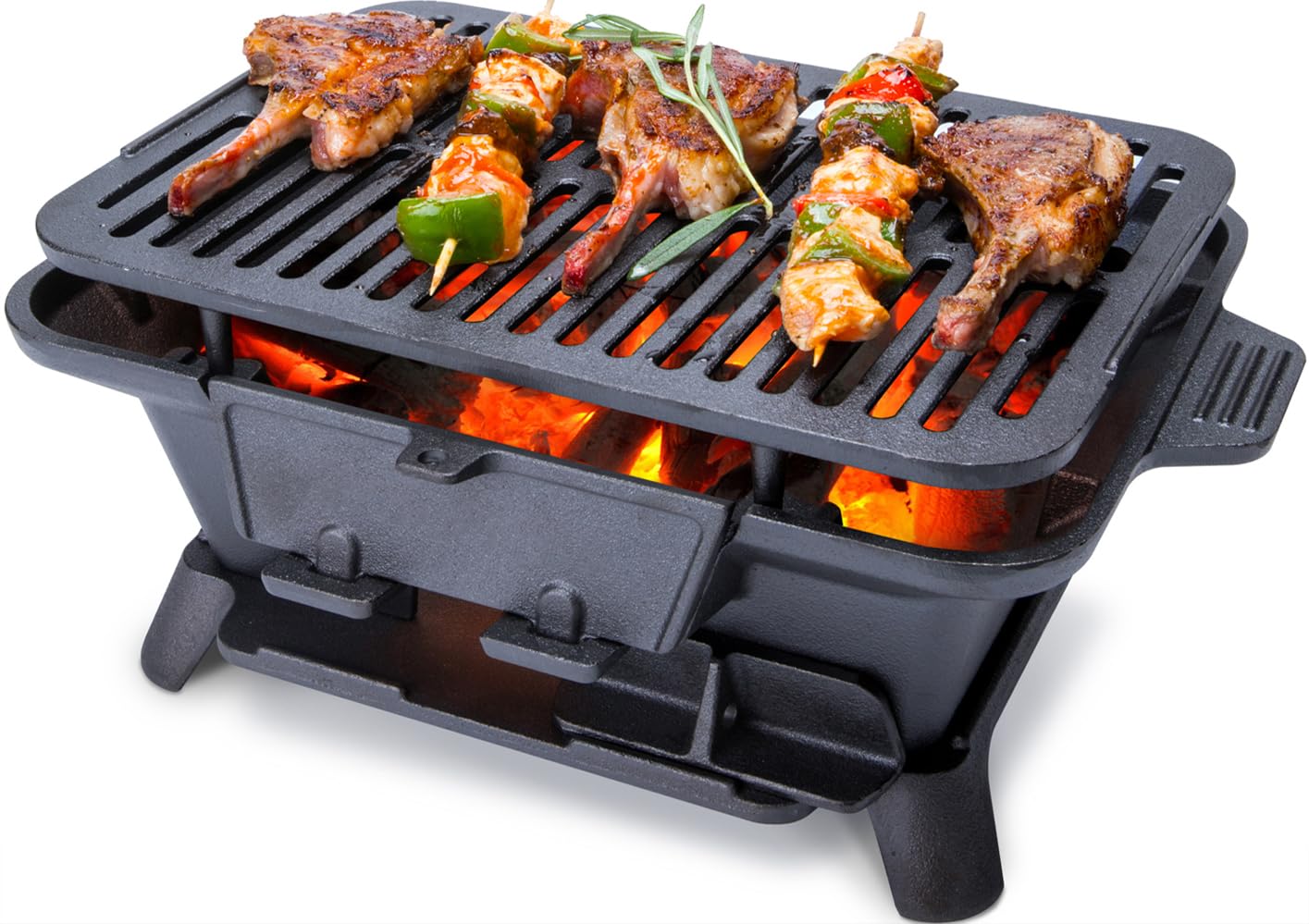
If you want the short answer: buy a grill that holds steady, focused heat under a row of skewers, and skip anything so thin it flares up and burns your yakitori before the inside cooks. The nine grills below are all charcoal-fired tabletop units built for skewer cooking, and they split into two clear families — heavy cast iron and ceramic on one side, stainless steel on the other. The best overall pick is the IRONMAX cast iron hibachi, the crowd favorite at 4.5+ stars across 90+ owners, because it holds heat like a small furnace and stays stable on three legs.
This guide is built by comparing the manufacturers’ published specifications and the patterns across verified customer reviews, so you get each pick’s real strengths and trade-offs instead of marketing spin.
You want skewers with crisp edges and juicy centers, and the grill you choose decides whether you get that. Cast iron holds heat steadily, ceramic spreads it evenly, and stainless steel resists warping—each behaves differently under high heat. Cooking surface size matters too: a 96 square inch grate fits two people, while a 144 square inch grate handles a small party. A grid lifter or ash tray saves you cleanup time by letting you access coals or dump ash without dismantling the grill. Every pick here is a charcoal grill you can set on a balcony, a patio table, or a campsite picnic bench. Choose by grate size for your usual skewer count and by weight if you plan to carry it. This breakdown of the yakitori barbecue grill market focuses on heat control, surface area, and how each body material handles years of coals.
Top Picks

How To Choose The Best Yakitori Barbecue Grill
Yakitori cooking is not the same as flipping burgers over a wide flame. Skewers need a narrow, even band of high heat so the meat sears on the outside while staying juicy inside. Body thickness, vent control, and grate size all serve that narrow, even heat band.
Body material decides how steady your heat stays
Cast iron soaks up heat and gives it back slowly, so a row of skewers cooks evenly without constant fiddling. Ceramic does the same job with less weight and adds thermal shock resistance (it tolerates fast temperature swings without cracking). Stainless steel heats faster and cools faster, which suits cooks who want quick sessions and easy cleaning but demands more attention to vent settings.
Vent and draft control is your real temperature dial
A draft door or side vent lets you starve or feed the coals. Close it down and the fire settles into a low, steady burn for slower skewers. Open it up and you get a hot sear for chicken skin or vegetables. Grills without adjustable airflow force you to manage heat by how much charcoal you load, which is far less precise.
Cooking surface size should match your guest count
A small surface of roughly 92 to 105 square inches suits two to three people and keeps charcoal use low. Step up toward 128 to 144 square inches when you regularly cook for four or more, or when you want a full row of skewers plus a side of vegetables going at once. Bigger grates need more coals, so match the size to your actual table.
Side-by-Side Comparison
| Model | Best For | Cooking Surface | Body Material | Weight | Amazon |
|---|---|---|---|---|---|
| IRONMAX Hibachi Grill Outdoor★ Best Overall | Cooking for two on a balcony or campsite | 96 sq. in. | Cast Iron | 20 lbs | Amazon |
| YOOODONNN Upgraded Japanese Hibachi (XL)Best for Small Spaces | Light indoor and outdoor daily skewers | — | Aluminum | 7.3 lbs | Amazon |
| ONLYFIRE GRILLS GS306Biggest Surface | Feeding a small group with even ceramic heat | 144 sq. in. | Ceramic | 22 lbs | Amazon |
| AUPLEX Yakitori Ceramic Grill 16″ | Fast preheat with a heat shield for the table | 92 sq. in. | Ceramic | About 7 kg | Amazon |
| ONLYFIRE GRILLS GS305 14″ | Compact ceramic cooking with a drip pan | — | Ceramic | 26 lbs | Amazon |
| YAK Grills Hibachi 400 Series | High-heat stainless searing with a carry case | 105 sq. in. | Stainless Steel | — | Amazon |
| The Bincho Grill 16″ Mini | Restaurant-style skewer sessions at home | 128 sq. in. | Stainless Steel | — | Amazon |
| The Bincho Grill 24″ Robata | Long robata sessions and small commercial use | 925.2 sq. cm | Stainless Steel | — | Amazon |
| KINKA Diatomite Konro BQ-8WF | Traditional konro cooking for dedicated skewer cooks | — | Diatomaceous Earth | — | Amazon |
Detailed Reviews
1. IRONMAX Hibachi Grill
Our pick — 4.5+★ from 90+ verified ratings; the strongest balance of quality and price.
A solid block of cast iron that soaks up coals and gives back steady heat for two.
The whole body is 100% cast iron, and that is the reason this one holds heat so well under a row of skewers. You get a 96 square inch cooking surface across a body that measures 14.8 by 9.5 by 7.25 inches, which lands squarely in two-to-three person territory. Set it on three legs and it sits flat without wobbling, whether that is a balcony floor or a picnic table.
Buyers pick this grill for its size, because it is honest about what it is built for: a small steak, a couple of hamburgers, a handful of hot dogs, or a full row of yakitori skewers for two. The cast iron quality runs a close second in owner feedback, and owners describe the cast iron build as heavy enough to hand down rather than replace. Heating power is rated at 15000 BTU (British thermal units, a measure of heat output), so it gets coals going and keeps a real searing zone available—enough to put a crust on steak or skewers without waiting.
The catch is care. Bare cast iron will rust if you leave it wet, so the routine is a quick brush, a full dry, and an oil wipe after every session. It arrives seasoned with 100% natural vegetable oil, and with that brush-dry-oil upkeep the maker says it lasts a lifetime. The coal door and adjustable draft door make adding charcoal and dialing temperature straightforward without lifting the grate.
At 20 pounds it is the lighter of the two cast-iron style bodies you will see here — the ONLYFIRE GRILLS 14-inch ceramic unit weighs 26 pounds, so this one is the easier lift between balcony and car. Just do not expect it to feed a crowd; the 96 square inch surface gets tight fast past three people.
What it does best
- 100% cast iron body holds heat and sears skewers evenly
- 96 square inch surface is right-sized for two to three people
- Draft door and coal door give you real temperature control
- Three stable legs keep it planted on uneven surfaces
- 15000 BTU of heating power for a tabletop unit
Where it asks more of you
- Bare cast iron rusts without a brush-dry-oil routine
- Small surface fills up fast for larger groups
- Outdoor use only
Buy this if: you cook yakitori for one or two and want a cast iron body that holds heat for years with basic care.
Look elsewhere for: big-group grilling — 96 square inches will not stretch to a party.
2. YOOODONNN Japanese Hibachi Grill XL
The one that fits on a countertop, weighs almost nothing, and still burns real charcoal.
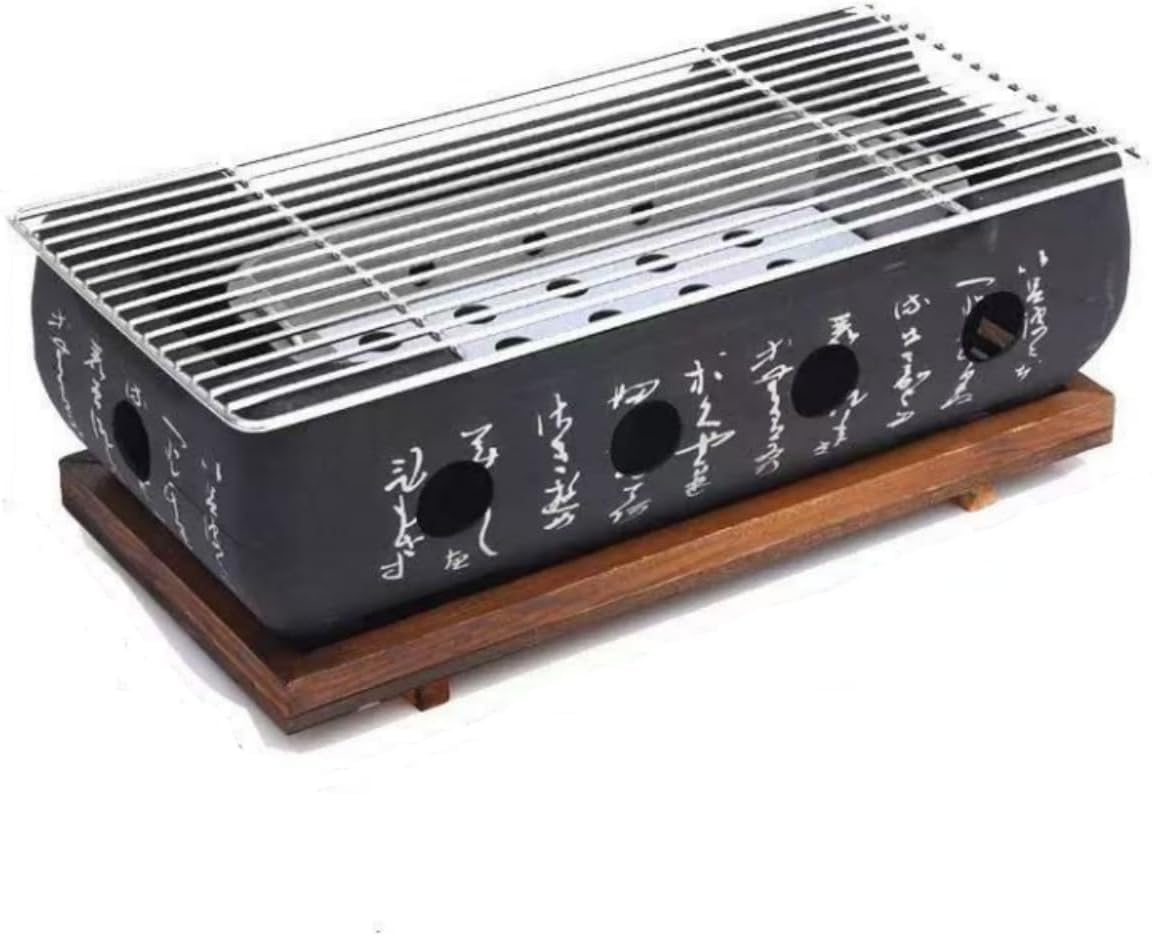
At 7.3 pounds with dimensions of 6.7 by 13.6 by 4.73 inches, this is the desktop unit of the group — it takes up about as much room as a cutting board. That makes it the natural pick for apartment cooks who want yakitori skewers inside or on a small balcony without hauling out a full-size grill. The side air vent design keeps air moving through the coals and helps cut down on sudden flame flaring.
Aluminum construction with a non-stick finish means it heats quickly and wipes clean in a minute. A solid wooden base keeps it stable on a table, and it ships as a ready-to-use set you can assemble simply and start grilling. If you are comparing it against the IRONMAX above, the trade is clear: that cast iron body weighs 20 pounds and this one weighs 7.3, but cast iron holds heat longer between batches.
The honest limit is heat mass. An aluminum body this light will not hold a searing band the way cast iron or ceramic does, so expect to manage the coals more actively for long skewer sessions. It is built for light, casual cooking rather than an all-evening robata run. Indoor and outdoor use are both listed, though you should always treat any charcoal unit with care near walls and ceilings.
The portability payoff: 7.3 pounds and a wooden base mean you can move from kitchen counter to picnic table in one hand.
Reach for this if: you want light, quick skewer cooking on a countertop and hate heavy lifting.
Think twice if: you need sustained searing heat across many rounds of skewers.
3. ONLYFIRE GRILLS GS306
The ceramic workhorse that spreads 144 square inches of grilling over a stable frame.
Take the measuring tape to this one: 144 square inches of cooking surface is the largest here against the AUPLEX ceramic 16-inch model’s 92 square inches — that is 57% more usable grate. The body stretches 20 by 8.8 by 6.3 inches across a thickened ceramic clay shell, and it weighs 22 pounds. What that buys you is real estate for a full row of skewers plus vegetables at the same time.
Heat retention is where ceramic earns its keep, and it is the second thing buyers call out after the size. Bottom vents let you dial flame and smoke, and the included grid lifter means adding charcoal without juggling a hot grate. You also get a charcoal plate, a stainless steel grid measuring 13.8 by 6.9 inches, and an anti-scalding wooden handle.
The durability question deserves a straight answer. Ceramic of this type is stiff and heat-resistant, but reviews are split — some buyers report cracking after the second use, while others find it sturdy. Treat it as a careful-handling unit and keep it out of hard knocks and sudden cold water on a hot body. The weight is the other honest note: at 22 pounds it is not a one-hand carry, so plan where it lives.
For a two-in-one grill that handles Japanese, Korean, and hibachi style charcoal cooking, the surface area here is the reason to pick it over the smaller ceramic options.
Room to work
- 144 square inch grate, the largest cooking surface in this lineup
- Ceramic body holds heat between batches
- Grid lifter lets you add coals without touching a hot grate
- Bottom vents for flame and smoke control
Worth knowing before you buy
- Ceramic can crack if knocked around; handle with care
- 22 pounds makes it a set-down-and-leave grill
The fit: cooks feeding three to four who want the widest grate and steady ceramic heat.
The caveat: treat the ceramic shell gently — it is not a knock-around camping grill.
4. AUPLEX Yakitori Ceramic Charcoal Grill 16″

Fifteen minutes to 662°F, with a bamboo shield between the coals and your table.
The spec that sells this one is preheat speed: it reaches 350°C / 662°F in about 15 minutes when properly preheated. That is fast enough to decide on skewers after you get home and still eat at a reasonable hour. The body is a 3.5cm thick blend of cordierite and mullite ceramic, which is the same family of material used for heat-resistant kiln furniture — it tolerates thermal shock and holds heat once it is up to temperature.
Adjustable air vents give you a working range from high-heat searing down to slower cooking, and the 92 square inch grate handles two to five people according to the listing. The bamboo heat shield and 201 stainless steel stand are the practical details that matter on a real tabletop — they put a barrier between the ceramic body and your surface. Side handles make it movable without grabbing something hot.
Compare it to the ONLYFIRE GS306 and the trade is size for preheat speed. That grill gives you 144 square inches; this one gives you 92 but gets to temperature in a documented 15 minutes. At about 7 kg it is heavy enough to feel solid and light enough to reposition between cooks.
The tabletop detail that earns its place: a bamboo heat shield and stainless stand mean you are not improvising a barrier with a spare cutting board.
Go here for: quick weekday skewer sessions where 15-minute preheat matters more than a big grate.
Consider the wider option if: you routinely cook for more than four — 92 square inches gets full.
5. ONLYFIRE GRILLS GS305

A square-foot foot-print ceramic grill that looks as good as it cooks skewers.
Appearance is what people notice first with this one — it is the most-praised quality by a wide margin, and the 14 by 14 by 7 inch ceramic body earns it. The shell is thickened ceramic clay with a non-stick finish, and it works as a Japanese, Korean, yakiniku, or yakitori grill depending on what you load onto the grate. Bottom vents handle flame control, and the included drip pan keeps the base area cleaner between sessions.
You also get a grid lifter and an anti-scalding wooden handle, which matter more than they sound. Lifting a hot stainless grid with tongs and hoping is how burns happen; a dedicated lifter removes that gamble. The complete package includes the grill, a stand with handle, a ventilation door, a stainless steel grid, and the drip pan.
One ownership note to weigh honestly: the base is the part to keep an eye on, with reports of cracking after the first use showing up alongside owners who find it sturdy. Given that, set it down rather than drop it, and do not shock a hot ceramic body with cold water. At 26 pounds it is the heaviest unit in this review — heavier than the 14-inch cast iron IRONMAX at 20 pounds — so give it a permanent spot.
Pick it for: the ceramic look and a drip pan setup that keeps cleanup simpler on a patio.
Handle with care: the ceramic base is the weak point under knocks, and 26 pounds is a two-hand move.
6. YAK Grills Hibachi

Full stainless steel, rated to 750ºF, and built to break down fast after the coals die.
The headline here is the heat rating: this grill is built to run at 750ºF, which is squarely in searing territory for chicken skin and steak edges. A 15 by 7 inch stainless grate gives you 105 square inches of cooking surface, listed as enough for 4 burgers, 2 large steaks, or 9 skewers. Airflow is designed to keep a long burn going while the base stays cooler against your tabletop.
Stainless steel throughout means it will not need the oil-wipe ritual that bare cast iron demands, and the whole unit disassembles for cleaning — the maker also lists it as dishwasher safe. It ships with a grate handle and a carrying case, so the camping and tailgating crowd gets a transport solution in the box. A 5-year warranty backs the build.
One disclosure worth reading twice: it should not be used on plastic tabletops or around children because of the high temperatures. That is a real constraint for balcony cooks with a plastic patio table. The trade against the ceramic options above is heat stability — steel heats and cools faster, so you will be managing coals more closely, but you gain speed and easier cleaning.
Why it earns the premium shelf
- Rated to grill at 750ºF for a hard sear
- 100% stainless steel with no seasoning routine
- Disassembles fully and is listed as dishwasher safe
- Carrying case and grate handle included
- Backed by a 5-year warranty
The fine print
- Not for plastic tabletops or use around children
- Outdoor use only
Built for: cooks who want a screaming-hot sear and a grill that goes in the dishwasher after.
Skip the plastic table: this one runs hot enough that surface choice actually matters.
7. The Bincho Grill 16″ Mini Yakitori Grill
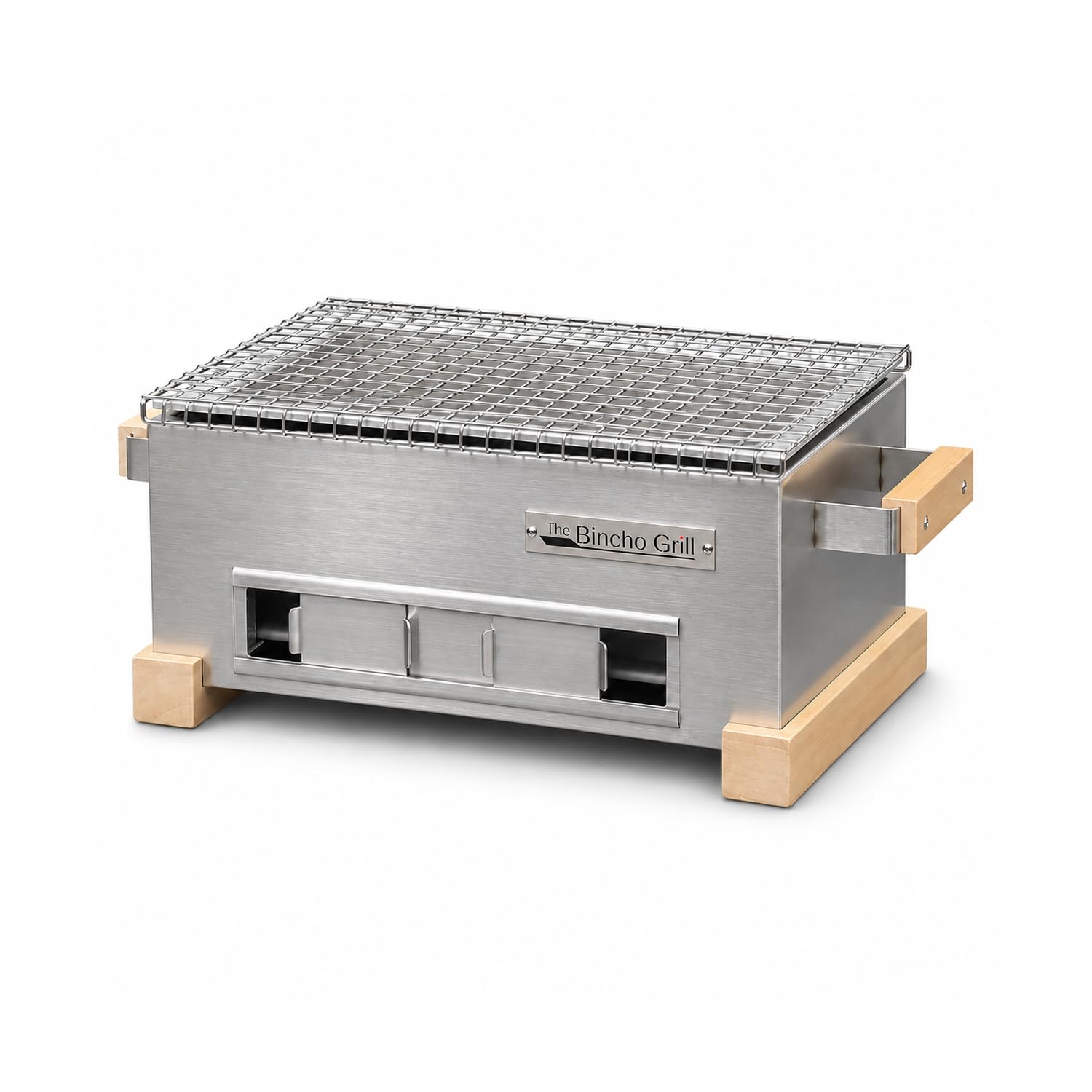
The skewer specialist with a thick steel body, an aluminum charcoal box, and a cool-touch base.
Construction quality is the reason people pay for this one, and it shows in the layers: a thick stainless steel body, an aluminum charcoal box, and a stainless steel liner inside it. The 16 by 8 by 7.5 inch frame carries 128 square inches of grate, which sits between the 105 square inch YAK and the wider 144 square inch ONLYFIRE. That extra width matters when you are laying out a full row of skewers and want them all over the same heat band.
The airflow system is tuned for efficient charcoal burning, which gives you better temperature control and longer burns — the exact thing binchotan charcoal needs to perform. A cool-touch base and poplar wood accents protect your patio table, so you are not playing the guess-how-hot-is-the-bottom game. Cleanup is handled by a removable charcoal liner and an ash tray, which turn a messy job into a two-minute one.
Buyers describe this as restaurant quality, and the build is what backs that claim up — the thick steel body, aluminum charcoal box, and stainless liner are built to resist corrosion and warping. The honest trade is price: this sits well above the ceramic mid-range, so it is a pick for someone who cooks skewers regularly and wants the gear to match. At 128 square inches it is not a party grill either — this is focused yakitori work.
The cleanup advantage: a removable liner and ash tray mean you are not chiseling cold ash out of a ceramic bowl.
Suits you if: yakitori is a regular ritual and you want a thick-steel body that will outlast the cheap stuff.
Not the pick for: occasional cooks who only light coals a few times a season.
8. The Bincho Grill 24″ Tabletop Yakitori Grill
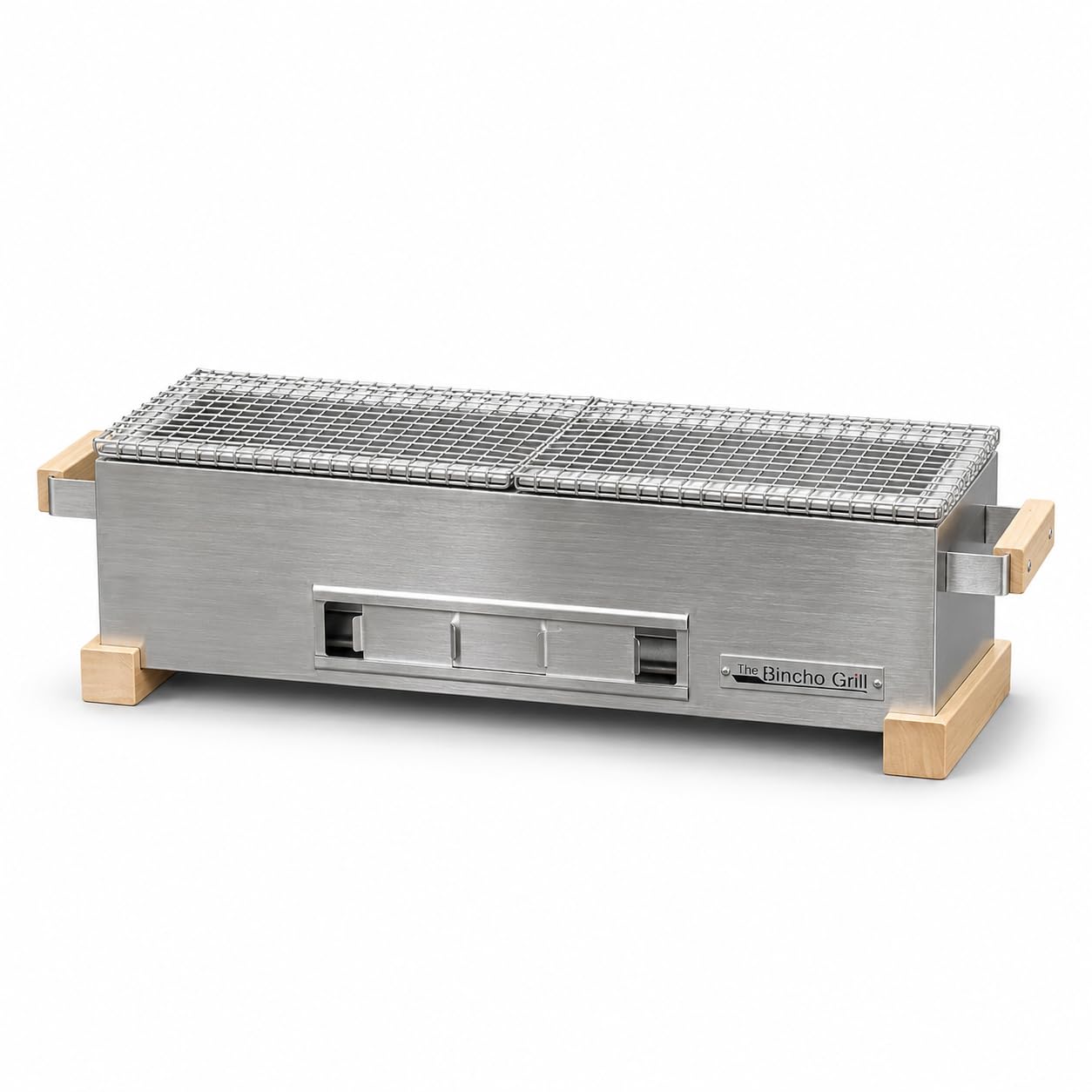
A 24-inch robata that runs two grates at once and shows up on professional kitchens’ benches.
Length is the entire story here. Two 12-inch grates sit side by side across a 24-inch body, giving you a long cooking line for skewers—enough to lay out a full row for a small group. Two adjustable windows give you airflow control along that span, so you can dial in heat from one end to the other. Thick-gauge stainless steel with smooth welds, double walls, and bends for extra rigidity keeps that long frame from warping under sustained heat, so it stays flat session after session.
Heat management is handled by a 3/16 inch thick aluminum insert with a stainless steel liner, which improves retention, protects your surface, and collects ash more cleanly. Cool-touch poplar wood handles and legs stay safe to grab during a long session. The maker notes this binchotan grill has appeared on the Iron Chef TV show — that is a placement claim from the brand, not a performance test, but it explains where the professional-kitchen design language comes from.
Set expectations against the 16-inch version: this one measures 24 by 6 by 6.75 inches and runs two grates, so it takes up real table space and needs more charcoal to fill that longer fire box. The upside is throughput — a long line of skewers cooks at once instead of in shifts. It is also listed for food trucks and professional kitchens, which tells you the build is aimed at sustained use.
Best for: cooks running a long line of skewers at once, or anyone outfitting a small food operation.
Size it right: 24 inches of body needs a deep table and a bigger charcoal load than a mini grill.
9. KINKA BBQ BQ-8WF Konro

The classic konro shape in diatomaceous earth — old-school yakitori gear for the purist.
Diatomaceous earth is the material that separates this from everything else here. That is fossilized sediment formed into a body, the traditional material behind Japanese konro grills, and it is prized for holding heat in a narrow, focused band under skewers. The BQ-8WF measures 54 by 23cm, giving you the long, rectangular profile that yakitori chefs work down in a line.
Heating power is rated at 8 KW, and the frame is stainless steel with wooden handles. The beige body and konro form factor are the visual signature of the traditional Japanese grill rather than a modern tabletop hybrid. If you have been chasing the flavor of skewers cooked over a proper konro in a small Tokyo shop, this is the shape and material that gets you closest at home.
The realistic caveat is support and detail: this is a specialized import-style grill with a lean listing, so you get the grill body and not much more in the way of extras like heat shields or drip pans. That means you supply your own table protection and cleanup setup. It also sits at the top of this group, so it is a pick for someone who specifically wants the traditional konro material rather than the most features per purchase.
Why the material matters: diatomaceous earth bodies are built for the focused, even heat that traditional yakitori cooking depends on.
The match: traditionalist cooks who want an authentic konro in diatomaceous earth and already have their table setup sorted.
Plan ahead: extras like heat shields are not included, so budget your own surface protection.
Know the Specs
Cooking Surface Area
This is the size of the grate your food sits on, measured in square inches. A larger surface lets you lay out more skewers at once so they all cook over the same heat band — but it also needs more charcoal to fill. Small grates around 92 to 105 square inches suit two to three people, while 128 to 144 square inches handle four or more.
Body Material and Heat Retention
Cast iron and ceramic bodies soak up heat and release it slowly, which keeps a steady band under your skewers between batches. Stainless steel heats and cools faster, so it sears quickly but needs closer vent management. The material also sets your care routine — bare cast iron needs an oil wipe, stainless steel does not.
Vent and Airflow Control
Vents are your temperature dial. A draft door or side vent lets you starve the coals for a low burn or feed them for a hard sear. Adjustable windows and bottom vents do the same job. Grills with no airflow control leave you managing heat purely by how much charcoal you load.
Weight and Portability
Tabletop grills here run from a 7.3 pound aluminum unit to a 26 pound ceramic body. Lighter grills move easily between counter and campsite; heavier ones hold heat better but want a permanent spot. Match the grill’s weight to how often you plan to carry it.
Common Questions
What is the difference between a yakitori grill and a regular hibachi?
How many people can a tabletop yakitori grill feed?
Do I have to use binchotan charcoal in these grills?
Will a cast iron hibachi rust if I leave it outside?
Can I use a ceramic yakitori grill on a wooden or plastic table?
How long does a ceramic grill body last?
Is stainless steel better than ceramic for yakitori cooking?
What does a grid lifter or ash tray actually do for me?
Can a yakitori grill be used indoors?
How much charcoal should I load for a two-person skewer session?
The Bottom Line
For most people, the best Yakitori Barbecue Grill is the IRONMAX cast iron hibachi because it pairs 100% cast iron heat retention with a 96 square inch surface built for two, and it sits at the friendliest end of the value range here. If you want the widest grate for a small group, the ONLYFIRE GS306 spreads 144 square inches of ceramic heat. And for a restaurant-grade skewer setup that handles regular sessions, reach for The Bincho Grill 16-inch Mini with its 128 square inch grate and removable ash tray. Whichever you choose, match the grate size to your usual skewer count and the body material to the care routine you will actually keep.
How we choose
We do not accept paid placement. Every pick is matched to a real buyer and a real use-case; we do not hands-on test units.
Sources
Specifications: manufacturer listings and product documentation. Review insights: verified customer reviews, as of November 2026. Pricing: not shown on this page (it changes often); check the current price via the retailer link.
As an Amazon Associate, Tactical Gear Guy earns from qualifying purchases. This does not affect which products we feature.