Specs are compiled from manufacturer listings and verified buyer reviews and can change over time — please confirm the key details on the product page before buying.
Halfway across open water, the only thing telling you your engine is fine is an analog gauge you have no reason to doubt — until it fails. That is the real problem a yacht monitoring system solves: it turns engine and energy data into something you can read on your phone before a small issue turns into a tow. The three picks below split cleanly into Mercury engine monitoring and off-grid power tracking, and your choice depends almost entirely on what you already have installed.
This guide is built by comparing the manufacturers’ published specifications and the patterns across verified customer reviews, so you get each pick’s real strengths and trade-offs instead of marketing spin.
Start with the engine compatibility checks before anything else, because a monitor that will not talk to your outboard is a paperweight on the helm. These picks sort out which module actually fits your setup, so you can stop guessing at engine health and start reading it — the whole point of a good yacht monitoring system.
Top Picks
How To Choose The Best Yacht Monitoring System
Before you compare brands, decide what you actually want to watch: the engine or the batteries. An engine monitor reads RPM (revolutions per minute, how fast the motor spins), temperature and fuel burn straight from the motor. An energy monitor reads what flows in and out of your battery bank. A boat with a big inverter setup (a device that turns battery power into household AC power) and twin outboards may eventually want both. Pick the monitor that matches the system you actually worry about.
Start with engine compatibility, not price
A Mercury VesselView module only talks to SmartCraft-capable engines — outboards and sterndrives built in 2004 or newer, rated 40hp and up. That is a hard gate. If your outboard predates that window or sits below that horsepower rating, no amount of money spent on an engine monitor will help. Check your model year and your engine’s rated output first, then shop.
How many engines are you monitoring?
This is where twins and singles diverge sharply. One Mercury module can display key data for as many as four engines. The single-engine SmartCraft Connect kit is exactly that — built for one Mercury engine and no more. If you run twins, read the fine print on engine count before you click buy.
Wireless range and where your phone sits
Signal range matters more on a boat than in a house, because steel and fiberglass sit between your module and your screen. One of these modules publishes a 30-foot range over Bluetooth Low Energy. That is enough to reach from the helm to a stern seat on most boats. It is not enough to reliably reach below deck.
What “remote monitoring” actually covers
Off-grid energy panels are a different animal. They track battery banks and solar input and can push readings to an app from anywhere with a connection. If you leave your boat on a mooring and want to know whether the fridge is draining your house bank, that is the class of monitor you want.
Side-by-Side Comparison
| Model | Best For | What It Monitors | Engine / Device Support | Connectivity | Amazon |
|---|---|---|---|---|---|
| Mercury VesselView Mobile★ Best Overall | Mercury owners wanting live engine data on a phone | Fuel use, engine temp, battery charge, RPM, engine hours | Up to four SmartCraft-capable Mercury engines | Bluetooth Low Energy, 30 ft range | Amazon |
| Renogy ONE Core | Off-grid boats tracking battery banks and solar | Voltage, amperage, energy use, smart automations | Renogy batteries and Renogy energy devices | Bluetooth BLE and Mesh, RS485, Wi-Fi | Amazon |
| Mercury SmartCraft Connect Mobile | Single-engine Mercury owners on the newer app | Live engine data, fuel tracking, digital gauges, maintenance | One Mercury engine, under-cowl install | Wireless via Mercury Marine app | Amazon |
Detailed Reviews
1. MERCURY Marine VesselView Mobile
Our pick — 4.5+★ from 2,500+ verified ratings; the strongest balance of quality and price.
Four Mercury engines’ worth of live data on your phone, for about the price of a fill-up.
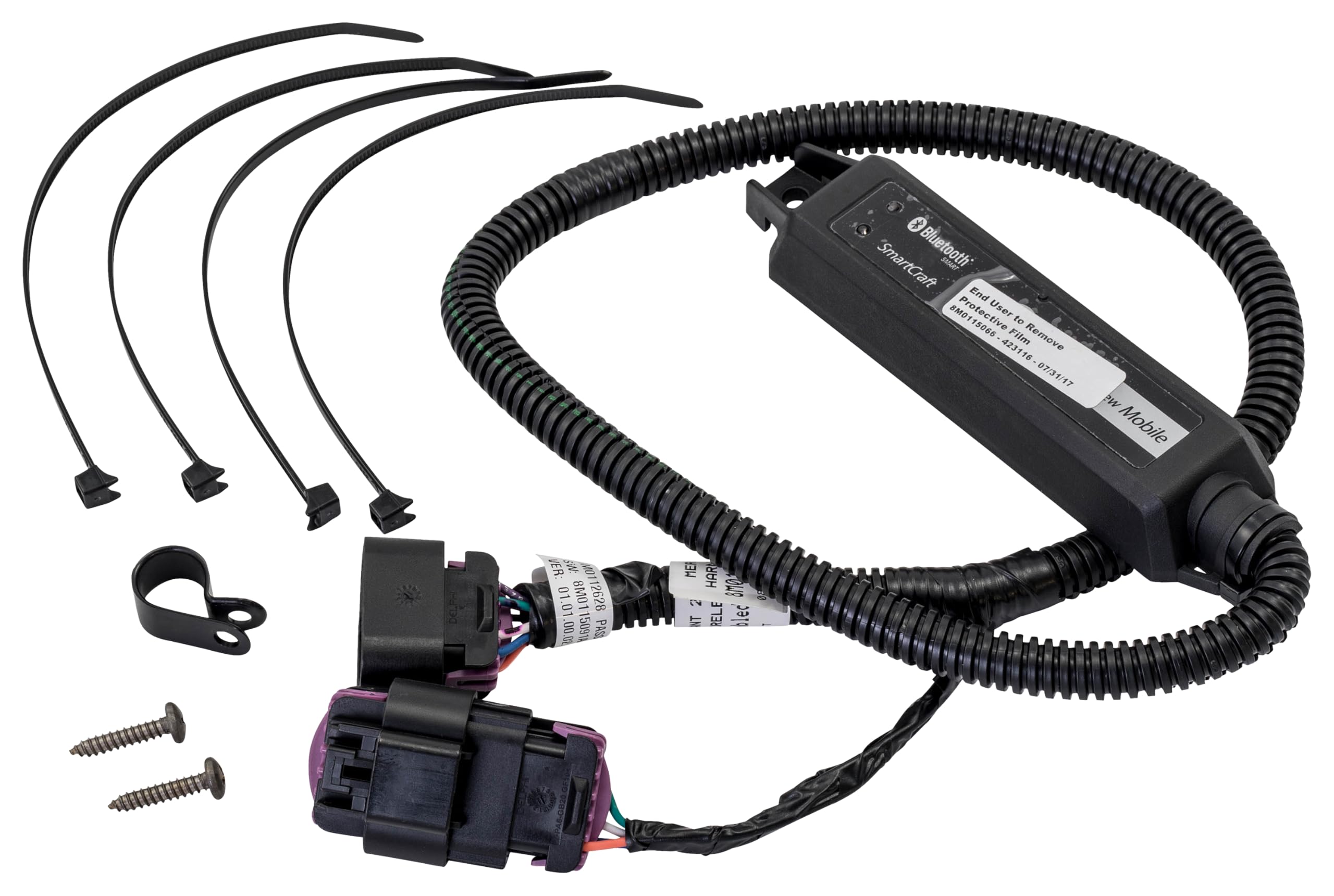
Four engines on one screen. That is the headline nobody else in this lineup touches — the VesselView Mobile module displays key data for up to four SmartCraft-capable Mercury engines on your iOS or Android phone or tablet. Fuel use, engine temperature, battery charge, RPM, engine hours. Twin outboards, a triple, a quad — all read from the same app grid while you sit at the helm.
The install is the part most buyers dread, and this one really is a plug-in job. Mercury rates it for any SmartCraft-capable outboard or sterndrive from 2004 or newer at 40hp and up, and the module and wiring are in the box. The Bluetooth Low Energy link carries data up to 30 feet, so a phone at the helm or clipped to a nearby seat stays connected. Owners overwhelmingly describe it as simply working — engine data arriving steadily, with RPM and fuel readings matching reality. It holds 4.5+ stars across 2,500+ ratings, the strongest owner consensus in this lineup.
Two things worth knowing before you buy. First, the SmartCraft compatibility gate is absolute. An older or smaller outboard will not connect, full stop. Second, Bluetooth has a ceiling, and steel or thick fiberglass eats signal — if your phone sits below deck, the 30-foot range can fall short of the physical distance. Fuel usage and connectivity both draw the sharpest mixed feedback of any feature, so treat the live fuel number as a trend rather than a fuel gauge you swear by.
What earns it the top slot
- Handles up to four engines from one module — twins and triples included
- Tracks true engine running hours so maintenance intervals stop being guesswork
- Plug-and-play on any SmartCraft-capable Mercury from 2004 or newer, 40hp and up
- 17 g module, so there is nothing heavy to mount or route
Where it will trip you up
- Locked to Mercury SmartCraft engines — no other brand talks to it
- Bluetooth range of 30 feet shrinks once walls and decks sit in the way
- Fuel readings draw the most divided feedback of the data streams
Reach for it if: you own a Mercury outboard or sterndrive built in 2004 or newer at 40hp or above, especially a twin- or triple-engine rig.
Look elsewhere if: your engine falls outside the SmartCraft window, or your engine is another brand entirely.
2. Renogy ONE Core
The one that watches your battery bank and solar input while you are moored and away.
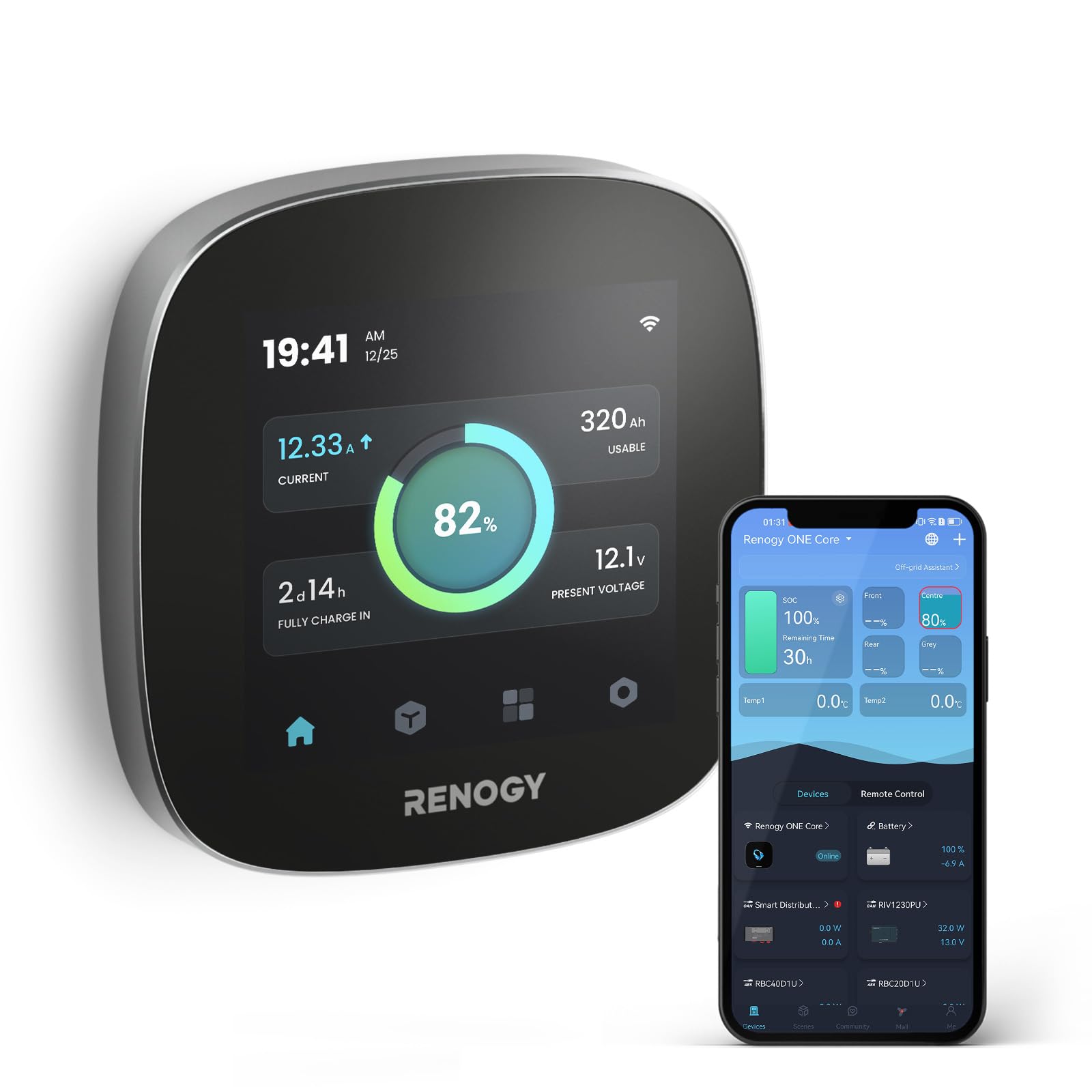
This is not an engine monitor and it does not pretend to be. The Renogy ONE Core is an all-in-one energy panel that tracks what your battery bank is doing — voltage, amperage, energy use — and pushes those readings to the DC Home app and the Renogy ONE Portal. If you are running solar and a house bank on a boat, a cabin or a van, this is the class of monitor you reach for. Measurement type is listed as voltmeter and ammeter, which tells you exactly what the two data streams mean: the push and the flow.
It runs 24/7 monitoring over Bluetooth BLE and Mesh plus RS485, and it can be powered from a 5V DC Type-C source or an 8V to 35V DC source through the power cable. It weighs 4.48 ounces and lists minimum operating voltage at 8 volts DC. It also supports smart automations with compatible Renogy accessories, and it works with Renogy batteries that have Bluetooth built in or use external BT-1/BT-2 modules.
Here is the honest catch, and it is a big one. Reliability is the most-discussed topic around this panel and the customer feedback lands genuinely mixed — some units deliver steady readings while others drop out far too often to trust a live system to. Connectivity feedback skews negative, which matters because the whole promise is remote monitoring. Worth knowing: the positive feedback that does exist centers on build quality, though quality counts are modest. Buy this one when you want Renogy-ecosystem energy data and can live with a shorter track record than the Mercury pick.
Tracks the bank, honestly: 24/7 energy readouts over BLE and Mesh plus RS485, with Wi-Fi remote access through the DC Home App and Renogy ONE Portal — so a mooring-side fridge drain shows up before you arrive.
Short-track-record reality: with a smaller review base than the Mercury module, this panel draws divided word on reliability and a clear negative lean on connectivity. Confirm your boat’s DC voltage falls inside the 8V to 35V range before you commit.
Built for: off-grid boat, cabin and van owners running Renogy batteries and solar who want battery-level data from anywhere.
Think twice if: you need engine RPM and fuel data, or you expect flawless connection from the start every single day.
3. MERCURY Marine SmartCraft Connect Mobile

Mercury’s newer app, one engine only — with a Bluetooth pairing that tests your patience.
This kit exists because of the newer Mercury app. The SmartCraft Connect module mounts under the cowl (the cover over the engine) of a single Mercury engine. It streams live engine data, fuel tracking and digital gauges to your phone through the Mercury Marine app, which is replacing VesselView Mobile. You can track maintenance in the app and share engine data with a preferred dealer, so service gets easier. It carries a limited 1 year warranty. For a single-engine boat on the modern Mercury platform, the idea is tidy.
The problem is the handshake. Connectivity is the most-discussed issue on this module by a distance, and the feedback is clearly negative — reports describe slow pairing to phones and a Bluetooth link that will not lock in. App functionality draws a second negative signal, with complaints about needing restarts mid-use. What buyers do like is the breadth of engine information once it is actually connected, which is comprehensive enough to show motor data the old app never surfaced. The core issue is getting there reliably.
Weigh it against its sibling directly. The VesselView Mobile module carries a 4.5+ rating and manages four engines. This one carries 3.5+ stars and manages a single engine. If you are buying for the live data, the older app still wins on both. If you want the newer Mercury platform and are willing to work through pairing patience, this is what Mercury now sells for a single engine — just budget for a little friction at startup.
The single-engine case: under-cowl install for one Mercury engine, live data, fuel tracking and dealer-shareable maintenance records in the Mercury Marine app, backed by a limited 1 year warranty.
The pairing tax: connection reliability is the top complaint and app behavior draws its own criticism, so expect to spend time coaxing the link into place before the gauges populate.
Pick it when: you run a single Mercury engine and want to be on the newer Mercury Marine app platform with dealer data sharing built in.
Skip the upgrade hassle if: you run twins or want the most reliable Mercury link available — the VesselView Mobile module above does both better.
Know the Specs
SmartCraft Compatibility
SmartCraft is Mercury’s own engine data protocol — the language the motor speaks to diagnostic tools. A monitor that reads SmartCraft will only read Mercury engines, outboards and sterndrives, 2004 and newer, 40hp and up. This is the first spec to check, because it is binary: either your motor is in the window or it is not.
Bluetooth Range
Bluetooth range is how far the module’s wireless signal reaches before data drops. One measure here is 30 feet, which covers most helm-to-seat distances on a boat. It does not always cover helm-to-cabin, because decks and fiberglass sit between the two. A shorter range is a physical ceiling, not a setting you can tune.
Amps and Volts
An energy monitor tracks two values: voltage, which is the pressure in your battery bank, and amperage, which is how much current is flowing. Together they tell you whether power is draining or charging. Renogy ONE Core lists voltmeter and ammeter as its measurement types, which is the plain way of saying it reads both.
Operating Voltage Window
The operating voltage window is the range of DC input a device will accept before it stops running. Renogy ONE Core lists an 8V to 35V DC power-cable input, plus a 5V DC Type-C option. Match that against your boat’s system before install — a 12V or 24V DC boat sits comfortably inside it.
Common Questions
Will the Mercury VesselView Mobile work with my outboard?
Can I monitor twin outboards with one VesselView module?
Does the Renogy ONE Core read my engine?
How far can my phone be from the Mercury module before data drops?
Can I see my battery bank from the marina office?
Why does the SmartCraft Connect module cost about the same as VesselView but rate lower?
Is the Renogy ONE Core compatible with any battery brand?
Do I need a dealer to install the SmartCraft Connect module?
Can I run both an engine monitor and an energy monitor on one boat?
The Bottom Line
For most boat owners the pick is the Mercury VesselView Mobile, and the case is simple: it shows four engines on one screen, works on 2004-and-newer SmartCraft engines (Mercury’s onboard data network) that most modern Mercury owners already have, and carries the strongest owner consensus of anything here. It is also the only pick that turns engine hours into a real maintenance schedule instead of a guess. If your boat is off-grid with solar and a house bank (a separate battery set for your cabin loads), the Renogy ONE Core answers the battery question instead — just accept its shorter track record. And for a single Mercury engine on the newer app with dealer data sharing, the Mercury SmartCraft Connect Mobile fits, as long as you are ready to wrestle the pairing. Check your engine’s model year and horsepower before anything else — that one step eliminates the wrong pick faster than any review will.
How we choose
We do not accept paid placement. Every pick is matched to a real buyer and a real use-case; we do not hands-on test units.
Sources
Specifications: manufacturer listings and product documentation. Review insights: verified customer reviews, as of November 2026. Pricing: not shown on this page (it changes often); check the current price via the retailer link.
As an Amazon Associate, Tactical Gear Guy earns from qualifying purchases. This does not affect which products we feature.