Specs are compiled from manufacturer listings and verified buyer reviews and can change over time — please confirm the key details on the product page before buying.
Buy the pair that keeps you upright on a wet deck, not the pair that just looks nautical. For most people that means a siped rubber outsole (a sole cut with fine slits that squeezes water out sideways for grip) plus a leather upper that drains and dries instead of turning into a soggy sponge. The nine picks below cover every budget tier, and each one has a clear job — some are built for long days on a moving deck, others are really weekend-cookout shoes wearing a deck-shoe costume.
This guide is built by comparing the manufacturers’ published specifications and the patterns across verified customer reviews, so you get each pick’s real strengths and trade-offs instead of marketing spin.
You will see where the leather is thick and where the sole is thin, which pairs run wide or narrow, and which ones survive salt water season after season. This breakdown of the best yacht boat shoes sorts the nine picks by which ones hold grip on a wet, tilting deck and which are really weekend-cookout shoes.
Top Picks
How To Choose The Best Yacht Boat Shoes
A yacht boat shoe has one job the catalogue photos never show: keeping your feet planted when the deck tilts and the surface is wet. Everything else — the leather, the stitching, the laces — is secondary to the outsole. Get the sole wrong and you will feel it the first time you step off a swim platform onto a slick fiberglass deck.
Start with the outsole, not the upper
Look for a siped rubber outsole, which is a sole cut with thin slits that channel water away so the rubber stays in contact with the deck. Non-marking matters too — that means the rubber is formulated so it will not leave black scuff streaks on a white gelcoat deck. A deep lug tread (raised blocks of rubber) grabs better on gravel and dockside concrete, while a flatter siped sole is better on smooth, wet fiberglass.
Leather type and how it ages
Full-grain leather is the top layer of the hide and keeps its natural grain, so it molds to your foot and patinas over time. A nubuck or suede-style upper feels softer from the start but shows salt stains faster. Hand-sewn moccasin construction — where the upper is stitched to the sole by hand — usually means a more flexible, better-fitting shoe, and it is the mark of the traditional deck shoe.
Lacing and fit
A 360° lacing system runs the rawhide lace all the way around the collar, so you can cinch the whole shoe to your foot rather than just the top. Slip-on designs with twin-gore panels (elastic side inserts) trade some of that adjustability for speed. Boat shoes are often worn barefoot or with thin socks, so sizing tends to run differently from trainers — check each pick’s notes on whether it runs large or narrow.
Side-by-Side Comparison
| Model | Best For | Upper Material | Outsole / Closure | Stated Weight | Amazon |
|---|---|---|---|---|---|
| Helly Hansen Feathering★ Best Overall | Deck days and city wear | Lightweight breathable upper | Non-marking rubber, EVA midsole | — | Amazon |
| Sperry Surveyor 2-EyeTop All-Day Comfort | All-day support on your feet | Full-grain leather and mesh | Wave-Siping, 360° Lacing | 1.17 pounds | Amazon |
| Clarks Sailview LaceBest Value | Everyday summer casual | Nubuck | Slip-resistant siped outsole | 2 pounds | Amazon |
| Columbia Bonehead PFG | Dress up or down | — | Bungee laces | — | Amazon |
| Sperry Authentic Original 2-Eye | Classic nautical look | Leather | Siped rubber, 2-eye lacing | 13.57 ounces | Amazon |
| OluKai Moku Slip-On | Slip-on ease | Lightweight mesh | Rubber outsole, twin-gore panels | — | Amazon |
| Timberland Heritage Classic 3 Eye Lug | Rugged weekend wear | Leather with leather lining | Rubber lug outsole, 360° lacing | 1.5 pounds | Amazon |
| Sebago Portland | Hand-sewn heritage build | Full-grain leather | Non-marking siped rubber, 360° rawhide | — | Amazon |
| Sebago Docksides Portland Crazy H | Patina and premium leather | Hand-sewn pull-up leather | Non-marking siped rubber, 360° rawhide | — | Amazon |
Detailed Reviews
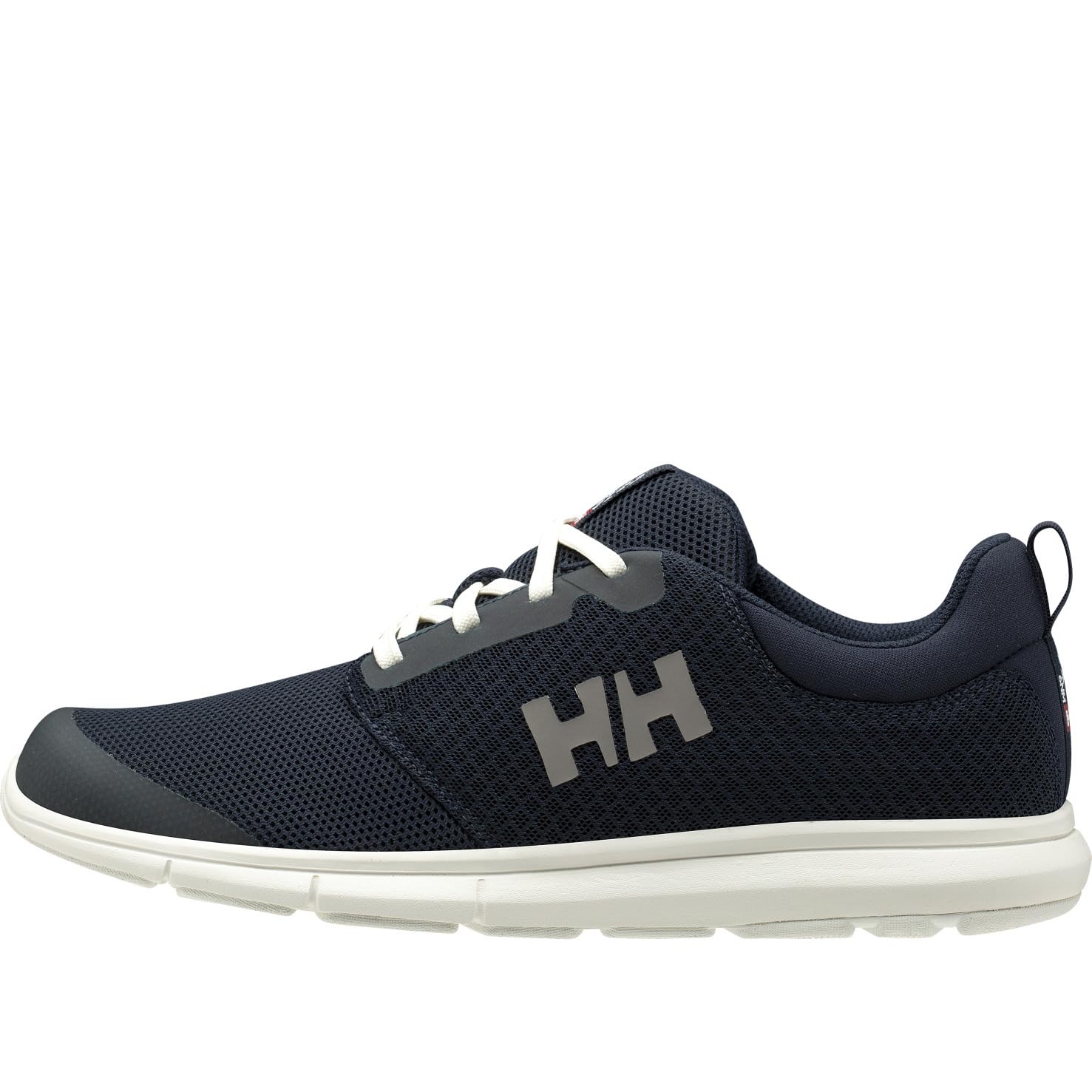
1. Helly Hansen Feathering Lightweight Deck Shoes for Men
Our pick — 4.5+★ from 600+ verified ratings; the strongest balance of quality and price.
A lightweight, breathable deck shoe with a non-marking rubber outsole and EVA midsole that works on a wet winter deck and on city pavement.
If your boat shoe has to survive a wet winter deck in the morning and a pub lunch in the afternoon, the Feathering is the one that makes that jump without you feeling under-shod. It was designed for winter sailing, so the whole shoe is built around secure footing on a wet, cold surface rather than looking pretty on a jetty.
The grip comes from a non-marking rubber outsole, and the flexible build keeps that traction steady as you move from an icy dock to a city sidewalk. Underfoot sits a premium EVA midsole — a light foam layer that absorbs the jar of stepping onto hard surfaces — so long stretches of standing do not beat up your heels. The upper is deliberately lightweight and breathable, which matters most on a warm day when a closed leather deck shoe starts to cook your feet.
What wins people over is the way it looks — that is the single most-praised thing about this shoe — with the traction running a close second. Owners describe it as easy to move around a deck without stumbling on gear, which is the exact behavior you want when the boat is heeled and the cockpit is full of lines.
Where it earns its keep
- Non-marking rubber outsole with a flexible build keeps grip steady from icy dock to sidewalk
- Lightweight, breathable upper stays cool on long summer outings
- Premium EVA midsole softens hard-surface standing for all-day comfort
- Transitions cleanly from deck duty to city wear
What to plan around
- It reads more like a sporty deck sneaker than a traditional hand-sewn moccasin, so if you want heritage styling look at the Sebago pairs instead
- Lightweight breathable uppers trade some of the plush, mold-to-foot feel of a heavy full-grain leather shoe
The one to grab: anyone who wants one pair that covers sailing, walking and casual town wear without looking out of place anywhere.
Second thoughts: if a traditional stitched-leather silhouette is the whole point for you, this is the wrong flavor of deck shoe.
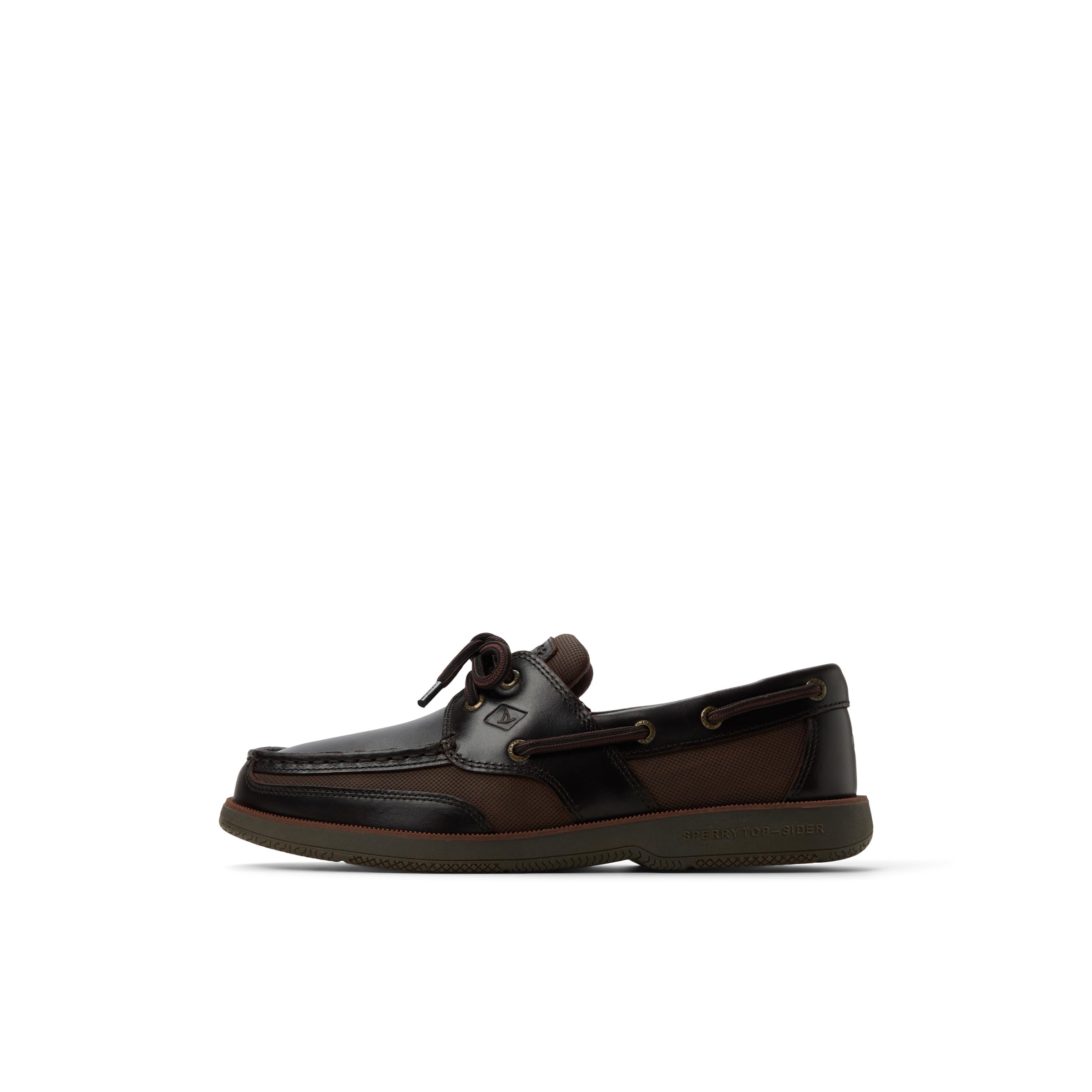
2. Sperry Men’s Surveyor 2-Eye Leather Boat Shoe
A sporty deck shoe built for long shifts on your feet, not just long afternoons on the water.
The Surveyor lists 1.17 pounds, versus the Clarks Sailview Lace at 2 pounds. Weight shows up in the last mile of a long day, when a heavier shoe starts to feel like it is dragging.
The build is full-grain leather with mesh paneling, so you get the look and durability of leather with a bit of airflow through the sides. Underfoot is a memory foam insole, and the Wave-Siping outsole is Sperry’s name for the razor-cut slits that channel water off the deck. The 360° Lacing system wraps the lace all the way around the collar so you can snug the whole shoe down to your foot.
The leather and mesh combination means this one takes a knock if you want a shoe that lasts for years of hard salt-water abuse. The recurring gripe is sole separation — the bottom lifts away from the upper — so treat it as a fair-weather deck shoe rather than an everyday workhorse. The quality and comfort are what carry it: the leather feels well-made, and the shoe is soft enough that it settles in fast.
Where it lands: light on the foot, comfortable over a long day, and fully capable on deck — just not the pair to drag through brackish water every weekend.
Reach for this if: you want the most comfortable leather deck shoe on the list for long stints on your feet.
Think twice if: you need a shoe that will take years of hard marine use, because the sole is the weak spot over time.
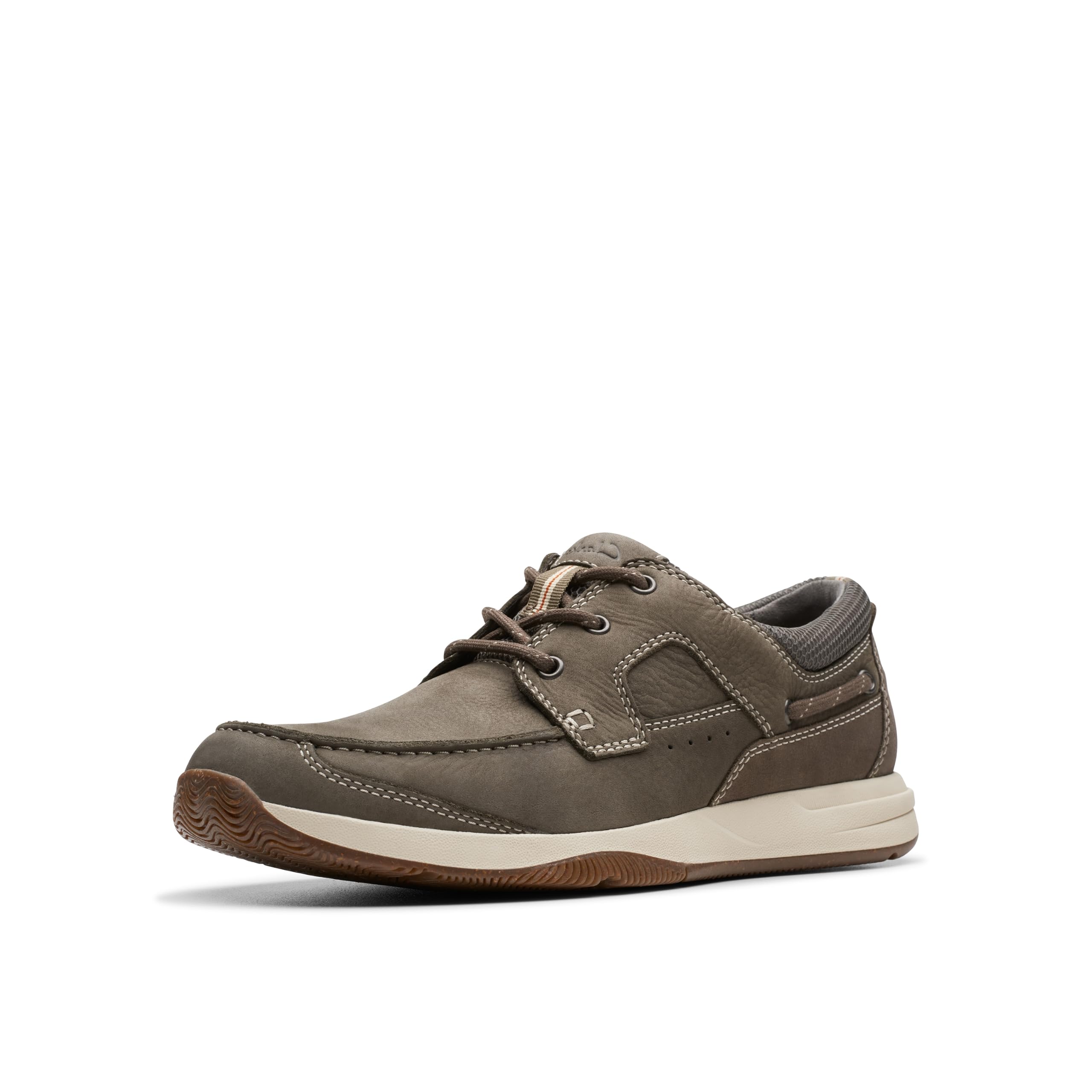
3. Clarks Unisex-Adult Sailview Lace
A nubuck boat shoe for cookouts and summer weekends, with a slip-resistant siped outsole for the occasional wet dock.
Plenty of buyers want the nautical look for land — vacations, cookouts, a summer weekend — and never actually step on a boat. The Sailview Lace is built for exactly that, then quietly leaves in a slip-resistant siped outsole for the odd time you do walk a wet dock.
The upper is nubuck, which is leather sanded to a soft, matte finish, and the stitching and embossed branding give it the crafted moccasin look. Adjustable lacing lets you dial in the fit so it does not flop around.
Build quality is the star here — it is the thing owners call out above all else, with comfort close behind. The leather and gum rubber soles earn steady praise, and the shoe is soft enough to wear straight through a long walking day. Just go into it expecting a roomier fit: some find it true to size, others say it runs a bit large, so consider going down if you are between sizes.
Read the sizing carefully: the fit is the one moving part — try a half size down if you are normally snug — while the leather and sole quality are the parts that earn their keep.
Good match for: the buyer who wants the boat-shoe look for summer weekends and backyard days, with grip that can still handle a wet deck.
Not your pair if: you want a featherweight, low-profile deck shoe for serious sailing — the generous fit and heavier build work against that.
4. Columbia Men’s Bonehead PFG Boat Shoe
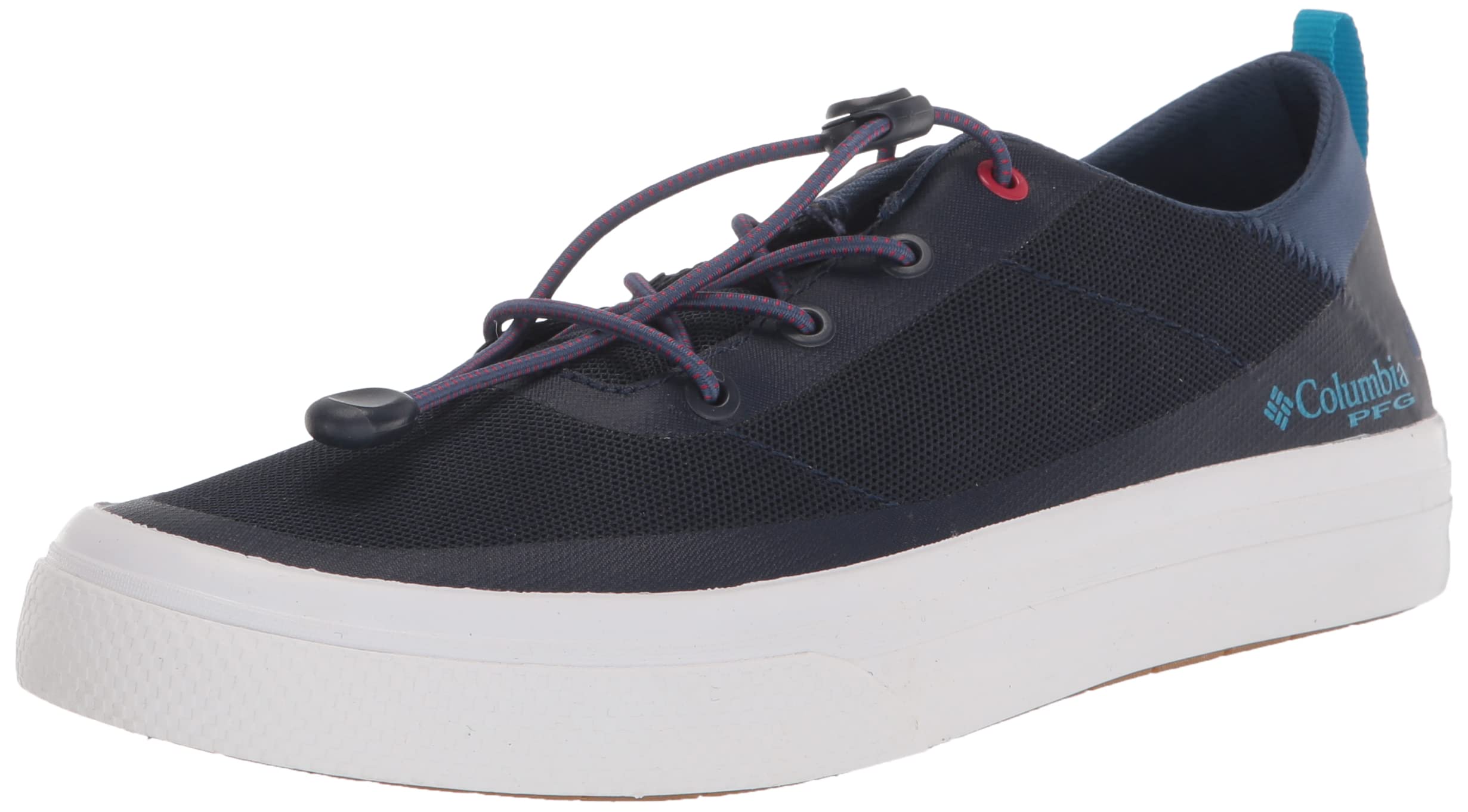
A light, breathable deck shoe with bungee laces you pull on once and never retie, from the marina to the cookout to the drive home.
The Bonehead PFG is a light, breathable deck shoe that leans into easy wear. Bungee laces mean you pull the shoe on and go — there is no rawhide to feed through, no bow to tie, and no lace to come loose while you are walking a tight dock.
Versatility is what it has going for it: owners wear it with anything from chinos to swim shorts. Traction and fit pull their weight too, so it handles a wet slip without drama. And because it is light, it works just as well as a travel shoe you can throw in a bag without a second thought.
The honest limit is durability. The sole has a habit of separating from the upper, so this is not the pair to drown in salt water day after day for years. The value question also gets a mixed reception — some feel it delivers for what it costs, others less so. But for a lighter-use deck shoe, the traction and comfort make it a genuinely easy wear.
The easy-wear case
- Bungee laces make it a true pull-on-and-go shoe
- Lightweight and breathable for warm days
- Versatile enough to dress up or down
- Solid traction and fit for wet-deck use
The trade-off
- Sole separation is the recurring durability complaint
- Value reads differently depending on who you ask
The fit: a casual deck shoe for lighter use and easy wear, where the laces are the feature you will appreciate most.
The flinch: heavy marine use over multiple seasons is exactly what its sole joint is weakest at.
5. Sperry Men’s Authentic Original 2-Eye Leather Boat Shoe

The 1935 original, still built on the siped rubber outsole that started the whole deck-shoe category.
If you want the shoe everyone pictures when they hear “boat shoe,” this is it. Sperry has been making this exact silhouette since 1935, and the siped rubber outsole — the razor-cut slit pattern that squeezes water off the deck — came from this line. That is why it still reads as authentic in a way the modern sneaker hybrids do not.
The leather is soft, meaningfully softer than a lot of the stiffer deck shoes out there, so it breaks in without chewing up the back of your heel. It suits summer wear and casual outfits, and it holds its shape for years of regular use. It lists 13.57 ounces, versus the Clarks Sailview Lace at 2 pounds.
Fit is the thing to get right, and it is also the shoe’s strongest suit once you do. The consensus is to take a half size up for comfort, since the standard cut runs snug across the foot. Expect the same mixed reports on longevity you see across most leather deck shoes: some pairs last for years, others wear out faster.
How it wears: soft leather, a genuine siped sole, and a shape that suits a summer wardrobe without you having to think about it.
Buy it for: the classic look with a real siped sole behind it, in a lighter shoe that feels broken-in fast.
Go elsewhere if: you cannot be bothered sizing up — the snug standard cut will feel tight across the foot at your normal size.
6. OLUKAI Moku Slip-On Men’s Boat Shoes

A laceless deck shoe with twin-gore elastic panels and a collapsible Drop-In-Heel that slides on without tying.
The Moku Slip-On strips out the laces entirely. Twin-gore panels — the elastic inserts on each side — flex as your foot slides in, and the Drop-In-Heel lets you collapse the back so it slides on like a sandal, then pop it back up when you want a closed heel. There is a rubber outsole under the mesh upper, and the mesh is genuinely light and breathable.
People find it easy to slip on and go, and it sits snug once on — it does not feel loose or sloppy, which is the usual failure of a slip-on deck shoe. The round toe keeps it looking like a deck shoe rather than a slipper. Comfort is right up there with the slip-on convenience, so it works for long stretches of standing and walking.
Sizing is the one thing to nail. Several people report it runs a bit large, so measure your foot before you order rather than guessing. Value also splits opinion: some see it as a fair deal, others find it on the pricier side. Get the size right, though, and it becomes a shoe you reach for over laces every time.
The convenience win: no laces, a collapsible heel, and enough grip to keep you steady getting on and off the boat.
The sizing caveat: it tends to run large, so check the chart and consider sizing down.
Best for: anyone who wants speed and comfort getting in and out of a deck shoe without fighting with laces on a moving boat.
Look elsewhere if: you want the secure, cinched-down feel of rawhide laces across the whole foot.
7. Timberland Men’s Heritage Classic 3 Eye Lug Boat Shoe

A leather deck shoe with a deep rubber lug outsole and 360° lacing, built for gravel and grass on the way to the dock.
A deep lug outsole is the difference between a shoe that grips wet fiberglass and one that also bites into gravel, grass and muddy paths on the way to the boat. Timberland’s Heritage Classic is handcrafted from leather with a 360° lacing system that runs around the collar for a secure fit, and leather lining for a plush underfoot feel.
The leather upper is rich and detailed, and the shoe carries that modern-classic look that dresses up or down. At 1.5 pounds it is heavier than a lightweight deck shoe, which is the price you pay for a lug rather than a flat siped sole. Owners describe it as comfortable with soft cushioning and a nice rich leather that feels like real quality.
This is the pick for weekends that start on a boat and end on a trail. If your boating is all smooth decks and a marina slipway, a flatter siped sole will feel more secure than a lug. But for mixed ground and a look that works beyond the water, it is the rugged choice.
What makes it rugged
- Rubber lug outsole grips gravel, grass and wet dockside ground
- 360° lacing cinches the whole shoe to your foot
- Leather lining gives a soft, cushioned underfoot feel
- Looks good dressed up or down
What to know going in
- Heavier than the flat-soled deck shoes on this list
- A lug tread is more than you need on a smooth, wet deck
Suits: the sailor who gets to the boat over rough ground and wants a shoe that handles both surfaces.
Pass on it if: your world is all smooth fiberglass and you would rather have the flatter, lighter siped sole.
8. Sebago Portland Boat Shoes
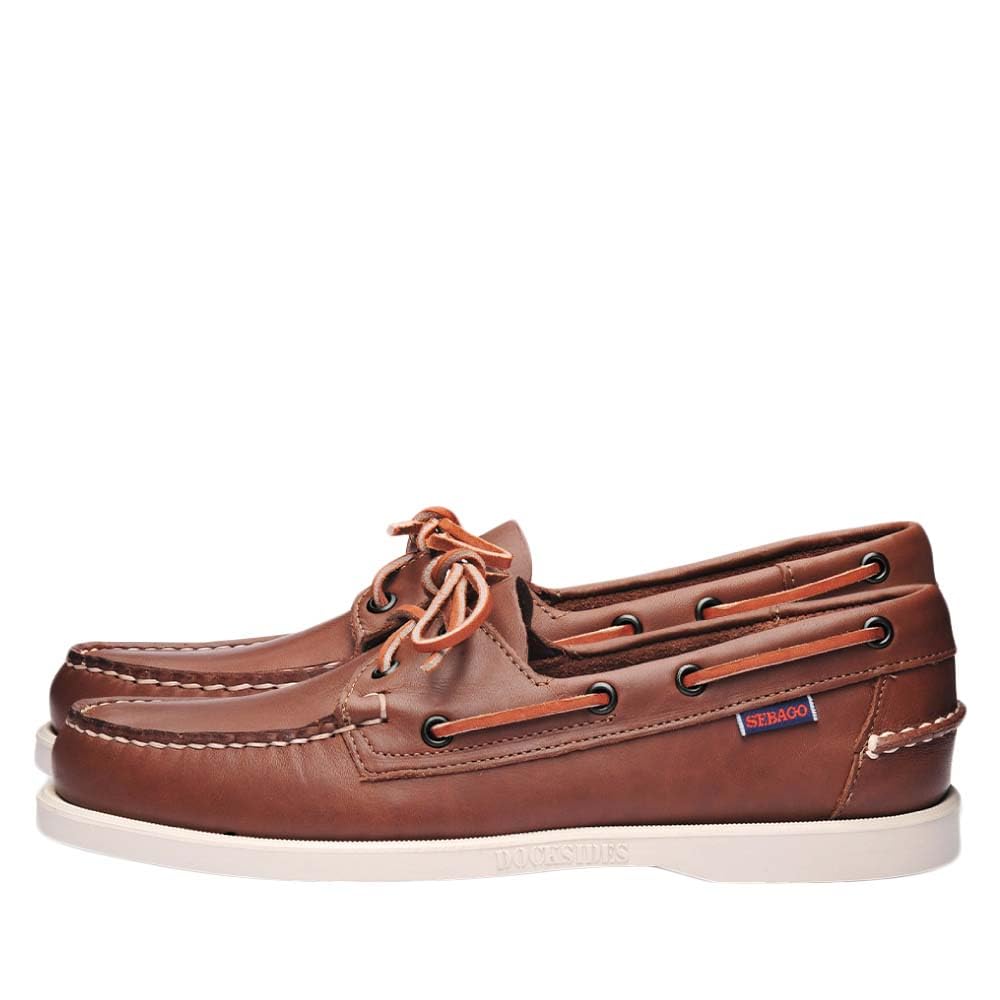
Hand-sewn, full-grain leather and rawhide laces — the most traditional deck shoe on this list.
The Portland is the shoe for the buyer who wants it made the old way. The full-grain leather upper is hand-sewn, the 360° lacing uses rawhide laces that run all the way around the collar, and the soft leather sock lining keeps the inside breathable. Underneath, non-marking siped rubber outsoles give you grip on wet decks without scuffing the gelcoat.
Full-grain leather molds to the shape of your foot, so expect it to fit better after a few weeks of wear than it does from the start. Owners find them comfortable and nice-looking, with real longevity behind them — these are shoes built to go the distance. The waterproof leather and leather lining are what make that possible.
The fit is the one thing to size for. Several buyers find it runs half a size too narrow, so if you have a wide foot, try before committing or size carefully. Value splits opinion too — some see the price reflected in the leather, others find them on the expensive side. But for a hand-sewn heritage deck shoe, the leather and craftsmanship are where the money goes.
Worth it for: the leather and the hand-sewn build, which is the whole reason to buy a heritage deck shoe in the first place.
Buy it if: you want the traditional moccasin construction and full-grain leather that ages into a proper patina.
skip it if: you have wide feet — the narrow cut will fight you unless you size carefully.
9. Sebago Docksides Portland Crazy H Moccasin Boat Shoes
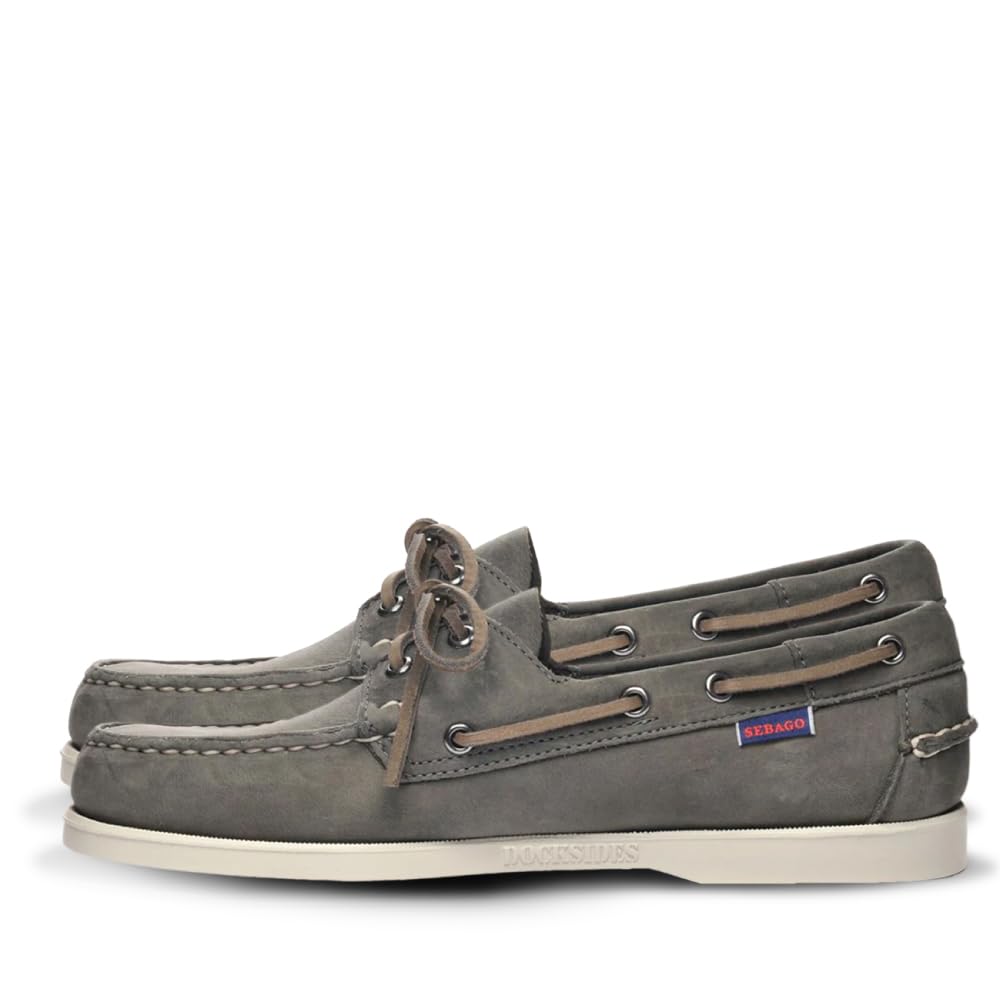
A hand-sewn moccasin in pull-up leather that darkens and creases into a one-of-a-kind pair, over a non-marking siped rubber sole.
The standout here is a pull-up leather upper — hand-sewn, and finished so each pair develops its own rich patina over time. No two pairs end up looking exactly alike, because the leather changes as it creases and takes on wear. The 360° rawhide lace system wraps the collar for a secure, customizable fit, and the soft leather sock lining keeps the inside breathable.
Underfoot sits a non-marking siped rubber sole — the slip-resistant deck grip you want — and the whole thing is built as a proper hand-sewn moccasin rather than a glued-up sneaker hybrid. This is a shoe aimed at sailors, deckhands and anyone who wants their deck shoe to look better the more miles it logs.
The catch with pull-up leather is that it wants a little care to keep looking its best, and it will show wear — that is the point of the finish, but not everyone wants a shoe that changes. If you prefer a uniform, factory-fresh look, the standard Portland above is the cleaner choice. If you want character in the leather, this is the one.
The long play: hand-sewn construction and a patina that deepens with every season on the water.
The honest note: pull-up leather is a living finish, so it will mark and change — that is a feature, but it asks you to be comfortable with it.
Go for this if: you want a deck shoe whose leather tells its own story and you do not mind a bit of patina.
Choose the standard Portland instead if: you want the same heritage build in a more uniform, less changeable leather.
Know the Specs
Siped Outsole
A siped outsole is cut with fine slits that open and squeeze water away as your foot presses down, so rubber stays in contact with the wet deck instead of skating on a film of water. Non-marking means the rubber is formulated not to leave black scuffs on white fiberglass. A flatter siped sole suits smooth decks; a deep lug tread grips better on gravel and grass.
Full-Grain vs Nubuck Leather
Full-grain leather is the top layer of the hide, keeps its natural grain, and molds to your foot as it breaks in — the traditional deck-shoe choice. Nubuck is leather sanded to a soft matte finish; it feels softer immediately but shows marks more readily. Pull-up leather is finished so it lightens and darkens as it creases, giving your pair a patina over time.
Lacing Systems
A 360° lacing system runs the rawhide lace around the collar as well as across the top, so you can cinch the whole shoe down to your foot. That matters on a moving deck where a loose shoe is a hazard. Slip-on designs with twin-gore panels use elastic inserts instead and trade that full adjustability for speed getting in and out.
Fit and Sizing
Boat shoes are often worn barefoot or with thin socks, and fit varies widely between models. Some run half a size narrow, some run large, and some run true to size. Check each pick’s sizing notes and, where a fit is described as narrow or large, size accordingly before you commit.
Common Questions
What makes a boat shoe safe on a wet deck?
Do yacht boat shoes run true to size?
Should I wear socks with boat shoes?
What is the difference between a siped sole and a lug sole?
How do I care for full-grain leather boat shoes?
Are slip-on deck shoes as secure as lace-up boat shoes?
Can I wear boat shoes on land all day?
What is non-marking rubber and why does it matter?
Is full-grain leather better than mesh for a deck shoe?
How long should a pair of yacht boat shoes last?
The Bottom Line
For most people, the yacht boat shoes winner is the Helly Hansen Feathering — it pairs a non-marking rubber sole and light, breathable upper with the grip to handle a wet winter deck, then walks into town without a second look. If long days on your feet are the priority, the Sperry Surveyor 2-Eye lists 1.17 pounds with a memory foam insole. And for the buyer who wants a hand-sewn heritage deck shoe that patinas with age, the Sebago Docksides Portland Crazy H is the premium choice. Whichever you pick, put a siped, non-marking sole first — that is what keeps you upright when the deck tilts.
How we choose
We do not accept paid placement. Every pick is matched to a real buyer and a real use-case; we do not hands-on test units.
Sources
Specifications: manufacturer listings and product documentation. Review insights: verified customer reviews, as of November 2026. Pricing: not shown on this page (it changes often); check the current price via the retailer link.
As an Amazon Associate, Tactical Gear Guy earns from qualifying purchases. This does not affect which products we feature.