Specs are compiled from manufacturer listings and verified buyer reviews and can change over time — please confirm the key details on the product page before buying.
If your toes go numb halfway through a walk, or a shoe’s “wide” label still pinches the moment you step off the carpet, the problem usually isn’t your foot — it’s the last the shoe was built on. The picks below all sit on genuinely wide or extra-wide lasts (the shaped foot-shaped mold a shoe is built around), from a 4E high-top to a leather trainer that a crowd of 90,000+ owners keeps coming back to. Read the width label before anything else, then match the shoe to what your day actually looks like.
This guide is built by comparing the manufacturers’ published specifications and the patterns across verified customer reviews, so you get each pick’s real strengths and trade-offs instead of marketing spin.
Every shoe below was picked because the width is engineered in, not stretched out — so the next step is matching one to your day. This walkthrough of the Best XX Wide Shoes covers what actually matters: room across the toe box, cushioning that holds up standing, and how the shoe behaves once your foot swells by mid-afternoon.
Top Picks


How To Choose Wide and Extra-Wide Shoes
Width is a fit dimension, not a comfort upgrade. A shoe marked wide is built on a wider last — that wider platform gives your forefoot room to spread flat instead of squeezing your toes into a point. Most width complaints come from buying a long-enough shoe in the wrong width, or sizing up to gain room your foot never gets.
Read the width code before you read the review
Shoe width is written as a letter code. D is standard for men, 2E is wide, and 4E is extra-wide; women’s standard is B. Models here run from 2E up to 4E, and the code tells you the platform you are actually buying. If a listing only says “wide fit” with no letter code, treat that as an unknown until you confirm the sizing chart on the product page.
Toe box shape matters as much as toe box width
A roomy toe box lets your forefoot splay with each step, which is what wide-foot buyers notice first. Some wide shoes get their room from a wide midfoot only, while others widen the front where bunions and hammertoes actually sit. Check where the shoe is widest relative to your own foot’s widest point.
Removable insoles change the whole equation
If you wear a custom orthotic or a firm insert, look for a shoe with a removable insole — pulling the factory footbed gives you depth for your own without turning the shoe into a vise. Several models on this list ship with removable footbeds, and that single feature is often the difference between a shoe that works with your insert and one that fights it.
Cushioning and the material inside
Cushioning is foam or gel that compresses under your weight and springs back — it decides how a mile feels at hour eight. Compression-molded EVA (a dense foam midsole that keeps its shape) feels firm and stable. Softer foam feels plush at first and can pack down. Neither is wrong; the question is whether your day is mostly standing, walking, or a mix.
Side-by-Side Comparison
| Model | Best For | Width Options | Midsole / Cushioning | Upper Material | Amazon |
|---|---|---|---|---|---|
| New Balance Men’s 608 V5 Cross Trainer★ Best Overall | All-day wear and long walks | Wide (2E) and extra-wide (4E) | IMEVA midsole with ABZORB heel crash pad | Durable leather | Amazon |
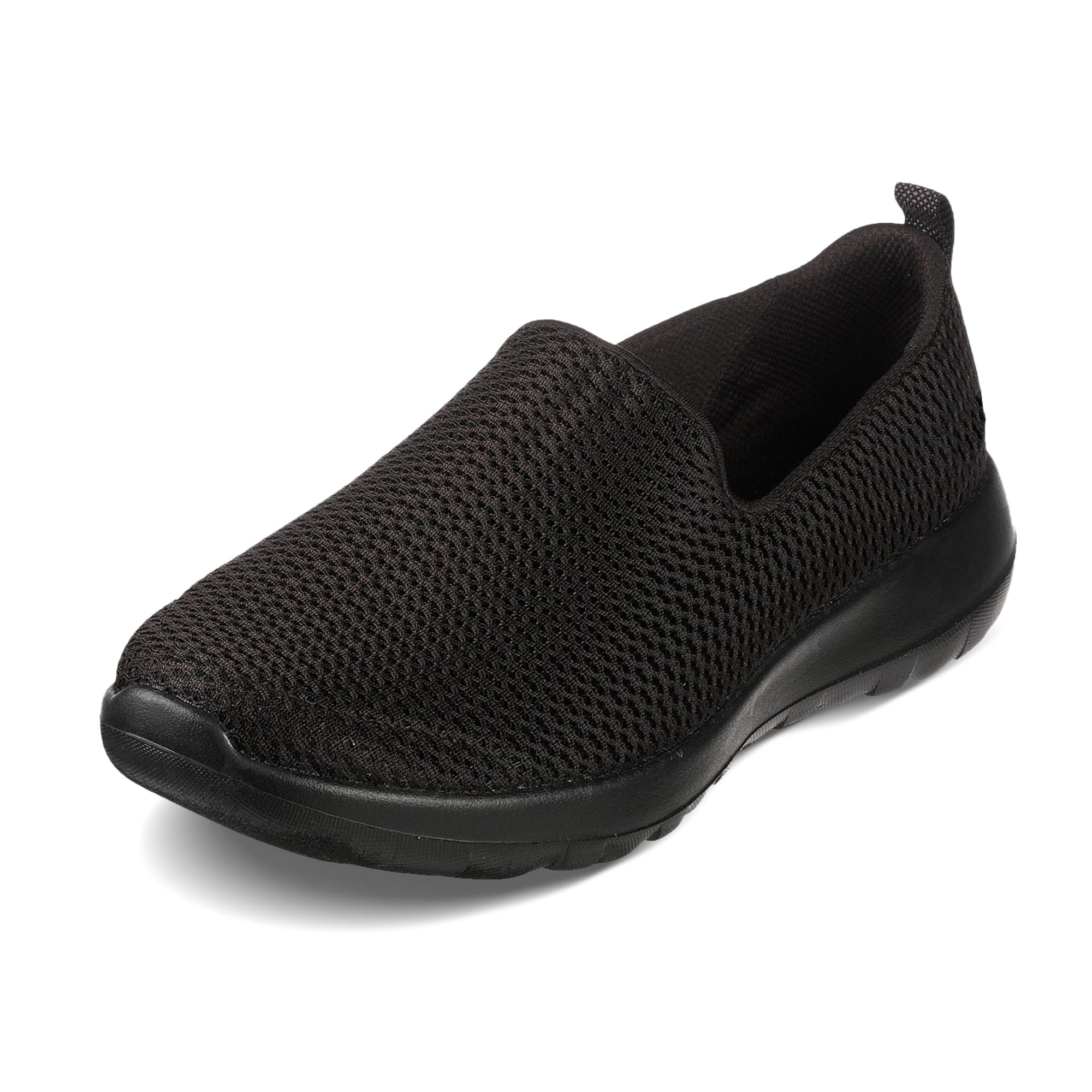
| Skechers Women’s Go Walk Joy SneakerBest Slip-On | Slip-on casual wear | — | — | — | Amazon |
| Nike Men’s Revolution 8 Easy On Road Running ShoesEasy On, Easy Off | Easy on-and-off running | — | Foam midsole with forefoot flex grooves | Mesh | Amazon |
| FitVille Extra Wide Walking Shoes | Wide toe box for long shifts | Wide (2E) to X-Wide (4E) | Dual-density high-rebound EVA | — | Amazon |
| New Balance Men’s 515 | Laid-back workplaces and weekends | — | EVA foam padding with NB Comfort insert | Suede and mesh | Amazon |
| FitVille Wide Basketball Shoes (High-Top Rebound Core) | Ankle coverage with extra width | Wide and X-Wide | PropelCore sole | — | Amazon |
| New Balance Men’s Fresh Foam X 880 V15 | Road running and gym sessions | — | Fresh Foam X midsole | Engineered mesh | Amazon |
| Merrell Men’s Nova 4 Sneaker | Roomy toe box on mixed ground | Wide sizes available | — | — | Amazon |
| KEEN Men’s Targhee 4 Low Waterproof Hiking Shoes | Waterproof trail days | Original Fit (wider) | KEEN.RUGGED rubber outsole | Leather | Amazon |
Detailed Reviews
1. New Balance Men’s 608 V5 Cross Trainer
Our pick — 4.5+★ from 90,500+ verified ratings; the strongest balance of quality and price.
The leather workhorse that carries a wide foot through a twelve-hour day.
Here is the number that decides this pick: 4.5+ stars from 90,000+ owners. That volume is why it takes the top slot — a wide-fit shoe that keeps that score across that many feet has clearly survived a lot of real-world walking.
The build is straightforward and it works. A leather upper sits on an IMEVA midsole (a lightweight foam platform that cushions without feeling mushy), and an ABZORB crash pad at the heel absorbs the impact of each strike. Around the ankle, dual-density collar foam cuts down on the rubbing and chafing you get when a stiff shoe chews at your sock line. Deep flex grooves let the sole bend where your foot bends, and an internal shank adds stiffness under the arch so the shoe doesn’t twist out from under you.
What wins people over is the overall quality of the build — it is the most-praised thing about this shoe by a wide margin, ahead of how it looks. Walking suitability shows up as its own theme too, which lines up with the leather-and-foam recipe: this is a shoe you put on and forget about until dinner.
The catch is sizing, and it’s worth planning around. Owners split on whether the 608 runs true or small, so the safest move is to confirm your width code against the sizing chart rather than guessing from your usual number. Durability also draws a mixed read — some pairs go the distance, others less so under hard daily use.
Why this one earns the crown
- Available in wide (2E) and extra-wide (4E) so the platform actually matches your foot
- ABZORB heel crash pad softens each step on hard pavement
- Leather upper holds its shape and looks tidy on casual days
- Internal shank adds support under the arch for long standing shifts
What to plan around
- Sizing splits both ways — confirm the width code before ordering
- Durability reads mixed under heavy everyday wear
- Leather needs a wipe-down to stay presentable
Reach for this if: you want one leather trainer that handles errands, standing shifts, and long walks without a break-in fight.
Look elsewhere if: you need a breeze-through mesh upper for hot weather or a shoe you can throw in the wash.
2. Skechers Women’s Go Walk Joy Sneaker
No laces, no bending down — a walker you step into and go.
The defining feature here is the slip-on entry: no laces to tie, so you step in and you’re out the door. For anyone whose hands or back make lacing a chore, that single detail is the whole reason this shoe exists in the list.
Owners describe them as comfortable and easy to pull on, and the casual look carries through a full day rather than reading like gym gear. It is a women’s model built for everyday wear — grocery runs, school pickup, a long errand loop — and the versatility is the thing that keeps coming up.
What it is not is a stability shoe. There’s no published arch-support spec to lean on here, so if you need firm underfoot support or a wide letter-code width confirmed before you buy, this isn’t the pick to lead with. It’s a comfort casual sneaker, and it’s honest about that.
Where it shines: the hands-free entry and the all-day casual comfort — it’s a shoe designed around convenience, and owners confirm it delivers on exactly that.
The honest limit: no published width letter code or arch-support spec in the listing, so check the sizing chart carefully if your foot needs a confirmed 2E or 4E fit.
Best for: women who want to slide a shoe on without lacing and wear it straight through a busy day.
Not the pick for: anyone who needs a measured extra-wide platform or firm arch support underfoot.
3. Nike Men’s Revolution 8 Easy On Road Running Shoes
A road runner built around getting your foot in and out fast.
Start with the geometry. This shoe uses comfort-focused rocker geometry — the sole curves up at the toe and heel so your foot rolls forward through each step instead of slapping flat. Forefoot flex grooves let the front of the sole bend with your toes, and a foam midsole supplies the cushioning underneath.
The mesh upper is the part that sells the “Easy On” name: it is breathable and forgiving, so your foot slides in without a struggle. Buyers report comfortable runs with no foot pain, and the easy on-and-off entry comes up as a real plus.
Two honest flags. Fit reviews split — some find a nice fit, others say it runs small — and arch support gets a mixed read, with some finding it sufficient and others wanting more. This is a lighter-traffic model too, so it’s best treated as a comfortable everyday road shoe rather than a stability pick for a demanding wide foot.
What buyers respond to
- Comfort-focused rocker geometry rolls you forward step after step
- Breathable mesh upper stays cool on warm runs
- Forefoot flex grooves let the sole move with your toes
- Easy on and off without untying everything
Where it asks you to compromise
- Fit runs inconsistent — some find it small
- Arch support reads mixed
- Lighter review base than the flagship picks, so less consensus to lean on
Go for it if: you want a breathable road shoe you can kick on and off around the house or the gym door.
Think twice if: you depend on firm arch support or need a shoe that runs predictably true to size.
4. FitVille Extra Wide Walking Shoes Casual Athletic Sneaker

A high instep and a 4E option, made for feet that fight every other shoe.
This is the widest-platform pick on the list. Width runs from Wide (2E) to X-Wide (4E), and the toe box is paired with a high instep design — the raised curve over the top of your foot. If standard shoes leave a red mark across your instep or squeeze your toes, that combination is the fix.
The insoles come out. FitVille ships these with removable ArchCore insoles that add arch support and shock absorption, and because they lift out, you can drop in your own custom orthotic without the shoe going tight. The midsole uses two densities of high-rebound EVA — one tuned for the forefoot, one for the heel — so cushioning and support land where your weight does. A rubber outsole handles traction.
What buyers respond to most is the build quality, and stability is a recurring theme — the kind of shoe that carries a shift without your feet aching. Cushioning is the split point: some find it plenty plush, others want more underfoot. Durability also reads mixed, so treat this as a comfortable daily walker rather than a shoe you’ll punish on rough ground.
The width story: 2E through 4E with a high instep is a rare combination, and it’s the reason to start here if every other wide shoe has still pinched.
The trade-off: cushioning feedback is divided between owners, and this is a walking and standing shoe — not built for running loads.
Made for: wide-footed walkers who need a removable footbed for their own orthotic and a toe box that stops squashing.
Skip the switch if: you want a running shoe or you need plush, deep cushioning under every step.
5. New Balance Men’s 515

The classic silhouette that gets away with jeans and a desk chair.
Suede plus mesh on the upper, EVA foam padding inside, and an NB Comfort insert underfoot — the 515 is built to look like a sneaker and feel like a slipper. The solid rubber outsole supplies grip, and the whole thing reads clean enough for a laid-back office or a weekend out.
Quality is the trait buyers single out most, with the comfort and the looks close behind. Owners call these a favorite in the rotation and good value, and several come back for a second pair — which tells you the fit works for them long-term, not just on day one.
Now the real picture. Fit is mixed: some find it perfect, others find it a little snug around the foot, so a half-size check is worth the minute. Durability is the louder concern — pairs can start coming apart within a year of regular wear, and it’s not a shoe anyone should plan on for labor work. Wear it for the desk and the weekend, not the job site.
Why it lands: a suede-and-mesh upper with EVA padding and an NB Comfort insert looks sharp and feels soft from the first wear.
The reality check: durability is the weak spot — this is a lifestyle shoe, and owners who wear them hard see them break down inside a year.
Pick it for: everyday casual wear where looks and immediate softness matter more than long-term toughness.
Pass if: you need a shoe that survives a physical job or heavy daily mileage year after year.
6. FitVille Wide Basketball Shoes for Men High-Top Rebound Core

The only high-top here — extra width plus a collar that cradles the ankle.
If ankle coverage is the point, this is the shoe. The High-Top Rebound Core wraps above the ankle for protection while keeping the FitVille multi-width build — both Wide and X-Wide are offered. The sole is the patented PropelCore, which the maker describes as delivering cushioning and comfort through each step.
There is real substance in the feedback here. The fit reads true to length, the extra width accommodates aftermarket orthotic inserts, and owners who live with plantar fasciitis describe meaningful relief in these shoes compared with standard-width pairs. The firm outer sole adds a stable base, which matters if you want the ground to feel solid under you rather than spongy.
Fit and comfort are both strong themes in the reviews, and ankle support shows up as its own consistent plus. The softer side of the ledger: durability is mixed, and cushioning draws a split read — some want it plusher. Expect a firmer ride than a plush walking shoe gives you.
The case for the high-top
- Ankle collar reaches higher than any other pick on this list
- Wide and X-Wide both available for broad feet
- Firm outer sole gives a stable, grounded feel underfoot
- Roomy enough to take aftermarket orthotic inserts
What you give up
- Cushioning splits between owners — not a cloud-soft ride
- Durability reads mixed over time
- High collar takes longer to lace up and break in
The right call when: you want height around the ankle and extra width in the same shoe, especially if you use your own inserts.
Better to look on if: you want a low-profile, plush, easy-on casual sneaker.
7. New Balance Men’s Fresh Foam X 880 V15
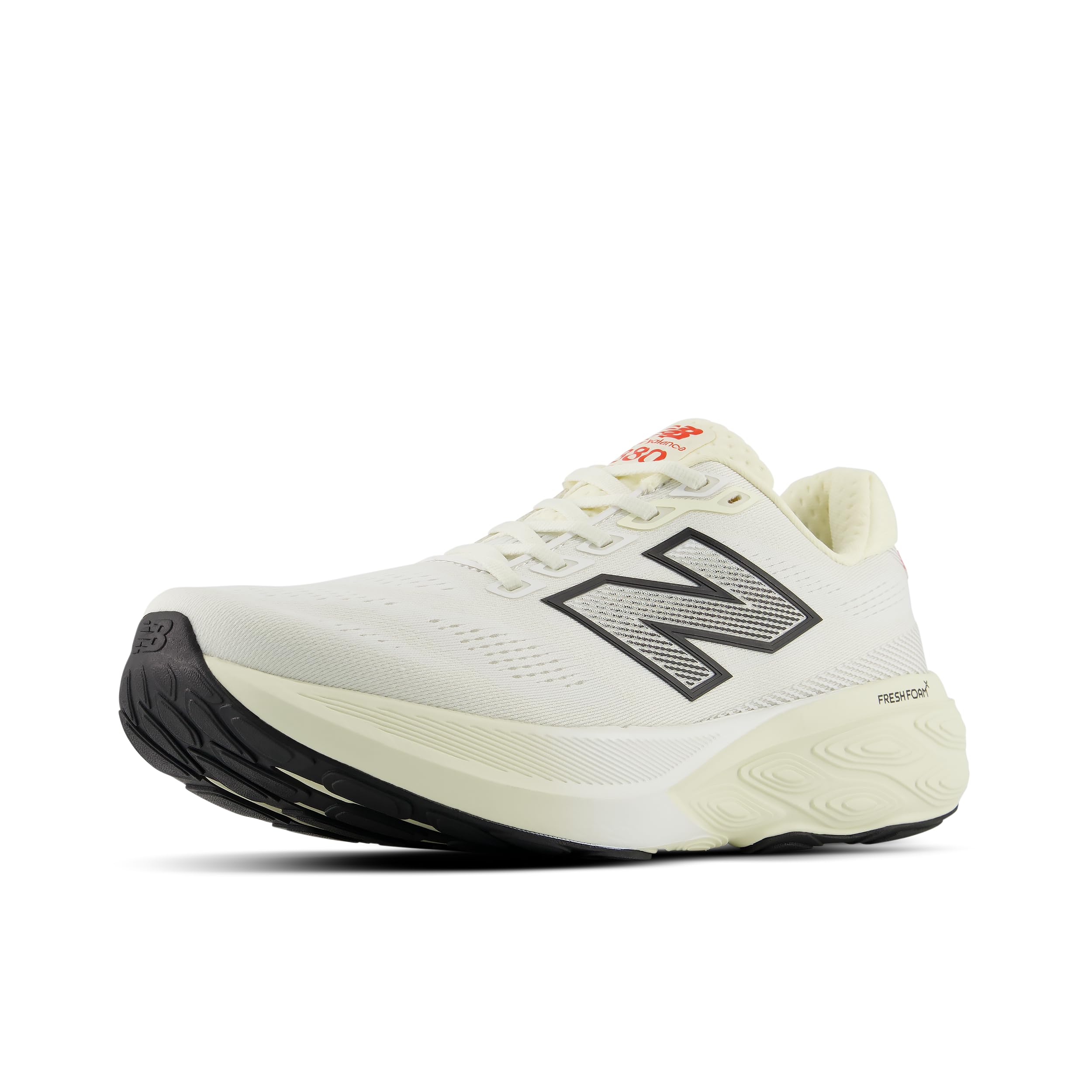
Fresh Foam X underfoot, wide fit on top — a road runner for broad feet.
Fresh Foam X is the whole pitch. The midsole foam is the cushioning, and owners describe it as feeling like walking on clouds — soft enough to take the sting out of pavement over a long walk. The engineered mesh upper is breathable and structured, so it holds its shape instead of collapsing around your foot.
Comfort is far and away what buyers talk about, with the wide fit and arch support right behind it. The shoe works for long walks as easily as a gym session, which puts it among the more versatile picks here. For a road runner, that kind of all-day cross-over is unusual.
The 880 leads on comfort over the lighter Nike Revolution 8 above, which doesn’t publish the same cushioning depth — while the Nike’s rocker geometry pushes you forward, the 880 simply softens the ground. Durability is the mixed note: some owners get a long life out of them, others find they wear faster than expected.
What the foam delivers: a soft, cushiony ride that holds up across long walks and gym days alike — the reason it’s the cushioned pick here.
Where it asks patience: durability feedback is divided, so don’t expect this to be the last pair you ever buy.
Worth grabbing if: soft underfoot comfort over a long walk is what you’re after and you want a breathable mesh upper.
Rather not if: you need a shoe that takes hard daily punishment for years.
8. Merrell Men’s Nova 4 Sneaker

Trail-shoe DNA with a toe box that lets your forefoot spread out.
Merrell’s best-selling trail shoe, reworked as a clean athletic sneaker that runs and walks. The wide sizes are cut with a roomy toe box — the front of the shoe stays broad, so your toes lay flat rather than curling under each other.
Comfort is the leading theme by a clear margin, with fit second and appearance close behind. Owners like the color combination and find them versatile enough for biking and walking, which is a wider range of uses than you’d expect from a trail-derived shoe. On mixed ground, that trail pedigree is what keeps them planted.
Set expectations on the long haul. Durability feedback is split — some pairs wear well, but webbing can tear after a stretch of use. Value is debated too, with some finding them worth the money and others reading them as pricey. Buy them for the fit and the look; don’t count on them being a buy-once shoe forever.
Where the Nova 4 wins
- Roomy toe box gives a wide forefoot genuine spread
- Trail-shoe build handles walking and mixed ground
- Clean athletic look works off the trail too
- Comfort is the standout in the feedback
Where it falls down
- Webbing can tear after extended wear
- Value draws divided opinions
- Not the most forgiving shoe over a very long service life
Go here if: a roomy toe box and a versatile trail-to-street look are your priorities.
Look on if: you want to buy a single pair and expect it to last several years of heavy use.
9. KEEN Men’s Targhee 4 Low Waterproof Hiking Shoes

A waterproof leather hiker that treats mud as a minor detail.
Waterproofing is the headline: a KEEN.DRY membrane sits inside the shoe with water repellency on the outside, so feet stay dry when the trail turns to slop. The build is leather, and the KEEN.FUSION glue-free bond is described as holding together without delaminating — the sole peeling away from the upper, the way glued hiking shoes often fail. KEEN rates the KEEN.RUGGED rubber outsole as twice as abrasion-resistant as standard rubber, so the lugs hold their edges on rocky ground.
Build quality is what buyers praise most, and it’s not empty talk — these are described in reviews as built like a tank, with a wide fit that accommodates varied foot shapes including bunions. Comfort and support follow closely, and the KEEN weight comes in at 530 g — the heavier footprint you’d expect from waterproof leather, and a trade-off some owners feel while others don’t.
The honest limit is the one you’d guess from a leather hiker: it’s heavier than the mesh-topped runners here, and weight is the single discussed trait that splits both ways. For dry, rocky, wet-ground days, that heft is the price of staying waterproof and rugged — and it’s a fair one.
The waterproof payoff: a KEEN.DRY membrane and water repellent leather mean puddles and wet grass are no longer a problem on the walk.
The weight caveat: at 530 g it’s a heavier shoe, and weight is the one discussed trait that splits both ways.
The one to grab: for wet-weather hikes and rough ground where dry feet and a tough sole come first.
Best elsewhere: if you want a featherlight road shoe or a plush everyday sneaker rather than a leather hiker.
Know the Specs
Width Letters (2E, 4E) and the Last
A width letter describes how wide the shoe’s platform is at the ball of your foot — D is standard men’s, 2E is wide, 4E is extra-wide, and women’s standard is B. The “last” is the shaped mold the shoe is built around; a wider last gives your forefoot room to spread flat instead of squeezing. That’s why a 4E FitVille and a 2E New Balance behave differently even if both are labelled wide. Always match the letter code to your measured width rather than sizing up for room.
Midsole Foam and the Heel Crash Pad
The midsole is the foam layer between your foot and the ground — it’s the part that compresses under weight and springs back. IMEVA and compression-molded EVA are dense foams that hold their shape and feel firm and stable; Fresh Foam X and PropelCore aimed at a softer, plusher ride. A heel crash pad (like New Balance’s ABZORB) is a denser insert at the back of the sole that absorbs impact on each strike, which matters most on hard pavement. Firm foam suits standing shifts; softer foam suits long walks.
Common Questions
Is 4E wider than 2E?
How do I know if I need a wide or extra-wide shoe?
Can I put my own orthotics in these shoes?
Do wide shoes run true to size or should I size up?
Are wide walking shoes different from wide running shoes?
Does a high-top help with ankle support?
How long do wide walking shoes usually last?
Are waterproof wide hiking shoes heavier than mesh sneakers?
What does “rocker geometry” mean in a shoe?
Can wide shoes help with bunions or a high instep?
The Bottom Line
For most people, the xx wide shoes winner is the New Balance 608 V5 Cross Trainer because it pairs a wide-to-extra-wide platform with a leather upper and a cushioned IMEVA midsole — the combo that carries a wide foot through a long day without a break-in fight.
If your priority is the widest platform with a removable footbed for your own orthotic, the FitVille Extra Wide Walking Shoes go from 2E to 4E with a high instep, and the FitVille High-Top Rebound Core is the only pick with ankle coverage. For soft underfoot comfort on a road run, the New Balance Fresh Foam X 880 V15 delivers the cushioning, and for wet-ground days the KEEN Targhee 4 keeps your feet dry.
One nudge before you decide: the 608 V5 has built the largest review base on this list, so it’s the safest starting point if you’re unsure — but confirm your width code against the sizing chart first, since the sizing reads mixed.
How we choose
We do not accept paid placement. Every pick is matched to a real buyer and a real use-case; we do not hands-on test units.
Sources
Specifications: manufacturer listings and product documentation. Review insights: verified customer reviews, as of November 2026. Pricing: not shown on this page (it changes often); check the current price via the retailer link.
As an Amazon Associate, Tactical Gear Guy earns from qualifying purchases. This does not affect which products we feature.